


Apple plans to add 20,000 jobs, new campus in the US
Apple is determined to show that it’s investing in the US economy despite its tax moves and foreign manufacturing. The company has announced a slew of investments it claims will pump a total of $350 billion into the US economy, highlighted by its focus on (what else) jobs. It expects to spend $30 billion in capital expenses that will create more than 20,000 new positions over the next 5 years, both at its existing buildings and a new location (to be unveiled later in 2018) that will initially focus on tech support.
It’s also pouring more cash into domestic manufacturing. The company is swelling the size of its Advanced Manufacturing Fund from $1 billion to $5 billion, which should both help existing American suppliers and foreign firms looking to set up shop in the US.
Apple also says it will back the next generation of students. It’s expanding its current efforts to support coding and STEAM (Science, Technology, Engineering, Arts and Math) programs and adding new programs to give teachers a helping hand. Accordingly, the tech giant is investing more money into its share of the government’s ConnectED program to ensure that students in less fortunate communities have the hardware and other resources to learn tech-related skills.
And Apple is naturally eager to head off tax concerns: it’s pointing out that it will pay about $38 billion in repatriations as a result of recent changes to American tax law. The payment should be the “largest ever made,” the company said.
It’s not surprising that Apple would unveil a large commitment. American companies are under pressure to show that they’re contributing to the economy, and Apple’s news is coming right as other American brands are slashing jobs. With that in mind, there are lingering questions. Apple didn’t elaborate on just how it would contribute $350 billion (though it did say this excludes product sales and tax payments), and it’s not clear how many of those 20,000 new jobs will be retail, tech support or other relatively entry-level positions. Even so, it’s evident that Apple is willing to splurge on its American businesses for at least the next few years.
Source: Apple
Facebook reopens investigation to see if Russia influenced Brexit
This past December, Facebook investigated whether Russia had used the social network to influence the EU Referendum vote, or Brexit. At the time, the team found little evidence of UK-related activity from the “Internet Research Agency” in Russia. Now, in a letter from Facebook’s UK policy director Simon Milner, the company promises to continue the investigation at the request of Damian Collins, the chair of the Digital Culture, Media and Sport Committee in the House of Commons.
Milner asserts that the work will need a “number of weeks” to complete, due to the detailed analysis of historic data required to be completed by the current security team, which is concurrently working on live security threats. The team will try and identify other clusters of coordinated activity around the Brexit referendum, similar to the one it investigated before. Milner also requests any information the UK government has that could help Facebook narrow its search.
Via: The Verge
Source: Parliament
Apple lands Kristen Wiig comedy series produced by Reese Witherspoon
Apple has now landed its fifth scripted TV series and its third produced by Reese Witherspoon’s company Hello Sunshine, The Hollywood Reporter has learned. The latest addition is a comedy starring SNL alum Kristen Wiig and is said to be inspired by a Curtis Sittenfeld short story collection called You Think It, I’ll Say It.
Hello Sunshine is also producing a show for Apple called Are You Sleeping? It stars Octavia Spencer and is based on a Kathleen Barber novel about a woman whose father’s murder is explored in a hit podcast. The third Hello Sunshine/Apple project is an as-of-now unnamed drama about a daily morning TV show starring Reese Witherspoon and Jennifer Aniston.
Among Apple’s other projects is a sci-fi drama called See, which will be directed by The Hunger Games director Francis Lawrence, and a documentary series about house design produced by Rock of Ages’ Matthew Weaver. Apple also has an anthology series called Amazing Stories in the works, which will be written by Bryan Fuller (American Gods, Star Trek: Discovery) and produced by Steven Spielberg. Apple has clearly established a pattern of signing shows with big names behind them and this newest addition to its lineup is no different.
The Kristen Wiig-led series is currently untitled but will be a 10-episode half-hour comedy. It was created by 30 Rock writer and producer Colleen McGuinness.
Via: The Hollywood Reporter
Instagram is testing a text-based ‘Type’ feature for Stories
Instagram keeps updating its Stories feature lately with new additions to keep things interesting. The company recently added polls, a way to surface past Stories and has been experimenting with cross-posts to WhatsApp. Now, according to a report at The Next Web, the latest Stories addition is something called Type, which gives you a number of new fonts to type your message across a background or photo as part of your Story.
WOAH!… Instagram is adding 4 NEW fonts to use in Stories (not available for all users yet)
h/t @CJMacLeod pic.twitter.com/hQuYcrFJtQ
— Matt Navarra (@MattNavarra) December 20, 2017
The feature was first noticed by The Next Web’s Matt Navarro last month. According to the current report, there are several fonts to choose from. Now you’ll be able to be a bit more text-focused when posting a Story on the photo sharing service.
Instagram declined to comment directly on the potential feature, sending along a generic response that it’s always working on new, cool stuff.
Source: The Next Web
Yahoo Sports teams with NBA on live games, AR and more
Verizon isn’t just obsessed with football. The carrier has unveiled an expanded partnership with the NBA that will make basketball games and related content available across Yahoo and “other Verizon media platforms.” To start, it’s making much ado over NBA League Pass. You’ll have the option of buying League Pass on sites like Yahoo Sports, and Verizon’s “It’s On Us” program will let you preview what you’d get without committing to a purchase. There will be additional material for non-subscribers, too.
Verizon and the NBA are promising development for augmented reality and “other new forms of content” that will take advantage of the carrier’s network. There will also be a daily highlights show as well as original sports and “lifestyle” shows drawing from the NBA’s deep video catalog. And while Verizon is touting how well this will work on its service, it stresses that the content won’t be carrier-exclusive. You ‘just’ have to visit Yahoo Sports.
The partnership will launch in earnest starting with the NBA All-Star game on February 18th.
When you combine this with Verizon’s switch in NFL strategy, it’s not hard to see what’s happening: rather than depend on carrier exclusives to reel you in, it’s betting that special offers and exclusives on Yahoo will make it a go-to destination for sports fans. There’s a considerably wider audience on Yahoo (including outside of the US) than there is with a carrier-specific service, and that means considerably more potential to make money from ads.
Source: Verizon
Huawei and its peers won’t win over the US without trust
Standing in front of a slide simply titled “Something I want to share,” the CEO of Huawei’s consumer product division is about to break tradition. Richard Yu is going to directly address the reported partnership with AT&T that fell through at the last minute, pulling back the curtains, ever so slightly, on a business that is largely conducted behind closed doors. The Chinese electronics company recently overtook Apple as the world’s second-largest smartphone maker in sales, but it still struggles to gain the approval of the American public.
You can almost hear the trepidation in Yu’s voice as he begins. “You know today, uh … Many people are waiting [for] me to announce that we are, uh, partnership with a carrier. Many of you guys have seen the newspapers that something is happened. That, uh, unfortunately this time, we cannot, uh, have this, uh, uh, to sell this phone, you know, from the carrier channel.” Yu laughs nervously as he says this. “Everybody knows that in the US market, that, uh … over 90 percent of smartphones are sold by the carrier channels,” he adds. Whether it’s due to nerves or frustration, his almost-candid rantlet is refreshing, his motivation clear. Yu has had enough.
For years, Huawei has made phones that are well-received by global and American media alike. In the US, however, the company’s devices are consistently criticized for not being sold through a carrier. Like Yu says, a vast majority of phones bought in the US are from carriers, and the apparent inability to make a phone that passes stringent carrier requirements not only limits Huawei’s access to American customers but also makes the company seem incompetent.
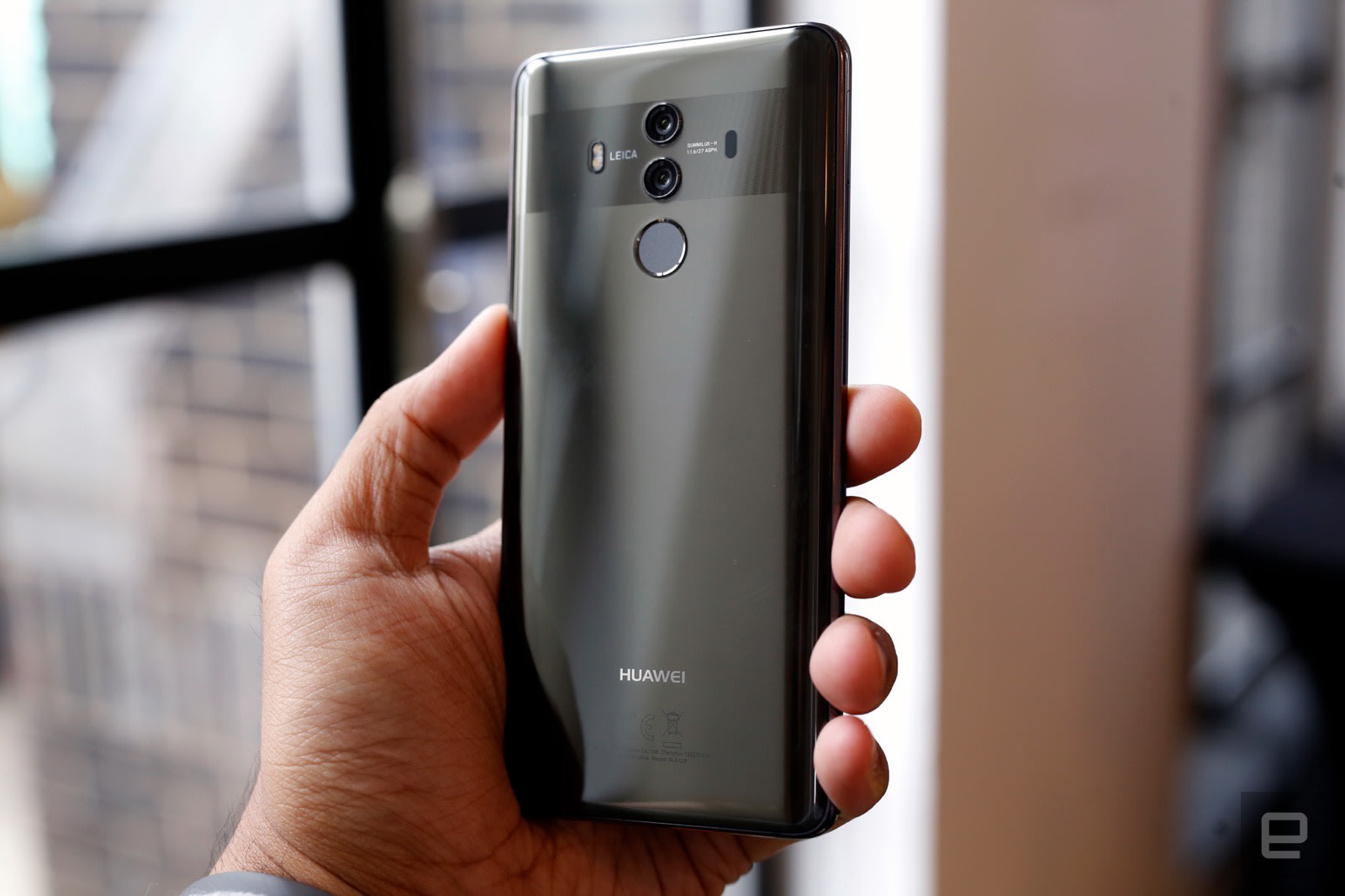
The thing is, Huawei is anything but. In recent years, its phones have greatly improved in quality, especially when it comes to design. It seemed to have finally gained enough momentum to achieve carrier buy-in, with multiple reports saying the company had clinched AT&T’s approval to sell the Mate 10 Pro. Yu’s speech seems to confirm this, although he never mentions the reason for the dissolution of the partnership. The Information reported that political reasons were behind the last-minute pullout while Reuters said shortly after that Congress lobbied for AT&T to drop the deal.
In its official statement, Huawei doesn’t directly address the deal and why it fell through. “We have the strongest confidence in our products and will continue to innovate and break new ground. At the same time, we believe that U.S. consumers deserve equal opportunity and the choice to enjoy the best technology and more smartphone options through more channels, just like other satisfied Huawei users around the world,” the company writes.
Huawei isn’t the only major Chinese company with its eyes locked on America. Baidu, which is Google’s equivalent in China, showed off a trio of smart speakers at CES, and company reps told Engadget that it definitely wants to bring its products to the US. Alibaba, also known as China’s Amazon, also wants to establish a presence in America. But there are many challenges clouding these companies’ ability to forecast a timeline.
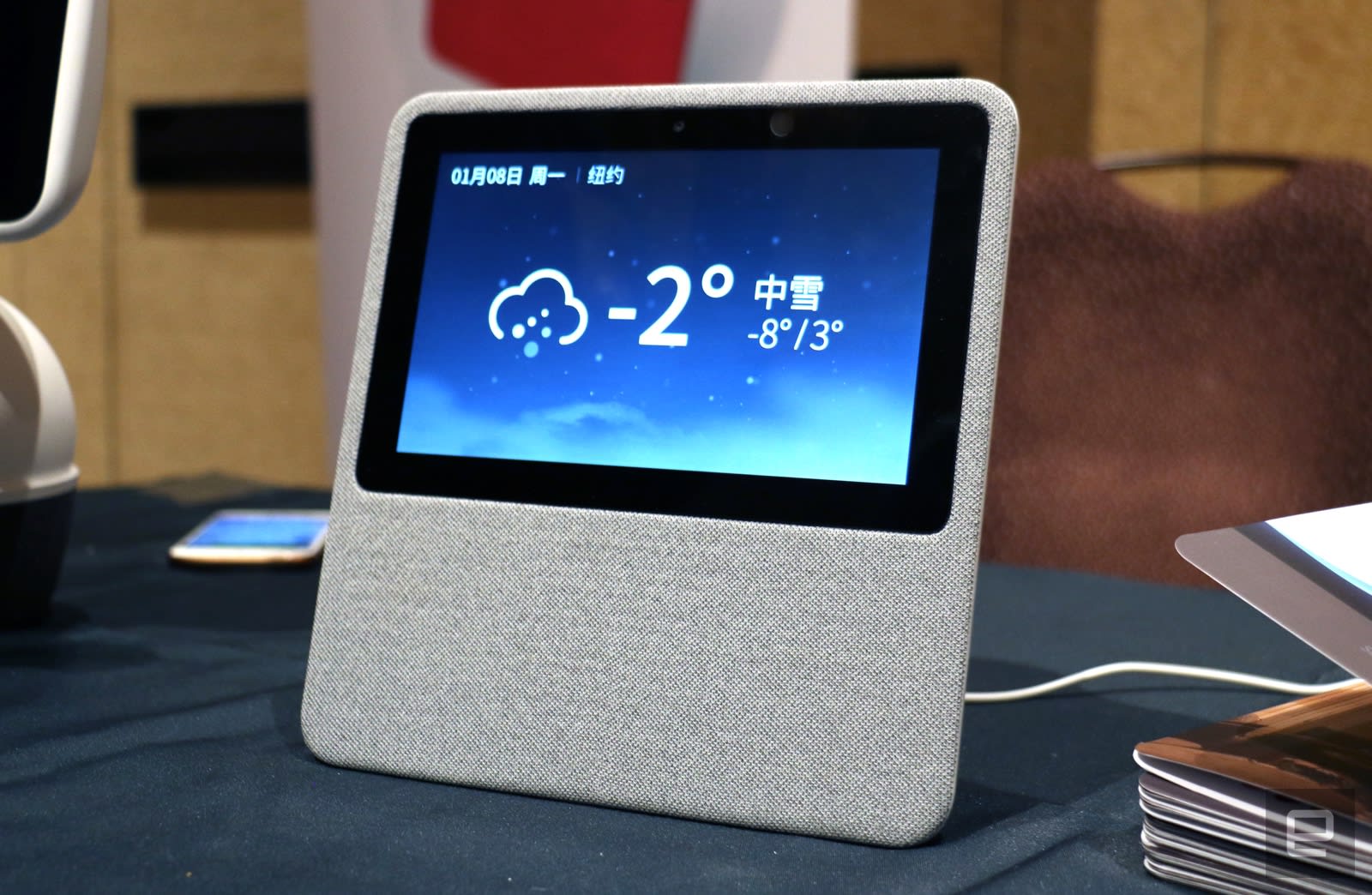
In Baidu’s case, tweaking its smart speakers for the US involves a complete overhaul. Its natural language interface DuerOS not only needs to be tailored for different consumer behavior but also has to learn an entirely new language (and all the associated nuances). Basically, American and Chinese people have different habits and tastes, and a product for one market cannot simply be reskinned to suit the other.
Chinese companies simply don’t have a good reputation in the US.
Chinese companies also frequently have names that Americans find hard to pronounce, like Xiaomi and Huawei. This affects the consumer’s ability to recall the brand when deciding what to buy, making it even more difficult for Chinese companies to appeal to the US market. The problem is so bad that Huawei has had to launch a massive ad campaign teaching Americans how to pronounce its name (“who-ah way” in Chinese, “wah-way” in Cantonese, “wow way” in the company’s unfortunately inaccurate marketing material). Xiaomi, which is frequently mispronounced as “show-me” actually sounds closer to “see-ow me.”
But it’s not just language and cultural differences that get in the way. Chinese companies simply don’t have a good reputation in the US. Right after Yu’s press conference at CES, Congress quickly proposed a bill to ban government agencies from working with Huawei and ZTE. These two companies were also the subject of a 2012 report from Congress claiming they “cannot be trusted.”
Huawei writes in its official statement that “privacy and security are always our first priority. We are compliant with the world’s most stringent privacy protection frameworks, including all GAPP and GDPR privacy protection requirements.” Both ZTE and Huawei also stated back in 2012 that they felt they were being unfairly singled out in Congress’ inquiry.

When your government makes such statements, it’s hard to feel safe buying anything from these companies.
Recently, Homeland Security also issued a memo saying it believes DJI drones are spying for China, while the office of the US Trade Representative continues to blacklist Alibaba over counterfeit goods. Whether these claims are valid or not, when your government makes such statements, it’s hard to feel safe buying anything from these companies, not to mention something as personal as your cellphone.
In the years since, though, ZTE has managed to sell low-cost phones through T-Mobile, MetroPCS and Boost Mobile. Most recently, ZTE’s folding dual-screen phone launched exclusively in the US via AT&T, although the rest of the company’s higher-end Axon series is still only available on the open market. Upstart OnePlus, which branched off popular Chinese phone maker Oppo, is also well-received in the US, although it isn’t sold via a carrier.
Why ZTE was able to achieve what Huawei couldn’t isn’t clear — perhaps its low-cost appeal is greater than the perceived risks. Other companies, like Lenovo, operate smoothly in the US largely due to acquisitions of established local brands and convincing most of the existing execs, in this case from IBM, to stay.
Other countries around the world have much less of a problem with Huawei and ZTE than the US does.
But the American public’s mistrust of Chinese tech companies isn’t unfounded. In 2017, we watched as Tesla wannabe LeEco crashed and burned after expanding its business to the US, amid reports of shady financial practices including multiple debts and breaches of contracts. LeEco former CEO Jia Yueting is now reportedly refusing to return to China as authorities there begin investigating him, something he’s apparently done before during a corruption scandal. Huawei itself was sued by T-Mobile in 2014 for not only trying to copy the Uncarrier’s phone-testing technology but also for attempting to steal it.
We don’t know of many other obvious, confirmed cases of Chinese companies engaged in illicit dealings. We do know that other countries around the world have much less of a problem with Huawei and ZTE than the US does. In Europe, Asia and other parts of the world, Huawei and ZTE phones are well-received. In fact, Huawei’s handsets are so popular that even without the American market, it’s become the second highest-selling brand worldwide. “We have gained the trust of over 150 million customers in the past year alone, and now sell our devices through more than 45 of the top 50 global carriers,” Huawei says in its statement.

Meanwhile, US brands continue to court China and its massive market, often with the help of local partners. For example, Chinese startup Mobvoi helped Google bring Android Wear to the People’s Republic, while Alibaba said it has helped small-to-medium-size American businesses like Real Techniques, OtterBox and Stadium Goods develop their brands and sell to locals. Apple has made a large push into China in the past two years, while Lenovo’s smart speaker was designed in part to help Amazon bring Alexa to the Asian superpower.
America doesn’t want to allow Chinese brands, barring a well-established few, to sell higher-end products in its borders.
Chinese technology is as good as, if not sometimes even better than, what we have in the US. At Alibaba’s booth at CES 2018, I tried out a face-recognizing receptionist robot that could conveniently clock employees in and out, a real-time translating chatbot, and a speaker that taps into almost every available online service to enable things like food delivery or video calls with your family. To some extent, you can already do that with the Amazon Echo or Google Home, but it’s important to note that healthy competition ultimately benefits the consumer. Alibaba is already testing how to sell Ford’s electric vehicles with vending machines in China: How long will Americans have to wait for that sort of convenience?
Chinese businesses need to make products that are so desirable to Americans that blocking them from the US would be difficult. Meanwhile, the US needs to consider how open it wants to be when it comes to trading with China. America is happy to continue feeding its goods to the People’s Republic and keep profiting off the relatively cheap labor that nation provides, but it doesn’t want to allow Chinese brands, barring a well-established few, to sell higher-end products in its borders.
This one-sided relationship may not be sustainable. America can continue to profit from trade with China, but it has to come up with a strategy that not only protects domestic interests but also welcomes foreign innovation.
Click here to catch up on the latest news from CES 2018.
Ubisoft inadvertently releases ‘Assassin’s Creed’ DLC a week early
Ubisoft has a history of premature software releases, but here’s one you might not mind. The developer has confirmed that it inadvertently released its Assassin’s Creed Origins add-on The Hidden Ones to Xbox One users a week ahead of its January 23rd release. A “misconfiguration” of the in-game store allowed downloads for the new content, the company said. You’ll still have access if you downloaded it and entered the new region (it’d create havoc for save files), but everyone else will have to wait for the official launch.
The early access was surprising, but certainly feasible. Game studios launching DLC frequently need to prepare well in advance, such as uploading the material itself, updating store pages and patching the base game. The extra time gives them a chance to coordinate the launch and catch last-minute issues. The problem, of course, is that it theoretically takes little more than an accidental flip of the switch to spoil everything. Clearly, Ubisoft flipped that switch — much to the delight of Origins fans who couldn’t wait to see what was new.
Via: Kotaku
Source: Ubisoft, Reddit
DoorDash’s delivery drivers will take restaurant leftovers to food banks
DoorDash announced a new project today aimed at reducing the amount of food thrown out by restaurants each year. A 2016 report released by the Food Waste Reduction Alliance found that restaurants that took part in its survey donated just two percent of leftover food in 2015 and over 93 percent of it was just thrown away. And restaurateurs consistently say that transportation is the biggest barrier to food donation. That’s where Project DASH comes in. DASH, or DoorDash Acts for Sustainability and Hunger, is teaming up with Feeding America Charity and will start transporting food between restaurants and local nonprofits that could make use of it.
The program is rolling out in New York, Los Angeles and San Francisco and all restaurants have to do is take a pic of their leftover food with Feeding America’s MealConnect app. MealConnect will then find a place for the food to go, like a food bank or shelter, and DoorDash will get a driver to deliver it. “It removes the donation as quickly as possible from a restaurant’s kitchen so that it doesn’t take up space in their storage,” Justin Block, Feeding America’s director of retail information services, told Fast Company. “Also, once the clock starts ticking on that donation, there’s a limited amount of time for its highest and best use…we’re maximizing the available shelf life of that donation so we can preserve as much of it as possible for the client to enjoy.”
DoorDash is donating driver time to cover delivery costs as of now, but in the future, drivers will have to choose to donate their time, according to Fast Company. DoorDash says more cities will see Project DASH this year.
Via: Fast Company
Source: DoorDash (1), (2)
The most eye-catching cars and tech from NAIAS 2018 in Detroit
The North American International Auto Show’s press and industry preview week is winding down, but the show is far from over. Next week the NAIAS opens to the public and if can’t make it to the Mitten State yourself but still want a peek at what’s tucked inside Detroit’s Cobo Center, we’ve got you covered. HoloLens and VR? Check. A Chevy pick-up with snowmobile treads for tires? Mhrm. Same goes for a Mercedes G-Class Wagon trapped inside a brick of “amber” resin. Hell, we even got the Michelin Man to flex his muscles for a photo. There’s a lot to see, so kick back, pour yourself a frosty beverage and peep the slideshow below on the biggest monitor available.
Click here to catch up on the latest news from NAIAS 2018.
Apple Paying Reese Witherspoon and Jennifer Aniston $1.25M Per Episode for Upcoming Morning Show Drama
Apple is paying Reese Witherspoon and Jennifer Aniston “upward of $1.25 million” a piece for each episode of their upcoming morning talk show drama series, reports The Hollywood Reporter.
The show, which is based on Brian Stelter’s non-fiction book “Top of the Morning: Inside the Cutthroat World of Morning TV” explores the drama-filled lives of the men and women who star on morning talk shows.
Witherspoon and Aniston’s $1.25 million salary per episode includes fees for executive producing and points on the show’s backend, as both are serving as executive producers on the series. Apple has already ordered 20 episodes of the show, split into two seasons.
Witherspoon’s high salary on Apple’s new television show drove up the price of her salary on the second season of HBO’s “Little Big Lies,” for which she will receive $1 million per episode.
One Hollywood agent told The Hollywood Reporter that if HBO matches Apple’s price, “it inflates the whole ecosystem of TV actor salaries.” HBO programming president Casey Bloys wasn’t as concerned, though.
“It’s not a shock to anybody that having a second season of an ongoing series is easier to have with those deals in place,” HBO programming president Casey Bloys tells THR. “Every outlet has to make their own decisions about economics that make sense for them. I’m not going to shake my fist and say, ‘Darn it, Apple!’ If that’s what made sense for them for that show, God bless.”
In addition to the morning show drama, Apple is working on two other TV shows with Witherspoon’s Hello Sunshine production company with Witherspoon serving a executive producer. One is “Are You Sleeping,” a psychological thriller starring Octavia Spencer, while the other is an untitled comedy series starring Kristen Wiig.
Related Roundup: Apple TVTag: Apple’s Hollywood ambitionsBuyer’s Guide: Apple TV (Buy Now)
Discuss this article in our forums
 AIVAnet