


Smartglasses from eSight are changing blind people’s lives by enabling them to see
Every once in a while, we see technology that is unlikely to actually be experienced by most people, but is truly transformative and life-changing for select people. That perfectly describes eSight, a pair of smartglasses that give blind people the ability to see. That’s amazing enough, but the glasses — which look like a cross between PlayStation VR and the Avegant Glyph — are so effective that in some cases the previously blind person may have the best sight in the room when wearing them.
We met Rosa Henderson, who is legally blind and has been since birth, at CES 2018. She has been wearing eSight for several months, and her story is one that shows the human side of cutting-edge modern tech. She didn’t talk about how something helped her productivity, or solved a very specific problem, but about something that lets her live. She said eSight gives her control over everyday life, confidence, and independence like no other device before it. It enables her to do the everyday things most people take for granted.
High-tech vision
An example? Henderson talked about attending classes at college, where she would normally have to make special arrangements ahead of time to sit at the very front of the room, and often bring an assistant along to help with dictation and note-taking. That’s after making the journey to the college in the first place, which may have involved the help of other people, using a cane, or owning a service animal — and always required considerable planning. Not impossible, but hugely restrictive, and very reliant on others. It’s hard for sighted people to understand how difficult all this is. Imagine performing your everyday routine with your eyes closed, and it’s probably pretty similar.
Henderson explained that without eSight, she sees nothing long distance, and couldn’t make out my facial features at all when I was sat less than a meter away. Yet with eSight on, not only could she see what I looked like, but she attends those classes without making any prior arrangements, travels safely on her own, and works in the class on her own anywhere she likes.
The classroom experience is a microcosm of real life. Reading signs, being able to see long distances, crossing roads, recognizing people, and even using an Apple Watch is is now possible for Henderson and other eSight wearers. To hear her describe the difference it has made to her life is extremely uplifting.
It’s not the first assistive device she has used, having had experience with everything from a cane to a massive magnification machine that resembled an old microfiche reader and allowed her to view documents. While these often assisted with a single task, none were very convenient, and some didn’t even work well at all.
Everything is solved with eSight, because it enables the wearer to actually see.
Better than 20/20
The eSight is a visor-like device worn on the head, with a pair of corrective glasses built in if they’re needed. A high-speed camera views the world around the wearer, projecting the image onto a pair of OLED screens, where special software enhances and cleans up the image. There’s no lag, the images produced don’t have a digital appearance, and because the visor can be lowered and lifted, peripheral vision isn’t ruined. It’s arguably the true definition of augmented reality.
A high-speed camera views the world around the wearer, projecting the image onto a pair of OLED screens, where special software enhances and cleans up the image.
How much does it change vision? Incredibly, Henderson has the equivalent of 20/20 sight using it. A zoom feature, which is controlled with a linked handset, means she may see further and often with more clarity than sighted people. There’s even an HDMI port to plug in a media device, so the headset acts like a virtual reality display for watching TV and movies. The whole thing is easy to put on, adjust, and take off, thanks to a clever system of magnets. Henderson admits the device could be lighter, but that’s something to work on for the next version.
Unfortunately, eSight costs $10,000, which makes it prohibitively expensive. However, the passion and commitment shown not just by Henderson, but also by Jeff Fenton, eSight’s Director of Outreach, is infectious. To help get eSight into the hands of people who need it, the company offers a financing plan, plus a way to donate and contribute to a worthy cause — making blindness a thing of the past by 2020. We may get all excited over the latest phone, wearable, or game console, but millions of people could experience the same level of freedom and independence as Henderson does by using eSight, and that puts it on a different level.
Editors’ Recommendations
- Engineered for fighter pilots, Everysight Raptor AR goggles are built for bikers
- The best crossovers you can buy
- The best GoPro accessories to make the most of your next adventure
- Open source suicide: This 3D-printable ‘death pod’ provides painless euthanasia
- The Pixelbook nearly doubles Samsung’s Chromebook Pro in price. Is it justified?
GE Lighting wants its smart light bulbs to help you improve your shut-eye
With GE laser-focused on playing a large role in the future of smart homes, Digital Trends caught up with Jeff Patton, GE Lighting’s general manager for connected home products, at CES 2018 to get some insight on the company’s upcoming products and innovations.
Patton touched on a number of GE innovations in the smart home field during his visit to the DT booth, but went into great detail about the Alexa voice integration aspect of the recently released C by GE Sol light.
“[The Sol is] the first lighting product to have Alexa voice assistant embedded,” Patton told Digital Trends. “With the voice assistant embedded in the base of it, the [Sol] is an all-in-one-product. It’s a combination of your table lamp, clock, radio — it’s all built into one.”
The voice integration of Alexa is a big aspect of GE smart home products moving forward. Alexa, however, isn’t GE’s only choice for voice integration, as the company is also utilizing Google Assistant and Apple HomeKit.
“Consumers want choice,” Patton told Digital Trends. “Our goal is to give people what they want. We are going to give them this incredibly valuable product and functionality, and depending on whatever voice platform they want to be on, we are going to make that available to them.”
Patton also briefly touched on how GE’s smart light bulbs are a cost-effective and accessible way for people to embrace smart home technology. He also highlighted how lighting affects sleep patterns and one’s overall health. According to Patton, these types of quality of life aspects are what GE Lighting is focusing on improving with its products.
“We need to spend more time investing in the quality of our sleep,” Patton told Digital Trends. “Because it affects the quality of our lives.”
Editors’ Recommendations
- GE is fast becoming the light of your life with more smart lighting options
- Perfect for that eureka moment: the best LED light bulbs to light up the night
- Wiz Smart Connected Lights review
- Let just the right amount of light in with Halio smart-tinting glass
- Noon Home’s DIY smart lighting system helps you set the mood for any occasion
New bill aims to block U.S. government agencies from communicating over Huawei or ZTE network equipment

H.R. 4747 wants to stop government contracts with telecom companies that use equipment from Huawei or ZTE.
Huawei and ZTE are familiar around these parts because they make some pretty good Android phones, but the bulk of their business comes from the networking equipment the two companies manufacture and sell. Worldwide, both Huawei and ZTE are known for providing equipment like network switches that perform well and aren’t crazy expensive. Their gear is popular, with Huawei being the top seller of networking equipment and ZTE coming in at number five — both companies are very important to China’s economy.
Past findings show a strong relationship between both companies and China’s Communist Party.
Another thing both companies have in common is controversy when it comes to the very same equipment. A 2011 congressional investigation found that Huawei and ZTE were both “directly subject to direction by the Chinese Communist Party,” and former NSA chief General Michael V. Hayden has said that Huawei shared “intimate and extensive knowledge of foreign telecommunications systems” with the Chinese state. These allegations led to bans and regulations against any government agencies buying equipment from either company.
A new bill introduced by Texas Republican Michael Conway dubbed “H.R. 4747 — 115th Congress: Defending U.S. Government Communications Act” aims to take things a step further and block any government agency from using a network service provider that has Huawei or ZTE equipment installed. Specifically, service providers with any of the following would be banned from government contracts should the bill pass:
- Telecommunications equipment produced by Huawei Technologies Company or ZTE Corporation (or any subsidiary or affiliate of such entities).
- Telecommunications services provided by such entities or using such equipment.
- Telecommunications equipment or services produced or provided by an entity that the head of the relevant agency reasonably believes to be an entity owned or controlled by, or otherwise connected to, the government of a covered foreign country.
Language in the bill references the past findings of Huawei and ZTE’s relationship with the Chinese government, but many U.S. officials are also concerned with trade between both companies and other countries that aren’t exactly allies, like Syria, Cuba, or Iran. Last year ZTE was fined over $1 billion for violating U.S.-Iran sanctions and a current investigation into Huawei’s dealings with Syria, Cuba, Iran, and Sudan is underway by the U.S. Treasury Department.
This news comes on the heels of AT&T and Verizon dropping support for the Huawei Mate 10 after concerns were reportedly expressed from the Senate and House Intelligence Committees about the companies ties to China’s Communist Party. It’s also not unusual to see government officials calling for product bans when they think a hostile government may be involved with a company, as we’re recently seen with Kaspersky Labs products and Russian spying concerns.
We’re unsure how much effect this would have on U.S.-China relations or either company’s bottom line, but it surely can’t be good news. The bill is currently being considered by a committee and if approved would go before Congress.
This could be our first look at the LG G7
Spoiler alert – it’s a black bar with slim bezels.
Samsung and LG are often the first two companies to release major Android flagships for the year, and we’re expecting this to be the case once again in 2018. The Galaxy S9 has already leaked in just about every way possible, but details on the G7 have been fewer and further between.
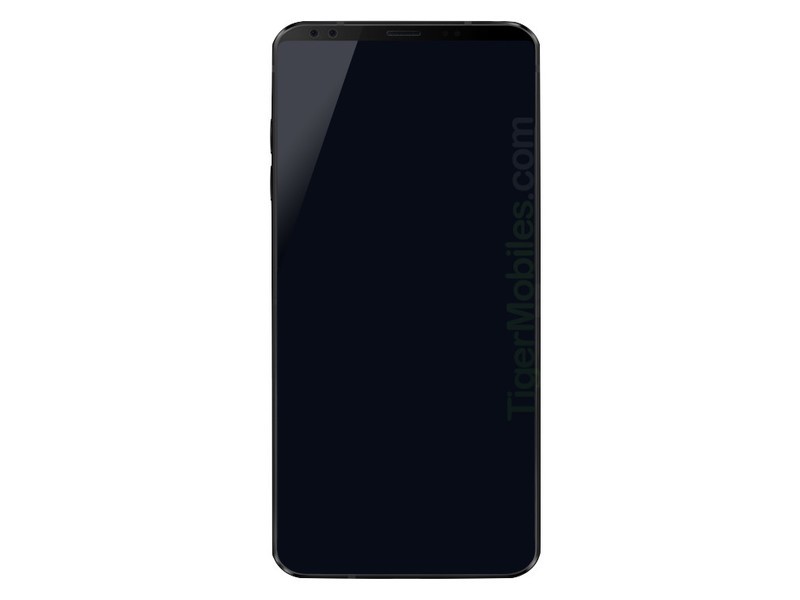
TigerMobiles recently shared a render of what’s supposedly our first look at the LG G7, and while it’s impossible to say for sure if this is what the phone will end up looking like, there’s nothing here that looks too far-fetched.
LG will more than likely be sticking with the 18:9 aspect ratio that it introduced with the G6 last year, and although we can’t tell from the render, we’re expecting an OLED panel to finally make its way to the G-series. It appears that LG will be trimming down bezels quite a bit compared to the G6, and if you look at the top left of the phone, you’ll see two front-facing cameras.
The LG G7 should be announced at some point in February, and according to a previous statement from an LG spokesperson, it’ll actually feature a completely different name and ditch the G-series branding.
Assuming this render is legit, does it have you excited about LG’s 2018 flagship?
LG will stop releasing new phones every year
Android’s notification dots are coming to Chrome OS
A new commit suggests that Chrome OS will soon get Android Oreo’s notification dots.
Oreo wasn’t the biggest Android update ever released, but one of the features it did add was notification dots. Notification dots are those colorful circles that appear next to your app icons, and long-pressing on an app with one of these reveals the notification(s) for that app above your app shortcuts.

A new commit was recently discovered by Chrome Story, and it suggests that these notification dots will soon make their way to Chrome OS. The commit itself is fairly long, but one of the highlights that leads us to believe notification dots are coming to Chrome OS includes “ShelfView::OnShelfItemChanged handles update the icons indicator.”
There are also a few comments regarding the commit, including “Add a notification for the app”, “Pin the app after the notification posts”, and “Draws an indicator in the top right corner of the image to represent an active notification.”
It’s unclear when exactly notification dots will make their way to Chrome OS, but it’s possible they’ll be added within the coming months.
Chrome OS will finally let you run Android apps in the background
ZTE plans on releasing more foldable phones like the Axon M
Axon M will be a series of foldable phones – not just phones with two screens.
Towards the end of 2017, ZTE made a surprise announcement with the Axon M. The Axon M is the latest phone to tackle the dual-screen smartphone, and it’s the first big attempt we’ve seen since the Kyocera Echo back in 2011. The Axon M is not a perfect phone, but unlike a lot of the competition, it took a risk to try something different.

In an interview with Engadget, ZTE’s Vice President of Marketing, Jeff Yee, confirmed that the Axon M will not be the last of its kind. Yee says that ZTE will release successors to the M, and throughout the interview, Yee reiterates that the Axon M is a foldable phone, not one with two screens.
While the current iteration of the Axon M very clearly has two separate screens, Yee says that ZTE’s end goal is to release a phone with one single display that can fold in and out depending on how much screen real-estate you want to use.
It’s unlikely that the next version of the Axon M will utilize this tech, but even so, it’s clear that this is the direction the mobile industry is very quickly heading. Samsung is reportedly planning to start production of its foldable smartphone by the end of 2018, and ZTE likely won’t be the last company to follow in its footsteps.
Aside from the single foldable screen, what else would you like to see from future Axon M releases?
Samsung said to start producing foldable smartphone in November
Google won the voice assistant popularity contest at CES
CES 2018 kicked off with a major Google presence on the show’s front doorstep. Nathan’s already explained why the company may have decided to appear at the world’s biggest tech show with such strength, but halfway through the show, I get the feeling that the gambit’s paying off. Google Assistant is eroding the lead established by Amazon’s Alexa, arguably the internet company’s biggest voice assistant rival, and it’s doing it with better devices, wider functionality… and free donuts for anyone at CES.
With Google bringing its Assistant to smart displays (not to mention more TVs), it’s obviously chasing Amazon’s own Echo Show assistant in a major way. It’s also done it with arguably better products: Lenovo’s 8- and 10-inch Smart Displays offer better-looking screens and more premium (read: less janky-looking) hardware than own Amazon’s debut smart display.
Adding screens to a voice assistant helps to discriminate between what Alexa and Google Assistant are capable of, and Google really tried to capitalize on this durin booth demos that ran through all the ways it can fold in Gmail, your Calendar and Google Maps into its assistant.
But I (and possibly you, Engadget reader) knew that. Google’s CES 2018 booth isn’t for a guy that’s been working tech shows for over six years: it was to demonstrate exactly what’s possible with voice assistants for people that didn’t realize they probably already had one on their smartphone.
The huge Google stand was in the lot right outside the convention center, sharing space a few hundred yards away from Engadget’s own trailer. This means anyone can get to it, and given how much it stood out from other exhibitors on the lot, it was an obvious draw for the public. Google had giant gumball machines offering free Google swag to all — including Home mini smart speakers — while more people lined up to tour the Google Assistant experience, a room filled with Google-powered gadgets, or just to simply claim a free donut (“20-minute wait”). We like free stuff.
Google Assistant’s arrival on cars is slightly more evolutionary, it’ll fold itself into Android Auto — software that already had voice recognition. This will add smart home controls from the driver seat, as well as access to YouTube and more. It’s a no-brainer, but for Google, it’s an easy way to increase the ubiquity of its Assistant. Of course, Amazon is moving similarly: Toyota is the latest to announce that Alexa support was coming to its new car fleet. The likes of Ford and Hyundai have also stated similar intents. At least with Android Auto, there’s, once again, a display to add visual answers to your verbal information requests.

Nicole Lee, Engadget
Amazon isn’t standing still: Alexa is coming to Windows PCs, which is great news for the retailer, but not for Cortana, Microsoft’s own voice assistant. Across the rest of CES, Google seemed to go toe-to-toe with Amazon’s voice assistant when it came to new smart devices. For every pair of Alexa-compatible smartglasses, there was a smart lock that had its hooks in Google’s option.
White goods maker Whirlpool continues to hedge its bets and offer both voice assistants. At this point, that might have been the wisest choice of all.
Additional photos: Nicole Lee
The Las Vegas strip’s first eSports arena opens in March
Last year, Allied Esports and Esports Arena announced plans to convert a Luxor Hotel and Casino nightclub into the Las Vegas strip’s first dedicated eSports arena. That arena is almost complete and is scheduled to open on March 22nd. To celebrate the opening, Esports Arena Las Vegas will host a multi-day, live-streamed tournament that’s invitation only. “With Las Vegas rapidly becoming a hub for eSports, Esports Arena Las Vegas at Luxor will be the city’s home for competitive gaming and interactive entertainment,” Allied Esports CEO Jud Hannigan said in a statement.
Along with the Las Vegas spot, Esports Arena has also debuted its mobile eSports gaming venue, Esports Arena Drive. It’s a semi that unfolds into a gaming arena, with a stage, social media center and VIP lounge. You can check it out in the tweet below. Next month, Esports Arena Drive will host a multi-day tournament at the Daytona 500.
The #RoadToVegas was a success! The #EsportsArenaDrive truck heads to the #DAYTONA500 with @DISUpdates and @704nascarheat for its next stop! #BigMeta pic.twitter.com/o6fEHAmH8O
— Esports Arena (@EsportsArena) January 11, 2018
The Luxor’s dedicated eSports space will have a competition stage, LED video wall, telescopic seating, daily gaming stations (meaning the space is not just for major events) and advanced streaming and production studios. While it may be the first full-time eSports venue on the strip, it probably won’t be the last. The Millennial Esports arena opened in downtown Las Vegas last year and other Vegas locations have expressed interest in creating eSports spaces, which could signal that this is the city’s next big move. Las Vegas saw a slight revenue loss in 2016 and preliminary numbers suggest that there were fewer visitors to the city last year than the year before. Gambling revenue as percent of total revenue also hit a record low, meaning other sources of revenue like eSports could be a welcome addition.
Source: Allied Esports
Waymo starts testing self-driving minivans in San Francisco
Waymo’s self-driving minivans are now ready for the road. The company has confirmed to TechCrunch that it’s testing its autonomous Chrysler Pacifica vehicles on San Francisco streets, where the “hilly and foggy” environment should give them “even more practice.” Suffice it to say the densely packed city could provide a greater challenge than Chandler, Arizona, whose spacious suburban landscape is well-suited to driverless car experiments.
The testing is a callback of sorts for Waymo — the formerly Google-owned company notes that it conducted some of its first tests in San Francisco back in 2009. Circumstances have changed a lot in the past 9 years, of course. Where self-driving cars had barely gotten started the first time around, they’re now advanced enough that driverless taxi services loom on the horizon. It’s still likely to be a long while before a robotic ride takes you from SoMA to North Beach, but there’s a good chance you won’t have to wait another 9 years for that to happen.
Source: TechCrunch
Visa will make signatures optional for chipped credit cards
It’s been about a month since American Express and Mastercard decided to stop requiring signatures for EMV chip credit cards. Now Visa is joining their ranks, making signatures optional for chipped transactions in North America.
“Visa is committed to delivering secure, fast and convenient payments at the point of sale,” said VIsa’s Dan Sanford in a statement. “Our focus is on continually evolving the market towards dynamic authentication methods such as EMV chip, as well as investing in emerging capabilities that leverage advanced analytics and biometrics. We believe making the signature requirement optional for EMV chip-enabled merchants is the responsible next step to enhance security and convenience at the point of sale.”
Contact and contactless chip-enabled points of sale are taking over, of course, for their enhanced security and convenience for retail transactions. Visa notes that it has deployed more than 460 million EMV chip cards and readers at over 2.5 million locations.
Source: Visa
 AIVAnet