


CES 2018: What to expect
It’s January, which means that Las Vegas, or the bit that pretends not to be Las Vegas for tax reasons, will play host to CES. The Consumer Electronics Show is the event that kicks off the technology world’s annual calendar, and 2018 will see thousands of companies descend upon Nevada to show off their wares. Many will claim to have the solution to whatever problem you may have, but we’ll be on the ground to peer through their flashy promises.
If last year’s CES had a theme, then it was an attempt to broaden its horizons beyond smartphones, tablets and TVs. Technology companies have mined every last drop of good ideas from the traditional gadget world, which is why many chose to try something new. Our Best of CES winners from last year included a smart bra-style breast pump, a self-balancing motorcycle and smart tech that will help farmers. CES will set the tone for the next year in technology, so while we make our way there, here’s a quick run-through of all the things we’re likely to find in the desert.
Personal Computing
There won’t be millions of laptops launched at CES, but you can expect plenty of talk about the devices that are coming. The theme is likely to be low-power, super-efficient devices that can truly be described as having an “all-day battery” without lots of caveats. In December, HP and ASUS launched Snapdragon-powered Windows 10S laptops that can even be upgraded to the full-fat version of Windows. These devices will also come packing always-connected LTE modems, as the worlds of smartphones and laptops start becoming one. Intel, which is feeling the pinch from ARM chip makers like Qualcomm, will probably have something of its own to show off, even if it is just a concept device.
Mobile
If you’re looking for the next blockbuster phone you want to buy, then CES probably isn’t the show for you, since we’ve got Mobile World Congress coming up shortly afterward. For a brief second, there was a rumor that Samsung would shock everyone by announcing the Galaxy S9 at the show, but that was rapidly quashed. But what you can expect to see are plenty of budget handsets that will offer up features from last year’s flagships at cheaper prices. Huawei’s sub-brand Honor will be doing something at the show, and it’s plausible that ZTE will do the same. Oh, and we’ll keep our eyes peeled on Sony’s corner because it’s always turned up to CES with something nice in its back pocket.
Wearables
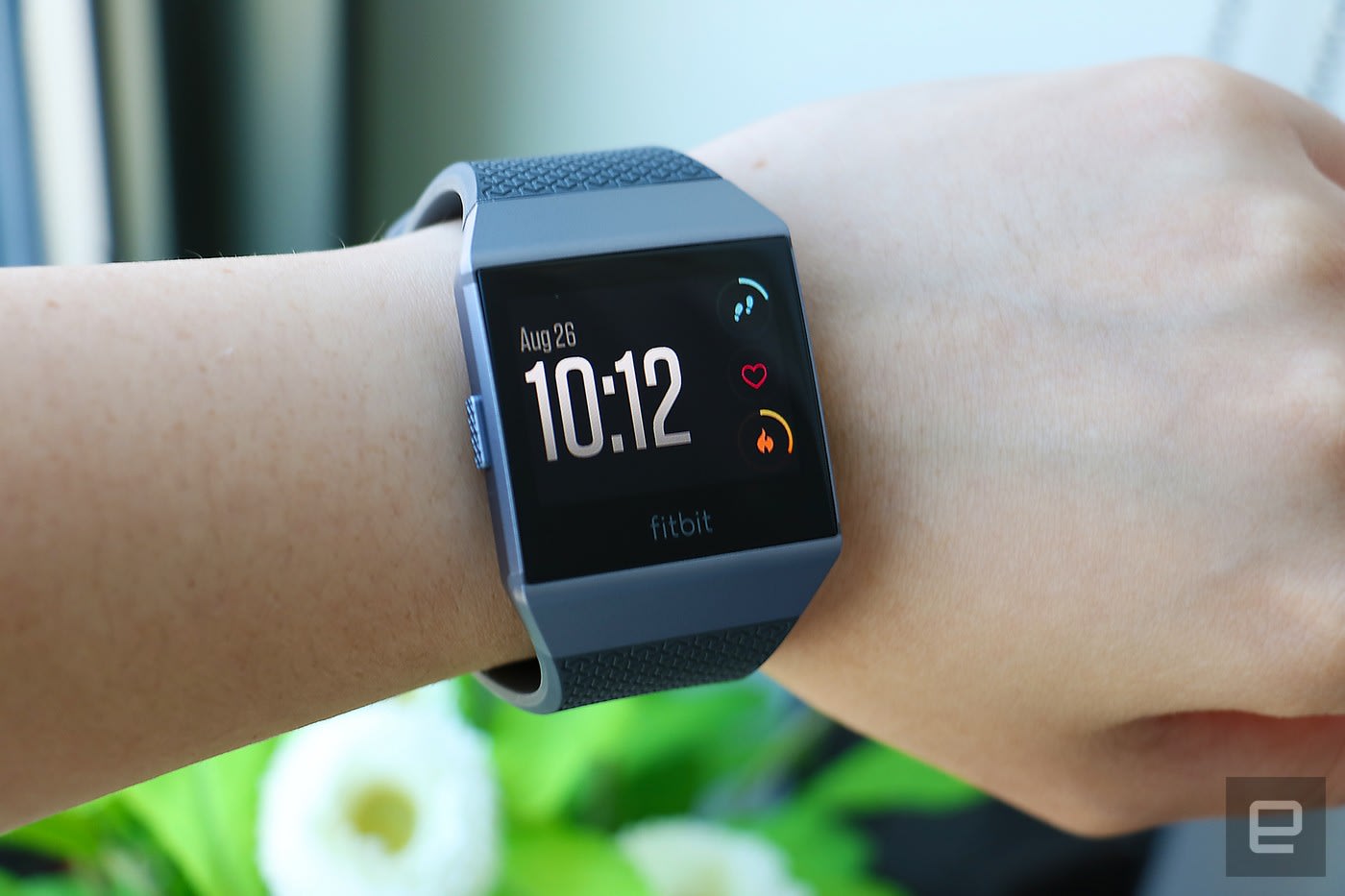
After a disastrous 2017, it’s looking to be a quieter year for wearables since the industry has failed to convince mainstream users to buy smartphones for their wrists. It’s possible that we’ll see Android Wear devices from more fashion brands, especially since the Fossil Group produces timepieces for so many top-tier houses. If you’re looking for big innovations in the smartwatch world, then you should probably gear yourself up for some disappointment.
Instead, it’s entirely possible that we’ll see wearable companies branch out further into the broader health and fitness world. Withings / Nokia Health already has a whole ecosystem products, from a sleep sensor, weighing scale and wireless thermostat to a smart hairbrush. Don’t be surprised if other companies try and move in a similar direction in 2018, or even pivot toward the serious healthcare market.
Since the consumer-level watch world has slowed, many companies — including Apple and Fitbit — are looking to more serious projects. Both companies are running studies to examine if fitness trackers can detect heart conditions, and we’ve already seen others building blood glucose monitoring devices. We’re on the lookout this year for plenty more of these, which will likely wind up being bought via your HMO.
TV and Home Entertainment
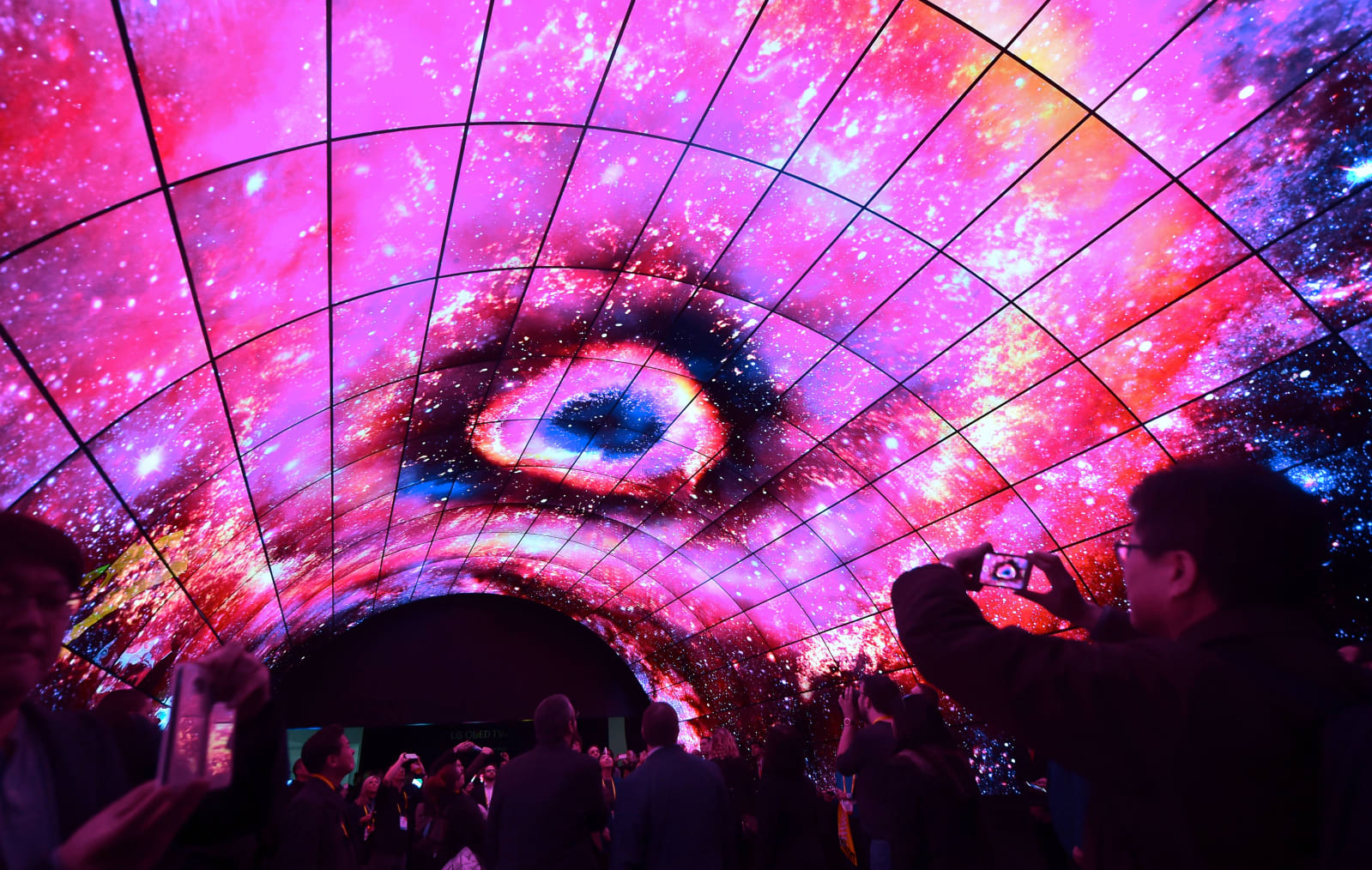
No matter how far CES broadens its horizons, it’ll always have a large space reserved in its heart for the TVs of the future. This is, after all, the show where the latest and greatest displays make their debuts in the hope of winning over a prime position in our living rooms. And 2018 looks to be the hottest contest for the public’s affections since Edward and Jacob went toe-to-toe in Twilight. (As an aside, shortly after Twilight was published, the big blows between HD-DVD and Blu-ray raged at CES 2006, a fight that many are embarrassed to have been invested in).
In the sparkly vampire corner is team OLED, backed by LG and Sony, which both offer 4K TVs that harness Dolby’s Dolby Vision HDR standard. Samsung is the hairless werewolf, packing QLED TVs that offer HDR10+, a rival standard designed to help Samsung avoid paying Dolby royalty cash for its research.
Of course, if your wallet won’t stretch to a ticket that reaches the rarefied air of a premium set, don’t be too disheartened. Lower-end manufacturers, like Vizio, TCL and Hisense, are now knocking out respectable, realistically-priced sets that you aren’t ashamed to have in your home. Not to mention that, in the last few months, we’ve seen TVs from Philips and RCA launch with built-in Roku streaming. So expect to see plenty more displays that offer decent quality and excellent streaming for very little cash.
But for those who just want to ogle the flashiest TVs out there, CES will probably have something to whet your appetite, too. At 2017’s show, LG debuted a TV that was just 2.6mm thick, making it so thin it had to be wall mounted, because it couldn’t stand up on its own. LG also showed off a display that had speakers built into the screen, reducing the need for an additional soundbar, a feature that Sony has also embraced.
Cars
Traditionally, cars aren’t considered consumer electronics, but as they get smarter and get electric motors, their justification for being at CES increases. Ford CEO Jim Hackett is the show’s keynote speaker this year, and you can expect that a lot of mobility companies will be showing off their wares. And there’s plenty to be excited about, with a whole raft of tech startups looking to supercharge the staid world of automotive engineering. We’re expecting to see companies building new driver-safety AI systems, cheaper LIDAR sensors and smart-charging devices. All of which will contribute to the infrastructure necessary to make electric, self-driving vehicles cheaper, faster and better.
Similarly, it won’t just be electric skateboards that fill in the void around personal electric transportation at the show. We’ll be looking out for electric scooters, self-balancing hoverboards and other gear to help you get around cities faster. We already know that OjO is teaming up with Ford to produce a range of electric scooters, and would be certain that we’ll find plenty more battery-powered transports at the show proper. Not to mention all of the concept vehicles that we can expect to see, complete with futuristic blue LEDs that make sure you know that it’s… you know, futuristic.
Gaming

CES has played host to a few big gaming launches over the years, like the Xbox and Oculus Rift, but it’s hardly a gaming show these days. That said, we can expect to see plenty of gaming companies appearing, even if they will keep the bulk of their powder dry for E3 later on in the year. Beloved brand Razer normally makes a big splash at the show, but that may not be the case this year — after all, it only recently released its first smartphone. It’s likely that all attention will be on its foray into the mobile space and encouraging users to treat it as a gaming device in its own right. That said, we may see some accessories for the Razer Phone, since the company is all about building ecosystems around its products. In addition, it’s plausible that we’ll see another of the Razer’s “project” devices, which aim to push the boundaries of what gaming can do. In recent years, we’ve seen triple-screened laptops and modular PC components make their bow in Las Vegas.
Of course, it’s likely that we’ll see plenty of flops and pixels being doled out from the back of NVIDIA’s truck, but that’s not where the gaming world is focused right now. Since so much of the hard work — and money — is sloshing around the eSports world, we’re expecting that to be a big focus of the show. In the last year, we’ve seen a host of big names launch eSports projects, from Nickelodeon and the NBA to… Fernando Alonso.
VR may not have set the world on fire just yet, but it’s likely that we’ll see something from the AR and VR space at the show. Microsoft, which is pushing its Mixed Reality Platform, already has partners in HP, Lenovo, Samsung, Acer, ASUS and Dell, and more could be on the way. We’ll also wait with baited breath for developments from both HTC or Oculus, both of which are leading the charge in the space.
Smart Home
We already have smart doorbells and smart thermostats, but what about making other parts of our homes as smart as that? It’s likely that CES will demonstrate plenty of cheaper and better-looking spins on existing ideas, but perhaps the biggest change will be on the inside. After all, Google and Amazon have spent the last few years trying to make Alexa and Assistant work with as many devices as possible. It’s probable that we’ll see a whole new raft of gizmos that integrate with your favorite voice interface. LG jumped ahead of the CES line by unveiling its ThinQ speaker with Google Assistant integration, and we’re expecting plenty more where that came from.
Amazon has already shown off its own home-access platform for deliveries, so why not widen that to third-party hardware? And since it’s a neck-and-neck race between these two companies, expect Google to follow suit, letting you open your front door simply by speaking. Not to mention all of the see-through fridges, connected crockpots and smart bathroom facilities that are likely to be on show. We’re also expecting, like at IFA last year, to see a big push in the smart appliance space, such as the third-generation LG Styler and even more comprehensive smart control systems.
Everything Else
CES is a grab bag of technology that is designed, by and large, to make our future better, so there’s always room for a surprise. Honda has already revealed that it will be bringing a quartet of robots to the show — including a smart wheelchair to help folks get around and an autonomous delivery robot. Last year saw a surge in companies offering next-generation WiFi gear, including ASUS, Norton and Linksys. We’d expect to see plenty more to come, with a focus on keeping your Internet of Things devices secure, and ensuring your kids can’t Google anything too erotic when you’re not looking.
Away from the hardware front, we’re expecting to see plenty of debate about how much political and social power technology companies currently hold. Many are anxious about what Silicon Valley can do, and has done, over the last few years, with blind optimism giving way to mistrust. Consequently, CES is playing host to several hand-wringing seminars where technologists debate the best way to move forward.
Some of this is playing out in the startups that are exhibiting at the show, a handful of which are looking to tackle online bullying and digital extremism. There will also be some talk about how technology companies can do better, although much of this talk will be for naught if the heavy hitters — Facebook, Google, Microsoft, Amazon and Twitter, amongst others — aren’t at the table.
A hospital in Japan will use robots to help out the night shift
In Nagoya, Japan, a city that once held an entire museum dedicated to robotics, a hospital will soon add robots developed by Toyota to its medical staff. No, they won’t be scrubbing in for surgery: In February, the Nagoya University Hospital will deploy four bots to ferry medicine and test samples between floors for a year.
Nagoya hospital to use robots for deliveries of drugs, materials:The Asahi Shimbun:The Asahi Shimbun https://t.co/bhlkzM0Rnp
— Asahi Shimbun AJW (@AJWasahi) January 1, 2018
The robots are essentially mobile refrigerators with a 90-liter capacity that rely on radar and cameras to zoom through the hospital. Should they run into humans, they’re programmed to dodge them or politely voice ‘Excuse me, please let me pass,’ according to The Asahi Shimbun. Staff can summon the robots and assign a destination for their medical payload using a tablet.
Nagoya built the robot system in partnership with Toyota Industries, a subsidiary of the automaker that produces auto parts and electronics. The trial run will run the robots between 5pm and 8am during the night shift when fewer people are walking the floors. Should the trial go well, the facility may choose to deploy more units.
Source: The Asahi Shimbun
BDSM 2.0: Castration and extortion in the digital age
It’s a mild but muggy September day in Beverly Hills, California, when Harley and I meet at her new neighborhood nail salon. Today, the 6-foot-tall Silicon Valley expatriate is dressed in a leatherlike jumpsuit so short and low-cut that it feels like a mere suggestion of clothing. A shock of magenta hair frames the constellation of stars tattooed across her left temple. Her unnaturally plump lips are so glossy and brightly colored they almost look lacquered. She wears platform boots to accentuate her already-imposing frame. An assortment of colorful, outsize tattoos runs the length of her seemingly infinite limbs.
NSFW Warning: This story may contain links to and descriptions or images of explicit sexual acts.
With her now-pink claws freshly coated, she looks nothing like the woman who appeared on The Doctors early that morning. During a taping of the Oprah-approved daytime talk show, in which she was accused of taking advantage of the poor and mentally unstable, she wore a flowy, high collared pirate’s top, reminiscent of Seinfeld’s iconic “puffy shirt.” Her face tats have been covered in stage makeup, but her signature glossy lips and flaming-red hair are a beacon of eccentricity in a sea of uniformity.
The segment begins with one of those nauseating quick-cut videos expertly exaggerating every aspect of Harley’s work in an attempt to alert the audience that something sinister is just around the corner. Then it’s time to go in for the kill. The panel of four health-care professionals will spend the better part of 10 minutes hurling accusations, pointed questions and mock compliments Harley’s way. For the majority of the segment, she’ll sit, surrounded by a studio audience that looks plucked from a J.C. Penney catalog, nodding her head with a defiant smirk. On the occasion that they let her speak, Harley will defend her work unemotionally — a stark contrast to the dramatics of The Doctors’ firing squad.
Mistress Harley is no stranger to this sort of hostility. She’s built (and trademarked) a name for herself as the world’s only Techdomme, engaging in a new breed of BDSM that takes place largely online and uses financial control and personal data as currency.
She can make up to $10,000 a day using basic IT tools and lightweight hacking to control men who get a thrill from being extorted, humiliated and, basically, ripped off. Financial domination is nothing new, but Harley has created a niche for herself, using skills she picked up working in software development in Silicon Valley. She cut her teeth working in QA at gaming startups before becoming a product manager, where she learned many of the skills she uses as a data dominatrix. When she realized she could apply those skills to her interest in BDSM, she left the tech industry and never looked back.
“I worked in an office with a kegerator, and I still had to be there fucking 15 hours a day sometimes,” she said. “I still got paid less than I was worth, and I know that because now I’m getting paid exactly what I’m worth.”
Harley spends her nights out at the bar or watching amateur wrestling matches. She spends her days lounging on the couch with her husband, watching Netflix. She has her groceries delivered from the grocery store around the corner. Her husband, who often matches his clothing with his own shock of bright pink hair, serves as her personal chef, bag handler and constant companion. On occasion her clients will splurge on a trip for the couple — a point that had The Doctors frothing at the mouth.
This is the colorful, comfortable, even enviable life of a woman who claims to make obscene amounts of money without ever having to do anything. It’s no wonder, then, that even in a post-50 Shades of Grey world Harley is a polarizing figure. This outsize personality who defies convention at just about every corner is exploiting her sexuality in what could be the ultimate lifehack.
She’s written a veritable library of self-published e-books with titles like The Consensual Blackmail Manual, the Holy Harley Bible and Scam Book for Guys Who Like to Lose, which contains 22 pages of, well, nothing. Her catalog of more than 700 custom clips, which sell for $10 per minute, includes titles like “Cameltoe Panties Pussy Worship” and “Christmas Pervert.” She sells one-on-one Skype sessions for the same price. She even has her own Android app, which she can use to track her clients’ whereabouts and read and respond to their text messages at a cost of $100. She offers “feminization and sissy training” for up to $300 a session and in-person domination for up to $3,000.
For many of her customers, though, the real thrill comes from blackmail. Harley can demand anywhere from $50 to $10,000 by threatening to expose her submissives’ secrets. She maintains a “Loser Hall of Shame” for “Exposed Sissies and Faggots” who send her unsolicited nudes or fail to deliver on scheduled payments. For those who don’t have time for all the back and forth, subs can pay $50 to be featured on the page and another $100 to be removed.
Her most loyal customers sign legally binding debt contracts, agreeing to pay her a set amount over time — usually in the tens of thousands of dollars. At least one man has even given her full control of his web cameras and intercom systems, which she uses to rouse him from sleep for impromptu worship sessions by blasting Wagner throughout his house.
The day before her TV premiere, she offered me a complimentary desktop takeover — one of her most popular services — to show just how easily she can ruin the life of a defiant client. The process starts by installing TeamViewer, a basic enterprise program that allows IT professionals to access a user’s desktop and troubleshoot issues remotely. From there she resets permissions to make herself the administrator and turns on parental controls that make pornography — save for her site — off-limits. She’ll install keyloggers to keep track of your every move and ransomware that will lock you out of your computer if you fail to pay her at agreed-upon intervals.
I gave Harley access to a relatively new work machine and let her get to the business of ruining my life. Unfortunately for her, I’m basically shameless. While she wasn’t able to pull up anything incriminating in my Google searches or on my hard drive, she quickly gained entry to my work email and located my most sensitive professional contacts. Had she, for example, come across a stash of porn or a secret folder of dick pics, she very easily could have forwarded them to my boss. She also very quickly uncovered all of the passwords I’d saved in Chrome — an embarrassingly large number — and pointed out that she could easily access my PayPal account and wreak havoc on my personal expenses.
“Just as in all BDSM, there’s that power exchange,” Harley said. “There’s somebody who wants to give power so that the other person can use that power. And so once somebody is inside your computer, inside your email, they know all your contacts, they know all your social media, they know who you work for, it’s very easy to force someone to fulfill the fantasies that they’ve always had.”
I didn’t find anything thrilling or arousing about watching Harley’s phantom cursor scroll across my screen. That said, I am, as Harley so kindly pointed out, “a hard man to blackmail,” largely because I have so little to hide. That, and, despite having foolishly saved a couple of sensitive passwords to Chrome, the computer I was using was largely a blank slate.

I worked in an office with a kegerator, and I still had to be there fucking 15 hours a day sometimes. I still got paid less than I was worth, and I know that because now I’m getting paid exactly what I’m worth.
Mistress Harley
I’ve dabbled in power play and even find it mildly amusing, but I was having a hard time understanding the appeal of virtual BDSM. A little spanking, a light choking, sure — but desktop sharing? I was more bored than anything by my experience at Harley’s hands, so I reached out to one of her submissives to better understand the appeal.
Michael, a name I’ll use to preserve his anonymity, has been involved in different aspects of BDSM for the past 20 years. He found Harley through a Google search in 2016 and soon after entered into a 10-year, $15,000 debt contract at 10 percent interest. He says he now pays out about half of his post-tax income to her every month. For Michael, financial submission is the ultimate sexual experience, and doing it online allows him a level of anonymity that he can’t achieve in the relatively small community he lives in.
“What I’m most interested in is being under someone’s control, being under someone’s direction, and money in our society is very important in regards to what you can achieve really,” Michael said. “It’s unfortunately that way, but that’s the way it is. It is the ultimate form of control to me. It’s just, a phenomenal all-encompassing way to give up yourself to someone else.”
Despite what The Doctors and other detractors might say, Michael says there’s nothing harmful about financial domination. He lives a modest lifestyle and his relationship with Harley is far from a negative influence. It allows him to be who he truly is as a person and a sexual being. It’s hard to argue with the exchange of money between two seemingly healthy, well-adjusted adults, but Harley’s relationships aren’t all that morally and ethically black-and-white.
Two years ago Harley entered into a dom-sub relationship with a German IT worker with feminization fantasies. They went through the standard desktop takeover and she installed her custom Android app on his phone. Their relationship grew quickly and Harley regularly had him dressing in a female drag, but he wanted to take his desires even further.
He wanted to be castrated.
He said he’d been dreaming about it for 20 years and had found a doctor in Guadalajara who would do the surgery. After some contemplation and a head-check with her psychologist, Harley agreed to help as tough-love moral support. She says she researched the health risks involved and the doctor he selected. She helped him with a budget for travel, surgery and recovery and she stayed in touch with him immediately before and after he went under the knife. The surgery was successful. Harley’s sub had his testicles removed and replaced with unnaturally large silicone implants.
“I’m invested in knowing that my subs are happy and that we’re in a symbiotic, reciprocal relationship.”
Harley says she treated the request like any other. “The person this person wants to be is a person that does not have any balls,” she said matter-of-factly. When I pointed out that it seemed like a greater emotional investment than her day-to-day desktop takeovers and sissy-shaming, she betrayed her blasé attitude.
“I’m invested in knowing that my subs are happy and that we’re in a symbiotic, reciprocal relationship, because that’s ultimately the point of BDSM and especially domination and submission,” she said. “It’s that both parties are receiving what they need from the relationship. So I’m invested in knowing that he’s healthy, invested in knowing that he’s happy, invested in knowing that he receives pleasure from serving me. But I didn’t necessarily have an investment in, like, whether he went through with the surgery or not.’”
If you can believe Harley, her line of work is first and foremost about making money — lots of money. It’s about power and sexual desire divorced from reason and morality, and she doesn’t care what you think about it. In fact, depending on how you look at it, pushing a client into castration may not actually be the most disturbing request Harley has granted. She occasionally engages in roleplay scenarios that involve degrading subs based on their race, religion and attraction to the same sex, and laughs off critiques that what she is doing is harmful. Harley would have you believe she’s amoral and unapologetic, but, she says, she does have limits.
“Crime is a hard limit for me,” she said. “I’m also not into scat. So, like, if a guy wants to poop on himself, he can do that for someone else. Otherwise, it’s just mostly things that are illegal. If I feel like someone is mentally ill or unbalanced in anyway, I will not continue with that person because I feel like that’s unsafe for me.”
She says child pornography is an obvious dealbreaker. If she were to find it on a client’s computer, she says, she’d end the relationship and report them, but not all scenarios are so universally immoral. Harley cites a particularly odd request from a client whom she eventually cut off.
“He wanted me to steal pictures of his mom, and he had those pictures in a folder labeled ‘Mom,’” she said. “Then he paid me to Photoshop women’s porn bodies onto pictures of his mom’s head and then Photoshop him into the sex scene so that it looked like he was having sex with his mom. I am not a Photoshop expert, so these were all, like, South Park bad, but that’s what he wanted.”
She said at first she thought it was just weird, but the request was always the same and she eventually ended the relationship because it “felt gross.”
Castration, race play, simulated incest. Yes, it’s consensual. Yes, it’s roleplay. And, yes, it’s a job, but when you look at the scope of her work, it’s easy to see why people find the Techdomme so threatening. For all of her colorful personality and over-the-top appearance, Harley operates in a moral, ethical gray area.
Throughout my time with Harley, I found myself constantly checking my own prejudices. I consider myself an open-minded person when it comes to the very personal sex acts that happen between consensual adults, but I couldn’t quite reconcile some of Harley’s more controversial practices. I may never understand what would compel her to coach a client into castration or to use the word “faggot” so liberally, but Harley doesn’t care what I think. She doesn’t care about you or The Doctors. In fact, what you think of Harley may say more about you then it does about her.
Harley stands behind her work, unashamed and undeterred by the repercussions. When I asked her if her family knew what she did for a living, she said she’d told her mother and assumes everyone will eventually figure it out. In any case, she’s not apologizing.
“I’m pretty distinctive-looking, and so it’s not like you can mistake me for someone else,” she said. “And I don’t care. Ultimately, I’m living the life I want to live and anyone who has a problem with that can go fuck themselves.”
iPhone X’s Already-Lowered Shipping Estimates in Early 2018 May Remain Too High
Multiple analyst reports last week pointed towards Apple reducing its shipment forecast for the iPhone X in Q1 2018 from 50 million units down to 30 million units. Today, analyst Nicolas Baratte of investment banking company CLSA followed up those reports with a note that stated the iPhone X’s shipment forecasts “remain inflated,” and that any Q1 2018 volume estimate over 35 million units “will prove too high” (via CNBC).
In a research note sent out to its clients today, CLSA said that Apple’s iPhone X shipment numbers are “unlikely to improve” upon the company’s Q4 2017 sales. Similar to the reports shared last week, the reasoning behind the analyst’s prediction is the fact that those who wanted an iPhone X immediately — and were accepting of the high price tag — have already received one. Average consumers looking at the iPhone X might not see the value in the $1,000 smartphone and opt to purchase another model in early 2018.
CLSA tracked iPhone X shipment volumes at 30 to 35 million in Q4 2017, and noted that it is “very skeptical that volumes will increase” in early 2018.
“We maintain that 2017 fourth-quarter iPhone X volumes were at 30 to 35 million and we are very skeptical that volumes will increase in the first quarter of 2018,” CLSA analyst Nicolas Baratte wrote in an note Tuesday. “This does not reconcile with the expectation of pent-up demand or push-out to the first quarter of 2018 in our opinion: consumers who wanted to get an iPhone X in December 2017 already have it.”
Although the 30 to 35 million range has become a popular estimate for iPhone X shipment forecasts in Q1 2018, other analysts have predicted higher volumes for the smartphone. Loop Capital increased iPhone X shipment numbers to between 40 and 45 million units in Q1 2018, while analysts at Jefferies forecast about 40 million iPhone X sales for the quarter.
CLSA also echoed previous rumors for the iPhone X in 2018, predicting a “lower priced X-gen option,” meaning that the firm believes Apple will lower the price of the current iPhone X “if volume proves problematic.” CLSA also expects to see an iPhone X Plus of some kind in 2018, which follows rumors that began last August and said that Apple could launch an iPhone with a 6.4-inch OLED display in 2018. Ming-Chi Kuo furthered those reports last November by laying out his own 2018 iPhone lineup prediction: 5.8-inch and 6.5-inch iPhones with OLED displays, and a 6.1-inch iPhone with an LCD display.
Related Roundup: iPhone XBuyer’s Guide: iPhone X (Buy Now)
Discuss this article in our forums
Founder of troubled LeEco refuses to return to China
The founder of LeEco has reportedly refused to return to China to answer questions about his company’s perilous financial situation. Reuters believes that Jia Yueting, who was ordered to return to his homeland by China’s Securities Regulatory Commission has opted to remain in the US. In a statement, the elusive figure said that he was focused on fundraising for the LeEco-affiliated Faraday Future and couldn’t travel. Consequently, Jia sent his brother, Jia Yuemin, to report back to authorities.
LeEco began as an entertainment company, but quickly developed into a behemoth with interests in countless subsidiaries. Unfortunately, Engadget’s blockbuster investigation into LeEco found that despite its size, it had no financial foundation to underpin its ambitions to become even bigger. Former employees described LeEco’s complex ownership structure as little more than a “shell game” to hide loss-making enterprises.
2017 saw the company hit a cash crunch, and it was forced to sell-off assets and fire employees to pay off debts that are believed to have been as high as $1.54 billion. Jia Yueting refutes the idea that LeEco isn’t profitable, and says that one failed payment in July prompted asset freezes and early loan recoveries. At the start of December, the businessman was placed on an official blacklist of defaulters as a way of encouraging him to repay his debts.
Plenty of questions linger over just how much money is sloshing around LeEco’s corridors, and why its former CEO has devoted this much time to Faraday Future. Not to mention the optics of remaining in self-imposed exile, letting your family take the heat from regulators who want to know what the hell is going on.
Source: Reuters
Smart lock maker Otto folds before releasing its first product
On a landscape increasingly driven by smart devices, a digital smart lock seemed like an obvious addition to the raft of home automation products already on the market. But Otto, the company that came closer than any other to making the product a sellable reality, has now closed its doors — just four months after showing off its device to the world.
Otto founder and CEO Sam Jadallah reveals in a lengthy Medium post, titled “So Close”, that the startup came so close to getting its digital lock on the market that there’s a warehouse full of them ready to go. But the company was due to be acquired by a bigger firm — one with more resources and experience — and the deal fell apart at the last minute. There was no Plan B, so in the warehouse the product stays and, as reports on Twitter suggest, most of Otto team are left out of work.
Or, “I kept 70 people late at the office 6 days a week for a year, then laid them off with 2 days notice 10 days before Christmas, and then bragged about it.” https://t.co/xyLcAbONbG
— Thomas H. Ptacek (@tqbf) January 2, 2018
No names have been mentioned regarding the acquisition, and frustratingly for Otto, the buyer apparently never gave a reason for its decision to pull out of the deal. But there’s no doubt that all parties involved had confidence in the product’s potential, even with its $699 price tag, which the company believed was made more palatable by the $1,000 iPhone normalizing the high cost of must-have tech.
Speaking to Techcrunch, Jadallah points to the volatility of Silicon Valley as a fact of life for startups, and notes that even those onto a sure thing aren’t immune from it. “The life of the startup is a binary thing. To go from what could be an incredible high to crushing low in a matter of hours is what we do.” Still, despite its failure to launch, the product got interest — serious interest. It’s only a matter of time before another company takes smart home locks mainstream, or as Otto would undoubtedly prefer, steps in to put the locks stored in that warehouse on doors, where they belong.
Source: Medium
Scientists get closer to replicating human sperm
Scientists have taken an important step forward in recreating the way the human body makes sperm, which could one day mean creating artificial sperm and eggs for infertility treatment. The researchers, from the University of Cambridge’s Gurdon Institute, are thought to be the first team to have reached the “halfway point” — a significant milestone — on the path between stem cells and immature sperm.
This pathway — which the team are attempting to track and understand — involves embryonic cells turning into immature sperm via a series of complex steps known as meiosis. Cells follow the same journey for around eight weeks, before taking different directions depending on whether they’re to be sperm or eggs. Previously, the team had managed to track this pathway to the four-week mark. Now, using new technology in the form of miniature artificial testicles (called “gonadal organoids”), it’s on track to pass this point and gain new, deep insight into the process of sperm creation.
The work could provide important clues to the cause of infertility, and potentially offer new hope to infertile couples. Clinics in Britain are banned from using artificial sperm or eggs, but if scientists could perfect the production of germ cells (which the team says could happen in around a decade), regulators could face pressure to change the rules. Gay couples could have a baby that’s genetically related to both of them, for example, or women could opt for lab-grown eggs instead of taking fertility drugs.
But while the practical applications of this type of work have been demonstrated on mice, the benefits for humans remains fairly far away. Speaking to the Guardian, UCL director of reproductive science and women’s health Helen O’Neill said, “Much of the ambition to recreate reproductive processes in the lab is to further our understanding of these processes. It is surprising how little we understand about the fundamental dynamics of the beginnings of life.”
Via: Guardian
Adidas will keep the Futurecraft 4D hype rolling in 2018
Despite tons of hype, 3D-printed sneakers are still hard to find. While we know that Adidas plans to produce more than 100,000 pairs of its Futurecraft 4D kicks by the end of this year, the leakers at Yeezy Mafia indicate they will remain an extremely limited item for now. Recent posts have shown off some samples including a white/ash green pair due for friends and family only, and the blue-tint pair above, which is a collaboration with Taiwanese shop Invincible. That should arrive in March at Consortium stores (the ones that usually have its hard-to-get releases) for $400. Still, 2018 is “the year of 4D” and its Digital Light Printing process so keep an eye on those apps.
#XmasCalendar Day 11
FUTURECRAFT 4D FAMILY & FRIENDS
Footwear White / Ash Green, in Feb/March 2018 #NotForYou pic.twitter.com/fyTrs0T9pq— Yeezy Mafia (@theyeezymafia) December 11, 2017
FUTURECRAFT 4D RUNNER INVINCIBLE
Blue Tint
Releasing in March at Consortium stores only in very limited quantity ($400) pic.twitter.com/iTWP4VBT84— Yeezy Mafia (@theyeezymafia) December 23, 2017
2018 is the year of 4D
A post shared by Yeezy Mafia (@yeezymafia) on Dec 29, 2017 at 6:40pm PST
Via: Sneaker News
Source: Yeezy Mafia (Instagram)
Apple Will Replace the Battery in Your iPhone 6 or Later Even if It Passes a Genius Bar Diagnostic Test
Last week, Apple reduced the price of out-of-warranty iPhone battery replacements from $79 to $29, following a wave of controversy over power management features in older iPhones. In a note to customers, Apple said its new policy applied to “anyone with an iPhone 6 or later whose battery needs to be replaced”, but failed to specify if this eligibility criteria was dependent on whether a given iPhone failed an official Genius Bar diagnostic test.
This morning, French tech blog iGeneration reported that an internal Apple Store memo has been circulated which states that if a customer asks for a battery replacement on an iPhone 6 or later, then the Genius Bar should allow it, even if their phone passes Apple’s own diagnostic test.
Apple has since independently confirmed to MacRumors that it will agree to replace an eligible battery for a $29 fee, regardless of whether an official diagnostic test shows that it is still able to retain less than 80 percent of its original capacity. The concession appears to have been made to mollify the anger of customers stoked by headlines suggesting that Apple artificially slows down older iPhones to drive customers to upgrade to newer models.
Anecdotal reports also suggest that customers who paid $79 to have their battery replaced before the new pricing came into effect on Saturday, December 30, will receive a refund from Apple upon request. Please let us know of your own experiences in the comments below.
Apple last week was forced to apologize over a lack of transparency regarding its process of dynamically managing the peak performance of some older iPhone models with degraded batteries to prevent unexpected shutdowns. When iOS 10.2.1 was released in February, Apple vaguely referred to “improvements” it had made to reduce occurrences of unexpected shutdowns. It only chose to explain that the changes it made may result in temporary slowdowns on some older iPhone models with degraded batteries after controversy recently reignited.
Apple can run a diagnostic on your phone’s battery remotely – you don’t need to visit an Apple Store. To initiate the battery diagnostic/replacement process, contact Apple Support by phone, online chat, email, or Twitter. Alternatively, you can schedule a Genius Bar appointment at an Apple Store with the Apple Support app. You can also inquire about a battery replacement with select Apple Authorized Service Providers.
Discuss this article in our forums
A US customs computer snafu caused major airport delays
US Customs and Immigration computers went down at various airports around the US yesterday, causing some havoc for travelers returning from holidays. It left hundreds of folks stuck in lines for a couple of hours in a part of the airport where there’s normally not a lot to do. The agency didn’t say what caused the problem, but said “there is no indication the service disruption was malicious in nature.”
As Reuters notes, a similar outage occurred at the same time last year, so it might be that the customs systems were slammed with Christmas travelers and couldn’t handle the excess traffic. Agents were still able to process passengers using an alternative system, albeit at a much slower rate.
Passengers depend heavily on some pretty wonky airport tech. Many airlines use ancient reservation systems, and even new ones like the Amadeus Altea system can go down, causing airport chaos. Despite those inconveniences, let’s not forget that 2017 was the safest year for flying ever, with zero fatalities on scheduled passenger jets.
Day 1 of 2018 in America. The entire #JFKAirport customs system is down. pic.twitter.com/LxaKT6wYEX
— Phineas James (@PhineasJFR) January 2, 2018
Source: Reuters
 AIVAnet