


Over 100 Million iPhones Now in Use in U.S., Nearly Two-Thirds Are iPhone 6 or Later
More than an estimated 100 million iPhones are being used in the United States, according to new data shared by Consumer Intelligence Research Partners [PDF]. At the end of the September 2015 quarter, more than 101 million iPhones were in use, and two-thirds of those iPhones were newer iPhones that have been released in 2014 and 2015.
An estimated 58 million of the 101 million iPhones in use were the iPhone 6 or 6 Plus, while four million were iPhone 6s and 6s Plus models. The iPhone 6, 6s, 6 Plus, and 6s Plus are the four iPhones that have larger 4.7 and 5.5 inch screens, and the 4.7-inch iPhone 6 appears to be the most popular model. CIRP’s data was gathered in September, shortly after the iPhone 6s launch. iPhone 6s and 6s Plus numbers are likely much higher now.

“The analysis shows the continued strength of the iPhone 6 and 6 Plus, now one year old,” said Mike Levin, Partner and Co-Founder of CIRP. “We estimate a combined 60 million of these flagship phones sold in the US from the September 2014 launch through September 30, 2015. For comparison, the iPhone 5S sold about 28 million in the same period in 2013-2014. With only a weekend of availability in the quarter, we estimate 4 million of the new iPhone 6s and 6s Plus sold in the US.”
CIRP’s data suggests that while the larger-screened iPhones make up a large chunk of the iPhones in use in the United States, iPhone adoption is slowing as the U.S. market matures. For the past eight quarters, the iPhone installed base grew an estimated average of eight percent, but the installed base grew four percent in the September 2015 quarter and six percent in the September 2014 quarter. Growth numbers were as high as 17 percent in the December 2013 quarter following the launch of the iPhone 5s and 5c.
As the U.S. market becomes saturated with smartphone owners, Apple has increasingly focused its attention on luring customers from Android and other competing platforms. Apple has introduced a new “Move to iOS” Android app, an Android-switching microsite, and a trade-in program for Android users looking to switch to an iPhone.
Apple’s efforts have been successful, and in October, Apple CEO Tim Cook said Apple saw the highest rate of Android switchers it had ever measured in the fourth quarter of 2015. 30 percent of customers who were upgrading from an existing smartphone to an iPhone were former Android users.
CIRP’s numbers are extrapolated from a September 2015 survey of 500 U.S. Apple customers who purchased an Apple product in the preceding quarter. CIRP analyzes data on iPhone buyers, their new model selection, and their prior phones and compares that to iPhone sales data adjusted to the U.S. market.
Discuss this article in our forums
OnePlus X review
Boasting a design overhaul and a compelling price point, OnePlus is hoping to marry the features of their most recent flagship, the OnePlus 2, with the value of its predecessor. Will the first mid-range offering from the company prove to be the smartphone for you? We find out, in this comprehensive OnePlus X review!
Design

Design is definitely the most striking aspect of the OnePlus X, with the large bodies and subtle curves that define its flagship siblings no longer to be found. Instead, what we get now is a black slate device, utilizing dual glass panels and a metal frame for that premium touch. There is a ceramic version of the phone available as well, where the back is made with a substantially heavier fire-baked ceramic material. That is a special edition of sorts, however, and the glass-encased “Onyx” edition seen in this review is the one that is more readily available.

Starting with the metal frame, there are a number of micro-cuts in it that contribute a lot to the handling experience. In case you were worried, these micro-cuts don’t scrape the skin and aren’t uncomfortable to the touch, but rather provide a reassuring feel when holding the device. All the buttons are on the right side, with the power button below the dual SIM/microSD tray and the volume rocker, and on the other side is a feature returning from the OnePlus 2, the Alert Slider. The bottom marks OnePlus’ return to the microUSB charging port, and despite appearances, only the left grill houses a speaker.

The 5-inch screen is just the right size for comfortable one-handed usage, and above it is the proximity sensor that helps trigger the Ambient Display feature. A closer look is required to see the markings for the capacitive navigation keys below the display, and as mentioned during the unboxing, these buttons are placed really close to the bottom, and that does take a little getting used to in terms of reaching them. On the back, the OnePlus logo is front and center, with the camera optics nestled in the corner.

We had several “smaller” devices this year, but the OnePlus X comes with a pretty sleek design to keep this form factor feeling pretty fresh. One-handed usage is a highlight here, with the flat sides and those micro-cuts really helping the phone sit snug in the hand while reaching from side to side. There are some drawbacks here however, with the dual glass design making for an incredibly fingerprint-prone device, and you will find yourself wiping it down often to keep things pristine.

Of course, there are some obvious sources of inspiration as well, but OnePlus does do a good job of having enough differentiating factors. Ultimately, the OnePlus X is a pretty premium looking and feeling device, that somewhat surprises when you consider how much, or how little, you will be paying for it.
Display

The OnePlus X features a 5-inch AMOLED display with a 1920 x 1080 resolution, resulting in a pixel density of 441 ppi. 1080p allows for the right kind of display experience for a phone like this, with some punched up colors due to the black levels an AMOLED screen allows for. It is good that, despite being an affordable device with a small form factor, OnePlus didn’t decide to bump the resolution down to 720p. Text is sharp enough for a 5-inch display when reading, and media looks really good as well. Brightness is also pretty high, and at the highest level, the white areas of the screen might actually be a little blinding even in normal lighting conditions.

AMOLED is taken advantage of by the OnePlus software, with its Ambient Display feature, that can be triggered by waving your hand over the proximity sensor, with the screen then showing the minimal version of the lockscreen for a quick glance at your notifications. The Oxygen OS theme is also set to Dark Mode by default, which is a really nice touch and allows for a battery life boost, by keeping the AMOLED screen from showing too many bright colors.
Performance

Under the hood, the OnePlus X comes with a quad-core Qualcomm Snapdragon 801 processor, clocked at 2.3 GHz, and backed by the Adreno 330 GPU and 3 GB of RAM. This processor was the 2014 flagship standard and was also found with the OnePlus One, save for the additional gig of RAM, and helps make a case that last year’s phones are certainly viable options in the current smartphone space. With daily tasks, like writing emails, listening to music, watching the occasional video, and general web browsing, the OnePlus X doesn’t skip a bit, and only when firing up the more recent graphically-intensive games is where you experience a slowdown.

Of course, when actually compared to current generation flagship smartphones, the Snapdragon 801 does show its age, and while some of the blame may lie on the extra polish that the Oxygen OS may still need, instances of stutter were fairly common. From little stutters when YouTube started playing a video, to the small but noticeable occurrences of Fleksy fumbling a letter, it became clear that while this is still a very viable processing package, it is still over a year old. Though the vast majority of users will be hard-pressed to notice these little issues, and future Oxygen OS updates will certainly also help smooth out the rough edges, it is still important to know what you will be dealing with.
Hardware

In hardware, the OnePlus X retains some of the features from the OnePlus 2, while adding some new hardware elements as well, with the main omission this time around being the fingerprint scanner. Just like on the OnePlus 2, NFC is not available. The Alert Slider is back however, and proves itself to be a really easy way of silencing the phone, with the middle position being useful only as long as you have your priority notifications set up properly.

Even though there are two grills at the bottom flanking the microUSB port, only the left grill houses the single speaker unit that provides audio skewed towards the higher ends, which is a little unpleasant, despite the speaker itself being able to get pretty loud. Using a good pair of headphones will allow for a much better audio experience. The wires also serve an extra purpose, with the OnePlus X coming with a radio tuner, which works as well as can be expected, and is a nice addition to have if you want to listen to local stations.

Another feature that is retained from the OnePlus 2 is the dual SIM tray, but the secondary SIM slot now doubles as a microSD card slot, which will certainly be appreciated, since the 16 GB of on-board storage will not be enough for most people. Of course, users will have to make a choice between dual SIM capabilities or expandable storage, but any implementation that allows for the latter is a big plus.

On the battery front, the OnePlus X packs a 2,525 mAh unit, which is pretty standard for a phone of this size, but actually allowed for pretty surprising results. With moderate usage, the device allows for around 3 hours of screen-on time, which seems pretty average, but means more when factoring in the low price of this smartphone. The standby time is also quite impressive, with due credit being given to the AMOLED display and features like Ambient Display and Dark Mode. There is no fast charging or wireless charging however.

One aspect of hardware that definitely needs to be addressed is with regards to mobile connectivity in the US. You may have already heard that the OnePlus X lacks a couple of key bands to access high-speed internet, one required for AT&T, and the other for T-Mobile. The AT&T issue keeps the phone from maintaining a steady LTE connection consistently, and for T-Mobile, the carrier’s gradual change to that particular band will cripple any LTE access. This is certainly a very big deal for any of you in the US, and brings up the point that if you are hoping to use the OnePlus X on these networks, this phone may come with an expiration date. The device is a very viable choice in other markets around the world, but it will help to be aware of these facts if you are planning to pick up this device in the US.
Camera

The OnePlus X comes with a 13 MP rear camera that uses phase detection autofocus and leverages HDR, along with a 8 MP front-facing shooter, that allows for some detailed selfies. The camera application is the same as the one found with the OnePlus 2, which uses swipes on the viewfinder in order to switch between various modes, including slow motion video, time lapse, and panorama. Going to the last mode means a change to the portrait orientation, which can be quite annoying. There isn’t much manual control available, aside from basically just being able to trigger HDR.

Taking a look at the camera samples, we find the OnePlus X guilty of some classic pitfalls. It’s great in good lighting conditions, but quality deteriorates drastically as conditions worsen, and taking a shot will always require a very steady hand. The app is fast enough, getting shots done in a decent amount of time, but even in medium light situations, the camera opts for slower shutter speeds in order to compensate for exposure. Slower shutter speeds are of course not a bad thing as such, but it does make getting good results in low light conditions difficult.


This actually becomes more of an issue with video capture, which gets a bit choppy more often than not, and is one of the main flaws that was observed in the camera experience. Going back to the images, darker areas are still quite fuzzy, which is expected, but aren’t particularly bad to look at. Colors are not particularly dull either, but could use a little bit more punch. Using HDR in these scenarios just results in a brighter picture, instead of a more vivid photo, which isn’t ideal. For a daily shooter, the OnePlus X requires a little more diligence to get good shots, but for its price point, we don’t fault the camera too much for that, unless your focus is video recording.
Software

On the software side of things, we have the return of the OnePlus built Oxygen OS, which brings a mostly stock-looking Android edition to the OnePlus X. Much of it is really familiar, with a Lollipop inspired interface that includes the paginated app drawer and the Quick Settings menu.

Shelf, where frequent apps and favorite contacts, along with user-defined widgets, can be stored, is off by default, but it is certainly a good place to put your widgets and helps avoid using a lot of homescreens. More input options are available, with users given the choice between capacitive keys or on screen navigation keys, and gestures like double tap to wake are to be found as well.

Even if it’s not based on Marshmallow, Oxygen boasts App Permissions, a feature that gives a nice insight into the kind of things applications are attempting to access. We have already mentioned Dark Mode a few times, and it is simply a bit nicer on the eyes, and the battery, and it has even got an option to cater the accent colors for a bit of a different look. By highlighting the Dark Mode, OnePlus has taken that little step to make its version of Android a touch different from stock versions, and given that the company prides itself on being different, we can certainly expect more additions to the Oxygen OS to further set it apart.
Specifications
| Display | 5-inch display 1920 x 1080 resolution Gorilla Glass 3 |
| Processor | Qualcomm 2.3GHz Snapdragon 801 processor |
| GPU | Adreno 330 |
| RAM | 3GB |
| Storage | 16GB |
| MicroSD | Up to 128GB |
| Connectivity | 2.4GHz b/g/n, Bluetooth 4.0, GPS, GLONASS, BDS, LTE |
| SIM card | Nano SIM, dual compatible (but uses microSD slot) |
| Camera | 13MP ISOCELL 3M2 CMOS with f/2.2 rear cam, 8MP front cam |
| Battery | Non-removable 2,525 mAh LiPo battery |
| Software | Oxygen OS (based on Lollipop) |
| Dimensions | 140 x 69 x 6.9 mm, 138g for Onyx, 160g for Ceramic |
Gallery


Pricing and final thoughts
Priced at just $250, a premium body and good internals make the OnePlus X quite a steal. Of course, OnePlus’ infamous invite system does return, but small windows for open sales will be available, before gradually becoming free from requiring any invitations.

So, there you have it for this in-depth look at the OnePlus X! With that low price, the X might be OnePlus’ most compelling offering yet. The OnePlus X makes no pretenses about being a flagship smartphone, and understandably doesn’t meet that standard. We do think that the device is a great phone, but that phrase almost always ends with the phrase, “for the price.” Granted, it isn’t future proof, and for users who need LTE in the US, the expiration date may be sooner rather than later, but for now, the OnePlus X is one of the best smartphone deals we’ve seen all year.
Gartner: Android and iOS dominate smartphone market with 98 percent marketshare

Android and iOS-powered devices have long dominated the smartphone market, and it’s still clear that the two mobile operating systems show no sign of stopping anytime soon. New data has been released by Gartner, suggesting that Android holds 84.7 percent marketshare as of the third quarter of 2015, which is a 1.4-percent increase year over year. The research firm says Android’s growth is thanks in part to strong global smartphone sales from Samsung and Huawei. These manufacturers make up 23.7 and 7.7 percent of all smartphones sold in Q3 2015, respectively.
Apple’s iOS achieved sizable growth over the past year as well. 13.1 percent of all smartphones sold in Q3 2015 were running iOS, which is a .6-percent increase year over year. Together, iOS and Android make up 97.8 percent of smartphone marketshare. Despite these numbers, Gartner says there’s still hope for Microsoft’s Windows 10 for Mobile. Windows dropped from 3 to 1.7 percent marketshare year over year. It should be noted that Microsoft’s new mobile OS debuts in the U.S. this Friday on the Lumia 950.
Roberta Cozza, research director at Gartner, says:
…we expect Windows smartphone market share will continue to be a small portion of the overall smartphone OS market as consumers remain attracted by competing ecosystems… Microsoft smartphones will mainly focus on driving value for enterprise users.
 Related: Google in control: Does Android need to be more like iOS?
In terms of overall sales, nearly 478 million smartphone units were shipped during the third quarter of 2015, which is an increase of 3.7 percent from last year.
To get all of the numbers for this past quarter, feel free to visit the source link below.
Related Videos
.rvs_wrapper
width: 350px;
.rvs_wrapper.align_left
float: left;
.rvs_wrapper.align_right
float: right;
.rvs_wrapper.align_center,
.rvs_wrapper.align_none
width: 100%;
.rvs_wrapper.align_center
text-align: center;
.rvs_wrapper.align_center.cbc-latest-videos ul li
float: none;
display: inline-block;
vertical-align: top;
.rvs_wrapper.cbc-latest-videos:not(.align_none) ul li:nth-child(2n+1)
clear: both;
.rvs_title
font-weight: 600 !important;
margin: 0 !important;
font-size: 24px !important;
.rvs_wrapper.align_right .rvs_title
padding-left: 20px;
.rvs_title a
font-family: ‘Roboto Condensed’;
color: #3a3a3a;
.rvs_wrapper.cbc-latest-videos ul
padding-top: 10px;
.rvs_wrapper.align_left.cbc-latest-videos ul li,
.rvs_wrapper.align_none.cbc-latest-videos ul li
padding: 0 15px 0 0;
.rvs_wrapper.align_right.cbc-latest-videos ul li
padding: 0 0 0 15px;
float: right;
.rvs_wrapper.align_center.cbc-latest-videos ul li
padding: 0 7px;
.rvs_wrapper.cbc-latest-videos ul li > a
font-weight: 400;
.rvs_wrapper.cbc-latest-videos ul li > a .yt-thumbnail
margin-bottom: 0;
@media only screen and (min-width : 480px)
body #page .rvs_wrapper.cbc-latest-videos ul
width: 100% !important;
@media only screen and (max-width : 480px)
body #page .rvs_wrapper.cbc-latest-videos
width: 100%;
float: none !important;
overflow-x: auto;
overflow-y: hidden;
body #page .rvs_wrapper.cbc-latest-videos ul
overflow: auto;
max-height: none;
body .rvs_wrapper.cbc-latest-videos ul li
float: left !important;
clear: none !important;

YouTube foots the bill for video makers to fight copyright takedowns

YouTube is no stranger to cases of copyright infringement, and it’s lending a hand to video creators who are involved in the disputes. The video-hosting site says that it will cover the legal fees for a few content creators that are fighting the demands of copyright holders with fair use claims. It’s only offering support in four cases right now, but the company doesn’t rule out expanding that number in the future. By offering assistance, YouTube hopes to not only educate the masses on fair use, but also foster loyalty among users who house their content on the site. “We want, when we can, to have our users’ backs,” said YouTube’s legal director for copyright Fred von Lohmann. “We believe even the small number of videos we are able to protect will make a positive impact on the entire YouTube ecosystem.” The new policy also helps combat the takedowns of legally posted content, keeping videos that should be available to the masses online.
[Image credit: AP]
Source: New York Times
Rumor has it Adele’s new album won’t hit Apple Music or Spotify

Adele’s latest album, 25, is due to release on Friday — but it’s going to skip streaming services like Apple Music and Spotify, The New York Times reports. Adele’s previous records, 21 and 19, remain available to stream, as do the new singles from 25. Back in 2011, it took a while for 21 to hit Spotify in particular, as Adele and company wanted to make it available to premium members only, and not as a free, ad-supported option.
Source: The New York Times
Daily fantasy sports to stay in Massachusetts with new regulations

As the likes of DraftKings, FanDuel and Yahoo fight to keep their daily fantasy sites open in New York, they’ll be able to do so in Massachusetts. Attorney General Maura Healey announced the first set of guidelines for a state to regulate the fantasy sports games rather than outright banning them. According to the new rules, players in Massachusetts must be 21 years of age and companies who run the games are prohibited from advertising on school or college campuses. What’s more, professional athletes or folks with ties to a professional sport (agents, employees, etc.) won’t be able to play games that focus on that particular sport. For example, an NFL player couldn’t participate in pro football daily fantasy games, but could do so for NBA or basketball-related activities. The regulations won’t go into effect immediately, though, as Healey asked for a public comment period and a court hearing before making the new rules official. However, daily fantasy companies could be proactive in establishing the new rules, which Healey said she hopes they would do.
[Image credit: Bloomberg via Getty Images]
Via: The Verge
Source: WCVB
Someone made a giant Rubik’s Cube in ‘Fallout 4’

It seems there are two types of Fallout 4 gamers: those who want to do nothing but take out bad guys, and a very patient few who painstakingly create some incredible stuff. Case in point, this giant floating Rubik’s Cube. User “Theowest” spent a whopping 25 hours gathering and assembling 128 generators, 36 terminals and thousands of wires to create this neon behemoth, but we’re not entirely sure whether or not it’s a cube that can be “solved.” It seems to be missing a top and bottom panel and each square is able to change color. So if you’re not a gamer who would make anything like this, then take a second to appreciate its complexity — right before you get back to kicking bad guy butt.
Via: Push Square
Source: Steam
‘Gravity Rush Remastered’ launch date shifts up a week in Europe

Sony is doing the fine people of Europe a solid and pushing up the release date of Gravity Rush Remastered from February 10th to February 2nd. This is the new-and-improved, PlayStation 4 version of Gravity Rush, originally a (truly incredible) Vita game. Gravity Rush Remastered includes updated graphics, motion-sensing controls, and extra missions, costumes and challenges. The game is due to hit PS4 on February 9th in the US, in both digital and physical forms. A sequel, cleverly called Gravity Rush 2, is also on its way to PS4 — and PS4 only, with no Vita version in sight.
Source: Sony
Google account no longer required to join a Google Hangout
Google has just announced a new feature, which has been a major request from users, for Hangouts that allows meeting organizers to invite any user, including those without a Google account. This new feature is especially useful for businesses who hold meetings over video chats using Hangouts. With this added ability, it should eliminate the need for special meeting accounts like Gotomeeting, and is especially great for small businesses who have to stick to budgets because Google for Work is only five dollars per month.

Key changes:
– Simpler: Joining a video call now is as simple as one click
– Easier: No filling in forms, no creating accounts, just easy access to
meetings
– Secure: Presenters maintain full control over adding, muting and
ejecting participants
Instructions for inviting users without a Google account:
1. Invite your external guests with Google Calendar
2. They click a link in the event description and fill in their name
3. In order to help give you control and security over your meetings,
you’ll get a prompt to accept / deny their entry whether you’re using web,
mobile or Chromebox for meetings.
Check out the new features at Google Hangouts.
Source – Google for Work blog
The post Google account no longer required to join a Google Hangout appeared first on AndroidGuys.
Google Fit updated to recognize all of your activies
Tired of your pedometer simply counting your steps? With Google’s latest update to Google Fit, it will now recognize all of your activities: from cardio to strength training, what you eat plus how you rest, and coaches you every step of the way. I can actually confirm this, as my own Google Fit app knew I had been more active recently and asked me to increase my daily goal, which I begrudgingly did. But after one day with the new goal, I already achieved an additional 25 minutes of activity which will make me healthier.


Google Fit will now pull information from your favorite nutrition and sleep apps giving you the whole picture of your health. Diet apps such as MyFitnessPal, Fatsecret, Lifesum, or LoseIt are all compatible with Google Fit. And the compatible sleep apps: Sleep as Android, Xiaomi Mi Band and Mi Band 1S, Sony Smartband 2, or the Basis Peak.
Google Fit is bringing a whole new level of health monitoring just in time for those New Year’s Resolutions.
Here are the new features(Google):
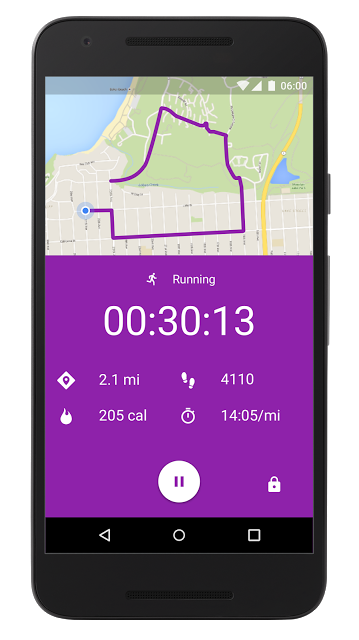
Instant insights. See real-time stats for your runs, walks and rides on your phone. Google Fit will record your speed, pace, route, elevation, and more so you can stay motivated and on track.
Strength training. Want to add push-ups to your routine? If you have an Android Wear watch, you can start a daily challenge and your watch will automatically detect and count each sit-up, push-up, and squat. They’ll be added to your daily activity, so you get credit for each one.
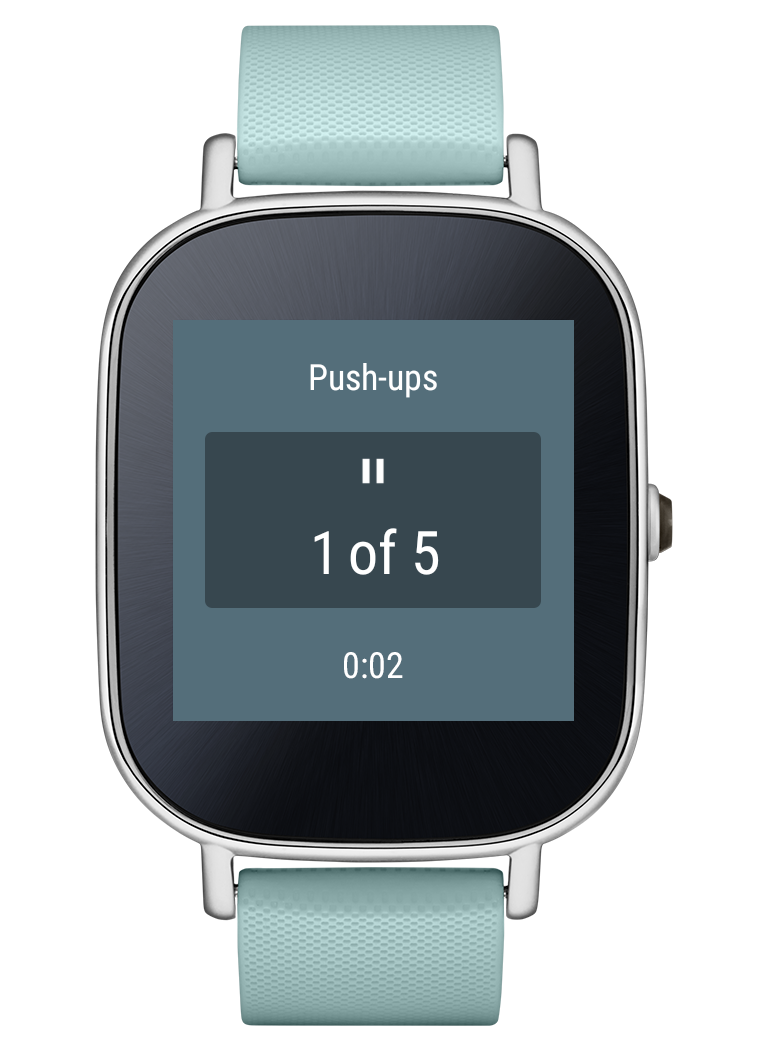
Just five push-ups?
Source – Google Blog
The post Google Fit updated to recognize all of your activies appeared first on AndroidGuys.
 AIVAnet