



Minnesota beats California to the punch, signs smartphone kill-switch into law

The Governor of Minnesota just signed a bill that could change the cellphone industry forever: a mandatory kill-switch law. The bill was written as a criminal deterrent: if a stolen phone can be remotely disabled, stealing smartphones may become a less lucrative crime. A study conducted at Creighton University suggests that such a measure could save consumers upwards of $2.5 billion a year, but it could prove expensive for carriers. The law has the potential to gut profits from selling cellphone insurance, sure, but implementing a feature for a single state isn’t cost effective — Minnesota’s kill-switch requirement might bring the feature to the entire nation.
Minnesota’s law closely mirrors an active bill in California, but it goes a step beyond adding carrier features. When the law goes into effect next July it will also limit how retailers can pay customers for their second hand devices, making cash transactions illegal. Stores will have to pay sellers by check, store credit or electronic transfer, securing a paper trail for used (and possibly stolen) devices. With any luck, these measures will make smartphone-focused muggings a thing of the past.
[Shutterstock / Scott Prokop] [Thanks Dustin]
Filed under: Cellphones, Mobile
Source: NBC News

Sony’s finance chief explains why it’s been hemorrhaging cash

Further heavy losses for Sony: electronics sales (minus phones and gaming) stand at half of the peak seven years. The company’s latest financial report is grim reading for its investors — and its fans. So what happened, Sony? It’s new CFO Kenichiro Yoshida gave a starkly honest assessment of his employer’s missteps at a conference late on Wednesday. “2014 is the year to finish off our restructuring measures.” However, it’s not the first time a Sony exec has mentioned rejigging the entire business and that’s been one many issues. Changes apparently never cut deep enough. The company was also sluggish to adjust to trends, resisted major changes, had hulking overhead costs and ever-continuing TV troubles –these were all part of the problem.
According to Yoshida, Sony’s cost cutting up until now focused on manufacturing, but really didn’t affect sales and HQ divisions: tied in with pricey Tokyo real estate and locations. From now, cuts to sales will be around 20 percent, while HQ will see a 30 percent reduction over the next few years. There’s no bonuses for CEO Hirai and other top-level executives, which will apparently translate to a 30-50 percent drop in annual pay totals. (Gotta love those bonuses.)
“Since we’re in a very difficult situation … we must not get the priorities mixed up.”
Sony’s TV arm has apparently totaled losses of around 790 billion yen over the last 10 years, despite annual promises of a profitable turnaround. The head of the arm has changed five years in that time, and the CFO says that steps taken to improve the business simply weren’t consistent. Previous restructuring had also stopped short of selling or terminating significant electronics businesses, like TV and PCs — something that’s certainly changed in 2014.
Perhaps the most damning comment from Yoshia was that the entire company had been slow to respond to consumer trends, as financial and entertainment arms continued to provide stable profits. Restructuring only occurred as electronics sales began to falter. Turning Sony into a more cost-effective company comes first, and only then can the company focus on its smartphone imaging and games strategy, said the CFO. “Since we’re in a very difficult situation … we must not get the priorities mixed up.”
[Image credit: AFP/Getty Images]

Want to be a race car driver? Start playing video games

The Nissan GT Academy is a racing competition that sees winning drivers transition from Gran Turismo‘s digital realm to an honest-to-goodness race car. Lucas Ordóñez was the very first GT Academy winner and he not only went on to race outside the virtual realm, but grabbed some podium finishes, too. Fast forward five competitions (and as many years) and Road & Track reports that four Academy grads will be racing at Le Mans for 2014, proving that this feeder route is the real deal. Nissan’s own entry in the famous 24-hour event, the hybrid electric ZEOD RC, will be driven by Ordóñez and 2012 winner Wolfgang Riep with Satoshi Motoyama as the third in the team. The Lotus entry in the gruelling full-day race will see 2011′s victor Jann Mardenborough — now actually racing in GT3 — and 2012′s Mark Shulzhitskiy competing with F1 commentator and ex-driver Martin Brundle’s son Alex Brundle. So next time your mom gives you grief for wasting all your time and rotting your brain playing video games, let her know you’re training for your future career as a professional race car driver.
[Image credit: Nissan]
Filed under: Gaming, Transportation, Sony
Via: The Checkered Flag
Source: Road & Track

Sprint had legal details of the NSA’s bulk phone data collection in 2010

The public only started learning about the legal justifications for the NSA’s collection of bulk phone records last June, but we now know that at least one telecom received notice much earlier. Both declassified info and Washington Post interviews have revealed that the White House gave Sprint the secret reasoning behind the NSA’s surveillance in 2010 to fend off a threatened court challenge over the program’s legality. Sprint dropped its formal opposition after that, but it pushed for the declassification last year as a retort to Foreign Intelligence Surveillance Court claims that there had been no court challenges. There might not have been a legal battle, a government official tells the Post, but there were still doubts.
Sprint isn’t directly confirming its role, but it says in a statement that it wants “substantive legal grounding” for any customer data requests and will refuse orders that it believes are violating the law. While those are important policies, the revelations suggest that the company isn’t all that heroic — unlike civil liberty advocates, it didn’t contest the NSA’s snooping after getting an official explanation. Still, the newly public information confirms that Verizon isn’t the only major US phone provider in recent memory to have had qualms about the government’s large-scale data collection.
[Image credit: AFP/Getty Images]
Filed under: Cellphones, Mobile, Sprint
Source: IC on the Record, Washington Post

Join the Engadget HD Podcast live on Ustream at 9:30PM ET

It’s Tuesday, which is time for the Engadget HD Podcast and we hope you’ll join us for the live recording at 9:30PM. It finally happened, Microsoft dropped the price of the Xbox One. We’ll discuss what that means for HD geeks, and perhaps even more importantly, how big a deal it is that streaming content to an Xbox no longer requires a subscription to Xbox Live Gold. Of course we’ll also talk a bit about net neutrality, and some Netflix, before we get into other home theater and entertainment news. And finally we’ll finish up with what we’re watching this week. If you’ll be joining us, take a peek at the topics after the break and then get ready to participate in the live chat.
Microsoft lowers Xbox One price to $400 without Kinect
Netflix, Hulu, YouTube and other services will be open to all on Xbox One, Xbox 360
The hidden value of Amazon’s Fire TV
Netflix begins raising prices, but current users get a two-year freeze
FCC’s new net neutrality rules opposed by 100+ internet companies
FCC may revise the new net neutrality rules, but it’s unlikely to satisfy critics
NBC’s $7 billion Olympics deal will keep the games tied to cable TV until you’re old
Rumors say AT&T is close to a $50 billion deal for DirecTV, unless it isn’t
Sony reportedly puts its OLED TV efforts on hold
Major League Soccer to stream out-of-market games on ESPN3
PBS gives parents a way to monitor what kids are watching on its site
Breaking Bad in 4K coming to Netflix in June
Must See HDTV for the week of May 12th: Her, Crocodile Dundee and so many finales
Filed under: Home Entertainment, HD

Experimental navigation system swaps satellites for quantum physics

GPS can be useful when you’re trying to navigate to that hot new bar — as long as your travels don’t take you somewhere its signal can’t reach. A new so-called quantum positioning system could pick things up when satellites fail, and help guide your way using super-cooled atoms. Aside from better directions, the solution might even make travel safer. While existing accelerometer-based systems can track location underwater within a kilometer, quantum positioning can do it within a meter, making it 1,000 times more accurate. With submarines, that could be the difference between staying safe and drifting into hostile waters.
The device, known as a quantum accelerometer, is actually based on a discovery made in 1997. Back then, scientists realized that when you trap a cloud of atoms in a vacuum with lasers, it can be cooled to just above absolute zero. Fast forward to 2014, and a group of researchers at the UK Defense Science and Technology Laboratory at Porton Down found the frosty atoms can be easily disturbed by an outside force. When you point another laser in the vacuum, you can track the atoms and determine their location based on the force of their movements. In the case of that submarine we mentioned, the “force” it’s tracking is the sub rocking back and forth under the sea. The group will test a prototype of the device, which is about the size of shoebox, on land in a stripped-down form in September of 2015. If those trials are successful, we could eventually see the technology used in future vehicles, planes and even smartphones.
Image source: Getty
Source: New Scientist
Motorola Alert app for the Moto E in the Play Store not quite ready for the Moto G or X
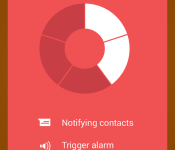
Motorola Mobility has released a new app to the Play Store today called Motorola Alert. the new app is free in the Play Store for Moto E devices but isn’t quite ready for prime time on the other Motorola devices like the Moto G or Moto X. Not sure what they were thinking on that one. The app is basically a simple location alert trigger app that sends your location data to the people you have designated.

 It will periodically send location updates to those people to help them find you as fast as possible in case of an emergency. Which means you should probably put people in the list that are close enough to actually help you and not so much your mom that lives across the country. The app does a little bit more than emergency location though. It also can create geo-fences so that you can get an alert for when your kids get to school, leave school, get home or what not.
The app is only available for the Moto E currently, but Motorola is said to be bringing it to the Moto G and Moto X later with no real plans to make it ‘just an app’ that everyone can have. However, the recipients don’t have to have the app or a Moto device to receive the alerts. It isn’t a bad concept really, Motorola is definitely trying to capture the youth / parents market with the Moto E and this app. having a teenager my self, I know it would come in handy. however there are a number of other apps that do similar things and a whole lot more and aren’t device specific.
You can check it out on the Play Store at your leisure, but Motorola doesn’t share much of anything on the app in the description section. Shame on you Motorola.
Via Phandroid
//<![CDATA[
ord = window.ord || Math.floor(Math.random()*1E16);
document.write('’);
//]]>
UC Irvine School of Medicine outfits students with Google Glass

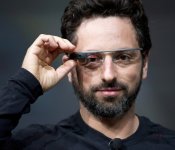
Medical schools have been eyeing Google Glass for some time, but the UC Irvine School of Medicine is making the device a standard tool for its four-year program. Starting this month, third- and fourth-year med students will sport ten of Mountain View’s headsets during surgery and emergency training situations. In August, 20-30 more pairs of Glass will join first- and second-year students to enhance anatomy labs, simulations, ultrasounds and more. As you might expect, instructors will have access too, giving a first-person perspective during instruction and the ability to transmit patient info in real time. Of course, that former scenario works in reverse, offering faculty the student’s view when needed. In terms of privacy, the high-tech spectacles will feature proprietary software to keep all coursework HIPAA compliant.
[Image credit: David Paul Morris/Bloomberg via Getty Images]
Filed under: Wearables
Via: Android Central, 9to5 Google
Source: UC Irvine

How to get started with home automation through Z-Wave

For many of us, smart homes seem like a far off concept from a science fiction novel set hundreds of years in the future. Imagine things like appliances that learn our schedules, lights that turn off after we leave a room, locks that can be remotely triggered to let yourself (or others) into your house and more. You know what though? The future is here. Engadget reader Dignan17 shows us what it takes to get started with home automation using Z-Wave compatible devices.
Have questions? Head over to the forums and ask away or share your own experiences with home automation.
Filed under: Household

Engadget Daily: futuristic Army helmets, Sony Alpha 6000 review and more!

You might say the day is never really done in consumer technology news. Your workday, however, hopefully draws to a close at some point. This is the Daily Roundup on Engadget, a quick peek back at the top headlines for the past 24 hours — all handpicked by the editors here at the site. Click on through the break, and enjoy.

Future Army helmets make for cooler soldiers, terrified enemies
What you’re looking at is not a mask from Halo, it’s part of the US Army’s new “soldier of the future” concept. As of now, the helmet is just a render, but this design could one day protect our forces from heat, humidity and even chemical agents.

Russia threatens to disrupt GPS navigation in fight over sanctions
Today, the Russian government threatened to end cooperation with America on maintaining the GPS network, unless the US promises to house stations supporting the competing GLONASS. Gee, thanks Putin.

Sony Alpha 6000 review: a do-it-all mirrorless camera that’s worth every penny
Once again, Sony’s hit the nail on the head with its Alpha 6000: a well-rounded camera with speedy performance, fit for the novice and advanced photographer alike. At only $800, it packs the most bang per buck of any mirrorless shooter around.

A PC component maker in a post-PC world
Creative Labs has deep roots in the PC market. But as our world becomes increasing mobile, how does such a company adapt? Well, the audio specialist’s betting on its new $200 Bluetooth speaker, the Sound Blaster Roar.
You also might like:
Filed under: Misc
 AIVAnet