


Groupon Introduces Gnome, an iPad-Powered Point-of-Sale System [iOS Blog]
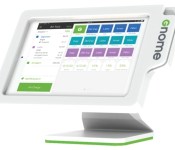
Groupon today announced Gnome, a new point-of-sale system that integrates with the company’s network of daily local deals. The iPad-based system provides a payment processing system as well as customer management tools for merchants that offer Groupon deals.

In addition to serving as an all-in-one cash register solution, Gnome allows customers to redeem their purchased Groupon offers either manually through the system or automatically if they have the Groupon app installed on their smartphone. Merchants can then access this customer data and use it to help improve future deals. It also improves the overall experience by minimizing those unfortunate occurrences when a user enters a business to redeem a deal, and the business is not equipped to process the offer.
“When it’s complete, Gnome will serve as an operating system for merchants to run their entire operation and enable them to create real-time promotions that bring customers into their business when they need them the most,” Groupon CEO Eric Lefkofsky said in a release. “Gnome is an important step towards our long-term mission of creating a world where merchants are constantly connected to the Groupon local commerce platform.”
Extending beyond Groupon vouchers, the POS system also can accept traditional payments, similar to Square’s Square Register. This Gnome system provides emailed receipts, calculates taxes, and helps manage inventory for the retailer. According to Re/Code, Groupon is charging 1.8 percent plus 15 cents for Visa and Mastercard transactions, along with a $10 monthly Gnome fee, for the POS service.
Groupon Gnome is already in use by select retailers with “tens of thousands” of merchants expected adopt the system in the coming months.
Apple In-Store iPad Trade-In Program Now Available in UK, Germany, Spain and France
 Apple today is expanding its iPad trade-in program to retail stores in several European countries, including France, Germany, Spain, and the UK. As spotted by Apfelpage.de and iPhoneAddict.fr, the program allows customers to recycle older iPad models at their local Apple retail stores and provides them with credits they can use towards the purchase of new devices.
Apple launched the iPad program last month in the U.S. and Canada on Earth Day as part of a larger green initiative to help consumers recycle old iOS devices. Customers can visit Apple retail stores and trade in their iPad 2, iPad 3, iPad 4 and iPad mini for store credit. The newer iPad Air and Retina iPad mini are not yet eligible for redemption.
The company has not revealed how much it will pay for these recycled devices in its international stores, but the pricing likely mirrors the existing trade-in program available in the U.S., with reduced prices for older devices and those in poor physical condition. Though not confirmed, Apple also may accept broken and non-working devices for free, providing a way for customers to responsibly recycle these devices.
The iPad program is similar to an existing in-store iPhone recycling program that debuted in the U.S. last August before expanding to the UK a few months later and several more European countries and Canada last month.

Apple Retail Under Angela Ahrendts: Focus on Mobile Payments, Customer Experience, and China
Angela Ahrendts officially joined Apple just under three weeks ago, but the new retail chief already has a solid plan in mind for improving both the online and retail Apple Store experience for customers. In a detailed report on Ahrendts, 9to5Mac suggests the retail leader will focus on three separate areas in her efforts to revamp Apple retail: China, mobile payments, and a redesign of the “end-to-end Apple Store sales experience.”
Growth in China is highly important to Ahrendts as it represents a major market where Apple hasn’t managed to gain a strong foothold. As of February, Apple only had seven percent of total smartphone market share in the country, but the company has worked to secure deals with all of China’s major carriers over the course of 2013, leaving it ripe for expansion. Ahrendts has plans to bolster Apple’s retail presence in the country, reaching 30 stores by 2016, up from the current 10 stores.

Along with expanding Apple’s footprint in China, Ahrendts is also said to be aiming for an overhaul of the end-to-end Apple Store sales experience, reimagining product discovery, customer interactions with employees, and mobile payment options, another tenet of Ahrendts’ three point plan. Over-the-phone service, Personal Setup, and the company’s trade-in programs may also see improvements under Ahrendts.
Ahrendts and new online stores VP Kupbens are seeking to improve mobile payments in Apple’s retail stores and mobile apps for both the online and in-person purchases. Ahrendts is said to be eyeing a major focus on blurring the lines between Apple’s online and physical stores in order to improve the overall experience for Apple customers.
As she settles into her role and begins enacting major changes to the retail and online sales experiences, Ahrendts has been visiting Apple stores close to Cupertino, in San Francisco and Palo Alto. Employees have described her as “honest,” “warm and genuine” and “so Apple.”
Ahrendts has also reportedly re-architectured Apple’s in-house retail team to better suit her needs, with longtime Vice President of Retail Stores Steve Cano moving on to international sales. Wendy Beckman, head of retail in Europe, and Denny Tuza, head of retail in China, will gain new responsibilities, while Apple’s VP of Apple Retail Real Estate Bob Bridger and the company’s VP of Retail Operations Jim Bean will both retain their roles. Bob Kupbens, the new VP of Online Retail will handle Apple’s online stores.
Back in October, when Ahrendts’ hiring was first announced, Apple CEO Tim Cook said he was “thrilled” she was joining the company, emphasizing that she shared Apple’s values, “focus on innovation,” and the company’s dedication to customer experience.
As CEO of Burberry, Ahrendts famously revamped the company’s entire shopping experience, and it’s likely that she will bring similar improvements to Apple customers at a time when the company is poised to launch several new major products, including the iPhone 6 and the iWatch.

What you need to know about net neutrality

The internet! It’s a truly wonderful place, a reflection of humanity that encompasses the breadth of our achievements and failures as a species. It’s at the center of modern life in the United States: from birth/early life education for parents to educational tools for kids, interacting with networks of friends and family, the entire college experience, managing finances into adulthood and building a business. It is ubiquitous. And the internet, as we know it, is open. The concept of “net neutrality” is simple: to keep the internet open.
WHAT IS IT?
“Net neutrality” is a dreadfully boring phrase, sadly. All credit to the very smart coiner of the term, Tim Wu, but “net neutrality” sounds like a combination of nerd jargon and hippie protest movement. The concept is thankfully very easy to understand: The internet is an open forum where all websites and services are created equal. Access to the internet means equal access to all websites and services, big and small, as legally allowed.
That is the idea of “net neutrality,” and it’s especially easy to understand in the context of reality: As of right now, the internet is open, and access to all websites is available (big and small, as legally allowed).
WHY SHOULD I CARE?

Doesn’t it stink when you’re trying to marathon House of Cards and the stream keeps stuttering? That’s no coincidence: Netflix recently inked deals with two internet providers (Comcast and Verizon) to pay cash for more reliable service. Previously, both Comcast and Verizon were noticeably slipping in Netflix speed tests; Netflix said the two companies weren’t throttling internet speeds, but connect the dots as you will. Anyway, Netflix speeds are improving on those providers and you’re back in business with Frank Underwood, right?
Yes and no. You are indeed able to laze away Sunday watching Anthony Bourdain tour the world, but Netflix is upping its prices pretty soon. Hey, that stinks! This is the very base level of why you should care.
WHAT’S AT STAKE?

Netflix has enough money to pay off the internet service providers (ISPs). How many others do? And what does it mean for the rest of the internet service you receive from an ISP that provides a separate lane for specific websites/services? These questions are at the heart of the battle over the future of the open internet.
More than just streaming issues, the stakes are innovation. So the argument goes: Though Netflix has the money to pay for dedicated internet speed, it could be using that money for, say, expanding its 4K offering. And if the company couldn’t pay? Then perhaps it wouldn’t make it in the long run, further entrenching the ISPs. According to the Electronic Frontier Foundation, a group that supports net neutrality, “New websites that can’t afford expensive fees for better service will face new barriers to success, leaving users with ever fewer options and a less diverse internet.”
WHAT’S THE ARGUMENT?

On the flip side of the innovation argument in favor of net neutrality, ISPs argue that regulation to enforce it impedes their ability to innovate. After the Federal Communications Commission voted recently in favor of proposing new rules, AT&T said, “Going backwards 80 years to the world of utility regulation would represent a tragic step in the wrong direction.” For some, the argument is against putting control of internet regulation in the hands of the government; for others, it’s a question of destabilizing stock markets as a result.
In either case, something has to give: The previous regulations set up by the FCC were shot down in court earlier this year. In so many words, the FCC has to do something to address net neutrality. After last week’s vote, we’re waiting to hear what exactly that something will be.
WANT EVEN MORE?
We sure hope you do, because there’s a ton of supplemental reading to do on the subject. Why not start at the beginning with the original paper by Wu (who coined the term “net neutrality”). Vox‘s breakdown of net neutrality digs into the legislative history and challenges the FCC faces in implementing regulations on how the internet operates, much of which we skirted here. Our own Richard Lawler explains why Comcast’s deal with Netflix doesn’t mean the end of the net neutrality fight. Or maybe you wanna get super serious and dig into the history of communications regulation in the US? Here’s the original text of the Communications Act of 1934 (PDF), which is the basis for much of the legal arguments over ISP regulation.
[Image credit: Bebeto Matthews/Getty Images, Brand X]
Filed under: Networking, Internet, Software, Verizon, AT&T

Game to complete a remarkable two-year turnaround by going public (again)

Two years after it went into administration, UK video game retailer Game could complete a stunning comeback by floating on the London Stock Exchange for a second time. The company, which was forced to close 300 stores, abandon its European expansion and kill the Gamestation brand in 2012, has surged following last year’s console launches and is looking to put the worst behind it by selling a 35 percent stake to investors. Led by investment firm OpCapita, the group will rename itself to Game Digital and is expected to hit London’s financial markets within the next four weeks. With 560 stores, a 33 percent share of the new game and hardware market in the UK and over 16 million combined Reward Card members, Game is expected to earn a £400 million valuation — not bad for a company that was all but dead 26 months ago.
[Image credit: Game Online, Flickr]
Filed under: Gaming
Source: BBC News

AT&T’s multibillion dollar DirecTV purchase could hinge on… football?

AT&T and DirecTV ruined an idyllic Sunday afternoon with the news of a multi-billion dollar acquisition, and — surprise, surprise — people haven’t stopped talking about it yet. That’s at least partially because of an interesting break-up clause the two parties have worked out: AT&T can wash its hands of the acquisition if DirecTV somehow fails to lock up the rights to offer NFL Sunday Ticket for another few years.
Not a pigskin aficionado? Sunday Ticket gives subscribers access to the full spate of NFL games that aren’t run by their local television affiliates in exchange for about $39 a month (you can pay a little extra for mobile access, natch). At last count, something like 2 million of DirecTV’s 20 million customers shell out for all that gridiron glory — assuming they all pay for the top-tier plan (which most definitely isn’t the case), some back-of-the-napkin math reveals that DirectTV can rake in as much as $1.32 billion from those customers each year. Locking up the rights to offer those football games cost DirecTV a whopping $4 billion over the past 4 years so straight-up profit isn’t quite as impressive, but it’s little wonder AT&T is so interested. If we’re being honest, the odds of DirecTV mucking things its NFL deal are pretty slim, but it’s still interesting to see what (if anything) could throw up roadblocks as these two giants pull each other closer.
Via: The Verge
Source: SEC

Groupon lets merchants process cards, track customers with iPad-based Gnome

Gone are the days when restaurants and retailers needed to drop five figures for the privilege of tracking and ringing up customers. Square’s Register app has been letting merchants process transactions with “cheap” consumer hardware since 2012, and now Groupon’s reinforcing its own position in the point of sale game with a new iPad-based solution. Gnome, which is expected to cost merchants $10 per month, will let customers redeem their Groupons via Bluetooth, or simply by providing their name at checkout. Customers can receive email or printed receipts, and they can pay entirely with cash or a credit card whenever they’re not redeeming a voucher. The company plans to move all merchants over to Gnome within the next few months, so expect a more streamlined Groupon experience soon.

Apple Allegedly Tapping Innolux as 3rd iPhone 6 Display Supplier Ahead of Expected Strong Demand [iOS Blog]
According to Taiwan’s Economic Daily News as reported by GforGames, Apple may be turning to Taiwnese supplier Innolux to provide display panels for its 4.7-inch iPhone 6 model. Apple reportedly has contracted with LG Display and Japan Display Corporation for the 4.7-inch panels, with Innolux added as a third partner to support the expected high demand for a larger iPhone model.

Apple may have been negotiating with Samsung and Sharp as well as Innolux for the panels, but the Cupertino company was said to have rejected offers from Samsung and Sharp.
Allegedly, the reason why Apple refused to collaborate with Samsung is because the Korean tech giant is too much of a direct competitor. As far as Sharp goes, Apple turned down the said company, following the analysis of the first wave of sample panels, which appear to be suffering from “Moire” issues.
Innolux has a long history of working with Apple on display technology, with the company reportedly suppling panels for previous Apple products such as the iPad 2 and the iPad 3.
It’s not surprising that Apple would bring in a third supplier for the iPhone 6 as demand is reportedly strong for a larger iPhone model, with Cantor Fitzgerald analyst Brian White calling the 4.7-inch iPhone 6 launch “a special one” for Apple. Apple’s next iPhone model is expected to arrive in two display sizes, with a 4.7-inch model likely debuting this fall, and the 5.5-inch possibly landing several months later.

Should ‘Adorkable’ ‘Duckface’ or ‘Nomakeupselfie’ be added to the dictionary?

How does the fusty council of elders that compose Collins’ English Dictionary spend their time? Just like the rest of us, they’re messing around on Twitter. In preparation for the twelfth edition of the tome, its creators have asked the site’s users to vote for one of nine words to become an official part of the English language, just like sext and selfie. The options run from Gaybourhood (a Gay-friendly neighborhood), through Felfie (farmer-selfie), Duckface (don’t make us explain this one) to Euromaidan (a pro-European protestor from Ukraine). You’ll be able to vote between now and May 28th, after which we’re going to commence a campaign to get the word Chumbumble, which we just invented, into the thirteenth edition.
Filed under: Internet
Via: Telegraph
Source: Collins’ Twictionary

Chinese cyberspies charged with stealing secrets from US companies

The Department of Justice has taken the unprecedented step of charging five officials from the People’s Liberation Army of China, who are accused of hacking into six American private-sector companies in order to steal trade secrets. Electrical and metal engineering companies like Westinghouse, Alcoa and Solar World are among the victims, and the DoJ believes their “sensitive business information” was stolen specifically to give a competitive advantage to Chinese state-owned companies. In the words of Attorney General Eric Holder:
“This Administration will not tolerate actions by any nation that seeks to illegally sabotage American companies and undermine the integrity of fair competition in the operation of the free market.”
The indictments might seem strange, given that none of the Chinese individuals may ever be physically hauled from their unit (said to be PLA Unit 61398 in Shanghai) to face prosecution in the US. Nevertheless, the move comes after increasingly vocal warnings from both the DoJ and the Pentagon that cyber-spying won’t be overlooked merely for the sake of wider US-China relations. For its part, China has always insisted that the problem runs both ways, and that it’s equally a victim of US espionage — although that response hasn’t really tackled the (blurred) distinction between spying for military purposes, versus using military resources for commercial spying.
[Image credit: CoolCaesar, Wikimedia Commons]
 AIVAnet