



Gmail for Android can save attachments directly to Google Drive

Just because you want to save an email attachment on your phone doesn’t mean you always want a local copy. What if you’re running out of space? That won’t be an issue if you’re using the latest version of Gmail for Android; the newly updated app lets you save files to Google Drive, making it easy to fetch them later on most any Drive-friendly device. The upgrade also gets you to the navigation menu through a simple swipe gesture, and there’s both improved right-to-left language support (think Arabic or Hebrew) as well as explanations for why messages land in the spam folder. It may take a few days for the new app to hit your phone or tablet, but it should be worth your patience if you prefer to fetch important documents from the cloud.
Filed under: Cellphones, Internet, Mobile, Google
Source: Gmail (Google+), Google Play

Scientists make deep-brain implants possible through wireless charging

Stanford researchers have figured out a way to wirelessly charge electronic devices that are deep inside your body. Currently pacemakers and nerve transmitters need to have large receiving coils near the top of your skin to charge up (limiting where you can put them), or periodically have their battery replaced through surgery. This new method, however, would allow devices to be much smaller because they don’t have to tote around such a huge battery. Also since they’re not reliant on charging coils they could live much deeper in the body and brain.
More than just idea, researchers have already created a pacemaker smaller than a single grain of rice that you can charge by holding a small power source above it. While wireless charging isn’t anything new, the ability to send power deep below the skin safely is – and could mean big things for medicine. The availability of such tiny and easily-powered devices could mean that doctors could start prescribing electronics as treatments more often for diseases and chronic pain rather than drugs. Have frequent migraines? You might be able to ditch the Advil for an implant. The group has run a few trials on small animals, and plans to test-drive it on humans soon. However, we’re still a long way from actually using the implants. Assuming those tests are a success, the project has quite a few federal evaluations and hoops to jump through before the technology is readily available to the public.
[Image credit: Shutterstock]
Via: Re/code
Source: PNAS

Rdio is now streaming in nine more locales

Spotify isn’t the only music streaming service looking to blanket the globe. In fact, Rdio has surpassed its primary competition in that tally. The latter outfit is now available in 60 countries after it announced the additions of Indonesia, Philippines, Thailand, Singapore, Greece, Croatia, Cyprus, Slovakia And Slovenia. For reference, Spotify currently tallies 56 countires worldwide. “We’re thrilled to have been able to expand from two to 60 countries in less than four years, while also pairing this rapid growth with regular catalog increases reflective of the amazing and distinct music that impacts the culture of each country we serve,” said CEO Anthony Bay. Heck, Rdio even made a playlist to celebrate.
Filed under: Internet, Software
Source: Rdio (Facebook)

AllCast now streams your media to any Android device

Koushik Dutta’s AllCast app can stream media to seemingly any set-top box you might own, but it hasn’t let you stream to (most) Android devices. Today, though, that barrier has come down: Dutta has released AllCast Receiver, an app that turns any supporting Android gadget into a streaming target. You can now send video to a tablet for more for more comfortable viewing, for example, or mirror your screen to walk someone through an unfamiliar app. To top it off, AllCast itself has received an update that will stream Google Play Music to other hardware, provided you get root OS access on the host device first. Whether or not you’re willing to take that risk, you’ll definitely want to grab the newer apps if AllCast is your go-to content sharing tool.
Filed under: Cellphones, Tablets, HD, Mobile
Via: Koushik Dutta (G+), Droid-Life
Source: Google Play (AllCast Receiver), (AllCast)

Researchers maximize your hybrid’s battery by learning your routine

Researchers have figured out a way to make your Prius even more efficient by tracking your route to work. Right now your car uses the battery until its power runs out and then starts dipping into your gasoline supply. It’s a solution that works, but isn’t the best use of power. Viktor Larsson from Chalmers University of Technology developed a system that analyzes that monotonous route you take to work (including that much-needed Starbucks detour), and then determines how to get the most out of your battery. For instance, your car might switch to gas on the highway where it’s more efficient and save your stored power for the stop-and-go traffic in the office park.
It’s a small tweak, but one that could reduce your car’s energy consumption by 10 percent. The technology will work on hybrid vehicles currently in production — it just needs access to the car’s computer to evaluate the route and communicate with the battery and engine. Larsson has been working on the technology with Volvo for the past year, and has already simulated and tested the system on-board its V60 Plug-in Hybrid. What’s more, there’s also the possibility of using a smartphone rather than a server to power the management system. Volvo seems like the obvious candidate to get this in cars first, but who knows when that might be.
Filed under: Transportation
Via: Phys.org
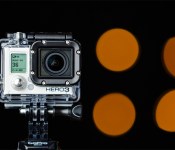
GoPro files for an IPO to grow its media empire

Look, it was no surprise that GoPro has been planning to go public for a while now — it said as much back in February. Things are finally getting officially official, though: the company just filed its S-1 with the Securities and Exchange Commission, so you can expect to see the ticker symbol GPRO on NASDAQ in due course. There’s no shortage of financial types digging through the document as we type (bits to note: the company managed to turn a pretty profit last year, and it shipped a net total of nearly 4 million cameras in 2013), but the story is clear — GoPro is a big deal, and it’s going to get even bigger.
It’s (obviously) a big step for the company, and a big milestone for its CEO Nicholas Woodman too. You see, he cooked up the original GoPro concept when he needed something waterproof and capable to take with him while surfing. From there, he embarked on the arduous path of a hardware startup founder (his advice to those who would follow in his footsteps: bootstrapping is a powerful thing) and used cash from his family to fuel growth before locking up a big deal with Foxconn in 2012. GoPro, then, is a sort of startup Cinderella story, and Woodman’s the one with the glass slipper… err, action camera.
And how does a company like GoPro plan to stay ahead of the competition? By pushing new cameras and, more importantly, a brand to go with them. The company expects the amount of money it spends on research and development to balloon going forward, but it’s the cultivation of a sense of identity that’ll really make or break GoPro’s fortunes. After all, it’s not like any of the upstart competitors looking to eat GoPro’s lunch have access to the same Ambarella systems-on-chips that power the popular action cameras… oh wait. A certain chunk of people have already embraced the lifestyle GoPro espouses, but can the company grow that group? Will hardy action cameras ultimately be displaced by beefy smartphones? Will the oft-rumored Hero4 camera ever get here? These are all questions that Woodman and his crew need to answer, and we’re looking forward to seeing how they do.
Filed under: Cameras
Source: SEC
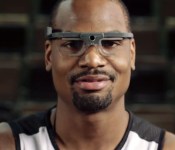
New eye-tracking glasses show others what you’re looking at in real time

Researchers and marketers often want to know what catches your eye, whether it’s players on the basketball court or just a new shampoo at the store. They may have an easier time figuring this out with Tobii’s latest eye-tracking headset, the Tobii Glasses 2. Besides providing a much wider field of view than the original eyewear, the new design has a front-facing 1080p camera that lets observers see whatever you’re focused on in real time — they’ll know right away if something gets your attention. The four eye-facing cameras and new software also offer more precise gaze data than the last time around.
As with Tobii’s earlier glasses, you won’t be buying a personal pair any time soon. At a minimum $14,900 price, the hardware is really meant for product developers, sports teams and others who could easily earn back the expense. All the same, the technology could still make a big impact on your life — whether it’s livelier packaging at the shop or better performance from your favorite athlete.
Filed under: Wearables
Via: TechCrunch
Source: Tobii

PlayStation Now’s game streaming beta comes to PS4

Back in January we were impressed by just how well Sony’s PlayStation Now game-streaming service worked, and the chance to test it out yourself could be coming rather soon. The closed beta program is making its way to the PlayStation 4 on May 20th (tomorrow!), according to the PS Blog, invites for new testers will be making their way select inboxes shortly. What’s more, the outfit also says that it’s opening the service’s PS3 beta to more users as well. If you haven’t thrown your last-gen console out just yet, this might be another reason to keep it around for a bit longer.
Filed under: Gaming, Home Entertainment, HD, Sony
Source: PlayStation Blog

Generate power to recharge gadgets while grilling with this camp stove

BioLite has been recharging smartphones, action cams and GPS units via camp stove fire since 2012, but now it’s offering a larger model that will grill enough grub to feed your entire crew. The BaseCamp stove offers the same heat-to-electricity conversion, but with a much larger cooking surface for grilling dinner (up to eight burgers at a time) for more than just a pair of weary hikers. The built-in power pack has been upgraded as well, generating 5W and storing power for juicing up devices during dessert alongside a UI that gauges temperature and displays the amount of electricity being generated. Need to use a pot to boil water? That cooking surface can wrangle the flame for optimal output with the flip of a lever. If all of that sounds too good to pass up, units are set to ship in September and you can one for $299 during the company’s Kickstarter effort.

Filed under: Misc
Via: Uncrate
Source: Kickstarter

AMC embraces the power of Tumblr to debut its new series ‘Halt and Catch Fire’

A new television series chronicling tech and social media narratives pops up on the regular these days and AMC’s upcoming “Halt and Catch Fire” is the latest entry into that sub-genre. In order to cultivate buzz for the series’ debut in a couple weeks, the network is relying on shares and reblogs from its Tumblr page to get the word out. Between now and May 31st, eager viewers can snag an early look at the pilot on the aforementioned page. The show follows a former IBM executive’s scheme to reverse engineer the IBM PC, and thus thrusting his current company into the personal computing fray for the 80s. According to TechCrunch, AMC has a number of advanced screenings planned at Apple, Twitter, Google and more as part of the pre-air promo effort amongst the tech community. If you’re in need of a brief introduction, the trailer awaits on the other side of the break.
Filed under: Internet
Via: TechCrunch
Source: AMC (Tumblr)
 AIVAnet