



The words hashtag, steampunk and selfie are now tired enough to go in the dictionary

There’s something in the water over on lexicography boulevard. Just a day after Collins asked Twitter users to vote on a new word, Merriam-Webster has revealed which internet-born terms it now considers official. The 150 strong list includes crowdfunding, selfie and hashtag, all the way through to more cultural ones like catfish, tweep and steampunk. Just think, you can use all six of those words in a term paper and your teacher can’t be mad at you, because, duh, they’re all in the dictionary.
Filed under: Internet
Via: LA Times
Source: Merriam-Webster

EA Sports UFC looks to bring out the mixed martial arts fighter in you

Given the success of franchises like FIFA and Madden, it’s easy to see why EA would want to commit valuable resources to developing an MMA title, a sport that’s been getting bigger and bigger over the past few years. But the road for creating this new game, dubbed EA Sports UFC, wasn’t an easy one. The relationship between UFC President Dana White and EA had its complications a few years ago. Back then, the developer reportedly wasn’t interested in making a title for the mixed martial arts company, which is what started the kerfuffle between them. Because of this, UFC eventually hooked up with THQ to create a game, while EA Sports went on to develop its own MMA series. Still, neither of these things lasted too long. And after the unfortunate demise of THQ, EA Sports eventually reached a deal with UFC, granting it licensing rights for the popular MMA league. The by-product? EA Sports UFC.
EA Sport’s UFC, which is launching exclusively on PlayStation 4 and Xbox One, offers everything you can expect from the big developer of sport titles. If you’re familiar with FIFA 14, Madden NFL 25 or, for whatever reason, NBA Live 14, then you’re going to feel right at home with the menus and game modes. The tile-based user interface is very simple to browse, and you soon learn that the modes found within the game are quite similar to those on other EA Sports franchises, like the ones mentioned above. There are things such as Fight Now, which quickly lets you jump into a match; Career Mode, wherein you can go from being a nobody to a famous ultimate fighter; and UFC Spotlight, which is a hub that gathers highlight videos from you, friends or the online community. You can also create a character (though only for personal use), challenge friends in what EA is calling Rivalries and do some training to improve your overall skills in the game.

“Our goal was to set a standard for how characters should act and look on next-generation.”
So, what about, you know, gameplay? And just how good does it look? Well, we came out pretty impressed. There’s no doubt that EA Sports UFC, powered by the Ignite engine, takes full advantage of the graphics power inside Sony’s and Microsoft’s new consoles. Simply put, it looks fantastic — for reference, it plays in 1080p at 30fps. In general, the amount of detail you can see within each MMA battle is quite remarkable. You can easily spot a lot of what’s going on with your fighter’s body and, in some cases, it may even be more than you would have liked to. Muscle flexing? Check. The smallest of chest hairs? Check. Hm, acne? Check. Yes, it’s all there for the taking, whether you want it or not. But it’s a beautiful scene, in its own magnificent way, and a huge step up from what we’ve seen in PS3 or Xbox 360 titles. “Our goal was to set a standard for how characters should act and look on next-generation,” Brian Hayes, the game’s creative director, told us.
Oh, and did we mention Bruce Lee? Yes. Bruce. Lee.
The controls, meanwhile, aren’t that complicated, which is good news for someone who just wants to play a fighting game. Much like with EA Sports’ Fight Night, it does take a little while to become decent at putting solid combos together. Once you get the hang of it, though, it turns into quite a fun experience — matches in the octagon are played at a nice pace, but they can end relatively quickly if you’re not blocking shots properly. Naturally, part of the experience has to do with the professionals you can use in the game; the rosters include most current UFC fighters plus others like Chuck Liddell. Oh, and did we mention Bruce Lee? Yes. Bruce. Lee.
EA Sports says it’ll be working constantly to improve UFC after its release, with expanded rosters and other features like that. The game will be available in the US on June 17th and elsewhere on June 20th.
Filed under: Gaming, Home Entertainment, HD
Source: EA Sports

Google Stories automatically creates digital journals from your photos and videos

Google has steadily been improving its Auto Awesome personal storytelling features inside G+, and today it launched a new tool that is simply called “Stories.” The idea is that no one really has a huge amount of time to dedicate to creating albums for personal events, so Stories can do that for you — automatically weaving together photos, videos and location data into a ready-made travelogue. The new feature will be available to try on the web and on Android devices sometime later this week, with an appearance on the iOS version of G+ also promised in the future.
Source: Google
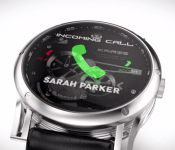
Move over Moto 360: The Kairos Mechanical Smart Watch Hybrid is here to make you Drool
 In an earlier article, I mentioned that the Motorola Moto 360 has been the smartwatch the seems to have encapsulated what some of us have been hoping for in a smart watch. That, of course, was before I saw the intro video for the Kairos Mechanical Smart Watch Hybrid. If the above image isn’t enough to convince you, take a look at the video below:
As you might have guessed, this so-called “hybrid” is a marriage of a fully mechanical watch which is overlaid with a 1.4-inch PMOLED (that’s Passive-Matrix OLED) touch display which is 40% transparent which can show various notifications sent via Bluetooth from a paired Android (or iOS) device. The pairing of a ARM Cortex M4 and a 180mAh battery still makes for a very economical 5-7 days battery life, but naturally, the mechanical watch beneath is powered separately.
 While the Kairos watch is currently designed with SmartOS, Kairos says they are determined to migrate the device to Android Wear in the near future. Hardware goodies available to the Kairos watches include a 3-axis accelerometer, Bluetooth, and a vibration motor, with a breadth of other functionality also afforded to it thanks to its connection to a smartphone. Pre-orders for the Kairos watches are open now, but they aren’t cheap: prices range from $499 to $2149 USD and will only start being received at the end of this year, continuing into next year. Still, it might be worth it if the final product looks even remotely like what the video depicted.
What do you think about the Kairos Mechanical Smart Watch Hybrid? Would you considering one of these or are you more set on cheaper smart watches? Let us know your thoughts in the comments.
Source: YouTube via Android Friendly
//<![CDATA[
ord = window.ord || Math.floor(Math.random()*1E16);
document.write('’);
//]]>
Apple Researching Integration of Solar Panels in Flexible Touchscreen Displays
The U.S. Patent and Trademark Office today granted a new Apple patent describing the integration of a solar panel into a mobile touchscreen device with a flexible display, reports AppleInsider.

The newly granted patent is a variation on patent No. 8,730,179, which primarily applies to display-less, touch-capable devices, limiting its functionality in contemporary mobile devices. Both patent applications were filed on September 30, 2008, but the expanded version granted today has taken more time to work its way through the approval process.
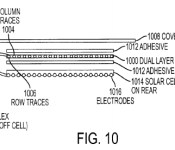
Today’s patent describes a method of stacking solar cells between touch sensor layers within a display matrix to create a compact solar charging system that stores energy in the device’s battery. It applies to both glass-covered and flexible plastic displays.
Integrated touch sensor and solar panel stack-up configurations that may be used on portable devices, particularly handheld portable devices such as a media player or phone are disclosed. The solar cell stack-up configurations may include one or more touch sensor layers and one or more solar cell layers. By integrating both the touch sensors and the solar cell layers into the same stack-up, surface area on the portable device may be conserved.
Given the limited power made available through solar charging and the power consumption requirements of mobile devices, this technology likely won’t be the main source of power in a device. It could, however, serve as a backup power source or may pave the way for advancements that could increase the efficiency of the system as mobile devices and solar technology improve.
Apple has reportedly explored a number of methods, including solar for charging its rumored iWatch. Other possible methods have included wireless induction charging and kinetic charging that would capture energy imparted as the user’s arm moves.
LG gearing up for G Watch launch

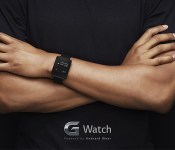
LG is prepping the launch of one of the first Android Wear smartwatches, the G Watch. After many different teases, especially the video last week (down below), LG has posted an article on their site called “Smart Watch is an IT and fashion fusion.”
The article goes into detail about how the G Watch is not the first “smartwatch” they thought about. The article is in Korean, so make use your translate option if you’re in Google Chrome. LG also released a picture of some famous TV characters such as Knight Rider and Captain Kirk to show that this idea of a smartwatch is actually becoming a reality.

The G Watch is slated for June availability and will be available in both Stealth Black and Champagne Gold. The watch will have a 1.85-inch display and 4GB of internal memory.
Source: LG Via: MobileSyrup
The post LG gearing up for G Watch launch appeared first on AndroidGuys.

Gmail updated featuring new UI tweaks and features

Gmail for Android has been updated to version 4.8, which offers a host of new features including “Save to Google Drive”, print attachments directly in Gmail, and some UI tweaks to clean things up a bit.

Google has moved the Settings, Help and Feeback menu buttons from the overflow menu to the sliding navigation drawer at the bottom. The new update also shows your Google+ avatar linked Gmail account instead of just the boring dot beside the Gmail account.


Google will also show the rest of truncated messages and explain why a message is marked as spam at the top of the email. Google has also improved reading for right-to-left languages including Arabic, Hebrew and Persian.


Gmail 4.8 will be rolling out in the coming days to users. I have already received the update and usually I am the last one. I am located in the southeast United States, so hopefully others are getting it today as well.
Via: Android Police Source: Google
The post Gmail updated featuring new UI tweaks and features appeared first on AndroidGuys.
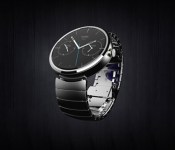
Moto 360 release date and price suggested in Report
 The smartwatch market has grown increasingly quickly in the last few months, but one device has still managed to stand out among its peers. The Motorola Moto 360 was announced the same day that Google announced its new smartwatch-centric operating system, Android Wear, and it captured, at least for some of us, what we had hoped smartwatches would eventually look like in the near future. At the time of its announcement, it was said the Moto 360 would be released sometime in summer, but today we have a new report that may have suggested a more accurate Moto 360 release date and price.
According to French site, Le Journal du Geek, more information is going to be divulged about the Moto 360 at next months’ Google I/O event which will be followed by a July release of the device. The site has also suggested that the asking price for the device will be a very pretty €249 or around $340 USD, though it must be said that region pricing tends to vary depending on where you are.
What do you think about the pricing of the Moto 360? Is it what you expected? Let us know your opinion in the comments.
Source: Le Journal du Geek via Phones Review
//<![CDATA[
ord = window.ord || Math.floor(Math.random()*1E16);
document.write('’);
//]]>
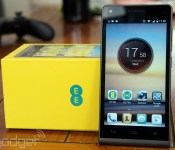
EE Kestrel review: a good low-cost 4G phone, but with a Moto on its back

The adjectives “affordable” and “budget” often allude to something of inferior quality — a questionable substitute for something more premium. Something out of financial reach. A few years ago, I would’ve assumed the same, having set up enough low-end Samsungs for family members to want only high-end handsets, extortionate contracts attached. Thanks to devices like Google’s Nexus range and, most recently, the OnePlus One, we’ve never been more aware of value for money. The Moto G, in particular, proved that a solid smartphone could be an absolute bargain.
It’s this newfound, positive connotation of affordable that EE’s aiming for with its first own-brand smartphone, the Kestrel. Launched earlier this month for £99 on pay-as-you-go, or free from £14 per month on contracts, it’s EE’s play for the 4G-curious, money-conscious consumer. The Kestrel’s LTE radio and inviting price tag aren’t the sum of its selling points, either; there’s also expandable storage and a very capable processor. Components such as the display and cameras are understandably more modest, but on paper, the Kestrel still ticks the value box. In the increasingly competitive area of low-cost handsets, however, the question isn’t just whether the Kestrel is a worthwhile purchase, but whether you’ll see it the same way a month later.
Hardware

EE doesn’t manufacture the Kestrel directly, of course. Chinese handset maker Huawei has been drafted in for this job, and if for some reason you’re particularly knowledgeable about that company’s own range, you might see the Kestrel bears a resemblance to Huawei’s Ascend G6. The Kestrel isn’t a straight rebrand, though: It suffers from a downgraded camera and softer detailing around the rear lens. Otherwise, it’s the same phone inside and out.
The handset fits the square-with-rounded-corners stereotype well, but not without a little flair thanks to its curved bottom edge. Three standard Android soft keys and the primary mic sit below the 4.5-inch display, with the front-facing camera, earpiece and multicolour notification LED above it. The flat back panel, which pops off to reveal the micro-SIM and microSD slots (but no removable battery), is host to a small loudspeaker grille in the bottom-left corner and the camera lens, LED flash and secondary mic along the top. The power key and volume rocker sit on the right edge, with the micro-USB data/charging port on the top perimeter. You get the picture: pretty standard layout.
But wait, the headphone jack appears to be on the left edge? And right at the bottom by the soft keys, no less. I’ve no idea why this component in particular was exiled from its usual home, but I do know that the design decision isn’t quirky; just annoying. I shouldn’t have to think about reorienting my phone every time I take it in and out of my pocket. It doesn’t slide in there either, with the headphone plug sticking out the side, constantly looking for something to snag.

Unlike the Ascend G6, EE’s Kestrel comes in just one colour: “Graphite,” which is dark grey in human speak. The matt plastic that makes up the back panel and the thin frame around the glass has a pleasant look and slightly tacky texture. Thankfully, ignoring its normal palette of yellows and green, EE’s logo is instead humbly stenciled in silver on the rear cover. The understated colour scheme gels with the handset’s simple design, but the combo is let down somewhat by a plastic band that runs along the Kestrel’s three flat edges. It’s made of slicker, shinier stuff that frankly looks a little cheap, something an all-matt design could’ve avoided.
The Kestrel doesn’t feel particularly cheap, though. You can squeeze a few creaks out of the back panel, but it fits snugly in the hand, and feels sturdy at 145g. It’s also on the thin side at 7.85mm, but being 131mm tall and 65mm across, there’s plenty of bezel flanking the 4.5-inch display. Space for the phone’s guts has to be found somewhere, and if I had to choose, I’d prefer a phone have a slightly bigger footprint as opposed to a thinner profile. The Kestrel’s still small by today’s standards, after all, so I don’t imagine many people will have issues here. Mind you, EE’s smartphone isn’t something you’ll be buying to show off in the pub, but it’s unassuming enough to be widely acceptable, especially considering the double-digit price tag.
Display

Numbers don’t lie, but they don’t always tell the whole story either. The Kestrel has a 4.5-inch IPS LCD display running at a qHD resolution of 960 x 540, which translates to a pixel density of 245 pixels per inch. It’s easy to declare those specs irrelevant when 2,560 x 1,440 displays are verging on commonplace. We’ll get to the pixel issue, but the quality of the panel itself deserves a mention. General colour temperature, as well as blacks and whites, are good to the point of surprising. Minus a small amount of unwanted glare, sunlight readability is adequate, as are the viewing angles. I seem to be in perpetual disagreement with the auto-brightness setting on most phones, flagships included, but somehow not the Kestrel.
In real life, my personal device has a 5.2-inch 1080p display, and yes, games and media look better on that than on the Kestrel. Maybe it’s because I don’t have a fetish for high pixel counts, and that I spend the majority of time browsing, checking email, sending IMs and the like, but I hardly register or care about the difference. Video is perfectly watchable, particularly if you stick to 480p content that fills the screen (any higher and you’ll start to see letterboxing). Motorola gets infinite brownie points for cramming a splendid 720p panel into the Moto G, but the Kestrel has 4G and expandable storage, with qHD being part of the trade-off. Obviously it depends on your priorities, and resolution is a valid one, but for me, at least, a good-quality panel is more important than having a higher resolution simply for the sake of specs.
Software

Being a Huawei creation, the Kestrel runs its manufacturer’s Emotion UI 2.0 Lite on top of Android 4.3 Jelly Bean. EE tells me an update to KitKat or beyond is under consideration, but far from guaranteed. Probably the biggest customisation of Huawei’s Android skin is that there’s no separation between the app drawer and home screen. It’s a simple tweak, but one that highlights the redundancy of the app drawer in other builds. Having everything on one carousel suits me fine. Most of the stock icons and the insistence on framing other app icons do make the UI a tad cartoony, but I like the minimalist notification drawer and its comprehensive selection of settings toggles.
EE’s done its part to keep in-house bloatware to a minimum, pre-installing only My EE, through which you can view your bill and data usage, and access various other services. There’s also EE Film, a movie-rental portal where you claim discounts on cinema tickets. Music-streaming service Deezer also comes pre-loaded to complement the free subscription EE customers get. These are all deletable, which can’t be said for everything else that’s been crammed onto the Kestrel. Both Google’s and Amazon’s app suites are present, joining a few utilities and social networking apps you might actually use. Then there are apps like the generic, duplicate browser, “Voice Dialler” and Lookout security that’ll likely go untouched; and even worse is the app with a sketchy icon called “Free Games,” which you’ll purposefully avoid.
Camera

The Kestrel’s front and rear cameras are the only components on the handset that don’t match the Ascend G6′s spec sheet. Instead of eight megapixels round the back and five up front, EE’s variant drops down to 5MP and 1MP, respectively. As with display resolution, the quality of the camera is more important to me than raw specs, and there are plenty of smartphone shooters that aren’t as capable as their sensor size might suggest. The cheap Moto G, for example, has a pretty versatile camera that’s only 5-megapixels strong. Unfortunately, the Kestrel’s camera doesn’t have anywhere near the same range.
Getting the most of the 5MP sensor is as simple as taking pictures in glorious, sunny conditions, but in most other scenarios, results fall off fast. I’ve never been one for toying with the manual camera settings on smartphones. If I’m using a proper camera (or maybe something like a Lumia 1020), then I pay close attention, but I want to be able to pull my phone out, snap a quick shot and not worry about white balance or scene selection. The camera app on the Kestrel has a Smart mode that automates those kinds of things, but it struggles outside of the perfect parameters I mentioned earlier.

Artificial lighting and even an orange sunset can make the white balance setting quite unreliable, and although the auto-exposure compensation is more consistent, it’s set too high in both Smart and normal modes by default. HDR mode is similarly hit-and-miss, and everything gets worse in low light. Most snaps taken in twilight and beyond are grainy, overexposed versions of what would otherwise be just a dark picture. The LED flash is pretty powerful and, as you’d expect, it washes out the colour of anything within its blast radius.
The decline in image quality outside of ideal conditions is joined by a drop in shutter response time, which often results in significantly blurred shots. It literally takes Panorama mode minutes to render a picture after you’ve the done the necessary twirl. Last but not least, the autofocus is a bit jittery, but it does have decent macro range. Video recording at 720p (30 fps) is much the same story. Image quality is proportional to the situation in which it’s filmed, going from good to noisy rapidly in failing light. Audio quality on recorded clips stood out as abnormally crisp.

The 1MP front-facing camera doesn’t need too much explanation. It’s good enough that you’ll be able to tell it’s you in selfies, as long as it’s not dark. The Kestrel’s 5MP camera isn’t very good, and I did expect more despite the handset’s price point. Again, it’s about priorities, and if you’re happy with something that’ll take a picture you can slap a filter on and throw up on Instagram, then you might even learn to like the white balance freak-outs.
Performance and battery life

Performance is, for me, the main area where newer budget handsets have really excelled. I’m happy to accept that corner-cutting is necessary to keep costs down, so long as phone makers don’t skimp on the user experience. The Moto G had me questioning the need for ever-increasing clock speeds when it was practically as quick as my top-tier flagship, so it’s good news, then, that EE’s Kestrel shares exactly the same internals. That’s a 1.2GHz quad-core Snapdragon 400 chip, paired with 1GB of RAM and eight gigs of onboard storage — only 5.5GB of that is available to you, but it doesn’t matter much when there’s a (much-appreciated) microSD slot supporting cards as large as 32GB.
Emotion UI is not a graphically intensive or feature-loaded skin so, much like the Moto G’s near-stock Android, you can fly through the one carousel as fast as your finger will take you. App-loading times range from instant to around 15 seconds for serious games. My go-to test title is NBA Jam and, as expected, the Snapdragon 400 handles it with ease. When I’m not smashing backboards, I also like a spin on Asphalt 8: Airborne. An eight-player online multiplayer match running at max graphics wasn’t a problem for the Kestrel, and having thrown other resource-hungry games at the Moto G, I knew I wasn’t going to find anything to complain about. In this respect, the Kestrel is a fantastic phone that shows once again that you don’t need the highest-tier components to ensure a quality user experience.

Chrome runs as fast as you’d like and only stutters briefly at the tail end of page loading. You can, of course, browse the web over LTE with the Kestrel, that being one of its main selling points and all. And it’s not just your run-of-the-mill 4G either: The device has a Cat 4 radio capable of handling 150 Mbps download speeds that are theoretically possible on EE’s “double-speed” tariffs. In various parts of London, I got speeds ranging from 15 to 30 Mbps down, and 10 to 15 Mbps up. There was evidently enough money left over to ensure the WiFi/Bluetooth chips and particularly the GPS module were capable of establishing quick and robust connections. Audio quality is fine, if not a little lacking in the bass range and needing an extra notch on the volume dial (Google Play Music; on-device MP3s). Like the majority of smartphones, the loudspeaker is for hands-free calling, not playing music. Please.
The 2,000mAh battery on the Kestrel is nothing special. Indeed, the phone was immediately incorporated into my nightly charging routine to keep it alive throughout the following day. In our standard looping-video rundown test, the Kestrel died in a fairly average time of six hours and 50 minutes. Moderate use throughout the day will slowly chew through battery life, with the display being the primary drain. An obvious point, but I highlight it because processor-intensive games and highjacking the phone’s 4G connection for tethering don’t guzzle as much juice as I expect them to.
The competition

I’ve compared the Kestrel to the Moto G too many times not to consider it competition. Available through various carriers on pay-as-you-go for £100, it has a more striking design, better display and more useful camera. It’s where the G itself is lacking that the Kestrel shines, particularly with the simple addition of a microSD slot. It wouldn’t be fair to recommend the Moto G over the Kestrel, because the whole point of the latter is to be a low-cost 4G smartphone, with the emphasis on connection speed.
If we look at what else out there has LTE and goes for a similar price, it’s slim pickings. On pay-as-you-go, O2 has the Lumia 625 for £100 and the BlackBerry Q5 for £130, neither of which are really compelling alternatives. Vodafone, too, has the Lumia 625 at a higher price of £115, whereas EE itself has the same Windows Phone for £100, and the Galaxy Ace 3 at £140, which, I’d say, is very much a budget device.
If you’re looking to sign up to a pay-monthly plan, the Kestrel is free on EE’s frugal £14-per-month contract (500MB data cap), with the Lumia 625 and Galaxy Ace 3 requiring £20 and £50 upfront, respectively. Until recently, EE also ranged the Alcatel One Touch Idol S as its lowest-cost handset, priced at £130 on pay-as-you-go and free from £14 per month. You won’t find it on EE’s online store any longer, which could well be a shrewd move to push customers toward the Kestrel. I’m not sure this was entirely necessary, though. Yes, the Idol S does come off better on paper in a number of areas (720p display, 8MP camera), but I’d hedge my bets that its 1.2GHz dual-core processor can’t hang with the Kestrel’s quad-core Snapdragon 400. Vodafone has nothing competitive on its 4G plans, and the only thing on O2 worth considering would be the free Lumia 925 from £19 per month (500MB data). That’s a higher monthly commitment, but it’s a gorgeous handset and worthy of an honourable mention.
All told, the problem the Kestrel faces isn’t about what’s available now; it’s what Motorola is bringing to the market in a matter of weeks.
Wrap-up

EE has achieved with the Kestrel exactly what it wanted to. It offers good value for the money, warts and all. The camera isn’t great; the display resolution may leave some wanting; and there’s nothing special about its design apart from the poorly placed headphone jack. But, with a good choice of display panel, excellent performance and Cat 4 LTE, £99 is a fair price. There’s nothing attractive in the way of alternatives for that kind of money, either, especially if it’s an Android phone you’re after. So, the Kestrel fits into a comfy niche, for now, but Motorola’s recently announced LTE variant of the Moto G with expandable storage is about to spoil the party.
Arriving in the next few weeks, this 4G version will nullify the advantages EE’s Kestrel had over the 3G model, albeit for the higher price of £149 unlocked. But, that’s before carriers start pumping subsidies into the system. In the same way the £135 unlocked 3G edition was available everywhere on pay-as-you-go for £100 almost immediately, the 4G variant should come in at closer to £120 when locked into a network. I therefore have no choice but to advise you sit on your hands for a couple weeks, save up a little extra pocket money and decide whether you want the black or white model of the new Moto G when it eventually launches.
That doesn’t give EE much of a window to work with, and the irony is it’s kind of forced to stock the 4G Moto G at a competitive price, or it’ll miss out on new custom the other networks will be happy to pick up. This is EE’s first venture in own-brand hardware, and we know it’s but one of a future flock that’ll all be named after birds of prey. The Kestrel is a promising start and I’m interested to see what else Huawei is working on, and whether they make a play for the high end. Not the best timing in the wake of Motorola’s announcement this time around, but perhaps EE’s next handset won’t find the predator-prey dynamic reversed quite so quickly.
Filed under: Cellphones
Meet the electric motorcycle that’s now the fastest production bike in the world

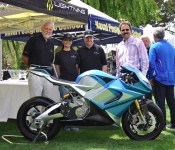
The Lightning LS-218 boasts a model number that actually means something. Back in 2012, a prototype of the electric bike clocked in a wholly unnecessary (yet much appreciated) 218mph, helping it to win at Pikes Peak and setting it up to become the world’s fastest production motorcycle. The finished version is now ready to make good on that promise, having just been revealed at the Quail Motorsport Gathering in California, prior to a scheduled launch in the summer — at which point it’ll likely cost upwards of $38,000.
The bike has a much sharper look now, but the key specs are just the same, including a liquid-cooled 200-horsepower motor and a max range of 180 miles, depending on which battery option you choose. The weight of the battery causes it to be a heavy ride (225kg / 495 pounds) compared to some gas-powered superbikes out there, but what makes the Lightning stand out is the incredible torque (168 ft-lb) delivered by its gearless, direct drive internals. If you want to get a taste of what that feels like while blowing past someone on the highway, check out the video below at 3:10 — you’ll see a white sedan disappear into the background so quickly that you can barely identify the make.
Filed under: Transportation
Via: Gizmag
Source: Lightning Motorcycles
 AIVAnet