


SmartThings brings a truly connected home closer to reality

The connected home is an inevitable reality, but it’s a market still in its infancy. SmartThings wants to be at the forefront of this expanding realm and today it’s announcing a number of updates and initiatives that it thinks will give it an unquestionable lead. The first piece of the puzzle is an updated app with a streamlined UI that exposes more functions and simplifies the setup process. For the company the new apps is about trying to polish the rough edges further and remove the last few obstacles to adoption. It will also give more exposure to third-party developers by making Labs, which was debuted at CES, far more visible. The new app is available today on iOS, but Android users will sadly have to wait until early June to enjoy it. But this is just a small part of a much bigger effort that marks the official launch of the “SmartThings Platform.”
Reducing the clutter and noise for consumers is essential, but so is empowering its over 5,000 developers and hardware partners. SmartThings is looking to take the app store approach to the whole thing. While you’ll still be able to manually control your switched or set up your own automated triggers, the focus will be on pre-programmed recipes. Those will be sorted in a number of different ways to simplify discovery, for example you can browse by device, action or the type of alert your looking for. Surfacing these apps is the first of a two pronged attack, the second is find hardware solutions to the problems you’re looking to solve. So, if you want to get a notification when someone walks down the driveway the app will point you to a compatible motion detector if you don’t already own one.
The final element is a certification program that will launch with over 100 approved devices and will also apply to apps. Devs can even submit apps for approval with a single click from within SmartThings developer tools. It will let the company guarantee a level of compatibility to all customers and quietly move away from producing its own hardware. And, the fewer resources it spends on building sensors the more it can throw at building a truly consumer friendly connected home platform.
Filed under: Household

Russia invests in homegrown tech with Visa and Mastercard out of the picture

America’s sanctions against Russia have already had an impact on high-level space and satellite projects, but it’s clear this is just the beginning of the growing technological separation between East and West. Ordinary Russians are starting to be affected too, especially now that Mastercard and Visa are forbidden from processing many of their credit card transactions. According to Bloomberg, the Kremlin sees the disappearance of US-based financial services as a “betrayal.” It’s looking to wean the country off foreign banking services, starting with a law that would allow all state employees (more than 20 million people) to be paid via a totally new, homegrown card platform.
As a result, the country’s central bank predicts a surge in demand for Russian-made microchip cards. And, if more citizens start to look internally for alternatives to American products and services — such as Yandex instead of Google — then many other Russian companies will stand to benefit from sanctions. Consumers may potentially benefit too, from cheaper prices or better control over their data, especially now that Facebook is required to store all information about its Russian users within domestic datacenters. In the long-term, however, they’ll also run the risk of being left on a technological island, or perhaps in an isolated bloc with China.
Source: Bloomberg

Oculus VR and Palmer Luckey being sued by CTO’s former employer

Oculus VR and co-founder Palmer Luckey are being sued by Zenimax Media and id Software, the former employer of Oculus VR chief technical officer John Carmack. The suit claims that John Carmack, while employed by id Software (owned by Zenimax Media), stole and misappropriated “trade secrets relating to virtual reality technology.” The suit was filed in Texas (where id Software is located), and follows up on legal claims Zenimax was already making public. For its part, Oculus VR denied Zenimax’s claims in a followup response, which stated, “There is not a line of Zenimax code or any of its technology in any Oculus products.” Oculus CTO John Carmack openly worked with Palmer Luckey in the lead up to the Oculus Rift’s tremendously successful Kickstarter campaign, and Carmack eventually joined the company full-time last year.
Developing …

Next Android looking to change navigation buttons

The next version of Android, whether it be 4.5 or 5.0, is possibly looking to change up the look of the interface a lot more than the subtle changes from Ice Cream Sandwich to Jelly Bean to KitKat. We’ve already seen the leaks of their redesigned stock icons, code named “moonshine”, and now we’re seeing a different navigation bar

The typical home button has been replaced with a Google logo, providing evidence that Google is looking to integrate their services even further into Android, like they have with KitKat’s Google Now Launcher. The multitasking logo is a bit different as well, and the only reason I can think of why is because of possibly how Google is going to list your recent apps menu. We’ve heard rumors before that Google is looking to change the Android UI completely, so perhaps multitasking will be a whole different thing in the next Android.
While I am a fan of Google changing up Android and integrating Google Now more, I’m not sure how I like the idea of having the Google logo as my home button. However it’s too soon to tell what they really have in store for us so I will be my judgment at bay.
source: techit.co.il
The post Next Android looking to change navigation buttons appeared first on AndroidGuys.

Google jumps over Apple and becomes the most valuable brand

Google became the most valuable brand in the world by leaping over Apple, at least according to Millward Brown’s 2014 100 Top BrandZ report. According to them Google had a 40% increase in value and is now valued at nearly $158.9 billion. Google Glass (which is in open beta now) certainly had something to do with that revenue bump.
Apple is not worth approximately $147.9 billion and according to Millward Brown they had a decrease of 20%, unlike Google. This could change when the iWatch and the larger iPhone hit the market though, considering they didn’t already, that might have something to do with the decrease in value.
In the 3rd place is IBM valued at $107,5 billion with a decrease in value of 4%, 4th is Microsoft $90.1 billion and an increase of 29%, and so on. You can check the rest of top 10 most valuable brands on the image above.
VIA: PhoneArena
SOURCE: Millward Brown
The post Google jumps over Apple and becomes the most valuable brand appeared first on AndroidGuys.
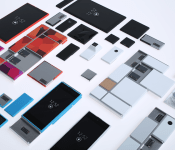
Unexpected manufacturer to provide Project Ara processors

It looks like neither Qualcomm, Nvidia, Intel or MediaTek will be providing the processors for Google’s upcoming Project Ara. It turns out Toshiba has been partnered with Google ever since the project began to provide the right types of chips for the modular phone that can support the many electric signals being transferred from one slot to the next.

Toshiba say it will provide three different types of chips for the phone, probably varying in speed.
The story is accompanied with the fact that Ara phones will start as cheap as $50, but this is probably for the bare-bones of the phone and will not include any additional parts. Each Ara phone will have 5-10 module slots, probably depending on the size of which one you get. Google did confirm that Ara will come in three sizes, small, medium, and phablet. While we don’t know the exact dimensions of each, we can assume the small will be around 4-4.3 inches, the medium around 4.7-5 inches and phablet around 5.5 inches.
Source: Nikkei
The post Unexpected manufacturer to provide Project Ara processors appeared first on AndroidGuys.
Android 4.4 Starts to Roll Out for Sony Xperia Z, ZL, ZR and Tablet Z
It is always nice to see an OEM stick to their promises. Just over a month ago Sony’s blog announced that the Sony Xperia Z, ZL, ZR and Xperia Tablet Z would all be getting Android 4.4 in May. Well, May is here and 3/4 of the way over and Sony has announced that the update is finally starting to roll out.
 Img via Robert Forslund
On Sony’s blog they outline that the Android 4.4 KitKat update for the devices named above has started today for select markets with more to follow in coming weeks. The update brings in all the usual Android 4.4 goods and fixes that you might have been watching everyone else enjoy. It also offers up a revamped Status Bar and Quick Settings panel.
-
As you might expect, we’re also uplifting Sony’s entire native app portfolio to the latest versions bringing tweaked / improved / current experiences for one and all… some of our favourites look like:
-
Messaging – a few UI adjustments here & there, including a slicker “send” animation, and deeper Emoji support for some expressive fun… also worth noting, you’ll find smileys wherever there’s an app with a keyboard

-
-
Email – you’ll be able to both load and see more mails… but don’t fret, navigation of said load is easier with a more responsive viewing pane – split screen modes divide info for easy digest… especially useful / works a treat on Xperia Tablet Z
-
Smart Social Camera – our social imaging experience makes its debut on our first Z Series devices; a selection of Xperia Camera apps directly accessible from your viewfinder… including personal favourite “Creative Effect”, and more for download to boot!
-
Battery STAMINA Mode – level-upping our unique power management feature, bringing smarter data management & more for prolonging your juice.
The WALKMAN and Album and Movies media apps are also getting an updated UI and are integrated into the Sony Entertainment Network cloud service with better download speeds and more. The update also makes the slightly older devices compatible with the SmartWare Experience SmartBand SWR10 and Lifelog App.
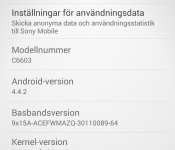
Unfortunately Sony doesn’t lay down the planned locales and regions for us, but we do know the above image is from the update that Robert just installed this morning in Sweden. It is unclear if the T-Mobile variant of the Xperia Z will be picking this update up or not. The current Xperia Z1s on the network is still sitting on Android 4.3, so I would imagine they would want to start there if they do anything at all.
Any devices owners out there seeing the update? Did you pull it from the PC companion app or via OTA, and where are you located?
Via Sony Blog
//<![CDATA[
ord = window.ord || Math.floor(Math.random()*1E16);
document.write('’);
//]]>

Hacker Team Claims Compromise of Apple’s iCloud and Activation Lock, Possibly via SSL Bug
 A pair of hackers from the Netherlands and Morocco, identifying themselves as AquaXetine and MerrukTechnolog, claim to have compromised the security of Apple’s iCloud system for locking iOS devices.
The hack will unlock stolen iPhones by bypassing Activation Lock, making it possible for thieves to resell the phones easily on the black market, reports Dutch publication De Telegraaf [Google Translate]. It also may provide hackers with access to Apple ID passwords and other personal information stored in Apple’s iCloud service.
The hackers reportedly worked on the vulnerability for five months, studying the transmission of data between iPhone handsets and Apple’s iCloud services. The pair claim to be able to unlock a locked iPhone by placing a computer between the iPhone and Apple’s servers. In this configuration, the iPhone mistakenly identifies the hacker’s computer as one of Apple’s servers and follows instructions provided by the nefarious computer to reverse activation lock on the handset.
While the hackers did not reveal precise information on how their intercepting computer can spoof Apple’s iCloud activation servers, it appears that they may be taking advantage of an SSL bug that is present in iTunes for Windows, as noted by iPhone in Canada, who spoke to security researcher Mark Loman about the issue. The previously disclosed issue was fixed in iOS 7.0.6 and OS X 10.9.2, but it appears that iTunes for Windows is still affected.
After looking into some claims of the jailbreak community, Mark Loman decided to do some investigating of his own and made a shocking discovery. SSL has two tasks: one, to verify communication with the intended server; and two, to prevent manipulation.
“The problem is with verifying the certificate. Apple appears to have deliberately left out this essential step required for proper secure communication. They fixed it last month for iOS but forgot to fix it for iTunes. But the jailbreak community is already making use of it — which is how I figured it out.”
The vulnerability reportedly allows hackers to intercept Apple ID credentials, which can then be used to unlock iOS devices that have been locked after having been lost or stolen.
Actually, the data IS encrypted. But when an attacker strips SSL during a so-called man-in-the-middle attack the AppleID account name and password can be extracted as they are sent in plain text inside SSL, Mark Loman said in an email sent to iPhone in Canada.
Using this technique, the hackers claim to have unlocked 30,000 iPhones in the past few days. The group allegedly contacted Apple about this vulnerability in March, but Apple never responded, prompting the hackers to go public with the information.
EE launches own-brand 4G ‘Eagle’ tablet for £199

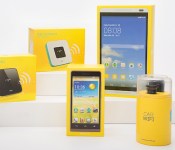
Something told us that when EE unveiled an own-brand smartphone, a tablet wouldn’t be far behind. The UK’s biggest operator today confirmed it’s launching a new 8-inch Android slate, it’s called the Eagle and it’ll set you back £199 on a pay-as-you-go tariff or £49.99 if you sign up to a £15 pay monthly plan. For that, you’ll get 1.6GHz quad-core processor, 1GB of RAM, 16GB internal storage and a 5-megapixel rear camera. EE says it offers “specifications and features traditionally associated with more expensive devices,” but you might know it as a rebranded version of the Huawei MediaPad M1 8.0. While Tesco’s Hudl commands only a £119 price tag, it lacks mobile connectivity. Google’s Nexus 7 does offer LTE, but that’ll cost you £299.
The Eagle isn’t the only avian-themed device EE is unveiling today: there’s also the Buzzard, a £49.99 plug-and-play 4G MiFi designed specifically for your car that’ll let you add up to 10 connections; the Kite, a £69.99 MiFi for business users; and the Osprey, a slightly cheaper 4G WiFi unit designed for younger customers. All of the carrier’s new devices will be available from May 28th — we expect to get an Eagle in our possession, so keep an eye out for our full review in the near future.
Filed under: Tablets, Wireless, Mobile
Source: EE Press Office

Land a role in the new Star Wars movie just for donating to UNICEF

Admittedly, we’re pretty stoked about the next instalment in the Star Wars saga — specifically seeing the old cast back in action. J.J. Abrams announced the Star Wars: Force for Change initiative from Episode VII’s set in Abu Dhabi this morning. Abram’s company Bad Robot, coupled with Disney and Lucasfilm will use Force for Change to help bring creative solutions to some of the world’s greatest problems. The initiative’s kick off would see your $10 entry fee go to Unicef’s Innovation Labs and Programs and the winner get a role in Episode VII. Yeah, you’ll get to flown to England with a friend, become J.J.’s VIP guest, get hair, make-up and costume sorted for your role. Have deeper pockets? Using the Omaze fundraising platform, entrants can choose all kinds of entry points and get gifts — think Kickstarter for charities. For $5k you get 500 chances to win and a replica lightsaber, for a cool $50K, 5,000 entries and a chance to see the film ahead of the rest of humanity. This first round in what we hope will be an ongoing charity saga, starts today and runs until July 18.
Via: The Verge
Source: Omaze — Star Wars
 AIVAnet