



Edward Snowden wants you to call him what he is: a trained government spy

Edward Snowden has been called a variety of things: whistleblower, patriot, traitor. But when it comes to his technical expertise, he’s usually just referred to as a hacker, contractor or some flavor of system administrator. That, Snowden says, doesn’t do his role and background justice. In an excerpt of an NBC interview, Snowden asserts that he’s a technical expert “trained as a spy in sort of the traditional sense of the word,” worked undercover and overseas for the CIA and NSA, lectured at a counterintelligence training academy and implemented systems for the government “at all levels.” According to the infamous whistleblower, he qualifies as a spy in the classic sense since he “lived and worked undercover overseas – pretending to work in a job that I’m not – and even being assigned a name that was not mine.”
So, how does Snowden claim Uncle Sam gets away with obscuring his experience? By pointing to the less illustrious portions of his resume, of course. “But what they’re trying to do, is they’re trying to use one position that I’ve had in a career here or there to distract from the totality of my experience,” Snowden explained. “So when they say that I’m a low-level systems administrator, that I don’t know what I’m talking about, I’d say it’s somewhat misleading.”
You can feast your peepers on the clip below, and catch NBC’s full chat with the international man of mystery when it airs tonight.
Filed under: Misc
Source: NBC
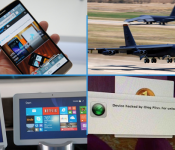
Engadget Daily: LG announces the G3, Toshiba unveils three new tablets, and more!

We went hands-on with LG’s newly announced its G3 smartphone, took a look at Toshiba’s latest trio of tablets, learned that the legendary B-52 bomber is still a force to be reckoned with and more. Read on for Engadget’s news highlights from the last 24 hours.

LG’s G3 flagship is a bigger, simpler, higher-res smartphone
Today, LG announced the G3, and yes, it is equipped with a beautiful 5.5-inch Quad HD display and laser autofocusing feature. What’s more, we managed to go hands-on with the handset. So click on through for our impressions and photos.

The US Air Force’s oldest bomber is now a flying network
The B-52 bomber is one of the most reliable aircraft ever designed, but at over 50 years old, it seems an upgrade is in order. Now outfitted with a modernized communications system called CONECT, the B-52 plans to keep on truckin’ in this era of real-time data transmission.

Toshiba’s new tablets are aggressively priced, especially its $110 Android slate
Today, Toshiba added to its lineup of slates with the 8- and 10-inch Encore 2, as well as the Excite Go. Sure, they aren’t the fastest tablets on the block, but they do have very attractive price tags.

Australian Apple users held to ransom by Find My iPhone hacker
A group of hackers managed to lock a few Australians out of their iPhones… using Apple’s own Find my iPhone feature. Several victims were spared because they already had a passcode in place, but others weren’t so lucky.
You also might like:
Filed under: Misc
German scientists make it possible to fly a plane with your brain

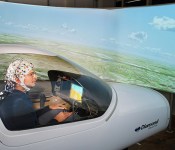
Mind control technology gives you the capability to do things you didn’t think possible — like piloting a plane even if you have zero flying experience. A team of researchers from the Technische Universität München and the TU Berlin in Germany have not only developed the technology to fly planes with thoughts alone, but also demonstrated how precise it is. The scientists, led by Professor Florian Holzapfel, had seven subjects (one with no cockpit experience at all) use a flight simulator, and apparently, they all navigated the virtual skies with enough accuracy to pass a flying license test. To make the brain-to-plane communication possible, the group outfitted the subjects with a cap connected to EEG electrodes. Signals from the subjects’ brains were then translated into commands using an algorithm developed by the TU Berlin scientists.
According to Tim Fricke, head of this EU-funded project called Brainflight, the research’s long-term goal is to make flying more accessible to more people. We doubt the Average Joe can put on an EEG cap and fly any plane soon, but in the meantime, the technology could make flying safer as it gives pilots the freedom to do more tasks in the cockpit.
Filed under: Misc
Via: TechCrunch
Source: Technische Universität München

Volvo building an electric roadway to wirelessly charge buses

Not content with its energy-sipping plug in hybrid buses, energy-friendly Gothenburg, the Volvo Group and Swedish Transport Administration have announced grand plans to hopefully augment its Hyper Bus fleet with inductive charging. Hyper Bus, or Hybrid and Plug-in Extended Range Bus system, recharges its power supply with a quick charging rig that takes only five to eight minutes to top up power at the end of the line. This quick charge enables the bus to run most of its route on electric power alone because it doesn’t need to stop for hours to juice up. One-upping itself, the program is now looking at creating a test route dubbed: ElectriCity — clever, right? — which will feature a 300 to 500 meter (roughly 1000 to 1500 feet) inductive charging pathway. Aimed at replacing those quick charging stations, the test route will zap the bus’ power source wirelessly while it’s in motion. The group hopes to have a system up and running in central Gothenburg sometime in mid-2015. Bonus? If your stop happens to be near the wireless charging area, someday laying a phone down on the road could help boost your battery life — or melt the handset — while you wait.
Filed under: Transportation
Via: Autoblog
Source: Volvo Group

Google whips up its own self-driving vehicles that lose the steering wheel and pedals

Google has been tweaking its self-driving car project for years, but now it’s taking another big step. Later this summer it will start testing prototype vehicles it’s designed from the ground up, instead of merely retrofitting existing vehicles. Announced tonight the the Code Conference, the new prototypes aren’t equipped with a steering wheel, mirrors, pedals or other vestiges of vehicles gone by, and for now are limited to a maximum speed of 25MPH. As explained in an early preview to Re/code, the car is driven entirely by computer, with backup automated systems for brakes and steering that would take over in case of a failure of the primary setup. So far, Google says it’s not planning to sell the vehicles itself, but is looking for “friends and partners to bring them to market. Following rumors from late last year, the automated cars could partner with a “friend” like Uber for a delivery service that runs on autopilot. Take a peek at test drives and demo videos explaining how the cars work after the break.
Developing…

The prototypes shown have a rounded, cartoonish appearance, and Google says they’re built with foam and flexible windshields that reduce the chance for injury if they do collide with anything. Before they hit the road entirely sans-drive though, Google will need to address regulations requiring a test driver inside. It expects new legislation will allow for the fully-automated vehicles soon, which we guess is bound to be better than the texting, eating or napping drivers we currently share our commutes with.
Would you buy a self-driving car powered by Google?
Filed under: Transportation, Google
Source: Google Blog, Re/code

Valve: don’t expect to buy a Steam Machine until 2015

Looking forward to putting a gaming PC in your entertainment center? Keep waiting: Valve says it doesn’t expect to officially launch its Steam Machine until 2015. The delay was announced in a rather casual blog post, and the update is loosely worded — it’s a “release window,” not a promise. The quality of the controller seems to be the main thing holding back the release: Valve says its getting a substantial amount of feedback. “It means we’ll be able to make the controller a lot better,” the company writes. “Of course, it’s also keeping us pretty busy.”
Naturally, the firm is eager to get the Steam Machines into consumer hands, but says it wants to ensure that its customers are getting “the best gaming experience possible.” Of course, delaying the launch of the official controller could have unforeseen repercussions: by the time the platform launches in 2015, the prototypes we saw at CES may very well be outdated. A harrowing thought — but at least Valve’s launch partners have the rest of the year to tweak their hardware designs.
Filed under: Gaming
Source: Valve
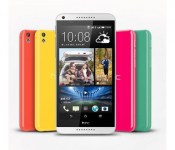
HTC Desire 816 starts selling in India at INR 25,000
The HTC Desire 816 finally went on sale in India this week at a price tag of INR 24,000. HTC Desire 816, a mid-range phablet was announced during MWC earlier this year. It comes with a large 5.5 inch HD screen, quad-core processor, 1.5 GB of RAM, dual SIM card slots and a 13 MP camera at the back.

HTC Desire 816
The Desire 816 competes with Samsung Galaxy Grand 2 and Sony’s Xperia T2 Ultra in its price range. The Xperia T2 Ultra comes with a relatively larger 6 inch screen with HD resolution, similar quad-core processor, Android 4.3 Jelly Bean, dual SIM card slots and a 13 MP camera. Although it gets a bigger 3000 mAh battery, which is higher than the 2600 mAh one on the HTC Desire 816.
Source: MySmartPrice
//<![CDATA[
ord = window.ord || Math.floor(Math.random()*1E16);
document.write('’);
//]]>

Microsoft Demos Skype Translation Tool Coming Later This Year
At today’s Re/code Code Conference in Ranchos Palos Verdes, California, Microsoft CEO Satya Nadella and Skype chief Gurdeep Singh Pall demoed an real-time language translation tool) that has been built into Skype.
During the demonstration, Pall conducted a conversation with a German-speaking colleague, with Skype providing real-time translation from German to English and vice versa. According to German speaking audience members at the conference, the translation software performed “pretty good” but not perfectly.
 Nadella and Pall demo Skype Translator at the Code Conference
Skype Translator results from decades of work by the industry, years of work by our researchers, and now is being developed jointly by the Skype and Microsoft Translator teams. The demo showed near real-time audio translation from English to German and vice versa, combining Skype voice and IM technologies with Microsoft Translator, and neural network-based speech recognition.
Microsoft hopes to use the huge number of conversations that take place on Skype to improve its translation tools with real language and speech patterns, which could lead to much better back and forth translations. Pall says the company is “working through” potential privacy issues that surround the use of customer calls.
While Microsoft plans to debut Skype Translate on the Windows platform later this year in a beta capacity, the company says that it will expand to other platforms, including OS X and iOS, shortly after the Windows version launches.
Microsoft will start with a handful of languages and only for the Windows version of Skype, though Microsoft hopes to quickly add more languages as well as support for the many types of computers and mobile devices that Skype customers use.
At launch, the Skype translator will only work with a small number of languages, those that “it can do well” but Microsoft has plans to continually add additional languages to the app as development progresses.

Apple to Announce Beats Acquisition This Week, Drops Price to $3 Billion
Apple’s rumored acquisition of Beats will indeed happen, just for a slightly reduced fee, according to a report from the New York Post this evening. The acquisition, which was originally reported to be roughly $3.2 billion for both Beats companies — the headphone and consumer electronics division as well as the streaming music service — will now happen at $3 billion.
Since the acquisition was originally reported on May 8, Spotify — the leading player in the subscription music field — announced that it had 10 million paying subscribers, and this could have given Apple additional negotiating leverage.
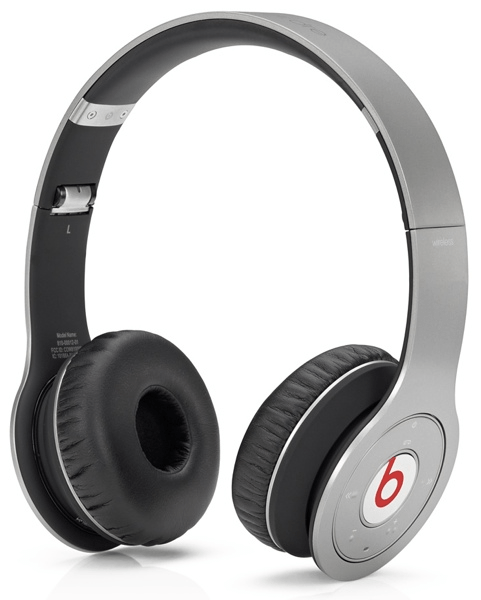
Still, the company is understood to place a high value on the profitable Beats audio business which retails headphones — costing up to $450 — and speakers around the globe.
That business recorded sales of $1.3 billion in 2013.
“Apple hadn’t even begun its due diligence process when news of the number came out,” one source close to the talks said Tuesday.
The paper notes that both Jimmy Iovine and fellow Beats co-founder Dr. Dre are expected to attend Apple’s Worldwide Developer Conference next week. Dre is expected to net somewhere around $750 million from the sale as he currently owns approximately 25 percent of the company.

The US military wants brain implants to treat combat trauma

For soldiers coping with brain injuries and post-traumatic stress, coming home may be tougher than the actual fighting; their conditions can last a lifetime. Long-term relief may be on the horizon for US veterans, though. DARPA is supporting the White House’s brain mapping initiative by funding the development of implants (conceptualized below) that alleviate the symptoms of warriors’ mental problems, ranging from PTSD to extreme depression. The technology, built by Massachusetts General Hospital, Draper Laboratory and UC San Francisco, will use sensors to watch for unusual neural activity at multiple parts of the brain. If something’s wrong, the implants will use deep electrical stimulation to restore healthy activity — permanently, if possible.
Affected veterans will have to wait a while to see results. Clinical trials for the implants aren’t expected until five years from now, and it’ll take longer still for a wide-scale deployment; researchers want to be cautious and avoid the ethical problems inherent to altering someone’s mind. Eventually, though, returning troops may get to leave most of their stress on the battlefield.
[Top image credit: AP Photo/Chitose Suzuki]

Filed under: Wearables, Science
Via: Boston Globe
Source: Massachusetts General Hospital, DARPA
 AIVAnet