



Wild Rumor of Apple EarPods with Biometric Sensors Has Roots in Apple’s Research
A seemingly wild rumor of Apple planning to launch new EarPods headphones with integrated heart rate and blood pressure sensors has been making the rounds today after the claim was posted on anonymous information sharing platform Secret (via Reddit).
Apple’s new EarPods will have sensors in them, for heart rate & blood pressure. Also iBeacons so they don’t get lost. They will require the lightning port, it’s why the audio jack was moved to the bottom. […]
It stores the data in a similar way to thumbprint point data, fully encrypted and nothing identifiable. But nice to send to your doctor to keep track of at which point your blood pressure started rising for example. […]
Redesigned remote too. Extra mic for better noise canceling.
While a number of major tech stories have in fact broken on Secret, the anonymous nature of the platform makes it all but impossible to separate legitimate claims from fiction without corroborating information from other sources. As a result, it’s easy to dismiss this EarPods rumor from someone claiming to have recently been let go from Apple.
But what makes the rumor a bit more interesting is that it has roots in Apple’s research as documented in patent applications dating back years. Whether the Secret rumor is a fake inspired by those patent filings or if there actually is something to it is unknown, but it’s worth taking another look at what Apple has proposed.
In one patent application filed in March 2007 and claiming a priority date of September 2006, Apple proposes using sensors integrated into various accessories or even devices themselves to collect physiological data.
The present invention can include systems and methods for integrating sensors for tracking a user’s performance metrics into electronic devices and accessories therefor. In one embodiment of the present invention, the electronic devices can include portable media devices similar to iPods sold by Apple Inc. of Cupertino, Calif. or cellular telephones similar to iPhones designed by Apple Inc.
In one embodiment, the present invention can include headsets having one or more integrated physiological sensors. The headsets can be, for example, headphones for receiving audio signals from a media device or headsets for communication with cellular telephones. The sensor signals can be transmitted to a data repository through the same communication channel through which audio signals are transmitted to the headset (e.g., hard-wired or wireless).
 Apple’s concepts for sensor clipped onto earlobe (left) to monitor pulse/oxygen levels or adhered to the skin (right)
Alternatively, Apple proposes using sensors embedded in an iPod or iPhone “sling” armband to monitor such data. Notably, two of the inventors listed on the patent filing are longtime accessories head Jesse Dorogusker, who moved to Square in 2012, and “father of the iPod” Tony Fadell, who left Apple in 2008 before starting Nest.
A second filing, which was granted as a patent this February, more directly addresses headphone-based physiological monitoring, although the application is also quite old, having been filed in August 2008 with an October 2007 priority date.
The invention pertains to a monitoring system that can be placed proximate to the head or ear of a user. According to one embodiment, the monitoring system can be used with a hearing device, headphones, earbuds or headsets. The monitoring system can, for example, be used to monitor user activity, such as during exercise or sporting activities. The positioning of the monitoring system can also facilitate sensing of other user characteristics (e.g., biometric data), such as temperature, perspiration and heart rate.
Advantageously, the invention can provide monitoring capabilities within a hearing device. Assuming the user is otherwise using the hearing device, such as to provide audio output by a portable media player, the user gains monitoring capabilities without requiring the user to wear or carry an additional article.
 Apple’s concepts for sensors integrated directly into earpiece (left) or in a separate housing (right)
Biometrics have been rumored to be a significant part of iOS 8, with a new “Healthbook” app for tracking various types of health-related information being a key addition to Apple’s mobile operating system. With Apple also rumored to be deploying biometric sensors in an upcoming iWatch, it’s clear that the company has been looking at ways of collecting health-related data for many years and the effort may finally be coming together.
64GB Patriot Stellar OTG USB 3.0 on sale for $24.99

We previously reviewed and the Patriot Stellar OTG USB 3.0 external flash drive and the results were, well stellar. It’s fast, compact, well-made and is perfect for those needing extra storage for their devices. There was a prior promo through Patriot and Amazon to get a 32GB Stellar for $24.75 which expired. Well, Newegg has just doubled down and you can get the 64GB version, which normally goes for $38.99 for $24.99 after you include a $14 rebate card. Check it out and get yours today.
//<![CDATA[
ord = window.ord || Math.floor(Math.random()*1E16);
document.write('’);
//]]>

Edward Snowden’s OS of choice, the Linux-based Tails, is now out of beta

Edward Snowden knows better than most how effectively the NSA can scope us online, so that’s why he used the Amnesiac Incognito Live System (Tails) to cover his own whistleblowing. That OS is now out of beta as version 1.0, letting you surf on most PCs while leaving zero trace of your activities. Its anonymizing apps include email and IM clients, an office suite, a web browser, image and sound editors and the infamous Tor anonymity network system. There’s no need for an installation, as it can run from a USB key, DVD or SD card independently of your existing OS, without touching your hard drives. If you’ve used the app before, the (anonymous) developers are advising you to grab the new release, as there are a host of security and bug fixes.
Filed under: Desktops, Laptops, Software
Via: CNET
Source: Tails project

PlayStation 4 indie devs are already using Project Morpheus

Becoming an independent PlayStation 4 developer is easy, Sony’s Adam Boyes tells us: “You just have to sign up.” The PlayStation VP of publisher and developer relations was explaining what the company has done to woo indie devs. Half the job was just making developer programs more accessible. “Before GDC last year we didn’t even have a website where you could go and find out about it, but now we have a very well thought out process.” Boyes says that anyone who qualifies as an independent developer can get a free (loaner) developer kit, too — a similar deal applies to Project Morpheus, too.
“It’s a very similar process,” he told us. “if we’re working with you closely, then the [VR] dev kits are going to come through a loan program.” Even so, PlayStation has to dole out the headsets carefully. There just aren’t that many to go around. “The only real concern is supply,” he explained. “We have to do what makes sense, as far as when we send it to different developers.”
Short supply hasn’t stopped Project Morpheus from getting attention in the indie world. “A lot of them are trying it out and seeing how it works. Getting to know how it runs,” Boyes told us. When asked about the fruits of their labors, he backpedaled, reminding us that Morpheus is just “sort of a tech project” that PlayStation is working on. It’s not a product yet. Lest you forget, Morpheus is still in the prototype phase, and the only release window for a final version is, “not this year.” We expect Sony will stay reserved when it comes to Morpheus claims for some time, until the hardware is in better shape.
Still, Boyes is focused on giving independent developers the tools they need to build new and interesting gaming experiences — VR or otherwise. “Being able to facilitate those great ideas that are kind of… crazy and nuts, that’s what gamers want, right?” Boyes said. “We need to be agile, and allow them to get on the platform so those crazy ideas can come bear.”
Boyes demonstrated that agility in the announcement last evening of another gaggle of indie games headed to PlayStation platforms, many embodying those “crazy ideas” he spoke of during our interview. Joystiq‘s got a rundown of all those titles, including indie hits like Nidhogg and Escape Goat 2, right here.
Filed under: Gaming, Peripherals, Wearables, Software, HD, Sony
Remembering BASIC on its 50th birthday

Nowadays, “basic” has a very different and derogatory Urban Dictionary-style meaning. Fifty years ago on this very day, however, it was the name given to a new computer-programming language born in a Dartmouth College basement. Devised initially by a group of the school’s undergraduates and professors, BASIC’s initial academic purpose was simple: to enable time-sharing on Dartmouth computers with an easy-to-learn, English-based language. Programming itself has greatly evolved since, but our early memories of coding in BASIC are no less fond.
Jose Andrade
 I was about 10 years old when my aunt decided she didn’t know what to do with her Commodore 64 and gave it to me. I was thrilled. I’d played games on an Atari 2600 before, but this was different. This was a real computer.
After playing more advanced games on the C64 for a few months, I realized I could do something called “programming.” Somewhere, I found a manual for BASIC and tried out my first commands:
10 PRINT “JOSE”
20 GOTO 10
Suddenly, my name was scrolling on the screen. The computer was calling me! This may sound simple and probably even dumb today, but it changed my life. I’d made something. I’d made a computer execute a program, and it had my name all over it.
BASIC on a Commodore 64 was very limited; well, it was extremely “basic,” of course. I never did much with it, though I did create a few question-and-answer games that I played with my cousin. No matter what, looking back, I appreciate that BASIC opened the doors to something bigger. It made me realize that I could actually create things thanks to technology. It made me fall in love with technology and programming.
When I was a teenager, I thought I’d grow up to become an attorney or diplomat and use technology in my spare time. In fact, I went to law school for a couple of years as an undergrad in Ecuador, but then dropped out. I didn’t want to spend my life surrounded by suits and bureaucrats. So I went back to college, but this time to pursue a computer science degree.
While I couldn’t say that BASIC alone was the reason why I now live and breathe technology, that first GOTO statement certainly helped me become the person I am now.
Dave Schumaker
 During the summer of 1994, I vaguely remember my parents strongly hinting that I should go outside more. Being a really nerdy kid, I had an aversion to things like sunlight, sports and socializing with others. But my parents kept insisting that I needed to do something to “get out of the house.” One of their ideas was that I look into some “fun” summer classes run by my middle school. “I’ll show them,” I thought, and immediately looked for anything that’d give off a comforting glow from a cathode-ray tube. I found two options:
1. An introduction to HyperCard
2. Learning to program with BASIC
Since I was about 12 years old at the time, I remember thinking, “Who would use HyperCard? And who would use a Mac?” (We were a die-hard PC house at the time.) I don’t think I had a strong preference toward either, but I remember ultimately choosing the BASIC course because of that QBASIC Gorillas game. I always wanted to make my own games, and thought that maybe taking this BASIC course would help me understand the source code of that game.
Summer came and went and about the only things I mastered were GOTO commands and how to display someone’s name when they typed it in. “Hello, David!” ended up being an output screen that I saw fairly often and basically represented the extent of my coding abilities at the time.
The next semester, we were given an assignment to “invent the future.” It required teams of students to come up with some idea from the future that would change our lives and demo it in front of the class. Then we’d discuss the pros and cons of each invention. A lot of groups made cardboard or papier-mâché models of things like toasters and food processors that would predict what we wanted for breakfast and make it. I partnered up with a fellow nerdy friend and we created the World Wide Web in BASIC!
Or at least a very simple, text-based version of it that we modeled on CompuServe and Prodigy welcome screens. It was a ridiculously simple program that had four options and made copious use of GOTO commands:
1. Check email
2. Chat with friends
3. Check weather
4. Visit a website
Thanks to that summer of learning BASIC, I continued to tinker with various programming languages as I got older. It’s never developed into anything more than a serious hobby, but it’s been fun and even useful to be able to make some simple programs that help automate various tasks. That said, 20 years later, I’m still trying to create a game that does more than say, “Hello, David!”

Frank Spinillo
 Reading the word “BASIC” instantly transports me back to my senior year of high school, when I’d gotten my first real exposure to programming. I’d done some dabbling in MS-DOS, but this course was going to be my real intro to programming. I assumed we were going to start off learning Visual Basic or go right into C++. But no, instead, we had to start from square one with BASIC. Or rather, QuickBASIC, which was Microsoft’s IDE and compiler for BASIC. What the 17-year-old me didn’t realize then was QuickBASIC would set up a nice foundation for understanding programming syntax.
The programs we made at the time were simple; nothing more than basic (no pun intended) programs to get comfortable with the language. I recall a lot of simple counting programs that scrolled from zero to 50, or only printed numbers if they met specific criteria, like being a multiple of five. I wrote a few programs that relied heavily on conditional if/then/else statements and loops.
One day, I figured out how to create sounds inside of a program with the simple syntax of SOUND. The wiseass in me thought it’d be funny to create programs that did nothing more than produce nonsensical sounds. So I did just that and filled the classroom with beeps and boops. My teacher decided it was best I keep my musical aspirations to band class and out of the computer. Still, for as simple as QuickBASIC was, I still had those moments of frustration when my program would error out. This lead to my first “a-ha!” moment; a moment many programmers experience while debugging. And that is something I will always be thankful to BASIC for.
Terrence O’Brien
 When it comes to coding, my list of accomplishments is quite short: I’ve made the light blink on my Arduino and created a crude text adventure game on an old Psion Organiser II. My crowning achievement, however, was a virus hoax I built in BASIC.
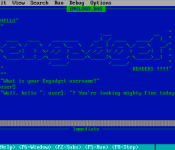
It started one afternoon as a practical joke I played on a friend’s father. The program was a rather primitive reproduction of a DOS prompt that just ignored everything he typed and, instead, pretended to execute its own commands — namely, formatting the hard drive. He’d press “w” and it would display “f”; instead of “i,” it would display “o.” This would continue until “format c:” was completed. To call the program crude would have been generous. It couldn’t even fool my Luddite target, largely thanks to the fact that I hadn’t quite figured out how to dispose of the question mark BASIC inserted at the end of every line when waiting for an input.
Over the following months, I fine-tuned it and eventually built something that convincingly recreated MS-DOS. It still basically just ignored anything a user typed, but at least now it spit out convincing error codes rather than jumping straight to the “format c:” gag. Plus, I’d finally managed to banish that pesky question mark for good while also adding in devious new features. If, for example, someone tried to run a few commands, the program would begin to taunt whoever was using it before ultimately trapping them into agreeing to run “format c:” — /Proceed with format (Y/Y)?/
When it was finally perfected, I deployed my virus hoax on its ultimate mission: My father’s place of work. (Now would be a good time to clarify that my father worked at a major international bank.) I walked around his office with a loaded floppy disk and set it running on a handful of computers. Although everyone quickly figured out it was a joke, there were a few moments of panic as people tried, in vain, to get their PCs to respond to their commands.

Sony expects huge loss after bailing on PC business

Here’s a euphemism to start your morning: Sony just issued a news alert, giving investors a heads-up that it’s “revising” its earnings forecast for the 2014 fiscal year, which actually ended back on March 31st. Revising! Here’s what that really means: Sony previously said it would generate 80 billion yen in income for the year. The company is now dialing that estimate down to 26 billion yen — a decrease of 67.5 percent. All told, the company expects to book a net loss of 130 billion yen (final numbers to be announced later this month). Previously, it said it would lose 110 billion. Ouch, Sony.
So what happened? How could Sony’s prediction have been so far off? What happened was a major restructuring in which Sony sold off its PC business. So, not only did Sony have to pay 30 billion yen in fees as it wound down its VAIO division; it also has loads of unsold computers that no one wants (can you blame people?). Here’s how the company put it:
Since Sony’s announcement on February 6, 2014 that it will exit the PC business, PC sales for the fiscal year ended March 31, 2014 and expected PC sales for the fiscal year ending March 31, 2015 are underperforming the February expectation. Consequently, Sony expects to record write-downs for excess components in inventory and accrual of expenses to compensate suppliers for unused components ordered for Sony’s spring PC lineup.
Adding injury to injury, the company also expects to book a roughly 25-billion-yen charge related to its disc business, which apparently isn’t doing as well as expected, especially in Europe. No surprise there: Who buys Blu-ray discs anymore? (Not Europeans, apparently.)

Apple’s WWDC 2014 to Focus on OS X 10.10 as Apple Pulls Resources from iOS 8 to Help
 According to 9to5Mac, Apple may use WWDC 2014 to focus on OS X 10.10, giving the desktop OS more attention than iOS 8 during the annual developer conference. Apple allegedly has been moving iOS user interface developers to the OS X teams in order to finish up the new design in time for early June conference.
As has been previously reported, Apple is not merging the two operating systems, opting to keep iOS and OS X as separate entities, but the next version of OS X may share similar design elements with iOS 7.
The new look will have similar toggle designs to iOS 7, sharper window corners, more defined icons across the system, and more white space than the current version. However, OS X characteristics like the Finder, multi-window multitasking, and Mission Control will not disappear in favor of a more iOS-like experience.
Apple is targeting the desktop OS for release in the fall along with new hardware that will ship with this latest OS X version. Though the internal development codename of OS X 10.10 is “Syrah,” the shipping name is still unclear, with Apple apparently securing trademarks for popular California locations that would match the new theme started with “Mavericks.”
On the iOS 8 side of development, Apple is allegedly pushing some features of iOS 8 off to version 8.1 as the company focuses intently on its next version of OS X. Though Apple may present most of the new features of iOS 8 at WWDC next month, some notable additions such as transit functionality in Maps may not be available until later versions of iOS 8.
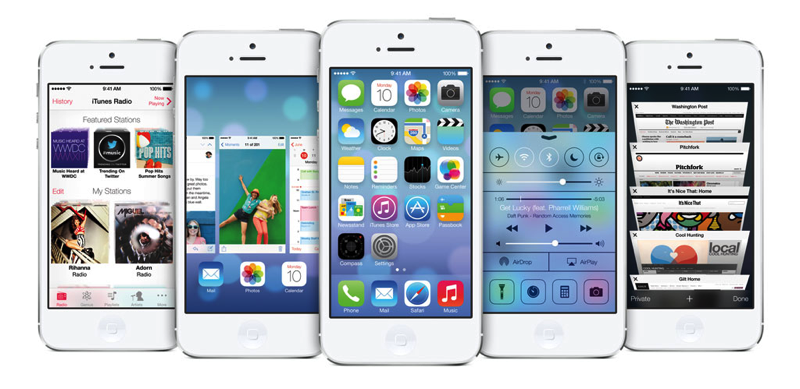
iCloud will reportedly see some significant changes in the coming year with improvements on the developer side that make it easier to implement support for the service. Siri may also see Shazam integration, allowing users to identify a song using the voice assistant. Lastly, iOS 8 is reportedly being optimized for Apple’s upcoming A8 processor and the rumored larger display of the iPhone 6.
The new iPhone’s larger display, as well as a “high-priority” iOS device that is not an iPhone, also lends itself to another core iOS 8 addition. The feature, dubbed by Apple employees as “multi-resolution support,” is designed to improve the performance of both App Store applications and the general iOS operating system across multiple new iOS device resolutions.
Apple TV is also now a priority for Apple, with the company rumored to be bringing in hardware and software engineering resources from within the company to work on the next generation device. Apple may be concurrently developing new hardware as well as a revamped iOS-based software system to power the device. Apple had hoped to introduce the hardware in early 2014, but the product’s debut has been pushed off. It is, however, unclear whether a new Apple TV will make its way into the WWDC keynote.
Samsung debuts LeBron app with ‘unprecedented access’ to athlete

Samsung on Thursday announced a brand new Android app designed specifically for Galaxy owners. Called ‘LeBron’, it gives users a look into the athlete’s life as he works his way through the NBA Playoffs. Details include photos and videos of workouts, his clothes and style, post-game commentary, and insight into what motivates him off the court. Also included in the app are lock screens and wallpapers.
Designed by Samsung in conjunction with the NBA the LeBron app is available on the Galaxy S5, Galaxy S4, Galaxy S III, Galaxy Note 3, and Galaxy Note II.
Samsung Gives Galaxy Owners Exclusive Access to LeBron James through New Mobile App
Galaxy owners get inside look into LeBron James’ life in the post-season
Dallas, TX – May 1, 2014 –Samsung Telecommunications America, LLC (Samsung Mobile) today announced “LeBron,” a mobile application that will give fans unprecedented access into the athlete’s life. Exclusively for Galaxy owners, the app provides a unique look into the life of LeBron James as he journeys through the NBA Playoffs.
The LeBron app will allow fans a glimpse inside LeBron’s world at a time when the Miami Heat player is in the midst of his busiest and most exciting time of year. The app will share never-been-seen content including photos and video both on the court and off the court along with game highlights and stats during the NBA Playoffs.
“We are creating content and services that enhance the consumers’ experience with our products,” said Todd Pendleton, chief marketing officer at Samsung Telecommunications America. “The LeBron app is the first of its kind that allows him to connect with his fans in a unique way, and gives our Galaxy owners an exclusive, insider’s view into his world.”
The exclusive content will focus on all areas of LeBron’s life, featuring four sections to browse:
- Athlete: Photos and videos of his workouts, daily life as an athlete including his routine for getting ready for games, post-game remarks and more.
- NBA Playoffs: LeBron’s season and career along with live scores from the Heat’s playoff games.
- Style: Photos and videos of his classic style, sneakers of the day, off-the-court looks, a radio that plays his favorite songs, and more.
- Journey: Insight into what fuels LeBron off the court including, his charitable work with his Foundation, as well as his home life with his wife and kids.
“Our partnership with Samsung continues to be totally innovative and exciting.” said Maverick Carter, LeBron James’ business manager and partner. “We collaborate on every project, concept, and campaign to come up with ideas that are totally authentic to LeBron and connect directly with his community. The NBA Playoffs are already so compelling and I think fans are going to love an opportunity to go even deeper.”
The app was built by Samsung in conjunction with the NBA and is available on the Galaxy S® 5, Galaxy S® 4, Galaxy S® III, Galaxy Note® 3, and Galaxy Note® II through the Google Play store.
“LeBron” also works in tandem with the NBA Game Time app allowing both apps to link together for current stats and game scores. Samsung also recently launched the Samsung Experience for select Galaxy* users available in the NBA Game Time app, featuring custom lock screens and wallpapers and special content for all NBA teams available first for Galaxy owners.
Through its partnership with the NBA, Samsung is continuing to develop unique mobile content and viewing experiences for fans. Screenshots and additional content is available on http://www.samsungmobileuspress.com.
*Samsung Experience in the NBA Game Time app is available on the Galaxy S 5, Galaxy S 4, Galaxy S III, Galaxy Note II, and Galaxy Note 3
Samsung, Galaxy, Galaxy S, and Galaxy Note are all registered trademarks of Samsung Electronics Co., Ltd.
About Samsung Telecommunications America
Samsung Telecommunications America, LLC, (Samsung Mobile) a Dallas-based subsidiary of Samsung Electronics Co., Ltd., researches, develops and markets wireless handsets, wireless infrastructure and other telecommunications products throughout North America. For more information, please visit http://www.samsung.com.
The post Samsung debuts LeBron app with ‘unprecedented access’ to athlete appeared first on AndroidGuys.
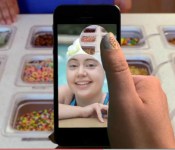
Snapchat brings Chat to its apps, video chat and instant messaging now available

Up until today, Snapchat was all about sharing disappearing photos, but now it’s so much more.
In the most recent update to its apps, which is are now available for download, it brings “Chat,” the ability to now interact with your friends and contacts through video chat and instant messaging.
After you update, all you have to do is swipe right on a friend’s name in your Snapchat inbox to start chatting.
Messages from both parties will disappear once both leave the screen, but either can take a screenshot to save anything they’d like to keep, just as before with photos. To video chat, all you have to do is go read a message from the text messaging screen and if that person is also there, just tap and hold the blue button to start a face-to-face chat.
There’s nothing like knowing you have the full attention of your friend while you’re chatting.
According to a blog post on its site, the company said that while building Snapchat, they learned a lot about what makes conversation special, that conversation feels better when it’s visual, but an important part was missing — presence.
If you’ve been in need of a way to use Snapchat as your sole instant messaging client or even just wanted to add another way to communicate to your repertoire, check it out now.
via Snapchat
The post Snapchat brings Chat to its apps, video chat and instant messaging now available appeared first on AndroidGuys.

T-Mobile boasts 2.4 million new subscribers in its best quarter ever

T-Mobile’s aggressive tactics and Un-carrier initiative is paying off…well, kinda. The second quarter figures are in for the fourth largest U.S. wireless provider and it shows T-Mobile as having gained nearly 2.5 million customers over the three-month period. It’s the best ever for Legere and Co. and would be welcome at any carrier. Growth comes from 1.8 million post-paid customers, 465,000 pre-paid subscribers; the same period last year saw them losing nearly 200,000 post-paid customers.
A year ago I promised that we would bring change to what I called this arrogant US wireless industry. We are delivering on that promise and our results reflect the growing customer revolution that we’ve ignited. – John Legere, CEO
It’s not all roses for T-Mobile just yet as they do report a loss of $151 million for the quarter, a near 180-degree turn from the $106 million profit earned in Q1 2013.
The post T-Mobile boasts 2.4 million new subscribers in its best quarter ever appeared first on AndroidGuys.
 AIVAnet