



Get an Amber Gold HTC One (M8) for $99 today only

In need of a new smartphone and want to make a bold statement? For one day only, today, you can get the all new HTC One (M8) in Amber Gold for just $99.
The deal started at 12:01 a.m. CST today and runs until supplies last, so if you’re interested, you better hop on this deal quickly.
Note that this is $99 on-contact and you can purchase the device on either AT&T, Sprint or Verizon.
HTC is also offering up to 65GB of Google Drive storage for free for 2 years, plus there is free shipping and the ability to trade in your device for credit towards the new phone.
Hit up the source link to grab your discounted HTC One (M8) now.
Via HTC
The post Get an Amber Gold HTC One (M8) for $99 today only appeared first on AndroidGuys.
Home Screen Widget ‘Blocks’ Imagined in New iOS Concept
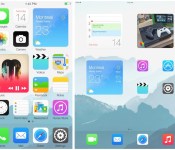
One of the more popular feature requests from iOS users has been live widgets for the home screen, similar to Live Tiles on Windows Phone and Widgets on Android. While there have been no specific rumors of widgets actually coming to iOS 8, a new concept from Jay Machalani (via The Verge) offers an excellent vision of how this could be implemented on iOS with the “iOS Block”.
Here’s how it works. On your iOS device you have your list of icons like you know and love. They work and look the same way as before. But, if you want more information about an app, you can simply pinch the app icon bigger and it will now become an iOS Block. There’s no menu, no hidden options and no weird gestures to do. You literally make the icon bigger with your finger if you want more; it can’t be simpler and more intuitive than that.
When you pinch the icon, you will see the transformation/transition into a Block and at that point you have two choices: Either you pinch it back to an icon since you got the information you need or you release your fingers and the icon will remain a Block on your iOS screen.
Malachani imagines three possible sizes for Blocks, designed to take up the space of a 2×2 grid of icons on the home screen for iPhone, iPad portrait, and iPad landscape.

Malachani goes on to outline more details on how the Blocks would be constructed with a relative uniform layout consisting of an app icon in the lower left, a tap zone along the remainder of the bottom edge where buttons could be placed, and a content zone taking up the remainder of the Block. As examples, Malachani walks through how the stock Weather, Music, Calendar, Messages, and Photos apps might look as Blocks.
As Malachani notes, the concept is still a work in progress, as he is unsure exactly how iOS would handle moving other home screen icons to accommodate a new Block on a full home screen, as the normal method of pushing icons to the next page could be disruptive depending on how frequently Blocks are opened and closed.
Apple Reportedly Asking Chinese Authorities to Crack Down on iPhone 6 Leaks
iPhone rumors this year have included a steady stream of mockups, case designs and alleged schematics for the iPhone 6 emerging from China and other Asian countries. Sonny Dickson, well-known source of Apple hardware rumors, claims this wellspring of leaked information may be drying up due to increased security efforts by Apple and Chinese authorities.
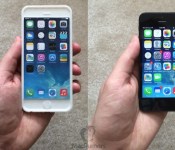
 iPhone 6 mockup (left) obtained by MacRumors and iPhone 5 (right) in the hand
Dickson claims Apple is working with Chinese officials to stifle leaks about the iPhone 6, hiring approximately 200 security officers to catch merchants who are selling accessories allegedly for the iPhone 6.
There are about 200 security officers trying to catch those who dare to sell i6 accessories.
— Sonny Dickson (@SonnyDickson) May 30, 2014
Apple is known for being a secretive company, with Tim Cook promising shortly after he took over as CEO that he was going to “double down” on secrecy when it came to future product information. Cook may be able to adequately control the flow of information from Apple’s employees by reminding them to “do the right thing,” but his power does not extend to Asian suppliers.
These overseas suppliers often are the weak link as they are privy to Apple’s unreleased products, but lack the strict oversight that discourages employees from intentionally leaking sensitive product details.

What you need to know about hologram people

Perhaps you watched the Billboard Music Awards and were aghast (or impressed) by Michael Jackson’s performance from beyond the grave. Or maybe you were at Coachella and caught a resurrected Tupac onstage with real-life Snoop Dogg. Hell, let’s say you were wooed by India’s Narendra Modi in his recent holographic stump speeches. Maybe none of the above? Well, either way, here’s a bit of disappointing news: none of those were true holograms, despite our dreams of a sci-fi future. The aforementioned performances are a product of a centuries old technique called ‘Pepper’s Ghost.” You might’ve seen this on a pretty grand scale during a family vacation to Disneyland, too. The park’s Haunted Mansion ride uses it extensively, especially during the ballroom scene where “ghosts” are dancing all over the place. The key difference between what we’re seeing now and what’s been used for the past few hundred years? The tech being used has gotten much more advanced.
WHAT IS IT?
Before we get into what this spate of digital resurrections is, let’s start with what this technique isn’t: an honest to goodness hologram, the likes of Princess Leia pleading for Obi-Wan’s help. Holograms use an array of lights to project a 3D image that’s viewable from all sides. What we’re seeing now is more of a parlor trick involving some figurative smoke and literal mirrors. Why it seems that no one much cared about any of this before the dead were involved, though, isn’t exactly clear — especially when one of the key companies behind the recent craze, Dimensional Studios, is responsible for basically all of the performances you’re familiar with. Its work dates back to Madonna performing with Gorillaz at the Grammy awards in 2006, and Al Gore speaking in Tokyo at 2007′s Live Earth concert.
HOW DOES IT WORK?
The holographic people we’ve seen are based off of an illusion called “Pepper’s Ghost,” developed by Henry Dircks and John Pepper in 1863. The concept requires two rooms, some specifically-placed glass, and carefully controlled lighting. A room adjacent to the viewing area (or stage) is set up as a mirror-image of the area the audience sees; if there’s a chair on the right of the stage, it’s on the left in the other room. The key difference is that other room is either painted black or entirely unlit, so as not to cast any unwanted reflections that would break the suspension of disbelief. That room is where the performer resides. The stage area must be brightly lit at first for the whole thing to work. Then, the stage’s lights are dimmed slightly and the lights are raised in the mirror-image room, which causes the not-physical performer to appear.
Whereas applications of yore relied on physical objects like animatronics or human beings, modern takes are a bit different. Tupac’s Coachella performance and the King of Pop’s appearance at the Billboard awards, for example, were based from meticulously detailed computer-generated models. In the case of Narendra Modi, his avatar was the result of HD video capture. As one aspect of the tech progresses, so does another. Instead of glass, the performances you’re probably most familiar with rely on something called a Musion Eyeliner 3D setup, which utilizes a digital light processing projector (DLP) — like what’s used in movie theaters — to beam an image onto a type of reflective, metallic screen instead of melted sand.
Because of that, the modern setup requires only one room: the stage. Typically, it involves the Musion screen to be at a 45-degree angle with the projector residing beneath the stage, pointing and projecting upward. For the Michael Jackson performance, however, it was a bit different. Six projectors threw the King of Pop’s video on a rear-projection screen hanging above the stage. The angled Musion-screen picked that projection up, and from the audience’s perspective, he appeared at the back of the stage. Careful placement of dancers and band members added to the illusion of depth and dimension.
WHY SHOULD I CARE?

Well, for starters, this could mean seeing a speaker wherever you might live, regardless of what their respective tour circuit is (or if they’re still living and breathing). As the technology progresses, this sort of thing could happen right in your living room and you could have a real-time conversation with friends or loved ones from around the world. If you aren’t cool with using Skype to video chat with Mom back home, though, this might not be any more comfortable.
WHAT’S THE ARGUMENT?
There’s a murky side to all of this, though. In the case of the deceased, how comfortable are we seeing the dead being paraded out to shill products posthumously? This takes something like the Paula Abdul and Gene Kelley Diet Coke commercial from the early ’90s to a new level (see that madness below).
There’s also an issue involving the uncanny valley: when artificial human features just miss the mark of an accurate recreation and come off as inherently creepy. Some have said that in the YouTube videos of the Michael Jackson and Tupac performances, something is slightly off. The movements are a little too smooth and fluid, and appear artificial as a result. This isn’t limited to digital recreations either; Modi looks a bit artificial in his simulcast speech too, as if he’s suffering from the “soap opera effect” seen on some HDTVs (moving just a bit too perfectly).
Also, what’s to stop the less than savory from recreating one of history’s most influential speakers (and greatest monsters), Adolf Hitler, to lead a new genocidal army? To be sure, there’s a possible dark side to any form of technology, but the implications of this are a touch more terrifying than some others.
WANT EVEN MORE?
Of course you do! USA Today recently sat down with the team behind MJ’s posthumous performance and got them to dish their secrets; they even cried during the show, apparently. If you’re more of a rap fan, Ars Technica poked and prodded academics about Tupac’s Coachella gig a few years back. Fancy setting up a low-fi ghostly illusion on your own? Let the folks at Make show you how its done — it’s never too early to start planning for Halloween.
[Image credit: Christopher Polk/Getty]
Filed under: Home Entertainment, Science

Engadget UK giveaway: win a Samsung Galaxy S5 courtesy of Pixa Prints

Samsung’s Galaxy S5 is the best in its flagship series to date (duh), but if you don’t have an upgrade loaded, it’ll set you back a pretty penny. If only you could get hold of a brand-spanking new one for absolutely nothing (you can see where we’re going with this, right?). Thanks to our friends over at Pixa Prints, that’s exactly what we have to offer one lucky UK reader. And, because Pixa Prints is in the business of creating personalized mobile and tablet accessories, as well as other gifts and prints from photos and designs, we’ve also got six phone cases made especially for the winner to keep their new GS5 cosy. If you fancy your chances, head to the Rafflecopter widget below to submit up to three entries, and give the rules a quick read while you’re at it, would ya? Good luck (Taken voice).
- Entries are handled through the Rafflecopter widget above. Comments are no longer accepted as valid methods of entry. You may enter without any obligation to social media accounts, though we may offer them as opportunities for extra entries. Your email address is required so we can get in touch with you if you win, but it will not be given to third parties.
- Contest is open to all residents of the UK, 18 or older! Sorry, we don’t make this rule (we hate excluding anyone), so direct your anger at our lawyers and contest laws if you have to be mad.
- Winners will be chosen randomly. One (1) winner will receive one (1) Samsung Galaxy S5 and six (6) cases.
- If you are chosen, you will be notified by email. Winners must respond within three days of being contacted. If you do not respond within that period, another winner will be chosen. Make sure that the account you use to enter the contest includes your real name and a contact email or Facebook login. We do not track any of this information for marketing or third-party purposes.
- This unit is purely for promotional giveaway. Samsung, Pixa Prints and Engadget / AOL are not held liable to honor warranties, exchanges or customer service.
- The full list of rules, in all its legalese glory, can be found here.
- Entries can be submitted until June 2nd at 11:59PM BST. Good luck!
Filed under: Cellphones, Samsung
Source: Pixa Prints (UK), (Ireland)

Two-thirds of Americans are doing nothing to protect their privacy

Americans are still not getting the message about protecting their personal info, despite recent epic data breaches. Consumer Reports said that one in seven US residents, or about 45 million people, received some kind of notice that their personal data was compromised. Those stats reflect a lot of corporate negligence, but individuals aren’t innocent, either. About 11 million people fell for email phishing scams and 29 percent had their PCs infected by malware. And despite frequent media reports about such attacks, 62 percent of us have done virtually nothing to toughen our security. Most problems can be avoided by taking a few small actions: using difficult-to-guess passwords and not re-using them, avoiding websites of dubious origin, not posting private info on social networks and not clicking on unknown email attachments, for starters. Finally, if you hear that a site like eBay has been breached and you have an account, change your password.
Via: Washington Post
Source: Consumer Reports
Samsung is working with Oculus on a media-focused VR headset

Last week we told you about Samsung’s unannounced virtual reality headset: a peripheral that enables VR interaction for flagship phones from the world’s largest phone manufacturer. This week we’ve got far more details. First things first, Samsung’s headset is the fruit of a collaboration with Oculus VR, the Facebook-owned virtual reality startup that both literally and figuratively kickstarted the current wave of VR products.
Oculus is handling the software-side of the product, while Samsung handles the hardware. The deal is a swap: Oculus gives Samsung early access to its mobile software development kit and helps develop user interface software, while Samsung gives Oculus early access to its next-gen OLED screens. And yes, Oculus is still making its own, gaming-focused, PC-based virtual reality headset; that’s why it needs next-gen, high-pixel density OLED screens from Samsung. Join us below for new details about the device itself, as well as more on the unlikely partnership between two tech giants.
THE PARTNERSHIP

Samsung wants to be first to market with a virtual reality headset, but it doesn’t want to invest the time and money that Oculus and Sony are. Oculus VR wants to create a high-quality virtual reality headset specifically for gaming, and it doesn’t want to rush one out. And thus, a convenient partnership is born between the two companies: Samsung makes the OLED screens that Oculus needs for its final product, Oculus makes the software that Samsung needs for its upcoming headset.
The partnership comes with both risks and rewards. On one hand, Samsung is a consumer electronics giant, and a company of that size investing in marketing and producing its own VR headset massively grows the medium. On the other hand, if it’s a bad product, it has the potential to poison the well — that is, it could be another Virtual Boy, thus making consumers even more apprehensive about VR as a medium.
We’re told by sources close to both companies that Samsung’s using an early form of Oculus’ mobile SDK — an exclusive use as part of the deal — developed in part by John Carmack. We were also told that the OLED screens that Oculus is getting as part of the deal are higher def than 1080p, and that the screens will also be used in at least some of Samsung’s next flagship phones. And this is where things get weird.
HARDWARE DIFFERENCES

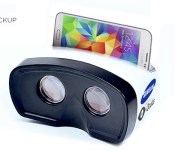
Rather than having its own screen, Samsung’s VR headset uses your phone directly. It plugs in using an existing port on your phone (think: microUSB) and becomes the screen. The headset itself has built-in sensors — an accelerometer at very least — so any motion tracking functionality is offloaded from your phone’s processor.
The folks we spoke with who have dev kits are still running the headset on Galaxy S4 phones, and we’re told it’s a shockingly good experience. That said, the consumer device will run either a new version of the GS5 or potentially its successor — either way, it’ll be tweaked for optimal VR performance. The headset can be used with a paired game controller or as a standalone media device, navigated solely through motion and voice (we’ll discuss that more below).
Wait! Before you write it off forever as “one of those headsets that straps your phone to your face,” we’re told there are some pretty great benefits to using a mobile device. For one, the rear-facing camera allows for video passthrough. That’s to say, “You can see through the phone using the rear camera, which shows a video feed of the outside world to your eyes.” Pretty intense sounding, but a smart addition for making long-term use more realistic. While the latency is too great to make augmented reality applications possible, it’s a convenient way to pause whatever you’re doing and, say, have a sip of a tasty beverage.
There are also buttons on the unit itself. There are standard Android buttons — Home, Back, Recent Apps — as well as some extra stuff. It’s not clear what the other buttons are, but we’re told that none of them are used for interactivity. That could of course change by the final unit; all of this could, potentially, but this is the current state.
SOFTWARE

Pictured: Oculus Rift’s original dev kit with a Leap Motion attached
The dev kit runs a basic UI. You’re in an empty virtual 3D space, and you interact with various demos (floating objects) by nodding at them. Nod to select, basically. Don’t expect that form of interactivity to make it into the final product, though. We’re told that nodding isn’t a strong contender for the final software; voice, touch (tapping on the headset spikes the accelerometer, which can be used as a “click”), and just outright using a gamepad are all on the table.
At this stage, the UI/OS is still very early. Heck, Oculus’ mobile SDK is still very early, so the software it’s able to build isn’t close to a finished product. We were told about two different demos, neither of which involved interactivity. In one, you’re at the beach with jamming hippies. In another, you dive from a plane (which is said to be, “pretty fucking nerve-wracking”). In both instances, our sources say they were impressed with the device.
IT’S ALSO A MEDIA DEVICE
Finally, expect Samsung to tout this device as a media player as well. “But Ben,” you say, “There are very few media experiences for virtual reality headsets.” That’s a fact! Samsung’s apparently looking at its VR device as a head-mounted display as well (like Sony’s HMZ line). Gaming experiences are said to be pared down, and there’s no guarantee it’ll ship with a gamepad. This means that, while it’s a gaming device, and there are VR games in the works right now for Samsung’s headset, it’s intended for a much larger market than just the early adopters who’ll take a chance on VR. Both Samsung and Oculus are taking an interesting risk in partnering on this headset, and we’re looking forward to hearing more. Perhaps you’ve got one and want to tell us all about it? Please feel free to get in touch.
Oculus VR declined to comment for this story, and we haven’t heard back from Samsung.
Mockup artist: Daniel Cooper
Filed under: Cellphones, Displays, Gaming, Peripherals, Wearables, Software, HD, Mobile, Samsung

AT&T now selling rugged Samsung Galaxy S5 Active

AT&T and Samsung on Friday announced the immediate availability of the Samsung Galaxy S5 Active, a rugged take on the flagship smartphone experience. Much like the standard model, the S5 Active comes with a 5.1-inch FHD display, a 16-megapixel rear camera, and integrated heart rate monitor. Powered by Android 4.4 KitKat, the phone also boasts a 2.5GHz quad-core processor, 4G LTE, and a host of Samsung software touches.
Designed to withstand all sorts of bumps and bruises, the phone is mil-spec 810G rated and can handle extreme temperatures, humidity, drops, and shock. And, yes, it’s also waterproof.
Samsung has added a “convenience key” to the side of the Galaxy S5 Active which launches all apps related to outdoor activity on one screen.
The Samsung Galaxy S5 Active retails for $200 with a two-year service agreement or can be purchased with AT&T Next; $27.50 on Next 18, $35.75 on Next 12.
The post AT&T now selling rugged Samsung Galaxy S5 Active appeared first on AndroidGuys.
Huawei’s flagship “Mulan” showing an 8-core processor

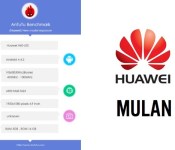
Huawei is looking to make a dent with it’s upcoming flagship phone, code named “Mulan”. This isn’t your typical Snapdragon powered phone either, as it’s looking to pack an octa-core “Kirin” processor, with each core clocked at 1.3 GHz according to AnTuTu benchmarks.
The phone is also looking to pack a 4.9 inch, full HD 1920x1080p screen, which is really refreshing to see a flagship with less than 5 inches nowadays. We’re also treated with 3GB of RAM and a typical 16GB on board storage. Camera specs are unknown at the time.

The “Kirin” processor is shown compared to other processors on AnTuTu, which is only a millimetre shy of the Snapdragon 801 processor, which is still really fast. Only the Snapdragon 805 and Tegra K1 are above these two.

Huawei’s senior VP announced a while ago that they were working on a new flagship that would bring a set of “unique features”. The handset is also rumored to have an aluminium body, which makes it sound like this will be one appetizing smartphone.
Source: AnTuTu
The post Huawei’s flagship “Mulan” showing an 8-core processor appeared first on AndroidGuys.

Developers We Love: ThaPhlash

Developers We Love is an ongoing series of posts designed to help discover great Android apps and games. We use the column to highlight both big name developers as well as small, indie outfits. Typically, we’ll opt for those who have released a number of titles before considering them for coverage but this is not a hard rule.
While you may already be familiar with some of these developers, new Android or smartphone users might not. Our aim here is to put companies on your radar so you can enjoy great content!
Who: ThaPhlash
ThaPhlash has been a staple in the Android icon community for many years now. In fact, he’s one of the most looked up to icon makers for Android by a lot of his fellow icon or theme developers. They inspire themselves to create the awesomeness that he himself creates when it comes to graphics for Android devices. There’s truly no other like him. While there are many that are great, if you ask 100 of them, I’d be willing to bet that 85 or more of them would say that they got their start or got their inspiration from seeing the work of ThaPhlash.


What you see above is the latest creation from ThaPhlash as far as his icon work is concerned. It’s called KEX, and it’s some of his best work to date. As you can see, these icons are totally custom in every shape, form and fashion. Icons for apps that just don’t look like any others by developers of other icon packs that you’ve ever seen before. Complete diversity and totally unique. Not to mention, totally awesome and amazing.
Now, for those of you that know ThaPhlash and what he’s done in the past, this will be some awesome news that I’m about to tell you. For those that don’t know about him and his past works of art, then just follow along with me for a second.


KEX is a first for ThaPhlash when it comes to icon packs. I know, you’re sitting there saying to yourself, “This man has done it all when it comes to icons, how can this possibly be a first?” Well, it’s true and what I mean by this is that KEX is the very first icon pack by ThaPhlash that’s available by him personally in the Play Store. Yes, that’s right folks! No ZIP files and no editing each icon manually on your home screens. Plus this means that all of your icons are now themed, including those in your app drawer.
But wait, there’s more! Once again, ThaPhlash has done something that no other has done, including himself, in the KEX icon pack. It’s called “dynamic icons” and you can read a bit about it here on Jack Underwood’s Google+ post about Today Calendar.
Now that you’ve read that, let me explain it a bit more. With some scripting and coding, Jack Underwood was able to get his Today Calendar icon to display the actual date on the icon, instead of having a static number that all icons have had since day one now. This means, that if the date is 5/14/2014, you’ll see the number 14 on the Today Calendar app icon, both on your home screen and in your app drawer.
What’s more is, he worked with Kevin Barry who is the creator of Nova Launcher, to get it implemented into Nova Launcher so that other icon makers could do the same thing. And this boys and girls is where ThaPhlash has done what no other man(or woman) has done before. He has several icons within the KEX pack that are dynamic and will change for various reasons. One is the Google Calendar icon. It’ll show the actual number for the date of the month of the current date. This is also true for Today Calendar and Business Calendar and ThaPhlash has stated that more calendars will be added upon request.
I will note, that for this to work, you need to be part of the Nova Launcher Beta Program, and you will need to have Nova Launcher 3.0beta1 or higher installed. If you’re not really interested in the dynamic icons, or you’re simply not a Nova Launcher user, the list below is all of the launchers that KEX is currently supported by.
- Nova
- Action
- Apex
- Holo
- Smart
- Aviate
- Inspire
- ADW
- Next
- Atom
- Go
KEX is available via the Play Store today, and the regular price is $3.99. However, ThaPhlash has a special sale going on since this is his first icon pack to hit the Play Store and you can pick it up for only $1.99, which is one hell of a great deal. You can grab it by clicking the Play Store widget below.
Google+: ThaPhlash
Twitter: ThaPhlash
The post Developers We Love: ThaPhlash appeared first on AndroidGuys.
 AIVAnet