


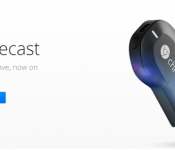
Finally: Google Chromecast is available in Australia for $49 AUD
 It looks like somebody was definitely a bit trigger happy at retailer Dick Smith. A few weeks ago, we were given our first indication that the Google Chromecast media streaming device would be made available in Australia after a listing was made on Dick Smith’s website citing availability on the 28th of May. And sure enough, Google has today officially announced that the Google Chromecast is available in Australia.
The Chromecast is slowly being made available around the world now, first making its presence in the Asia Pacific known in Korea, and now Australia. While Australia isn’t quite the hotbed of media streaming that other parts of the world are, media providers like Quickflix, Foxtel and even the ABC have promised that Chromecast capabilities are coming to their apps soon. Unfortunately, there has not yet been word from Telstra about any content being made available for Chromecast or even any bundle deals despite rumours that they were in discussions directly with Google.
If you’re hoping to pick up a Chromecast, you can hop over to the Google Chromecast site here which lists all the available retailers, or you can purchase it on Google Play itself.
Source: Google via Ninemsn, Dick Smith
//<![CDATA[
ord = window.ord || Math.floor(Math.random()*1E16);
document.write('’);
//]]>

Inside LG’s G3: How vacuums, focus groups and competitive pressure shaped a smartphone

Nine months ago, deep in a heavily guarded lab in Seoul, South Korea, LG’s mobile design team set out to create a phone to rival Samsung’s flagships. It was no light responsibility: According to IDC, Samsung dominated smartphone sales in 2013 with 31.3 percent of the market compared to LG’s 4.8 percent. Yet, in the amount of time it takes a newborn baby to blossom from conception to her first appearance in this world, LG cranked out a compelling piece of circuitry. The G3, announced today, comes with the highest-res display on the market, a 5.5-inch body that feels smaller than it really is, a fresh metallic finish and a never-before-seen imaging component invented by a robotic vacuum company.
LG is struggling. It may not have the same image problem HTC does, but it’s clearly coming into this project as an underdog. Sales of the G2, its prior flagship, sputtered against expectations despite a new design direction and market-topping components. The company wasn’t able to climb out of the Galaxy S4′s shadow, so it turned its focus to beating Samsung. The G3 uses a larger, higher-resolution screen than its rival without making the phone feel unwieldy. It features a larger battery and it boasts a faster autofocus (thanks to its new laser sensor), all while fixing sore spots users had with the G2.
LG is struggling. It may not have the same image problem HTC does, but it’s clearly coming into this project as an underdog.
After walking through what seemed to be a typical, sterile, cubicle-laden office building, we entered a white-walled, nondescript meeting room in LG’s design headquarters in Seoul. On a table, amongst an endless series of office chairs and whiteboards, sat a plethora of G3 mockups. Next to them sat several different variations on back button arrangements and at least two dozen back covers in nearly every color you can imagine. The full lineup was obviously transplanted here from some secret lab in another part of the building. Although none of the mockups functioned — the front of each one was just a blank plastic face — they were made to mimic the proper weight and feel of a real phone. Despite repeated requests, we weren’t allowed to take pictures of the mockups because, understandably, any of them could be used for a future device.

These design candidates were just a few of the 300 models LG considered, and ultimately rejected, for the final G3 design. Each version had a different texture, color or material. Some were glossy, others ridged and still others built with materials we couldn’t quite put a finger on. The back buttons were arranged in ways we’d never seen before; one version even replaced the buttons with a circular apparatus of undisclosed purpose. Not only were we staring directly at LG’s past, but we were also likely gazing into its future.
The G3 isn’t the first phone to feature a Quad HD display, but it’s the first from a major manufacturer. Some argue that such high resolution on a small screen doesn’t make enough of a difference; naturally, LG believes it does. The company touted blind tests that show people prefer screens with 500 pixels per inch (ppi) over 400 (the G3 sits at 538 ppi), and they found that small text and nighttime scenes were definitely clearer on the higher-res display. There will always be demand for more than what we already have, and LG is anxious to beat the competition in any way possible.
Not only were we staring directly at LG’s past, but we were also likely gazing into its future.
LG is confident that if the display doesn’t get you interested in the G3, the phone’s new laser sensor will — and the feature almost didn’t even make it into the final product. A first in the digital camera industry, the new feature was actually developed by Roboking, the makers of LG’s robotic vacuums. Originally, it was intended to measure the distance between the vacuum and obstacles that it may have to maneuver around. Roboking dropped it for a number of reasons, but it told the mobile team about it over a coffee break and the rest is now history: Imaging specialists went to work adding the vacuum’s laser beams to the G3, which helped the camera snag an even faster focus lock than its closest competitors (both the One M8 and Galaxy S5 boast 300ms focus times, whereas the G3 claims 276ms). Fortunately for our eyes and sanity, this sensor doesn’t double as a laser pointer.
To our surprise, nearly half of the prototypes didn’t even feature a spot for the sensor because the team had to prepare for the possibility that it might not be ready in time. The feature was confirmed for the G3 two months ago, just before the final deadline. There was just enough time for Chul Bae Lee, VP of mobile design, and his team to tweak the design to make sure everything fit properly, which involved a few changes to the device’s shape. “Any small treatment could affect the shape of the phone,” Lee said. “Before, the shape was slightly different; the arc was a bit more flattened.”

To our amazement, one of the mockups was aluminum. Wait: LG actually considered a metal phone? Like Samsung, LG has historically opted to use polycarbonate plastic for most smartphones. Alas, aluminum was vetoed at some point in the process, in favor of a metallic hairbrush finish that looks and feels like the real deal, but doesn’t attract fingerprints or scratches. It’s warmer, lighter and offers an anti-scratch coating. It’s also much less slippery, a pain point that frustrated us with the HTC One M8. There’s less risk of attenuation issues (as we saw with the iPhone 4 a few years ago), and wireless inductive charging is much more effective on a plastic surface, since it tends to heat up metal surfaces too easily. As it turns out, there are plenty of reasons why so many manufacturers avoid the material.
But why not use the same self-healing finish found on the curvaceous G Flex? While its ability to fend off dings and cuts isn’t perfect, it was a groundbreaking feature that helped it stand out from the crowd. It’s also a few steps ahead of anything LG’s competitors have come out with. According to Lee, “We couldn’t find a way to adapt self-healing without making it glossy.”
Users’ aversion to glossy plastic was just one of the lessons LG took to heart from the G2.
Users’ aversion to glossy plastic was just one of the lessons LG took to heart from the G2. As good as the phone was, it had its share of flaws, and user feedback was critical. The G3 is designed to be more comfortable, simpler (tagline: “Technology, simplified”) and easier to hold. To bolster the support of power users, the rear cover and battery are now removable and a microSD slot sits underneath for expandable storage. And as Dr. Ram-Chan Woo, head of mobile product planning, is quick to point out, “The [G2] back cover is more plasticky and a fingerprint magnet.” Indeed, if you liked the G2, the G3 should look incredibly tempting right now.
Lee added that only half of G2 users liked the back button setup. It’s an acquired taste that grew on us after a while, but it has to grab the attention of buyers from day one. His team changed the shape of the buttons to circles and added more separation between them and the camera in an attempt to make it more difficult to smudge the lens. The designers also added a pointy power key in the center, the highest peak on the phone’s chassis, because too many users lose their grip on big phones. The new style, Lee said, stabilizes your thumb to offer a secure grip, despite the device’s 5.5-inch frame. This, in addition to the thin sides and arched back cover, also makes the G3 feel smaller than it really is.

The G2′s 3,000mAh battery was among the best for flagship smartphones of a similar size (that is, not a “phablet”), so LG chose not to make compromises on its successor by shrinking its size. This was a challenge, thanks to the device’s floating arc design; the arched back is the reason why this 5.5-inch phone doesn’t feel like a behemoth, but there was too much curvature for LG to fit a standard battery of that size. The solution: an “arc battery.” Upon closer inspection, the battery seemed just as flat as any other battery on the market. Not so, according to Woo: “It looks flat, but it isn’t. Since the back cover is slightly arched, the battery is also arched in order to fit the cover.”
Trendy colors aside, LG can and has brought some innovative solutions to the table.
But if the battery stays exactly the same size, won’t the higher-res Quad HD panel suck up a lot more power? Not if the company’s marketing claims speak the truth: The display utilizes something called dynamic frame rate control, which tells the display to stop refreshing if you’re on the same screen for long periods of time. If the content on the screen stays the same, the frame rate drops to 30 fps, which should be a huge aid to battery efficiency.
The G3 will come in five colors. White and “titanium” are the obvious go-tos for phone manufacturers. “About 80 percent of actual sales are white and black, so you have to offer [those colors],” Lee said. While we always prefer a choice of colors, it doesn’t always equate to success, so the design team chose shades that reflect current trends: Gold, violet and red will also be offered. All of LG’s biggest competitors have gold-colored flagships now, and red is starting to surface on more devices. Violet was an unusual choice, but Lee insisted: “Purple seems to be quite the fashion these days.”
Trendy colors aside, LG can and has brought some innovative solutions to the table. The back buttons, laser sensor and metallic finish are primary examples of that, but it’s had a difficult time selling the message that its flagships can hold their own against Samsung, HTC and other competitors. The G3 is a step in the right direction, but it’s not going to matter if it can’t beat Samsung at its own game: Marketing and mindshare.
Mat Smith contributed to this post.
Filed under: Cellphones, Wireless, Mobile, LG

Nintendo wants its cut of ‘Let’s Play’ gaming videos

Remember when Nintendo started wrapping ads around ‘Let’s Play’ commentary videos last year and pocketed the revenue? It’s happening again, albeit in a more organized way. Nintendo just announced that it’s creating a YouTube affiliate program for content creators that use officially licensed images and video. Creators who sign up for the program (and receive permission to use copyrighted material) will be eligible to receive “a portion” of the advertising profit.
It’s not too surprising, but it is a little odd. Microsoft’s game content usage rules specifically ask that users don’t seek payment (via advertising or otherwise) for projects made using gameplay footage, but the company typically doesn’t try to claim revenue made by those who do apply ads to their video. More to the point, both Sony and Microsoft allow gamers to stream gameplay directly from their consoles without agreeing to any revenue-sharing initiatives. Nintendo’s taking a much stronger stance on YouTube creators than the rest of the industry.
The program could be a response to the negative reaction its copyright claims got last year, but it might have something to do with Mario Kart 8. The upcoming racer allows users to upload gameplay videos directly to YouTube, which are automatically flagged as Nintendo owned in the service’s Content ID system. It’s not clear, however, if these videos will be eligible for revenue-sharing. Nintendo promises to release more details at a later date. Either way, Nintendo’s stance is clear: if you’re making videos of its games, your video’s ad revenue should be at its discretion.
[Image credit: rapapu/Flickr]
【YouTube映像に関するお知らせ】任天堂は以前より、不適切なものを除いて、YouTube上の任天堂の著作物を含む映像を正式に許諾しています。許諾した映像には広告がつくことがあり、その広告収益は従来のポリシー同様、Googleと任天堂で分配されます。(1/2)
– 任天堂株式会社 (@Nintendo) May 27, 2014
【YouTube映像に関するお知らせ】その上で、より積極的な任天堂著作物の利用を希望される方に向けて、広告収益の一部を受け取れるアフィリエイトプログラムを準備しています。アフィリエイトプログラムの詳細については、後日続報いたします。ご理解の程、よろしくお願いいたします。(2/2)
– 任天堂株式会社 (@Nintendo) May 27, 2014
Filed under: Gaming, Internet, Nintendo
Via: Joystiq
Source: Twitter (1), (2)

‘Lomo Instant’ takes your standard Polaroid to the next level

Back in the good old days, you could take a photo of Fido with your Polaroid, and after a few shakes be ready to tape it to your dorm room wall. Now Lomo is looking to bring that same old-school experience into the next decade with the Instant – a self-developing film camera with a vintage feel. It has support for several different lenses, color filters and can even create images with multiple exposures of your furry friend. The company already has a pretty sizable line of toy and DIY cameras that push the envelope (like this one made out of a paint can). The Instant follows in that tradition, building off an old favorite, the Fuji Instax. The camera uses its easy-to-find credit card-sized film, but has five aperture settings, including f/8, the largest available on any instant camera. It also has three different shooting modes for tons of flexibility.

You get a wide-angle lens in the box for the ultimate selfies, and the camera supports optional Fisheye and Portrait lenses as well. Unfortunately, buying it is a little less “instant” for now. Lomo has a working prototype of the camera, but the finished product isn’t a reality yet. The company posted a Kickstarter today looking for $100,000 for a production run, a goal it’s already blown past with 30 days still left to go. Photo enthusiasts will still have to wait until November to score one of the first Instants off the assembly line. The camera is just $70 for those who invest now, or will be priced at $120 when it hits Lomo’s virtual store shelves next year.
Filed under: Cameras
Source: Kickstarter, Lomography

Playdate: We’re livestreaming Watch Dogs for PS4!

Welcome, ladygeeks and gentlenerds, to the new era of gaming. The one where you get to watch, and comment, as other people livestream gameplay from next-gen consoles. Because games! They’re fun!
What would you do if you could control your hometown with nothing more than a smartphone? That’s what the world of Watch Dogs asks. Here, escaping the cops (and Big Brother) takes a little more than fancy driving skills and sheer firepower; it takes brains and creativity. We’ve been itching to get our hands on the game since its show-stealing debut back at E3 2012 and now that wait is over — we’ll be streaming live at 4PM PT/7PM ET! Feel like hacking the planet along with us on PS4 before picking up your copy? All it takes is a press of the button below. If you’ve already grabbed your copy, let us know what you think of Watch Dogs in the forums; we’ve set up a thread and everything!
Watch live video from Engadget on www.twitch.tv
Filed under: Gaming, Home Entertainment, HD
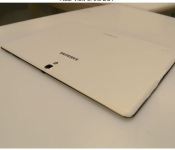
8.4-inch Samsung Galaxy Tab S details revealed

Further details of one of the tablets we are expecting to see Samsung reveal next month have been leaked on the bench-marking app AnTuTu.
The Samsung Galaxy Tab S 8.4 have emerged on AnTuTu giving an insight into the hardware we can expect to see in the tablet.
According to the leak, the Galaxy Tab S 8.4 will have a Exynos 5 Octa 5420 processor with an ARM Mall-T628 GPU. In addition, the 8.4-inch display is shown to have a 2560 x 1600 resolution, and will feature 3GB of RAM, 32GB of internal storage, and a 2-Megapixel front-facing and 8-Megapixel rear-facing camera.

Samsung is holding a press event on the 12th June where they are expected to announce their lineup of next generation Galaxy tablets.
The post 8.4-inch Samsung Galaxy Tab S details revealed appeared first on AndroidGuys.
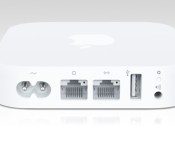
Apple Tested USB Hard Disk Support for 2012 AirPort Express [Mac Blog]
Apple may have considered including USB hard drive support in the AirPort Express initially released in June of 2012, according to an early support manual unearthed by French site Journal Du Lapin (via iPhone in Canada).
Available in PDF format, the older manual references a section suggesting a USB hard disk or USB hub could be connected to the AirPort Express, allowing all computers on the network to access those devices.

Connect a self-powered USB hard disk to your AirPort Express. All of the computers on the AirPort network can access the information on the hard disk.
Connect a USB hub to your AirPort Express, and then connect multiple USB devices, such as printers or hard disks. All of the computers on the AirPort network can access those devices.
These references are not found in the final product’s manual [PDF], which only includes a section on connecting a USB printer to the device. USB hard disk compatibility would have potentially allowed the lower-cost AirPort Express to be function in the same way as the more expensive AirPort Extreme, suggesting Apple possibly once considered merging these two products before making the decision to release the AirPort Express without external hard drive compatibility.
While Apple’s AirPort Extreme retails for $199 and includes the ability to connect to a USB hard drive that can be accessed by all computers on the network for sharing and storing files, the AirPort Express, priced $100 less at $99, remains a no-frills entry level WiFi solution for consumers for the time being.

Controlling fruit-flies with lasers looks fun, not very useful

What with their simple genetics and ultra-brief lifespan, poor fruit flies are the go-to insect for mad scientists. Researchers have discovered a new way to make their lives miserable with a mind-altering project called FlyMAD (not kidding). There’s even an overly-elaborate plan: motion tracking cameras guide a specially-tuned laser to zap the insects like a tiny missile system. That activates light and heat neurons in their brains, triggering singing and dancing that seduces no actual female Drosophila. The scientists, however, were well pleased, and think they can further manipulate their subjects by perfecting the technique — which we’re sure has infinite real-world application.
Filed under: Science
Via: DVice
Source: IDC

Improve your skills with Adidas’ miCoach smart ball

In an effort to expand its miCoach line of sporting gear, Adidas has now launched a smart ball for football (aka soccer) players. With an array of motion sensors featured inside, this new intelligent kickable sphere can track a ton of data and send it right to your iOS device — Adidas hopes it will all be useful to help you improve certain skills during training. The freshly announced miCoach smart ball, which has been in development for more than a year, uses your iPhone (or iPod touch and iPad) to show you where and how hard exactly it is being struck. In addition to that, you can use the miCoach system to see the visual trajectory of the ball, as well as the exact impact points.
Adidas is also using the companion iOS app as a hub that can be used as a training planner, allowing you to keep track of your shooting records and offering personal challenges designed to make your overall football skills better. The miCoach smart ball is available now for $299, and you can get it directly from Adidas or through one of Apple’s retail channels.
Filed under: Misc
Source: Adidas
Minnesota man building a 3D printer to construct houses

It’s the dream of many to build their own home, but financial, temporal and technical limitations mean that few of us ever do. At least, that’s the situation right now. An inventor from Minnesota is currently trying to build an enormous 3D printer that’d do for housebuilding what the technology has already done for small colored plastic widgets. Andrey Rudenko is currently working on hardware that’ll help him build his next home, but that could also be sold to contractors for “the cost of a car.” Admittedly, we don’t know what sort of whip is in Rudenko’s driveway, but presumably that’s a small price to pay for the control on offer.
Despite the fact that the hardware is so much larger than desktop 3D printers, it uses the same Arduino Mega 2560 hardware that you’ll find in other homemade projects. In order to make it affordable to more than just a select few, the creator is using a cheap cement-and-sand mix, which is layered out 20mm at a time, holding its shape long enough for an operator to add-in some steel reinforcement before it hardens. Rudeno is planning to make a splash with the tech later in the summer, as he’s working on building both a small playhouse to test out the concept, before finding a plot of land upon which we can cook up a full two-story house.
Filed under: Misc
Source: 3D Printing Industry
 AIVAnet