


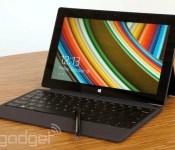
Microsoft slashes Surface Pro 2 prices by up to £150

Microsoft might be gearing up for the launch of its bigger, better Surface 3 tablet, but it still hopes to shift some older slates in the interim, with help from an enticing discount. In the biggest price cut we can remember since Surface RT received similar treatment, all configurations of Surface Pro 2 are now available through Microsoft’s UK store for £140 or £150 off their normal cost. This means you can grab the base 64GB model for £569 (down from £719), up to the top-of-the-line 512GB unit for £1289 (reduced from £1439). Alright, so they’re still not the most wallet-friendly tablets around, but if you want full-fat Windows 8.1 on a 10.6-inch slate, then at least these ones are cheaper than they were last week.
Filed under: Laptops, Tablets, Microsoft
Source: Microsoft
Apple Introduces Education Pricing for iPad Air and Retina iPad Mini, Now Starting at $469 and $379
Apple has introduced reduced education pricing for the iPad Air and Retina iPad Mini, offering both tablets at starting prices of $469 and $379, reports MacGeneration (Google Translate). With both iPads still showing a standard retail price starting at $499 and $399, the new education pricing totals to a $30 discount on the iPad Air and $20 discount on the Retina iPad mini and marks the first time that Apple has included the iPad in the special program. Apple is also offering special education pricing on refurbished previous generation iPads.

Apple previously cut education pricing on the non-Retina 13-Inch MacBook Pro to $999 last year, and also offers discounts on the entire Mac line in its education store. The discounted education pricing is available to employees of K-12 schools as well as faculty, staff, students, and parents of students at higher education institutions.

Google uses self-aware datacenters to cut the cost of searching

Google spits out about 4 million search results per minute (among many other duties), which consumes a lot of energy. According to a recent blog, it cut its electrical bills significantly by applying the same kind of machine learning used in speech recognition and other consumer applications. A data center engineer on a 20 percent project plotted environmental factors like outside air temperature, IT load and other server-related factors. He then developed a neural network that could see the “underlying story” in the data, predicting loads 99.6 percent of the time. With a bit more work, Mountain View managed to eke out significant savings by varying cooling and other factors. It also published a white paper to share the info with other data centers and prove once again that humans are redundant.
Filed under: Internet, Software, Google
Source: Google

Virgin Media’s TV Anywhere app now works on the latest Android devices

Virgin Media’s TV Anywhere Android app has been available since November, but its rollout has been hampered by limited device support. After the company opened the app to Nexus 5 owners earlier this year, it’s finally made the streaming service available to most powerful Android smartphones and tablets that money can buy. If you own Samsung Galaxy S5, Sony Xperia Z2 or HTC One (M8), you’ll now be able to stream over 90 channels and remotely control your TiVo box while on the move. There is a minor catch, however: the company notes that while the new devices can download TV Anywhere from the Play Store, they’re not officially supported. In the company’s own words: “We expect them to work, we have not been able to test all of them due to the large number of Android devices available.” The list of supported devices is updated regularly, though, so for now, check out the list below to see if your Android smartphone or tablet makes the grade.
The full list of new devices: Samsung Galaxy S5, Samsung Galaxy Note 8, Sony Xperia Z2, Sony Xperia M2, Sony Xperia Z2 tablet, Sony Xperia M, HTC One (M8), HTC One Mini, HTC One Sensation, HTC One Max, HTC Desire HD, Motorola Moto X, Motorola RAZR I, Motorola Xoom 2, Motorola Xoo ME, Lenovo Ideatab A1000, Lenovo Ideatab S6000, Barnes and Noble Nook HD, Barnes and Noble Nook HD+, Huawei Ascend Y300, LG G2, LG GPad 8.3, Samsung Galaxy Note PRO 12.2, Samsung Galaxy Note 10.1, Samsung Galaxy S Duos 2.
Filed under: Cellphones, Home Entertainment, Internet, Software, Mobile
Source: TV Anywhere (Google Play)

After drones, Google and Facebook eye satellites to expand internet access

Google and Facebook already compete on PCs, mobile devices and recently their rivalry has moved to the skies, but a new report from The Information suggests it could move even further from land. Over the last year or so, both looked at drone maker Titan Aerospace before Google acquired it, adding to a portfolio that includes its Project Loon experiments. Not to be outdone, Facebook is said to have acquired a drone maker from the UK called Ascenta. The only thing left? Space. The Information follows up on claims that Google is looking at a satellite company called Skybox Imaging by noting recent hires and investments in companies that deal with satellite-delivered internet. Craig Barratt is named as leading several teams at Google developing wireless internet technology to connect the rest of the world (white spaces, municipal WiFi, community routers for businesses etc.) while Google X teams work on the drones and balloons. Facebook’s interests in (the) space are not as well-documented, but we can only guess that the race will reach low-orbit soon, and collect a few more startups and giants as competitors. Maybe DirecTV made its deal with AT&T too soon?
Filed under: Wireless, Google, Facebook
Source: The Information

Qualcomm looking to make duo-cameras a standard

With the HTC One M8 introducing the idea of having two cameras on the back of the device for quicker focus and cool lens-blur features, Qualcomm is going to make it easier for other phone makers to do the same with its upcoming Snapdragon 805 chip. It took some serious software optimization on HTC’s part to get the duo-camera feature to work, and is probably a bit taxing on the snapdragon 801 chip inside of it.
Qualcomm will be integrating easy support for duo-cameras, which will allow stereo and depth camera processing without the manufacturer doing all the heavy lifting. The new chip will also support taking up to 16MP burst photos at 15 FPS while shooting 4K video, which is something current smartphones cannot do.
It’s pretty cool to see Qualcomm not only making some of the best chips in the world for phone makers, but integrating impressive features into them to benefit phones as well. I personally would like to see some more slow-motion features added to phones, such as the support of 1080p video at 120fps, which currently we can only record at 720p.
The post Qualcomm looking to make duo-cameras a standard appeared first on AndroidGuys.
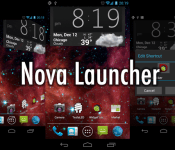
Nova Launcher 3.0 Beta 1 is now available, a bunch of new features added

I believe most of you have at least heard of Nova Launcher, one of the best and most popular Android launchers out there. It is hard not to notice such a powerful, customizable and yet optimized and smooth launcher.
Nova Launcher 3.0 Beta 1 is out now and those of you who are willing to be a beta testers can get it on your device(s). The update is apparently large, the largest we’ve seen in a while. Here’s a full changelog:
-
Subgrid positioning, snap widgets/icons to half cells. Greater control of placement/size without shrinking/cropping app icons
-
Support Today Calendar’s dynamic icon, also supported by icon themes from Kovdev including Domo, Lumos and Tersus and PHLASH’s new KEX theme.
-
Custom label colors (desktop, dock, drawer)
-
Individual drawer tab colors (tap on the tab and select Edit)
-
New tab style Colorblock
-
Vertical drawer scrolls under transparent navbar
-
Backup/Restore using Kitkat’s Document Provider (supports ext-sdcard, Drive, Box, etc)
-
Full 4×1 widget support in dock
-
Individually toggle widget padding (long-press on widget and select Padding)
-
Nova Action for First Item In Folder (Use with swipe/tap action of folders)
-
Honeycomb style persistent searchbar available on phones
-
Slight visual refresh (settings screen, menu icon, color picker)
-
Fix Samsung KitKat bluetooth settings shortcut
-
Fix home button action on Verizon Motorola
-
Restore “Force” wallpaper scrolling for HTC KitKat
-
“Show Shadows” on HTC One M8 perfectly blends from semi-transparent system bars
-
Tab configuration is a bit stricter. Now one and only one All Apps tab is required, and zero or one Widgets tab can be used. These tabs can be renamed and recolored.
-
All Apps tab dropdown menu no longer includes filters for New/Downloaded
-
The dropdown menu indicator has been removed from the tabs, though the menu still exists (with some modification)
-
Persistent Search Bar is either enabled or disabled, the landscape only option has been removed
-
Persistent Search Bar style is consistent between landscape and portrait
-
Icons are now centered vertically in their cells, rather than being top aligned
-
Phone landscape mode fills available space horizontally, rather than reserving space for the search bar/dock even if those elements were hidden.
-
Honeycomb style search bar no longer includes the menu button (which was not authentic to honeycomb anyway)
As you can see it’s a hefty changelog. It’s 3-step process if you want to become a beta tester:
- Visit this link on Google+ and become a member of Nova Launcher Beta community
- Then go here and choose to be a Google Play app beta tester
- After that just download Nova Launcher from Google Play and you’ll be ready to go.
If you feel that’s too much work, you can always sideload it by downloading it directly from TeslaCoil.
SOURCE: Phandroid
The post Nova Launcher 3.0 Beta 1 is now available, a bunch of new features added appeared first on AndroidGuys.

Samsung released 3 new Galaxy S5 ads and they’re kind of neat

Samsung did a really good job in the ads department this time. Under the hashtag #Expect more they introduced 3 new ads and as we said, they’re not half bad.
All 3 of them last around 30 seconds touting different features of the Galaxy S5. The first one is featuring a girl advertising a private mode feature, the one after that a guy touting Galaxy S5′s water resistance and the last one is advertising S5′s Ultra Power Saving Mode feature in a rather funny way.
We don’t want to spoil the ads too much. Make sure to see them for yourself and tell us what you think.
SOURCE: Samsung (YouTube)
The post Samsung released 3 new Galaxy S5 ads and they’re kind of neat appeared first on AndroidGuys.
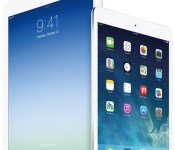
Apple to Offer iPad Air and Retina iPad Mini on Japanese Carrier NTT DOCOMO Starting June 10 [iOS Blog]
Apple announced today that it will begin offering the iPad Air and Retina iPad mini on Japanese carrier NTT DOCOMO starting Tuesday, June 10. Both tablets will be compatible with the company’s nationwide Xi LTE service, as users will be able to pre-register for both devices beginning June 2nd at local DOCOMO stores and the carrier’s website.

“With the addition of iPad alongside iPhone, we now offer the complete lineup of Japan’s most popular mobile devices on the nation’s most reliable LTE network,” said Kaoru Kato, President and CEO of NTT DOCOMO, INC. “We know our customers will enjoy using iPad Air and iPad mini, and anticipate that new customers will look to experience these amazing devices on our high-quality network with our new billing plan.”
“We are extremely happy for iPad to join iPhone on NTT DOCOMO’s network,” said Tim Cook, Apple’s CEO. “The results on iPhone have been tremendous, and we look forward to delivering iPad to NTT DOCOMO customers.”
The iPad Air and Retina iPad mini were originally launched in Japan and a number of other countries last fall. The move also follows the launch of the iPhone 5s and iPhone 5c on the carrier last September, marking the first time that Apple’s phones were offered on DOCOMO. Since then, Apple has seen its share of the Japanese mobile phone market rise above 36%, with the iPhone accounting for more than 40% of phone sales on the carrier.

The FTC wants to help you control how you’re tracked online

Brokers are collecting and selling information about where you go and what you do online, and you might not even realize it’s happening. According to an FTC report Tuesday, data brokers are compiling profiles on Americans, and then peddling that info to marketers and even politicians who want to target them. That’s not anything new, however, the FTC is now recommending that Congress take a look at the industry and consider regulating data broker’s collection practices.
Brokers are able to create profiles on you based on a ton of small things you might publicly share such as your activity on social media sites, warranty registrations and magazine subscriptions. While those things might seem tiny on their own, when you combine them together with other public information they can help create a pretty powerful picture of who you are and what you’re into. Having your data collected could potentially have some benefits, for instance, advertisers could use the information to give a bike enthusiast a discount on a new motorcycle. But, the FTC notes that a life insurance company might see the same information and charge someone a higher premium for “risky behavior.” Since the practice isn’t regulated, you’d be just as likely to be the target of both scenarios.
The commission is suggesting that Congress put the power of what’s shared in your hands. It wants to require that companies notify you when they plan to pass around your information, and give you an opportunity to opt out. It also wants there to be a centralized portal where brokers have to identify themselves and their data collection practices, including where they’re getting their information. It also wants consumers to have access to that data, so they can correct any misinformation. All that sounds like a good idea to us. Whether Congress, who uses that same information when it comes election time, takes the commission’s advice, we’ll just have to wait and see.
Filed under: Internet
Via: Re/code
 AIVAnet