



Canadian airlines will let you use devices during takeoff and landing

American airlines may let you use your mobile devices at every stage of flight, but their Canadian counterparts still insist that you power down until you’re in mid-air. That’s going to change shortly, though: Transport Canada has greenlit the use of electronics during takeoff and landing. As long as carriers can show that passenger gadgets in airplane mode (that is, with wireless off) won’t interfere with avionics, you’ll get to use your gear at any time. Of course, you’ll get to switch on WiFi for most of a given trip if you’re on an aircraft with internet access.
As with the FAA’s electronics ruling in the States, you shouldn’t expect the tech-friendly policy to kick in right away. Air Canada says it’s “finalizing measures” that will let it adopt the new rules, while WestJet expects to give the all-clear “early this summer.” All the same, the loosened regulations are good news if you’d rather not stop writing a report (or playing Angry Birds) just because you’re flying into Vancouver.
Filed under: Transportation
Via: MobileSyrup
Source: Government of Canada, Air Canada, WestJet

Robot fixes robot on the ISS so astronauts don’t have to (video)

When something goes wrong with the ISS, astronauts usually don their suits and brave the harsh conditions of space to do what needs to be done. But the space station’s Canadian robotic arm (aptly called Canadarm2) is currently attempting to fix itself with minimal human input, thanks to its very special passenger — a multi-limbed helper robot called Dextre. Canadarm2 carries the handymanrobot around to fix anything that’s broken on the ISS or to catch unmanned vehicles headed for the station, such as SpaceX’s Dragon capsule. This time, though, Canada’s Space Agency is remotely controlling Dextre to move and replace old cameras on Canadarm2 itself.
Apparently, this is the first time a task that typically requires an astronaut to spacewalk is being done robotically. CSA mission control supervisor Mathieu Caron says using robots to repair other robots on the ISS is ideal, since spacewalks are very complex and time-consuming. This method will give astronauts more time to perform scientific experiments and will reduce health risks at the same time. Dextre is slated to finish its task on Thursday, but it’ll take some time before astronauts can hand over all repair jobs to the robot-fixing robot.
Filed under: Misc
Source: CBC News

Anonymous Twitter user sends SF citizens on cash goose chase

If you need cash and don’t mind chasing Twitter clues around San Francisco, you’re in luck. A group called @HiddenCash, apparently led by a wealthy real estate developer, has decided to try a “social experiment” by sharing their good fortune with random strangers. They choose hiding paces around the city like the underside of a park bench or a parking meter, then cache money-stuffed envelopes labeled “@HiddenCash — Tweet when you find.” Though that makes our “PR stunt” antennae twitch, they told the Bold Italic that they have “no commercial interest” and just want to draw attention to the massive income inequity in San Francisco. For critics who though the money could be better used, they added that they already donate to needy charities and encourage those who find the cash to do the same. We’re not sure if we’re buying all that, but what the hell — judging by their Twitter feed, a lot of people have had fun with it so far.
Filed under: Internet
Via: The Bold Italic
Source: @HiddenCash (Twitter)

Japan is building a huge ‘ice wall’ to block Fukushima’s fallout water

No one can blame Tokyo Electric Power Co. (TEPCO) for the earthquake and tsunami that wrecked its Fukushima nuclear plant in 2011. Since then, however, the company has been accused of having a “weak sense of crisis” in responding to the accident’s many knock-on effects. This includes the leakage of contaminated groundwater that passes under the damaged plant and into the Pacific Ocean — something that is happening right now at a rate of 400 tons per day. This week, after more than a year of back and forth, the TEPCO has finally managed to get the Japanese nuclear regulator’s approval to create a massive wall of frozen soil to hold the groundwater back.
At the government’s expense, a refrigerant chemical will now be passed through an underground network of pipes, stretching for almost a mile underneath the plant, in the hope of cutting leakage down by around two thirds. A 10-meter test wall has already proven effective, but this is unlikely to be the end of the story: There’s a risk the frozen soil could thaw during the wall’s expected seven-year life span, or that it could cause areas of earth to sink. Meanwhile, nobody has so far been able to predict the long-term impact of the radiation that has already made its way into the sea, and much of the land around Fukushima is still home to nothing but ghost towns.
Filed under: Misc, Science, Alt
Via: PhysOrg
Source: Japan Times

Museum teams up with Samsung to render mummies in 3D (video)

Thanks to more advanced medical CT scanners, we can now look at what’s inside the British Museum’s mummies… even if they remain wrapped. The museum has partnered with Samsung to provide 3D visuals for eight mummies of people who lived in the Nile Valley as far back as 4,000 years ago created using high-res CT scans. These visuals (some of them even interactive) show you what lies underneath all those mummified layers, from accessories and hairstyles that indicate their status in life, to the state of their health when they passed away. For instance, you’ll see that a man of high status was buried with gold leaves and facial features painted on his wrappings, while a lowly temple doorkeeper had his severed head roughly reattached with wooden poles. The exhibit’s already live for anyone interested in (digitally) peeling layers off the ancient remains, and it’ll be around until November 30th this year.
Filed under: Misc
Via: Gizmodo, New Scientist
Source: British Museum

The US Air Force’s oldest bomber is now a flying network

The B-52 may be one of the US Air Force’s most reliable bombers, but it’s not exactly a technology powerhouse; some of its systems were only fresh when Kennedy was President. The aircraft’s newly-delivered CONECT (Combat Network Communications Technology) variant is finally catching up with the times, though. It’s effectively a network hub with wings. A wideband satellite link keeps the machine in touch with other Department of Defense systems, letting it receive new mission plans and redirect smart weapons after they’ve launched.
The upgrade also helps communications between crew members, which get an internal network to both control multiple systems and chat over a digital intercom. The CONECT B-52 still isn’t cutting edge — it’s just getting keyboards and trackball mice, and it will take a while for all 76 of the Air Force’s B-52s to get the revamp. However, showing off isn’t really the point. The modernized bomber should be smart enough to survive in the internet era, where real-time battlefield data is as important as having the right kind of firepower.
Filed under: Transportation
Via: Defense Industry Daily, Ars Technica
Source: Boeing (1), (2)
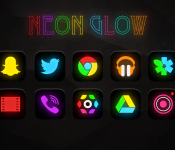
Neon Glow Icons by Samer Zayer – Icon Pack Review

They are finally here. We have been getting teased like crazy by screenshots from the man himself, Samer Zayer, about his new icon pack, Neon Glow. These sexy little icons have been well received in the community, and many of you have been asking me about them since a had a couple of them on my homescreen while I did app reviews. Had to keep it a secret for awhile, but now we can talk about them.
Neon Icons are simply beautiful, and they make your homescreen pop. The colors on each icon are eye-catching, and leap off the screen. Zayer is no stranger for coming up with unique icons. If any of you are part of his community on Google Plus, then you know he rocks when it comes to creating icons.
Not only does this icon pack have super-sexy icons, but Zayer has some wallpaper that will also compliment your homescreen. They mix very well with the Neon Glow icons, and if you need some further encouragement to buy this icon pack, click the community link below to check some nifty looking screenshots others have posted on that page. Also check out my video run-through below to see what the icons look like on my Nexus 5
Samer Zayer Community Page
Play Store Link
//<![CDATA[
ord = window.ord || Math.floor(Math.random()*1E16);
document.write('’);
//]]>

Lenovo’s next flagship phone is all about metal, a quad HD screen and a big battery

Lenovo’s current flagship phone, the Vibe Z (K910), opted for plastic instead of metal like its predecessor, so it’s nice to see metal making a comeback on the next model, dubbed the Vibe Z2 Pro. This is according to several photos that have been making the rounds on Sina Weibo, and our sources have since confirmed that these were taken at an internal event, so someone’s been a bit naughty. The specs are top notch: 6-inch quad HD display, 16-megapixel OIS camera (with dual LED flash), massive 4,000mAh battery and 2.5GHz quad-core Snapdragon 801 chip. These are all wrapped inside a 7.7mm-thick metallic body that also supports NFC.

Like the Vivo Xplay 3S which packs the same display, the Vibe Z2 Pro appears to feature a very high screen-to-bezel ratio, which is always welcomed as long as the touchscreen’s edges aren’t too sensitive. You can also see that this is a dual-SIM device with LTE support, though the international variants may differ. Oddly enough, the usual “Lenovo” logo spot on the back has been taken up by “Vibe,” thus suggesting that for some reason, the Chinese company is making a bigger push for its mobile sub-brand.
Given the fact that this was from an internal event, we should be hearing an official announcement very soon. With ex-Nokia vet Colin Giles recently quitting Huawei to run Lenovo’s global mobile division, here’s hoping he’ll do something about that ugly UI before bringing it to our side of the world.
Filed under: Cellphones, Mobile, Lenovo
Source: Sina Weibo (1), (2)

Hackers Remotely Locking Some Macs and iOS Devices in Australia for Ransom [iOS Blog]
A number of iOS and Mac users in Australia are reporting a growing issue on Apple’s support forums (via The Age) in which hackers are locking iPhones, iPads and Macs remotely through iCloud. Compromised devices are also displaying warning messages offering unlocks for money.
 A hacker’s message on a compromised iMac (via The Age)
Member veritylikestea on Apple Support Communities:
i was using my ipad a short while ago when suddenly it locked itself, and was askiwhich I’d never previously set up. I went to check my phone and there was a message on the screen (it’s still there) saying that my device(s) had been hacked by ‘Oleg Pliss’ and he/she/they demanded $100 USD/EUR to return them to me.
Member Sei_L on Apple’s forums also reports a similar message:
Same things here, both Ipads got the “hacked by Oleg Pliss” message, both have passcodes. In Western Australia also. I’ve chatted with Apple Chat and they said “this is very serious.” They’ve set up a phone call back from the correct department (whoever they are) tomorrow morning so we’ll see what happens then. We can access the ipads because they both had passcodes but when an app is used, it comes up with GameCentre password request; we didn’t put it in.
IT security expert Troy Hunt commented on the specifics of the issue, stating that the hackers are likely using compromised data exposed from recent security breaches to login to iCloud accounts. Hunt also notes that the accounts hacked were likely not using two-step verification, suggesting that a single password would have not had granted access had the feature been turned on.
Apple has yet to officially comment on the issue, although users are encouraged to turn on two-step verification for their Apple ID with directions available on a support page.
Samsung’s mobile health app can now tell when you’re stressed out

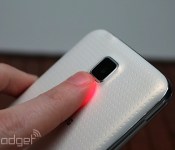
The Galaxy S5′s heart rate sensor has mostly been handy for fitness gurus, but it’s now helpful for the rest of us, too. Samsung has pushed out an update to S Health that uses the sensor to track stress levels; if your heart is racing after a bad day at work, you’ll know. The app also tracks long-term trends, so it should be clear when you’re overdue for a vacation. While S Health won’t help you get rid of the annoying coworkers or personal dramas that cause stress, the app will at least make it clear that it’s time to relax.

Filed under: Cellphones, Mobile, Samsung
Via: SamMobile, Android and Me
Source: SammyHub
 AIVAnet
