


Stable Chrome for the Desktop Picks up “OK Google” Voice Trigger
Voice triggered searching, along with all other voice triggered actions, seem to be where things are headed. For a while now the “OK Google” hotword has been active in the Chrome beta builds for desktop and laptop PC’s and it would seem that Google is finally confident enough in its performance to make it available to the stable Chrome build that general users interact with daily.
 The hotword action will slowly be making its way to all Chrome users on Mac, Linux and Windows over the next few days here in the U.S.. They mention that they plan to include more languages and ChromeOS to the mix soon. You may already have it, or you may not. To check, just open up a new tab or go to Google.com, and you should be able to simple say “OK Google” and tell it stuff like Set a timer or Create a reminder.
 To make sure it is active head to the three bars in the upper right hand corner of Chrome. Then go to Settings, Show advanced Settings and then look in the Privacy section. You should see “Enable ‘OK Google’ to start a voice search”. If you don’t, then you haven’t picked up the latest update yet. So just sit tight and wait. At least you can still click the mic.
Anyone stoked for the hotword addition to the stable Chrome release?
Source: Google Chrome Blog via Androidandme
//<![CDATA[
ord = window.ord || Math.floor(Math.random()*1E16);
document.write('’);
//]]>
Developer Edition of the LG G3 Makes a Leaked Appearance
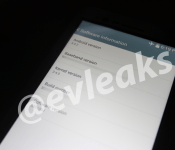
Leaks of the LG G3 have been cropping up left and right lately. Rightfully so since the rumor mills have pegged it for a May 27th announcement. It would only make sense that more leaks of the device and the specs would crop up. The latest leak comes from the usual suspects, or rather suspect, @evleaks.

This time he states that the images are of a LG G3 Developers Edition with T-Mobile. The T-Mobile aspect has us wondering what is up. It makes sense that there would be a developers edition of the device and that T-Mobile in general would support it as a GSM device. I am not sure if what he is saying is that a unlocked developer edition will come to the carrier as is though. That would be something pretty amazing really. Toss in the killer plans and put this puppy on payments and your have a recipe for awesomeness.
Perhaps what is a bit more exciting to see, is the clarity of the screen in the images. The LG G3 spec sheets have been talking about a 2K quad HD display, and I have got to say, I don’t see any pixelation in the screen images, do you?


I don’t know about you guys, but that is pretty stellar to me. You can take a look at a few other images including a benchmark score, the battery and camera lens over at @evleaks page.
Source: @Evleaks G+
//<![CDATA[
ord = window.ord || Math.floor(Math.random()*1E16);
document.write('’);
//]]>

NYC’s Met museum is offering 400,000 works of art as free downloads

The NYC Metropolitan Museum of Art is making some of its gigantic collection of masterpieces available for you to use in your next project. The Met just marked almost 400,000 digital images of its works as Open Access for Scholarly Content (OASC), which is bringing some pieces to the web for the first time and making them all available for non-commercial use. What that means is that now you can use Rembrandt’s epic Toilet of Bathsheba in your thesis (because, why not?), or bring some bling to your next documentary with a photo of an Aztec necklace for free. The collection includes all of the images the museum feels are in the public domain and aren’t subject to any other copyright restrictions. You can tell a photo is up for grabs by looking for the OASC label and download button below each pic.
Filed under: Internet
Via: Slashgear
Source: The Collection Online, Met Museum

Meet the Smartisan T1, a surprisingly unique phone from China

A little over a year ago, a fresh Chinese startup by the name of Smartisan (“smart” and “artisan” combined) showed off its first work: the Android-based Smartisan OS. What caught our attention was its truly unique UI and insanely thoughtful UX features, so naturally, we had very high expectations for the company’s own hardware back then. At long last, the Smartisan T1 phone was unveiled in front of some 5,000 people — along with 2.74 million online viewers — at the two-hour long event earlier this week, and despite the usual flagship-level specs, it was still full of nice surprises. Don’t be mistaken: unlike the low-cost, high-end devices from Xiaomi, OnePlus, Nubia and other young Chinese brands, the T1 isn’t about affordability; it’s positioned as a more premium smartphone with much more differentiation. How so? Read on to find out.
Let’s get the boring specs out of the way first. Like most flagship phones these days, the T1 packs a 5-inch 1080p IPS display by JDI, Gorilla Glass 3 on both the front and back, a powerful 2.5GHz quad-core Snapdragon 801 SoC, 2GB of RAM, 16GB or 32GB of internal storage (sorry, no microSD expansion here), a fixed 2,570mAh battery and a noise-cancelling secondary microphone. For the wireless part, you get the usual 802.11ac WiFi, Bluetooth 4.0, GPS, NFC and AT&T-friendly 3G bands. The 3G version will arrive in China first come July (from CN¥3,000 or about $480), followed by a 4G version by end of year (from CN¥3,500 or about $560). That’s right, this isn’t your typical cheap Chinese phone, but the price points are still not bad.
Photography shouldn’t be a problem with the 13-megapixel f/2.0 camera (featuring Sony’s IMX214 sensor) and the 5-megapixel selfie camera. CEO Luo Yonghao stressed that his imaging team collaborated very closely — more so than most other manufacturers have, apparently — with Fujitsu, who also convinced Smartisan to adopt AcuteLogic’s auto white balance software and ArcSoft’s scene recognition plus noise reduction technology. We’re most interested in the camera app’s night mode, which takes six consecutive shots and combines them into one to reduce noise. The panorama mode is also handy, as it lets you toggle between 180-degree mode and 360-degree mode. As the unit we’ve been given was still running on beta software, we’ll save our camera impressions for later.

Luo also boasted the T1′s audio performance. By using just TI’s OPA2604 op-amp chip, his engineers were able to achieve an audio frequency response plus low distortion that claim to be almost identical to that of the Vivo Xplay 3S, a recently launched Chinese phone aimed at audiophiles. For those who aren’t familiar, the Xplay 3S uses an extra DAC chip alongside the same OPA2604 amplifier, thus taking up more space on the logic board, consuming more power and potentially producing more heat; so it’s impressive that the T1 has a matching audio performance using less hardware. We’ve had a good listen with our unit and it definitely sounds better than with the “Hi-Fi” mode disabled: the sound stage is more apparent thanks to greater clarity, and the bass is more lively yet not aggressive. Luo added that he had help from two famous music producers in China, and he welcomed all audio enthusiasts to give his phone a serious test drive.
At 167g heavy and 8.23mm thick, Smartisan’s first smartphone isn’t exactly gunning for any record-breaking title, which isn’t a surprise given the heavy focus on the software side; but that’s not to say the company did a lazy job on the hardware. Here, Luo took a minimalistic approach with both the phone plus the packaging, and he had help from Apple’s ex-lead designer, Robert Brunner, who now runs Ammunition in San Francisco. The studio’s work include the Beats branding and products, Barnes & Noble Nook tablets, the Polaroid Cube and Adobe’s Project Mighty plus Project Napoleon. It should also be pointed out that the elegant box is made by James Cropper, a 169-year-old fine paper specialist firm from England.

The device is dominated by glass across the entire front and back sides, thus covering 83.8 percent of its exterior. The removable back cover — which can be swapped with a slightly thicker battery cover for extra juice — also features subtle bevels that add character to its glass polish. On the sides, you can see the simple three-layer sandwich formed by the flat fiberglass frame in the middle, as well as the glass panels’ glossy plastic frames. It’s essentially the same sandwich layout as the iPhone 4 and 4S, except here the metal frame is flush with the plastic frames.
On a related note, the T1 and the iPhone 4/4S share a similar back cover locking design: you push it up to pop it off, and you secure it with two screws at the bottom (there are also two spare screws provided). This may seem a rather inconvenient way of hiding the Micro SIM slot underneath, but Luo reasoned that he didn’t want to have a SIM tray ruining the clean surface on the mid-frame, plus most people only change SIM cards once a year. Obviously, that doesn’t apply to road warriors like many of us here at Engadget, but the good news is so far, our back cover still stays secure without the screws, though only time will tell whether it’ll become loose.

The T1 comes in either black or white. For the sake of reducing the number of black dots on the white version, the proximity and ambient sensors are housed within the same tiny groove as the earpiece at the top, leaving just the front-facing camera right next to them. Alas, the other end of the panel doesn’t look as clean no thanks to the three physical buttons, albeit each being marked with just one tiny light dot. Smartisan chose these as it believes capacitive buttons are more prone to accidental clicks, which we don’t entirely agree with; and not to mention the irony of how these rounded keys bulge out as well. On a more positive note, you can swap the menu button and the back button around in the system settings menu (which unfortunately does look like the one in the earlier versions of iOS), so it doesn’t matter whether you’re left-handed or right-handed.
The T1′s design carries heavy emphasis on symmetry. The micro-USB port and the two sets of customizable rocker keys (one for volume and one for brightness) are all centered on their respective sides of the phone. The circular power button near the top right corner mirrors the headphone jack on the top left; and likewise with the speaker grills on both sides of the micro-USB port at the bottom (even though the one on the right is just a dummy, as the loudspeaker and the microphone are tucked inside the left one).
The black pre-production unit (at stage “P4.5″) we received already looks and feels good, though Luo did point out that the final version will use a black micro-USB socket instead of the white one on our device. That’s how OCD he is. The only downsides we’ve noticed so far are the relatively heavier weight (which arguably also gives a more premium feel), plus the glass panels’ inevitable susceptibility to fingerprints. We could complain about the lack of a curved back that would have provided a more comfortable grip, but on the other hand, we do welcome the more secure grip courtesy of the flat composite frame, as opposed to the annoying slipperiness on the latest HTC One’s rounded edges.

The real differentiator for the T1 is its unique Smartisan OS software. For those who aren’t familiar with this Android ROM, its home screen comes with 3 x 3 grid panels plus a three-item dock by default, which is more pleasing to the eye than most other Android launchers. We also dig how the tiles animate every time you unlock the phone, move an icon around or change the launcher’s theme. When you pinch the page or hit the menu button, you can zoom out to either a 6 x 6 view or a massive 9 x 9 view, where you can directly launch an app, move an app to another panel, rearrange the panels, hide them or lock them. You can also switch to a 4 x 4 grid layout or even back to the conventional, grid-less Android home screen, though the latter would kind of defeat the purpose of using Smartisan OS.
One interesting point to make is that while you can set a photo as the lock screen wallpaper, you can’t do the same for home screen wallpaper, as Smartisan insists on keeping the launcher look clean. You do, however, have several theme options: black, gray, blue, wood, purple, rock, leather and brown. Just when you think there’s limited UI customization here, note that the ROM is kind enough to let you toggle between its custom icons and the original icons for select apps. There are even some “OCD” settings — all disabled by default — if you want to toggle minor things like icon labels, battery percentage, icon notification badges and a full-screen swipe-up gesture that clears said badges.

The “smart” in Smartisan OS is all about how it solves the many pain points that we come across while using our smartphones. You can check out a detailed list of features in our previous article, so we’ll focus on the new ones introduced at this launch event, as well as some of our favorites here. Most notably, there’s another reason for why the T1 comes with two sets of rocker keys: you can squeeze both at any time — even when on standby — and then let go to instantly take a photo! It’s pretty much just a one-step process, as opposed to having to wake the phone and then launch the camera app to hit the capture button. The problem with this handy feature is that it currently doesn’t focus in advance, so here’s hoping the final software will have this fixed.
There are a couple of noteworthy gesture-based features as well. One of them is a downward thumb swipe to pull the entire screen down, so that everything is within your thumb’s reach. Another cool one is you can trigger a screen rotation at any time by using both thumbs to draw a circle, in the direction of your desired rotation. This comes in rather handy when you’re lying on a side, where auto rotation becomes more of a nuisance than convenience.

Other goodies include: the ability to create a calendar event from a received text message (date and time are automatically recognized, if mentioned); the option to crop screenshots right after capture; disable lock screen password when connected to your desired password-protected WiFi network (based on the work of jailbroken iOS app CleverPin); text messaging scheduler; and a system-wide mute timer (up to eight hours) in the volume panel. There are also some fun bits like intentionally out-of-sync second hands on the world clock page (but you can shake to sync them), and the turntable arm in the music app lets you fast forward or rewind music (Luo is also considering adding disc-scratching function here).
We can go on and on with the list of features. What’s certain is that an insane amount of thought has been put into both the hardware and the software, making the T1 a truly unique and passionate product. But that’s not all. Instead of buying a case for the sake of protecting your T1, you can pay CN¥200 or about $30 — a bit less than the typical price of a nice case — for a “SmartCare+” warranty, which offers two free front or back panel replacements within a year. But if you prefer the old fashioned way, Smartisan will also be selling a bumper case for its phone.

In terms of availability, the T1 will be shipping in China come July, but there aren’t any plans to launch it outside the country just yet, so interested folks elsewhere will have to rely on either a resident of China or an importer. Looking ahead, though, Luo told us that he plans to eventually launch a phone overseas in about a year or two, and he’ll even personally host the keynote in English. For a man who went from zero to launching such an eccentric phone in just over two years, anything is possible.
Filed under: Cellphones, Mobile
Drone equipped with Google’s 3D-sensing phone won’t be deterred

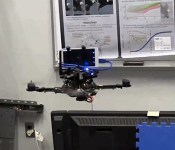
Google wants to put its Project Tango handsets in orbit, but researchers from the GRASP Lab at UPenn are keeping things on the down-low with one of their already-clever quadrotors. If you’ll recall, Tango has a depth sensor, motion tracking camera and two Movidius vision processors to create an internal 3D map of its surroundings. That should, in theory, keep the drone aligned with pinpoint accuracy and no GPS signal. Judging by the video below, it worked perfectly — the quadrotor stuck to a fixed point and pre-programmed flight path despite some healthy shoves. That should help future autonomous drones react better to their environment if we decide to send them out for, say, delivery duty.
Filed under: Cellphones, Transportation, Alt, Google
Via: IEEE Spectrum
Source: Vijay Kumar (YouTube)

Uniqlo’s new smartphone app lets you design (and buy) your own tees

Uniqlo is offering customers in its homeland the option to make their own T-shirts through their smartphones. The UTme! app is on both Android and iOS, and lets you craft your own T-shirts with photos, text or (relatively simple) drawings. Naturally, there are some provisos and it’s the usual mix of copyright avoidance, but it goes beyond just images to encompass music artists’ names and even famous quotes — which seems a little excessive. If you upload them, your designs are also Uniqlo’s property, another point users should be aware of. Alongside the usual cropping tools, it also pulls in movement sensors for Android devices and iPhones, and you can shake up your own photo or design with mosaic and glitch effects to spice up any lackluster designs. Once it’s uploaded, you can buy your design for roughly $20 (1,990 yen) — although you’ll have to move across the Pacific to order ‘em, at least for now.
Filed under: Wearables
Via: Engadget Japanese
Source: Uniqlo

Modern dance with drones is confusingly beautiful

Dancers with weird costumes? Check. Trippy sci-fi music? Check. Drones with pyramids on top… wait, what? The Eleven Play dance troupe in Japan has integrated quadrotors into its performances, starting with synchronized moves choreographed to the dancers. The flying ‘bots soon take over the show, though, chasing the humans off the stage. Then it’s all drones, flying in trippy coordination to a Tron-like geometric light show. It’s all quite wonderful (see the video below), even if we don’t know exactly what it all means — something something dehumanization of modern technology?
Via: The Verge
Source: Daito Manabe (YouTube)

Microsoft wins case to block FBI request for customer data

When Microsoft said last year that it’s committed to protecting its customers from government data requests, it wasn’t messing around. Microsoft general counsel and executive VP Brad Smith recently revealed that the software giant successfully challenged an FBI National Security Letter that tried to seek basic information from one of its enterprise customers. The letter apparently had a nondisclosure provision that would’ve prevented Microsoft from telling the customer in question about the request. Microsoft challenged that provision in Seattle’s Federal Court, stating that it was “unlawful and violated our Constitutional right to free expression,” and wouldn’t you know it, the FBI withdrew the letter. Smith said in a blog post that such requests are rare, but it’s still good to know the Redmond company is continuing to do what it can to be transparent about such things — even if it knew about them all along.
Via: ArsTechnica
Source: Microsoft

BlackBerry’s ultra-secure chat gives each message its own security key

Chat systems like BBM and iMessage are typically very secure, since they’re encrypted end-to-end. However, they still have a glaring flaw: if intruders do crack the code, they can see everything you’ve said. That’s where BlackBerry’s soon-to-launch BBM Protected comes in. As the company showed at its BlackBerry Experience Washington event (CrackBerry‘s video is below), the new service makes it extremely difficult to spy on an entire conversation. Each message has its own random encryption key; even a very clever data thief would only get one tidbit at a time, so it could take ages to piece together a full chat.
BBM Protected will only be available for corporate-controlled BlackBerry devices when it launches as part of an enterprise suite in June, although that will include anything running the now-ancient BlackBerry OS 6 or higher. The chat client won’t be available for personal phones running BlackBerry Balance until early fall, while Android and iOS users will have to wait until late fall or early winter. All the same, it might be worth holding out if you’re really, truly worried that someone is watching your private discussions.
Filed under: Cellphones, Internet, Mobile, Blackberry
Via: BGR
Source: CrackBerry

Report Claims Beats Acquisition to Bring “Culturally Aware” Managers to Apple, Manage Subscription Music Transition
 Bringing “culturally aware” managers to Apple is a big part of why Apple is interested in acquiring Beats, according to a new report from TechCrunch.
The piece claims that Jimmy Iovine and Dr. Dre are the big prizes at the company, and that it fits with Tim Cook’s recent hiring of high-fashion managers like Angela Ahrendts from Burberry, wearable expert Ben Shaffer from Nike, and Paul Deneve from Yves St. Laurent.
Dre and Iovine have design and marketing savvy from Beats that could be significant for the company, which has struggled somewhat with its marketing efforts since Steve Jobs has passed away.
A well-placed source has confirmed rumors that Apple’s acquisition of Beats “is happening” but was close to falling apart multiple times. The source said with “70% certainty” that Apple’s planned multi-billion acquisition of headphone maker Beats will go through. But Apple isn’t buying Beats for the technology, they’re buying the talent.
“They want Jimmy and they want Dre,” said the source. “He’s got fashion and culture completely locked up.”
In a separate TechCrunch piece, a different reporter says Apple is looking to operate Beats as an external streaming music service to avoid cannibalizing its iTunes download business.
Reportedly, it’s not that Apple is worried about losing its 30% cut of song downloads, but Apple launching a streaming music service could decimate the more than $1 billion that iTunes generates for record industry revenues.
Because it’s deeply conscious that pumps a lot of blood into the music industry. My source says iTunes execs started deeply considering streaming at least two years ago. They realized a sudden move for iTunes from downloads to streaming could lead to dark days for the record business, reducing musical inventory – and revenue – accordingly.
The piece argues that Apple may be looking to grow its streaming business on the side as iTunes music downloads drop, and that the company is looking to “bridge the download and cloud eras gracefully.”
It says Apple executives are looking to strike a deal with record labels that would allow the company to sell a subscription music service for $5 per month, half of what Spotify charges, but with a higher cut of revenues.
Supposedly the acquisition will be announced soon, perhaps during Apple’s Worldwide Developers Conference keynote on June 2.
 AIVAnet