



A red HTC One M8 spotted in photos from Taiwan
 We’ve seen the HTC One M8 in quite a few colours now including blue, gold, platinum and even pink. The latest variation of the device spotted in the wild is a red HTC One M8 which was seen in HTC‘s home country of Taiwan. In the fairly extensive run-down, the source takes pictures of the packaging of the red M8 as well as the device from multiple angles (clearly the source liked red devices since the HP laptop featured in the photos was also red).
 HTC apparently officially announced the red M8 yesterday and is being sold in multiple retail stores in Taiwan already. Whether this coloured variant will be seen in other countries around the world isn’t clear yet, but if it is, you can bet certain carriers are going to be all over it (read: Verizon and Vodafone).
 What do you think about the red HTC One M8? Which is your favourite coloured variant of the ones we’ve seen so far, or which colour would you like to see? Let us know your opinion in the comments.
Source: mobile01 via Phones Review
//<![CDATA[
ord = window.ord || Math.floor(Math.random()*1E16);
document.write('’);
//]]>

This bloke’s air-powered Wolverine claws could probably kill you

For some of us, the closest we’ll ever get to becoming Wolverine is making a pair of cardboard claws, growing a bitchin’ set of sideburns and developing a cigar-chewing habit. The more industrially inclined, however, make sets of air-powered, razor-sharp talons that can cut through a watermelon like… Well, how an adamantium knuckle-knife might slice through watermelon. YouTube user ColinFurze fabricated a set of 12-inch stainless steel claws that extend and retract thanks to a set of palm-mounted toggle switches that connect to compressed-air tank on his back — no bicep-flexes required here, folks. If you’re feeling particularly inspired and/or have a welder and some plate-stock handy, bub, Furze has posted a how-to video in addition to the clip where he joyously hacks apart cardboard and what looks like a Mystique blow-up doll (seriously). Even better, he’s promised more X-Men-themed videos come next Thursday. Try not to go berserk before then, would-be Weapon X.
Via: TechCrunch
Source: ColinFurze (YouTube) (1), (2)

Meet Sony’s RX100 III, a refined edition of its excellent point-and-shoot

Even though Sony has been suffering from financial woes of late, the Japanese company did find some form of success recently thanks to new Xperia smartphones and the PlayStation 4. And let’s not forget another meaningful part of its electronics business: cameras. With the introduction of the Cyber-shot RX100 back in 2012, Sony made a point-and-shoot that most any photography buff could proudly carry around, to use not only as a backup to, say, a DSLR, but even as a main camera. Now, looking to build on the success of the first and second generations, Sony is announcing the RX100 III, bringing with it more bells and whistles than you could ever hope for out of a compact shooter.
On the outside, the new RX100 is quite similar to its predecessors, sporting a sleek, slightly glossy black finish and that 180-degree tilting LCD on the back. It is the inside where most changes have taken place, however. For instance, it now features Sony’s Bionz X image processor (also found on the recently unveiled Alpha A77 II), which is paired alongside the same 20.1-megapixel Exmor R CMOS sensor that’s found on the previous version of the RX100. But while Sony didn’t make any upgrades to the sensor here, the RX100 III does welcome brand new Zeiss glass in the Vario-Sonnar T*, a 24-70mm, f/1.8-f/2.8 lens — Sony says this is perfect for keeping a wide-angle view and should help you take some solid, bokeh-filled pictures.
One of the many things the RX100 does well is video, and Sony wanted that trend to continue with its third-gen model. The pocket-sized shooter now processes video in XAVC S format, which, according to Sony, lets you record 1080p videos at a much faster data rate and with very little compression — in other words, this will make your movies look a lot better and crisper. To go with that, Sony also added a built-in, retractable OLED electronic viewfinder (which wasn’t present on either of the older editions), WiFi/NFC for wireless sharing and the ability to capture 4K still images, making the newest RX100 an even more powerful little camera.
So just how much will you have to pay for all these features? Well, Sony’s pricing the Cyber-shot RX100 III at a reasonable $800 when it arrives next month, which is only $50 more than the RX100 II was when it became available last year.

Full-frame and 4K-ready: The Sony Alpha A7s can be yours in July for $2,500

It’s hard to believe that the Alpha A7 is about to have its successor hit the market, especially since a full-frame mirrorless camera from Sony was just a rumor not that long ago. Today, Sony announced that its Alpha A7s, which was revealed at NAB in Las Vegas last month, will be going on sale in July for a cool $2,500 (body-only). Sure, it is a pretty heavy price tag, but the A7s packs enough features inside to make it one of the most exciting shooters to date. Along with the 35mm full-frame, 12.2-megapixel Exmor CMOS sensor, Sony’s newly minted ILC can also take 4K video (though you’ll need an external drive to do so) and has an ISO range of 50 to 409,600. But there’s a lot more where that came from, too — things like built-in WiFi, NFC, a 25-point autofocus system and 4K movie output.
We asked Sony whether the A7s would have a body-plus-lens kit available at the time the camera goes on sale, but the company said it didn’t have any details to share on that at the moment. Still, chances are there will be one — after all, that’s sort of standard with camera sales nowadays. The availability announcement of the Alpha A7s comes alongside the introduction of the Cyber-shot RX100 III, as Sony continues to expand its camera lineup with a little something for everyone. Of course, the A7s is set to face a little more competition than its cousin the RX100, with existing options like Panasonic’s Lumix GH4 and others looking to also get a piece of the 4K pie.

Engadget Daily: The FCC’s new net neutrality rules, HTC’s One Mini 2 and more!

You might say the day is never really done in consumer technology news. Your workday, however, hopefully draws to a close at some point. This is the Daily Roundup on Engadget, a quick peek back at the top headlines for the past 24 hours — all handpicked by the editors here at the site. Click on through the break, and enjoy.

FCC votes in favor of new Net Neutrality rules, leaves room for ‘fast lanes’
Today, the FCC voted on a new set of Net Neutrality rules, and not surprisingly, the outcome was a split decision. Thankfully, nothing’s set in stone just yet. The final vote will take place later this year.

HTC’s One Mini 2 is an awkwardly named, cut-down version of the excellent One M8
The HTC One Mini 2 is here, and surprise, it looks just like the One M8. But despite its similar appearance, this miniature handset has been downgraded in almost every department. Even still, the Mini 2 remains a great option for those on a budget who want that premium feel.

How a water bottle gave birth to a whole new world of self-healing products
Sometimes great things happen by accident. Read on and learn how a Dasani water bottle and laboratory error lead an IBM researcher to develop the tech behind a self-healing and flexible polymer.

Wearhaus: If you love your social headphones, set them free
Social headphones you say? A company called Wearhaus wants to empower over-ears with the ability to wirelessly share music with anyone. Our own James Trew loves the idea, but fears it won’t catch on.
You also might like:
Filed under: Misc

Google Play starts accepting PayPal for digital goods, but not for physical ones

Well, here’s a surprise: Mountain View now accepts PayPal payments for apps, games, books and other digital goods on Google Play. If you’re not exactly fond of paying through credit cards cards or carriers, you can activate the option by clicking Add Paypal and typing in your log-in details. The option has a huge limitation, though: you can’t exactly use it to buy devices and accessories. So, if you want to buy a new Android phone or a Nest thermostat, you need to bust out that plastic. That said, Play has also expanded carrier billing and gift card availability to more countries, and anyone waiting for either may want to check Google Support for the full lists.
[Image credit: Steve Ganz/Flickr]
Filed under: Cellphones, Tablets, Mobile, Google
Via: Droid Life
Source: Android Developers Blog
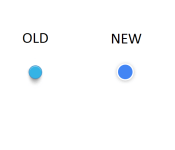
New Project Hera location marker found in Google Maps version 8 Apk
 A lot of buzz has been going around the Android community ever since the idea of an overhaul to the Google apps ecosystem, apparently codenamed Project Hera, was suggested. While the primary purpose of the alleged update is to improve the multitasking between Google core apps, it has been suggested that the update would also bring a new appearance to most of these apps. While we’ve been wondering whether these changes would be coming in a new version of Android or be updated in the standalone apps, Markus Exler from Google+ has seemingly found the answer to that question with the discover of the Project Hera location marker in the Google Maps apk.
As you can see in the above image, the icon on the left is the location marker that we are all very familiar with, however the icon on the right was also found in the Maps apk labelled “new_blue_dot.png”. As far as we can see, the colour scheme of the Project Hera location marker appears to match the colour scheme of previously leaked apps. It’s interesting that the icon was found in the latest Maps apk (which can be downloaded here), but it might suggest that the Project Hera updates are going be delivered through an update to the standalone apps rather than in an Android software update. With Google I/O just around the corner, we would expect more things like this to start popping up more and hopefully with an official announcement at the event itself next month.
What do you think about the Project Hera location marker? Are you a fan of the colour scheme of the suggested changes? Let us know what your thoughts are in the comments.
Thanks for the tip Off Corner Pack!
Source: Google+
//<![CDATA[
ord = window.ord || Math.floor(Math.random()*1E16);
document.write('’);
//]]>

Carl Icahn Buys Additional 2.8M Apple Shares Raising Stake to Nearly $4.5B [Mac Blog]
 Activist investor Carl Icahn has purchased another 2.8 million Apple shares worth some $1.65 billion according to a regulatory filing from Thursday (via The Wall Street Journal). In total, Icahn now owns more than 7.5 million shares of Apple, bringing his stake to almost $4.5 billion.
Icahn’s investment follows Apple’s April announcement of a dramatic increase in its share repurchase authorization to $90 billion, up from $60 billion. Apple will also implement a 7:1 stock split in June and plans to return more than $130 billion to shareholders under its capital return program by the end of 2015.
Prior to Apple’s announcement, Icahn had pushed Apple to increase its stock repurchasing program in a meeting with CEO Tim Cook. Icahn abandoned a legal effort to have shareholders recommend an increased share repurchase in February after Apple repurchased $14 billion in stock following its January earnings call.
After Apple announced its boosted stock repurchasing plans, Icahn said he was “extremely pleased” with the company’s results, noting that the stock was still “meaningfully undervalued.”

Now you can text 911… just not from everywhere

Text-to-911 became available in select markets today. As the name implies, the service allows you to text your emergency to first responders rather than call. There’s just one issue: it doesn’t work in most places. The list of supported cities is so small in fact, you should probably just assume the feature isn’t up and running in your town.
Today’s launch stems from a policy the FCC adopted back in January to make text-to-911 available everywhere. All four major carriers signed on to launch the service by May 15th — that’s today — everywhere a call center could support it. Turns out, they’re pretty few and far between. Locations that are online today are using existing TTY systems (traditionally used by the hearing impaired) to accept texts, or new browser-based solutions. However, Iowa, Maine and Vermont are the only ones who’ve managed so far to get support statewide.
But even if you’re one of the few who have text-to-911 support already, that doesn’t mean you should use it. While the feature will certainly be helpful for the deaf (or if, you know, you’re standing in the bank during a robbery), it can hurt you in other situations. 911 texts will have to include your full name and address, a needed step that will take a bit of time to type out on that QWERTY keyboard, as will your description of the crime scene (you won’t be able to include photos or video). Texting also prevents an emergency worker from being able to hear what’s going on around you or from asking quick, sometimes life-saving questions.
Text-to-911 will launch across the US by the end of the year. For now if you try and use the service somewhere it isn’t available you’ll get a bounce back message encouraging you to call instead — something you likely should have done in the first place.
[Image credit: Getty]
Filed under: Cellphones, Wireless, Mobile
Via: TechCrunch
Source: FCC

Cities use online ticket tracking to save you time on the subway

Many commuters know the agony of mass transit at rush hour; it’s no fun to skip packed buses and subway cars when you’re already desperate to get home. Urban Engines clearly shares in that pain as well, as it’s rolling out an internet service that uses commuting patterns to spot choke points in public transportation. Ticket purchases, pass card swipes and similar behavior create an activity map that reveals just where and when the delays are; it’s easy to tell that there need to be more buses at 6PM, or that the lines are too long at the subway turnstiles.
Multiple cities are already testing the cloud-based congestion fighting, including Sao Paolo, Singapore and Washington, DC. They’re not just using it to decide which transit lines need more vehicles, either — Singapore is using Urban Engines’ built-in incentive system to get its less harried passengers riding at quieter hours. It could be a while before the technology reaches your burg. If and when it arrives, though, it could save you valuable minutes (not to mention a few headaches) every day.
[Image credit: Roman Kruglov, Flickr]
Filed under: Transportation, Internet
Via: TechCrunch
Source: Urban Engines
 AIVAnet