



Far Cry 4 arrives November 18th on current, last-gen consoles and PC

Amidst talk of its 2014 financials, Ubisoft hid a sliver of information that will please fans of open-world, first-person shooters: Far Cry 4 exists, and it’s coming out this year. Ubisoft Montreal — with the help of developers at Red Storm and the company’s other dev shops in Toronto, Kiev and Shanghai — is bringing the title to PC, PS4, Xbox One, PS3 and Xbox 360 on November 18th in the US, and on November 20th in Europe, the Middle East and Africa. In the fourth installment of the franchise, players will roam the mountainous terrain of Kyrat, a region of the Himalayas with a “despotic self-appointed king.”
Folks who pre-order the shooter will snag a free upgrade to its Limited Edition, which packs a set of three single-player missions dubbed Hurk’s Redemption, along with Hurk’s harpoon gun. Ubisoft says its goal is for Far Cry 4 to become one of the top 10 best-selling games of 2014. While other details on the game are slim, the firm promises we’ll hear more about it during E3.

Source: Ubisoft (PDF), UbiBlog
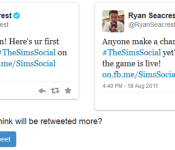
Crafting the perfect tweet is one-third talent, two-thirds science

Random and fickle as social networks may seem, the success of an individual Tweet or Facebook post can be hugely dependent on the way it’s worded. Some sentences will work well, while others will quietly implode in a puff of indifference. However, researchers from Google and Cornell University now claim that they can predict this outcome using straightforward linguistic rules. The rules may not be especially practical when it comes to actually crafting a Tweet (the main tips are: make it sound like a news headline, follow “community norms,” and add more detail where possible), but there does seem to be decent statistical evidence to back them up.
When the rules were applied to a real-world sample of Twitter “twins” — that is, two published Tweets by the same user, about the same subject, where the only big difference is in the wording — they were 66 percent accurate in predicting which twin got more re-tweets. By contrast, average human readers were only 61 percent accurate in spotting the better Tweet, which backs up the idea that social networking success is more about science than about emotion. Then again, the remaining 34 percent of inaccurate predictions delivered by the researchers’ model means there’s still a whole lot of literary flair which remains unaccounted for, and which probably can’t be condensed to a simple set of rules.
If you reckon you know what a good Tweet looks like, to the point where you might be able to beat the human average and the computer model, then the researchers have built an addictive little quiz to give you the chance to prove your skills. (Just to get things going, this author scored 70 percent, after ten trials. Beat that, ppl.)
Via: Washington Post
Source: Chenhao Tan et al. [PDF]

“Tab into Color” Event Scheduled by Samsung for June 12th, should be Galaxy Tab S Line
Invites are rolling out for a an upcoming event with Samsung in New York. The date is set for June 12th at 7 p.m.. The invite, seen below, offers up a what looks like the side view of a couple tablets and offers up a tag line of “Tab Into Color”. needless to say, Samsung should be making an official announcement of new Galaxy tablet line. Previous leaks and rumors peg Samsung to be bringing out a Galaxy Tab S series of devices and that is exactly what we are expecting to see on the 12th.
 The rumors have pegged the new Tab S line to be offered in an 8.4 and 10.5 inch 2560 x 1600 resolution on AMOLED displays. other talks have added in a Exynos 5 (5420) octa-core processor, 3GB RAM, 8MP rear camera, 2.1MP front facing camera and an IR Blaster. Other leaked info also stated Bluetooth 4.0 LE / ANT+ and W-Fi 802.11ac along with the more known a/b/g/n. I am sure it will bring in the newer magazine style UI that the other Pro line offered up. Whether or not Samsung will be starting off at Android 4.4.2 or not is still a guess at this point.
If the rumored specs pan out to be what Samsung is really pushing out in a couple weeks, this new Tab S line is going to pack quite the punch and be beautiful. You can expect it to have an equally impressive price tag too though. Those of us that can’t make the trip will be happy to seethat Samsung will also be live streaming the event on their YouTube channel.
Source: Phandroid
//<![CDATA[
ord = window.ord || Math.floor(Math.random()*1E16);
document.write('’);
//]]>

Text-to-911 goes live in select markets, national coverage expected by the end of the Year
 If we can get Amber Alerts, Emergency Weather notifications and more to our phones, then why has it taken so long for us to be able to text an emergency to 911? As of today, a number of location are up and running to support communities via text versus a phone call. It certainly makes sense. There are a number of petrifying situations where texting is easier, quicker and safer than placing a phone call. Not to mention individuals with speech conflicts or those that might be deaf.
AT&T, Sprint, T-Mobile and Verizon are all on board and agreed to have things in place by May 15th to support this service. The quarterly report filed in April said everything was on track, so we have no concerns that anyone is dragging their feet on this one. Unfortunately the additional service will take some time to become available across the nation due to software and system upgrades that need to be installed in the 911 call centers. The FCC has a running list of locales that all have the service enabled already.
Trey Forgety, director of government affairs at the National Emergency Number Association, told ABC News, “It’s always preferable to make a voice call to 911. Call if you can, text only if you can’t.”
If your location doesn’t support the service yet, your message will be bounced back as undeliverable. It is also recommended, and pretty much common sense, that you should text the emergency and your location before hitting send.
I am sure there will be plenty of people that abuse the service, much like they do now with calls, but you can certainly bet they will be watching and hefty fines and arrests will take place if you fool around.
Source: ABC / FCC / AndroidPolice
//<![CDATA[
ord = window.ord || Math.floor(Math.random()*1E16);
document.write('’);
//]]>

Swarm inherits Foursquare’s social roots, tells you where your friends are

In an effort to focus more on local search and finding you the best restaurants in your area, Foursquare recently announced that it would be splinter off the social aspect of its app — the part where you check in and find out where your friends are partying — to an entirely separate one called Swarm. Today, that app is officially live in both the Apple App Store and Google Play. I had a chance to try it out for a few days, and while it looks very different from its progenitor with its bee-inspired design and bright-orange hue, many of the social features remain the same. All your Foursquare contacts are ported over, and you can check in to a location just as you would before. Similarly, you can view a list of your friends’ recent check-ins, and you’re able to heart or leave a comment on them as per usual.
But in addition to that familiar functionality, Swarm’s also introduced a whole new set of features that might not have fit so well with the original Foursquare app. For one thing, Swarm now has an ambient proximity feature called Neighborhood Sharing, which when toggled, passively shares your location in terms of what neighborhood you’re in — check-in not required. This lets your nearby friends know that you’re in the neighborhood without telling them your specific location. For example, instead of saying you’re at a certain cafe, you’ll just be listed as being in a particular area, like the Mission District in San Francisco, or Soho in New York. According to Foursquare, your friends will never know your exact spot with Neighborhood Sharing, at least until you actually check in. Still, if you feel uncomfortable with that, you can always switch the toggle off.

In conjunction with the new Sharing feature, Swarm’s main welcome screen provides a social heat map of sorts that lets you know which of your friends are closest to you. They’re divided into six distances — Right here (500 feet), A short walk away (1.0 mile), Nearby (5.0 miles), In the area, (20 miles) and Far far away. If you see someone is close enough to arrange a rendezvous, simply tap on their avatar and you’ll be able to call, text or send them a message on Facebook Messenger (as long as they’ve got all that information set up on their accounts).
Perhaps my favorite feature of the new Swarm app, though, is the ability to set up plans. Instead of just randomly posting a status update on Facebook or Twitter that you’d like to have drinks after work, you can send a quick open-ended invite to Swarm’s “Nearby plans” page in the hopes that friends in the vicinity will see it and respond. You can then make arrangements of where to meet ahead of time, which is far easier than broadcasting your locale and simply hoping your friends show up. Of course, nothing’s stopping you from posting random missives on the Nearby Plans page, so you could also use it to sell extra concert tickets or complain about the weather. It seems pretty similar to Dodgeball‘s pre-Foursquare shout feature, just a lot more localized.

Swarm also added a fun little component that seemingly every other social app has: stickers. You can either add a mood sticker that indicates your, well, mood, or a category sticker that matches the place you’re at — so you would add a beer sticker if you’re at a bar, a coffee one if you’re in a cafe, etc. Swarm doesn’t offer reward Badges — that particular feature remains with the main Foursquare app — but you’ll get more stickers if you check in to more places. Also, like we said a few days ago, the concept of mayorships has changed. Instead of just having one mayor, a particular place can have multiple mayors because you’re only competing with your friends to hold the title at any given location. Last but not least, Swarm finally introduces extensive search of your entire check-in history so you can reminisce on where you’ve been.
As I’ve only had the app for a few days, there’s likely more about it that I haven’t yet discovered. But at first glance, it feels as if Foursquare old-timers will feel right at home with Swarm’s social elements, and though I have my reservations about ambient location-sharing, that seems potentially useful, too. The question now is whether that’s enough for folks to switch over — after all, an app that tells you where your friends are is only useful if your friends actually use it. To check it out for yourself, either hit the source link below or head over to the appropriate app store to download it.
Source: Foursquare
From Dodgeball to Swarm, Foursquare seeks to move beyond the check-in

On May 1st, 2014, Foursquare announced that after nearly five years, it’d be splitting its app in two. The main Foursquare app still exists, but its focus is now on location discovery and local recommendations, thus positioning it as a competitor to Yelp and Google. If you want to check in to a place to let your friends know where you are — you know, the idea that Foursquare was based on — you’ll now have to use a brand-new app called Swarm. Debuting today, Swarm is described as a sort of social heat map that tells you where your buddies are in relation to you. It inherits a lot of the more social aspects of Foursquare, like mayorships and insights into your whereabouts (like if you’ve gone to the pub five days in a row this week). In many ways, Swarm represents what Foursquare used to be — a location-based social platform that encourages you to meet people in the real world. It’s an app category that Foursquare practically invented. It’s also one it can’t rely on.
It all began with Dodgeball, the predecessor to Foursquare that founder Dennis Crowley created in 2000 with fellow NYU student Alex Rainert. Born from the frustration of not knowing where people were partying, Dodgeball was a fairly basic service. Simply text your location to a city-specific Dodgeball email address (say, sf@dodgeball.com or ny@dodgeball.com), and friends would instantly be alerted to where you were as long as they were signed up to the service as well. Crowley called it the “Friendster for cellphones.” After introducing it at SXSW Interactive in March 2005, it appeared the concept worked. Early Dodgeball user Eddie Codel, a live-video consultant, said it was a great way to see what was happening in real time at the tech conference.
“I knew that if a bunch of my friends were checking in at the Ginger Man, then it probably was a place I wanted to be as well,” he said.
In a sense, Dodgeball became a passive method for socializing — simply announce where you are and hopefully someone will show up.
The service soon became popular in major cities like San Francisco and New York, especially among early web adopters, one of whom was yours truly. I used Dodgeball as it was intended, eagerly typing out my location on my T-Mobile Sidekick II and sending it out into the world in the hopes that my friends would join me. Like Codel, if I saw that a group of buddies was convening at a pub, I’d make the attempt to head over to see what was going on. Though the rules weren’t officially laid out, it was generally understood that you wouldn’t be checking in somewhere if you didn’t want people to join you. In a sense, Dodgeball became a passive method for socializing — simply announce where you are and hopefully someone will show up.
As popular as Dodgeball was in my immediate social circle, it didn’t connect with the mainstream. According to a Wired UK article, its membership apparently never went over 75,000. Still, it showed enough potential for Google to snap it up in 2005 for an undisclosed sum. The search giant would eventually shut it down and incorporate its location features into a product called Google Latitude, which itself ended in 2013 as Google+ adopted some of its functionality.
Frustrated by Google’s “hopeless social strategy” at the time, Crowley left in 2007 to pursue other career paths. He never gave up hope, however, and came back in 2009 with a new partner, Naveen Selvadurai, and a reimagined location sharing app called, you guessed it, Foursquare. It blossomed at SXSW Interactive in March of 2009, where it went up against Gowalla, a competing app that debuted at the same time. Even though Gowalla proved to be quite popular in its own right, it just couldn’t compete with Foursquare’s growing clout, and was eventually bought by Facebook in 2011.

Foursquare retained the Dodgeball idea of location check-ins, but took it a step further. It added gaming elements like earning badges and points, so you could compete against your friends to see who was more socially active in a particular week. It also introduced the idea of mayorships — for those who checked in the most at a specific spot — which has since become one of Foursquare’s most recognizable features. While Dodgeball’s only incentive for checking in was to hang out with your buddies, Foursquare encouraged users to check in pretty much everywhere. Checking in wasn’t just about telling your friends where you were — it was also about exploring new places and documenting your whereabouts.
“I’d say my use of Foursquare has changed since the heady days of Dodgeball,” Codel said. “I don’t see nearly as much of a ‘critical mass’ of check-ins at events in SF as I did in the early days. I also check in to create a historical record of my activities. Turning that data into visualizations is pretty cool and a good way to see at a glance what my and other people’s habits are.”
Carla Borsoi, vice president of customer experience at iMatchative and another longtime Foursquare user, noted the change in her use of the app. “I used to use it mainly to see what people were doing and if I should go join them,” she said. “Now I use Foursquare for personal-history logging, friend and family awareness, [keeping] track of what friends are up to in their day-to-day lives and finally to get tips.” John, a software developer who goes by @johnthebastard on Twitter, said the same, stating that back in the day, members of his social circle would just glance at their phones to find out where their friends were. “That still happens a fair bit now, but not as much,” he said. “Yelp and Facebook adding check-ins fragmented the social map and made it less useful. We have to make plans in advance now. It’s less spontaneous.”
Checking in wasn’t just about telling your friends where you were — it was also about exploring new places and documenting your whereabouts.
As he mentioned, Foursquare is no longer the only app that lets you check in. Facebook added it in the form of Facebook Places, and so did Yelp, both of which have much larger existing user bases. By the end of 2013, Foursquare reported over 45 million registered users and about 50 million monthly visitors. Though impressive, that doesn’t come close to the 100 million people that check Yelp every month or the 1 billion or so folks who frequent Facebook just on their phones. Other standalone location apps like Highlight and Glancee cropped up too, but even they struggled to grow outside the Silicon Valley bubble — Glancee was eventually acquired by Facebook in May 2012, while Highlight is still waiting for wider adoption.
To add to Foursquare’s concerns, Facebook also recently added a new ambient location-sharing feature called Nearby Friends that’ll alert you to friends in your vicinity, which sounds a lot like Swarm. It’s clear that Foursquare needed a hook beyond just letting people check in and broadcast their location.
According to Crowley, the plan for Foursquare was always to be a customized discovery and recommendation engine first, and a social tool second. Those check-ins, he said, actually give Foursquare a rich source of information about where you and your friends go, giving them the ability to feed completely customized suggestions based not just on your location, but also the kinds of places your friends like. Think of it as a more personalized Yelp. “I refer to Foursquare first when trying to find a new cafe or restaurant in a place I’m not familiar,” said Codel. “I’d much rather have friend-moderated referrals before general reviews of a venue.”

Foursquare became an app with two seemingly divergent purposes, social and discovery, thus the move to divorce the two. In a lot of ways, it makes sense — having such different features in a single app can bog it down — but it’s also a little disconcerting. Foursquare has become so synonymous with checking in and mayorships that existing users might find it a surprise that the check-in feature is no longer there. Additionally, a location check-in app only has value if most of your friends use it, a problem that Swarm might have down the road. If you’re an existing Foursquare user, Swarm will have all your contacts there already, so it’s easy for you to get acclimated. But if you’re not, there’s little incentive for you to get on board, especially since Swarm doesn’t have all the discovery features and recommendations of the larger Foursquare app.
“I will definitely try Swarm — I say try, because there’s a network effect there and if it’s a ghost town, it won’t be something worthwhile,” Borsoi said.
John echoed the sentiment. “I worry that the already shrinking pool of friends who use the social map for meeting up won’t survive the transition to Swarm,” he said. He was also soured on the news that Swarm would allow for multiple mayorships of a single place, thinking it might be better to get rid of the idea altogether. “That pretty well kills all the fun of the game.”
But perhaps the grand idea of a dedicated location-sharing app is a dying one.
Some people, like Codel, remain optimistic. “I understand why Foursquare wants to do that,” he said, “as there are very different use cases in the way it’s used. I’ll likely use Swarm more than Foursquare once that’s the case. If it improves the user experience and speed, then it sounds like a win-win.”
But perhaps the grand idea of a dedicated location-sharing app is a dying one. My use of Foursquare is still restricted to only a few trusted friends, simply because I don’t want everyone in my life to know where I am. I can’t imagine I’m the only one who feels that way. If that’s the case, location-sharing apps will likely never gain the mindshare of the public at large. That’s fine if “checking in” is just one cog in the machine, but it isn’t quite sustainable as an app of its own.
Like Codel and Borsoi, I’ll still give Swarm a shot and try to use it to hang out with my friends. But not before I head to Foursquare to find out where to go first.

Even chickens have their own virtual world

How much would you pay for organic, virtual free-range chicken breasts? It doesn’t really matter, you can’t buy such a thing. But Austin Stewart, an assistant professor at Iowa State University, really seems to like the idea. He’s been traveling the country showing off Second Livestock, a concept that takes cooped-up poultry and grants them the gift of being free-range through virtual reality headsets and an omni-directional treadmill. The truth is, despite Stewart’s stone-faced presentations, that Second Livestock is not a real thing, and it likely never will be. But it is meant to showcase just how much we rely on technology to solve our myriad problems and how it impacts our own lives.
Obviously we don’t have the space or resources to allow every chicken in the country to be free range, but we’re not always entirely comfortable with the cramped filthy conditions our future meals are raised in. Thus was born this virtual environment where chickens can roam free, at least in their minds. But the project is as much about human relationships as it is about chickens. We spend our days isolated in cubicles glued to a computer screen — just how different is that from a chicken coop? Well, we’re not rolling around in our own feces, so that’s an advantage. If you’re not into feeling introspective and down right now, then just sit back and enjoy the Photoshopped image above. I mean, come on — it’s a chicken wearing a VR headset!
Via: TechCrunch
Source: Second Livestock

Meet Skylock, the smart bike lock that can save you after a crash

There are plenty of smart bike locks that warn you about thieves, and some will even let you share your bike if you’re the generous sort. However, their utility often stops when you start riding — which is where Velo Labs’ new Skylock comes in. The security system compares its own motion sensor data with that of your smartphone to tell if you’ve been in an accident. If you tumble off and don’t respond within a set time frame, Skylock will alert emergency services that you’re in trouble.
As you’d hope, Skylock covers the baseline features many have come to expect from smart locks: it’ll let you know where your bike is and if someone is trying to tamper with it, and you can lend out your wheels to others. This may be the lock of choice if you hate recharging, too, since its solar panel will give you a week of power from an hour’s worth of sunlight. Just be ready to pony up. Velo is crowdfunding the Skylock’s hoped-for late 2014 launch, with a relatively high $159 pledge required to set a unit aside for yourself. That’s still a bargain over the expected $249 retail sticker, though, and it could easily be worth the expense if it saves you after a nasty spill.
Filed under: Transportation
Source: Skylock
Univision dials up its own MVNO on back of T-Mobile network

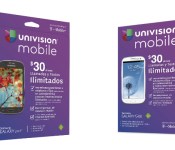
Spanish-language TV network Univision on Thursday announced its own wireless service, Univision Mobile. Aimed at Hispanics living in the United States, the mobile virtual network operator (MVNO) operates on the back of T-Mobile’s 2G/3G network.
Univision Mobile offers no-contract plans that start as low as $30 per month. The $30 plan includes unlimited talk and text; a $45 plans adds up to 2.5GB of 3GB data. Those who sign up to the service will receive:
- Exclusive access to tailor-made content, downloadable assets, events, campaigns and apps. Right out of the box, customers are a click away from unique Univision content, specifically tailored to Hispanic Americans’ interests and needs, including sneak peeks of new Univision shows and premieres, as well as opportunities for behind-the-scenes VIP access to Univision events and television/radio personalities.
- Unlimited domestic voice calling
- 100 minutes to call mobile or landline numbers from the U.S. to eight Latin American countries, including Mexico – the ONLY wireless service with built-in International voice services to Latin American countries.
- Unlimited International texting from the U.S. to select Latin American countries and 200+ countries and destinations around the world – more than twice the countries provided by other carriers.
Univision Mobile will be offered in Walmart stores effective May 19 and will also be available for purchase in Univision-branded stores in Puerto Rico.
The post Univision dials up its own MVNO on back of T-Mobile network appeared first on AndroidGuys.

HTC One Remix is coming to Verizon

HTC One (M8) is HTC’s flagship and pretty much everyone knows that, however HTC is dangerously stepping into Samsung’s territory by pushing HTC One brand on a bunch of devices.
HTC already announced HTC One (M8) Harmon Kardon edition, we’ve had some leaks of HTC One (M8) mini and now HTC One Remix name has surfaced. HTC looks eager to push as many devices they can with the HTC One brand. There’s not much to go on here, all it says in the leak is “HTC One Remix” and “coming to Verizon” but it has plenty of credibility considering it’s coming from @evleaks, considering their track record of course, plus there’s a “HTC One Remix” entry in USPTO filing so the device is definitely a reality.
What do you think/hope this device will turn out to be, another music centered device or maybe something unexpected, a hardware change perhaps? We can only guess, until then you can find our HTC One review here, David did a great job on it and confirmed it’s one of the best smartphones around.
SOURCE: @evleaks, USPTO
VIA: Pocketnow
The post HTC One Remix is coming to Verizon appeared first on AndroidGuys.
 AIVAnet