



Jawbone now lets you link Mini Jamboxes — if you happen to have two

As far as portable Bluetooth speakers go, Jawbone’s Mini Jambox falls short of being our favorite; it’s more expensive than the competition, without being significantly better. That said, then, you might want to take this post with a grain of salt: The company just announced a new feature called Multiplay that allows you to turn the tiny Jambox into a stereo speaker. The catch? You need not one, but two of these $150 units to make it work (N.B.: They’re priced at $130 right now, but only as a limited-time offer). Assuming you can pony up, or have a friend with the same speaker, you can send music from one to the other by holding down three buttons on the device. Or, you can play the same song through both at once, with the option to designate a right and left speaker, allowing for a wider soundstage. (The Mini already has a “LiveAudio” feature that does basically the same thing, except the effect is subtler.) Given the prohibitive cost, this is a fairly improbable setup for most folks. That said, if you happen to own the Mini, and have access to a second unit, you can enjoy the feature now through a free firmware update.
Filed under: Portable Audio/Video
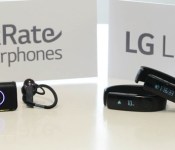
LG’s Lifeband Touch and Heart Rate earphones to arrive on May 18th

Though the internet was trolled recently with Apple’s “biometric” earpods, LG’s fitness-oriented Heart Rate earphones and Lifeband Touch are no joke. In fact, they’re finally set to arrive next week in three sizes, after being outed by various rumor sites and, of course, LG itself during CES 2014. The LifeBand looks much like we saw it then and most closely resembles Nike’s Fuelband, though it has similar functionality to Samsung’s Gear Fit and the FitBit Force. Activated with a twist of the wrist, it has a full-touch OLED display, 90mAh battery and a triple-axis accelerometer and altimeter. Those will let you track your exploits via Android or iOS apps like MyFitnessPal or Runkeeper, along with LG’s own fitness app. You’ll also see (and feel) incoming calls and messages, and can control music using the touch display.
For listening to said music there are the Heart Rate earphones, which also function as an honest-to-god heart rate monitor by measuring blood flow in the ear. They can be used in tandem with the Lifeband Touch or a compatible smartphone using the included Bluetooth medallion. That’ll let you do hands-free calling and if paired with LG’s upcoming Fitness app, give audible, real time updates about your heart rate and VO2 max levels. As for the audio quality itself, LG says it’s “excellent,” but we’ll need to judge that for ourselves once we get our hands on it. The HeartRate earphones and Lifeband Touch will roll out in the US on May 18th (Asia and Europe will follow) with pricing to be announced later. Hopefully, they’ll have a new G watch and G3 handset joining them shortly thereafter.
Filed under: Home Entertainment, Wearables, LG

Another Uber SUV cab service comes to San Francisco

We’ve all suffered that problem when we’ve got too many friends to share a single cab, but not really enough to justify splitting into two groups. Uber understands our pain, and has launched UberXL, specifically for medium-sized groups of partygoers to get around in an SUV instead of a sedan. Now, if we’re honest, we have no idea how this is going to shake out compared to UberSUV, which also offers SUV-sized transport, but costs twice as much to use. We have asked the company, and will let you know what we learn. Still, UberXL, which is already available in Singapore and Sydney is now coming to San Francisco, just in time for the annual Bay to Breakers race-cum-city-wide-rave. Compared to UberX, you’ll pay a $5 base fare and a minimum $8 fee, but that’s a small price to pay not to break up the party.
Update: So we’ve heard back from Uber, who explained that UberSUV uses TCP-licensed drivers for luxurious transit, whereas UberXL is just for larger groups of regular folk.
Filed under: Transportation
Source: Uber
LG released a new teaser video for LG G3

It seems LG really loves teaser videos, just yesterday they released a short video showing of their upcoming LG G Watch and today we’re getting the same treatment for their upcoming flagship, LG G3.
LG G3 is going to have some fierce competition when it’s finally announced, the likes of Samsung Galaxy S5, HTC One (M8), Sony Xperia Z2 and some other flagships that are already available. Regarding the specifications, LG G3 is rumored to sport a Snapdragon 805 processor, 3GB of RAM and a 13MP OIS+ camera, you can find more details here.
The video itself is kind of intense, LG is showing of parts of the phone in quick flashes in a rather dark setting. We can see that the device will be curved towards the edges and that leaks so far have been rather accurate as far as the design goes. LG also uses a “Simple is the New Smart” tagline in the video.
LG G3 will be announced May 27 in London, as it says in the video itself.
SOURCE: YouTube
The post LG released a new teaser video for LG G3 appeared first on AndroidGuys.
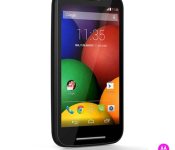
Moto E Gallery

Here’s the new Moto E in all its glory. Check out the full coverage of the device here.


The post Moto E Gallery appeared first on AndroidGuys.

Adaptxt Legal Keyboard for Law Professionals

Law Professionals Can Now Eliminate Embarrassing Typos with Android Legal Dictionary
Guest Contribution Post By: Sumit Goswami, CEO, Keypoint Technologies
We’ve all probably experienced embarrassing auto-corrections when emailing and texting friends and family on our mobile devices. Now imagine you’re a legal professional or law student engulfed in language specific to your industry where every email, text and note taken is critical to your reputation. There is now an accurate and constantly updated dictionary for the legal profession called the Adaptxt Legal Keyboard that can save legal professionals both valuable time and the fallout from sending falsely auto-corrected communications.
The issue of “dumb” auto-correction is greatly exacerbated when considering how intimately legal professions rely on their mobile devices. As more law professionals take notes and compose emails, contracts and other critically important forms of written communication on their tablets and smartphones, the need for accurate and seamless auto-correction is more important than ever. Just imagine the embarrassment and potential reputation-damaging effects misspelled legal terms could have.
There is also the financial impact of fussing with cumbersome auto-correction and inadequate dictionaries. Let’s say there are 20,000 terms in a law dictionary and to be conservative, 4,000 are unique and generally not found in a mobile device’s default dictionary. If we assume each correction takes 10 seconds, each attorney could be wasting thousands of dollars per year with dumb autocorrect. For even mid-sized law firms, this would be well north of $100,000 wasted annually.
Students, professionals, and firms alike can avoid these reputation, financial and productivity pitfalls by checking out the Adaptxt Legal Keyboard. It was created specifically for the legal industry and contains over 20,000 industry terms across 5 different languages. The behind-the-scenes algorithm and artificial intelligence learns user behavior over time, thereby suggesting often-typed words and phrases. It also learns contextual communication. If you’re typing in an email client, Facebook or Twitter account, for example, the application will know which words and phrases you use most often in those contexts.
The application is also fully customizable to enable law students and professionals to create shortcuts that best suit their unique needs. Considering the legal dictionary is handcrafted and constantly updated by top linguists, it’s an ideal addition to the repertoire of law students, paralegals, judges, lawyers and other law professionals.
Adaptxt Legal Keyboard is available now for $3.99 in the Google Play Store.
The post Adaptxt Legal Keyboard for Law Professionals appeared first on AndroidGuys.
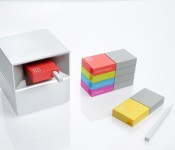
Cue measures vitamin D and fertility, brings lab testing to your home

Wearables like FitBit and the Jawbone UP have encouraged our love of personal statistics, but they’re currently limited to steps taken, distance walked and a handful of other relatively simple metrics. And while some gadgets can monitor your heart rate, what about things like inflammation and vitamin D levels? Enter Cue, a 3-inch device that specializes in measuring these and several other stats, including testosterone levels and influenza. It’s available for a special pre-order price of $149 starting today, and it’s expected to ship in spring 2015 after it’s been cleared by the FDA. That’s a long way away, but as someone who hates the doctor’s office, I’m intrigued by the idea of bringing lab tests into the home. Jump past the break for a closer look.
Developed by a San-Diego based technology company of the same name, the Cue comes with single-use cartridges that measure fertility, testosterone, influenza, vitamin D and inflammation. (Those are the currently available tests, though additional ones will be added further down the line.) You add a droplet of saliva or blood — or a nasal swab — and the device analyzes your sample, sending information to an app on your smartphone via Bluetooth 4.0. The idea is that you’ll perform tests several times to monitor your health, and Cue’s app will show you charts that display your progress.
Beyond just tracking inflammation and testosterone levels, though, the system will offer you recommendations based on your results. This kind of information is what makes the future of health-tracking devices so exciting, after all; beyond just monitoring how many calories you’ve burned, gadgets will soon analyze our data to let us know when we need to hit the gym or get a few more hours of sleep. We’ve already seen this functionality in devices like the Jaybird Reign, but a sophisticated device like the Cue, complete with various cartridge tests, promises to be even more insightful.
Cue’s makers, Ayub Khattak and Clint Sever, emphasize that the gadget isn’t meant to replace your doctor. Instead, the home tests empower you in managing your health, and they could inform your conversations when do visit a physician. The potential benefits are especially clear when considering the fertility cartridge test: tracking your Luteinizing Hormone helps in planning when to conceive, and if you can get that information without a trip to the lab, all the better.
Again, the Cue isn’t set to launch until next year, but the company is kicking off pre-orders today. The first 1,000 buyers will get theirs for $149, while the remaining units will go for $199. Check out the source link for more info.
Filed under: Misc
Source: Cue

Nexus 7 purchases now come with £50 Play Store credit

If you’ve been eyeing up Google’s latest Nexus 7 tablet but needed a little something to tip you over the edge, then this might give you the incentive you need. Google and ASUS have teamed up to offer £50 credit to spend on Play Store content if you purchase a 16GB Nexus 7 between now and June 1st. There’s also some good news if you bought your Nexus earlier in the month: ASUS says that any purchase made from a UK retailer after May 5th will qualify. If you have your Nexus 7 in hand, all you have to do is head to this site within 30 days and follow the instructions to redeem your credit.
Filed under: Tablets, Mobile, Google
Via: Google UK (Google+)
Source: ASUS

Top Five Android Accessories According to Everyday Users
 Like most people, you probably think of yourself as a distinct individual— completely original, a 100 percent unique snowflake. But you tend to start caring a little more about the thoughts of others when it comes to buying something online. You’re probably a lot less likely to download a particular Android app if the ten most recent reviewers complain about crashing issues. Phone accessories are no different, except you usually invest a lot more money in accessories than you do in apps. So rather than sorting through the reviews yourself, below are just a few five best-reviewed accessories on the market:
1. Universal Charge Cable
Every gadget geek has a tangled web of charger cords lurking somewhere, turning every “low battery” alert into a starter pistol for the race of untying the cord before the device dies. The Universal Charge Cable is an essential cord that connects your smartphone to your computer, e-reader, tablet, and any device with a USB port. Out of 98 Amazon reviews, the device has a four-star rating, with most of the positive reviews raving about the long, five-foot cord and the convenience of data syncing. The cable offered by Cable Forge had a number of negative reviews about the cord’s short lifespan, while the universal charge cable offered by T-Mobile received more consistently positive reviews.
2. Sports Armband for Droid OtterBox Defender
Four hundred and forty-five Amazon customer reviewers gave the Sports Armband an average rating of 4.5 stars. The armband is designed to secure to protective OtterBox cases for the Motorola Droid Mini, Droid Razr HD, Razr Maxx HD, Droid Razr M, Moto X, and more. Reviewer Silver called the armband “a must for runners,” with some advice on using the styrofoam insert to provide a snugger fit for skinnier arms. Meanwhile, a special band flap keeps your earphone cords organized, and a clear, protective window cover doesn’t interfere with control.
3. Andru Android Robot USB Travel Charger
The Andru Robot is unquestionably the cutest Android smartphone charger on the market, and it happens to be one of the most well-reviewed. An outstanding 224 Amazon reviewers gave the charger a perfect five-star rating. User Anonymous139 gave the most helpful review, writing, “The most important thing about this little guy is the fact that he’s a 1 amp charger — the same as your stock charger. So you’ll get fast charge times, unlike with a cheap charger or USB port (which usually puts out about 500mA or half an amp).” One three-star reviewer said it charged a little too slowly for his taste.
4. Oontz Curve Wireless Bluetooth Speaker and Speakerphone
When your phone speaker doesn’t cut it for playing music and watching movies, the Oontz Curve portable Bluetooth speaker picks up the slack. The device has five hours of play time, a rechargeable lithium-ion battery, and 365 five-star reviews on Amazon. User Liana Saxton Smith said, “I didn’t expect too much bass at this price point but I have to say I’m very pleased with the quality of sound and volume.” User Josh complained of feedback to support his two-star review, so users sensitive to this quality may want to take extra precautions.
5. Mot Droid Razr Hybrid Case
Unfortunately, many Android users know the gut-sinking feeling of accidentally dropping a smartphone on a hard surface. If a regular case just isn’t cutting it for your lifestyle, the Mot Droid Razr Hybrid case comes with high-tech protection and more. It comes with a hard plastic inside, soft silicone outside, and reinforced edges to maximize grip and protection.The case got an average four-star rating from 69 Amazon reviewers, who claim it’s “better than an OtterBox” and emphasize the benefits of the kickstand feature.

Flying drone can ‘3D print’ with foam, help carry away hazardous objects

Flying drones with 3D printers attached to their body: it was only a matter of time until the two technologies met. Such a thing now exists, although we’re not quite sure it’s earned its printing qualification yet. Developed by a team at the Imperial College London, the “3D printing Micro Aerial Vehicle (MAV)” is a quad-copter that carries two chemicals that create polyurethane foam when mixed. Scientists say the foam can be molded to create non-complex structures or repair components, making the drone especially useful in hard-to-reach areas. The substance is also extremely sticky, which allows teams of drones to work together to remove dangerous objects from hazardous locations. Like the video below shows, the quad-copter can swoop in and “print” a layer of sticky foam, which will then stick to the underside of a bigger and more powerful drone so it can be transported away.
Scientists drew inspiration from nature when developing the MAV, mostly notably the the swiftlet. The swiftlet is a small bird that builds nests entirely from threads of their saliva. Right now, the drone can only fly in controlled environments using sensors that feed real-time information back to a laptop. The next step will see the team equip the quad-copter with high-speed cameras, sensors and even solar panels, allowing it to fly autonomously and charge itself in any environment.
Via: CNET
Source: Imperial College London
 AIVAnet