


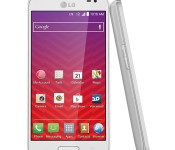
Virgin Mobile and Boost Mobile call on Spark-ready LG Volt

Both Virgin Mobile and Boost Mobile have added a tri-band 4G LTE smartphone to their respective rosters today; both now sell the LG Volt. Powered by Android 4.4 KitKat, the Volt features a quad-core 1.2GHz Snapdragon 400 processor, 1GB RAM, and 8GB internal storage. The back offers an 8-megapixel rear camera while the front houses a 1.2-megapixel shooter. Other hardware includes Wi-Fi, GPS, NFC, and a 3000mAh battery.
In terms of software, the LG Volt includes a host of custom apps and features such as QSlide Function 2.0, QuickMemo, Knock Code, and Quick Remote.
Virgin Mobile offers a white version of the LG Volt while Boost Mobile carries a blue version. Both sell the handset for $179.99 immediately.
The post Virgin Mobile and Boost Mobile call on Spark-ready LG Volt appeared first on AndroidGuys.

Half Life 2 and Portal come to the NVIDIA Shield via Play Store
We heard that the NVIDIA Shield would be getting Half Life 2 at some point, but we didn’t think it would be this soon. As of today, May 12th, those lucky NVIDIA Shield owners out there can pick up Half Life 2 through the Pay Store for their portable gaming marvel for $9.99.
 In addition to the release of Half Life 2, they also released another fantastic game that everyone loves, Portal. Portal will set you back $9.99 also.
Both these killer titles are in the Play Store for your purchase and download, but they are limited to NVIDIA Shield devices, at least for now. It is possible that they will open up for other Tegra running devices, but we aren’t sure if they will want to pull that trigger. Keeping them to the Shield keeps the games running as built with minimal possibility of issues, rather than fighting issues on multiple devices. If you have a Shield, head into the Play Store via the two links below and grab these guys. Let us know how they play.
//<![CDATA[
ord = window.ord || Math.floor(Math.random()*1E16);
document.write('’);
//]]>

What you need to know about smart guns

It’s increasingly difficult to have a rational discussion about gun violence. Thankfully for us, we’re not here to do that. We’re here to explain what the concept of a smart gun is, beyond what you’ve seen in hit Sylvester Stallone film Judge Dredd. Lost amid the shouting and hand-wringing of American politics are a bevy of technologies that aim to skip the argument, instead aiming to decrease gun violence through advanced technology. Barring a dramatic shift in American culture or politics, however, it seems the smart gun concept may wither and die. So, what are smart guns?
WHAT IS IT?

The term “smart gun” is trademarked by the company Mossberg, though it’s generally understood to refer to any firearm that is designed to allow only the owner to pull the trigger. How exactly a weapon accomplishes that doesn’t matter, so long as some form of authentication is required.
There are a number of different solutions out there, but the Armatix iP1 (seen above) has received the most attention recently. The safety mechanism on this .22-caliber pistol is built around a watch that unlocks the gun by broadcasting a wireless signal (RFID). If the weapon is separated from the watch by more than 10 inches, it won’t fire. Mossberg employs a similar technique with passive RFID rings, which are powered wirelessly by a battery inside a shotgun. When the rings come within a certain distance of the gun, they’re powered on and then send a signal back to the firearm disabling the safety.
Another company, Kodiak Industries, has taken a different route. Instead of building a specialty firearm, it offers the Intelligun modification for 1911-model handguns — one of the more popular weapons in the United States. A fingerprint scanner is embedded in the grip right where your middle finger would naturally rest when holding it; if your finger isn’t on the sensor, the gun won’t fire.
Then there are seriously futuristic-seeming prototypes, like the Dynamic Grip Recognition system from the New Jersey Institute of Technology (NJIT). That uses an arry of sensors in the handle to identify the unique pressure pattern exhibited by a user. The team behind this particular solution is looking for investors and partners now to bring the concept to market. Armatix has also developed a system that can supposedly tell the difference between paper targets and people, and will disable the weapon when pointed at a human being. Even industry stalwarts like Smith & Wesson and Colt have put in work on smart guns.
WHY SHOULD I CARE?
Well, the reasons are pretty obvious. There have been more than enough alarming news stories about children who get their hands on a parent’s gun. Sometimes these tales end with the child bringing it to school for show and tell and getting in trouble. But an unfortunate number of these incidents end with the death of another child. A fingerprint lock would, ideally, make these occurrences less frequent.
A smart lock would also make it near-impossible for a weapon to be turned on its owner. The Armatix iP1 promotional video above, corny as it is, illustrates as much: A man (who makes a number of seriously questionable decisions) winds up losing his firearm to an attacker after a struggle. When the masked thug tries to pull the trigger, nothing happens and he takes off.
Back in 2002, the New Jersey state government had enough faith in the technology to mandate that gun dealers convert all their stock to smart guns over time. That bill, the Childproof Handgun Bill, states that gun retailers have to start converting their stock to smart guns once the law is triggered. And how is the law triggered? By someone, somewhere in the country selling one. At that point, stores in New Jersey will have exactly three years cease selling traditional handguns and stock only smart guns.
And Jersey isn’t the only government agency that believes in the personalized gun’s ability to reduce firearm deaths. Many of these efforts have been backed by grants from the US government. And the European Union views it as a cornerstone (PDF) of theft prevention and misuse. In America, however, you can’t walk into a store and buy one.
WHAT’S AT STAKE?

While the idea of a gun that couldn’t be turned on its owner seems like an obvious win for everyone involved, there are a number of problems with the concept. Chief among those worries: the safety mechanism will fail when it’s needed most. If you’re relying on a weapon for defense, the last thing you want is another avenue for failure. Electronics aren’t perfect. Sometimes cameras can’t autofocus. Cable boxes freeze up when browsing the channel guide. The equivalent, seemingly small glitch in a smart gun could be the difference between life and death.
And then there are specific technical limitations. Smart guns rely on batteries to power their various safety systems. Should that battery die, the gun could fail to fire. In fact, most models designed for civilian use are designed to fail if the battery dies. It’s been suggested that smart guns designed for law enforcement should automatically disable the safety if the battery dies. There are similar issues with biometric scanners, which have serious trouble reading fingerprints if your hands are wet (with panicked sweat as you grapple with an armed attacker, for instance). Many of these systems claim they can read a fingerprint or other biometric and properly unlock the firearm 99.9 percent of the time — but when it comes to matters of life and death, even 0.1 percent chance of failure is considered too high. And then there’s always the worry that these weapons could be hacked or jammed remotely. Which is terrifying.
The biggest roadblock to the sale of smart guns in the US is currently the aforementioned Childproof Handgun Bill passed in New Jersey. The law has become a landmine for manufacturers and retailers. Rather than incentivize all the parties to get on board, it gives everyone involved an excuse to avoid the technology, and provides an easy rallying point for gun rights advocates opposed to the technology.
WHAT’S THE ARGUMENT?

Not all advocates of gun control oppose the move toward smart guns, but there are plenty who do. One of the biggest is the Violence Policy Center, which believes they’re “a very seductive hoax.” The group argues that smart guns engender a sense of false security. While RFID and fingerprint scanners are hardly new technologies, they’ve yet to be successfully deployed in a commercial firearm, so the group’s also concerned that failures would be frequent. Additionally, opponents argue that the millions of dollars pumped into developing these weapons would be better spent on other violence-prevention and educational programs.
The strongest argument is that most of the people who would purchase a smart gun already own traditional firearms. If a non-smart weapon is already present in the home, adding a smart gun to the mix doesn’t do anything to decrease the risk of accidental or premeditated violence. It’s also believed that some who currently don’t own weapons may be convinced to invest in one if they believed that it couldn’t be fired by anyone but themselves. And, in the view of the Violence Policy Center, an increase of gun owners is undesirable — especially those who might be less experienced with or knowledgeable about firearms.
WHAT EVEN MORE?
Well, if you want more, you can’t go out and buy a smart gun. Two stores in the US have said they would stock the Armatix iP1, but campaigns by advocacy groups have forced them to backpedal. Within days of announcing he would carry the gun, Andy Raymond of Engage Armament in Maryland discovered the NRA had launched an intense counter-campaign and people started sending him death threats. Ultimately, these groups do not want to see the NJ law triggered and resorted to bully tactics to force Raymond to back down. For even more, check out this piece from Motherboard that looks at the future of smart guns, including ones that can aim themselves. And for more on New Jersey’s Childproof Handgun Bill, check out this New York Times article from 2003 which details the situation.
Filed under: Misc
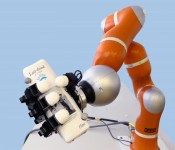
Scientists build a robot arm that catches objects in the blink of an eye

Humans are good at catching fast-moving objects — just ask any baseball fan. Robots typically lag behind, however, which is why the École Polytechnique Fédérale de Lausanne (EPFL) has developed a robot arm with the reaction time needed to catch just about anything. After learning the basic concepts by imitating human behavior, the machine uses its cameras to predict the path of a flying object and grab it in less than five hundredths of a second — roughly as fast as it takes you to blink. It can even adapt to objects whose center of gravity is likely to shift around, such as a half-full drink bottle.
The EPFL’s breakthrough may first find a practical use in space, where it could catch orbiting debris before it hits satellites. It will certainly be useful here on Earth, though. Safety-minded robots could catch falling people, and the underlying motion detection could help driverless cars avoid collisions. While it’s doubtful that you’ll see robots on a baseball field anytime soon, it might not be long before they can offer a helping hand in a crisis.
Filed under: Robots
Via: Phys.org
Source: EPFL

Apple Impressed by Beats’ Ability to Attract Paid Subscribers, Likely to Keep Brand Separate
 Music industry veteran Jimmy Iovine is believed to be the primary target in Apple’s rumored acquisition of Beats Electronics, but the company also is eyeing Beats’ streaming music service and the Beats branded headphone business, reports Bloomberg. Apple likely will assume leadership of the company, but keep the Beats brand independent.
Beats co-founder Iovine previously pitched the idea of a streaming music service to both Steve Jobs and Tim Cook, but neither party showed interest until the streaming music service launched earlier this year.
Apple became interested in doing a deal with Beats after executives were impressed by Beats Music, an online music streaming service unveiled earlier this year, which was rapidly converting users into paying subscribers, said a person with knowledge of the talks, who asked not to be identified because the discussions are private.
Beats Music could fill a gap in Apple’s music portfolio, which now offers digital downloads via iTunes and iTunes Radio, a channel-based music streaming service akin to Pandora. Though still a leader in the music download arena, iTunes is losing ground to full-library streaming music services like Spotify, which is poised to overtake iTunes as Europe’s largest online digital music service.
Besides the music service, Apple also will obtain a high-margin headphone business co-founded by rap musician Dr. Dre, Iovine, and early partner Monster cable. As part of the acquisition, Beats will likely remain an independent brand with Apple providing design improvements for future Beats products.
Both Iovine and Dre may take on senior roles at Apple following Apple’s acquisition, remaining at Beats’ Los Angeles headquarters and traveling to Cupertino when necessary. Iovine is expected to leave his role as chairman of Interscope Geffen A&M records and use his music industry experience to help Apple secure future deals with music labels.

Apple Looking to Boost Safari JavaScript Performance with New Accelerator Upgrades
 Apple is apparently working on significant improvements to JavaScript performance for its Safari browser, as shown by the inclusion of accelerator upgrades in recent builds of WebKit, reports InfoWorld.
WebKit is the open source browser engine created by Apple and which serves as the basis for Safari, and the new upgrades to WebKit’s “Nitro” JavaScript engine are known as “FTLJIT”. With the upgrades, WebKit’s JavaScript engine would become more competitive with Google’s V8 and Mozilla’s SpiderMonkey engines.
FTLJIT is still considered experimental, so although it’s being made available in the OS X port of WebKit by default, it’s not actually turned on yet — it has to be enabled through command-line flags.
One attribute that could make FTLJIT stand out from the pack all the more is how well it runs JavaScript code that is not specifically optimized for [Mozilla’s] asm.js. Every JavaScript engine will run asm.js code, but only Mozilla’s SpiderMonkey honors asm.js-specific optimizations, and right now no other browser maker has elected to follow Mozilla’s lead.
The report notes that speed tests are showing WebKit with FTLJIT enabled outperforming Chrome, while Firefox still tops the charts when using asm.js-optimized benchmark tests.
JavaScript has been a key technology for web browsers for many years, facilitating a variety of user interactions with web pages such as dynamic loading of content without reloading pages and handling page animations and other media. Because JavaScript code embedded on a website is run inside the user’s browser when the page is loaded, the efficiency of the browser’s JavaScript engine can have a significant impact on the user experience as JavaScript implementations become increasingly complex.
It is unclear whether Apple is targeting OS X 10.10 for these JavaScript improvements, but with them only being enabled in the OS X version of WebKit, it appears that there is still substantial work to be done.

Official FIFA World Cup theme for Xperia phones gets leaked

Sony’s getting ready for the World Cup and because they’re an official sponsor have made a special FIFA World Cup theme to honor the tournament for their Xperia devices. The theme hasn’t officially been released yet, but that hasn’t stopped it from leaking out online.
The new FIFA World Cup Theme has custom icons, backgrounds, and colours all to get you into the World Cup spirit. It’s available to download here and will probably make an official appearance on the Google Play Store closer to the launch of the World Cup.
SOURCE: XperiaBlog
The post Official FIFA World Cup theme for Xperia phones gets leaked appeared first on AndroidGuys.

Electric shocks could hold the key to manipulating dreams

Ever wanted to have more control over your dreams? A new study into how electricity affects the brain is enabling scientists to influence the way people sleep, giving hope that it could one day be used to improve the quality of your night’s rest. By stimulating the frontal and temporal positions on volunteers’ scalps, all of whom had never experienced lucid dreaming before, scientists were able to change the neural activity in their brains, bringing them towards a more “awake-like” state that could possibly allow them to control the outcome of their dreams.
Lucid dreaming, if you’re not already aware, is simply a dream in which you know you are dreaming. It has researchers excited that this type of brain stimulation can be used to treat patients suffering from mental disorders. Armed with knowledge of how the brain manages to hallucinate and be deluded, experts believe that lucid dreaming could be triggered in those experiencing nightmares, giving them the means to get the better of bad dreams and stay asleep that little bit longer.
[Image credit: RelaxingMusic, Flickr]
Via: BBC News
Source: The Scientist

Make your air conditioner modern with Tado’s smart thermostat

Plenty of companies produce smart thermostats to control your home’s heating, but what if your air conditioner isn’t part of the same system? Tado, which already produces Nest-like smart thermostats for heating systems in Europe, is now working on a device that’ll do the same for cooling. Tado Cooling connects to your home’s AC unit over infrared, and lets you control the temperature while out and about from your smartphone. In addition, there’s geo-fencing, so it’ll shut down if you go away, and come back on when you reach a certain distance away from your home.
If you lose your smartphone, the front of the hardware is capacitive, so you’ll be able to control it straight from the LED display, and the device will also regulate the humidity in your home. Since no company can resist the lure of crowd funding, Tado has taken to Kickstarter to raise the $150,000 necessary to begin the production run, and you can bag a regular model for $70 or a limited-edition colored version for $180. If, like us, however, you’ve got Kickstarter fatigue, then you can pick up a retail model for $150 with it launches in August.
Source: Kickstarter

Color Cables Charge and Sync Giveaway

Overview
We recently reviewed the Color Cables that are a unique sync cable, since they glow in the dark, allowing you to locate that valuable charging cable when your device has run out of battery in the pitch black. The cables are infused with photo-luminescence for a bright and importantly continued glow. The cables absorb energy from the sun or an artificial light and re-remit the energy by glowing in the dark.
We liked these cables so much that we’re giving 20 of them away to our readers. Continue reading below to find out how to win yourself a Color Cable.
Requirements: You must live in the United States, since this is where the item will ship from.
Simply follow these steps:
1. Follow us on Twitter
2. Tweet the competition
Tweet to @androidguys
!function(d,s,id)var js,fjs=d.getElementsByTagName(s)[0],p=/^http:/.test(d.location)?’http’:’https’;if(!d.getElementById(id))js=d.createElement(s);js.id=id;js.src=p+’://platform.twitter.com/widgets.js’;fjs.parentNode.insertBefore(js,fjs);(document, ‘script’, ‘twitter-wjs’);
3. Leave a comment using the website Disqus comments (not Google+) making sure you’re logged in to enable us to track you, stating your Twitter handle and why you want to win these cables.
The giveaway will run for 5 days, with the winners chosen at random and being announced on Saturday 17th May 2014.
The post Color Cables Charge and Sync Giveaway appeared first on AndroidGuys.
 AIVAnet