



Hyperrealistic virtual reality adventure Loading Human headed to Oculus Rift and Project Morpheus

As the medium of virtual reality progresses, its applications only get more incredible. Take Untold Games’ Loading Human, for instance. It takes Unreal Engine 4 and infuses it with the tropes of the adventure game genre, only instead of pointing and clicking, you’re in that world. Solving puzzles and exploring narrative are at the heart of Loading Human, and it shows in the eerily realistic gameplay clip the studio’s released. The game’s intended for Oculus Rift, naturally, and Sony’s Project Morpheus headset as well.
That’s if the studio achieves its Kickstarter goal of $30,000, of course. The 11-person team claims it can create the first episode of a planned three episode game for that paltry sum, with backer benefits ranging from the basic (a thank you in the game) to the extreme ($5,000 gets your face in the game in place of the main character — creepy!). But when will you get the game itself, given the total lack of a release date (or even a window) for consumer-ready VR headsets? Untold Games is anticipating “Q1 2015″ for Rift availability (though, ya know, that’s not from Oculus), so maybe then? Only time will tell.
Filed under: Gaming, Peripherals, Wearables, Software, HD, Sony
Source: Kickstarter

Navy develops dubiously named secure e-reader

Somewhere in between developing seafaring lasers and electromagnetic railgun, the Navy found time to design an e-reader especially for deployed sailors. As you’d expect, it was designed with security in mind, so it runs custom firmware, has no WiFi connection, SD reader or any other means to connect to an external storage or computer. Its creators, the Navy General Library Program (NGLP) and ebook company Findaway World, even made its hardware tough to tamper with. Since users won’t be able to download anything new, it already comes preloaded with a catalog of reading materials from classics to contemporary best-sellers. It might sound extremely limited, but this device gives personnel the means to carry around the Navy’s library, whereas they only used to have limited access to those digital tomes. Sound great? Sure does, but its designers probably ran out of creative juices when it was time to name the device. Because that’s the only reason anyone would name it NeRD, right? …Right?
Filed under: Mobile
Source: Findaway World

Huawei’s Ascend P7 wants to be the LTE phone of the people

With the Ascend P6, Huawei looked to build a smartphone that emphasized design and material quality over performance. Unfortunately, it shipped without LTE at a time when networks were making a big push on the new standard, and so marginalized the P6 in favor of devices from rival manufacturers. Lesson suitably learned, the company is back with the P7, a handset that’s marketed as a cheaper alternative to the Samsung Galaxy S5 or HTC One M8. Unlike its predecessor, it comes with LTE and a series of refinements that should eliminate all of the issues that were found with last year’s model. We’ve spent some time with the prototype, and wanted to share with you our initial impressions.
Unlike the previous generation, which had an aluminum band around the edge and a coated aluminum back, both sides of the P7 are coated in a generous helping of Corning’s Gorilla Glass 3. Despite resembling a bizarro-world iPhone 4, the metallic band doesn’t comprise part of the phone’s antenna assembly, so you’ll be spared any concerns over “death grip.” Speaking of which, the prominent microSD and SIM card slots remain down the right-hand side of the slab, but the headphone jack plug-cum-ejector pin is gone — it may have been a neat design trick, but it was hardly the most practical of features.
Despite having a 5-inch display, it’s also deceptively small, given that the bezels on either side of the 1,920 x 1,080 screen have been shrunk to under 3mm on either side. The in-cell Japan Display screen itself has a pixel density of 445 ppi, the same as the Nexus 5, and appeared to be bright and sharp — not that we had any issues with last year’s model. Speaking of which, the company wasn’t prepared to talk pricing, but we gather that the P7 will retail for the same rough bracket that you could grab the P6, hovering under $600.
The Ascend P7 comes with the company’s Emotion UI 2.3 that sits between you and KitKat (Android 4.4). As usual, there’s mostly refinements and finesses placed upon what we’ve seen before, including a low-battery mode that’ll push the phone’s UI into grayscale to warn you to find an outlet. It may not be new, but Huawei is also going to start emphasizing that you can now switch from Emotion UI to a simplified home screen that’s pretty reminiscent of Windows Phone 8. With big, bright blocks, it’s designed for smartphone novices and those with poor eyesight, and means that this device could supplant the Lumia 620 as a device you’d buy for an elderly family member due to its relative ease of use.

Huawei has no background in imaging technology, so for the P7′s camera, it once again teamed up with Sony for the BSI shooter on the rear side of the device. This time out, however, you’ll be using a 13-megapixel sensor and a lens with an f/2.0 aperture. You’ll also get the usual nifty tweaks including HDR and real-time filtering for all of those faux-Instagram shots of your dinner. The company is also working on a one-second snapshot function, whereby a sharp double-press of the volume key will instantly take a picture from standby mode. There are also options like audio snapshot, where you can take 10 seconds of ambient noise to accompany each image, and the ability to add text and watermarks to your pictures.
If you were excited at the 5-megapixel forward-facing camera on the P6, then the 8-megapixel unit (with an f/2.4, five-element aspherical lens) that replaces it will have you screaming in apoplexy. In addition to the face-beautification modes that were found on last year’s model, there’s now a Selfie Panorama mode, which will let you take a wide location shot with your fizzog obscuring most of the historic location you’re capturing.

One of our biggest complaints about the P6 had to do with the Huawei-made system-on-chip that ran things from within. The homegrown 1.5GHz quad-core K3V2 silicon was efficient, sure, but was entirely unable to keep up with smartphones carrying chips from NVIDIA or Qualcomm. Has the company learned its lesson? It’s too soon to tell, but we do know that it’ll be another homemade variant of an ARM Cortex-A9 with a quad-core 1.8GHz CPU, a Mali-450 MP4 GPU, 2GB of LPDDR3 RAM and 16GB storage.
When we tested the 2,000mAh battery on the P6, we were dismayed to see that it lasted for less than five hours on a charge. Huawei, however, claims that it acted quickly to switch battery suppliers in the wake of those early reviews, and produced several software tweaks to ensure that customers didn’t suffer from the same fate. The cell inside the P7 has only a modest increase, to 2,500mAh, but we’re told that the company has been working hard to make certain that it’ll have even more staying power, despite the huge demands of the new LTE modem.

All in all, the Huawei P7 is a device where time and effort has mostly been spent fixing the gripes of last generation’s hardware. The pre-production model that we used was comfortable in the hand with surprisingly solid build quality. Huawei may still be in the second or third tier of handset makers, but it’s easy to forget that it’s only been making phones under its own flag for less than five years. We’re looking forward to seeing what this device can do under the rigorous conditions of a full review, so check back in the near future to find out more.
Sharif Sakr contributed to this report.
Filed under: Cellphones, Mobile, Google

The BBC wants you to join it for ‘the first 24/7’ World Cup

With the greatest footballing show on earth less than a month away, the BBC is looking to whet the British public’s appetite with the promise of “the first 24/7 World Cup.” Building on the platform that helped it deliver stellar Olympic coverage, the Beeb will deliver 31 live World Cup matches as well as additional reports, news and content across a multitude of platforms, ranging from TV and radio to mobile apps, consoles and connected TVs. In all, the BBC says it will deliver over 160 hours of TV broadcasts from Brazil, which is over 50 percent more than the 2010 World Cup in South Africa.
Although the BBC must share TV coverage with rival ITV, the public broadcaster will continue to deliver additional coverage both on TV and the web, including the launch of daily “World Cup breakfast” videos that summarise the day’s action and what’s coming up later that evening. That’s in addition to video highlights of every single match, full match replays for BBC TV games, and the streaming of classic matches via World Cup Rewind. All of its video coverage will be available on both the BBC Sport website and iPlayer. If you’re wondering what games will be shown where, the BBC will show England’s opener against Italy on June 11th at 11pm. ITV has managed to snap up the other two group matches on the 19th and 24th June respectively, suggesting the BBC could be in line to deliver live footage of England’s usual knockout stage exit (that’s if they get that far).
Source: BBC Media Centre

China’s Vivo Xshot slaps Android on a bright and stabilized camera

Despite its relatively small presence outside China, Vivo is still a mobile brand that’s worth keeping an eye on. The company’s known for its fondness for high-end audio chips, and it’s also often one of the very first to pack the absolute latest components into a phone, as demonstrated by its Xplay plus Xplay 3S. At one point, Vivo even boasted the world’s thinnest phone until local rival Gionee broke the record. This time, the ambitious brand has launched a camera-centric smartphone dubbed the Xshot, which is the first to pack a camera with both a fast f/1.8 lens speed and optical image stabilization. Naturally, we had to get our hands dirty with it.
Let’s start off with the basic specs. The Xshot comes with Qualcomm’s awesome Snapdragon 801 SoC (quad-core, 2.5GHz), 3GB of RAM and 32GB of built-in storage, along with microSD expansion (up to 128GB) and Micro SIM support — both of which are on a single pin-eject tray. You also get a more palm-friendly 5.2-inch 1080p LCD, as well as a non-removable battery within the shiny aluminum frame and smooth plastic cover — very much the same solid construction as the Xplay 3S. Unsurprisingly, there’s LTE radio here, but the supported bands will depend on the variant.
The Xshot’s main camera features the rather common 13-megapixel resolution, but its combination of optical image stabilization plus a bright f/1.8 aperture makes it a rather unique selling point. The downside here, as you can see in the earlier photo, is that the bulky camera literally sticks out like a sore thumb on the back. On a more positive note, you get a two-stage shutter button on the side, which should provide a better grip and easier camera control. Vivo’s also thrown in a dual-tone LED flash that’s also used by the iPhone 5s and the latest HTC One for prettier flash photography. As for video, this camera’s capable of 4K capture, though we remain skeptical of the video quality coming from such a tiny sensor.

The front camera isn’t too shabby, either: it’s capable of shooting 8-megapixel stills plus 720p video, and it even has its own LED flash (Vivo did the same with last year’s female-oriented Y19t). While we weren’t allowed to share sample shots due to the device’s pre-production nature, Vivo’s confident that its collaboration with ArcSoft should guarantee decent images from the Xshot’s cameras.
Don’t worry, Vivo hasn’t sacrificed any audio goodness here for the sake of the camera features. The Xshot comes with a “powerful” Maxim MAX97220 headphone amplifier, along with a refined Cirrus CS4398 DAC that’s apparently less than half the original package size, as well as a Texas Instrument ADC chip for a wider audio input bandwidth. We’ve already praised Vivo’s audio efforts in our Xplay review, so the Xshot shouldn’t be disappointing on this end, either.
Software-wise, the unit we played with ran on Vivo’s Funtouch OS 1.2 based on Android 4.3, but the retail version should ship with Android 4.4. Much like the Xplay 3S’ system, you’ll find handy features including screen-off gestures, “air wake” gestures, voice-activated camera, beautification camera and a timeline desktop that lists out your app plus camera interactions chronologically. By the way, if Chinese isn’t your forte, you’ll have to put up with some “Chinglish” dotted around Vivo’s software.

The sad news is Vivo has yet to officially launch the Xshot outside China, but you should be able to grab one from the usual e-tailers (or just ask your Chinese pen pal). Just for reference, the phone will be available for CN¥2,998 or about $480 unsubsidized in China later this month.
Filed under: Cellphones, Mobile

Pulsing pill promises to put an end to problematic pooping

The average trade-show diet of meat and bread plays havoc with our bodies, so it’s no surprise everything grinds to a standstill after a long week. Israeli company Vibrant looks ready to solve our intestinal woes with its chemical-free way to treat constipation. Rather than plying our bunged-up bodies with drugs, the outfit is ready to show off its pill, the size of a vitamin, that begins vibrating six-to-eight hours after being swallowed. Sitting on the wall of the large intestine, the vibration induces peristalsis — the squeezing motion that pushes matter from one end of your body to the other — without the use of laxatives. The earliest trials have been successful, with participants who took a pill twice a week finding their movements doubling without anyone experiencing adverse side effects. Well, except for the poor souls who now have to write about this without giggling, of course.
Filed under: Science
Via: CNET
Source: Vibrant

LG’s SMS-activated smart appliances are ready to wsh ur shts

If you’re rich and lonely, LG is now rolling out the SMS-controlled smart appliances it previewed earlier this year. You can send commands “much like chatting with a friend” to the Smart Refrigerator, Washing Machine and Lightwave Oven using the LINE messaging app and LG’s WiFi-based HomeChat system. For example, text “what are you doing?” to the washing machine, and you’ll get a real-time response on its progress (hopefully not “I’m flooding the basement”). The Smart Oven will provide recipe recommendations and set the temperature and cooking time for your chosen dish. Finally, the Smart Refrigerator’s built-in wide-angle camera will track your food habits and generate shopping lists automatically, to name a few examples. They’re now available in Korea, but will also arrive to the US and elsewhere soon. LG hasn’t listed prices yet, but if you’ve never shopped for smart appliances before, brace yourself.
Filed under: Cellphones, LG
Source: LG

TSMC Provides First Batch of Fingerprint Sensors for iPhone 6, iPad Air 2, and iPad Mini 3
Apple supplier Taiwan Semiconductor Manufacturing Company (TSMC) has reportedly provided the first batch of Touch ID fingerprint sensors to be used in the iPhone 6, iPad Air 2 and iPad Mini 3, according to a new report from component information website cecb2b.com citing supply chain sources (Google Translate, via GforGames).

In addition to production at TSMC, the report notes that the fingerprint sensors are being assembled by TSMC subsidiaries Xintec and Suzhou Crystal Semiconductor. A report in January noted that TSMC would begin production on the sensors sometime in the second quarter of this year with a new 12-inch fab processing method, however a report in February stated that TSMC would be using the same 8-inch fingerprint sensor processing method that was used for the iPhone 5s.
The inclusion of Touch ID on the next-generation iPad Air and Retina iPad Mini would also fall in line with predictions from KGI Securities analyst Ming-Chi Kuo, who noted that both devices would gain the feature alongside processor upgrades and various other improvements.
Apple’s head start on Touch ID fingerprint sensor production will likely help the launch supplies of all three devices. The component was said to be a key factor contributing to the limited supplies of the iPhone 5s at its launch last September, with low yield rates at Xintec and iOS 7-sensor integration slowing production.

Apple Looking to Open Sixth Manhattan Retail Location in Late 2015 [Mac Blog]
Apple is apparently gearing up to open a sixth retail location in Manhattan by late 2015, according to a new report from ifoAppleStore.

The current interior of the building as occupied by VBH (via ifoAppleStore)
Likely to be located at 940 Madison Avenue, the future store will occupy a former banking complex built in 1921 that currently houses luxury retailer VBH. The building itself offers a large amount of space, featuring a 4,000 square-foot ground level and 1,000 square-foot mezzanine.

An outside view of the building in 1922 (via Museum of the City of New York)
Apple has notably constructed a number of stores in historic locations, including a flagship store in Brisbane, Australia that is located in the famous MacArthur Chambers building and a store in a century-old theater complex located within Berlin’s Kurfürstendamm avenue. The company’s Grand Central, Opéra, and Buchanan Street retail stores have also been noteworthy for their significant locales.
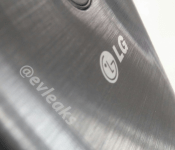
LG G3 hardware specs leaked by insider, include Snapdragon 805, 3200mAh battery and 13MP Sony Camera with OIS+
 Earlier today we got our best look at what the LG G3 is probably going to look like on the outside (see here), however, we really don’t have that much of an idea of what the next LG flagship smartphone will have on the inside. An insider has leaked what will probably be the final LG G3 hardware specs which include a Snapdragon 805 processor, 3GB RAM, 32GB storage, a 5.5-inch Quad HD display with a 3,200mAh battery. The inside goes on to say that the G3 will also possess a 13MP Sony camera sensor (the same as the one in the OnePlus One) which will be enhanced by OIS+ which first featured on the LG G Pro 2.
The tip from the insider does look pretty good, and it does line up with what we know about the Snapdragon 805 at least which was supposedly due in devices in May. However, the specs cited do also disagree with what we’ve previously learned about the G3, in particular that the insider says that the G3 will be made out of polycarbonate. Whether the above leaked photo is of a prototype G3 or this tip is a hoax, we’ll really only know when LG announces that device which is expected to occur at LG’s event on May 27th.
What do you think about these LG G3 hardware specs? Would you get one if it had these specifications? Let us know your opinion in the comments.
Source: TechManiacs.gr via Phone Arena
//<![CDATA[
ord = window.ord || Math.floor(Math.random()*1E16);
document.write('’);
//]]>
 AIVAnet