



OnePlus teams with Medic Mobile to offer the chance to donate your phone instead of smashing It
 The OnePlus One is surely one of the more intriguing devices to be released so far in 2014. However, its launch has been somewhat marred by OnePlus’ Smash the Past marketing campaign; you can win the opportunity to get one of the OnePlus Ones for $1 if you volunteer to destroy it in a video on YouTube. Unfortunately the nature of the contest was announced before the official rules were put in place which ended up in many a prematurely destroyed smartphone. While it’s definitely a very interesting campaign, it’s not exactly productive, in the conventional sense, which is why it’s good to see that OnePlus has teamed with Medic Mobile to potentially do some good.
To the 100 applicants who have won the opportunity to buy the new OnePlus One for $1, Medic Mobile is working with OnePlus to offer these winners the chance to donate their phones to Medic Mobile’s cause instead of destroying them on video. For those interested, Medic Mobile is a nonprofit organization that recycles old phones so that healthcare workers in remote corners of the world can have access to better mobile technology. As Medic Mobile puts it:
“You’re giving the best new tech out there for $1 and recycling users’ existing phones for good. And then we’re turning those 100 phones into 1,000 phones for people that were left behind with the tech revolution. It brings it full circle in a really interesting way.”
I think it’s great that OnePlus has brought some good out of this campaign, but it seems like a waste to simply offer this option to only the winners of the Smash the Past competition; it should be offered to all purchasers of the OnePlus. But that’s just me thinking out loud; what do you think about all this? Let us know your thoughts in the comments.
Source: OnePlus via TalkAndroid
//<![CDATA[
ord = window.ord || Math.floor(Math.random()*1E16);
document.write('’);
//]]>
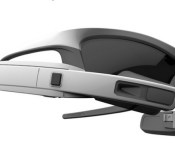
Recon Instruments’ Jet sporting sunglasses get delayed (again)

When we first saw Recon Instruments’ Jet at Google I/O last year, we expected to be using it to monitor our heart rate and speed on the track by fall. But alas, it wasn’t to be. In November the company delayed the launch of the extreme sporting sunglasses by “a few months,” and today it broke our hearts a little more — postponing the first shipments until September 25. Adding insult to injury, if you want to snag a pair of the high-tech glasses you’re also going to have to shell out a little more cash. Starting this summer the device will be priced at $699, up $100 from its original $599 price tag.
The news isn’t all bad. The delay is certainly disappointing, but when Jet finally hits the market it’s going to be even better than the prototype we saw in 2013. Since then the company has scored some cash and assistance from the likes of Motorola and Intel. CEO Dan Eisenhardt says they’ve been able to “make the module-to-lens attachment mechanism more robust, improve the durability of the plastics and sealing elements (one of our main concerns), and achieve considerably better GPS antenna performance.” All things that despite the release-date speed bumps, should make that first Jet ride a lot sweeter.
Filed under: Wearables
Source: Recon Instruments

Microsoft wants you to help improve Kinect 2.0’s voice recognition

Using the Xbox One’s Kinect for voice commands is still pretty hit-or-miss for many, and Microsoft knows it. With the console’s next update, Redmond is adding an option for speech data collection as a way to crowdsource the sensor’s improvement. Writing on his blog, Xbox’s Major Nelson says that the more voice samples the company has to add to its algorithms, the more accurate the console can be. If you aren’t keen on the company collecting samples of your voice (which is entirely understandable!), it’s an entirely opt-in process. Should you want to help out, however, all you need to do is dip into the console’s privacy settings and enable it. This isn’t the first time that Microsoft has done such, though — a similar function was in place on the Xbox 360 as well.
The update also brings in a few user-requested features, too. The Xbox One is also getting a sound mixer for snapped apps and volume control for voice chat. The former gives you control over which app on-screen is the louder of the pair — perfect for listening to The Daily Show in the background while trouncing ghosts in Forza 5, we’d imagine — while the latter allows for control of volume levels if you’re using Kinect for voice chat.

What’s more, the on-demand system update button that arrived with the last …update is finally getting some action. This’ll allow you to grab the latest system software as soon as it becomes available — no more waiting for the roll-out fairy.
Filed under: Gaming, Home Entertainment, HD, Microsoft
Source: Major Nelson

Jury Rules Samsung Infringed On Some Apple Patents, Ordered to Pay $119.6 Million
After three days of deliberations and several weeks of testimony, the jury reached a unanimous verdict in the second Apple vs. Samsung trial (via CNET). The jury found that Samsung willfully infringed on two of five patents involved in the lawsuit. As a result, Samsung has been ordered to pay $119.6 million, far from the total that Apple was hoping for.
In this second lawsuit, which began on March 31, Apple argued that Samsung owed it $2.2 billion in damages for infringing on five separate iPhone patents. Samsung argued that Apple had infringed on two of its own patents, asking for $6.2 million in damages.

Over the course of the trial, Apple called in numerous experts to argue why it was owed $2 billion, chalking the total up to lost profits and reasonable royalty estimates. Samsung argued that Apple’s $2 billion request was ludicrous, insisting it should owe only $40 million, or $1.75 per device.
While Samsung focused on proving that Apple was actually targeting Android in its suit, calling multiple Google witnesses like former Android chief Andy Rubin, Apple presented the jury with testimony from its own employees on the design, development, and marketing of the original iPhone.
During the trial, news broke that Google is covering lawyer fees and potential damage awards related to four of the patents in the lawsuit. Four of the five patents Apple has accused Samsung of infringing on are part of the Android operating system, and Google will presumably help pay damages for the ‘647 data syncing patent Samsung was accused of violating.
This damages award adds to the damages from the original Apple vs. Samsung trial, in which Samsung was ordered to pay Apple $890 million. This suit focused on newer devices, including the Galaxy S III, Galaxy Note II, Galaxy Tab 10.1, the iPhone 4/4s/5, the iPad 2/3/4, the iPad mini, and fourth and fifth generation iPod touch.

Apple vs. Samsung trial round two: Samsung infringed two patents, owes Apple $119.6 million

Here we go again. 2012′s patent trial of the century — which was all about whether certain Samsung devices were utilizing Apple technology without paying for it — resulted in a billion dollar win for Apple. Yet, at the time we knew a second case, involving different patents and devices, was brewing on the horizon. The trial for that other case is finally over, and the jury has just rendered its verdict. In general terms, it’s not a complete win for either party, as Apple owes Samsung $158,400 and Samsung will have to cut Apple a check for $119,625,000, a far cry from the $6.2 million and $2.2 billion the parties asked for, respectively. Why? Apple devices infringed one of two asserted Samsung patents, while Samsung phones and tablets infringed two of Apple’s five asserted patents.
Developing…
[Image Credit: Janitors/Flickr]
Filed under: Cellphones, Tablets, Mobile, Apple, Samsung
Via: Recode
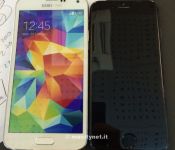
Physical iPhone 6 Mockup Compared to Galaxy S5 in New Images
Earlier this week Italian site Macitynet shared images of a high-quality physical mockup of the iPhone 6, based on earlier design drawings and renderings. The site has now shared [Google Translation] a new series photos comparing that mockup to a Samsung Galaxy S5, showing how Apple’s larger iPhone might stack up to Samsung’s flagship offering.

Samsung’s Galaxy S5, released in April, has a display size of 5.1 inches, along with a thickness of 8.1mm. That makes it both larger and thicker than the iPhone 6 mockup, which appears to have a display size of 4.7-inches. While the thickness of the mockup cannot be determined, rumors have suggested the iPhone 6 will be thinner than the existing 7.6mm iPhone 5s, possibly between 6.5 and 7mm.

The mockup in the photos was reportedly created by a case manufacturer and is said to be a “final” version used to make sure cases and accessories will fit Apple’s iPhone 6, which means that it could be a solid representation of what we can expect from Apple’s larger phone.
Several design elements that have been seen in other case models and mockups are present in this high-quality mockup, including rounded edges, rectangular volume buttons, a rounded rear flash, a protruding camera, and a power button located on the right hand side of the device for easier one-handed use. ConceptsiPhone (via BGR) has compiled many of Macitynet‘s photos into a video, showing the mockup next to an iPhone 5s and an iPhone 4s.
Apple’s 4.7-inch iPhone is expected to launch in the fall months, possibly as early as September. Along with a thinner frame and a larger display, it is also expected to include an A8 processor and camera improvements. A second 5.5-inch iPhone is also rumored to be arriving several months later due to production delays.

Engadget Daily: Google’s modular smartphone, Kevin Spacey stars in COD, and more!

You might say the day is never really done in consumer technology news. Your workday, however, hopefully draws to a close at some point. This is the Daily Roundup on Engadget, a quick peek back at the top headlines for the past 24 hours — all handpicked by the editors here at the site. Click on through the break, and enjoy.

Here’s how Google’s modular phone will get its 3D-printed parts
Project Aura faces plenty of obstacles. But one of the biggest will be finding a way to manufacture millions of specialized smartphone modules while keeping costs down. Thankfully, the experts at 3D Systems have a plan.

Popular login services have a security hole, but Facebook and Microsoft can’t fix it
Wang Jing, a researcher from Singapore, claims to have discovered a potentially serious security hole involving OAuth and OpenID login services. Jing alerted Facebook and others, but it appears impossible for any of these companies to singlehandledly squash the bug.

Call of Duty: Advanced Warfare is this year’s entry, starring Kevin Spacey
The first trailer for Call of Duty: Advanced Warfare is out. And interestingly enough, the House of Cards actor Kevin Spacey appears to be cast as a (surprise, surprise) powerful, politically driven antihero.

LG’s G3 breaks cover with narrow bezels, redesigned back button
What do we know about LG’s upcoming G3 smartphone? Well, according to a tipster and leaked photos from GSM Arena, it appears the handset will be made of plastic, have 2 or 3GB of RAM and a 3,000mAh battery. As long as it comes with that Quad HD display we’ll be happy.
You also might like:
Filed under: Misc

Stanford turns to Twitter to track earthquakes

It’s easy to tell when an earthquake hits an area full of Twitter users — there’s frequently a rush of panicked tweets within seconds of the ground shaking. If Twitter and Stanford University have their way, though, those posts could be useful for more than just alerting friends. They’ve conducted research showing that geotagged tweets can help model the effects of a quake while it’s happening. When you combine geological data with the volume of related tweets within a given radius, it’s easier to determine the intensity of tremors and accurately track how they spread.
There aren’t any immediate plans to use these social network updates for creating earthquake maps. If they’re ever implemented, though, they could cut the modeling time down to a matter of minutes. That could be a big help to governments that want to deliver relief both quickly and effectively. Tweet volume could even represent the primary data source in areas where there are few recording stations. In other words, don’t be afraid to use that #earthquake tag when things start moving — it could eventually save lives.
[Image credit: New Zealand Defence Force, Flickr]
Filed under: Internet
Via: TechCrunch
Source: Twitter, Stanford University (PDF)

The EFF wants your help testing a browser add-on that blocks spying ads

Like many privacy advocates, the Electronic Frontier Foundation isn’t a big fan of advertisers and sites following you around the web. So, it’s doing something about this nosy behavior — it’s launching a browser add-on, Privacy Badger, that lets Chrome and Firefox users limit site tracking. The tool automatically stops sites’ attempts to shadow your surfing activity and lets you selectively grant permission when you’re not worried. To get on the Badger’s good side, a web host has to honor Do Not Track requests — a not-so-subtle dig at Facebook, Google, Yahoo and others that so far insist on tracking visitors.
If you like the idea, the Foundation could use your help. Privacy Badger currently exists only as a rough alpha release, and the EFF would like some real-world testing before it recommends the software to the public at large. Should you have no problems with living dangerously, though, you can try the anti-snooping software today.
Filed under: Internet, Software
Source: Electronic Frontier Foundation

This poster lets you hear what herbs and spices taste like

Don’t worry, that’s not a typo. You can actually swipe across this poster to hear what a handful of spices sound like. The interactive artwork is the result of a collaboration between the creative agency Grey London and Schwartz, an herb and spice brand. After an illustrator penned the visual for what each of the culinary add-ons might look like, they were assigned individual notes based on taste. For example, cumin is an E flat major and fennel got a higher-pitched F minor.
The studio then peppered in capacitive-touch tech from Novalia (a Cambridge-based interactive outfit) and conductive-ink printing for the physical production. Once the posters are paired with a mobile app, the viewer’s smartphone or tablet becomes a speaker for discovering the flavored sounds. “We’ve basically created an app that’s made out of paper. 16 different herbs and spices have been translated into musical chords and the conductive inks on this poster enable you explore those sounds with your fingers,” notes Grey London’s Andy Lockley. The printing process is still in the prototype phase, but I’m holding out hope for a fully-interactive Mastodon tour poster at some point.
Via: Singularity Hub
Source: Novalia
 AIVAnet