


Snapchat now does video chat and IM, with self-destruct still included

Snapchat, the photo messaging app beloved of cheeky monkeys everywhere, has just undergone a major transformation. Self-destructing messages are still at the core of what it does, but the iOS and Android app is today being updated to also handle instant messaging and live video chats — just swipe to the right from the main camera screen and you’ll see a list of your friends, allowing you to chat with them using these more traditional methods.
Texts are wiped by default when you back out of the chat screen, except for any that you deliberately tap to make the app remember them. Video chats, meanwhile, are ephemeral by their very nature: A throbbing blue icon pops up to tell you when a friend is paying attention to your chat (as opposed to the general “online” status used by other messaging apps), and you press and hold this to open up a one-way video stream of your beautiful nakedness self. If your friend wants to, they can do the same in order to make it a two-way thing, and both sides can use gestures to quickly flip between their back- and front-facing cameras. Overall, these changes constitute a big expansion to what Snapchat can do, but they cleverly avoid changing what Snapchat is. The upgrade could well take the app to new heights, in which case Zuckerberg might just have to up his alleged offer to buy it out.
Filed under: Cellphones, Internet, Software, Mobile
Source: Snapchat

T-Mobile’s no-contract attitude brings in another 2.4 million customers

So, now we know where all those disgruntled Sprint folk have been going. In total, 2.4 million new customers hooked up to T-Mobile USA’s network in the first quarter of this year, with around half of those opting for the carrier’s “Un-carrier” style plans, which do away with service contracts and instead provide straight-up financing to those looking for a new handset. Despite being reprimanded by an industry watchdog for its aggressive and not-wholly-accurate marketing, T-Mo actually managed to beat its last bumper quarter in terms of new subscribers, at a time when the other, bigger networks saw much smaller increases — AT&T and Verizon each only added around half a million new postpaid customers last quarter, for example. Curiously, on the financial side of things, T-Mobile actually reported a drop in earnings — which it blamed on the fact that it’s having to grow so fast. Another curiosity: If some of this growth really has been happening at Sprint’s expense, then pretty soon it may not matter.
Filed under: Cellphones, Mobile, T-Mobile
Source: T-Mobile USA
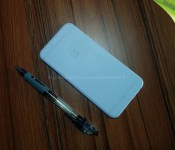
iPhone 6 Physical Mockup Allegedly Based on Real Machine Schematics Surfaces
A new physical mockup claiming to be based off of real iPhone 6 machine schematics from supply chain sources has surfaced on Chinese technology blog 86Digi (via Nowhereelse.fr, Google Translate).
The physical mockup shows the 4.7-inch iPhone 6 as a 6 mm thin device featuring rounded corners and various physical changes. In line with other reports, the model shows the power button now located on the top right hand side of the device, rectangular volume controls on the left, and the camera and circular LED flash on the rear.

Notably, the mockup also shows two rear antenna breaks cut out on the device’s rear, with the post noting that Apple will incorporate a three-stage aluminum design on the back of the iPhone 6. This is partially in line with a report from Mac Otakara last week that claimed Apple would be doing away with the glass breaks currently found on the iPhone 5s in favor of an aluminum design, although it is unsure how Apple will incorporate changes to its overall antenna layout to accommodate the new look.

The photos and video of this new mockup follow images of other physical mockups in recent days, including another model from a case manufacturer showing the 4.7-inch iPhone 6 and one showing the larger 5.5-inch iPhone 6 based on design drawings shared by Japanese magazine MacFan last month.

The iPhone 6 is expected to be unveiled this fall in two different sizes of 4.7-inches and 5.5-inches. The 4.7-inch version of the device will likely ship first in the third quarter of 2014, while the 5.5-inch version is estimated to ship later this year or early next year as Apple solves issues with the phone’s display and battery.

In addition to a larger display, both versions of the iPhone 6 are expected to include a thinner profile, a faster A8 processor, Touch ID fingerprint sensor, and an improved camera that may feature optical image stabilization or electronic image stabilization. Jefferies analyst Peter Misek also claimed in a research note earlier this month that Apple is negotiating for a $100 price increase on the iPhone 6. 
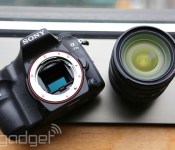
Sony bets on speed with the second edition of its Alpha A77 DSLR

The Alpha portfolio from Sony is pretty well stacked, what with cameras like the newly minted, 4K-ready A7s. To add to that, the Japanese electronics giant today’s announcing the A77 II, a successor to the 24.3-megapixel shooter it revealed back in 2011. Similar to its predecessor, Sony’s A77 II features the same amount of megapixels and Exmor APS-C sensor, but this is now coupled with the Bionz X image chip that’s found on the Alpha A7 and A7R cameras. There’s also an OLED electronic viewfinder, which lets you see the total frame; a 3-inch LCD that can be tilted in three different positions; and NFC, so you can share pictures wirelessly to a smartphone, tablet or VAIO PC.
But the aforementioned specs don’t tell the entire story. Sony wanted the most important improvements over the original Alpha A77 to be all about speed, both in terms of shooting and processing. The A77 II has a brand new focusing system, lead by 79 AF points (compared to 19 on the previous version) with 15 crossing sensors, which allow it to handle a continuous burst of up to 60 full-res photos at a maximum of 12fps — Sony hopes this is more than enough to lure in those of you who like to take a lot of action shots. What’s more, the A77 II brings improvements in the ISO department, going from 16,000 to 25,600 at its highest level, or 52,000 when expanded — if you’re a night owl (or just have a thing for the dark), you’ll no doubt appreciate this.
For Sony, it’s not only about stills, though: the company wants videographers to really consider the A77 II a solid alternative to, say, something like Canon’s Mark III. While there’s nothing surprising about the fact it can shoot 1080p movies at 60 and 24p (AVCHD 2.0), Sony believes the improved AF system inside its A77 II, which offers things like continuous face-detection, is an attribute that makes it standout from the rest of the pack. And, because we know you’re going to ask, there’s no 4K output to be found here.
While Sony may not have taken the biggest leap with the A77 II, there’s no doubt it is still a nice upgrade. But is that plenty for you? It’ll be available in June for $1,200, body-only; a kit with a 16-50mm f/2.8 lens will be sold for $1,800.

Virgin Atlantic to Integrate iBeacon Technology Into London’s Heathrow Airport
Virgin Atlantic is reportedly gearing up to integrate Apple’s iBeacon technology into London’s Heathrow Airport, according to Re/code. The airliner will be using beacons sourced from startup Estimote, as the transmitters will be deployed near businesses and terminals to notify users of promotional deals and areas of interest.
 An
An In one use case, passengers would receive an offer on their phone for no-fee currency exchange as they near that place of business. The program, which will utilize Apple’s iBeacon technology and the Passbook iOS app, follows a trial in which airline employees donned Google Glass as they greeted first-class passengers upon entering the airport.
First introduced during Apple’s 2013 Worldwide Developers Conference, iBeacons enable iOS devices to wirelessly communicate with physical beacons through Bluetooth, as the transmitters are able to deliver specific information to apps when a user is nearby.
iBeacon technology has also been utilized in a number of unique ways since the end of 2013. Shopping app Shopkick and Macy’s teamed up to integrate the technology into stores to aide consumers, while Major League Baseball and the National Basketball Association have used iBeacons to provide enhanced in-stadium experiences. Apple has even implemented iBeacons into its own retail stores to provide customers with product information and deals, while a London-based cafe and the Consumer Electronics Show have also featured the technology.

Logitech Unveils New Case+ Product with Multiple Accessories [iOS Blog]
Logitech has unveiled its new Case [+] product for the iPhone 5s and iPhone 5, which contains a metal case and multiple magnetic attachments including a leather cover, a mount for use with vehicles, a wallet, and an external battery.
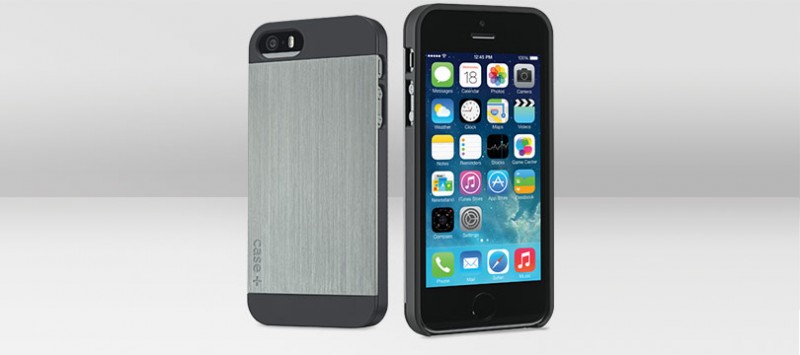 The Logitech Case [+]
The [+] tilt attachment provides users with a leather cover that can also be used on the rear of the iPhone as a mount or kickstand, while the [+] drive attachment can be used as a magnetic mounting solution on a car’s dashboard or windshield. Both attachments connect to the back of the case, while the [+] tilt attachment can be detached to be used as an earbud wrap.
 Logitech’s [+] tilt Attachment
Case [+] also includes a [+] wallet accessory that can be attached to the back of the phone to hold cash, credit cards, and keys, as Logitech’s “Magnashield Technology” prevents cards from being demagnetized. Finally, the [+] energy attachment includes a mountable 2,300 mAh battery that utilizes a port connector, and also includes LED lights that display how much battery is left in the case.
 Logitech’s [+] energy Attachment
Logitech’s Case [+] system will be available later this month for $199 and can be preordered now from the company’s official website.

Spotify for Android updated to provide an even better user experience

Spotify has announced a new update available for download in the Play Store.
The new update features an refreshed interface with a black theme, new typography and rounded iconography.
Also added to their offering is a feature called Your Music, which allows you to save and organize songs or albums for listening later.
Spotify is also introducing the Browse feature which allows you to select the perfect playlist to set the mood or occasion.

This update looks to add to the extensive list of features already offered by the Spotify app, and should be rolling out now.
Source: Spotify, images via Phonedog
The post Spotify for Android updated to provide an even better user experience appeared first on AndroidGuys.

OnePlus One phone available to the masses this June

OnePlus, a subsidy of Chinese phone maker Oppo, has published a statement that the highly anticipated One unlocked phone will become generally available to the public this June. In the oneplus.net forums, OnePlus has stated:
“When we started OnePlus, one of the first things we announced was that our product would be available internationally in Q2 2014. We’re well on track of achieving that….”,
In addition, the OnePlus project has highlighted the below milestones which show the progress of the various phases.
- Ready now – 100 for phone smashers
- Mid to late May – Larger batch 16GB Silk White for the first batch of invites
- Early June – Larger batch 64GB Sandstone Black
- Later in June – Increased general availability, people who want it should be able to get an invite without much trouble in June”
The One’s media is touting the device as a almost-pure Android device that has (initially) impressive physical build and specifications, while still being priced at $299 unlocked.
You can find previous AG news one the OnePlus One here.
The post OnePlus One phone available to the masses this June appeared first on AndroidGuys.

Google will also stop scanning business and government Gmail inboxes for ads

Student Gmail accounts aren’t the only ones safe from Google’s prying eyes. Apparently, the company’s also pulling its targeted ad scanners from Gmail inboxes for businesses and government, as well as from free legacy accounts. Mountain View’s confirmed to TechCrunch that it’ll completely kill the enable/disable toggle for targeted ads for those users. These lucky people will just never see another link hawking Viagra (hey, show me a Spam folder without at least one of those emails) on their interface by default. Google didn’t explain why it has decided to stop scanning these accounts after years of doing so. But this development’s probably linked to the same lawsuit that prompted the company to stop mining students’ inboxes.
Source: TechCrunch

Vince Zampella Co-founds Nuclear Division; Mobile Gaming Has Taken a Step Toward Awesome
 One of video gaming’s greatest developers, Vince Zampella, the man behind the good Call of Duty games (in my opinion) and Titanfall has recently co-founded and invested in the mobile game developer, Nuclear Division.
 Not much is known outside the fact that Vince Zampella will only act as an investor/advisor to Nuclear Division while still remaining at Respawn Entertainment, although that is still great news. It is great to see a legendary developer such as Vince Zampella start to take mobile to the next level; it will only be a matter of time till other legends will get behind mobile and more legends will be created because of mobile.
I myself cannot wait to see what will come from this partnership, whether it be a mobile version of Titanfall or something that will be great in its own right. One thing I know for sure is this is truly a sign of great things to come.
Source: Game Informer
//<![CDATA[
ord = window.ord || Math.floor(Math.random()*1E16);
document.write('’);
//]]>
 AIVAnet