


[Op-ed] Why aren’t their more options for built-in storage for our mobile devices?

In the year of 2012, leaps and bounds where made in the mobile market. It was the first of many things to come at a fast pace. Dual-core 1 ghz processors became the norm. As well as having storage options of 16 or 32 gigabytes on board storage.
The year now is 2014. We have full high definition (HD) screens, quad-core processors that can run over 2 ghz and your choice of 16 or 32 gigabytes of on broad storage. I will give you a second to process that. We have made leaps and bounds in every area but on board storage. Worst of all, most manufacturers don’t offer external expansion.
Are there ways to expand memory? Yes. Some companies offer cloud storage. Problem with that is most carriers are on a tier data plan. The other carriers that do offer unlimited data either slow down your data or don’t have very much coverage to truly enjoy it. Another way is, if your running Android device, you can connect a USB thumb drive to the phone with some trickery and a special cable. Some thumb drives now even offer a private WiFi connection. However, they can be expensive and the WiFi thumb drive runs on a battery. Just something else to make sure that is charged.
In the full HD world of the mobile market, most forms of entertainment are taking up more and more space. Mobile apps take more space to be visually appealing on HD screens. Mobile games take more space to run on full HD. Worst of all, Android custom user interfaces take up more space. For example I have a LG G2, I bought it with 32 gigabyte built-in storage. Out of the box I only have access to 24 gigabytes. Yes LG uses 8 gigabytes to store bloatware and features I will never use, nor do I have the ability to delete it, outside of rooting of course.
In conclusion, in the mobile world everything gets faster, smaller, and is capable of more memory. Even if it cost more, I know I’m willing to pay more for it and I know I’m not the only one. Yes, some Android manufacturers have made higher built-in storage options for their devices. However, those are only a few when 64 gigabyte built-in storage should be a standard by now in the mobile world.
Switched On: Birth of a platform
Each week Ross Rubin contributes Switched On, a column about consumer technology.

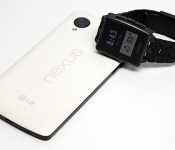
Regardless of what one may think about the potential for smartwatches, one of the most exciting things about a new device category is that there is so much experimentation with form factors and capabilities. We’ve already seen products with different display technologies (Memory LCD, LCD and OLED) and varying screen sizes. Some have various combinations of microphones, speakers, cameras, touchscreens, WiFi or cellular radios. Their prices have ranged from less than $100 to $400 and beyond and their battery life has varied from a day to a year. And then, of course, there are many of the factors that differentiate traditional watches — size, design and materials.

The launch of the Pebble app store brings to mind the launch of the iTunes App Store for the iPhone. In both cases, a convergent device was being opened up to the imagination and creativity of a world of developers. Taking advantage of its early marketplace entrance (and perhaps some lessons learned from the Allerta inPulse), the Pebble is an extremely constrained platform. With no touchscreen, no keyboard (not even a screen-based one), few accessible controls and a tiny monochrome display, one must have realistic expectations about the sophistication of the apps, of which the watch can have only eight resident at a time. Even accessing some of the apps can be a hassle requiring multiple button presses.
On the other hand, the Pebble has access to certain advantages that the iPhone didn’t have when its app store launched. For one thing, it has the iPhone itself (and now Android phones), as an always-connected bridge to do the heavy lifting of connectivity. It also has access to a far greater wealth of internet-based services to draw on, many of which were dragged online and made more accessible because of smartphones. And finally, it is arriving in the early days of a world where, increasingly, everyday objects are connected.
The Pebble has access to certain advantages that the iPhone didn’t have when its app store launched.
The initial six categories of the Pebble app store are: Daily, Tools and Utilities, Notifications, Games, Remotes and Fitness. Immediately, one can see that this is far from a perfect topology, but a few of the categories stand out. Games always seem to be a staple of new platforms, but the two categories that best reflect the heart of the smartphone are fitness and notifications. The Pebble doesn’t have any special sensors to judge body signs apart from the standard-issue accelerometer, but a whole class of wearables has been focused on providing a reflection of activity — an input focus. Conversely, notifications — a feature of the pre-app Pebble — represent the other main smartwatch focus, the at-a-glance output focus.
Remotes is a bit of a new twist as a category. Indeed, one of the first App Store apps released by Apple for the iPhone was the Remote app for controlling Apple TV. Similarly, using the connected smartphone as a surrogate, the Pebble can reach out and provide wrist access to some of the emerging Bluetooth and WiFi-connected devices such as the Philips Hue lights, Nest thermostat and GoPro camera.

There are a few notable, popular web-based and mobile-based services. These include Yelp and Foursquare, the latter of which has made a habit of being first on a platform with a showcase app. Developers also haven’t been afraid to push the Pebble to tasks for which it may not be well-suited. One of these includes an app that allows you to “mirror” the image coming from your smartphone’s camera — at least as well as it can be mirrored on a 1.26-inch monochrome display.
Smartphone app stores have included many of the staples of the PC … but became better known for a new class of applications that were inherently focused on location and context.
As has been the case with smartphones, the Pebble store can serve to expand market awareness for services that might not cross the radar of someone just looking for a watch that can display a variety of different faces. If you weren’t aware of the Indigo or Vera home-automation platforms, you will be when you peruse the store.
Smartphone app stores have included many of the staples of the PC — web browsers, email, Office productivity — but became better known for a new class of applications that were inherently focused on location and context, tied to social networks and optimized for a new interface. In its early days, we can see evidence of that trend continuing with smartwatch apps. There is overlap with some of what one can do with a smartphone, but the emphasis has shifted to a different class of applications that is addressing the promise of what one can do with a quick bit of attention to one’s wrist.
Ross Rubin is principal analyst at Reticle Research, a technology, media and telecom advisory firm, and founder of Backerjack, which covers crowdfunded product innovation. He blogs at Techspressive.

Xiaomi confirms 5.5-inch, octa-core Redmi Note phone with teaser

The leaked Redmi phone we saw a couple of days ago is coming sooner than we expected, and it now bears an interesting name: Redmi Note. Does it mean we’ll be getting a stylus with this Chinese phone? No idea, as Xiaomi’s midnight teaser — pictured above — doesn’t reveal much, other than confirming the 5.5-inch screen (the leak indicates a 720p resolution) and the octa-core processor (1.4GHz or 1.7GHz). What’s missing is the price, but it should sit somewhere between the current Redmi’s CN¥699 (about $110) and the MI2a’s CN¥1,499 ($240) — so maybe CN¥999 ($160) at most. Folks in China will be able to pre-order at local time 8pm on March 19th using Tencent’s Qzone app, which got the exclusive for the Redmi Note’s debut sale. For those outside China, your usual gray market channels are standing by.
Filed under: Cellphones, Mobile
Source: Qzone

Feedback Loop: Earliest internet memories, first tweets and more!
Welcome to Feedback Loop, a weekly roundup of the most interesting discussions happening within the Engadget community. There’s so much technology to talk about and so little time to enjoy it, but you have a lot of great ideas and opinions that need to be shared! Join us every Saturday as we highlight some of the most interesting discussions that happened during the past week.

This week, we celebrated the 25th anniversary of the world wide web, shared our first tweets, discussed the fashion appeal of wearables and started a March Madness tournament bracket. Head on past the break and join the conversation.
Share your first experience with the world wide web
This week, the world wide web turned 25-years-old! It seems like only yesterday that we put up with the high-pitched squeal of a modem and the ridiculously slow speeds of a 9600-baud connection. Do you remember the first time you tasted internet access? Head over to the forums and share your first experience using the Internet.
What was your first tweet?
Engadget Associate Editor Nicole Lee shared a story about her first years on Twitter. Instead of sharing links and breaking news, people simply posted the more mundane details of their lives. It was a much different place. Kris was inspired to start a discussion in the forums about her own first tweets on Twitter. Check out some of our first (and sometimes embarrassing) posts. And then share yours.
Wearables: Geeky toys or fashion statement?
Wearable technology is all the rage right now, but how well does it mesh with our personal style? Engadget reader sirijo asks some interesting questions about the pricing, usefulness and fashion appeal related to wearables. Tell him what you think.
Join Engadget’s NCAA Tournament Bracket
March Madness is almost here! Are you a college hoops fan? Billy Steele put together an Engadget NCAA Tournament bracket pool. If you fancy yourself a baller, head over to the forums after Selection Sunday and make your picks. Good luck!
That’s all this week! Do you want to talk about your favorite gadget or have a burning question about technology? Register for an Engadget account today, visit the Engadget forums and start a new discussion!

Veronica Mars Ultraviolet digital copies frustrate many backers, Warner Bros. offers refunds

After an instantly successful $5.7 million Kickstarter campaign the Veronica Mars movie has finally arrived in theaters and at home, but that doesn’t mean all is well. Digital copies of the movie for backers were distributed using codes for Flixster, Warner Bros.’ Ultraviolet-connected movie site/service. Unfortunately, many users had issues signing up for the often-convoluted Ultraviolet login process, setting up the Flixster software to stream or download the video, accessing a copy outside the US, or actually getting overloaded servers to work.
There are some who flew through the setup without issue, but an update by series creator Rob Thomas directs backers with problems to contact customer support. They’ll help get things working, or provide a refund for purchasing the movie on another service like Amazon or iTunes. On (the also Flixster-operated) Rotten Tomatoes, Veronica Mars is showing a 98 percent audience rating and 76 percent overall, so once fans can sit back and and press play, it appears they’re liking what they see. Not yet familiar? An unaired version of the original pilot is available for free on iTunes, and you can get caught up on the entire series on Amazon’s Prime subscription service.
(function(d, s, id) var js, fjs = d.getElementsByTagName(s)[0]; if (d.getElementById(id)) return; js = d.createElement(s); js.id = id; js.src = “//connect.facebook.net/en_US/all.js#xfbml=1”; fjs.parentNode.insertBefore(js, fjs); (document, ‘script’, ‘facebook-jssdk’));
Going to bed angry. Have been trying to watch @veronicamars for going on 2.5 hours now. Flixster is TERRIBLE!
– Stacy Mullins (@StacyDMullins) March 15, 2014
Got my Veronica Mars code via email, logged into Flixster/Ultraviolet through Facebook, and now streaming the movie. Took about 20 seconds.
– Andy Baio (@waxpancake) March 15, 2014
Got my Veronica Mars movie download! And I only had to create Flixster, UltraViolet and Vudu accounts in order to watch it on my TV!
– Ridiculously (@Ridiculously) March 14, 2014
wow. @flixster is not very good. nonfunctional for @veronicamars movie, which means an additional $20 via @iTunesMovies. #fail
– Eamon Gallagher (@eamonaogallaghe) March 15, 2014
Filed under: Home Entertainment, HD
Source: Kickstarter, The Wrap
RAVPower wireless charging pad review
Having used the stock Nexus 5 wireless charger exclusively until receiving this unit, I must say, I much prefer this form factor. There’s no magnet keeping the phone attached, instead the logo in the center of the pad is made from grippy rubber that holds the phone securely enough in place. I’ve always found the magnet in the Nexus brand wireless charger to be a bit overkill for use on a desk.
This charger seems to work better than the other while the device has a case on, due to the rubber grip rather than the magnet.
Charging my Nexus 5 from 2% – 100% took exactly 3 hours. In my experience that’s about what I’ve come to expect from wireless charging.
All things considered, I would have to say for only $35.99 marked down from $99.99 this is a definitely a suitable, if not preferable to the Nexus brand charger.
If you have any of the compatible devices listed on their site:
Direct Charge Models:
– Nexus 7 2nd Gen / Nexus 5 / Nexus 4 / LG Optimus Vu2
– Nokia Lumia 920
– HTC 8X (UK version does not support QI wireless charging)/ HTC Droid DNA
Models that Require a Wireless Charging Case / Cover Adapter:
– Samsung Galaxy S4, S3 / Galaxy Note 2
– Nokia Lumia 820 / 925 / 925t / 1020
– iPhone 5S 5C 5 4 4S 3G
Check out the RAVPower site and order one yourself!
The post RAVPower wireless charging pad review appeared first on AndroidGuys.
Android goes back to the 80’s with Steven Jackson’s Sorcery!
Fans of choose-your-own-adventure games can now fight evil monsters and explore strange lands in “Sorcery! Part 1″ that just released for Android.
inkle, a developer of interactive narrative apps, and author Steve Jackson teamed up to create re-imagined version of the 1980s “Sorcery!” gamebooks, which released on iOS last year.
These gamebooks were initially released as part of the Fighting Fantasy series and the re-imagined versions consist of four parts just as the original set did. However, you can sleep easier at night knowing that each game is a self-contained experience without having to wait for the next release.
In Part 1 – The Shamutanti Hills, the journey starts out heading across the Shamutanti Hills to recover the stolen Crown of Kings. The original 176-page adventure has been adapted to bring this 1980s classic to the digital age while providing a deeper experience that lets the player make thousands of choices that can change their journey.
Sorcery! Part 1 is available now in the Google Play store and the Amazon Appstore in the US and UK.
The post Android goes back to the 80’s with Steven Jackson’s Sorcery! appeared first on AndroidGuys.

Today is Hardware Freedom Day, go learn how to build stuff

Looking for something to do on a lazy Saturday? You could always learn a little more about Open Hardware initiatives. Today, March 15th, is Hardware Freedom Day — an annual celebration of open-source gadgetry and unrestricted hardware collaboration. The Digital Freedom Foundation created the event in 2012 to promote the idea of Open Hardware and give local hackerspaces a chance to interact with their communities. Local events are being hosted on almost every continent, exposing everyday folks to fabrication tools, Arduinos, Rasberry Pi hacks, 3D printers and more. Check out the official website at the source link below for details and event locations.
Filed under: Misc
Source: Hardware Freedom Day
RAVPower 5-in-1 file hub review
Hardware
At first glance the device appears to be nothing more than an external battery pack. There are 4 LED indicators on the face labeled with symbols: Battery, R/W, Wi-Fi (indicates the hotspot is active) and finally the Internet light which denotes when the device is connected to another network which is providing access to the internet (so you still get your emails while you’re connected to the hub)
Aside from feeling a little cheap because the outside is made out of plastic, it’s a pretty nice feeling little device.
The device has an internal 3,000 mAh battery to power the device which can double as an emergency charger for your phone.
Software
The web interface for the file server is great, like a simple version of what you might expect from logging into any Wi-Fi router. All of the options you would expect, even options to upgrade and backup the firmware on the device. You can explore the connected storage devices from the web interface as well.
On the phone side, there’s an app in the Play Store: RAV FileHub, which is basically just a file explorer but can also control most of the same options the web interface can. It took 5 minutes to pull a 1 GB file down from the connected USB drive to my phone and about 10 minutes to push the same file back. The device will not connect to N wireless, but it seems to work just fine on 2.4 GHz.
All-in-all
This is one of those great little devices that you may not think you’re going to need, but when you need it, it’s a life-saver. This was the perfect way to back up the photos and filed I’d accumulated on the device I’ve been reviewing for transfer back to my daily driver. And it makes a much quicker job our of it than the alternative, which would be uploading to a cloud storage service like Drive or Dropbox.
With only $44.99 on the tag, (down from $79.99) this device is a worthy buy for the times it comes in handy, it’s worth its weight in gold.
The post RAVPower 5-in-1 file hub review appeared first on AndroidGuys.
LG Lucid 3 leaks with updated curved design

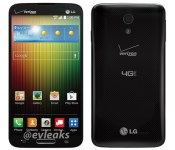
We’ll admit, we’re getting mixed messages here. According to @evleaks’ latest reveal there is very likely a new LG Lucid (number 3 to be specific) invoming for Verizon. Nothing unusual there, as it’s been about a year since the last one. But if the images are accurate (and history predicts they will be) LG has taken some design cues from its G-series — rounded corners, and a curved back etc — along with a very Samsung-esque physical home key (the last edition had capacitive buttons). There’s little else to glean from the image other that the obvious, but expect a mid-range specification (with model number VS876) to hit the Verizon web store in the coming weeks.
Filed under: Cellphones, Mobile, LG
 AIVAnet