


Google Keyboard Updates to v3.0 with Enhancements and Personalization [APK Download]
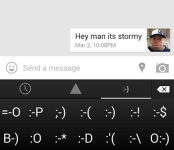
Hey, is today Wednesday? Oh, it is. Google must be pushing out a bunch of app updates. We just picked up an update for Google Keyboard that moves it version 3.0.19373. That is a whole number improvement over the previous 2.0v. The update offers up a few little tweaks to the keyboard like an “ABC” button when you are in the Emoji tab to help make it crystal clear that that is how you get back to the regular keyboard mode. Apparently the Keyboard icon wasn’t enough. Image on the left is the new keyboard.


There is also a new settings icon when you long press on the mic key.
 The big update comes in the form of Personalized Suggestions. When you first load up the new install you you are presented with a screen that tells you “Personalization is on. Touch for Info.” The info screen lets you know that the new Google Keyboard now uses data from your other Google suite of apps in help improve your suggestions and corrections. The data is supposedly store on your phone and not in the servers. This option is set to “On” by default, so if you aren’t a fan of it you will need to head into the keyboard settings to disable it.

 You can kick back and wait for the update to reach your device through the Play Store if you want. It is rolling out oin the typical staged roll out fashion. If you are impatient and want to grab it now, head over to Gappsearly and pick it up.

Via Droid-Life
New Cloak app helps you hide from ‘that guy’

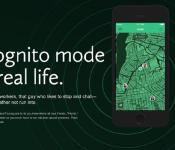
There are a plethora of geo-location-based apps that make it incredibly convenient to do friendly things, like chat with nearby peers about local hotspots or meet up with a coworker on the fly. A new iOS app called Cloak, however, utilizes services from Foursquare and Instagram for a more anti-social purpose. The brainchild of Brian Moore and former Buzzfeed director creative director Chris Baker, Cloak identifies the location of friends (read: those you’d rather not bump into) based upon their latest check-in. While perusing the map, you can choose to “flag” certain undesirables, like exes or annoying third-wheels, to be notified when they wander within a preset distance of your personal bubble. Or you could, ya know, skip town altogether just to be safe.
Filed under: Misc, Internet, Software, Mobile
Source: The Washington Post, Cloak

Valve’s free pro-gaming documentary hits iTunes, Steam and YouTube (video)

If you didn’t make it to Free to Play‘s San Francisco premiere last night, Valve (yes, that Valve) has you covered. The Dota 2 tournament doc is now available on iTunes, Steam and YouTube for the very reasonable price of zero dollars. The Valve-produced documentary clocks in at a little over an hour, and, as SlashGear has noticed, the gaming giant has also released a few outtakes and behind the scenes clips as well. We’ve embedded everything after the break should you want to give it a peek for yourself. If you’re in the dark about exactly why the game’s so popular, maybe watching players from all over the world duke it out for a million-dollar top prize will clear a few things up.
Filed under: Gaming, Home Entertainment, Internet, HD
Via: SlashGear
Source: Valve (YouTube)
NSA claims that technology firms are aware of its data collection

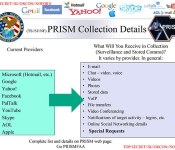
If you ask technology leaders like Apple or Google, the NSA has been snooping on their customers without permission. However, the NSA has a very different story. Agency general counsel Rajesh De tells an oversight board that these companies are fully aware of and assisting data collection under the PRISM surveillance program, whether it targets servers or internet traffic. There’s a “compulsory legal process” for the firms involved, the attorney says. If accurate, the statement at least partly contradicts repeated claims from these companies that the NSA leaves them in the dark. With that said, it’s still possible for both sides to be right. Leaks from last June suggest that company staff handling these government requests are required to keep the details secret, even when speaking to coworkers — higher-ups won’t necessarily hear about cooperation with the intelligence community.
Filed under: Networking, Internet, Apple, Microsoft, Google, Facebook
Via: CNET
Source: The Guardian

Engadget HD Podcast 390 – 3.19.14

Streaming services, set-top boxes and dongles are dominating HD news this week, and there’s quite a few to discuss. Rumors are bubbling up about more Amazon hardware to match the competition’s offerings and Chromecast continues to make headlines with the international roll out of its diminutive device. Surprisingly, Richard isn’t going on about March Madness and Ben is lukewarm about the arrival of an ACC Sports channel for Apple TV. Signs of the robopocalypse perhaps? We hope not, since there’s plenty of Titanfall still to play and the Xbox One was catching up to PlayStation 4 sales numbers. Keep in mind that Microsoft has only just decided to take its console global. We’ve got plenty in store and its all packed into this episode of the Engadget HD Podcast, conveniently located at the streaming links below.
Hosts: Richard Lawler, Ben Drawbaugh
Producer: Jon Turi
Hear the podcast:
05:46 – Rumors of an Amazon music service, TV set-top box swirl yet again
07:16 – Amazon’s streaming device is reportedly a dongle with gaming support
13:10 – Plex adds free Chromecast support for all, media shuffling and camera uploads to iOS
14:23 – Chromecast Android app prepped for upcoming international rollout
14:34 – Big UK retailer lists Chromecast ahead of an official launch
16:06 – Google settles its seven-year YouTube copyright battle with Viacom
19:10 – PlayStation 4 tops US console sales in February, but Xbox One narrows the gap
24:14 – Microsoft to take Xbox One to 26 new countries in September
27:16 – ACC Sports channel arrives on Apple TV with on-demand analysis and highlights
28:43 – Torrent front end Popcorn Time made streaming movies free and easy, so of course it’s gone
33:03 – Veronica Mars Ultraviolet digital copies frustrate many backers, Warner Bros. offers refunds
35:24 – Dish’s Super Joey DVR extender arrives, lets you record eight shows at once
36:15 – Netflix’s three new originals include ‘Shrek’ and ‘Madagascar’ spin-offs
38:00 – March Madness Live 2014: new apps, redesigned brackets and more social features
38:58 – Must See HDTV for the week of March 17th: March Madness, American Hustle, Infamous
43:18 – ‘Project Morpheus’ is Sony’s virtual reality headset for the PlayStation 4
Get the podcast:
[iTunes] Subscribe to the Podcast directly in iTunes (MP3).
[RSS – AAC] Enhanced feed, subscribe to this with iTunes.
[RSS – MP3] Add the Engadget HD Podcast feed to your RSS aggregator.
Contact the podcast:
Huawei has ‘no plans’ to launch an Android/Windows Phone hybrid

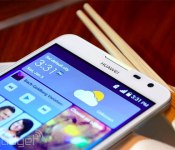
If two heads are better than one, does that mean two mobile operating systems are better than one? Huawei seemed to think so. CMO Shao Yang recently told TrustedReviews that it was working on a phone that ran Android and Windows Phone, but the company did an about-face today and said it has “no plans” to launch such a dual-booting Frankenphone. When Yang first brought up the notion, he said that an Android/Windows Phone combination could be more enticing to consumers than a standalone WP device. He may have had a point (if only because of sheer novelty), but c’mon now: while geeks may swoon, average phone buyers probably wouldn’t embrace it as enthusiastically. Even if Huawei made switching between platforms seamless (a very big if, mind you), users would still have to grapple with the intricacies of two very different OSes. The world probably won’t mourn the loss of Huawei’s hybrid, but hey — at least the dual-boot dream lives on with Ubuntu and Karbonn.
Filed under: Mobile
Via: TechCrunch
Source: FierceWireless
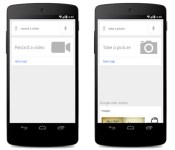
‘Okay Google, take a photo’ comes to Search for Android app

Glass users are all too familiar with the battery of commands required to get the headwear to spring into action. Beginning today, two of those lines are available in the Google Search for Android app. If you say “Okay Google” followed by “take a photo,” your device will launch the camera app. Similarly, “take a video” accomplishes the same, albeit it in movie mode. Of course, we prefer to speak into a smartphone only when absolutely necessary, and with plenty of other methods for launching into photo mode (including, of course, simply tapping the camera icon), this is a feature we don’t plan to use anytime soon.
Filed under: Cellphones, Google
Source: Google

Netflix signs Jane Fonda and Lily Tomlin to original series, but what about Dolly?

When Lily Tomlin, Jane Fonda and Dolly Parton came together to form the holy trinity of dark comedy in 1980′s 9 to 5, VHS was still relatively young. Fast-forward 34 years and your VCR (if you still have one) is likely covered in dust and cobwebs, but the star power of those three women hasn’t faded. Netflix, the company arguably responsible for the death of the video store, is bringing Lily Tomlin and Jane Fonda together again for yet another original series called Grace and Frankie. The comedy, which shares a creator with Friends, will run 13, 30-minute episodes, and finds Grace (Fonda) and Frankie (Tomlin) as bitter rivals brought together when their husbands fall in love and announce plans to get married.
Netflix has seen previous success with original hit series like Orange is the New Black and Emmy-award-wining House of Cards, and recently announced that it surpassed HBO in paid US subscribers. There are no specifics on an airdate for Grace and Frankie, or whether Dolly Parton will appear in a cameo (please, oh pop culture gods!), but Ted Sarandos, Netflix Chief Content Officer, has called it “anything but wholesome.” Fingers crossed that means we’ll see Fonda returning to her roots with some Barbarella-esque oddity.
(Images: AP / Getty)
Google Keyboard 3.0 released adding personalised word suggestions
Google’s very own keyboard has today been updated to version 3.0, or more specifically 3.0.19373. The update brings a few minor bug fixes and tweaks, such as a dedicated “ABC” button to switch from emoji.
Of most interest in the Google Keyboard 3.0 update is a new personalised suggestions feature which uses data from other Google Apps and Services to improve suggestions and corrections.
The settings is enabled by default, so will need turning off if you aren’t too happy with Google capturing keyboard info in other apps.
Google Keyboard 3.0 is now available in the Google Play Store.
The post Google Keyboard 3.0 released adding personalised word suggestions appeared first on AndroidGuys.
Looking back: A brief history of Google’s Nexus devices
Sometimes when a smartphone is released, it is very easy to tell what the manufacturer was aiming for. Unlike some popular lines of smartphones like Samsung’s Galaxy S series or HTC’s One series, Google’s Nexus line has received some interesting feedback over the years. Does the term ‘Nexus’ mean what it did when Google started this line? Which one of these devices was truly iconic for it’s time? Let’s take a look back.
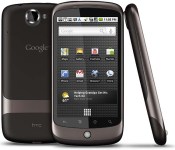
HTC Nexus One

Introduced: January 2010
Android version: 2.1 Eclair – 2.3 Gingerbread
Notable hardware features: HTC used their familiar build for the time – matted plastic with brushed metal accents. Oh, and a trackball. It also sports a 3.7-inch 480×800 AMOLED (or Super LCD) display, 1 GHz Qualcomm Scorpion CPU with 512 MB RAM, 1400 mAh battery, and a 5 MP camera.
How it was sold: The One was sold mainly for developers and launched as $529 unlocked, and offered a “pure Android” experience with an unlockable bootloader. Also, this was Google’s first attempt to sway people to buy a device online without seeing in stores. Perhaps a bit ahead of its time, the Nexus buying experience would evolve over the years.
Despite the lawsuits and patent troubles, the reaction was very positive. These were some of the best specs anyone has ever seen on a smartphone. Everything was great about the phone except for the price, even by today’s standards.
Samsung Nexus S

Introduced: Nexus S: December 2010, Nexus S 4G: March 2011
Android version: 2.3 Gingerbread – 4.1 Jelly Bean
Notable hardware features: Samsung opted for a slimy hyperglaze plastic for their first Nexus, with a slight curve to the screen. It also has a 4-inch 480×800 Super AMOLED display, 1 GHz Samsung Exynos 3 processor, 512 MB RAM, 1500 mAh battery, and a 5 MP camera.
How it was sold: The Nexus S was sold for $530, while the Nexus S 4G was sold for $550. The jump to Gingerbread didn’t change a whole lot, at least talking about the user interface.
At the time, it was one of the best smartphones to date. The first model didn’t support HSPA+, which was a big negative. However, Google seemed to remedy that by offering a 4G model in the coming months. This one wasn’t a huge step up from the One, at least originally, but it did keep users interested in the Nexus line.
Samsung Galaxy Nexus

Introduced: November 2011
Android version: 4.0 Ice Cream Sandwich – 4.3 Jelly Bean
Notable hardware features: Samsung’s second iteration of the Nexus came at us with a completely different design – still plastic, but more textured on the back plate, still keeping the slight curve of the screen and a (very) heavy bottom. This one sports a 4.65-inch 720×1280 Super AMOLED display, 1.2 GHz dual-core ARM Cortex-A9 processor, 1 GB RAM, 1750 mAh battery, a 5 MP rear-facing camera, and a 1.3 MP front-facing camera.
How it was sold: The G-Nex was sold for $399 at launch. Probably the biggest selling feature of this one is the software. The jump from Gingerbread to Ice Cream Sandwich is still the biggest UI overhaul to date, adding tons of new features/improvements.
Due to the software, the Galaxy Nexus became hugely popular. Now, every phone has it’s faults. But it seems to be more apparent than ever in this Nexus. The batter life, though a big jump from it’s predecessor, is terrible. There is no way a smartphone user could get through an entire day on a single charge. That’s to be expected, given the time this phone was relevant. But the phones being launched at roughly the same time had tremendously better battery life that this one. Also, when Android 4.4 Kit Kat was announced, Galaxy Nexus owners were distraught to hear that their phones wouldn’t be receiving the update.
ASUS Nexus 7 (2012)

Introduced: June 2012
Android version: 4.1 Jelly Bean – 4.4 Kit Kat
Notable hardware features: Google decided to rope in popular tablet/laptop manufacturer, ASUS, for their first take at a Nexus tablet. The back was a soft-touch plastic with a golf-ball like texture. It has a 7-inch 1280×800 IPS LCD display, 1.2 GHz quad-core ARM Cortex-A9 processor, 1 GB RAM, 4325 mAh battery, and a 1.2 MP front-facing camera.
How it was sold: The Nexus 7 was announced at Google I/O for $199, bringing Android 4.1 to the table. With the addition of Google Now and other enhancements, the Nexus 7 was a very attractive tablet, especially for the price.
For years, Android tablets have had a big problem. The lack of tablet-friendly applications was a huge negative for Google’s first iteration at a Nexus tablet. Ultimately, the tablet did very well with the common consumer. It was a big change in the Nexus family – not only was it not a phone, but it was aimed at the average consumer. Also, the $199 price point was an invitation for developers to pick one up and start working on tablet-friendly apps.
Samsung Nexus 10

Introduced: October 2012
Android version: 4.2 Jelly Bean – 4.4 Kit Kat
Notable hardware features: Google had Samsung make their 2nd Nexus tablet. This one has a rubbery-soft (very grippy) plastic and front-facing speakers. It has a 10.1-inch 2560×1600 True RGB Real Stripe PLS LCD display, 1.7 GHz dual-core Cortex-A15 processor, 2 GB RAM, a 9,000 mAh battery, a rear-facing 5 MP camera, and a front-facing 1.9 MP camera.
How it was sold: This one was supposed to be announced with the Nexus 4 in an event in New York, but it was cancelled because of Hurricane Sandy. It was still announced later that day for $399. It was running Android 4.2, a notable step up from Android 4.1.
The Nexus 10 was popular, but still carried the same unfortunate handicap that the Nexus 7 had. If the lack of tablet-friendly apps wasn’t apparent enough on the first Nexus 7, it was made very clear on this one. Suffice it to say, it is getting better, but at the time that this tablet was released, it was difficult to find apps that played nicely with a big screen.
LG Nexus 4

Introduced: November 2012
Android version: 4.2 Jelly Bean – 4.4 Kit Kat
Notable hardware features: LG’s first Nexus was beautifully designed. It offered a glass back with a dotted, almost sparkly look to it. It also offered plastic bezels and a screen that curved slightly around the edges. LG”s Nexus has 4.7-inch 768×1280 IPS LCD display, a 1.5 GHz quad-core Snapdragon S4 Pro processor, 2 GB RAM, a 2,100 mAh battery, an 8 MP rear-facing camera, and a 1.3 MP front-facing camera.
How it was sold: Launched alongside the Nexus 10, the Nexus 4 was originally sold for $299. Still aiming at developers, this Nexus offered a very small price point – something the average consumer would be very fond of. It also offered Qi wireless charging – a Nexus family first.
For $299, you’d be hard pressed to find a better smartphone for the price. But for Google to reach that price point, they needed to make some sacrifices. One of those being the lack of 4G. Weird, right? Nexus phones that were released a couple years prior had 4G capabilities, but why not this one? Google seemed to think the HSPA+ support would suffice. There wasn’t much else that didn’t make it on the phone, though. It was a decent step up from the Galaxy Nexus, and showed people that they didn’t need to fork over an entire paycheck for a smartphone.
ASUS Nexus 7 (2013)

Introduced: July 2013
Android version: 4.3 Jelly Bean – 4.4 Kit Kat
Notable hardware features: ASUS got a shot at making a second Nexus tablet. It has a soft-touch back, two long speakers on each end, as well as a big ol’ camera on the back. It has a 7-inch 1920×1200 IPS LCD display, 1.5 GHz quad-core Krait 300 processor, 2GB RAM, a 3950 mAh battery, a 5 MP rear-facing camera, and a 1.2 MP front-facing camera.
How it was sold: The 2013 Nexus 7 was announced at an event called “Breakfast with Sundar Pichai”, Google’s current Senior Vice President, overseeing Android, Chrome and Apps. It launched for $229 – a $30 price increase from the first generation tablet. This one brought Android 4.3 Jelly Bean to the table and a much-improved screen.
The Nexus 7 (2013) has been Google’s most popular tablet to date, fixing just about every gripe that consumers had with the first generation. The speakers are loud and very difficult to cover up, the screen received a much-needed upgrade, and the bezels shrunk on the sides, making the tablet’s screen pop much more. With help from more and more tablet-compatible apps, this device marked Google’s entrance into the mainstream tablet world, offering an affordable, yet glorious competitor to others such as the iPad.
LG Nexus 5

Introduced: October 2013
Android version: 4.4 Kit Kat – 4.4.2 Kit Kat
Notable hardware features: This is LG’s second attempt at making a Nexus phone. The Nexus 5 offers a soft-touch back and a big camera on the back, much like the Nexus 7 (2013). It also offers a 4.95-inch 1920×1080 IPS LCD display, 2.26 GHz quad-core Krait 400 processor, 2 GB RAM, a 2,300 mAh battery, an 8 MP rear-facing camera with OIS, and a 1.3 MP front-facing camera.
How it was sold: The Nexus 5 was announced in a Google+ post for $349, and went on sale in the Google Play Store immediately. It launched with Android 4.4 Kit Kat, and drew people in with its exclusive “Google Now Launcher”.
The Nexus 5 became popular very quickly, mostly due to its price and hardware upgrades. Much like the 2013 Nexus 7, Google fixed most of the complaints users had from the Nexus 4. The addition of 4G bands, a slightly bigger screen, and more durable hardware were it’s best features, by far. The meaning of the term ‘Nexus’ began to change due to the Google Now Launcher. Though still aimed at developers, the consumer market took this one by storm. Google not only offered a cheap price point, but they added exclusivity with some of the services that came with it. Instead of offering a phone with a “pure Android experience”, they opted to give a “pure Google experience”.
Honorable Mention: Google Play Editions

Between the Nexus 4 & 5, Google announced the first ever Google Play Edition smartphones – the GPe Galaxy S4 and the GPe HTC One. Bringing a quality Android experience to top of the line hardware, the GPe phones are a force to be reckoned with… until you look at the price. The GPe Galaxy S4 was announced for $649. Suddenly, the term ‘Nexus’ doesn’t mean cheap anymore. Or, wait… is this a Nexus?
With the promise from Google to receive timely Android updates, the GPe smartphones took an odd spot in the Nexus family, quickly dubbing themselves as the red-headed step children of the group. You love them because they offer a great hardware experience, but that price… oh man, that price. Google is still continuing to announce GPe devices left and right, so here’s the question – what’s their end goal?
Here’s my take, although I may be wrong; it’s the only answer my brain wants to accept as correct. Google has been releasing GPe devices for a while now. At first, it seemed normal for the S4 and HTC One to get the Google treatment. Premium hardware and software, where could you go wrong? Then they started announcing some really odd editions like the Moto G, for instance. The Moto G was already basically a Google-ified smartphone. It ran mostly a stock experience, give or take a few features. So why would they release it?
Manufacturers don’t receive code until the day it’s announced to the public. So with the odd addition of the Moto G to the family, swooping in before they’re whisked off to Lenovo, it gives all of the main hardware manufacturers early code that they wouldn’t have gotten already. Google didn’t have to add any of those phones to their lineup to make any money… they did it for the greater good – early updates for all.
What’s next?
So, does the term ‘Nexus’ mean what it did 4 years ago? Not really. But that’s not a bad thing. There will always be room for the Nexus line in the hearts of pure Android enthusiasts, developers, and consumers who aren’t fond of 2-year agreements. Sure, there are rumors that the GPe devices will take over the Nexus line sometime next year, but one thing is certain: we will always have access to the pure Android experience that we all love.
Sometimes it’s just nice to take a look back and reminisce about devices we love, no? Which of these devices is your favorite? Do you have anything to add about (what I consider to be) the best smartphone line ever? Leave a comment below and we’ll talk!
The post Looking back: A brief history of Google’s Nexus devices appeared first on AndroidGuys.
 AIVAnet