



Oink helps parents monitor and control their kid’s in-app purchases

A 13-year-old with access to his parent’s iTunes account can potentially rack up a sizable bill in an afternoon of Candy Crush — a tab mom might potentially refuse to pay because she didn’t authorize the purchase. Payments company Oink has created a solution that lets kids buy what they want, but still stay within mom and dad’s budget. With the service, parents can tie a credit card to the account and set limits on exactly where funds in the account can be spent, as well as how much money can be used in a single purchase.
Oink works similar to PayPal in that purchases can be made online using just a username and password. A child could be given a certain amount of money to spend on their favorite game each month, or can be given an allowance that can only be used at a few specific retailers. Purchases can also be restricted by rating (to prevent the purchase of mature games), and can be disabled quickly if payment info falls into the wrong hands or a parent wants to temporarily prevent a child from spending. The service is available now in a number of online retailers and popular games such as Habbo Hotel, and the company is currently in negotiations to expand to even more (a process that requires a developer to add just nine lines of code, so in theory we could see more compatible sites right away).
At GDC this week the company also told us it plans to release a physical card sometime this summer. The card would work anywhere Discover cards are accepted, and could be used to buy everything from dinner out with friends to a taxi ride home afterwards. Just like the online product, parents would be able to control spending limits and locations. Every purchase is also tracked online and broken down in an easy-to-read pie chart, so kids can learn a bit about budgeting while they’re out buying that new pair of shades at the mall.
Filed under: Cellphones, Gaming, Wireless, Mobile
Source: Oink

Professionals Successfully Push Mac Pro to Absurd Limits With 558-Day Video Timeline in Final Cut Pro [Mac Blog]

After waiting for several years for Apple to release a new professional tower, the company finally released the new Mac Pro last year. With dual-GPUs and an innovative cooling system, the diminutive machine has impressed professional users.
FCP.co decided to test out Final Cut Pro X and their well-equipped 8-core Mac Pro to absurd limits. The site put 1600 connected clips into the GUI, and actually got the Mac Pro to play 50 ‘layers’ of 4K video for a few seconds before it began dropping frames. It also made a 500,000 pixel wide project, useful perhaps for making (extremely wide) digital signage projects. Finally, the site successfully made a 558-day video time line — roughly a year and a half.
We pushed FCPX and the Mac Pro to silly limits, of course nobody will make a year long or a 500,000 pixel wide timeline, but it’s good to know the combination will go that far.
It seems that the real limitation is a hardware one, yes FCPX will do 16K, but you have to have the storage bandwidth to supply the huge number of pixels per second. When creating that huge timeline, we used the same clip over and over. Making the same timeline from different shorter clips wouldn’t be as easy as we think very large numbers of clips within FCPX will slow the machine down.
Apple have however, built a combination that will be good for nearly all different media sized projects within the foreseeable future. The Mac Pro and FCPX handle 4K like SD, so 8K should be fine.
FCP.co notes that most of the limitations occur with the hardware, not artificial limitations with Final Cut Pro X itself.
     |
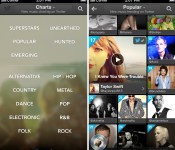
Twitter’s Little-Used Music App Shutting Down April 18 [iOS Blog]
One year after it launched, Twitter is killing off its #Music iOS app. The company announced today that it will be removing the app from the App Store this afternoon, with existing users continuing to have access to the app until April 18.
Twitter said in a tweet that it will “continue to experiment with new ways to bring you great content based on the music activity we see every day on Twitter.”

AllThingsD reported back in October that the app was likely to be discontinued because of “abysmal” download numbers and a lack of user interest. With Apple launching its iTunes Radio streaming music service alongside iOS 7, the iOS music scene has become increasingly more competitive and crowded.
It was reported earlier today that Apple is considering a new on-demand streaming music service similar to Spotify, along with an Android platform of the iTunes Music Store and iTunes Radio.
| |

Apple and Google, Like Microsoft, Reserve Right to Read Customer Emails
 Apple, Yahoo, and Google all have terms of service that allow them to read users’ emails if necessary, according to research done by The Guardian. Apple’s iCloud Terms and Conditions includes a clause that gives Apple permission to disclose Account information and Content, including iCloud email, when necessary by law, to address security, fraud, or technical issues, or to protect the rights and property of Apple.
You acknowledge and agree that Apple may, without liability to you, access, use, preserve and/or disclose your Account information and Content to law enforcement authorities, government officials, and/or a third party, as Apple believes is reasonably necessary or appropriate, if legally required to do so or if we have a good faith belief that such access, use, disclosure, or preservation is reasonably necessary to: (a) comply with legal process or request; (b) enforce this Agreement, including investigation of any potential violation thereof; (c) detect, prevent or otherwise address security, fraud or technical issues; or (d) protect the rights, property or safety of Apple, its users, a third party, or the public as required or permitted by law.
Google, Yahoo, and Microsoft’s terms of service all contain similar wording granting the technology companies unfettered access to content. The Guardian initially began investigating the rights of major companies to access user email after Microsoft looked through the personal Hotmail account of a blogger in order to discover the source of a Windows 8 leak.
Microsoft employee Alex Kibkalo was found sending a tech blogger parts of Windows 8 code back in 2012, allowing the blogger to access screenshots of the operating system, which were then posted online. Microsoft fired Kibkalo, but its methods of discovery were questioned, prompting the company to make a statement on its investigation policies, pledging not to read customer emails except in circumstances where a court order would be justified and vowing to announce such searches in its bi-annual transparency report.
While it is Microsoft that’s under fire for reading the email of its users, as mentioned above, Apple, Google, and Yahoo have the same rights to access content under questionable conditions. Apple does not mention whether or not it accesses iCloud email for non-security reasons in its own transparency reports and it is unclear whether the company has accessed private content in the search for leaks.
Apple is a notoriously secretive company, however, going to great lengths to protect its upcoming products. According to Apple CEO Steve Jobs, product secrecy is one of the specific tenets that has been responsible for Apple’s success, and in 2012, Tim Cook said the company would “double down on secrecy on products.”
Nevertheless, Apple has had a hard time keeping leaks under wraps. The iPhone 5s and the iPhone 5c were both unveiled long before their release, and more recently, some significant iOS 8 leaks have come to light.
Apple and Google both opted not to comment to The Guardian on the clauses in their Terms of Services, but all customers opt-in to possible searches when signing up for an email account with either company.
| |

Apple in Talks for On-Demand Streaming Music Service, Considering Android iTunes App
 Apple is considering launching an on-demand streaming service similar to Spotify in light of declining music sales, reports Billboard. The service would be part of a multi-prong strategy that may also include an iTunes app for Android.
Apple has opened exploratory talks with senior label executives about the possibility of launching an on-demand streaming service that would rival Spotify and Beats Music, according to three people familiar with the talks. Apple is also thinking about adding an iTunes App for Android phones, the Google rival that has been growing faster than the iPhone, these sources said.
In January, it was reported that music sales had declined for the first time since the iTunes Store opened 2003, with individual song downloads falling 5.7 percent from 1.34 billion units sold to 1.26 billion, and digital album sales dropping from 117.6 million units from 117.7 million units.
In recent months, Apple has attempted to lure more customers with exclusive album releases, such as Beyoncé’s fifth album, released first on iTunes, and has been pushing record companies for additional deals of that nature.
Album sales have remained down, however, as streaming services have risen in popularity, prompting Apple to explore other options as well. A March report from the RIAA indicated Spotify, Pandora, and YouTube had generated $1.4 billion in subscription, advertising, and licensing revenues in the U.S. in 2013, a 39 percent increase from 2012.
Apple introduced its iTunes Radio streaming music service last year, but it is station-based like Pandora, limiting how many songs users can choose for themselves. An iTunes service similar to Spotify or Beats Music would allow listeners to pick and choose all of their content, which could potentially be accessed on other non-Apple platforms like Android.
“They are feeling out some people at labels on thoughts about transitioning its customers from iTunes proper to a streaming service,” says one major label source. “So when you buy a song for $1.29, and you put it in your library, iTunes might send an e-mail pointing out that for a total of, say, $8 a month you can access that song plus all the music in the iTunes store. It’s all in the ‘what if stage.”
Apple’s talks with record labels about a possible expansion of iTunes Radio into a full-fledged music streaming service are still in the early stages, and the company has declined to comment.
| |
Microsoft gives Windows XP users $100 off new Windows 8 PCs, but only on select models

First Microsoft used warnings and migration tools to help make Windows XP users upgrade. Now, it’s trying a different tack: bribery. In an effort to get folks to stop using the 12-year-old OS, Microsoft is offering XP hold-outs a $100 discount off new Windows 8 PCs. That sounds like a sweet deal — and it might well be — but there are several catches you should be aware of. First off, the promotion only applies to a select few models, and you’ll need to visit a Microsoft Store to even see the full list.
Secondly, the offer only applies to PCs priced at $599 and up, so if you thought you could use this to buy an extra-cheap tablet like the ASUS Transformer Book T100, then you’re sorely mistaken. (The Surface 2 isn’t included at all, which means even the $679 LTE model is off limits.) Finally, the deal is only valid through June 15th, so you’ll need to nab the discount soonish if you intend to use it. Regardless, with extended support for XP ending on April 8th, two weeks from now, we suggest you upgrade ASAP if you haven’t already.
Filed under: Software, Microsoft
Via: The Next Web
Source: Microsoft

Xbox One’s ‘Titanfall’ bundle gets a price cut to $450 at Walmart and Best Buy

The PS4 may have commanded an early lead over the Xbox One, partly thanks to a $100 price difference, but Microsoft is quickly narrowing the gap. Now, the company might just seal the deal with a discounted Xbox One-Titanfall bundle: both Walmart and Best Buy have cut the price to $450. The move is an aggressive one on Walmart and Best Buy’s part: Microsoft only recently started selling the Titanfall bundle for $500 a week and a half ago. Now, just 10 days later, it’s received a $50 discount. For those keeping track, that puts the Xbox One within spitting distance ($50) of the PlayStation 4, which doesn’t even come with a game in the box. Subtract Titanfall‘s $60 value from the cost, and Microsoft at last has the cheaper console. So, which of you is buying?
Filed under: Gaming, Microsoft
Via: New York Times, Joystiq

Apple reportedly considering iTunes Store for Android phones

Apple’s iTunes store may still be one of the most popular sources for downloading cheap music, but you need an iOS device to take advantage, and that leaves a heck of a lot of smartphone owners out in the cold. Rather than have those users hand over heaps of cash to competitors, it makes sense for Apple to bring its iTunes store to Android. And according to Billboard, that’s exactly what Cupertino may be considering. The magazine’s own sources claim that Apple has begun discussions with several record label execs, with topics ranging from a streaming service to compete with Spotify to an iTunes app for Android devices. Launching such an application isn’t as simple as dropping it in Google Play, however. Complex negotiations with record labels are reportedly in the very early stages at this point, so it’ll likely be some time before we see this latest concept materialize, if it’s due to debut at all.
Filed under: Cellphones, Software, Mobile, Apple
Via: 9to5Mac
Source: Billboard

AT&T thinks increased bandwidth costs are Netflix subscribers’ problem

AT&T’s swinging back at Netflix CEO Reed Hastings’ recent assertion that ISPs (internet service providers) should shoulder the cost of increased bandwidth demands. In a post on AT&T’s Public Policy Blog, Senior EVP Jim Cicconi denounced Hastings’ desire for a “cost-free delivery” agreement with ISPs, saying that it unfairly shifts the burden of infrastructure cost to AT&T and its subscribers rather than to Netflix’s own customer base. As Cicconi views it, that subscriber base is the very one responsible for the increased traffic demands and resulting need to build out additional facilities, and should therefore bear the brunt of a fee hike.
In an attempt to highlight what he sees as Hastings’ “arrogant proposition,” Cicconi goes on to point out that this “self-righteous” streaming model is akin to Netflix “[demanding] a customer’s neighbors” pay the cost of its DVD mail delivery service. The comparison isn’t quite apple-to-apples, but his point is fairly straightforward: if you’re using Netflix, it’s up to you to pay for high-quality streams. In other words, it’s not AT&T’s problem.
And also, AT&T just doesn’t want to pay for Netflix’s “good business fortune.” But that much should already be crystal clear.
[Image credit: Getty]
Filed under: Home Entertainment, Internet, HD, AT&T
Source: AT&T

Engadget Podcast 389 – 3.21.14

Join us for an out-of-this-world episode with Joseph, @terrenceobrien and Ben (who’s Skyping in from the land of blue skies and balmy weather). Experience Mars with Sony’s Project Morpheus, hear Joseph’s pitch for virtual reality installations at arcades around the country, and learn the truth about your pet cat — spoiler alert: it’s an alien. We’ve heard that robots are coming soon to a wrist near you courtesy of Google’s new Android Wear platform, but is the wearable world ready for a smartSwatch? There’s news, speculation and insight, but definitely no Virtual Boy in this week’s edition of the Engadget Podcast.
Hosts: Terrence O’Brien, Joseph Volpe, Ben Gilbert
Producer: Jon Turi
Hear the podcast:
05:24 – Using the PlayStation 4′s virtual reality headset, Project Morpheus
07:41 – The new Oculus Rift costs $350 and this is what it’s like
38:12 – Valve’s new Steam controller feels familiar, but strange
40:11 – Google announces Android Wear, a Nexus-like platform for wearables
48:10 – Meet Samsung’s new smartwatch family: the Gear 2, Neo and Fit
56:57 – Amazon wins patent for airbag system designed to protect portable devices
Subscribe to the podcast:
[iTunes] Subscribe to the Podcast directly in iTunes (enhanced AAC).
[RSS MP3] Add the Engadget Podcast feed (in MP3) to your RSS aggregator and have the show delivered automatically.
[RSS AAC] Add the Engadget Podcast feed (in enhanced AAC) to your RSS aggregator.
Download the podcast:
Contact the podcast:
Connect with the hosts on Twitter: @terrenceobrien, @jrvolpe, @realbengilbert
Email us: podcast [at] engadget [dot] com
Filed under: Podcasts
 AIVAnet