



Feedback Loop: Ultrabooks, discrete graphics, Google Voice replacements and more!
Welcome to Feedback Loop, a weekly roundup of the most interesting discussions happening within the Engadget community. There’s so much technology to talk about and so little time to enjoy it, but you have a lot of great ideas and opinions that need to be shared! Join us every Saturday as we highlight some of the most interesting discussions that happened during the past week.

Happy Saturday! This week, we took a look at Ultrabooks with discrete graphics cards, debated the merits of smartwatches, discussed viable alternatives to Google Voice, talked about how we discover new apps and fondly remembered some of our earliest RSS feeds. Head on past the break and join the conversation in the Engadget forums.
Ultrabooks and discrete graphics cards
Lightweight and powerful enough for most tasks, Ultrabooks are really convenient. But what if you want to use one for gaming? Neuromancer2701 is looking for Ultrabooks that contain a discrete video card. The Maingear Pulse 14 looks right up his alley, but are there other options he should consider in order to get his gaming on? Help him out!
What’s up with smartwatches?
Earlier this week, Google announced its Android Wear initiative, which will bring Android to more wearable devices. Additionally, Engadget readers picked the Samsung Galaxy Gear as the best wearable device of 2013. All of this love and attention for wearable devices has caused Frankspin to wonder: What’s the big deal with smartwatches? Do you think wearables like the Pebble, Galaxy Gear and Moto 360 are a passing fad or is there something bigger happening? Sound off in the forums!
Alternatives to Google Voice
This week, we had two interesting discussions about alternatives to Google Voice! In the first, I ask about viable Google Voice competitors that people are happy with. In the second, groovechicken documents his experience leaving Google services and shares his own research on how to best replace Google Voice. Do you utilize this Google service and have you thought about how you would replace it?
How do you discover new apps?
Frankspin is on a roll this week and has another interesting discussion on how to best discover new apps. Do you use a service? Do you rely on the advice of friends? Share your secrets for discovering all those hot new apps before they become trendy.
RSS is dead. Long live RSS!
It’s been awhile since Google Reader’s demise. Despite this, RSS still remains an important way for many people to get and consume content on the internet. Some of us have been using some sort of RSS service or app for a long time. Dignan17 wants to know the oldest saved RSS story you have in your feeds.
That’s all this week! Do you want to talk about your favorite gadget or have a burning question about technology? Register for an Engadget account today, visit the Engadget forums and start a new discussion!

Rhapsody and Napster leave Echo Nest following Spotify’s takeover

Echo Nest must have developed cooties after Spotify bought it. Just days after Rdio said it would stop using the song recommendation provider to avoid sharing data with a rival, Rhapsody has announced that it’s ramping down its own Echo Nest deal (which also applies to Napster) within several months. The company doesn’t characterize the split as a defensive move, though. Instead, it’s a chance to stand out. Rhapsody says it has “never been completely satisfied” with leaning on others for music personalization — independence theoretically lets the company improve its advice to listeners. Whether or not things pan out as planned, it’s clear that Echo Nest has lost at least some sway over the streaming radio industry.
Filed under: Internet
Via: GeekWire
Source: Rhapsody Blog
FlipBeats, getting the most out of your music [App of the Day]
Who doesn’t enjoying plugging into their phone and turning on their favorite tunes? I know there is nothing like shutting out the world and just getting lost in some of my favorite songs. However, I never thought if I was truly getting the music experience until FlipBeats arrived!
FlipBeats takes the music experience to a whole new level by implementing a “studio listening experience” through a variety of equalizers. You can also have predetermined equalizer modes based upon what you are listening to, so if you have some serious bass or lots of treble, you can really bring out the sound. Even if your music is blasting through a bluetooth speaker or hooked up to your stereo via headphone jack, you can adjust the sound settings for the size room you have.
Currently there is a 20 day free trial; after that it is .99 cents to enjoy forever! Check out the specs below!
FlipBeats specs:
- Home Screen Widget (Re-sizable)
- Lock Screen Widget (for Android KitKat)
- Basic Mode
- Advance Mode
- Multi band Graphical Equalizer
- Bass Boost
- Surround Sound
- Balance Control
- Room size configuration
- Android 3.3 and up
The post FlipBeats, getting the most out of your music [App of the Day] appeared first on AndroidGuys.
What is the role of a colocation center?
Data plays an important role in all types of businesses. So, business owners should have the data security as a priority. Protecting data with the help of a data center is the most intelligent way to protect our business data. A remote colocation center is an off-site space where people can keep their crucial hardware such as data storage, networking equipment and servers. Although, it is a little strange to keep these things away from the business premises, there are several benefits in doing so. Some of them can include security, improved safety and reliability of our important IT assets. In the current economic condition, small business owners may find it difficult to employ security personnel for protecting their business premises throughout the day. You may think that installing a video surveillance can prevent theft. The fact is not as what people think it is. So, opting for a data center’s assistance is the best option for safe-guarding our valuable business assets. The biggest advantage of a data center is that the hardware will have increased security. For instance, if you are business owner in Spokane and you have your servers guarded in Spokane colocation center, then you can make sure that you data are protected by security guards, closed-circuit surveillance and complicated access systems.
What are benefits of a locating a data center?
On top of physical safety a remote Spokane colocation center will offer a firewall protection that will defend your business against viruses as well as hackers. So, business owners can be at peace that their data is protected round the clock by professionals. Apart from security and storage services, Spokane colocation center may also help business owners with network monitoring. When a business owner finds it difficult to monitor the networking system, he can definitely get in touch with a data center. A data center will be able to provide monitoring services to the customers. This particular service will let the business owners about the activities in the network. A remote Spokane colocation center can guard your assets against any type of disaster. Such a facility will be able to keep the data a lot more safe than your office building. Most data center facilities will be constructed in areas where flooding or fire won’t be possible. The facility will be equipped in such a way that servers and other hardware are kept in optimal temperature and humidity.
How can you manage your important IT assets?
Data loss is something that people face on a daily basis. When there is a power outage or a hardware failure, there is a possibility for people to lose important data on their computers. This could result in loss of money and time. When Spokane colocation center is in place, then people don’t have to bother about power failure, as a colocation center will 24 hours backup with the help powerful generators. If the service provider has many locations, business owners can setup secondary servers for providing failover operations when the primary servers experience unexpected outage. Such a facility will normally reduce the network outage risks. Although the server machines are not on-site, people will still have to the machines. No matter you are at home or in the office, you will be able to log onto the server though a secure access. The best part is that data center will allow you to physically access your server whenever you want. When you are linked to remote colocation center, then you can make sure that you have a partner who is an expert in terms of protecting, handling and guarding your IT assets. You can also spending on building separate area for installing the server and security personnel. All these things will be handled by the data center.

Time Warner Cable says ‘me too,’ issues first transparency report

Not to be outdone by its competitors (or future owner), Time Warner Cable has released a transparency report of its own. From January to June last year, the telco obeyed some 12,000 information requests from the government that break down as such. Of the legal requests, 82 percent were for subpoenas, 12 percent were for court orders and four percent related to search warrants. Seventy-seven percent of the time that data was requested, it was subscriber and transactional info that was disclosed, 20 percent resulted in no data shared at all and three percent of the time, content information was disclosed. Because the report doesn’t give exact numbers, though, comparing the precise amount of requests that TWC handled with its competitors isn’t exactly easy.
Time-Warner releases first Transparency Report. http://t.co/xeL8x0XiXr Keep ‘em coming!
– Kurt Opsahl (@kurtopsahl) March 22, 2014
Filed under: Internet
Source: Time Warner Cable

Telling Google Search to “Play Some Music” will now actually result in Music
 As Google continues to evolve and fine-tune the functions available to Google Search and Google Now, the features they bring in with each update seem to become more and more useful and intuitive. The latest feature to join the party is the “Play Some Music” command which, as you might expect, will play music courtesy of Google Play Music.
All that you need to do to take advantage of this new command is to tell your Google Search or Google Now to “Play Some Music” and it will launch Google Play Music and start a “I’m feeling lucky radio” playlist. What should happen is that Play Music will assemble a playlist of music that either exists on your device, is in your library, or if you have an “All-Access” subscription, it will play a selection of songs like those you normally listen to.
This is a pretty cool feature to have; I’m hoping the next update will let you specify the type of music to play e.g. “Play Some Mood Music”. What do you think about this latest edition to the Google commands list? Let us know how you’d like to use it in the comments.
//<![CDATA[
ord = window.ord || Math.floor(Math.random()*1E16);
document.write('’);
//]]>

An HTC Nexus 8?! Oppo Find 7 Official! – The ManDroid Show

The ManDroid Show is here my friends. It has been a crazy week for me this week, and some changes are going to happen when it comes to video content. An HTC Nexus 8 might be on the horizon which is something to be excited about. Oppo launches the Find 7, and in two versions. Pretty stuff I must say, some of you were probably drooling like we are. Enjoy the show!
News Topics
Android Wear becomes official
Nexus 8 rumors suggest July or August production
Oppo Find 7 official
Countdown to the HTC event
//<![CDATA[
ord = window.ord || Math.floor(Math.random()*1E16);
document.write('’);
//]]>

Seed promotes the “Phone That Grows”, like a PadFone, but for all Devices
 The ASUS Padfone line of devices has always raised a lot of eyebrows, but we quite like it; the idea that you can have one device that acts as a phone normally but can also power your tablet is a pretty cool idea (and cheap too).But imagine that you could have that phone device and not only power your tablet, but your laptop, your desktop PC and your smart TV too. That’s the idea behind the Seed phone and its motto, “the phone that grows”. Check out the concept video that creator Nick Rout has put together to lay out his idea:
Reminds me a lot of the modular phone concept, Phonebloks, but for devices in general. The idea that a single device could power our entire lives is a really powerful one, and in reality, the tech world is slowly gravitating towards that anyway; smartphones and tablets run Android and hybrid laptops are known to also utilize Android operating systems. Throw in Smart TVs as well and we’re almost there, but to run it all from one smartphone would be an incredible and exciting feat. While Nick Rout may only be a final year computer engineering student, we hope his fantastic Seed concept catches the attention of an ambitious manufacturer, as Phonebloks did with Motorola, who can turn that dream into a reality.
What do you think about Seed and “the phone that grows”? Could we reply on one device to power all our technology? Let us know what your opinion is in the comments.
Source: Seed via Phone Arena
//<![CDATA[
ord = window.ord || Math.floor(Math.random()*1E16);
document.write('’);
//]]>
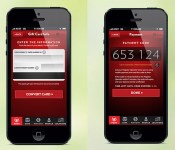
Wendy’s now lets you pay for a meal with its mobile app

Wendy’s, home to a bunch of square burgers and Frosty, is following in Burger King’s footsteps and embracing mobile payments. Now, you can use the Ohio company’s app to pay for your purchase in most (but not all) of its locations in the US. Just like its Burger King counterpart, the app acts as sort of a digital wallet that generates six-digit codes you’ll have to give to cashiers for payment. Wendy’s, however, has regrettably left out one of the BK app’s best features — discounts and coupons.
The fast food chain apparently decided to offer mobile payments in an effort to attract the younger, smartphone-obsessed set. Unfortunately, the app’s limited features (you can’t use it to call in a delivery, if you’re wondering!) and lack of discounts as a perk make it a less convincing download than its competitors. But, hey, at least it can show nutritional values, so you don’t scarf down a Baconator without knowing it has 940 calories.
Filed under: Misc

Twitter may indulge our vanity by showing view counts for tweets

Twitter isn’t supposed to be a popularity contest, but let’s be honest — many of us get a little thrill from new favorites and followers. It may be a good thing, then, that Twitter is experimenting with view counts on tweets. While Twitter’s ad partners have had access to this data for a while, the test lets regular social networkers (albeit just a handful) see how much interest there is in what they say. The company isn’t commenting on the dry run, but we wouldn’t assume that a full-scale launch is coming. While view counts might encourage participation after well-received posts, they could also crush the self-esteem of newcomers. Not everyone can attract as many eyeballs as a celebrity or a politician, after all.
[Image credit: Lydia J, Twitter]
Filed under: Cellphones, Internet, Mobile
Source: The Verge, Lydia J (Twitter)
 AIVAnet