


IRL: iRobot Roomba 700

We’re not sure how long it takes for someone to become an honorary Tokyoite, but whatever the answer, it’s clear Mat Smith is still fairly green. After two years as an Engadget editor based in London, Mat moved to Japan last summer to run our coverage there. And run it he does. But can he call himself a transplant? Probably not yet. But adopting a robot was a good first step.

When in Japan, you buy a robot vacuum. That’s the rule, right? I needed no persuasion, although I’m already imprinting pet-owning behavior on the not-sentient Roomba 770, which I’ve now named TBD-3000. I managed to game the multiple chains of electronics retailers here in Tokyo, cutting around $150 off its MSRP, but even then, robot vacuums (the decent, sensor-loaded types) aren’t cheap. The argument goes they’re more of a supplementary dust and hair remover you can add to your existing OCD cleaning arsenal. I don’t believe that: I don’t own a normal vacuum cleaner. Instead, I go for the old-school dustpan and brush when the TBD can’t clean where I want it to.
One month in, I’m still very much in the honeymoon period of robot vacuum ownership. When it bumps into the same table leg umpteen times in a 30-minute period, it’s still adorable. The iRobot models are far quieter than regular upright vacuums, but by no stretch are they silent. I’ve scheduled mine to clean mid-morning as a sort of brutal alarm clock to ensure I make the most of my weekends. My apartment is practically built for a robot cleaner too: it’s a one-floor affair, with hard flooring and a few rugs, none of which the bot had trouble getting onto. Disposing of what the robot finds is easy and pretty much mess-free, and I’ve been pleased with how much cleaner the floor remains. As long as the Roomba manages a few circuits every two weeks (you can schedule specific days too), I don’t need to concern myself with floor cleaning at all.
It’s not perfect, however. Sometimes it simply peters out of power, and I’ll later stub my toe on it under the dining table, or beneath the corner of my bed. It also likes to chew up the mat next to my kitchen sink — this is where I find it most days, stuck. It’s also gone through one pair of iPhone headphones and two USB cables, coercing me into being tidier. A little more disturbingly, I often catch TBD-3000 chewing its own AC charger, which hooks into its charging dock. That’s not going to end well.
– Mat Smith
Filed under: Household
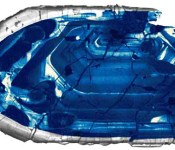
Inhabitat’s Week in Green: smog safety bubbles, the Tesla Gigafactory and transforming furniture
Each week our friends at Inhabitat recap the week’s most interesting green developments and clean tech news for us — it’s the Week in Green.

Extreme weather is dominating the headlines yet again this winter. California is in the midst of a historic drought, which has many observers wondering if desalination is the answer to the state’s water problems. This week, workers broke ground on what will soon be the largest desalination plant in the Western Hemisphere near San Diego. Man-made fixes like desalination plants aren’t likely to solve the problems brought on by climate change, but they could help mitigate the effects. For example, a team of researchers found that offshore wind farms could reduce wind speeds, wave heights and storm surges resulting from hurricanes. A string of harsh winter storms has battered most of North America all winter, but here’s one vehicle that can cut right through the snow: A Quebec man created a crazy battery-powered sled that can navigate the most treacherous terrain. And architects from the London-based firm Orproject have drafted plans for large inflatable bubbles that would give residents of Beijing a place to escape from the city’s suffocating smog.
Tesla has been ruling the electric car world recently, and now the company has another feather to put in its cap: Consumer Reports just named the Tesla Model S the Best Overall Car. Tesla also announced plans to build a new large-scale “gigafactory” that could reduce the cost of lithium-ion batteries by more than 30 percent. In other automotive news, Hyundai announced that it will begin leasing a fuel cell version of its Tucson crossover in the US next year. When the car becomes available, drivers in Southern California will be able to power it using processed sewage. In Spain, the Electric Mobility Company developed a solar-powered recharging station for its Xkuty One electric bike. And one of Inhabitat’s editors tested out the ShareRoller, a new compact device that can transform any Citi Bike into an easy-to-ride electric bike. In Italy, a retired schoolteacher bought a used Ape motorbike and modified it to create a portable library that houses 700 books.
The tiny house trend has taken off in recent years, and now tiny homes are being used to help solve America’s homeless problem. From Portland to Provo, people are building micro dwellings to give homeless people a place to sleep. Small-space living isn’t just popular in the US — in Tel Aviv, architects from Raanan Stern’s studio designed a highly efficient 15-square-meter apartment that’s filled with transforming furniture. On the island of Sandhornøya in northern Norway, Solardome Industries built a large geodesic dome that contains a three-level cob home. Architect Vincent Callebaut recently released renderings of a futuristic city district designed for Kunming, China that consists of 45 energy-positive villas set on a huge community orchard and food garden. And the Swiss Alpine Club recently redesigned a hut nestled in the heart of the Valais Alps that is completely powered by the sun.
In environmental news, scientists have confirmed that a piece of zircon found in Jack Hills, Australia is the oldest fragment of Earth ever found. Last week, Google Earth users were surprised to see a massive mysterious spiral in the Sahara Desert — turns out it’s an immense land art installation created by three artists near the Red Sea over two years. Google also unveiled Global Forest Watch, a new online tool that allows organizations to monitor deforestation around the world. Fitbit announced that it is voluntarily recalling its Force fitness-tracking bracelet after some users complained of rashes and burns on their wrists. And for tech-savvy moms and dads, Sleekbit has created a new Android app called Dormi that can turn smartphones into mobile baby monitors.
Filed under: Misc

Google’s ‘Projected Mode’ in-car system possibly leaked by Mercedes-Benz

Job adverts aren’t most reliable way to hear about new technology, but interesting ones do crop up from time to time, and that’s why our eyes are drawn to one recently posted by Daimler, the parent company of Mercedes-Benz. The ad requests the services of a software engineer who can help the German car maker implement Google’s forthcoming in-car system, which is apparently called “Google Projected Mode” and which is described as a way to “seamlessly integrate” Android smartphones into a dashboard’s head unit. This head unit would presumably house a bigger display that mirrors a simplified version of the Android UI — unless the use of the word “projected” implies something more futuristic.
The ad makes no mention of how the connection is made between the phone and the dash, for example whether it’s cabled, wireless or a mixture of the two. However, it does refer to media playback, messaging, calls and navigation all being handled “safely” through the vehicle’s control system, which suggests this will be a fully featured alternative to Apple’s “iOS in the Car.” Perhaps the most revealing thing is a line at the end of job description that refers to Google Projected Mode coming to “all Mercedes-Benz vehicles in all markets worldwide.” That sounds like a pretty firm commitment to the platform, even if Daimler can’t claim to be a founding member of Google’s new Open Automotive Alliance.
[Thanks to everyone who sent this in.]
Filed under: Cellphones, GPS, Transportation, Mobile, Google
Source: Daimler [German]

Tim Cook’s leadership style goes under the microscope in new book

Whatever you think of Apple’s products, there’s no denying that Tim Cook has played a large role in making them profitable, first as an operations executive and later in running the company. But just what kind of a leader is he? Thanks to an excerpt from Yukari Iwatani Kane’s upcoming book Haunted Empire, we have a clearer picture of what makes Cook tick. He’s both very meticulous and a motivator, according to Kane. While he’s known for holding six-hour review meetings and chewing people out for minor slip-ups, he also inspires hard work and encourages a charitable, friendly atmosphere at 1 Infinite Loop. He’s also characterized as relentless — the sort who’d go straight to the office after a red-eye flight. The excerpt likely won’t change your mind on Cook’s strategy, but it’s worth a read if you want to know what drives one of the technology industry’s most distinctive CEOs.
Source: Wall Street Journal

5 Tips To Boost Your Blog SEO
Search engine marketing or Search Engine Optimization is essential to the success of your blog. Get it proper and you will see floods of free traffic coming to your web site from the search engines. Get it mistaken and your blog could be dead within the water before you even start.
There are specific things that the bots are looking for when they’re crawling your site. They need to know immediately what your weblog is about. Also they need to have the ability to navigate round your site and from page to page easily. If they can do this then they will give you good credit within the search engines.
A great place inside Google, Yahoo and Bing can ship you numerous pretty free, focused traffic.

These are the 5 issues that you must do to increase your probabilities of an excellent ranking.
Key phrase Analysis: As soon as you already know your area of interest the following job is to define your primary keyword. You’re in search of an essential key phrase that describes your area of interest effectively, that has good search quantity however low to medium competition has. For those who get this proper than half the battle is done. While you determine on your predominant keyword, look for 5-10 Lei (Layton Symantec indexing) keywords. These lengthy tail keywords might be what Google determines are valid and linked to your fundamental keyword.
Your Blog URL: Now you could have your foremost keyword, this keyword must be in your blog URL. Or no less than function in your URL. Let’s simply say your key phrase is “pet coaching” your weblog URL would want to include the key phrase “pet coaching” in some form.
Your Weblog Title: Again your keyword needs to be in your blog title. This manner when the bots and folks search for a key phrase and your site comes up with that keyword in the URL and in the title they’ll know immediately what your blog matter is.
Weblog Classes: We talked earlier about lengthy tail keywords (LSI). Ideally these 5-10 keywords should make up your category titles. When the various search engines have a look at your site they will see your major key phrase but also keywords that they affiliate with your primary keyword. Subsequently providing you with higher recognition in the serps.
Inside Linking: Inner linking is a key part to your own web page SEO. This means that all your posts and pages should connect to every other. When you write a put up put a link in it to a previous post. Another good tip is to have a listing of hyperlinks to relevant posts underneath each post. This not solely gives your reader more selection, it also hyperlinks all your posts together making navigation easier.
The identical goes to your pages; you can link to them from your home web page, however then link the pages to each other as well.
When first creating your weblog, it’s fairly simple to get your on page web optimization right; it is nevertheless a bit harder as soon as your weblog is up and running. Comply with the following pointers and your weblog will rank fairly simply in the search engines.
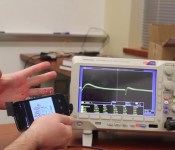
Watch out Kinect, AllSee does gesture control without a camera

What if you could turn the music down on your phone by just waving your hand? That’s the idea behind AllSee, a new gadget under development by computer scientists at the University of Washington. Built by the same guys who created the gesture-recognition in the Galaxy Nexus, the tiny sensor works completely different than the feature in devices like the Galaxy S5 that require the use of the forward-facing camera. Instead, AllSee uses TV signals to not only help it recognize gestures, but also as exceptionally efficient source power. That means it doesn’t need a battery to operate and can see your movements even when your phone is out of sight in your pocket — pretty awesome.
AllSee is able to do that by working essentially as a wireless receiver. When you move your hand, you disrupt the wireless signals around you in a way that it can recognize and then translate into a command. The best part? AllSee is able to do it all at a price of less than a buck. While the tech is currently being demoed on a phone, it’s a pretty neat trick that we can see implemented a number of pretty fantastic ways. A robot to bring you a drink with a simple ‘come hither’ motion, anyone?
Filed under: Cellphones, Wireless, Mobile
Via: Gizmodo
Source: AllSee, University of Washington

Instacube photo frame finally shipping, will arrive with support for video

Well, that took awhile. Remember Instacube, the purpose-built digital photo frame designed to pull images directly from your Instagram feed? The Android-powered photo screen found itself short on both funding and manufacturing options last summer. These issues set production back almost a year, but come April 5th, it’ll all pay off — the first units are finally shipping out. Instacube’s creators used the extra time productively, at least: the final hardware was redesigned to include speakers (to support Instagram video). Future updates will imbue it with the ability to stream content from Facebook, Vine, Flickr and other services, too. Kickstarter backers who opted for the white or classic models should get their units in the next few months, but the team says additional styles won’t be available until production hits full steam. A bummer for sure, but hey, folks have waited longer to get Instagram.
Filed under: Internet
Source: Kickstarter

[LEAK] Apparently this is the All New HTC One being used in Public
 With the announcment of the All New HTC One only a few weeks away, it’s not surprising that the number of leaks have increased; we now know that the All New HTC One will be coming to Verizon and AT&T and we’ve seen various blurry photos of the device being spotted in the wild. Today, we get yet another two photos of the device, previously codenamed the HTC M8, the first as it is being used to take a photo of another photo, and the second of someone having their photo taken.
 To conceal the identity of the persons involved in this leak, they’ve had their face censored in MSPaint, and we’re guessing these photos have actually been taken in HTC‘s native Taiwan seeing as these look like they were taken in the Taipei 101 tower. While this isn’t exactly anything we haven’t seen before, it is probably the first time we’ve seen the camera app in operation on the device, though someone who owns a current HTC One would be best to point out any differences.
What do you think about these leaked photos? Are you considering getting the All New HTC One when it is announced on March 25th? Let us know what you think in the comments below.
Source: mobile01 via Phone Arena
Project Ara modular phone size and costings revealed
It’s no secret that Google is working on a modular phone which they are calling Project Ara, and attention has turned to establishing details about just how it will work.
Google has scheduled a developer conference on April 15-16th in Mountain View, California to discuss the alpha version of the Ara Module Developers’ Kit and discuss everything about the MDK that is necessary for developers to become familar with the modular device.
Despite this, the Project Ara team attended the LAUNCH tech conference and gave a 25 minute talk about the concept and how the modular swapping actually works.
The device will come in three sizes: a mini version measuring in around 4″, a medium of 5″, and a larger tablet version, with prices set to be hovering around the $50 mark. The Project Ara team state that the actual modules themselves should cost around $15 per unit.
The post Project Ara modular phone size and costings revealed appeared first on AndroidGuys.

System Dump for the Sony Xperia Z2 is now Available
 Despite being heavily leaked prior to its announcement at MWC 2014, the Sony Xperia Z2 is somewhat of a surprise release. This is mainly because it is being launched a mere 5 months after its predecessor, the Xperia Z1, was released, and while many people assumed it was rushed out to correct the mishaps of the Xperia Z1, Sony admitted it has had a change in strategy. Specifically, this change is going to likely see 2 flagship devices a year, which means we might even see a Xperia Z3 later in 2014, but that’s another story completely.
While you might think this strategy is a bit of a bummer for early adopters, there is a silver lining, at least for those who like to dabble in development and mucking around with their phones. This silver lining is that while software OS updates will likely come at the same rate, these increased number of new devices means you can update your older device with these updated apps. So when owners of the Xperia Z and Xperia Z1 see that the system dump for the Sony Xperia Z2 is now available, they now have a reason to smile.
If you are a developer and want to get your hands on the system dump, it can be found over at the XDA forums (links will be below) and with any luck, we’ll be seeing custom ROMs and Zperia Z2 apps becoming available in the very near future. The files are for Android 4.4.2, so those of you with Sony devices waiting for your KitKat update may want to keep a close eye on this space.
Are you going to get a Sony Xperia Z2? And what do you make of this increased cycle of two devices a year from one manufacturer? Let us know what you think in the comments.
Source: XDA forum via XDA News
 AIVAnet