



Verizon Introduces ‘ALLSET’ & ‘BRIDGE DATA’; Basically Rollover Data for Prepaid
 The age of prepaid, no contracts and service options are constantly growing and being tweaked to cater more towards the end users. All the big name carriers out there have various prepaid options. heck, some even have their own side companies, like Sprint with Boost Mobile. Today, Verizon has announced a new prepaid offering dubbed ALLSET.
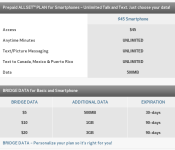
In the smartphone range you are looking at $45 a month with unlimited text and 500 MB monthly data. Where the extra data, and subsequently, the ‘sort of rollover data’ option comes in is with the purchase of BRIDGE DATA. Where you can purchase an allotment of data that can be used over 90-days vs the typical 30-day period. With the exception of the usual 500 MB additional allotment, of course.
- 500 MB for $5 with 30 exp
- 1 GB for $10 with a 90-day exp
- 3 GB for $20 with a 90-day exp
I suppose you can’t really call it rollover data if it has an expiration date attached. Since you can now have a 90-day block to use more data, it does offer users a chance to be a bit more flexible and save a little bit if one months usage goes up while the rest stay lower.
Along with that information, Verizon points out that the plans also give users unlimited texting to Canada, Mexico and Puerto Rico for no additional cost. New ALLSET plan customers will also receive 1,000 minutes a month for international calling to Canada and mexico, but not to Puerto Rico. Finally, on the ALLSET smartphone plan you will have access to the mobile hotspot feature to share the data connection with other device. We are betting that is where they will be happy to nab you for extra data packages.
It is better than nothing and for many, it might be all that is needed. I know I am on Wi-Fi 90% of my day and my mobile data consumption is extremely low. It could work out for me quite nicely.
Source: Verizon
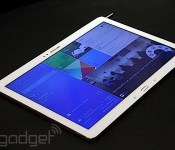
Gartner: Android passes iOS to become the most popular tablet platform

Several years ago, technology research firm Gartner predicted Apple would maintain its hold on the tablet market until 2015. A new study from the company, however, shows Android taking a decisive lead: in 2013, it boasted 62-percent market share, compared to 36 percent for iOS. Google’s mobile operating system climbed to the number one position thanks to more tablet sales overall, though Gartner also credits the proliferation of cheaper, smaller-screen slates (the Nexus 7 no doubt included) with establishing Android’s newfound dominance.
The other winner, according to this study: Samsung, which grew by 336 percent in 2013 to a 19.1-percent share of the tablet market. That’s still a much smaller piece of the pie than Apple’s 36 percent, but among Android device makers the Korean company is still very much the king. Conversely, Microsoft has seen very modest growth; Windows 8 tablets accounted for just 2.1 percent of the market in 2013. Click through the source link for more stats.
Filed under: Tablets, Mobile, Samsung, Google
Source: Gartner
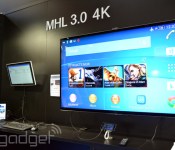
MHL 3.0 does 4K video output, 10W charging and data transfer over a single cable (video)

You may have already followed the announcement of Sony’s Xperia Z2 and Xperia Z2 Tablet last week, but did you know that they are also the first mobile devices to feature MHL 3.0? For those who haven’t caught up, this standard allows 4K video output — over a bandwidth of 6 Gbps — from a micro-USB port, while giving back up to 10W of power to keep your phone or tablet juiced up. Better yet, you also get a dedicated 75 Mbps channel for data transfer, as opposed to just 1 Mbps in earlier versions, which is only enough for HID input (like keyboard, touchscreen, mouse and even gesture control). It’s still snail pace compared to the likes of USB 3.0 and Thunderbolt, but at least you can now transfer files to and from your mobile device over the same cable. Besides, it’s possible to achieve a higher transfer rate of up to 600 Mbps using special connectors, such as USB 3.0′s 10-pin configuration.
At MWC last week, Silicon Image demoed MHL 3.0 — powered by its SiI8620 transmitter chip — working between an Xperia Z2 and a Sony 4K TV, with the bonus capability of navigating through the phone using the TV’s remote. The company also showed off file transfer between a USB drive and a Snapdragon 800 development board over MHL 3.0, though products (likely monitors, set-top boxes and docks) that support this feature won’t be out until later this year. For now, you can check out our demo video after the break.
Filed under: Cellphones, Mobile, Sony

10 Years In: The birth of Engadget

The evening of June 23, 2005, wasn’t especially hot in New York City, at least by historical standards. The day’s high was a mere 79 degrees, slightly below average for late June, and well below the record for the day of 96. But inside Compact-Impact, a Japanese gadget store on the city’s Lower East Side, things were downright steamy. As more than 200 sweaty fans packed the tiny storefront, it quickly became stifling, crowded and noisy. It wasn’t an appearance by a hot local band or political activist. It was a meetup. For a blog. Engadget had arrived.
“I didn’t know if anyone would come,” recalled founder Peter Rojas. “The fact that people would show up and hang out with the guys from a gadget site kind of blew my mind.”

Just 18 months earlier, Engadget was only a concept. Rojas had been running Gizmodo, the first blog launched by Gawker Media, since 2002, and saw how the emerging medium could shake up tech journalism.
“I liked writing about tech, and I wanted to write as a fan, as someone who was really into this stuff — not just as a journalist or a dispassionate observer,” Rojas said. “That’s one of the things that made blogging great; it was people who were talking about things from their own perspective as enthusiasts, not just telling you industry news.”

Brian Alvey: I had already started designing Engadget when Peter asked us if he could hire a freelance designer he knew named Jill Fehrenbacher. She made pretty much the logo you see today, with the energy waves emanating from the “t” in Engadget. … Over the years, Engadget fans have submitted photos from airports or marketplaces all over the world where electronics stores have ripped off that Engadget logo.
According to Rojas, Gawker’s original model was to have single bloggers working part-time, but he saw potential for something bigger. So, in early 2004, he began talking to potential partners about launching a new gadget blog.
“I was nervous,” Rojas said. “Back in the early days of blogging, there was this idea that there may only ever be one blog for each topic. A blog about New York. A blog about sports. There was a gadget blog. People posted at the time, ‘I’m not sure we need another gadget blog.’”
With that in mind, he began planning his new venture, researching a range of potential partners, including CNET.
“I knew one of the founders, and I called and left him a voicemail. He never returned my call,” Rojas said.
Jason Calacanis and Brian Alvey, who had recently gone into competition with Nick Denton’s Gawker with their own blog network, Weblogs Inc. (WIN), also believed the world was ready for another gadget blog, and had already reached out to Rojas. They clicked, and on March 2, 2004, the team rolled out Engadget, which quickly became the flagship of the network.
“Early on we could tell from the traffic that it was going to be a success,” recalled Alvey. “Engadget itself was never less than 20 percent of our entire network’s traffic and it was often more than half. That ratio changed as we quickly launched new consumer-friendly sites like Autoblog, Blogging Baby, Luxist, Gadling and Joystiq, but they were all modeled after Engadget.”
Calacanis, a serial entrepreneur who currently runs the successful LAUNCH event series, took heat for “poaching” Rojas from Gawker, but argued at the time that the new site would only help the nascent blogging industry.
“The bottom line is Nick is going to be wildly successful with his gaggle of blogs, and I think WIN and Engadget will be wildly successful,” Calacanis wrote. “Nothing would please me more than to see Denton get rewarded for all his hard work with Gawker Media, and if he is successful, that means that blogging is legit (as we all know), and that is a good thing for me, Brian and Peter (and probably you too if you’re a blogger).”
Rojas quickly established an editorial approach based on knowing — and respecting — the site’s readers.
“What I loved about blogging was you could zero in on an audience that was passionate about gadgets,” he said. “You didn’t have to justify why you were writing about them. And we always tried to write up, not down — we didn’t have to dumb things down. If you respect your readers’ intelligence, they’ll give you respect back. Our readers appreciated the fact that we didn’t assume they were dumb or didn’t know anything about tech. My assumption is that, if you’re reading this, you know about tech, and you probably know more than we do.”
At first, as at Gizmodo, Rojas was Engadget’s only writer.
“I was a wreck,” Rojas said. “I would sleep with my phone under my pillow and wake up in the middle of the night to check tips. If there was news in the middle of the night, there was nobody but me to do it.”
Of course, the goal from the beginning had been to build a strong editorial team.
“We didn’t have bylines at first,” Rojas said. “In part because I didn’t want people to see it was just one guy. But I also didn’t want it to be about me. This wasn’t Peter Rojas’ LiveJournal. I wanted it to be a team thing.”
That team began to take shape within a few months of the site’s launch, with additions like Rojas’ eventual successor, Ryan Block.
“Not long after Peter started Engadget, I dropped a line about a story he’d written, and almost out of nowhere he asked if I’d like to try my hand writing about technology,” Block recalled. “And that right there is the thing about Peter: He’s the guy who can draw connections that other people can’t. I’d always loved technology, and I’d gone to school for writing — but he was the one who connected the dots.”
By the end of 2004, the site had more than a dozen contributors, including veteran tech industry analyst Ross Rubin, whose Switched On column debuted in October, and continues on the site to this day. “As with many things in Engadget’s early days, the path was paved by Peter Rojas, with whom I had had lunch in part to discuss this crazy new ‘blogging’ fad,” Rubin said. “I had been editing a site about wireless technology for a major trade publisher and Peter had been kind enough to link to a few of my columns there. When he started Engadget, he reached out and said he’d love to have me contribute a column.”
Another early contributor was Joshua Fruhlinger, who would later become the site’s editorial director. “I met Peter Rojas and Ryan Block down at TeaNY in the Lower East Side to talk about a potential writing job for Engadget. … We nerded out for a bit and they quickly offered me a contributing editor job at a whopping $800/month. I had to file 200 stories every 30 days, which sounds like a lot, but I figured that only came to about seven stories a day. I could do that on my lunch break while I was working at Razorfish. And I did.”
With a team in place, the site became more ambitious, sending writers to major industry events like CES, interviewing industry leaders and reviewing products.
“When we first did CES in 2005, we were woefully understaffed,” Rojas said. “But it helped put us on the map. Nobody was liveblogging the press conferences. We changed the metabolism of tech news. We made it faster, and it also meant a lot of products that didn’t get attention before were able to get attention. We’d write about the smaller companies and products that couldn’t reach the mainstream tech media.”

As Block recalled, “We didn’t know it at the time, but we were helping write the new rulebook for media. It’s easy to take for granted now, but at the time, the only media taken seriously was printed on dead trees, and was, at best, half a day old or more. And there we were, chronicling the rise of all these disruptive new technologies, not even fully aware of just how disruptive a force we were about to become in technology media.”
The site continued to grow, as did its influence. Dozens of other tech blogs were launched, and Engadget became something of a hub for that growing universe. “The whole point of a blog, initially, was to link to the best of what’s out there,” Rojas said. “Blogging meant the democratization of media; anyone could set up shop and have their voice. We wanted to be part of that world.”
By 2005, Engadget had caught the attention of industry insiders like Michael Gartenberg, then of Jupiter Research, who commented (in a blog post, of course): “Several vendors have told me recently that they’re not overly concerned with what Walt Mossberg says about them anymore. They’re concerned about what Peter Rojas is saying about them on Engadget and what he’s telling his audience both online and offline.” The site also caught the attention of AOL, which acquired it — along with the rest of the Weblogs Inc. network — in late 2005.
When Engadget was sold to AOL, Rojas stayed on for two years, working with Block, who became the site’s second editor-in-chief, to make sure that the new owners didn’t dilute its impact or try to change its focus. He later returned to AOL, after the company acquired another startup, gdgt, which has since been merged into Engadget. While the site has grown and changed over the past decade, he still sees today’s Engadget as a strong continuation of everything he did in those early days. “People ask, ‘What’s the trick?’ The trick is to post stuff that’s good and that people like. I’m super proud that the legacy continues. I can read a post on Engadget and it makes me feel smarter. The format is still there in terms of being witty and concise and knowledgeable.”
Filed under: Meta

Uber adds surge pricing push notifications to its iOS app

A week after Uber CEO Travis Kalanick promised push notifications were on the way to help riders cope with surge pricing, the outfit has added the feature to its iOS app. With the latest update, those handset-based pop-ups alert you when the dreaded surge pricing window has passed and replace SMS messages for updates. For customers in the UK, PayPal integration has also been tacked on as an alternate payment option. No word on when Android users can expect the new alerts, but we’d surmise it’s not too far out as add-ons have been quick to grace both OSes in the past.
Filed under: Transportation, Software, Mobile
Via: The Next Web
Source: Uber (iTunes)
Verizon reboots prepaid options with Allset plans
Verizon Wireless on Monday announced a new set of prepaid plans for smartphones and more traditional feature phones. Called Allset, smartphones plans are $45 per month and include unlimited voice, text, and 500MB data. The feature phone rate plans include $35 for 500 voice, messaging, and 500MB data; For $10 more per month, customers can get unlimited voice and text with 500MB data.

Verizon is also offering what’s known as “Bridge Data” which amounts to rollover data buckets. Allset customers can pick up additional data at anytime and use it to fill in when needed.
- 500 MB for $5 with 30-day expiration
- 1 GB for $10 with 90-day expiration
- 3 GB for $20 with 90-day expiration
To help get things going, Verizon is offering to double the monthly data and toss in 1,000 monthly minutes for calls to Canada or Mexico. To qualify for the promotion, customers must sign up for either of the $45 monthly plans.
The post Verizon reboots prepaid options with Allset plans appeared first on AndroidGuys.
Microsoft Wants to Expand Xbox Live Capabilties on iOS and Android ‘In a Big Way’
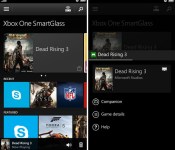
Microsoft has been aiming to entrench its popular Xbox Live service into both the iOS and Android ecosystems for several years, having introduced its first Xbox-compatible app SmartGlass in 2011, along with a few other iOS and Xbox hybrid apps.
SmartGlass, which is also available for the Xbox One, is designed to be a companion app that allows gamers to access and control their Xbox game consoles to browse content and track achievements. The SmartGlass app also allows an iOS device to be used as a remote control and a keyboard for the system.

Microsoft may be aiming to expand Xbox Live on iOS even further, according to a new report from The Verge, which suggests the company wants to poise Xbox Live as an optional replacement for Game Center.
While Microsoft has experimented with achievements on iOS and Android recently, the company is planning to push Xbox Live cross-platform in a big way soon. Sources familiar with Microsoft’s plans tell The Verge that Microsoft is building a platform to extend Xbox Live functionality to iOS and Android games.
Back in December of 2012, Microsoft experimented with an iOS game that provided gamers with Xbox Live achievements for reaching in-game milestones. The company plans to expand on this concept, making it easier for iOS and Android developers to incorporate Microsoft’s framework into games on their respective platforms.
Microsoft already offers tools that allow Xbox Live functionality to be integrated into games, but to access them developers are required to be certified through Microsoft, which is a significant barrier to entry.
According to job listings found by The Verge, Microsoft is currently assembling a team that will create an “open-source, lightweight, extensible and scalable” framework that spans multiple platforms including the Windows Store, Windows Phone, iOS, and Android. Such a system, with fewer restrictions, could make it easier to integrate Xbox Live into apps and games.
Apple and Google both have proprietary game progress tracking in the form of Game Center and Google Play Games, but Microsoft appears to be aiming to get Xbox Live on all platforms, leading to a unified achievement system that would work with multiple systems.
     |
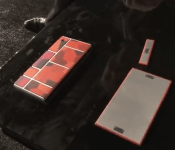
The Google Modular Smartphone, Project Ara, Goes on Video
In the past there had been options to custom build a smartphone from the ground-up. You chose the processor, camera and a various other little tid-bits. That was many years ago though and the end result was fairly expensive if you want something ‘special’. When Google sold Motorola to Lenovo one thing they kept their hands on was Project Ara. That was the modular smartphone design that allows you to pick and choose your pieces and build your device. It goes a bit further though since you will be able to buy just the upgraded parts you want and not a whole new device. For instance, you opt for a 8MP camera now and then later down the road you want a 13MP camera. With Project Ara you can just buy the upgraded camera module and swap it out.
 For the first after hearing about the project, we now have a chance to see what it is all about on video instead of just images. At the Launch Festival in San Francisco the head of Project Ara, Paul Eremenko, shows how it all works.
The main chassis is a 3 newton permanent magnet that helps to magnetically lock in the various modular pieces. This is for the industrial prototype of course where as the actually physical version will be different. The chassis, endoskeleton, will house a small battery and is said to be $15 each. He goes over the module pieces and we find out that the casing are 3D printed. Meaning anyone with a 3D printer can print up and module housing part at anytime to change out the look of their device. This also means that anyone can print up their own and sell them too. You really just need to take a look. Start at the 6 minute marker.
The whole concept is quite interesting. I really like the low-end concept of the “gray” device that he goes over at about 12:20. That is where he talks about a very basic version with a display, a battery, a processor and Wi-Fi module for just $50. Interestingly enough, many of you might remember when Motorola’s CEO said a $50 phone is do able. You could argue that it really isn’t a phone with Wi-Fi only, but with more than enough apps that allow VoIP calling and plenty of people only needing a device in their home, it really is possible.
Obviously the $50 version isn’t going to be the big deal about Project Ara. The big thing about Project Ara is going to be the MDK , the free and open sourced modular developer kit. That alone will allow anyone anywhere to build and create a module sell it individually. For instance, Beats by Dre could create a speaker module and sell it to you directly, or Lenmar could make a high capacity battery module that you could swap out when you needed. The possibilities are endless, especially since the modules would be individual pieces, the manufacturers or creator of the module wouldn’t have a licensing fee to build it and it would keep the costs affordable and your entire device experience customizable at a whim.
Personally I can’t wait for 2015 to get here. What do you guys think of the whole thing?
Via ThinkDigit
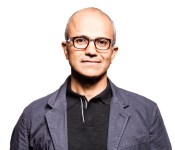
First two Microsoft execs exit following new CEO appointment

Microsoft has a new CEO in Satya Nadella, but two of his direct reports are apparently on their way out according to Recode. Both marketing EVP Tami Reller and biz dev/evangelism EVP Tony Bates are leaving Microsoft; the company hasn’t officially confirmed either departure, but is expected to announce as much tomorrow. Bates is certainly the bigger name of the two, having previously led Skype to its acquisition by Microsoft back in 2011.
In a video from that era (found below), Bates said he was looking forward to what Microsoft and Skype could do together. He said he saw video communication becoming ubiquitous in the next several years, and was looking forward to combining Skype and Microsoft’s “disruptive” approaches to consumer tech. He was reported to be in the running for Nadella’s CEO job as well, which certainly helps to explain why he’d be interested in leaving Microsoft right now.
As far as Reller goes, it’s not entirely clear why she’s on the way out. Recode posits that her situation internally before Nadella took the new CEO spot was contentious, sharing management duties with Ballmer (for instance) over certain employees. How does any of this impact you? It doesn’t just yet, but the former head of Skype leaving Microsoft certainly doesn’t bode well for that department. Either way, expect to see more departures as the ongoing exec shuffle at Microsoft continues.
Source: Recode

RunKeeper adds training plan feature to its Android app

RunKeeper has a solid track record when it comes to giving users new ways to interact with the application. It’s no surprise, then, that the fitness-focused app is getting some fresh tidbits on Android. Most notably, you’ll now see a training plan feature which is set to coincide with the goals you’ve set up within the app. This version also brings a redesigned “Me” tab, an option to keep a close eye on training schedules and the ability to view your workout history. It’s a very nice update, to say the least — and given that it’s Monday, it couldn’t have come at a better time to inspire your next run.
Filed under: Misc, Software, Mobile
Via: Android Community
Source: Google Play
 AIVAnet