



Titanfall: The Joystiq Review

Titanfall is strictly coiled around the player. You couldn’t excise even one piece without slackening it like a ruined kidnapper’s rope. The serpentine level design, the liberating sense of movement, the flawless controls and yes, the enormous bipedal tanks dropping from the sky, are equally indispensable in this arresting shooter.
Given the studio’s splintered status as a former Call of Duty custodian, Respawn Entertainment has made a multiplayer game fit for those who have spent years peering through the eyes of a speedy killing machine – a seasoned six against six in battles for land or a higher kill count. A history with rapid-fire aim and fleet-footed 3D movement is not essential here, but recommended.
Click here for more
Filed under: Gaming, Software, HD, Microsoft
Source: Joystiq

Got Comcast? You can watch House of Cards without a Netflix subscription

Have you been eager to watch House of Cards, but haven’t wanted to spring for a Netflix subscription? If you’re a Comcast subscriber, you no longer have to. The cable firm has reached a deal with Sony Pictures Home Entertainment that lets subscribers buy the first season of House of Cards through the Xfinity Store on their set-top boxes. Orange is the New Black will reach the store on May 13th. The arrangement also gives provides access to some hotter Sony movies and TV shows before the usual video on demand release window, including American Hustle and Breaking Bad. Netflix still has exclusive streaming rights for its shows, but that shouldn’t be a problem for Comcast customers with a little extra cash on hand.
Filed under: Home Entertainment, Internet, HD
Via: TechCrunch
Source: Variety

Get the look of the “All New HTC One” with these wallpapers and sounds
The All New HTC One will be announced in just two weeks on March 25, but that isn’t stopping leakers from spreading some love online with wallpapers and sounds from the unreleased device.
You can thank jonas2295 from XDA Developers forum for all of these wallpapers. Hit up this link if you want to go to a page to download all of them at once.


If you want to give your device the same sounds as the new HTC One, make sure you have root access on your device then:
• Download the M8sounds.zip file
• Unzip M8sounds.zip and copy the files/folders into system/media/audio
That’s it! Enjoy these until you can get your hands on the actual device!
via XDA Developers
The post Get the look of the “All New HTC One” with these wallpapers and sounds appeared first on AndroidGuys.

A closer look at Titanfall’s not-so-secret weapon: Microsoft’s cloud

While you were busy running along walls and throwing missiles back at your opponents during the Titanfall beta, countless data centers across the world were making sure that each AI-controlled Titan bodyguard had your back. Much of the frenetic action in Respawn Entertainment’s debut game rests on one thing: Microsoft’s Azure cloud infrastructure.
Up until last November, Microsoft CEO Satya Nadella’s baby was mostly used for business applications, like virtualization and acting as an enterprise-level email host. With the Xbox One, though, the company opened up its global server farms to game developers, giving them access to more computing power than could reasonably be stuffed into a $500 game console. Since the Xbox One’s debut, Microsoft has been crowing about how Azure would let designers create gaming experiences players have never seen before. Now it’s time for the product to speak for itself.
With Tuesday’s release of the online-multiplayer-only Titanfall, Redmond’s gamble takes center stage. Players are no doubt concerned about the game’s stability at launch. With one look at the problems that plagued Diablo III, SimCity and Battlefield 4, consumer skepticism is easy to understand. The folks behind Titanfall believe they’ve got a not-so-secret weapon to circumvent the foibles those games endured, or are still enduring, in Microsoft’s server infrastructure. It’s been in place and running pretty successfully since 2011.
Respawn engineer Jon Shiring says that since the beta ended, some skeptical devs have already changed their minds about the feasibility of using Azure for the parts of a game traditionally handled by a user’s console or PC. In Titanfall‘s case, that largely includes artificial-intelligence-powered teammates.
“Back when we started talking to Microsoft about it, everyone thought it was kind of crazy and a lot of other publishers were terrified of even doing it,” Shiring says. “I’ve heard that since our beta ended, they’ve been pounding down the doors at Microsoft because they’re realizing that it really is a real thing right now.”
By eliminating the hassles of setting up a game’s cloud infrastructure, Redmond is letting developers focus on what’s important: making killer games.
Shiring has touched on what Redmond’s back-end would allow before, but even then, it wasn’t clear just how intrinsic Azure was to the game’s twitch-based multiplayer mayhem. Aside from providing dedicated servers for low-lag online matches, Azure’s remote horsepower is part of what sets Titanfall apart from contemporary first-person shooters.
To understand how Respawn ended up working with Microsoft, we have to travel back to 2007, back when Miley Cyrus was still Hannah Montana and Call of Duty wasn’t a household name.
IN THE BEGINNING
In the span of five years, Call of Duty house Infinity Ward sold millions of plastic discs and, with 2007′s Call of Duty 4: Modern Warfare, it established the prototype for current multiplayer gaming. After a very public falling out with parent company Activision three years later, key creative staff left the studio to form Respawn. While the new team was in the early stages of deciding what its first game would look like, Shiring was already pushing hard for dedicated servers. The downside, however, is that those CPU stacks and the space to house them aren’t cheap. Luckily, Respawn had friends in the right places.
“Microsoft got really interested in the idea, and that was early on,” says Shiring. “I’d say I started to nudge them in 2010, but it really was 2011 when we were coming at them like ‘What can you do? We can’t afford this.’”
This was around the time that Redmond was deciding what to do with the online service for the as-of-yet unnamed Xbox One.

“There are other games like Battlefield that have dedicated servers, but they haven’t gone the same direction that we have with them,” Shiring says.
“We knew in the early stages of developing Xbox One that we wanted to tap into the power of the cloud in a way that hadn’t been done before,” says John Bruno, Xbox Live’s lead program manager. “We were convinced that enabling dedicated servers using cloud computing presented a great opportunity to realize our vision for Xbox One.”
Microsoft is providing the garage and the tools for game developers to work with, and, perhaps most importantly, it’s keeping the rent cheap. By eliminating the hassles of setting up a game’s cloud infrastructure, Redmond is letting developers focus on what’s important: making killer games. For a startup like Respawn, that was pretty attractive and would allow the studio to achieve its vision with minimal compromise.
GOTTA KEEP IT DEDICATED
While a good number of PC games use dedicated servers, most console titles rely on a player hosting each multiplayer session. This introduced more than a few roadblocks to Respawn’s vision. For starters, it wouldn’t allow for the resource-intensive AI-controlled combatants and busy battlefields the team had in mind.
“Having these servers with a significant amount of CPU power and bandwidth available is absolutely essential to our game: Having these machines that are regional and servers that have good ping — that’s huge,” he says. “That has completely changed the way we make games.”
Many look at Titanfall as the first true next-gen game, offering an experience we haven’t seen on last-generation hardware (think: the PlayStation 3 and Xbox 360). From what Shiring says, the fact that Respawn wasn’t held back by a console’s local processing power was key to letting the studio achieve what it has.
“There are other games like Battlefield that have dedicated servers, but they haven’t gone the same direction that we have with them. We have all of this AI and things flying around in the world; that has obviously let us build a different game than we would have if we’d have gone with player-hosted,” Shiring says. “Really, the biggest thing with that is that it has uncapped our designers and let them do things that were previously impossible to do.”
Because Titanfall‘s advanced AI is handled by the Azure servers, your Xbox’s or PC’s innards can be used to achieve more detailed graphics and the game’s silky-smooth frame rate. The Titan bodyguards, dropships and legions of AI-controlled combatants are essentially free from a processing-power standpoint. Without Redmond’s cloud, it’s highly likely that Titanfall‘s six-versus-six player limit would be painfully apparent. Since these features live on remote servers, though, making sure they seamlessly appear in-game is paramount.
THE LAST MILE
As is often the case with networking, the distance between access points is where things tend to fall apart. In player-hosted gaming, it’s no different. When you start a typical multiplayer game on a console, the quality of your experience often relies on how good your connection to the host is. If someone in their house starts watching True Detective on HBO Go or, worst-case scenario, the host leaves, chances are that your experience will suffer as a result.
Shiring believes that, eventually, centralized hosting will become the new normal.
Ping — the time it takes in milliseconds to transfer data between remote machines — is the crux of multiplayer gaming. Simply put: If it’s too high, the bullets you fire at an enemy won’t hit their target because your network is running slower than the game is animating player movement.
For details on why Titanfall doesn’t feature cross-platform play, check out the full interview with Respawn’s Jon Shiring.
Azure’s regional data centers address this by providing a clean, semi-local connection point between your console and the server where it connects. Naturally, the lower your ping is, the better; most PC gamers try to select servers that have a ping of 100ms or less. Shiring tells us that when Respawn’s offices in Los Angeles connect to the Azure data center in San Francisco, the average ping is 19ms to 20ms. “We’re talking barely more than one rendering frame to get a message to the server and back again, which is outstanding,” he says.
“What I’ve found is that a lot of the latency in consumer broadband is at the edges: Getting to another user is slower than getting to a hub and back again,” Shiring says. Because the Azure data centers are regional, he says that the latency is a lot lower than what you would get if the connection was to another player. That means that every non-player-controlled character should do what it’s supposed to do, when it’s supposed to, almost anywhere on the globe.
With Azure taking care of Titanfall‘s external AI elements, the speed that they’re delivered to a game session needs to be near-seamless for a good player-experience. It has to feel like you’re fighting alongside scripted AI teammates in a single-player campaign — not like a typical, stuttery multiplayer match — for the computer-controlled characters to be valuable. After all, a robotic bodyguard is useless if it takes even a millisecond longer for your Titan to detect an enemy than it does for the enemy to kill you. If the technology hiccups because of a slow connection, the illusion breaks. At its core, Respawn’s use of Azure promises a consistently fast connection where you don’t see the stitches holding the game together.
PEAK TIME
These regional data centers also allow Respawn to keep everyone playing even if their closest server farm is overloaded. During the beta, the studio ran Titanfall on an intentionally limited number of servers to discover where the infrastructure’s weak points were when running at a full load. Some 2 million people participated in the game’s test run (across both PC and Xbox One) and at one point, a portion of Europe’s data centers were running at full player capacity and couldn’t accept more users.
Respawn had a contingency plan in place: moving the affected players over to the East Coast US data centers, behind the scenes. This meant higher ping of course, but not by a dramatic amount. “We don’t look forward to doing that at all, but if we have a bunch of people sitting unable to play the game, then we’re going to make sure that the experience is good enough — maybe not ideal — to get them playing,” Shiring says.
In a way, this was a method of answering the biggest question the developer could face during launch: What will happen if everyone tries playing the game at the same time and can’t?
An entire country will miss out on a console game because of the lack of Microsoft’s servers in the region.
“We’re trying to figure out how many people will be playing and trying to make sure the servers will be there for that,” Shiring says. Essentially, that’s where Respawn’s responsibilities end. If player experience is suffering at launch, that’s on Redmond to fix.
“One of the really nice things about it is that it isn’t my problem, right?” Shiring says. “We just say [to Microsoft], here are our estimates, aim for more than that, plan for problems and make sure there are more than enough servers available — they’ll know the whole time that they need to bring more servers online.”
Titanfall benefits from dedicated servers, but it’s dangerously dependent on them to function; there are parts of the world where Azure data centers don’t exist. Like South Africa, for instance. Because Respawn couldn’t guarantee the quality of the experience, its debut game won’t be released there. An entire country will miss out on a console game because of the lack of Microsoft’s servers in the region.
THIS IS JUST THE START
Shiring is keenly aware of the pressures on him and his coworkers to not only launch well, but also to maintain a consistent level of quality throughout Titanfall‘s lifespan. It isn’t just the first tentpole title of the current generation of gaming; it could also be the killer consumer app for Microsoft’s Azure tech.
He expects that once his team’s game ships and is complete, the studio will have more confidence that the grunt work associated with brand-new code and technology will be done. From there, other developers can build on Respawn’s foundation. Shiring believes that, eventually, centralized hosting will become the new normal. He also recognizes the risk in being first.
“Working with Microsoft is great, but we’re kind of taking a bullet with doing the pain of proving that the game will scale up, and we’re finding bugs that every system has at launch,” he says.
The only other proof that Azure actually works for gaming is Xbox One launch title Forza Motorsport 5. The game’s Drivatar system uses the cloud to catalog your racing behavior and create a virtual driver that competes in other people’s online races, earning in-game money while you’re away. Doing laps around the Indianapolis Motor Speedway, however, doesn’t have as wide an appeal as, say, operating a three-story robotic death machine. Should Titanfall and Azure live up to expectations, Shiring thinks that Redmond’s infrastructure could change how studios approach developing games. If he’s right, this could lead to much more Respawn-style experimentation from other studios and maybe create entirely new genres of games as a result.
“Suddenly, the publisher solution becomes more risky than the cloud solution,” he says. “That will be a big shift in the industry for everybody.”
Filed under: Gaming, Home Entertainment, Software, HD, Microsoft

Shaquille O’Neal talks Fitbit, Google Glass and smartphones at SXSW

This is Shaquille O’Neal’s second SXSW, and this year he stopped by Austin to talk about wearables. In a panel with Rick Valencia of Qualcomm yesterday, Shaq touched on the importance of activity trackers in keeping us fit. He’s personally a fan of Fitbit, which he uses to help meet the goal of 10,000 steps per day, though he told us he’s all for any device that keeps users active and motivated. We had a chance to pick his brain about wearable tech in general — he’s all for Google Glass — and asked him about the other gadgets he relies on when he’s on the road. (Spoiler: he carries both an Android handset and an iPhone.) See what else caught his eye at SXSW 2014 in our video interview.
Zach Honig contributed to this report.
Filed under: Wearables
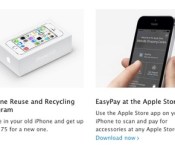
Apple’s iPhone Trade-In Program Expands to Canadian Retail Stores [iOS Blog]
After expanding to France last week, Apple’s iPhone trade-in program is now available in Apple retail stores throughout Canada as noticed by 9to5Mac. Though not publicly announced, the launch was confirmed on Canadian Apple Store retail pages and in the Apple Store app.

The in-store recycling program allows customers to trade-in an older iPhone model and immediately receive a gift card up to $275 towards the purchase of a new iPhone. The program encourages customers to responsibly recycle their old iPhones instead of throwing them away. SellCell estimates customers are storing and not recycling approximately $13.4 billion in unused iPhones.
This in-store iPhone recycling program debuted in the U.S. last summer and was expanded to include the UK a few months later. Apple also offers a mail-in recycling program that requires customers to send in their iPhone before receiving a credit. Customers may receive more money for their iPhone via the mail-in program, but they lose the convenience of a no-hassle credit that’s immediately available to spend on a new phone.
     |
AT&T lowers price of 1-2 line Mobile Share Value Plans
AT&T on Sunday rolled out new Mobile Share Value Plan pricing for subscribers with one or two lines. Effective March 9, customers can pick up a 2GB Mobile Share Value Plan for $65 per month ($40 for 2GB data, $25 for smartphone access), a discount of $15 over the normal rate. Two lines will run $90 per month under the new pricing; each line receives unlimited voice, texting, 50GB free cloud storage through AT&T Locker.
The post AT&T lowers price of 1-2 line Mobile Share Value Plans appeared first on AndroidGuys.

How to make money with Binary Options

Binary options have emerged as one of the most profitable and entertaining modes of trading. Even with small investments, binaries bring traders high returns whereby they stand to make a lot of money provided they know the rules of the game. Binary trading options only have two outcomes in which case the trader loses or wins. Entering the binary options market is quite easy as there are only minimal barriers if any. You just need to open an account with a trusted platform and you can start trading with a very small deposit into your account. One two trade offers beginners free demo accounts that they can use to practice until they have perfected their skills in the game.
The element of risk
For you to make money with binary options, it is essential that you understand the element of risk and know how it can influence the outcome of your trade. Just like with any other trade on commodities, stock market, indices or Forex, trading binary options comes with its share of risks. There are certain factors that can influence the movement of underlying assets as well as number of trades on the market. However, with binary options trading, forecasting the exact price isn’t necessary for traders as they have to predict only the down or up movements. Making money with binary options is easy and enjoyable and here are some few tips that will really help you along the way.
Do your research
Doing your research before you engage in binary options trading is very crucial and this can mean the whole difference between succeeding and failing. There are so many things that you need to research about. First, you need to research about binary options trading platforms and ascertain their pros and cons so that you can choose the most appropriate one that meets your trading needs. Also, it is essential that you know about the different commodities you can trade in and choose the most liquid ones.
Learn about risk managing
Just as highlighted here above, binary options trading is quite a risky engagement and if you want to make any money in this field, you should learn how to manage risk as well as ways of increasing your money earning chances. Making money with binary options is not all about luck as such and even though last minute changes on instrument prices are inevitable, you can learn various strategies that can enhance your money earning capacity.
Determination and patience are paramount
Everything is not a bed of roses in binary options trading. To be successful, a trader should be patient, determined and also willing to invest a lot of efforts and time in the trade. However, trading binary options gives you an advantage and it is different from the conventional market as you don’t need to be an experienced trader to make money. In fact, you will be thrilled to know that binary options trading are a much simpler and easier investment alternative to the traditional investment. However, financial experts will always have an upper hand with binary options trading but most importantly, you shouldn’t have a gambling mentality for you to make money. You might loose a considerable amount of your hard earned money if you approach the market with this notion.
Also, it is important that you start trading with a little amount of money at least until you grab the fundamentals of binary options trading. If you go through a One Two Trade review, you will realize that this broker charges no commission fees which enhance your opportunity of earning more money. Make sure that you deal with a good broker who doesn’t charge such fees and also one who provides a protection fees.
Important tips to keep in mind
When trading binary options, it is important that you know that prices can change at any moment and without notice depending on the prevailing market changes. You will also find various kinds of binary options that offer alternatives that are more advanced compared to the conventional call and put system. The binary options broker you choose will significantly determine how successful you are and how much money you can make in this trade. Most importantly, make sure that you choose a trusted, credible broker and everything will be good to go.
Also, don’t disregard the demo account offered by your broker as practicing is crucial so that you can perfect your skills. There are some brokers that don’t provide free demo accounts and it is essential that you determine if you need them or not. Only get into actual money trading when you are well acquainted with the basics of binary options trading. Even though binary options trading are relatively new, there is so much money that stands to be made with this kind of trading.

An e-reader that makes calls: InkPhone promises two weeks on a charge

When we reviewed the dual-screen YotaPhone, some of you thought it’d have been better if the device simply skipped the LCD and relied on a single E Ink display instead. Well, that’s exactly the approach taken by Polish company Onyx, which is showing off a prototype of its MIDIA InkPhone here at CeBIT. Packing a 4.3-inch front-lit E Ink display (no LCD here), the device is designed as a back-to-basics device for people who need really long battery life or simply those who are looking for an e-reader that can also make calls. Part of the appeal, of course, is that E Ink displays sip power, and the company promises that the InkPhone will last for more than two weeks on a single charge of its 1,800mAh battery.
You might not have heard of ArtaTech, which is Poland’s equivalent of Kobo: it uses e-readers (manufactured by Onyx in China) that have access to its own proprietary bookstore and has national sales that are second only to that of, surprise surprise, Amazon’s Kindle. Of course, since there’s no need to provide content for a high-res display, the company can cut some corners on the internals front and reduce the asking price. It’s using a low-end Rockchip CPU, an unspecified (low) amount of RAM and only 4GB of on-board storage. There’s also no camera, but maybe the microSD card slot that can add up to 32GB more space will salve that wound a little.
When we used it, we found that some of the elements worked really well, with the e-reader app behaving as smoothly and responsive as the Kindle app on a traditional smartphone, although we couldn’t say the same about using the device in other modes. In fact, when we tried to swipe between pages on the home screen, there was a wait of up to 20 seconds before it would respond to our commands. There’s also the small matter that you won’t be able to use Google Play or Amazon’s Kindle app (or any other Android app, for that matter) without installing the APK yourself, since the company believes that it can’t guarantee the minimum levels of usability and quality that its customers might expect — especially since a number of e-book apps have animations that won’t run well on the display’s low refresh rate. Still, if you’re up for giving it a go, production is expected to begin toward the end of this month and should arrive on store shelves in Germany and Poland at some point in April. It’ll be priced at around €140 ($195) and will also be available via Amazon if you’re based elsewhere in the world.
Sharif Sakr contributed to this report.
Filed under: Cellphones, Mobile

One of Facebook’s biggest science pages is becoming a TV show

Science TV shows are enjoying a small renaissance, it seems. Virtually in sync with the first episode of the Cosmos reboot, Facebook page and stand-alone website I F-ing Love Science (yes, we know how that’s really written) has announced that it’s getting a TV show on the Science Channel around the third quarter of the year. Late night talk show host Craig Ferguson will present the series, while page founder Elise Andrew (shown at center) will contribute behind the scenes. The TV deal is a testament to IFLS‘ online influence — its Facebook page alone has over 10 million likes, and over 50 million people get the site’s social updates every week. The show may only reel in a portion of that internet audience, but it still represents a victory for those who want more science in their living rooms.
[Image credit: Elise Andrew, Twitter]
Filed under: Home Entertainment, Science, Internet, HD, Alt, Facebook
Source: IFLScience
 AIVAnet