


Astronaut Training

If the Academy Award-winning film Gravity has you ready to pack your bags and head to NASA, then prepare yourself for years of rigorous training. Becoming an astronaut is an extremely demanding process that combines years of classroom instruction with specialized training in otherworldly environments. Of course, the training is well worth it when you can say that you’re one of the few people alive who has ventured out of this atmosphere. But seeing Gravity in IMAX 3-D is the closest most of us will ever get to being in outer space. On the other hand, if you want to skip the years of training and go right for the pleasures of space (and have $250,000 to spend), then consider Virgin Galactic for an all-inclusive space flight. Let’s take a look at the training process that goes into astronaut preparation, from day one to lift-off.
The first astronauts in the 1950s were all members of the military with extensive experience as pilots. Eventually, NASA discovered the need for astronauts with high levels of scientific expertise, especially in physics, engineering, astronomy, and biochemistry. This led to them broadening their criteria, and NASA now selects two different types of astronauts: pilots and mission specialists. Both types of astronauts must undergo the same rigorous training to prepare them for missions and operating the spacecraft. However, the main responsibility of pilot astronauts is to pilot and command the spacecraft, while mission specialists focus on the specific duties of the mission, such as experiments and launching satellites. Before they get into space for the actual mission, however, they undergo years of training to prepare them to handle any situation.
Even if you are accepted as an astronaut candidate, this does not guarantee that you will become a full-fledged astronaut on a space mission. Candidates report to the Johnson Space Center in Houston for primary training, which consists of two years of basic, classroom training. Sort of like medical school, the astronaut candidates must first learn about all the spacecraft systems and scientific fields, including engineering and meteorology, that are required for work in space. This technical and scientific training is paired with physical training as well, preparing candidates with scuba qualification and swimming tests that are required for military-level water and land-survival techniques. This physical training prepares them to handle emergency situations, such as an unplanned water landing.
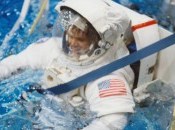
Basic training is just the first step, as passing candidates are then paired with mentors who train them in all areas related to spacecraft operation, launch, orbit, and landing. Once the candidates have proved their proficiency, they are considered astronauts and are given mission assignments. Over a 10-month period, they train with their crew for mission-specific activities. This can involve underwater training, flight simulators, or work with tools, such as plastic welding equipment, that will be needed to complete the mission.
Once mission training is complete, it’s time for lift-off and the fun truly begins. One question you may never have considered about gallivanting in space is what outer space smells like. Astronauts have described the smell that hangs on their suit and helmet after a spacewalk as an odd combination of metallic welding fumes and roast beef stew. Definitely a peculiar description, but that’s just one of the perks that comes along with making it into the elite, distinguished company of spacewalking astronauts.
Please feel free to contact Ella Gray at ella.l.gray@gmail.com with any questions or concerns.
 AIVAnet