


Boost Mobile offering LG Optimus F3
Boost Mobile on Monday announced the arrival of its latest Android smartphone, the LG Optimus F3. Powered by Android 4.1 Jelly Bean, the handset is Boost’s most affordable 4G LTE ready device to date. Features include a 5-megapixel rear camera, 4-inch display, 4GB internal storage, and a dual-core 1.2GHz processor. Rounding things out are a front-facing VGA camera, NFC, DLNA, and a 2460mAh battery.
Over on the software front, the Optimus F3 comes with a host of LG apps; VuTalk, QSlide, QuickMemo, and Q Translator add to the overall experience. Also present are Boost Mobile apps and services Boost Zone, Mobile ID, Google Mobile Apps, Boost Mobile Wallet.
Priced at $129, the Optimus G3 can be paired with Boost’s Unlimited plan with Shrinking Payments. Starting at $55 per month, the plan drops by five bucks every time you complete six on-time payments, ultimately getting down to as low as $40 per month. For the money, subscribers get unlimited talk, text, and 2.5GB high-speed data. Going over that data threshold drops the speeds to 3G.
The post Boost Mobile offering LG Optimus F3 appeared first on AndroidGuys.
iTunes Radio Adds NPR, with More News Channels on the Way
 Apple’s iTunes Radio streaming music service is expanding today with the addition of a new National Public Radio (NPR) channel, reports Re/code.
NPR’s channel, which should be live today, will offer a free stream, 24 hours a day, which mixes live news with segments from pre-recorded shows like “All Things Considered” and “The Diane Rehm Show.” NPR officials say that within weeks, some of the broadcaster’s local stations should begin offering their own channels, with a similar mix of live and taped news.
NPR has also been working on bringing on-demand programming based on users’ tastes to its mobile apps, and it is possible that functionality could come to the station’s iTunes Radio service as well.
The report notes that it is currently unclear what the business relationship between Apple and NPR is in terms of generating revenue for NPR, but NPR vice president of digital media Zach Brand says that Apple has been “very understanding of the business model” used by the nonprofit.
     |
Google Play Store prices likely to increase in the UK
The UK Chancellor George Osborne has delivered his budget and an interesting change included within it means that the Google Play Store prices could potentially increase.
The reason being is that digital content downloads will now have to be charged tax for the country they are sold in, instead of where the company selling the content is registered. That means all content distributed through the Google Play Store in the UK will be subject to an increased rate of VAT of 20%.
The rules are set to come into effect on January 1st, 2015, so we shouldn’t see any immediate changes in the UK, but no doubt the increase in taxes will be passed onto the consumer come next year.
The post Google Play Store prices likely to increase in the UK appeared first on AndroidGuys.

NSA spied on Huawei founder’s emails to implicate him as a Communist Party insider

Ren Zhengfei might seem to us like a man of mystery; a quintessential “elusive figure” about whom we know very little beyond the facts that he founded Huawei and has had some (partly refuted) connections to the Chinese Communist Party. According to documents leaked by Edward Snowden and seen by Der Spiegel and The New York Times, however, there are snoops inside the NSA who know him much better than we do — not least because they’ve been reading his private emails.
The leaked documents suggest that the NSA has been hacking into Huawei’s HQ in Shenzen since 2009 for two different purposes: Firstly, to create “back doors” into the company’s international telecoms infrastructure, thereby allowing for deeper spying wherever that infrastructure is used (i.e., precisely what the US has accused Huawei of doing on behalf of the Chinese state); and secondly, to monitor internal communications, including messages sent by Zhengfei and Chairwoman Sun Yafang, based on the suspicion that these people are deliberately furthering China’s “SIGINT” (signals intelligence) capabilities.
The NSA’s activities apparently reached the point where one agency worker complained of having “so much data that we don’t know what to do with it.” But despite the amount of information collected, none of the leaked documents appear to prove or disprove America’s primary fear about Huawei being a security threat. This lack of evidence has led Huawei’s US spokesman, Bill Plummer, to take the ironic stance of calling on the US government to help clear his company’s name:
“If such espionage has been truly conducted, then it is known that the company is independent and has no unusual ties to any government, and that knowledge should be relayed publicly to put an end to an era of mis- and disinformation.”
Filed under: Cellphones, Mobile
Source: Der Spiegel, New York Times
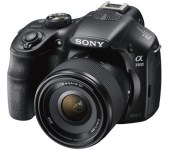
Sony’s mirrorless A3500 looks like a rebadged A3000 with a new lens

According to a listing on its Australian site, Sony’s just launched the A3500 mirrorless camera, but don’t get too excited yet. It seems to be a mild re-working of the A3000 released just six months ago with an identical body and specs, like the 20.1-megapixel Exmor APS sensor, 1080p video and 3.5fps continuous shooting speed. The new model has the same 499 Australian dollar price as the A3000 did (the older model is no longer available there), and it comes with a brand new 18-50mm f/4-5.6 lens. There could also be some changes under the hood, as the footnotes mention a phase-change focus option coming via a firmware update. We can’t be sure, though, since there’s been no formal announcement to go along with the listing. In the meantime, we’ve reached out to Sony for an explanation.
Via: Slashgear
Source: Sony
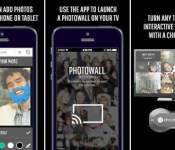
Google’s Photowall for Chromecast lets you doodle on photos, beam them to your TV

Photowall for Chromecast is one of those rare official Google apps that makes its debut on iOS instead of Android. In fact, we can’t even say for sure it’ll be coming to Mountain View’s mobile OS, but there’s no reason to assume it won’t. The app itself is pretty simple: one or more people are able to beam photos from their iDevice to a Chromecast creating a collage of memories. If you want, you can even doodle on your images before putting them up for all to see. While you’ll need the app to actually send the Photowall to your TV, not everyone needs the app to add photos to the collection. There’s a simple web app for uploading pics to share. Oh, and when you’re done, you have the option of exporting the montage to a YouTube clip for passing around between friends. You can download Photowall for Chromecast for free at the source link.
Via: 9to5Mac

We’re liveblogging HTC’s ‘all new One’ event tomorrow at 11AM ET!

Given the extensive number of leaks we’ve seen of HTC’s next-generation flagship smartphone, we wouldn’t blame you if you thought that the latest and greatest out of Taiwan was already official and being sold in stores. Truth is, it’s not — but it’s going to be announced in a little over 24 hours. The company is unveiling the all new HTC One in a big way: a livestreamed event taking place in both New York City and London at the same time. We’ll be liveblogging the launch on the US side, and hope that you can join us as CEO Peter Chou finally reveals everything we want to know about the device codenamed the M8!
Filed under: Cellphones, Wireless, Mobile, HTC

Employee Anti-Poaching Agreements May Extend Far Beyond Apple and Google
Apple, Google and five other large technology companies were caught signing “no solicitation” agreements that prevented the companies from trying to hire away each others’ employees. Court documents newly obtained by Pando Daily suggest these anti-poaching agreements extend far beyond this Silicon Valley seven.

According to these documents, over a dozen companies and as many as one million employees may have been affected by these secret hiring agreements.
Confidential internal Google and Apple memos, buried within piles of court dockets and reviewed by PandoDaily, clearly show that what began as a secret cartel agreement between Apple’s Steve Jobs and Google’s Eric Schmidt to illegally fix the labor market for hi-tech workers, expanded within a few years to include companies ranging from Dell, IBM, eBay and Microsoft, to Comcast, Clear Channel, Dreamworks, and London-based public relations behemoth WPP. All told, the combined workforces of the companies involved totals well over a million employees.
Investigation into these wage-fixing deals focused on Adobe, Apple, Google, Intel, Intuit, Lucasfilm and Pixar, but other businesses such as NVIDIA, British cable company Virgin Media and even recruiting agencies were caught up in this net. Some of these other companies did not sign reciprocal non-solicitation agreements, but, instead, were added by Google and others to “Do Not Cold Call” or similar “Sensitive” company lists.
Google and Apple allegedly signed one of the first wage-fixing agreements in early 2005, with other companies following suit. The discovery of these agreements in 2009 initiated a Department of Justice investigation that resulted in the dissolution of these restrictive hiring deals. A subsequent class-action civil suit was filed in 2011 and is expected to go to trial in May.
| |

Link Bubbles Changes the Mobile Web Browsing Experience – APP OF THE WEEK

When you compare web browsing on desktop and mobile, there is striking difference in the experience. On your desktop, you can click on a link your browser happily creates a new tab for that page, and you can just continue looking at something else while that page loads. You also have the convenience to look at the page later by keeping that new tab open. When it comes to mobile, you click on a link and you are taken completely out of what ever app you are in, and your browser takes over your phone. No tabs involved, just you waiting there for the page to load, and then you can go back to what ever you were looking at perviously once you are done with that page. Well Chris Lacy to the rescue, as he has created a very innovative app that kind of takes a page out of Paranoid Android’s book when it came to HALO, and brings us Link Bubbles.
What Link Bubbles will do for you, is make those tabs happen in mobile, but of course they are not called tabs they are called bubbles. When you click on a link, a bubble appears on the left side of your screen, spinning as it loads your new page. As the page is loading, you can continue on looking at other things on your phone, like for instance your Twitter or Google + feeds. Then once the page is loaded, you can click on the bubble and an overlay window opens up and you can treat it like the typical web browser on your device. You also have the option of having multiple Link Bubbles, but you have to pay for the pro version.
Lacy also added the options to either share your link very quickly by holding down the bubble and dragging it to the share bubble, or to an app you have selected in the settings. You can also save the link for later, just in case you didn’t have time to take a look at it in that moment.
Overall, this is a great app, and I even suggest forking over the $5 for the pro version. Yes, it seems a bit steep to pay that much for an app, but it is well worth it, and Lacy deserves it for the hard work he does. If you want to see the app in action, check out my video run-through below. Let us know if you downloaded it and how much you enjoy it. How were we able to browse without it?
//<![CDATA[
ord = window.ord || Math.floor(Math.random()*1E16);
document.write('’);
//]]>
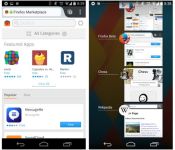
Firefox 29 beta allows to install web apps as native Android apps
Mozilla Firefox is one of the famous and most used browsers in the world, and just like Google Chrome, Firefox is also available on Android as well. One of the best features Firefox offers is that you can install apps from Firefox Marketplace, and then when you run them, the app would open up in a browser window. But with Firefox 29 beta, things will be a little changed as Firefox Marketplace will allow you to install web apps as if they were native Android apps.
 If you want to download the apps, you have to download the Mozilla Firefox for Android from the Play Store. After that, fire up the app, then Menu button>Tools>App>Firefox Marketplace. From there, you can install any app you want and then the browser will download any necessary data and then open up the Android installation menu. The app will show up on the home-screen, as well as in the app drawer.
However, if you uninstall Firefox, the apps will remain installed but they won’t work, instead it will open up Play Store listing for the Firefox web browser.
That’s probably one less reason to buy a smartphone with Mozilla OS, right? Because all the apps are already on Android. What do you think? Let us know in the comment box below.
Source: Mozilla
The post Firefox 29 beta allows to install web apps as native Android apps appeared first on AndroidGuys.
 AIVAnet