


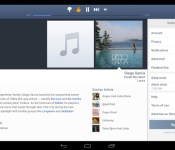
Pandora bumps subscription fee to $5 per month for new customers

Pandora will soon charge new subscribers a bit more to enjoy ad-free internet radio. Starting in May, anyone who signs up for the company’s premium service (Pandora One) for the first time will have to pony up $5 a month, a buck more than the current rate. The company explains that its operating costs have grown since it started offering ad-free radio in 2009, hence the price increase. As you’d expect, royalties are one of the biggest contributing factors despite Pandora winning in court against the American Society of Composers, Authors and Publishers’ demands for larger rates. In addition to upping its monthly price, the company’s also killing the annual $36 subscription option altogether. All current premium subscribers (3.3 million out of 250 million registered users) will be moved to a monthly rate after their subscription ends. The good news is that Pandora’s rewarding its loyal customers by continuing to charge them $4 a month — and yes, that includes last-minute stragglers who sign up before May.
Filed under: Internet
Source: Pandora

This is BlackBerry’s unreleased ‘Cyclone’ streaming box

In 2011, BlackBerry was rumored to be developing a media box to compete against the likes of Roku and Apple TV. While that device never made it to market, it looks like the company did manufacture some units, as proven by pictures posted on the CrackBerry forums. These photos were taken by user “isaac708,” who claims he got 10 BlackBerry Cyclones (the device’s code name) inside a box full of server stuff from a RIM liquidator. Half of those units came with a remote control, and some of them can actually connect to the internet via WiFi as well as stream videos to a TV using HDMI connection. One of the images he posted even shows the box’s user interface with the YouTube and Slacker apps in full view, though Netflix, which is also supposed to be part of Cyclone’s repertoire, is nowhere to be seen. While the device’s fate is likely up in the air (if it hasn’t been scrapped yet) due to the company’s ongoing struggles, the pictures after the break should give you an idea of how it looks.
[Thanks, Joel]


Filed under: Home Entertainment, HD
Via: n4bb
Source: CrackBerry Forums
Grocery King releases free version, no coupon needed
If you’re tired of going to the store three times a week to purchase all the good stuff you forgot on your initial visit, Grocery King aims to end this with a new free version of its existing shopping list app.
Grocery King offers a highly customizable shopping list experience that learns from the user. The more you use it, the better it gets.
This list is also more than your average list, as it lets users create them by picking from hundreds of photos of everyday items in 24 different categories. Grocery King aims for a more visual and fun experience to give a more natural feeling to creating your shopping lists.
Many additional features help differentiate Grocery King from the other shopping list apps available. The app offers cloud-based sharing and syncing of lists to enable real-time coordinated shopping with friends and family, inventory control of current items within the app, price tracking across previous shopping history and price comparison between stores (managed manually) and the ability to store their retailer loyalty cards, coupons and gift cards within the app.
Available on the Google Play store for the past four years, Grocery King was the number one shopping app for two years in a row and still ranks within the top five paid apps in the “Shopping” category even four years later. The free version is ad-supported and has some feature limitations.
The post Grocery King releases free version, no coupon needed appeared first on AndroidGuys.
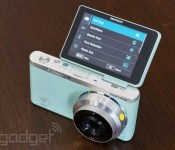
Samsung’s interchangeable-lens NX mini sports 1-inch sensor, fits in your pocket (hands-on)

Hey “style-conscious” men and women in your 20s and 30s, Samsung’s got a new camera just for you. The electronics giant is touting its NX mini as the world’s thinnest and lightest interchangeable-lens camera, and while it technically falls at the low end of the company’s NX line, this new cam comes along with a 1-inch (smaller) sensor and a scaled-down lens mount, which means new lenses, though you can use larger NX glass with a $150 adapter. Without a lens, the camera weighs 158 grams (5.6 ounces), making it lighter than “some bananas” (the fruit), as Samsung demonstrated with a PowerPoint slide during a presentation earlier today. There’s a 20.5-megapixel BSI CMOS sensor, WiFi, NFC, a 1/16,000 max shutter speed, 25,600 top ISO, 6 fps burst mode, 1080/30p video, a battery that can capture up to 650 shots with a full charge and a 3-inch HVGA flip-up touchscreen.
We spent a few minutes poking around the mini’s menu system and taking some sample shots (which we were required to leave behind). The camera performed well, with speedy focusing and accurate exposure (based on reviewing images on the LCD). It’s hardly the fastest mirrorless ILC on the market, but Samsung’s making no such claim — performance was what we’d expect from an entry-level model. Both the 9mm (24.3mm equivalent) f/3.5 pancake lens and 9-27mm (24.3-72.9mm) f/3.5-5.6 zoom are incredibly compact and lightweight. With the prime lens attached, the mini will fit in a jacket pocket. There’s also a 17mm (45.9mm) f/1.8 lens in the works, which should ship in July. The camera, meanwhile, will be available black, white, brown, green and pink sometime next month. A 17mm kit will retail for $450 while a version with the zoom lens instead (that also includes a tiny external flash) will be available for $550. Both pairings ship with a free copy of Adobe Lightroom 5.

Daily Roundup: Sony’s ‘Project Morpheus,’ the Moto 360 smartwatch and more!

You might say the day is never really done in consumer technology news. Your workday, however, hopefully draws to a close at some point. This is the Daily Roundup on Engadget, a quick peek back at the top headlines for the past 24 hours — all handpicked by the editors here at the site. Click on through the break, and enjoy.

This is Motorola’s new Android Wear smartwatch: Moto 360
Motorola’s new wearable, the Moto 360, takes smartwatch form factor back in time (har), boasting a seriously eye-catching design and circular watchface. Powered by Google’s Android Wear, owners can utilize the power of Now from their wrists. What’s more, this isn’t the Moto 360′s only design. It’ll come in a variety of styles once it launches this summer.

‘Project Morpheus’ is Sony’s virtual reality headset for the PlayStation 4
Sony’s officially jumping into the VR realm with “Project Morpheus.” Now just a prototype, the two-part headset has a 1080p display and packs a 90-degree field of view. And though it’s still unclear how the device will work with consoles, the hardware you see above will double as a developer kit.

Google announces the Android Wear platform
Earlier today, Google unveiled Android Wear: a Nexus-like platform designed to power wearables, featuring contextual updates similar to Now and the same always-listening feature found on the Moto X. This mobile OS will focus on the smartwatch form factor for now, but Google says that’s just the beginning.

Apple’s new 8GB iPhone 5c now available worldwide
It looks like the rumors were true. An 8GB version of Apple’s iPhone 5c is available from several European carriers on multi-year contracts. And though the colorful handset has also arrived for Australia and China via Apple’s online store, we’ve yet to hear word of US availability.
You also might like:
Filed under: Misc
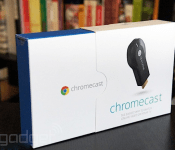
Chromecast officially available across Europe and in Canada starting today

Sure, a few eager Amazon shoppers might have been enjoying the Chromecast on the other side of the pond, more or less straight after it launched in the US. However, those Europeans (update: and Canadians) waiting for an official retail channel, (as suspected) your time has finally come. Google just announced that its popular media streaming TV accessory will be available for customers in the UK, France, Germany, Spain, Italy, Netherlands, Norway, Sweden, Denmark and Finland starting today and will cost £30. Naturally you can purchase via the Play store, but Amazon will be stocking also. If you prefer things a little more bricks and mortar, and live in the UK, they’re also coming to Curry’s — if you hadn’t already heard — and PC World. With the official release in new territories of course comes region specific apps, led by the BBC’s ubiquitous iPlayer which will now play nice with the HDMI dongle. All these new customers, just in time for the inevitable wave of apps, too. It’s almost like they plan these things…
Filed under: Home Entertainment, HD, Google
Source: Google Chrome Blog
Live from PlayStation’s ‘Driving the Future of Innovation’ panel (the VR one)

What is the “Future of Innovation”? Sony’s gonna tell us tonight, but we’re pretty sure we can tell you what it is right now: bacon-scented alarm clocks. Oh, right, the future of innovation is also the rumored virtual reality headset from Sony’s PlayStation team. At least we’re pretty sure that’s the case, both based on the rumor mill and our own cabal of sources on the ground here at GDC 2014. We’ll certainly find out soon enough, as the event kicks off shortly. Stick around, as we’re starting shortly.


‘Project Morpheus’ is Sony’s virtual reality headset for the PlayStation 4

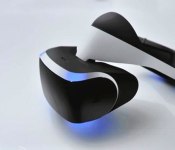
The rumors are true: Sony’s working on virtual reality. The hardware is called “Project Morpheus” and it’s headed to the PlayStation 4. The headset is two pieces: a closed display and what looks like a PlayStation Move sensor built in. SCE Worldwide Studios head Shuhei Yoshida unveiled it on-stage tonight at GDC 2014; he said the “prototype” is “by no means final.” It’s the culmination of over three years of work, Yoshida said, and the prototype unveiled tonight will also double as a dev kit.
As seen above, a subtle PlayStation-themed blue light is emitted by Morpheus. A single wire can be seen exiting the unit on-stage; it’s unclear how the device will work with consoles. Sony’s clearly drinking the VR Kool-Aid: there’s serious talk about “presence” on-stage (the term Valve coined as the target for “true VR”). What are the specs in the headset? It’s got a 1080p display and just over a 90 degree field of view. There’s positional head tracking, 1000HZ refresh rate, a 3-meter working volume with full 360 degree tracking — it looks like anyone who wants to use Morpheus needs the PS4 camera. In terms of sound, the device has “true spatial sound” using binaural audio — pretty neat! It’s also apparently “highly adjustable” and support custom headphones if you’d prefer your own audio choice (it plugs right into the headset). Head below for more!
The current dev kit is wired, though the wire is “very long” (around 5 meters, we’re told). The dev kit also has a “breakout box” between the headset and your television.
PlayStation R&D engineer Richard Marks dug into the nitty gritty a bit: he said Morpheus needs a high-resolution, high-quality screen (“no problem,” he quipped), great sound (SCE is developing binaural tech to produce sound, incorporating that into the experience), tracking (he pointed out that the PS4 camera is “almost custom-built for VR”), and control (Sony’s sticking with DualShocks, cameras and Move, apparently).
Marks admitted that VR needs to be easy to use — as in, as simple as picking it up off the coffee table and quickly jumping in. So, perhaps no wire then? That’s still unclear. He finished with a plea to devs to create content for Project Morpheus, “which is why we’re announcing this at GDC.” Sony’s already working with a handful of devs, including Epic Games and Crytek. We expect it won’t be too long before the large world of game devs jumps in.
Update: In a Q&A following tonight’s session, we were told by R&D engineer Anton Mikhailov that the headset was given its project name for “the god of dreams” (he’s not lying). In terms of first-party Sony studios working on content for Morpheus, the Sony trio on-stage stayed mum, pointing to the handful of titles revealed tonight as the first example.

Sony’s new VR headset being shown at GDC 2014 with playable demos of EVE Valkyrie, Thief
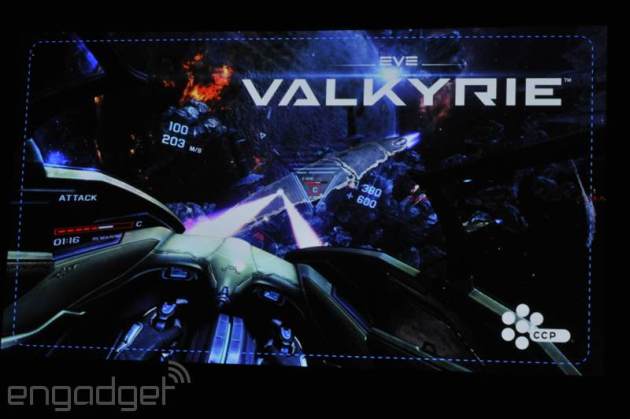
What’s a virtual reality headset without software? Nothing — and Sony knows it, which is why the company is treating GDC attendees to four demos on the conference show floor, starting tomorrow morning. Some of them are familiar: when EVE: Valkyrie was announced as a playable demo, Sony’s GDC audience erupted into cheers and applause. Gamers stopping by Sony’s booth will also get a chance to play a special build of Thief created specifically for virtual reality. Although these traditional gaming experiences are likely to steal the show, Sony’s also trotting out two demos that sound more passive: The Deep and The Castle, which lets players experience at a shark infested lagoon and a medieval fortress, respectively. So, how do these games play? We’ll let you know as soon as the GDC show floor opens tomorrow.
Filed under: Sony
Apple Seeds Safari 7.0.3 and 6.1.3 for Mavericks and Mountain Lion to Developers [Mac Blog]
Apple has just pushed the first seed of Safari 7.0.3 for Mavericks and 6.1.3 for Mountain Lion to developers, asking them to focus on Push notifications, AutoFill and more. The betas are available through the Software Update mechanism in the Mac App Store as well as through the Mac Dev Center.

– General website compatibility
– Safari Push Notifications
– Login AutoFill
– Credit Card AutoFill (OS X Mavericks only)
– Extension Compatibility
Earlier today, Apple seeded Mavericks 10.9.3 Build 13D17 to employees along with a new iTunes 11.1.6 beta that restores local contact and calendar syncing to developers, but the betas should be seeded to developers in the near future.

     |
 AIVAnet