



Microsoft’s Project Spark beta now open to all wannabe game makers (video)

If you haven’t had the chance to make the Flappy Bird or Minecraft clone of your dreams just yet, Microsoft is removing the final barrier to Project Spark’s entry. The game-creation title’s been in open beta for a bit, but now you can download it directly from the Xbox One dashboard — no waiting required. Should you need something to, ahem, spark your creativity, the embedded trailer’s montage of user-creations set to a Linkin Park song might do the trick. If that somehow doesn’t help, Major Nelson will be joining the dev team on its Twitch stream this week, and you can pick his brain for ideas there. Or, maybe just kick back while Xbox’s blogger plays the game (where he’ll presumably make a game) on your game console. It’s all up to you!
Filed under: Gaming, Home Entertainment, HD, Microsoft
Source: Major Nelson

Dual-display YotaPhone now shipping to the UK for £419

We’re not entirely convinced that this is the right time to hop aboard the YotaPhone express, especially when a greatly improved second-gen handset has been promised before the end of this year. Nevertheless, if you’re in the UK and you’re willing to drop £419 in order to experiment with a genuinely unique e-reader / smartphone hybrid (as opposed to a phone that is e-ink only), then the Yota Devices web store will now ship to you via the source link below.
Filed under: Cellphones, Mobile
Source: YotaDevices UK web store

Google expands Nexus 5 and Nexus 7 sales to more European countries

Google may have wowed the world yesterday with the introduction of Android Wear, but it turns out it also had some Nexus-related news tucked away too. Already available in 13 countries around the world, the search giant has quietly expanded sales of the Nexus 5 and Nexus 7 across Europe, listing them on the Play Store in eight new markets. These include Austria, Belgium, Denmark, Finland, Ireland, the Netherlands, Portugal and Sweden, giving customers the option to bypass operators and grab themselves an unlocked Nexus device direct from Google. With the Chromecast finally on sale outside of the US and an influx of Android-powered wearables on the way, Google’s finally making it easier for Europeans to start investing in its expanding product family.
Filed under: Cellphones, Tablets, Mobile, Google
Via: Android Police
Source: Google Play Support
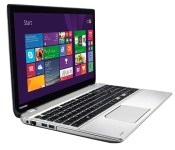
Toshiba details 4K laptop arriving before summer

Toshiba has dished most of the important details about its intriguing 4K Satellite P50t that we saw at CES 2014, along with some other new models. Unfortunately, it’s also left some details hanging — namely the all-important prices. For the most part, the 50t model sounds pretty fine, considering the sleek 2.2kg (4.8 pound) weight. There’s that exotic, eye-melting 3,840 x 2,160, 15.6-inch 282 pixel per inch touchscreen with 2GB AMD Radeon R9 M265 graphics, for starters (1080p is optional as well). It’s also packing an Intel Core-i7 CPU, 16GB DDR3L RAM, 4 USB 3.0 ports, an SD/SDHC slot, Bluetooth 4.0, 802.11ac WiFi and Windows 8.1. Oddly, the otherwise well-spec’d device only features a 1TB mechanical disk option, when it’s clearly screaming for SSD speed — hopefully Toshiba will rectify that prior to release. Availability is listed as sometime in Q2, but again, there’s no clue about pricing. Meanwhile, Toshiba’s also detailed a few other models after the break.
Slipping down the scale are Toshiba’s S50 (15.6-inch, 4.5 pounds) and S70 (17-inch, 5.9 pounds) laptops. Those eschew 4K for 720p, 900p or 1080p displays with optional touch, and use either Intel HD or AMD’s Radeon R9 discreet graphics. Except for fewer USB 3.0 ports (two instead of four), the CPU and other features are the same as the P50t. The Satellite C50/C70 and L50/L70 models round out the new range. Each is available in 15.6-inch and 17-inch models, but the L50/L70 maxes out at 1,920 x 1,080, while the 15.6-inch C50 packs a 1,366 x 768 screen and the 17-inch C70 can do 1,600 x 900 (touch is optional for most models). As for the rest of the specs, there’s a dizzying array of options. Depending on the size and model, you can get Intel Core-i7 or AMD chips, 8-16GB RAM max, up to a 1TB hybrid SSD and Blue-ray drives. There are too many configurations to detail here, but if you’re still intrigued, check the galleries or sources below.
Source: Toshiba (1), (2), (3), (4)

Headset combines virtual and augmented reality with holodeck-like results

Two months ago, Sulon Technologies broke cover with a video showcasing a bulky augmented reality and virtual reality system. Fast forward to today. The chunky backpack and headset combo has been replaced by a much, much smaller second prototype — it’s just a headset with a power cord coming out the back. Oh, and it’s got a name: The Cortex. If you’re a tinkerer, you can pre-order the dev kit version to follow this new prototype — the company claims this more polished hardware will be shipping out in Q4 of 2014. It’ll cost you $500 to get this particular peek into the future, though, so read on to find out what it’s like wandering around with the dev kit’s hacked-together portable predecessor on your melon.
When I first laid eyes on Sulon’s new headset, it was immediately apparent that I’d be demoing a very rough prototype. The eye cups (but not the optics) are ripped straight from an Oculus Rift, and much of the electronics attached to the headset’s straps are wrapped in black gaffer tape. A custom made spacial scanner sits up top and is stuffed with LIDAR, ultrasonic scanners and cameras. that combo’s what maps its surroundings, thereby ensuring proper graphics placement both during augmented reality and virtual reality sessions.
The brain of the spacial scanner is a bit of silicon called a spacial processing unit — it’s dedicated solely to tracking everything the system needs to work, and that info gets beamed to the phone on your face through Bluetooth. And, while the spacial scanner maps the room the Cortex is in, it locates your hands by working with Razer’s Hydra wireless nunchuck controller.
Once Sulon’s software’s interpreted all that info, it can overlay graphics onto your surroundings. Rather than using see-through displays like Meta, Epson or Google Glass, however, the Cortex augments reality in the same way that your smartphone does — by using a camera and overlaying graphics atop the video feed it captures. In fact, the system actually uses an Android smartphone as its display.

The face of the prototype is actually a housing where you slide in a jumbo phone — with a 6-inch, 1080p screen and a Snapdragon 800 — that serves as both the display and the graphical brains of the thing. It’s also got a camera stuck to the front of it. To counterbalance those bits, a power pack is situated around the rear of your skull. The prototype’s version is tethered to an outlet, but company CEO Dhan Balachand assured us that the dev kit will pack a rechargeable battery that’ll provide at least four hours of use.
The weight of the Cortex prototype is noticeable, but it didn’t become uncomfortable during the five minutes we wore it — we expect the dev model to be lighter.
As with the hardware itself, the software still has a ways to go, too. When you first slide the Cortex onto your head, it takes a few seconds to get adjusted as the headset calibrates its optics to suit your eyeballs. After some initial disorientation, we were looking at our empty hotel room and a few digital objects, and then noticed that the video feed was magnifying our view as compared to actual reality. Aside from taking some getting used to, it served to generally keep us aware that we were staring at a phone’s screen instead of the real world.
That said, the shift from augmented to virtual reality is relatively seamless — we stepped into a digital portal and suddenly the hotel room was a covered terrace overlooking a lake and some mountains. Graphical quality is what you’d expect when a mobile chip’s providing the grunt: about as good as a PS2. And during our demo, there was significant flicker and chop to the animation. We were told that the system also works with PCs, in which case the graphics are much smoother. We didn’t get to see such a setup.
Walking around a physical and digital space simultaneously was definitely an interesting experience while being tethered to a power outlet. But, we had helpful Sulon employees keeping the cord out of our way, and the headset itself has a warning system that beeps when you are reaching a physical boundary in the real world.
I played a zombie shooting game, using the Razer Hydra to blast the undead as I ported from digital room to digital room (all the same size, of course), and found myself sitting still and turning in one place instead of traipsing around blasting walkers. While the digital world was mapped very close to the real one, I couldn’t shake the feeling that I was blindfolded, and so moved around with trepidation. Perhaps with more practice, I’d feel more comfortable. But, I feel safe saying that for the tech to catch on with the public, it’ll have to be much more immersive. More accurately placed, smoother graphics might have provided me more confidence.
Bottom line? The hardware we wore was a hacked together prototype, but warts and all, still managed to deliver cool and somewhat immersive VR experience. It’s still not wireless… yet, and we’d really like to see it with the new, faster spacial scanner that the company tells us will be in the dev kit — as Balachand tells us it’ll solve many of our graphical gripes. Still, what we saw is far from the holodeck enjoyed by the crew of the starship Enterprise, but there’s potential in the Cortex. We’ll be looking forward to finding out if it can fulfill it.
Filed under: Gaming, Peripherals, Wearables, HD
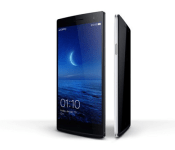
The Oppo Find 7 is official, can actually take 50MP Photos
 True to their word, Oppo today launched their latest flagship smartphone, the Oppo Find 7, and this is probably the first time we’ve ever said this, but surprisingly, the rumours about it were true. As Oppo alluded to, there will be two versions of the Find 7, both with a 5,5-inch screen. The lesser of the two models will have a Snapdragon 800 (2.3GHz) processor, 2GB RAM, 16GB storage, 2,800mAh battery and 1080p display which will retail for $499. The more hardcore Find 7 will instead have the newer Snapdragon 801 processor with 3GB RAM, 32GB storage, 3,000mAh battery and the vaunted 2560×1440 (2K) resolution display. That isn’t even the good news yet…
 Prior to today’s announcement, we were getting some mixed messages about what the Oppo Find 7′s camera would be like; rumours repeatedly suggested the device would have a 13MP camera however photos from the device kept leaking out that could only have been taken with a 50MP camera. Well, you’ll be pleased to know that both these suggestions were true: the Find 7 will indeed only have a 13MP camera, however through the magic of Pure Image 2.0, Oppo’s new image signal processor, the Find 7 will be able to create fantastic 50MP photos (see here for some of the giant leaked photos). It will be able to do this by rapidly taking 10 consecutive photos, then combining the “best” four photos to create the full 50MP image; take that Nokia Lumia 1020!
 The camera will also be able to record videos in 4K resolution (30fps), slow motion videos (100fps) and 32 second long exposure photos. Perhaps most interesting for those of the selfie-persuasion, the front facing camera will be a 5MP affair with an aperture of f/2.0; for those looking for a comparison, the iPhone 5S rear camera has an aperture of f/2.2.
While the Find 7 is definitely an incredibly interesting device, unfortunately it will only be shipping with Android 4.3. The lower-powered Find 7, also known as the Find 7a, will be available sometime in mid April and the more powerful Find 7 will become available in May or June, presumably for sale globally.
What do you think about the Oppo Find 7? Are you considering getting one? Let us know what you think in the comments.
Source: engadget
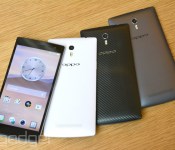
Oppo Find 7 is the world’s first phone that can take 50MP photos (video)

We’ve seen the teasers and we’ve seen the leaks, so it’s about time to see the real thing. Oppo has finally unveiled the Find 7 in Beijing just now, and as promised, this Android 4.3 device really can take 50-megapixel photos! But as with many things in life, there’s a catch here: the sensor is actually a 13-megapixel Sony IMX214 CMOS, so it’s a software trick. Still, the results we saw earlier were surprisingly good, so read on to check out how it’s done and what the rest of the phone is like.
The Find 7 comes with Oppo’s latest image signal processor dubbed Pure Image 2.0, and this is what enables the 50-megapixel “Super Zoom” creation: the camera takes 10 consecutive shots very quickly, and then it automatically picks four best shots to combine them into a 50-megapixel still. Our 8,160 x 6,120 sample shots ended up being around 10MB large each, and as you can see above, there’s a lot of detail preserved even up close, which puts the Xperia Z1′s 20-megapixel camera to shame. While Super Zoom is a software-based feature, the 1/3.06-inch IMX214 sensor also deserves credit for its 480 megapixel-per-second bandwidth, which is 33 percent faster than the 13-megapixel CMOS chip on the Find 5. And of course, the bright f/2.0 aperture helps, too.


Other notable camera features include 4K video recording at 30 fps, slow-motion video at up to 100 fps, long exposure for up to 32 seconds and HDR-capable GIF creation. You’ll also be able to use some of these features with the 5-megapixel f/2.0 front-facing camera.
The 5.5-inch Find 7 will come in two versions. The $499 Find 7a (aka Find 7 Lite in China) packs a 2.3GHz Snapdragon 800, 2GB of RAM, 16GB of internal storage, a 2,800mAh battery and a 1080p display. The more premium $599 Find 7 features a faster 2.5GHz Snapdragon 801, 3GB of RAM, 32GB of storage, a 3,000mAh cell plus a quad HD (2,560 x 1,440) display. This makes Oppo the second manufacturer to offer a quad HD phone, following sister company Vivo’s Xplay 3S.
Apart from the above points plus the different back covers (the Find 7′s has a carbon fiber texture), the two models are otherwise identical. You get Gorilla Glass 3, microSD expansion (up to 128GB), micro-SIM slot, LTE radio (for Chinese, European and US models; 3G only for Indonesian model), a pulsing “skyline” notification light underneath the chin, award-winning MaxxAudio plus Dirac HD audio enhancement and “VOOC” rapid charging (you go from zero to 75 percent in just half an hour). About the last point, you apparently won’t have to worry about potential heat issues while charging, as the Find 7 is built with five layers of thermal protective coating, and the solid titanium-aluminum alloy frame — crafted with nano-injection molding — also helps dissipate heat.

The Find 7 will be shipped with Color OS 1.2 based on Android 4.3, and it’ll come with many familiar features that are already on the N1. These include weather animation on the home screen, gesture shortcuts (including torch and camera activation even when the screen is off) and themes. Do look up our N1 review if you want to know more about Oppo’s custom ROM. At the time of publishing this article, we have yet to hear any news about CyanogenMod development for the Find 7, so stay tuned.
Interested folks outside China can order a Find 7a both online and offline come mid-April (there will be a $50 early bird discount from some retailers), or you can wait for the advanced Find 7 due May or June. If you happen to be in Beijing, CEO Tony Chen will be personally selling some units in one of the local shops tomorrow. Now that’s a hands-on boss.
Filed under: Cellphones, Mobile

Sony’s bringing Hulu Plus and Redbox to the PlayStation Vita

Assuming you like to do more than just play games on your PlayStation Vita, the latest batch of media-centric apps available on Sony’s handheld may be of interest. Crunchyroll, NHL GameCenter LIVE and Qello Concerts are now live on the PlayStation Store, catering for those with a taste for anime, sport and music. Sony also revealed that Hulu Plus and Redbox Instant apps will come to the Vita on March 25th, with fitness app Gaiam TV following later this spring. It’s a nice boost for gamers who remain welded to their Vita, but the wide availability of smartphone and tablet apps means Sony is continually playing catchup.
Filed under: Gaming, Internet, HD, Sony
Source: PlayStation Blog

Pocket’s read-it-later service adds international flavor with six new languages

Despite how far the internet has come, it hasn’t quite conquered the language barrier. The devs behind Pocket know this and have added new languages to hopefully make the delayed-reading app a bit easier to use if English isn’t your native tongue. To wit, the application is now available in French, German, Italian, Japanese, Russian and Spanish. Those languages account for some 22 percent of what its users speak and, according to the company, this is just the beginning of its expansion to a broader audience. Only time will tell if that’ll include Klingons, though.
Source: Pocket

Sony’s early VR headset prototypes looked pretty silly

Head-mounted display, movement sensors…. done. Sony Computer Entertainment’s Shuhei Yoshida says that the company’s been working on its Project Morpheus VR hardware for over three years and it’s fair to say it’s come a long way: the early model above features three Move controller modules, attached in what could be described as the Mickey Mouse formation. It’s somehow cute, but also hilarious.The luminous pearl-finish headset revealed on stage is apparently still nowhere near complete, although SCE appear to have taken on board some of the design cues of Sony’s existing head-mounted display series. There’s more pictures after the break, with Yoshida himself channelling some Star Gladiator vibes with two different prototypes.

Filed under: Gaming, Home Entertainment, Wearables, HD, Sony
 AIVAnet
