


Samsung Galaxy S5 UK pricing gets revealed by Three
If you were wondering what the Samsung Galaxy S5 may cost you when it arrives next month, then Three UK have just revealed their pricing structure for the new device.
A Galaxy S5 purchased through Three will cost £69 upfront on a 24-month contract starting at £38 per month which includes 600 minutes and 2GB of data, with the top tier contract setting you back £44 a month for unlimited minutes and data.
Pre-orders for the Samsung Galaxy S5 will be available online and in-store from March 28th, with the release of the Galaxy S5 set for April 11th.
The post Samsung Galaxy S5 UK pricing gets revealed by Three appeared first on AndroidGuys.

Sky’s new program guide fuses live TV with online content

In an effort to put more content at the touch of viewers’ fingertips, Sky’s bringing together live TV and online content as part of a new ‘Homepage’ rollout for Sky+ boxes. As part of the update, the company has combined Catch Up TV, Sky Store, and Sky+ Planner for the first time, giving them equal prominence in its new tile-based electronic program guide (EPG). The reasons behind the change are clear: Sky recognized the importance of online streaming and on-demand television early on and has developed various services that can compete with Virgin Media, Netflix, Amazon Instant Video and Apple’s iTunes in their own right. Now it wants people to use them more. To mirror the changes on its set-top boxes, Sky says the Sky+ app will also receive an update, in which it will gain an option to turn Sky+HD boxes on and off from a mobile device. While the new Homepage will be available from today, it may take until the end of May for it to become available for all.
Filed under: Home Entertainment, HD
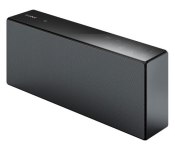
Sony’s SRS-X7 and SRS-X5 wireless speakers ship today starting at $200

If you’re still looking for the ideal wireless speaker, Sony is adding two more options to the fray with the arrival of its SRS-X7 and SRS-X5. The audio gadgets pack Bluetooth streaming with AAC and aptX support, ClearAudio+, one-touch listening, aux input, subwoofers with dual passive radiators, USB gadget charging and a relatively minimal design. With 32W of power and six hours of playback, the SRS-X7 (shown above) wields WiFi support — should you prefer the DLNA or AirPlay route. For the SRS-X5 (pictured after the break) is concerned, there’s 20W of power, three color options and eight hours of easy listening; however, the wireless connectivity is limited to Bluetooth here. Both units start shipping today, with the SRS-X7 priced at $300 and the SRS-X5 set at $200. Anxious to nab one, or see the full spec sheet? Consult the source links below to do just that.

Filed under: Portable Audio/Video, Sony

Valve’s latest Steam beta makes it even easier to go full VR

Despite the fact that most of us still don’t have an HMD (head-mounted display) like the Oculus Rift, Valve is embracing VR gaming wholeheartedly. Its latest SteamBeta now has a “virtual reality mode” right in the view menu, negating any of the last beta’s command line futzing. Assuming you have the SteamVR beta installed and an HMD plugged in, you can now switch quickly between the desktop and VR or Big Picture modes. Your HMD can be hot-plugged in while Steam is running too, unlike before. With those tweaks, Valve seems well prepared in case a highly-anticipated VR headset shows up at GDC 2014 this week, or something. Right Sony?
Filed under: Gaming
Source: Steam

Seattle limits access to Uber, Lyft and other ride-sharing vehicles

Uber, Lyft, Sidecar and other ride-sharing services just suffered a huge setback in Seattle, and it’s way more serious than getting their vehicles’ tires slashed by irate competitors. The city’s council members have decided to uphold a decision they made in February — one that caps every platform’s active vehicles to a measly 150 each. According to TechCrunch, the decision was a result of various complaints and questions regarding these services, which you can use to summon cars through mobile apps, as they’re relatively new. Most of those were concerns for public safety, even though the companies already screen their drivers (in California, at least) and are expanding their insurance coverage. Considering Uber claims to have roughly 1,000 drivers in the city, this move will not only put many of them out of work, but also severely limit each company’s capacity to meet demand.
Despite the unanimous vote to stay the cap, a few council members campaigned to abolish it. As GeekWire liveblogged from the voting event, council member Tim Burgess said that limiting ride-sharing services “would be like prohibiting Netflix because [they] wanted to protect Blockbuster.” Fellow council member Sally Clark, however, criticized the companies for not communicating with regulators as well as they’ve pitched to their investors. We may never know if the council upheld the cap because these services didn’t collaborate with regulators, or (as Lyft and Uber suggest) for the benefit of the local taxi industry. Whatever the real reason is, Seattle might have set a precedent, and that’s certainly bad news for all these companies.
Filed under: Transportation, Internet
Source: GeekWire, TechCrunch
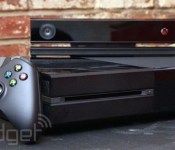
Latest Xbox One update preview revives friend log-in notifications

The Xbox One’s March update is so last month, those enrolled in the update preview program are already being invited to test the latest batch of upcoming tweaks. Version 1404, the April update, or whatever else you’d like to call it, will be rolling out over the next couple of days, with features and fixes being implemented piecemeal. Nevertheless, we know the full intentions of the next update, which will bring back friend sign-in notifications, make it clear who on your buddy list is engaged in multiplayer action, and allow you to check their favorite apps. A ‘saving game’ progress bar will be added, as well as flags that show what games/apps are being updated or have been recently. Beyond that, there’s another fix for the European 50Hz media playback problem, this time for Blu-rays, and improvements to voice and motion controls, game recording quality and compatibility with A/V gear under the One’s control, like TVs and set-top boxes. Most of us will have to wait until the update is properly tested, remember, but take comfort in the knowledge it’s on the way.

vrAse turns your smartphone into a VR headset (hands-on)

We’ll admit it, when we first laid eyes on vrAse — a smartphone case that gives your handset Oculus Rift-like functionality — we we’re a bit… curious? The ambitious/ingenious project was launched on Kickstarter at the end of last year, and while it didn’t get quite the huge sum that Oculus did, it captured enough imaginations to secure the money it needed. How does it work? An optimized app splits its output into two — side by side. You then slide the phone into the headset/case which has a lens feeding into each eye, creating a large, 3D image. The hardware we saw was just a prototype, but final designs should be ready by summer. We also got to try it on!
In effect, the vrAse is creative use of existing hardware (your phone) and existing software techniques, with some barebones hardware that brings the it all together (the case). The first benefit of this approach is the cost, the vrAse (think VR, case) will retail for around $100 once it fully launches later this year. Another benefit is that by offloading the heavy lifting to your phone, the brains of the operation is effectively endlessly upgradeable. Update your phone, you have a new engine in the machine. Other perks of this method mean you can also benefit from other features that come with a phone such as the camera or microphone.

In our quick demo with the vrAse, we we shown a demo that sits you in a roller coaster. The phone being used was a Galaxy Note, so one with a larger screen, but we were surprised by how immersive the experience was. As we rode around the virtual landscape, we genuinely felt the urge to lean left and right along with it — and the anticipation of a loop the loop was very real! Another demo we were shown used the phone’s camera — so that we could actually see the real world — but the software placed virtual furniture in the room that we could walk around and even change the color of with a voice command to the phone. Apps aren’t limited to working with the hardware either, games, for example, can have an optional 2D mode for when you just want to play on the phone directly.
The experience is perhaps not as fully immersive/slick feeling as the Oculus Rift due to the inherent compromises that come with an open hardware platform, and decentralized software (it’s, of course, open to iOS, Android, Windows Phone and beyond). This should improve, however, once the final hardware is comes to market, and the goal posts become a little more fixed. We were shown how the retail unit will look, but were unable to take photos. As you can imagine, it’s somewhat more attractive than the prototype we saw, and very much in keeping with similar headsets we’ve seen of late.

Apple Launches 8 GB iPhone 5c, Relaunches 16 GB iPad 4
As indicated by multiple reports yesterday, Apple has officially launched an 8 GB version of the iPhone 5c and relaunched a 16 GB version of the previously-discontinued fourth-generation iPad. The 8 GB iPhone 5c is currently being sold in Apple’s European Online Stores for £429 unlocked in all of the existing color options, where it is £40 cheaper than the 16 GB model and is expected to become available in the U.S. later today. The 16 GB iPad 4 is available worldwide and retails in Apple’s U.S. Online Store for $399, while customers may also purchase a cellular version for $130 more at $529.

The relaunch of the 16 GB iPad 4 has resulted in Apple discontinuing the three-year-old iPad 2, although the company’s European stores still currently show the iPhone 4S being sold alongside the new 8 GB iPhone 5c.
Apple’s iPhone 5c has seen lower-than-expected sales since its debut last September due to high demand for the flagship iPhone 5s. The move also comes amid a renewed push by Apple to promote the iPhone 5c, as the company has debuted a new set of playful dot-centric for the phone on popular blogging platform Tumblr as well as the front page of Yahoo.com and in recent issues of The New York Times.
Meanwhile, the iPad 4 has been brought back into Apple’s lineup after being removed in favor of the iPad Air last October. However, KGI Securities analyst Ming-Chi Kuo predicted in February that the company would shift from the iPad 2 to the iPad 4, as the latter sports Apple’s A6X chip and 1GB memory compared to the former’s A5 processor and 512 MB of memory.
Both devices are available to order from Apple’s Online Store or through the company’s retail locations.
     |
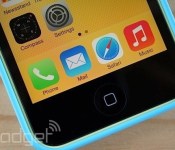
Apple’s new 8GB iPhone 5c now available worldwide

The rumors are true, Apple is launching an 8GB version of the iPhone 5c. After internal documents from German carrier O2 clued us into a new variant of Apple’s mid-tier phone, carriers across Europe have now begun taking orders for it. UK operator O2 and French provider SFR are offering the handset for free and one euro respectively on multi-year contracts, discounting it by more than £50 ($83) to tempt new customers. Apple has also added the new model to many of its online stores worldwide, pricing unlocked models at £429 ($714), which means you’ll need to pay an extra £40 ($67) to double your storage. While the 8GB variant is available in China, it remains conspicuous in its absence from the company’s US store. Apple has remained quiet regarding sales of its multi-colored iPhone, but today’s price drop could certainly indicate sales didn’t meet expectations.
Filed under: Cellphones, Mobile, Apple
Via: 9to5mac
Source: O2 Shop, SFR Store, Apple Store (UK)

Apple kills iPad 2 in favor of 4th-gen Retina display model

When Apple launched the iPad Air, it swiftly kicked the fourth-generation iPad to the curb, but kept the iPad 2 around as an “entry level” option. At the same time as the company has tweaked the iPhone lineup, it’s also pulling a switcheroo in the tablet space — dumping the iPad 2 and replacing it with the Retina-and-Lightning model. The unit is back on the Apple store for the same price as the Retina iPad Mini, so now it’s just a decision as to what size slab your hands can carry.
Source: Apple Store
 AIVAnet