


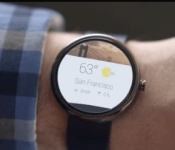
Google Announces “Android Wear”, The Android Based Smartwatch Platform
 Over the last few months there has been considerable speculation and rumor about Google bringing a smart watch to market with the help of LG. We fully expected the announcement to happen at Google I/O, but we also speculated that they would make it happen earlier so devs could get to work bringing great apps to it before it was available to buy. Today via their blog, Google has shared what the new Android Wear is going to be all about.
I am pretty convinced that Google has nailed it. Check out some details about the developer preview. Google is also launching the preview SDK for this next week.
After reading through the info and watching the videos a couple times, it is sounding like Android Wear is targeted as a software for smartwatches and wearables. If you watch the videos, you see various watch styles and designs. Google is already working with “Asus, HTC, LG, Motorola and Samsung; chip makers Broadcom, Imagination, Intel, Mediatek and Qualcomm; and fashion brands like the Fossil Group to bring you watches powered by Android Wear later this year.” That means that all these manufacturers will create their own slight twist or take on the look and options for a wearable using the Android Wear software. This doesn’t mean that Google isn’t going to produce one of their own to be sold on the Play Store. We are still convinced that LG will be making an Android Wear based Nexus branded watch for Google.
Google has brought the power of Google Now to your wrist. Utilizing the hot word, “OK Google” much like you can do on your device now without having to pull it out of your pocket. Reading through the blog post we also find out that you can tell Android Wear to cast content to your TV too.
Via Google Blog
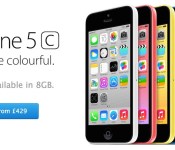
8 GB iPhone 5c Intended to Boost Mid-Tier Markets Where LTE Is Growing
With today’s launch of a new 8 GB iPhone 5c, much discussion has been centered around the observation that the new model is available in only a handful of countries: the UK, France, Germany, Australia, and China. In a statement to Re/code, Apple reveals that its strategy is to offer a lower-cost option that is compatible with LTE networks in countries where those networks are seeing rapid growth.
“The mid-tier iPhone segment is growing year-over-year and the 8GB model provides a more affordable option for markets where LTE is becoming more established,” an Apple representative told Re/code. The iPhone 5c, unlike the iPhone 4s, which is also still sold, supports LTE networks.

The report notes that Apple may prefer not to sell the 8 GB iPhone 5c in the United States because of the popularity of subsidized phones, which sees the 16 GB model being offered for $99 or even less on a two-year contract. There are, however, plenty of other countries where subsidies are not common and where Apple has elected not to offer the new 8 GB model. The business model is even changing in the United States, where T-Mobile has led a charge to decouple device pricing from service plans. Under the new models, carriers are offering interest-free payment plans on devices and charging users separately for their service.
     |

Google Launches ‘Android Wear’ Project for Wearable Devices
As promised, Google today announced its “Android Wear” project, which is designed to bring Android to wearable devices. To begin with, Android Wear will be focused on watches that will come in a range of styles from several different manufacturers.
Most of us are rarely without our smartphones in hand. These powerful supercomputers keep us connected to the world and the people we love. But we’re only at the beginning; we’ve barely scratched the surface of what’s possible with mobile technology. That’s why we’re so excited about wearables—they understand the context of the world around you, and you can interact with them simply and efficiently, with just a glance or a spoken word.
Android Wear for watches is designed to offer several functions over basic time telling. The app will provide notifications, messages, and updates from social networking apps and it will include Google Now capabilities allowing users to say “Ok Google” to ask questions, send texts, set alarms, and more. The “Ok, Google” function can also be used to control other devices, pulling up a music playlist on a phone or casting a movie to the TV.
Android Wear is also designed to be health-oriented, providing reminders for exercise goals and fitness summaries. Fitness apps designed to be compatible with Android Wear will be able to give real-time speed, distance, and time information.
Google’s Android developer site has gained a new section focused on wearables. Developers can obtain a Developer Preview of the software, designed to allow them to tailor existing app notifications for watches that will be powered by Android Wear.
Google has plans to release additional developer resources and APIs in the near future and has announced partnerships with several different electronics manufacturers including Asus, HTC, LG, Motorola, and Samsung, which could see a range of wearable Android-based devices appearing later this year. LG, for example, will launch a watch next quarter with Android.
The company is also partnering with chip makers Broadcom, Imagination, Intel, Mediatek, and Qualcomm, plus fashion brands including the Fossil Group to introduce watches powered by Android Wear in 2014.
| |
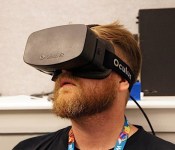
This is the week virtual reality goes wide

After attending the first day of the annual Game Developers Conference, the only games I played were in virtual reality. In the following four days, many, many more VR experiences will happen. Some will be good, some will be great, some will be not-so-great. One thing’s for sure: when this week’s over, the VR landscape will look very different.
SONY

Let’s get the elephant in the room out of the room right now: yeah, we’re all pretty sure that Sony’s got a VR headset and it’s going to be shown at GDC. This panel right here — which takes place this evening and we’ll be liveblogging — features a trio of big names at Sony’s PlayStation arm: Worldwide Studios head Shuhei Yoshida and PlayStation hardware R&D guys Richard Marks and Anton Mikhailov. Those three are particularly interesting for a few reasons. First, Yoshida already professed his love for VR to us last year. Second, the latter two gentlemen were previously involved with another major PlayStation hardware initiative: PlayStation Move. We’d call it less than shocking if some form of PlayStation-branded virtual reality headset is announced during tonight’s panel.
Of course, what Sony’s rumored headset can do is what matters most. Even the rumor mill is relatively light on this one; the only suggestion of its ability is that it’s superior to the original Rift dev kit and more similar to the Crystal Cove prototype from CES. Here’s hoping we’ll find out tonight!
OCULUS VR

Will we finally see the Oculus Rift retail unit at GDC? Sorry to tell you, but our money’s on no. Last we checked, there’s no launch window for the retail version of the Rift. And, wouldn’t you know it, the original Rift dev kit just recently stopped production. It’s no secret that, after the Crystal Cove prototype was shown at CES, another development kit would eventually have to exist. Now seems the perfect time to introduce a newer model dev kit with a higher-res screen, depth tracking, and “low persistence” — one giant step closer to what we’ll eventually be able to buy in stores.
VALVE
 This is a VR prototype headset from Valve
Valve insists it isn’t creating any consumer-grade VR tech just yet, but the folks behind Steam are still a presence at this year’s GDC. Besides coming for the business side of the show (finding new employees, brokering deals with other companies, etc.), we’re hopeful that the new Steam Controller iteration will be at the show for a fresh hands-on. In case you missed it, Valve added eight buttons in place of the touchscreen in the original prototype.
There’s also no indication that Valve’s updated game building tech, Source Engine 2, is getting any real showing. It makes most sense to show off fancy new engines with games, though, and that’s best saved for a private event or E3. We’ve not heard anything on the former, and the latter is approaching quickly (this June).
Oh, and Half-Life 3 will finally be re-announced and given a release date: it’s available right now! Hooray! … No no, not really. Sorry y’all.
THE REST

Yes, I did only mention two VR headsets. So what about the rest? GameFace Labs is here, albeit with the same prototype from CES (which uses Rift optics). We spoke with CEO Ed Mason yesterday morning and his company is working toward its next prototype for soon after GDC. His company was the only other VR headset maker we found at CES this year. At GDC, however, they’re one of five or six (that we know of thus far). Some may be hangers-on to the sudden mass interest in VR, but we also expect to see some very interesting new entries in the field of VR by weeks end.
We’ll of course bring it to you live, as fast as we can, from sunny San Francisco.

IUNI U2 is palm-friendly Xiaomi competitor, packs an UltraPixel front camera

When Gionee’s spin-off online mobile brand IUNI — taken from “I am unique” — launched back in November, it vowed to go right after Xiaomi with a similar sales strategy, but it’s also differentiating itself by delivering “stunning” hardware design and “elegant” UI at the same time. Earlier today, the Chinese company finally showed off what it’s been working on: the U2. This 2.2GHz Snapdragon 800 device is positioned as the best single-hand metallic phone, featuring a 4.7-inch 1080p LTPS display — similar to that of last year’s HTC One — tucked within a 65mm-wide aluminum body, which is narrower than the Huawei Ascend P6 and even the Moto X. Oh, and it’s cheap, too: the 32GB version with 3GB of RAM is just CN¥1,999 (about $320) unsubsidized, whereas the 16GB version with 2GB RAM is just CN¥1,799 (about $290).
Even though the U2 is a budget phone, a lot of work has been put into its design. The “double curve” design on the back reminds us of the palm-friendly Moto X, but appearance-wise, it’s very much like a distant cousin of the HTC One due to the similar zero-gap aluminum construction. However, IUNI pointed out that due to the 10-degree folds at the top and bottom, along with the shinier “3D polish” on the chamfer, the yield is just 48 percent from the 90-minute process at BYD’s production lines. IUNI admitted that this costly process is rather insane for a budget brand, but this is where they see an opportunity to fight other Chinese online brands — most of which sell plastic devices.

On the software side, the IUNI OS claims to be the cleanest Android ROM you can get (at least in China), as it won’t come with any pre-loaded third-party apps that tend to help generate revenue for manufacturers. The OS itself is also designed in a way to minimize the number of swipes and taps for most common actions, but we’ll only know how effective this is once we have spent some time using it.
Overall, it’s pretty exciting to see a new player injecting fresh energy to the Chinese budget market. While most vendors are offering cheap product by cutting corners, IUNI is really trying to offer a decent phone that makes sense to users, while still able to sell it in the same price range. The U2 has the most efficient 16-megapixel camera, the fastest front-facing camera and it is great for single-hand usage. Sure, it only has HSPA+ instead of LTE, and the battery’s just 2,200mAh, but for just $320 unsubsidized, we’re not complaining at all. If you live in China, you can already head over to IUNI’s website to leave a deposit for the 32GB version of the U2. Sadly, there’s no word on global availability, but we’ll keep an eye out for further news.
Filed under: Cellphones, Mobile
Source: IUNI
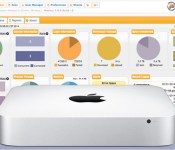
Engadget giveaway: win a Mac mini courtesy of CrushFTP!

For many Engadget readers, part of the work day consists of telling co-workers to “move” so they can get in there and fix the computer — after advising a restart, of course. So we’re offering an IT-centric giveaway this week courtesy of CrushFTP, makers of robust and secure file transfer server software and long-time gadget hackers. They’ve given us an Apple Mac mini and a full enterprise version of CrushFTP for one lucky Engadget reader. This prize pairing provides all the tools necessary for setting up a fully functional file server with a browser-based UI for monitoring and controlling all the exchanges. CrushFTP includes modern HTML5 support, ad-hoc sharing, customizable web forms and a litany of other high-level features to help keep server workflows running smoothly. All it takes is a few clicks and you could be on your way to winning this Apple Mac mini and software package; just head on down to the Rafflecopter widget to enter. You’ll barely even have to move yourself.
- Entries are handled through the Rafflecopter widget above. Comments are no longer accepted as valid methods of entry. You may enter without any obligation to social media accounts, though we may offer them as opportunities for extra entries. Your email address is required so we can get in touch with you if you win, but it will not be given to third parties.
- Contest is open to all residents of the 50 States, the District of Columbia, and Canada (excluding Quebec), 18 or older! Sorry, we don’t make this rule (we hate excluding anyone), so direct your anger at our lawyers and contest laws if you have to be mad.
- Winners will be chosen randomly. One (1) winner will receive one (1) Apple Mac mini (A1347) and a 6-month Enterprise subscription to CrushFTP.
- If you are chosen, you will be notified by email. Winners must respond within three days of being contacted. If you do not respond within that period, another winner will be chosen. Make sure that the account you use to enter the contest includes your real name and a contact email or Facebook login. We do not track any of this information for marketing or third-party purposes.
- This unit is purely for promotional giveaway. Apple, CrushFTP and Engadget / AOL are not held liable to honor warranties, exchanges or customer service.
- The full list of rules, in all its legalese glory, can be found here.
- Entries can be submitted until March 19th at 11:59PM ET. Good luck!
Filed under: Announcements, HD, Mobile, Alt, Apple

Facebook’s face-recognition tech is almost as good at Stallone-spotting as you are

Facebook’s long been interested in facial recognition, as the photo tag-suggestion feature that didn’t go down too well in Europe shows. The Zuck’s social network also gobbled up a face-recognition outfit in 2012, but it’s Facebook’s AI research team that’s made headway recently with technology that’s almost as good as us meatsacks at identifying mugs. Known as DeepFace, the system uses a “nine-layer deep neural network” that’s been taught to pick up on patterns by looking at over 4 million photos of more than 4,000 people. We’re not as up-to-date with complex machine learning techniques as we should be, either, but the main reason DeepFace is so accurate is its method of “frontalization” — or, creating a front-facing portrait from a more dynamic source image.
Like in the Sly storyboard above, the tech maps facial features, combines them with a generic 3D mask, and spits out a model that can be orientated so the subject is now perfectly posed. By doing this, it can simply compare the output with other images generated in the same way, thus silencing troublesome differences in lighting, expression, face position and the like as best it can. And, it does an extremely good job, with 97.25 percent recognition accuracy in a standardized test that humans score just over 97.5 percent in. DeepFace is just an academic endeavor currently, but it would seem like a wasted effort if Facebook didn’t make use of all this work in the future — because we’re all looking forward to being auto-tagged in the background of poorly lit pictures with our best nightclub-faces on, aren’t we?
Filed under: Internet, Facebook
Via: The Verge, MIT Technology Review
Source: Facebook

Barnes & Noble brings Nook Press self-publishing to parts of Europe

Does your agent constantly reject your manuscript about a teen wizard who falls in love with a vampire and has to fight for their life in a televised death zone? Barnes & Noble feels your pain, and is opening up the Nook Press self-publishing platform to parts of Europe to get your story told. From today, the web-based service launches in the UK, France, Germany, Spain, Italy, the Netherlands and Belgium. But how much do you stand to make? If your title is priced between £1.50 (€2.50) and £7.99 (€9.49) you’ll receive 65 percent of the fee, and if it’s under £1.50 (€2.49), you’ll get 40 percent land in your bank account. Just remember that Amazon is the only e-reader company that’ll let you write your GI Joe opus.
Source: Nook Press, Barnes & Noble
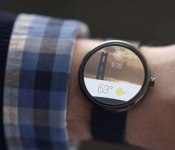
Google announces Android Wear, a Nexus-like platform for wearables

Google’s getting into smartwatches in a rather large way. As previously reported, the search giant is extending its Android platform to more wearables than just Glass. In a blog post that went out today, Google announced Android Wear, which is essentially a way for the company to extend its mobile OS to a new category of devices while offering a lower cost for developers and users — think Nexus for smartwatches. Of course, smartwatches are just the beginning, Google acknowledged that there’s plenty more to come, but it was ” starting with the most familiar wearable.”
One of the most eye-catching features we’ve seen so far is the same always-listening experience that we’ve enjoyed on the Moto X. Anytime you need to do something with your watch, just say “OK Google” and everything from pulling up nearby gas stations, to restaurant reservations are just a quick voice command away.
Developing…
[Image credit: Getty Images]
But there’s more to Wear than just putting voice search on your wrist. As the rumors have suggested, it pulls in contextual updates as well, just like Now — putting the power of its preemptive search a quick glance away. Obviously it also pulls in notifications from messaging apps like Hangouts or your social networks. But the real power lies in the ability for developers to extend their applications to your Android-powered smartwatch. For example, Google is already promising that “favorite fitness apps” will offer real time speed and distance tracking. (Get on that RunKeeper!)
We’re still waiting to get details on specific watches, but features like these (and many more) have to be incredibly power efficient to ensure your new fancy piece of digital jewelry actually lasts longer than a day. Expect to start seeing devices working on the new platform sometime next quarter (as luck would have it, Google I/O will be held at the very end of that quarter). And, fingers crossed, maybe Google will announce that Now is opening up to third parties as part of its wearable push.
Filed under: Wearables, Wireless, Mobile, Google
Source: Google
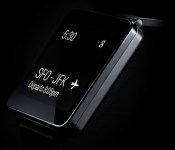
LG G Watch to launch next quarter with Android Wear

Over the last two years, LG has established a storied history of collaboration with Google. The two companies have worked together on three devices (two Nexus smartphones and a Google Play edition tablet) and today we’re hearing about the fourth — a smartwatch. LG’s latest piece of handywork, known as the G Watch, features Google’s new wearables platform called Android Wear. LG’s keeping quiet on the specs and other details of the new device, but the above image at least gives us a sneak peek of what we can expect. Just by looking at the Now-like flight information on the watchface, we can tell that Google Now features prominently on the platform. And just like on the Moto X, users will be able to initiate voice commands by simply speaking “OK Google.”
LG wants the G Watch to act as a “low barrier to entry” for developers, while offering a Google experience to users at the same time; this likely means that when the watch arrives sometime next quarter (exact date and pricing remains unknown), we can expect it to sell at a rather competitive price point. “The opportunity to work with Google on LG G Watch was the perfect chance for LG to really pull out all stops in both design and engineering,” said Dr. Jong-seok Park, CEO of LG’s Mobile Communications division. “We’re confident that a well-designed device has the potential to take the smart wearable market by storm.”
Filed under: Cellphones, Wearables, Wireless, Mobile, Google, LG
 AIVAnet