



iPhone 6 May Include Temperature, Pressure and Humidity Sensors
 Electronics analyst Sun Chang Xu reports on her Weibo account that the next iPhone may add a pressure, temperature and humidity sensor.
G for Games relayed the relayed the report and points out that the “pressure” in this context is certainly atmospheric, not blood pressure:
According to Sun Chang Xu (news chief analyst at ESM-China), sources close to the matter have revealed that Apple will catch up in the “sensors department”, as the iPhone 6 will feature pressure, temperature and humidity sensors. Please note that the analyst is probably not referring to blood pressure (this feature is rumored to be implemented in Apple’s iWatch) but to atmospheric pressure.
This same analyst previously reported that Apple may use “optical sensors” to measure heart rate and oxygen levels in the rumored iWatch. The addition of these atmospheric sensors would bring it up in line with Samsung’s S4 which included similar atmospheric sensors.
The addition of more sensors to the iPhone 6 seems a natural progression with all the recent reports that Apple has been aggressively hiring individuals in the area of health sensors. iOS 8 is said to include a Healthbook app which reports on many health related sensors.
     |

Jonathan Ive: ‘We’re surrounded by anonymous, poorly made objects’

In a rare interview, Apple’s VP of Design offers at least a little insight into both his thinking and how Apple makes its products. Apparently, it all starts with Jonathan Ive imagining what a new kind of product should be and what it should do. After that, the process moves on to what it should look like. Inspiration here apparently comes from, well, everywhere, from candy manufacturers to metalworkers in Northern Japan. It’s no surprise to hear that Ive labors over the details: “months and months and months” were spent on perfecting the iMac stand. “When you realize how well you can make something, falling short, whether seen or not, feels like failure.”
“We don’t take so long, and make the way we make for fiscal reasons.”
More than any Apple product in particular, however, it’s the idea that customers might not be completely driven by prices — that’s what he’s most pleased with. “We’re surrounded by anonymous, poorly made objects. It’s tempting to think it’s because the people who use them don’t care – just like the people who make them.” Ive references that life-changing products, unimaginable before, are expensive – and that’s part of the Apple premium.”We don’t take so long, and make the way we make for fiscal reasons.”
“It’s not just about aesthetics… Our success is a victory for purity, integrity – for giving a damn.” His thoughts on Apple designs and ideas that appear elsewhere? “It’s theft. What’s copied isn’t just a design, it’s thousands and thousands of hours of struggle… It takes years of investment, years of pain.”
Looking for more details on an Apple TV or iWatch? You’ll have to find those elsewhere. (“I’m not going to talk about that. It’s a game of chess, isn’t it?”) But if you’re willing to leap past the paywall, you’ll find the rest of the reverential piece here. (Oh, and Ive mentions he’s terrible at mathematics.)
Filed under: Cellphones, Desktops, Laptops, Mobile, Apple
Source: The Sunday Times

Google improving on Samsung and PA’s Pie-style menu?
Looks like Google is working on multi-touch pie-style menus as they’ve just filed a patent on touch-screen radial menus.
Now, we’ve seen a lot of lead up to this in Android, with Samsung’s S-Pen menu options, Paranoid Android’s “Pie” navigation features, and even Google’s own AOSP browser’s “Quick controls” option (which I always loved, and kept me from migrating to Chrome for quite some time)
Here’s why I’m excited about this. Growing up watching movies with futuristic touch interfaces, I always wondered what inexplicable quality existing touch interfaces were missing that would just give them that futuristic feel, let’s have a look, shall we?

Now aside from the fact that most of these are transparent displays, what do you have? AWESOME radial menus, that’s what.
I leave you with this;

Let’s all take a moment to thank Google for working on bringing the futuristic interfaces from Minority Report to our Android powered devices.
The post Google improving on Samsung and PA’s Pie-style menu? appeared first on AndroidGuys.

Jony Ive Discusses Design Philosophy, Relationship with Steve Jobs, and Future of Apple in New Interview
 In a lengthy interview with The Sunday Times (via 9To5Mac), Apple’s Senior Vice President of Design Jonathan Ive discussed a number of topics including his philosophy on design and collaboration, the strong relationship he had with former Apple CEO Steve Jobs, and the future of Apple along with thoughts on new product categories.
Speaking on his approach to design, Ive stated that he starts on a project by imagining what “a new kind of product should be and what it should do,” revealing that his design team consists of 15 people from the United States, New Zealand, Japan, Australia and Britain. Ive added that the majority of work amongst his team happens in his office, which consists of computer controlled cutting machines and a large wooden bench that resembles a Genius Bar for new products and prototypes.
Ive also discussed his tried-and-true approach of perfecting a product’s design:
[Ive] spent “months and months and months” working out the exact shape of the stand of the desktop iMac computer because “it’s very hard to design something that you almost do not see because it just seems so obvious, natural, and inevitable.” When he has finished a product, even one as fresh and iconic as the white headphones that came with the first iPod, he is haunted by the idea: could I have done it better? “It’s an affliction designers are cursed with,” Ive frowns.
On the topic of his late friend and former Apple CEO Steve Jobs, Ive spoke out against the negative comments about Jobs’ tough management style, stating that the former CEO had unique characteristics which led to great work:
So much has been written about Steve, and I don’t recognize my friend in much of it. Yes, he had a surgically precise opinion. Yes, it could sting. Yes, he constantly questioned. ‘Is this good enough? Is this right?’ But he was so clever. His ideas were bold and magnificent. They could suck the air from the room. And when the ideas didn’t come, he decided to believe we would eventually make something great. And oh, the joy of getting there!
When asked about wearable technology and whether Apple will make an iWatch smart watch, Ive replied that there are “obviously rumors about about [Apple] working on one”, but stated that he would “obviously” not be talking about the subject, likening the rumors surrounding the iWatch to “a game of chess.” Recent reports have pointed to Apple currently developing such a device to be revealed later this year, which may include health-tracking features and integration with other iOS devices.
Finally, Ive answered as to whether he’d stop working at Apple if the company could no longer make innovative products, and gave his optimistic vision for the future:
“Yes. I’d stop. I’d make things for myself, for my friends at home instead. The bar needs to be high.” But, he adds: “I don’t think that will happen. We are at the beginning of a remarkable time, when a remarkable number of products will be developed. When you think about technology and what it has enabled us to do so far, and what it will enable us to do in the future, we’re not even close to any kind of limit. It’s still so, so new.”
Traditionally a quiet figure, Ive has been very instrumental in Apple’s success since assuming his role after the return of Steve Jobs in 1997, designing some of Apple’s most successful products including the iMac, MacBook Pro, MacBook Air, iPod, iPhone, and iPad.
Currently, he leads Apple’s Industrial Design Group and oversees the company’s Human Interface division, a position he took in October 2012 after then-Senior Vice President of iOS Software Scott Forstall left the company. Ive also directed the effort behind iOS 7, which was released last September and featured a completely new design in addition to various other tweaks.
| |
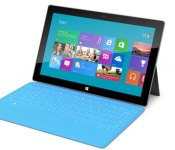
How would you change the original Surface?

At the tail-end of 2012, Microsoft launched the Surface with Windows RT, a gorgeous, homegrown tablet that was meant to be a productivity-focused alternative to the iPad and Android tablets. Unfortunately, the device didn’t sell anywhere near as many as then-CEO Steve Ballmer had predicted, which some believe is what caused him to lose his job. However, the Surface has lingered around, and we’re sure many of you bought one when the price was cut. The question for you all to answer now is: what about it would you change? Tell us all, over on the forum.
Filed under: Tablets, Microsoft
Source: Engadget Product Forums

Seagate 600 Series SSD Review; Speed and Storage Capacity Priced Right
Before you say anything, Your right, SSDs having nothing to do with Android. At AndroidSPIN we use all sorts of technology to write articles, hack and root our devices and any technology that helps us do this better is fine with us. That’s why we occasionally write reviews and report on other technologies out there.

It’s amazing how much storage technology hasn’t significantly changed for a long time. Computers and smartphones keep getting more and more memory and memory gets smaller and smaller, but computer hard drives have always been the throttling point of many products.
The evolution of mechanical hard drives has finally reached a point where solid state memory is starting to replace them. No more tiny motors and magnetic platters holding your precious data and failing every couple of years.
Solid State Drives or SSDs are now becoming a viable option as prices fall and speed and reliability increase. Laptops are the main concern as they are inherently mobile devices and anything mechanical that spins and contains tiny little read heads sitting dangerously close to your data. One touch and that data is corrupted. One sudden movement too much of your laptop while its reading data and its toast.
OK, that may be a little bit of an exaggeration, but they are prone to failures if they are dropped at just the wrong time, or placed down too hard on a solid surface while the drives are spinning.
SSDs are just lumps of memory configured to act like a regular hard drive and designed to give significant speed increase.
I’m not going to go into too much technical detail with piles and piles of stats that show how fast SSDs really are, what I’m trying to do here is give you a good understanding of how SSDs will improve the everyday use of your computers.
The Seagate 600 Series SSD
You’ve all heard of Seagate. Seagate is one of the biggest and well known manufacturers of hard drives. Chances are you’ve got one their drive in your current computers or you’ve had one in the past.
Seagate has finally entered the SSD arena. We thought this day would never come. While almost every other manufacturer jumped onto the SSD bandwagon, in the late nineties Seagate had been quoted as dismissing SSDs and apparently didn’t seem to believe in the technology, until now.

Enter the Seagate 600 Series SSDs. Seagates first consumer oriented Solid State Drive. Seagate sent us a model ST480HM001 480 GB internal Notebook Drive for review. They are available in 120GB, 240GB and the 480GB model that we received for testing.
Here’s the specs of Seagate’s entire line of SSDs:

Here’s quick video from Seagate for your enjoyment:
The Seagate 600 SSD is a designed with 2.5-inch MLC NAND optimized for performance.
The SSD is a available in two form factors, 5mm and 7mm primarily designed as an upgrade for laptop users who want the bets performance possible. Additionally, SSDs have no moving parts so there is less chance of disk failure if you accidentally drop your laptop. One immediate boost you’ll see is load times that are 50% faster than traditional HDDs. solid State memory does have limits, the Seagate 600 SSD offers up to 40GB of data writes over its 3-year warranty period, as quoted by Seagate. That’s a lot for sure when you average it out.
if you’d like to see the data sheet for the 600 series drives, you can find it here.
In the real world, the speed increase if immediately noticeable. I installed the drive in my Lenovo Y510P laptop, used a drive cloning package to make an exact duplicate of the drive already installed, swapped the drives across and was up and running in one and a half hours.
Performance
The first boost I noticed was powering on my laptop and booting windows in less than half the time it previosly started. I was immediate impressed and my hopes were high for the rest of the testing. With the stock 1TB 5200RPM drive, my laptop would take up to a minute compared to about 10 seconds with this SSD. This blows away the 50% increase claims generally floating around.
I also ran a quick benchmark using CrystalDiskMark with the stock HDD in my laptop and then again after I installed the SSD. these are benchmarks and show the raw performance of the drives, but I still prefer the real world tests.
Here’s how my laptop stock 1GB 5200RPM HDD performed in CrystalDiskMark:

Here’s how my laptop performed in CrystalDiskMark with the Seagate 600 Series 480GB SSD:

Pretty significant don’t you think!
If you really want to see benchmark stats, do a quick search in Google and you’ll find plenty.
I’m an engineer by trade and create a lot of complex 3D models using Inventor from AutoDesk. Inventor is a very heavy product and can take a while to load up. Using the previous 5200 RPM hard drive took around 50 seconds to fully load AutoDesk inventor. With the Seagate SSD, Inventor took a mere 7 seconds. Yes you are reading that right. The speed increase was unbelievable.
I’ve upgraded five computers at our offices with SSDs. We had an older Lenovo Thinkpad laptop that was slow and used around the workshop for viewing 3D models, parts look up and various other tasks. Upgrading the hard drive to an SSD turned this three year old laptop into a responsive, nice to use, power house. The leap in performance is amazing.
Conclusion
Every application I launched saw a significant decrease in load times and my laptop experience increased to an entire new level. If you’ve every thought about upgrading your computers, SSDs are the first area you should consider. You pay a premium, but it could mean the difference between scrapping an older laptop or using it for another year.
There are a lot of choices out there, but the Seagate 600 series is high on the list of options you should consider. The pricing is very competitive and the performance is among the best of the SSDs available.
The Seagate 600 is a top notch performer and the price performance ratio is about as high as you can get.
You can grab the 480GB models for as little as $250 at the time of writing this article, and the 240GB models for about $130.
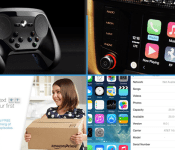
Weekly Roundup: Apple releases iOS 7.1, Amazon raises the price of Prime and more!

You might say the week is never really done in consumer technology news. Your workweek, however, hopefully draws to a close at some point. This is the Weekly Roundup on Engadget, a quick peek back at the top headlines for the past seven days — all handpicked by the editors here at the site. Click on through the break, and enjoy.

Apple releases iOS 7.1 with CarPlay support
Apple recently unveiled its CarPlay interface at the Geneva Auto Show, and now its complimentary iOS 7.1 update is ready for action. In addition to CarPlay functionality, 7.1 brings a lengthy list of bug fixes and and a couple of clever Siri improvements. So head on over to your settings menu and get downloading.

Amazon raising Prime subscriptions by $20 to $99 a year
After Amazon acquired Lovefilm and its database of over 70,000 movie titles, we suspected that US Prime customers were subject to a price increase. Now, the announcement is official. Brand new customers have seven days left to lock in their first year of Prime for $79, after that renewals will cost $20 more.

Here’s a much clearer look at Valve’s new Steam Controller
Valve released the first prototype Steam Controller toward late last year, and now it’s given us a much better idea of what the final product will look like. When compared to the older version on the right, you’ll notice the newer model lacks the touchscreen, but adds several buttons in its place.

Report: This is what iOS 8 looks like, at least right now
What you’re looking at is reportedly a leaked screenshot of Apple’s iOS 8 mobile operating system, according to the Chinese microblog site Weibo. And if you look closely, you’ll notice the image features the expected Healthbook app, as well as three interesting new additions: TextEdit, Preview and Tips.
You also might like:
Filed under: Misc

HTC Features ZOE in their New Technical Translation Video

Technical Translation has been a very humorous look into the HTC One’s features, and today, we get a look at photo gallery feature, ZOE. This was another feature that a lot people actually enjoyed seeing when it was unveiled, but I think Google’s Auto Awesome took a little spotlight away from the feature.
Like the rest of the Technical Translation videos, the two men tease the All New HTC One at the end, by bleeping out words and blurring out the device. It is another funny chapter in HTC’s new campaign, so check it out and let us know what you think.
 AIVAnet