


Inhabitat’s Week in Green: floating skate ramp, foldable electric bicycle and a 3D-printed sneaker
Each week our friends at Inhabitat recap the week’s most interesting green developments and clean tech news for us — it’s the Week in Green.

The Earth is a mysterious place. Scientists recently discovered a small, rough diamond that reveals the existence of an ocean of water more than 250 miles below the Earth’s surface. But that’s not all: A German company has figured out how to produce super-strong spider silk from genetically modified E. Coli bacteria. Electric vehicles have been picking up steam around the world. Case in point: Norway is set to become the first country in the world with one electric vehicle on the road for every 100 cars.
But politicians in the US are pushing back against electric carmakers. New Jersey made it illegal for Tesla to sell its vehicles directly to consumers last week, ruling that the company must instead sell its cars through a franchise. On the design front, the Eiffel Tower, one of the world’s most iconic landmarks, is set to get a green upgrade as solar, hydraulic and wind power systems are being installed on the tower’s first floor. And pro skateboarder Bob Burnquist made a splash when he and his team debuted an awesome new floating skate ramp in Lake Tahoe.
Big car companies aren’t the only ones innovating with electric cars; in the Chinese city of Zhengzhou, one man built a tiny electric Lamborghini out of $815 worth of stainless steel and batteries to take his grandson to school. One of the world’s most famous luxury car companies is greening up its image: Last week, Rolls-Royce announced plans to create a plug-in hybrid vehicle within the next three years. In two-wheeled transportation news, the company Revolights is raising money to produce the first integrated brake light for bicycles. Designer Dan Gestoso Rivers created a beautiful IKEA-inspired bicycle that can be assembled with a single Allen wrench. And Inhabitat took a look at the clever GiBike, a full-size electric bicycle that can fold up to fit in any apartment.
Of all the man-made impacts on the environment, noise pollution is perhaps the least discussed — but it can have a powerful effect on our health. In response to the problem, Blue Forest designed the Quiet Treehouse, a cocoon-like structure that will be donated to The Chestnut Tree House Children’s Hospice in West Sussex. In other architecture news, a design team in Vietnam created a beautiful vegetable nursery from bamboo and more than 2,000 plastic bottles. The Chilean design firm Smiljan Radic has been selected to build a temporary structure that looks like a giant boulder propped up on four large stones for the 14th Serpentine Gallery Pavilion in London. An up-and-coming architecture student named Tyler Short has designed an incredible shading system that rotates in three directions in accordance with sun’s position. And a Barcelona-based artist group created one of the world’s most unexpected public art installations by inflating enormous balloons inside buildings to transform them into mind-boggling works of art.
Solar panels will soon be much more accessible for American consumers: Best Buy and SolarCity just announced a new partnership to sell off-the-shelf photovoltaic systems. In other science and tech news, one company has produced a compact LED phototherapy device that can treat jaundice in infants. A new company called Isidore Electronics Recycling is giving ex-cons in Los Angeles another shot while diverting e-waste from landfills. The Open Source Beehive project aims to put the power to fight colony collapse disorder in the hands of everyday people. Not only does the project offer kits for building your own backyard beehive, but it also gives scientists new tools to monitor global bee health. And in wearable tech news, Recreus has produced a 3D-printed sneaker that is flexible enough to fold up and fit in your pocket.

Who said the Galaxy S3 was dead? Here’s the Samsung Galaxy S3 Slim in all its low spec Glory
 While most of the world is now awaiting the retail release of the Samsung Galaxy S5, Samsung continues to pad out the rest of its device line-up, this time with the Samsung Galaxy S3 Slim, a low specification model which presumably looks a lot like the original Galaxy S3 but has very little similar on the inside. As far as I can tell from the dimensions given on the product page, the S3 Slim is actually a little thicker than the original S3 at 9.7mm compared to 8.6mm; Samsung marketing strikes again it seems.
The S3 Slim is going to be packing a quad-core processor clocked at 1.2GHz with 1GB RAM, 8GB storage and a 2,100mAh battery. It will also feature a 8MP rear camera and VGA front camera, as well as a 4.5-inch 960×450 resolution display. Unfortunately, the S3 Slim is going to be launched with Android 4.2 so there are not really any benefits to this device over the original S3, though the device appears to be targeted for a Brazilian audience so far; no word on whether other regions will see the device as well.
What do you think about device releases like the Samsung Galaxy S3 Slim? Let us know your opinion in the comments.
Source: Samsung via Phones Review

Project Aria, Amazon’s rumoured first smartphone, is still on its Way
 We’ve heard whispers of an Amazon-branded smartphone for some time now but nothing has ever eventuated from those rumours. According to TheInformation though, there’s still a chance that this device might be happening in the near future. The news stems from a report that says Amazon is developing the smartphone under the name Project Aria and is planning to launch a device in the U.S., Latin America, Europe, and Asia later this year.
The report goes on to say that such an Amazon smartphone would be running Amazon’s own forked version of Android that we’re familiar with on the Kindle tablets. While Android purists will scoff at this eventuality, people who have already bought into Amazon’s ecosystem and extensive Amazon appstore might just jump at the chance to add a Amazon smartphone to that family.
Who would be interested in getting an Amazon smartphone? Do you think Project Aria is ever going to see the light of day? Let us know what you think in the comments.
Source: TheInformation via Phone Arena
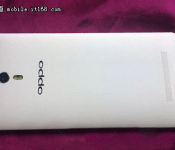
[LEAK] Images of the Oppo Find 7 and its retail packaging leak out ahead of its Announcement
 The Oppo Find 7 is turning out to be quite an intriguing device ahead of its March 19th announcement; touting two variants with different display resolutions, one of which will have a 2K display, a Snapdragon 800 processor and 13MP camera. This much was revealed in an entry in the red dot 21 design database, though we’ve yet to see the device in the flesh. As luck would have it, images of the Oppo Find 7 have leaked out showing not only the device itself, but its retail packaging as well.
 It’s been noted by Phone Arena that the packaging for the Find 7 is exactly the same as the Oppo N1 released late last year, but for the rest of us that didn’t get the N1, the packaging does look very intriguing and refreshing. The leaked photos of the Find 7 look pretty much exactly what was shown last week, except in white. We also get a sneak peek of the UI planned for the Find 7 and it looks like it’s pretty heavily skinned; no CyanogenMod influence this time it seems. You can check out the rest of the leaked images down below:


Only a few days more before the Find 7 is announced: are you excited to hear more about Oppo’s new flagship device? Let us know your thoughts on the device in the comments below.
Source: IT168 via Phone Arena
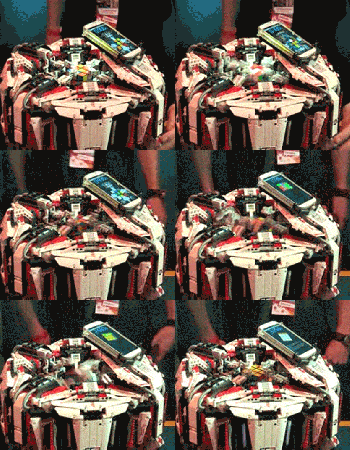
Lego Cubestormer robot solves Rubik’s Cube in less time than it takes to read this headline

Until yesterday, the world record for fastest time in solving a Rubik’s Cube was 5.27 seconds, which was set in the fall of 2011 by a Lego robot named Cubestormer 2. Thanks to the machine’s successor (aptly named Cubestormer 3), the time to beat is now 3.253 seconds. The robot, which is the third in a series of automatons designed solely for the purpose of solving the Rubik’s Cube ASAP, is powered by an octa-core Samsung Galaxy S4; it’s got four high-performance ARM Cortex-A15 cores and four lower-intensity Cortex-A7 cores running the show, each one managing its own Lego Mindstorms actuator.
Essentially, the phone is responsible for analyzing how the cube is arranged, outlining the steps necessary to solve it, and then instructing the robot what to do. We can’t help but wonder how different the end result would be if a high-end Snapdragon, Intel, NVIDIA or Apple chipset had been used, but we’ll leave it up to the brilliant minds of designers David Gilday and Mike Dobson to tackle that challenge with the Cubestormer 4 when the time is right. And in case you want a reference point as you watch the video below, the fastest human time is 5.55 seconds. (We’d be happy if we could solve it in less than 10 minutes.)
Filed under: Cellphones, Robots, Wireless, Mobile, Samsung
Via: Gizmodo
Source: BusinessWire
Court rules that Pandora won’t pay higher royalties to songwriters

Pandora has been fighting tooth and nail against potential songwriting royalty increases, and it appears that this tenacity is largely paying off. A court has ruled that the streaming radio service should pay the same 1.85 percent royalty rate that it has paid for years, resisting both Pandora’s call for 1.7 percent (like traditional radio) and the American Society of Composers, Authors and Publishers’ (ASCAP) demand for 3 percent. Details of the ruling are under a court seal, so the motivations behind the decision aren’t yet clear. However, ASCAP is more than a little upset by its loss; it sees the verdict as proof that full-scale licensing reform is necessary to “reflect the realities” of modern music. Whether or not that’s true, the Society may have inadvertently sabotaged its own case. It pointed to iTunes Radio’s higher royalty rate as a model for fair compensation, but Apple is willing to make little to no profit from its music services — ASCAP may have unintentionally suggested that its proposal wasn’t realistic.
Filed under: Cellphones, Internet, Mobile
Via: Billboard
Source: ASCAP

Court rules that Pandora won’t pay higher royalties to songwriters
Pandora has been fighting tooth and nail against potential songwriting royalty increases, and it appears that this tenacity is largely paying off. A court has ruled that the streaming radio service should pay the same 1.85 percent royalty rate that it has paid for years, resisting both Pandora’s call for 1.7 percent (like traditional radio) and the American Society of Composers, Authors and Publishers’ (ASCAP) demand for 3 percent. Details of the ruling are under a court seal, so the motivations behind the decision aren’t yet clear. However, ASCAP is more than a little upset by its loss; it sees the verdict as proof that full-scale licensing reform is necessary to “reflect the realities” of modern music. Whether or not that’s true, the Society may have inadvertently sabotaged its own case. It pointed to iTunes Radio’s higher royalty rate as a model for fair compensation, but Apple is willing to make little to no profit from its music services — ASCAP may have unintentionally suggested that its proposal wasn’t realistic.
Filed under: Cellphones, Internet, Mobile
Via: Billboard
Source: ASCAP

Torrent front end Popcorn Time made streaming movies free and easy, so of course it’s gone

For about four days “Popcorn Time” lived, opening an easy-access door to streaming movies via torrents, but now it’s gone. Aggregating info from APIs (YIFY for torrents, OpenSubtitles for subs and TheMovieDB for metadata) its developers quickly pushed out open source apps for Linux, OS X and Windows. The team explained that it’s meant to be as easy as using Netflix, and insisted no legal problems were incoming because it didn’t host any content locally or charge anything. Whether Hollywood studios agreed (doubtful) won’t be known, as a “Goodbye” statement on the Popcorn Time website says the project is over “because we need to move on with our lives.” If this sounds like a dream setup however, all is not lost — TorrentFreak has heard from the YTS movie torrent site that it’s picking up the baton and expects to release an installer “shortly.”
Filed under: Home Entertainment, HD
Source: TechCrunch, Popcorn Time (1), (2), TorrentFreak

[Op-ed] Why aren’t their more options for built-in storage for our mobile devices?

In the year of 2012, leaps and bounds where made in the mobile market. It was the first of many things to come at a fast pace. Dual-core 1 ghz processors became the norm. As well as having storage options of 16 or 32 gigabytes on board storage.
The year now is 2014. We have full high definition (HD) screens, quad-core processors that can run over 2 ghz and your choice of 16 or 32 gigabytes of on broad storage. I will give you a second to process that. We have made leaps and bounds in every area but on board storage. Worst of all, most manufacturers don’t offer external expansion.
Are there ways to expand memory? Yes. Some companies offer cloud storage. Problem with that is most carriers are on a tier data plan. The other carriers that do offer unlimited data either slow down your data or don’t have very much coverage to truly enjoy it. Another way is, if your running Android device, you can connect a USB thumb drive to the phone with some trickery and a special cable. Some thumb drives now even offer a private WiFi connection. However, they can be expensive and the WiFi thumb drive runs on a battery. Just something else to make sure that is charged.
In the full HD world of the mobile market, most forms of entertainment are taking up more and more space. Mobile apps take more space to be visually appealing on HD screens. Mobile games take more space to run on full HD. Worst of all, Android custom user interfaces take up more space. For example I have a LG G2, I bought it with 32 gigabyte built-in storage. Out of the box I only have access to 24 gigabytes. Yes LG uses 8 gigabytes to store bloatware and features I will never use, nor do I have the ability to delete it, outside of rooting of course.
In conclusion, in the mobile world everything gets faster, smaller, and is capable of more memory. Even if it cost more, I know I’m willing to pay more for it and I know I’m not the only one. Yes, some Android manufacturers have made higher built-in storage options for their devices. However, those are only a few when 64 gigabyte built-in storage should be a standard by now in the mobile world.

Switched On: Birth of a platform
Each week Ross Rubin contributes Switched On, a column about consumer technology.

Regardless of what one may think about the potential for smartwatches, one of the most exciting things about a new device category is that there is so much experimentation with form factors and capabilities. We’ve already seen products with different display technologies (Memory LCD, LCD and OLED) and varying screen sizes. Some have various combinations of microphones, speakers, cameras, touchscreens, WiFi or cellular radios. Their prices have ranged from less than $100 to $400 and beyond and their battery life has varied from a day to a year. And then, of course, there are many of the factors that differentiate traditional watches — size, design and materials.

The launch of the Pebble app store brings to mind the launch of the iTunes App Store for the iPhone. In both cases, a convergent device was being opened up to the imagination and creativity of a world of developers. Taking advantage of its early marketplace entrance (and perhaps some lessons learned from the Allerta inPulse), the Pebble is an extremely constrained platform. With no touchscreen, no keyboard (not even a screen-based one), few accessible controls and a tiny monochrome display, one must have realistic expectations about the sophistication of the apps, of which the watch can have only eight resident at a time. Even accessing some of the apps can be a hassle requiring multiple button presses.
On the other hand, the Pebble has access to certain advantages that the iPhone didn’t have when its app store launched. For one thing, it has the iPhone itself (and now Android phones), as an always-connected bridge to do the heavy lifting of connectivity. It also has access to a far greater wealth of internet-based services to draw on, many of which were dragged online and made more accessible because of smartphones. And finally, it is arriving in the early days of a world where, increasingly, everyday objects are connected.
The Pebble has access to certain advantages that the iPhone didn’t have when its app store launched.
The initial six categories of the Pebble app store are: Daily, Tools and Utilities, Notifications, Games, Remotes and Fitness. Immediately, one can see that this is far from a perfect topology, but a few of the categories stand out. Games always seem to be a staple of new platforms, but the two categories that best reflect the heart of the smartphone are fitness and notifications. The Pebble doesn’t have any special sensors to judge body signs apart from the standard-issue accelerometer, but a whole class of wearables has been focused on providing a reflection of activity — an input focus. Conversely, notifications — a feature of the pre-app Pebble — represent the other main smartwatch focus, the at-a-glance output focus.
Remotes is a bit of a new twist as a category. Indeed, one of the first App Store apps released by Apple for the iPhone was the Remote app for controlling Apple TV. Similarly, using the connected smartphone as a surrogate, the Pebble can reach out and provide wrist access to some of the emerging Bluetooth and WiFi-connected devices such as the Philips Hue lights, Nest thermostat and GoPro camera.

There are a few notable, popular web-based and mobile-based services. These include Yelp and Foursquare, the latter of which has made a habit of being first on a platform with a showcase app. Developers also haven’t been afraid to push the Pebble to tasks for which it may not be well-suited. One of these includes an app that allows you to “mirror” the image coming from your smartphone’s camera — at least as well as it can be mirrored on a 1.26-inch monochrome display.
Smartphone app stores have included many of the staples of the PC … but became better known for a new class of applications that were inherently focused on location and context.
As has been the case with smartphones, the Pebble store can serve to expand market awareness for services that might not cross the radar of someone just looking for a watch that can display a variety of different faces. If you weren’t aware of the Indigo or Vera home-automation platforms, you will be when you peruse the store.
Smartphone app stores have included many of the staples of the PC — web browsers, email, Office productivity — but became better known for a new class of applications that were inherently focused on location and context, tied to social networks and optimized for a new interface. In its early days, we can see evidence of that trend continuing with smartwatch apps. There is overlap with some of what one can do with a smartphone, but the emphasis has shifted to a different class of applications that is addressing the promise of what one can do with a quick bit of attention to one’s wrist.
Ross Rubin is principal analyst at Reticle Research, a technology, media and telecom advisory firm, and founder of Backerjack, which covers crowdfunded product innovation. He blogs at Techspressive.
 AIVAnet