



Crowd-funded KickSat to carry over 100 tiny satellites into space this Sunday

It began with a Kickstarter project in 2011. This Sunday, KickSat creator Zac Manchester will see his poker chip-size satellites take flight when they launch from Cape Canaveral to an altitude of about 200 miles. More than 100 of the Sprite free-flying spacecraft will orbit the Earth as part of a technology demonstration. Each satellite includes a gyroscope, magnetometer, a Texas Instruments microcontroller, a radio, two antennas and solar cells for power. Once the Sprites are deployed from the KickSat cube sat on April 1st, the system will transmit telemetry packets that can be picked up by basic ham radio equipment back on Earth.
Eventually, individuals could purchase their own Sprite, with launch costs split between multiple owners. Since the tiny devices enter a low-altitude orbit, they’ll likely re-enter Earth’s atmosphere within a few days or weeks, eliminating the potential for space debris. The KickSat is expected to last a bit longer, burning up within a few months of launch. Check out a rendering of the deployment process in the video below.

Navigate the Colorado River from your sofa with Google Maps Street View

With spring quickly approaching (hopefully) and summer following shortly thereafter, outdoor adventures are just around the corner. In order to get mentally prepped for expedition season, Google Maps now affords users the opportunity to paddle down the Colorado River in Grand Canyon National Park thanks to Street View, without fear of being swept away by the currents. The added imagery also provides an up-close look at the Grand Canyon itself and popular spots like Deer Creek Falls, North Canyon and the Nankoweap Granaries. By adding the endangered river to Street view, the folks in Mountain View are hoping to raise awareness for the issues that plague the area. This is just the latest in Google’s Map-based tourism exploits that have recently included Monticello, Mount Fuji and even a submarine.
Filed under: Internet, Software, Google
Via: TechCrunch
Source: Google Maps
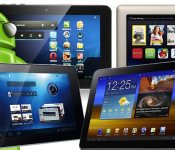
Top 7 Android Tablets In The Market Today That You Shouldn’t Miss

With so many android tablets out there, it is very easy to get dizzy and be overwhelmed with the different choices. To make things worse, if you are not tech-savvy yourself, there is a good chance that you will pick the wrong one and end up regretting your choice. For this reason, I want to help you to make the right decision by narrowing down your choice to seven. In this post, I want to share with you 7 of the top Android tablets across the globe. Of course, it is undeniable that these tablets might be a bit expensive, but hey, quality comes with a price. So if money is not an issue, check out our list and see which will best work for you!
Top 1: Google Nexus 7
On top of our list is Google’s very own Nexus 7. What else can we expect? Google owns the Android OS and so we surely would see how Google will turn its android tablet to be on top of the line. So what makes Nexus 7 2013 edition to be the king of all Android tablet? For one, it has the best screen resolution there is. Its battery life is impressive as well along with its other many features.
Top 2: Sony Xperia Tablet Z
Sony is truly an amazing brand when it comes to technological advancement and innovation. With its Xperia Tablet Z, there is no doubt that it deserves the number 2 spot in our list. I believe its waterproof casing and high durability makes it the best choice.
Top 3: Samsung Galaxy Tab 3
Run by Android 4.1 Jelly bean, Galaxy Tab 3 is by far the best series of the Samsung’s line of tab. It has a staggering 1.2GHz processor and 1GB RAM – enough to run a laptop or desktop. It has great hand grip, powerful features, and various multimedia capabilities.
Top 4: Amazon Kindle Fire
Amazon won’t be denied when it comes to the wholesale android tablets market. This tablet is perfect for watching movies because of its sophisticated Dolby audio and high screen resolution at 100% sRGB color accuracy. Personally, I believe Amazon’s Kindle Fire has the best screen resolution that even redefined the term HD.
Top 5: Asus Transformer Pad TF701T
Asus could have been a better tablet if only it’s not too bulky. Its outward design looks even more outdated. However, it is still one of the cheap Android tablets when it comes to performance. Asus Transformer Pad can be docked to a keyboard to make it look like a small netbook. Because of its fast performing processor, it can be the perfect tablet for gamers.
Top 6: Advent Vega Tegra Note 7
The best thing about Advent Vega Tegra Note 7 is its blazingly fast processor that can exponentially bring your gaming experience to a whole new level. It has good speakers too. So if you love to listen to music or watch movies with your cheap tablet, then this can be a good buy. You just have to settle with its average design and you will only rely with Wi-Fi for faster connectivity.
Top 7: Tesco Hudl
If you can’t afford an over $300 iPad, then you can get the best worth of your money with Tesco Hudl. Though it cannot be entirely considered as a wholesale android tablets, Tesco Hudl can help you gain the best features with the least price. It has a very sharp display and high memory expandability.
Conclusion
This is our top 7 list of the best of the best Android tablets available today. Because of the tough competition within this market, I am sure that every brand will do their best to wow their potential customers. To really identify the cheap android tablet for you, I would recommend that you determine your need, preference, and budget. Afterwards, explore the different options currently available to suit your criteria.

March Madness Live 2014: new apps, redesigned brackets and more social features

It’s about that time again. That time for NCAA Division I schools to battle it out on the court during the month of March, all in search of men’s basketball glory. Naturally, the NCAA, in partnership with CBS and Turner Sports, couldn’t have kicked things off without revamping its beloved March Madness Live, both on the desktop and mobile apps. For the most part, however, the streaming service remains largely unchanged — and we’d say that’s a good thing. That said, there are a few new things coming to March Madness Live this year, such as apps for Kindle Fire, Windows 8.1 and Windows Phone 8 (we’ll come back to the latter two in a bit).
Most notably, the bracket section has been redesigned across all platforms. This means you’ll now see the inclusion of team logos; and the ability to pinch to zoom within, which can either bring up info on specific games or show the entire tournament schedule, depending on your finger movement. A news section is also being added in 2014, with articles and videos emerging from the NCAA website. MML’s Senior Director Product and Operations, Hania Poole, told us how social networks were key factors to consider while everything was in development. As such, Social Arena is a huge part of the desktop and mobile experience; #MarchMadness will be used during streams to show what people are sharing on Facebook, Instagram, Twitter and Vine.
March Madness Live 2014 worked and looked great when we checked it out. Things like the freshly minted news section are a nice addition for hoops lovers to have, right alongside the live games, real-time stats, an improved Boss button and, of course, their brackets. Unfortunately, the Windows applications aren’t on par with those on iOS and Android, missing out on a number of tidbits — namely, bracket pinch-to-zoom and some social features. Video feed is present, though, so we have a hunch not too many folks will mind.
The tournament starts on the 18th of this month, and all live games will be accessible with a subscription to one of the many participating cable companies. Broadcasts by CBS, on the other hand, won’t require any sort of authentication, as has been the case in years past. You can get a better feel for March Madness Live 2014, which begins rolling out today, in the video below. And hey, let us known in the comments who you’re hoping is the last team standing come April 7th.
Daniel Orren contributed to this review.
Filed under: Home Entertainment, Internet, HD, Mobile
Source: NCAA

Apple Explores Adding a Lens Mounting System to the iPhone
Apple’s granted patents and patent applications over the last couple of months have revealed a significant interest in camera lens systems that attach to the iPhone’s existing camera, enhancing its photo taking capabilities much like third-party lens attachment solutions from companies like Olloclip.
In a newly published patent application (via Patently Apple), Apple explores a bayonet lens attachment mechanism to fix a separate lens to an iPhone. Bayonet is a type of pin-based of lens mount that is designed to precisely align the mechanical and electrical features between a lens and a body in a traditional camera, preventing the components from rotating.
According to Apple, this attachment method is superior to other solutions such as a separate case that lenses can be mounted to or a magnetic attachment system that may not be strong enough to keep a lens attached while in motion. Apple describes both a case and a magnetic mount as “undesirable” and “unsightly.”
 Detachable lenses from third-party manufacturer Olloclip
The application explains in detail how a lens can be mounted to an iPhone or other device through a bayonet attachment, with the iPhone or other device possessing a cavity that the can attach to a lens and the bayonets being located around the aperture of the lens. It also describes quick release methods, should a device with a lens attached by dropped or otherwise damaged.
Attachment mechanisms are provided. The attachment mechanisms may be configured to couple accessory devices, such as lens devices to an electronic device. For example, a lens may be coupled to the exterior of an electronic device with first and second attachment mechanisms.
While there are a range of third-party add-on lenses for the iPhone and the iPad, none of the available solutions are able to use an attachment method as Apple describes due to the fact that such a system would have to be manufactured directly into the iPhone. Instead, they use magnets, cases, or other less than ideal attachment solutions that would be unable to compete with a native solution from Apple, should the company choose to pursue camera enhancements in the form of lens attachments.
 A drawing of Apple’s lens attachment method
Apple has also explored other attachment methods in recent years, including a magnetic lens attachment system that was detailed in a patent granted in January and a similar lens attachment system that worked with a removable back panel used to swap in different lenses, unveiled in 2012.
     |

Titanfall Creators in Talks With Aspyr, Mac Version May Be in the Works [Mac Blog]
Titanfall, the multiplayer first-person shooter developed by Respawn Entertainment exclusively for Windows, Xbox 360, and Xbox One, may be coming to the Mac in the future.
In a post on Twitter last night (via Polygon), Respawn Entertainment co-founder Vince Zampella said the company is in talks with Mac game publisher Aspyr over possibly bringing Titanfall to Mac. “We are talking to Aspyr,” he told a fan asking about a Mac version. “They should do it.”
Back in February Zampella expressed similar sentiments, telling fans that he would like to see a Mac version happen after the game launched for Xbox and PC on March 11.
In Titanfall, players fight in six-vs-six online multiplayer matches, controlling mech-style Titans and pilots to complete team-based objectives. The game won more than 60 awards when it was revealed at E3 and has received largely positive reviews.
Crafted by one of the co-creators of Call of Duty and other key developers behind the Call of Duty franchise, Titanfall is among the most highly anticipated games of 2014, having been shrouded in mystery for nearly three years. The visionaries at Respawn have drawn inspiration from their proven experience in first-person action gaming, and are building on that pedigree by taking a new approach to game design and creating an all-new universe with Titanfall.
Aspyr has published multiple major gaming titles for the Mac, including Call of Duty 4: Modern Warfare, Bioshock Infinite, Borderlands 2, Star Wars Knights of the Old Republic, and more. There is no word on when a Mac version of Titanfall might be released.
| |

Office 365 Personal offers cheaper access to Microsoft’s productivity suite

Micorosoft’s Office is still pretty ubiquitous, but it’s facing challenges from a number of cheaper (often free) competitors that have quite a head start in the cloud. Office 365 Personal is an attempt to ward of some of those would be usurpers by delivering 20GB of Skydrive storage and 60 minutes per-month of Skype calls along with the standard Office apps for $70 a year or $7 a month. The Personal package gives you access to Word, Excel, PowerPoint, Outlook, OneNote, Publisher, and Access on one desktop computer (be it Windows or Mac) and one tablet as well as their web app counterparts. The Home Premium option, which costs $100 per-year or $10 per-month will remain, though it will be renamed simply Office 365 Home. The more expensive option give you the ability to install the suite on up to five computers as well as access from a smartphone. The Personal subscription will launch sometime this spring, though Microsoft hasn’t given an exact date just yet.
Filed under: Internet, Software, Microsoft
Source: Office Blog
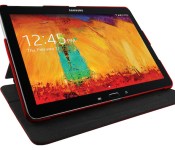
Samsung Galaxy Note 10.1 2014 Edition arrives on Verizon for $600 on contract, $700 without

The focus right now might be on Samsung’s Pro tablets, but the South Korean company also has a little something called the Note 10.1 2014 Edition. Introduced back last summer, this LTE-ready slate is available on Verizon starting today, featuring a sharp 10.1-inch, 2,560 x 1,600 display, 32GB of internal storage (up to 64GB via microSD), a 8,220mAh battery and Android 4.3. Naturally, you can also expect to see a lot of TouchWiz, with features like Multi Window and My Magazine — hey, gotta use that S Pen sometime, right? Just be prepared for your wallet to take a hit: Verizon is selling the Note 10.1 2014 Edition at $600 with a two-year contract. And if you’re not interested in signing on the dotted line, then you’ll have to pay $700 if you wanna take home the tablet, no strings attached.
Filed under: Tablets, Samsung, Verizon
Source: Verizon
Google Drive’s reduced rates make cloud storage even more affordable

Google Drive has been the cloud repository of choice for many people since it launched back in 2012, and now the company is dropping prices to make it even more attractive. While users will still get 15GB for free, the 100GB package now costs $1.99 a month, down from $4.99. What’s more, the 1TB option has received more than a 50 percent price cut: it now costs $9.99 per month, a big drop from its previous rate of $49.99. Need even more room? 10TB+ plans start at $100 a month. Best of all, if you’re already paying for Drive storage, you’ll automatically be converted to a better plan at no additional cost and the storage still spans Drive, Gmail and Google+ Photos.
All told, compared to Dropbox, at least, Google’s new rates are quite tempting: Dropbox offers just 2GB for free, and charges $10 a month for 100GB. Business plans, meanwhile, start at $15 per user per month. The first two tiers do allow for added space for free based on referrals, one gigabyte at a time.
Filed under: Storage, Internet, Google
Source: Google Drive Blog

T-Mobile to upgrade all of its 2G markets to LTE by mid-2015

Happy birthday, T-Mobile LTE! It’s been exactly one year since the UnCarrier launched its next-gen network, and it’s taking advantage of the occasion by announcing further expansion. T-Mobile plans to flip the LTE switch in every market that currently has a 2G/EDGE connection — in other words, everywhere else on the coverage map that isn’t enjoying fast data right now. While the massive expansion is scheduled to be “substantially” complete by the middle of next year, many customers will notice a change before then, as 50 percent of the expansion is expected to take place by the end of 2014.
At first blush, this sounds like a rather lofty goal for T-Mobile — its current LTE deployment is nothing to laugh at, but the fast speeds often go away as soon as you leave metro areas. A nationwide rollout of this magnitude over a period of just 15 months is rather impressive for the fourth-largest operator in the US. At least part of this rollout will involve the minty-fresh 700MHz A-Block spectrum T-Mobile just acquired from Verizon back in January; since lower frequencies have a broader range of coverage, it’s now much easier for T-Mobile to deploy LTE to the masses without incurring massive costs in the process. For anyone concerned, this expansion doesn’t mean that EDGE will go away entirely (not yet, anyway), because there are still plenty of devices that rely on 2G technology. But for those of you who have an LTE smartphone or tablet, you’ll soon be able to enjoy faster speeds even outside the city limits.
Filed under: Cellphones, Wireless, Mobile, T-Mobile
 AIVAnet