



Here’s how the NSA can collect data from millions of PCs

We know that the NSA has been ramping up its efforts to collect data from computers, but it’s now clear that the intelligence agency has the tools to compromise those computers on a grand scale. Information leaked by Edward Snowden to The Intercept has revealed that the NSA has spent recent years automating the way it plants surveillance software. The key is Turbine, a system launched in 2010 that automatically sets up implants and simplifies fetching data; agents only have to know what information they want, rather than file locations or other app-specific details. A grid of sensors, nicknamed Turmoil, automatically spots extracted info and relays it to NSA staff. The combined platform lets the organization scrape content from “potentially millions” of PCs, instead of focusing only on the highest-priority targets.
The spies also have a wide range of weapons at their disposal. They can grab data from flash drives and webcams, remote control PCs and intercept the content from both internet calls as well as virtual private networks. The NSA doesn’t always go directly after a target, either. It frequently compromises IT administrators to reach people on the networks they run, and it will both spoof websites and alter traffic to trick targets into installing code. Snowden’s latest leak isn’t all that surprising given that we’ve seen governments use similar espionage methods in the past, but it suggests that the NSA can easily watch a large number of computer users without sweating the exact techniques that it uses.
Filed under: Networking, Internet
Via: CNET
Source: The Intercept

SXSW 2014 wrap-up: Snoop Dogg, stun copter, Snowden, Mario Kart and more!

SXSW Interactive can hardly match the significance of CES, MWC or IFA when it comes to consumer electronics launches, but there’s always a ton of awesome gear to see. This year, Chaotic Moon’s “CUPID” stun copter was perhaps the most shocking innovation, but IBM’s Watson-powered food truck, a Leap Motion-equipped Oculus Rift and Neil Young’s PonoMusic player also dominated on the gear front. In between hands-on demos, we caught up with Aereo, BlackBerry, Shaquille O’Neal and even Snoop Dogg, while also sitting in on SXSW sessions featuring the likes of Edward Snowden and 23andMe’s Anne Wojcicki. We say farewell today, but South-by 2014 will live on for a few days to come, with hundreds of concerts and other events dominating the seemingly countless performance venues in Austin, Texas.
Filed under: Misc

Forging weapons upstages fowl flinging in the new Angry Birds Epic RPG

If you’re a fan of flinging Angry Birds across the screen or racing them in go-carts on your favorite mobile device, Rovio’s next installment looks to offer a new challenge. Angry Birds Epic is said to be a turn-based RPG with all the battle and armor building players can handle. Kotaku reports that making weapons, potions and other provisions with funds acquired during conquests or via in-app purchases will be a key part in the storyline. Details are scarce for now, but an in-progress version is said to hit iTunes in Australia and Canada this week with a global launch across iOS, Android and Windows Phone sometime in 2014.
Filed under: Gaming
Via: 9to5Mac
Source: Kotaku

Gaming deals of the week: 3.12.14

Sometimes you just have to wait until a retailer tosses together a bunch of tech that you’re eying before you make the leap. In terms of new gaming consoles, today could very well be the day. There are tempting bundles for both Xbox One and PS4 on the other side of the jump, alongside two other entertainment-minded gadgets to help boost those high scores.
If there are other gaming devices you’re after that we haven’t included here — join us and add them to your “Want” list. Every time there’s a price cut in the future, you’ll get an email alert!
Xbox One Bundle

Price: $630
Regular Price: $730
Engadget Score: 81
Buy: GameStop
Sure, you could go after one of the new Forza 5 bundles, but here you’ll nab the Xbox One, an extra controller, the aforementioned title, Zumba World Party to keep you fit and a 12-month Xbox Live Gold subscription. All of that comes with a $100 discount off of the regular sticker price of snagging each of those separately. Don’t worry, you can Zumba from the privacy of your own living room. We won’t judge.
PlayStation 4 Bundle

Price: $550
Regular Price: $570
Engadget Score: 83
Buy: GameStop
Prefer the PS4 and FPS titles? No worries: There’s a bundle for you too. This option includes Call of Duty: Ghosts, a second DualShock 4 controller and one year of PlayStation Plus. Sure, $20 is obviously a modest discount, but that’s money you can spend elsewhere, right?
Apple iPad Air (16GB, WiFi)

Price: $450
Regular Price: $500
Engadget Score: 92
Buy: Best Buy (Silver), (Space Gray)
A tablet on a gaming deals roundup? You betcha. And a $50 price drop on the current-gen model is certainly worth considering, especially when you factor in the iPad Air’s A7 chip and stellar battery life for iOS gaming. According to our 90-day Price History, there was an additional $10 discount just last week, so you may want to keep an eye out if you’re really pinching pennies.

Turtle Beach Ear Force PX51

Price: $200
Regular Price: $270
Buy: Amazon
If you’re all set in the console department, might we suggest a useful accessory? The Ear Force PX51 is now seeing an attractive discount on a model that debuted in March 2013. There’s compatibility across a wide spectrum of devices with custom presets to wrangle the 360-degree Dolby Surround Sound. Use our Compare tool to see how this unit stacks up against other high-scoring gaming headsets.
Filed under: Gaming

Yahoo now shows Yelp reviews when you’re searching for local businesses

Google has long made it easy to find reviews of local businesses in its search results, but you’ve been out of luck if you prefer Yahoo. You won’t have much trouble scouting those locations after today, though. As hinted earlier this year, Yahoo has integrated Yelp’s data into its searches, including reviews and photos. Look at a sushi place, for instance, and you’ll find out when it’s open, what it looks like, and whether or not its rolls are any good. Yahoo may just be closing a feature gap with the Yelp deal, but we’re not going to complain if it means that more of our friends make informed decisions about where they shop.
Filed under: Internet
Via: Recode
Source: Yahoo Search (Tumblr)
Monitor which apps consume your time with Frequency [App of the Day]
Ever wonder why you’re not getting any work done? Or, perhaps you’re trying to figure out why your smartphone battery dies so quickly. Maybe you want to see how much Flappy Bird you’re getting in versus productivity apps. Guess what… there’s an app for that. Surely there are others, but I really dig Frequency lately.
Offered in a free and pro version ($.99), this app looks at which apps you are using and for how long. You can compile your list based on a variety of factors: today, past week, past month, etc. What’s more, you can check to see which apps you’ve used and see them against apps you have yet to run.
The free version checks frequency every thirty seconds, delivering the data in half minute increments. Should you go pro you can toggle the frequency and fine-tune the app. We can imagine this be helpful if you’re billing a client for time spent within a particular app. Those who work on a tablet may find this convenient for photo editing tools or writing/CMS scenarios. Also, toggling to a less-frequent ping can help get your battery to last longer.
We should also point out that the free version does not automatically run at the startup of your Android device. The pro client, as you might have guessed, can be configured to do so.
We’ve seen monitoring apps for data and general usage but few of them look as sharp as Frequency. We like the layout of the app, its simplicity, and its overall aim.
The post Monitor which apps consume your time with Frequency [App of the Day] appeared first on AndroidGuys.

iOS 7.1 Includes Warning Message About 15-Minute In-App Purchase Window
Along with several visual tweaks, CarPlay support, and Touch ID enhancements, iOS 7.1 also brought some changes to the way in-app purchases work. When making an in-app purchase for the first time after updating, users are notified via a pop-up window that additional in-app purchases can be made for 15 minutes without reentering a password.
The message also points to an existing option in the Settings menu that allows users to require a password with every in-app purchase.

First uncovered by AppleInsider, the new message is likely the result of an agreement between Apple and the Federal Trade Commission, which required the company to implement measures to obtain express consent from consumers before billing them for an in-app purchase.
According to the consent decree that was initially signed in January, Apple had until March 31 to make the necessary changes, which may or may not be completed with the inclusion of the new message that requires users to acknowledge the possibility of additional in-app purchases.
While the pop-up is new, Apple has always had a 15-minute purchase window allowing additional in-app purchases to be made without reentering a password, a policy that landed the company in hot water in 2011 after parental complaints about children over-spending in apps sparked the FTC’s interest.
Apple made some changes to in-app purchases following the complaints, requiring a separate password entry specifically for in-app purchases, but the company was still forced by the FTC to to provide full refunds to parents whose children purchased unauthorized in-app items.
In addition to implementing the required changes to the App Store, Apple will refund approximately $32 million to parents.
     |

Steve Jobs Opera Based on Shakespeare’s ‘Henry V’ to Open in France [Mac Blog]
France’s Opéra de Lyon is set to begin performing a multimedia opera that combines the history of former Apple CEO Steve Jobs with the story of Shakespeare’s 1599 play Henry V.
Written by German composer Roland Auzet, “Steve Five (King Different)” pulls its content from Walter Isaacson’s best-selling Steve Jobs biography and explores the parallels between two kings – one from Silicon Valley and the other from England – who confronted reality through invention.
Via Google Translate:
The book is composed of two biographies, two routes, close and yet separated by five centuries: two words, two ways to confront reality by inventing. Steve Jobs painted what Shakespeare called “the brightest heaven of invention” and the fate of Silicon Valley faces the epic Henry V.
The opera, which includes includes rap and classical orchestra, spoken and sung opera, and poetry, will be performed for the first time on Friday, March 14 at the Théâtre de la Renaissance in Lyon, France. It will also have three subsequent showings on March 15, 17, and 18.
| |
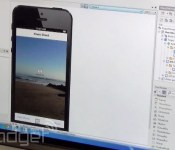
Appmethod lets you code native Android, iOS and desktop apps simultaneously (hands-on)

With different requirements and countless other incompatibilities, building applications for multiple platforms can be a tremendous chore. Embarcadero Technologies is setting out to simplify that process a bit with Appmethod, a multi-device development platform that lets you create apps for Android, iOS, Mac and Windows simultaneously. The WYSIWYG tool lets you drag and drop buttons, connectors, databases and other design elements into one emulated platform, then easily duplicate the app onto another.
Reps suggest starting out on the platform that’s most important to you. From there, you can easily migrate to another operating system, be that Android, iOS, Mac, Windows or even Google Glass. You should be able to sign up for Appmethod beginning on March 18th. Prices range from $299 per developer, per platform, per year for firms with up to five users, to $999 with the same pricing structure if you’re planning to work alongside six or more devs. Check out our SXSW hands-on video below to see the IDE in action.
Filed under: Software

Life in 140 characters or less: My first eight years on Twitter

“I am sick of cell phones.”
I posted that on Twitter on November 16th, 2006, during a time in my life when I made a living writing phone reviews. It was a one-off rant during a particularly busy week, and I didn’t expect anyone to read it. Little did I know that Twitter would grow into the social media titan that it is today, and that particular missive would live on as my first-ever “tweet.” I confess, I didn’t particularly like the term “tweet,” even if it was unofficially adopted by the community early on. Even Twitter itself didn’t acknowledge the word until the company trademarked it in 2009.
Twitter officially debuted on March 21, 2006, when Jack Dorsey published the first-ever tweet. It simply stated: “just setting up my twttr.” When it first came about, nobody really knew what it was. Even Ev Williams, one of Twitter’s co-founders, said in an interview with Inc. that few people were clear about Twitter’s purpose. “They called it a social network; they called it microblogging, but it was hard to define, because it didn’t replace anything.” Twitter left it up to its users to decide. And so we did.
I am sick of cell phones.
– Nicole Lee (@nicole) November 17, 2006
The early days of Twitter were like blogging in the heyday of Blogger and LiveJournal. When I joined in 2006, the community just enjoyed talking to each other about their lives. Instead of the rather neutral “Compose new tweet” instruction in the empty update field, Twitter prompted users with a question to help get them started: “What are you doing?” And so we would answer that question. “Eating a grilled cheese sandwich,” we would say. Or, “Going to the park.” Or maybe, “Heading into the office.” It seems horribly boring now, but we were mostly talking amongst friends. We could be as rude or as obscene or as bland as we wanted because it was just us chatting.
Part of Twitter’s charm is its constraint. It sounds quaint now, but the 140-character limit comes from the character limit of SMS — the SMS limit is really 160, but 20 characters were reserved for usernames. Before iPhone and Android apps, people would text updates to 40404 (which, incidentally, is still in use today). I remember using a T-Mobile Sidekick II to send and receive those tweets, and feeling like I could type them up faster than anybody because of that roomy QWERTY keyboard. A few of my friends used Palm Treos and BlackBerrys, but the majority managed to whip up tweets with just a regular number keypad, a feat I thought was rather impressive. And because those tweets counted against our monthly text-message limits, we were careful not to send too many. While this might sound like a limitation, I thought of it as a challenge: How do I convey my thoughts in a short enough missive without resorting to shorthand like using “2″ instead of “to,” or “4″ instead of “for”?
We could be as rude or as obscene or as bland as we wanted, because it was just us chatting.
In March 2007, Twitter exploded at SXSW Interactive. Not only did it spread by word of mouth, but the company was also smart enough to set up television screens in the convention center to display the latest tweets. Many SXSW attendees were early adopters of the web, and found immediate benefit to Twitter’s short-form public messaging. It was the perfect venue to find information about panels, meetings, dinners and, of course, parties. Its popularity soon spread to the web at large; there were around 400,000 tweets per quarter in 2007. In 2008, that number grew to nearly 27 million.
There were complaints, even then, about the influx of new people ruining the experience. But the great thing about Twitter is that you curate your own timeline — you only see tweets from people you follow. So you could live in your own little Twitter universe, and it would be fine. Indeed, the beauty of a small social network like that is that you can create a community of like-minded people. As Twitter grew, I soon found myself forging new friendships based on a similar sense of humor and set of interests. It was like belonging to a special club where people actively tried to out-funny one another. There was even a site called Favrd that actively sought to aggregate the most popular starred tweets on any given day. It encouraged me to be funnier and wittier in my public updates, even if I failed more often than I succeeded.
But somewhere along the way, Twitter became a media darling. Companies used Twitter to market their products. Media outlets used Twitter to post links to articles. Even Twitter itself evolved from a social network to an information network. News broke on Twitter faster than anywhere else; people learned about earthquakes and natural disasters before they showed up on television. In November 2009, Twitter changed the “What are you doing?” question to “What’s happening?” — a clear indication a shift was taking place.
My small, little, insulated Twitterverse was no longer so small and insulated. It began to feel a tiny bit crowded.
It became a powerful tool in social movements such as the 2009 Iranian election protests and the 2011 Egyptian revolution. Twitter adopted tools like hashtags, Trending Topics and retweets to help spread information and in turn gain more followers. Celebrities and politicians started to sign up, which in turn resulted in several thousands of fans getting on board. My small, little, insulated Twitterverse was no longer so small and insulated. It began to feel a tiny bit crowded.
Twitter as a company changed a lot, too. From a small startup in San Francisco’s South Park neighborhood, the company moved ever upward to larger and larger offices, eventually landing at its current location in Mid-Market, where it rents out four of the building’s 10 floors. From just a handful of employees in 2006, the company now employs nearly 2,000 people. At the end of 2013, seven years after its inception, Twitter filed for an IPO, and ended up with a valuation of $31 billion after its first day of trading.
Such astounding success and publicity made me all too aware that the things I said on Twitter were no longer just for my friends and me. For a period of time, I resented this immensely. I didn’t want Twitter to be used for marketing and advertising. I wanted it to remain the way it was, as a place for us to hang out. Eventually, however, I grew to accept the change. I kept my small, curated list of friends, but slowly began following news outlets and information sources as they became increasingly valuable to my line of work. Soon, I began to see Twitter as both a useful tool for news and a place for me to tell horribly unfunny jokes. I could have the best of both worlds.
Still, even if the rest of the world can’t see Twitter’s value, I absolutely do — at least as an open mic night that never closes.
For Twitter, however, the story is far from over. As wonderfully successful as Twitter has been, it still faces a number of hurdles. Even with around 240 million users sending nearly 500 million tweets daily, the company has yet to turn a profit after all these years. In fact, its first earnings report after its IPO showed that user growth is actually slowing. Some say that unlike Facebook, Twitter doesn’t have the same reach or name recognition. There’s also speculation that Twitter’s quick rise to prominence is a warning sign of the next dot-com bubble, and is just as overvalued as other newly public companies, like Facebook and LinkedIn. Still, even if the rest of the world can’t see Twitter’s value, I absolutely do — at least as an open mic night that never closes.
To celebrate our 10th anniversary, we’ll bring you a new story every week in March that explores how the social media landscape has changed. Check out our hub every Wednesday for more from of our 10 Years in Social Media series, and keep your eyes out for more ’10 Years In’ content in the months to come.
Image Credit: Getty
Filed under: Internet
Source: Wikipedia (Twitter)
 AIVAnet