



Former Apple Engineer Recalls Steve Jobs’ Great Displeasure with Multi-Button Mouse Concepts [Mac Blog]
Steve Jobs’ great displeasure about the the idea of a multi-button mouse was apparently the driving force behind Apple’s push to greatly innovate in the area of input devices, according to a new interview with Apple’s former Senior Mechanical Engineer of Product Design Abraham Farag (via Cult of Mac).
Farag, who is the current owner of product development firm Sparkfactor Design, says that he was brought onboard to Apple in 1999 to design a successor to the original Apple USB “hockey puck” mouse, which shipped with the iMac G3 in 1998 and garnered heavy criticism for its small size, short cord, and tendency to rotate in a user’s hand.

From left to right: Apple’s USB “Hockey Puck” Mouse, Pro Mouse, Mighty Mouse, and Magic Mouse
The designer said that Apple’s design team had worked on five complete prototypes to show Jobs, complete with lines cut for buttons and different plastic parts. Farag noted that the team made a last-minute choice to work on one more prototype model, which resembled the Apple Desktop Bus Mouse II.
However, that last prototype was not finished as Jobs entered the room to look at the group of potential mice, which led to an encounter between the CEO and the design team:
“It looked like a grey blob,” Farag says. “We were going to put that model into a box so people wouldn’t see it.” However, when Jobs turned up things went awry.
“Steve looked at the lineup of potential forms and made straight for the unfinished one,” Farag says.
“That’s genius,” he said. “We don’t want to have any buttons.”
“That’s right, Steve,” someone else piped up. “No buttons at all.”
The meeting, it seemed, was over.“[Afterwards], Bart Andre, Brian Huppi and I left the room and huddled outside with each other, [saying] ‘how are we going to do that?’” Farag recalls. “Because of that unfinished model we had to invent a way to make a mouse with no buttons.”
The unfinished model that Jobs designated as his choice eventually became the Apple Pro Mouse, and began shipping in 2000. Farag believed Apple was the first to create a mouse that used an LED for optical tracking in place of a rubber ball, as the team looked toward building a successor worthy of the Apple Pro Mouse. Once again, Apple’s design team wanted to create a mouse with multiple buttons, as Farag recalled a meeting with Apple design chief Jony Ive in which multiple prototypes were being discussed.
“Steve wasn’t invited to the meeting,” Farag recalls. “Not because he wasn’t allowed — he could go anywhere in the company — but just because it wasn’t something we were pitching to him yet.
…Suddenly Jobs happened to walk by, on his way back from another meeting. Seeing prototypes on the table, he stopped and came over.
“What morons have you working on this project?” he asked as he realized what he was looking at.“There was just a total hush,” Farag recalls. “No one was going to fess up to being the moron in the room. Eventually I said, ‘Well, this was asked for by the marketing division. It’s a multi-button mouse. It’s been approved through Apple’s process channels, and so we’ve been working on it.”
Jobs stared at him.
“I’m Marketing,” he said. “It’s a marketing team of one. And we’re not doing that product.” With that, he turned and stalked off.
Farag notes that it was Jobs’ persistence to create a mouse unlike anything on the market that helped Apple in the long run, and that the concept of built-in capacitive sensors to emulate the presence of multiple buttons eventually changed the former CEO’s mind about multi-function mice.
Apple then went on to produce the Mighty Mouse, which was the company’s first mouse to ditch the one-button philosophy, and followed it up with the Magic Mouse, which features multi-touch gesture controls and is currently included with every new iMac.
     |

Apple’s iTunes Radio Becomes Third Most Popular U.S. Music Streaming Service
Less than six months after its launch alongside iOS 7 last September, Apple’s iTunes Radio has become the third most popular music streaming service in the United States, according to a new report from Edison Research and Statista (via Fortune).

While Pandora and iHeartRadio took first and second place with a 31% and 9% share of the market respectively, iTunes Radio accounted for an 8% share with over 20 million users, passing Spotify’s 6%. Apple’s streaming service also passed the likes of competitors such as Google Play All Access, Rhapsody, Slacker, and TuneIn Radio.
While users can hop between services freely (and at least one report has suggested that 92 percent of iTunes Radio listeners also find time for Pandora), that figure would suggest that iTunes Radio is growing at the fastest rate of the top three services, and is likely to overtake iHeartRadio in the next quarter or two.
Apple launched iTunes Radio in Australia last month, as the company looks to ultimately have the service “in more than 100 countries,” according to senior vice president of Internet software and services Eddy Cue. The company will be able to roll out its service to additional countries more quickly than competitors due to its existing international rights deals with Universal Music Group and other record companies.
| |

[LEAK] ‘HTC Duo Camera’ may be the official name of the All New HTC One’s dual-sensor Camera
 Australia is known for many things: kangaroos, koalas, being amazing at cricket and being home to Crocodile Dundee. On this particular occasion though, we might have done the Android community a favour by leaking the official name of the All New HTC One‘s dual-sensor camera in a magazine ad. In the ad, Telstra refers to the camera as the ‘HTC Duo Camera‘, which isn’t quite on the same level as ‘BoomSound’ or ‘UltraPixel’, but it’ll do. As we’ve suspected all along, the Duo Camera will have Lytro Camera-like abilities (read more about the tech behind it here) and will be able to:
“Create vivid images even in low light and professionally edit memories after you’ve taken the shot. Choose where to focus, highlight what you love, soften backgrounds and add 3D effects.”
As well as possibly leaking the camera’s name, rough pricing for the device was also provided. Off-contract from Telstra, the All New HTC One is going to run you $840 AUD, which equates to about $760 USD; it must be noted that Australian prices tend to be a bit higher than the norm, but expect the phone to still be in that ballpark. The ad also makes reference to Sense 6.0 and introduces some of the abilities it has, like double tapping the screen to rotate the orientation of the screen.
What do you think about the naming of the camera as the HTC Duo Camera? Let us know your thoughts in the comments.
Source: Google+ via Android Central

BBC revamps iPlayer with new web UI and greater focus on content discovery

The BBC teased us with stories of a new, improved iPlayer nearing the end of the last year, and today we’re seeing the first part of that go live. Arriving today on the web and smart TVs, the “completely re-built” iPlayer has a simpler, image-focused UI that’ll be consistent across all platforms when tablet and smartphone apps catch up in a few months. You can switch between the various BBC channels using tabs near the top of the page, with quick access to categories and favorites on the same level. A revised category list should make it easier to find things to watch that suits your tastes, and suggestive search should help you find those shows you already know you like. Similarly, new themed “collections” will give offer eyeball food that revolves around the same topic. If you’re still not sure what to watch, there’s always the A-Z program and recently watched lists for inspiration. A new playback page doesn’t need to reload when you move onto the next episode (or something else from the recommendations), and you can add programs to favorites straight from the player.
The new iPlayer isn’t just about improving the user experience, though. It’s a completely fresh platform the BBC will build on top of in the future. We didn’t hear much about features we might have expected today, like the BBC Store for paid content, and an extension of the catch-up window to 30 days (which may be realized later in the year if the BBC Trust approves). We did learn, however, that an option to log-in is in the works, so you can pause a show on one device and pick up where you left off on another, for example — and that it won’t be a requirement or an attempt to track down those in the licence grey area. It’s not so much about adding more bells and whistles, though, but about “creative opportunities that the new iPlayer will open up.” The high likelihood of BBC Three moving online-only was heralded as both sad and exciting by the BBC, as moving to a different setup means they can experiment with new content and how it’s presented to viewers. BBC Three has been a guinea pig for ‘iPlayer-first’ content, of course, and should it move exclusively online, will retain its own identity, we’re told. Also, there will be much more unique content coming to the platform during the year — a handful of drama shorts have found a place in the new UI today — as the BBC continue to position iPlayer as an on-par offering to their traditional channels, rather than a fall-back.
Filed under: Home Entertainment, Internet, HD
Source: BBC

Raspberry Pi gets its own sound card

When UK Prime Minister David Cameron gave a speech at CeBIT this year, what examples did he use to highlight tech innovation in Britain? Yes, ARM and Imagination were on his list, but he also referred to the tiny, Linux-based computer called Raspberry Pi, which has now sold over 2.5 million units. In a timely fashion, the Pi’s makers, element 14, have just announced a new $33, Wolfson-powered audio card that should give the device a broader range of functions.
The add-on board fits right onto the Pi’s P5 pins and carries a Wolfson audio processor that supports high-res audio up to 24-bit / 192KHz, which can be played via a direct connection to an amp over 3.5mm line-out or alternatively via a digital S/PDIF output. Audio recording, meanwhile, comes courtesy of two onboard MEMS mics (useful for things like voice control), a 3.5mm mic jack and a digital S/PDIF input. It’s true that some of these audio capabilities have already been possible on the Pi by using USB peripherals such as DACs, but the Wolfson Audio Card gets into the DIY spirit of things with a $33 price tag and an emphasis on experimentation and community support. Speaking of which, some Pi owners have already gotten their hands on the board prior to today’s global release, and you can follow their exploits at the source link below.
Filed under: Desktops, Home Entertainment, HD
Source: Element14

Privacy group blocks NSA from destroying phone records, calls them evidence

A US judge has temporarily stopped the National Security Agency (NSA) from destroying phone metadata it collected, thanks to an intervention by the Electronic Frontier Foundation (EFF). The privacy watchdog argued that the documents were key to upcoming lawsuits stemming from mass surveillance revelations revealed by Edward Snowden. Ironically, the spy agency itself wants to preserve the records for security reasons, but a foreign surveillance court ordered them destroyed. The reason? Such records would actually violate the rights of persons in the phone lists. However, the EFF claimed that court wasn’t aware of existing orders to keep the documents, which stemmed from a suit it filed in July and another from 2008. A hearing is now scheduled for March 19th to determine once and for all if the phone records will be destroyed or kept — with your privacy being argued in both cases.
Via: Bloomberg
Source: Courthouse News (1), (2)
First-gen Kindle Paperwhite gets second-gen features, at last

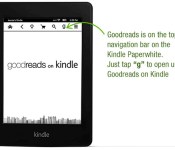
First-gen Kindle Paperwhite owners are woefully missing a bunch of features, including Goodreads integration, available on the device’s successor. Thankfully, this latest software refresh brings their e-readers up to par — and, yes, that means early Paperwhite adopters can now place The Winds of Winter on their to-read roster from within the device. Just like on the second-gen Paperwhite, Goodreads’ familiar “g” icon should appear on the menu bar after installing the software. Clicking it will launch the app where users can segregate books into lists, share digital bookshelves, look for weekend reads or post excerpts.
Those who don’t particular care for the Amazon-owned service might enjoy the other new features more, though. For parents, there’s the FreeTime function, which allows them to make profiles for their kids and monitor their reading habits. The update also gives users the power to customize e-book list categories (Cloud Collections), skim books without losing the page they’re on (Page Flip) and easily organize bookmarks, highlights and notes. When people look up words, they’ll now see dictionary, Wikipedia and X-Ray information, and those words get automatically added to Vocabulary Builder. Finally, they can now read footnotes in-line without having to go to another page.
An over-the-air update with all the new features is rolling out to first-gen Paperwhites over the next few weeks. People who’ve had enough of waiting, however, can manually download the software refresh right now from Amazon’s website.

Audi’s in-car LTE starts at $99 for six months of service and 5GB of data

Audi’s been talking about its in-car LTE for awhile, but how much it’ll cost hasn’t been clear until now. A six-month plan with 5GB of data will run $99, while a 30-month plan with 30GB runs $499, both through AT&T. However, you’ll snag half-a-year’s service absolutely free should you drive off the lot in one of the new A3 sedans equipped with Audi Connect. The German automaker says it plans to roll the feature out to its entire model line this year, which should give quite a few options to choose from if you’re in the market. The pricing is a bit steeper than what the outfit’s offered before, but the T-Mobile plans were for 3G connectivity — next-gen infotainment has a need for speed.
Filed under: Transportation, Wireless, AT&T
Source: Audi
Instagram does your selfies a favor with an improved Lux feature for iOS

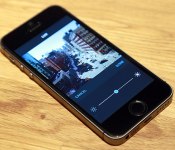
Go ahead, ask any youngster around you: selfies are serious business. No one is more mindful of that universal truth than Instagram, which is why it pushed out yet another iOS app update earlier today. No, there aren’t any new filters (isn’t 19 enough?) — instead, the company brought some much-needed control to its Lux feature.
Lux (a.k.a. that little sun icon that makes pictures look better) was originally added to help mobile photogs salvage their underexposed, anemic-looking shots. The big caveat? It was an all-or-nothing affair, with no way to find the middle ground between the original image and the occasionally over-the-top Luxified result. Today’s update adds a much-needed slider to the mix so you can decide just how dramatic the effect should be. If you’re feeling particularly devious, you can crank down the Lux to desaturate your shots, too. Alas, there’s no word on when the tweaked feature will hit Android or Windows Phone, but hey — there’s no shortage of photo editing apps to get the job done until it arrives.
Filed under: Mobile
Source: @Instagram, iTunes Store
Android 4.4.2 for the T-Mobile Galaxy S4 and Many More! – Device Updates

Alright friends, time to see if you got an update headed your way. Pretty much all the updates are Android 4.4.2 related, and you T-Mobile Galaxy S4 and Note 3 users should be you are finally getting it. If you haven’t gotten you update yet, don’t worry, these update rollouts take time. Just be glad that they are coming.
Device Updates
T-Mobile Galaxy S4 gets Android 4.4.2
Android 4.4.2 for the HTC Butterfly S
Huawei Ascend P6 gets Android 4.4.2
KitKat hits the T-Mobile Galaxy Note 3
Android 4.4.2 rolls out to the Sprint Moto X
 AIVAnet