



ZTE Boost Max review
The Boost Max aims to give users a premium phablet experience with a small price tag.
Do you remember when smartphones were upwards of $500? Some still are, like the Samsung Galaxy S4, Note 3, and the HTC One. Recently in the United States, prices of handsets have gone significantly down, allowing more and more users to purchase their phones outside of a 2-year agreement.
In turn, the phones that have a cheap off-contract price are selling like hot cakes, and more and more manufacturers are trying to join the US market. ZTE certainly doesn’t have much presence in the United States, but they’ve made a recent effort to change that with the ZTE Boost Max.
It can be found for $299 on the Sprint MVNO Boost Mobile, weighing in as one of the more expensive “premium” phones that the prepaid carrier offers.
Recently, the bar has been set pretty high for budget smartphones. The Moto G, Moto X, and Nexus 5 are prime examples of premium handsets for a very cheap price tag. Can the Boost Max rival the price of the Moto G, while offering a great phablet experience like the Galaxy Note 3? Find out in our review below.
Specs
When you first read the list of the specifications, you might not be interested, at all. But remember: this phone is relatively inexpensive, and ZTE obviously has to make money on it, so try giving them the benefit of the doubt.
With it’s 5.7-inch, 720×1280 IPS LCD display, the Boost Max houses a 1.2GHz dual core Snapdragon 400 processor, 8GB of on-board storage, and 1GB of RAM. It has an 8MP rear-facing camera, a 1MP front-facing camera, and a non-removable 3200mAh battery. It also has Bluetooth 4.0 LE, WiFi 802.11 b/g/n, and 4G LTE.
Hardware

If you’re looking for the most positive part of the phone, look here. The look and feel of this phone is well-built and beautiful. With the brushed metallic back and the matte-finished top and bottom portions, it is a really good-looking device. But don’t read too far into the metallic back of the phone – it’s only plastic. It’s easy to see why ZTE made that material decision, given the $299 price point.
The button layout on the Boost Max is a little different from what most people are used to. The power button sits on the right edge, along with a physical camera button. The left side holds a microSD card slot and the volume rockers. You’ll also find a micro USB port on the lower-left side – this makes it a bit awkward to hold while charging. This is definitely a two-handed device, so you’ll find yourself bumping into the charging cable more than you might like.

It also has capacitive navigation buttons – back, home, and… a menu button – one design aspect that we wish would just go away.
The top matted portion covering the camera snaps off to reveal a SIM card slot, while the rear portion holds a single speaker. It’s decently loud, but very tinny. When playing media without headphones, there are a few fixes for poor audio quality, due to ZTE’s custom software. (We’ll revisit this in the software section).
The display on the Boost Max could be better, but arguably not, solely because of the price tag. It has a 5.7-inch, 720×1280 IPS LCD display. Viewing angles are fine, and we weren’t able to see any pixelation anywhere on the screen. We did, however, find one major flaw – whites aren’t white – they’re very visibly off-white. Tainting almost every screen we viewed, this is the major downfall to what is otherwise a beautiful display.
Software

Probably the most unappealing part of the software is that it ships with Android 4.1.2 Jelly Bean. This is a very old build to be shipping on a smartphone that was released in January 2014. Though Boost informed users that they intend to push Android 4.4 KitKat sometime in 2014, that is a very vague description. This is one of the sacrifices we wish didn’t make it to the Boost Max.
The phone offers a near-stock Android experience, while only throwing in a few minor design changes. The homescreens and app drawer don’t stray away from the “stock” look. The only changes they made in the user interface are the lock screen, notification tray, and the quick settings. There are, of course, a huge amount of custom apps. Most of them are from Boost and can be uninstalled very easily.

ZTE also opted to throw in some surprisingly useful features. The main feature being a multi-window clone called Smart Viewer. Hold down the back button to pull up a list of apps, and drag them to one half of the screen. Smart View lets you mute one window at a time, which we found to be very useful. On the Samsung’s Multi-Window feature, only a handful of apps are compatible for some reason. On Smart Viewer, any installed app can be used.
We did experience a good amount of lag in odd places. This mainly happened while accessing Chrome, Google Search, YouTube, or Smart Viewer. Sometimes, the webpage we were trying to load would take more than a minute to fully show. The amount of lag we came across hinders the otherwise positive experience with the software.
Now, to talk about audio quality. The speaker, though very loud, has some EQ issues. It’s a bit like listening to music in a tin can, but Boost hopes to change that with their Dolby Digital Plus EQ app. We actually found this to be very useful, though a bit cumbersome. If you use it frequently, it’s easy to get the best sound possible out of the given hardware. However, if you frequently switch between podcasts and music, revisiting the app over and over to change sound modes gets old very fast.
The overall software experience was just… okay. You can tell ZTE tried, but due to the processor and other hardware slumps, it fell a bit short.
Battery Life
The battery life on this phone is tremendous. With it’s huge 3200mAh battery, we failed to drain it in an entire day. Stand by time was great, only draining 1% overnight, while connected to the Boost network. Watching hour-long HD videos on YouTube and streaming music from Spotify barely brought the battery down to 70% in a few hours. If you’re a normal-heavy multimedia consumer, you should have no qualms with the battery.
The only factor that remotely drained the battery was the the Boost network. Even though we had some trouble in this area, you should have no problem making it through much more than a day of use.
Camera

The Boost Max’s 8MP rear-facing camera is good at times, and horrible at others. There aren’t many things to nit-pick about it, considering the price. Shutter speed is normal, and focusing didn’t cause us any problems. They’re not perfect, but they’ll do.
We did have a lot of trouble with color. Colors are washed out and dull, no matter the lighting conditions. Also, the hardware shutter key isn’t a two-step button, so you’ll find yourself with a lot of blurry photos if you try to focus beforehand. We found ourselves better off just using the on-screen shutter key.
If you hope to get a decent camera on a budget phone, you could certainly do worse. But that doesn’t mean it’s particularly good, either.
Availability
If you’d like unlimited everything (minutes/messaging/data) on Boost Mobile, plans begin at $55. If you pay your bill on-time, your plan shrinks by $5 every month, until it’s as low as $35. This is definitely a good incentive to move over to Boost, but is the Boost Max good enough to keep people on the network?
Conclusion

The Boost Max tries to offer as much as it’s competitors, but ultimately falls short in some important areas. Most of our experiences can be summed up with a, “This feature is nice, but…”.
ZTE’s Smart Viewer is a great addition, adding functionality and innovation to the size of the device. But it’s buggy and slow, and that made us not want to use it. The look and feel of the device is beautiful. It has a nice weight to it, and it offers a loud speaker and a hardware camera button. But the speaker is tinny, and the camera button makes it difficult to keep your focus.
All things considered, if you’re on Boost Mobile, and absolutely have to stick with it, you could do worse than the Boost Max. It’s the best option for someone who wants a phablet experience, but doesn’t want to break the bank. If you’re in the market to purchase a new phone off-contract and you don’t mind the screen size, buy a Moto G. It has better software, hardware, and is two-thirds the price.
If the Boost Max was $200, I would recommend it immediately. It’s a bit slow, but offers a beautiful look and feel, while giving you the experience you’re looking for. But for $300, I have a difficult time recommending this one.
The post ZTE Boost Max review appeared first on AndroidGuys.
CHIL Notchbook Review and Giveaway!
The CHIL Notchbook is a quality case worth updwards of $50 but costing only half of that. The leather feels great and really has a “premium” design about it. You’ll find that it’s light, padded, and protective – three things we look for in a tablet case.
The cutout for your hand seems a bit gimmicky at first, but the more I’ve used it, the more useful it becomes. The case feels high quality and looks professional. It has a built in magnet for auto sleep/wake when the case is opened of closed.
The main complaint I have is that the frame around the screen cuts it a bit close. Performing actions from the top, sides or bottom (such as pulling down a notification shade) requires slightly more effort than without the case and the magnet that keeps the notch flap in place. Keep in mind that I’m reviewing the 2012 Nexus 7 variant of the case, so this issue may not exist for other models depending upon how each device is made. For this case in particular, when the magnet moves on or off of the back of the device it likes to trip the magnetic sensor in the tablet and shut your screen off. As you can imagine, this can be pretty frustrating when you’re trying to read.
The only other quibble is more due to the construction of the tablet, but the volume and power buttons aren’t as available as I’d like them to be. Every time I attempted to change the volume or take a screenshot I found myself fumbling around and guessing at which button I needed.
If you watch a lot of Netflix or YouTube on your device, the stand mode is really great; both simple and sturdy.
All-in-all, at the price point, I’d recommend this case to most people depending on your needs.
Win a Chil Notchbook!
Thanks to the fine people at CHIL, we also have a Notchbook case for the 2013 Nexus 7 to give away!
How to Enter: In the comments below, please tell us why you love your Android device so much.
When does this mighty fine Giveaway end? Well, you must enter this giveaway contest by Wednesday, March 12 (11:59PM PST)
Winners will be picked at random and announced in an update to this post.
What if this giveaway is over and I’m still interested in a CHIL Case? You can find out more information about purchasing a CHIL Notchbook Case for your tablet by visiting CHIL’s website. Enter “AndroidGuys” in the promo code for 15% off your purchase, which lasts until April 15.
The post CHIL Notchbook Review and Giveaway! appeared first on AndroidGuys.

Watch Edward Snowden’s SXSW virtual conversation at 12PM ET

At SXSW today, NSA whistleblower Edward Snowden will make his “first appearance front of a live audience” since he unveiled the under belly of the government surveillance program. Snowden will speak with the ACLU’s Ben Wizner and Christopher Soghoian, but as the name suggests, this is a virtual conversation and he will not be appearing in person for the festivities in Austin. The ACLU is liveblogging the entire affair here at 12PM ET and a livestream will be posted over at The Texas Tribune. If you miss out on the live coverage, the ACLU will post a video of the interview afterwords.
Update: We’ve embedded the livestream after the break.
Filed under: Internet
Source: ACLU

Bitcoin exchange Mt. Gox files for bankruptcy in the US

Just days after it sought protection in Japan, once popular Bitcoin exchange Mt. Gox has been forced to file for bankruptcy in the US in the hope of climbing out of the huge hole it’s found itself in. Still reeling from the loss of 850,000 Bitcoins (currently worth around $549 million) and debts of more than $63.6 million, the company has filed papers that will temporarily suspend US legal action against it, allowing it to work out how “weaknesses in the system” allowed the digital currency to go missing in the first place. It’s not quite the news customers were hoping for, but it’s a logical move by Mt. Gox as it will better protect investors located outside of Japan and could also open avenues for it to take on financial aid. While it continues to piece together exactly what happened, some are taking matters into their own hands. Over the weekend, hackers reportedly gained access to Mt. Gox CEO Mark Karpeles’ personal blog as well as his Tumblr and Reddit accounts, accusing the company of fraud and alleging it kept some of the Bitcoins that had been reported stolen.
[Image credit: anatacoins, Flickr]
Via: ZDNet
Source: Marketwatch

Titanfall: The Joystiq Review

Titanfall is strictly coiled around the player. You couldn’t excise even one piece without slackening it like a ruined kidnapper’s rope. The serpentine level design, the liberating sense of movement, the flawless controls and yes, the enormous bipedal tanks dropping from the sky, are equally indispensable in this arresting shooter.
Given the studio’s splintered status as a former Call of Duty custodian, Respawn Entertainment has made a multiplayer game fit for those who have spent years peering through the eyes of a speedy killing machine – a seasoned six against six in battles for land or a higher kill count. A history with rapid-fire aim and fleet-footed 3D movement is not essential here, but recommended.
Click here for more
Filed under: Gaming, Software, HD, Microsoft
Source: Joystiq

Got Comcast? You can watch House of Cards without a Netflix subscription

Have you been eager to watch House of Cards, but haven’t wanted to spring for a Netflix subscription? If you’re a Comcast subscriber, you no longer have to. The cable firm has reached a deal with Sony Pictures Home Entertainment that lets subscribers buy the first season of House of Cards through the Xfinity Store on their set-top boxes. Orange is the New Black will reach the store on May 13th. The arrangement also gives provides access to some hotter Sony movies and TV shows before the usual video on demand release window, including American Hustle and Breaking Bad. Netflix still has exclusive streaming rights for its shows, but that shouldn’t be a problem for Comcast customers with a little extra cash on hand.
Filed under: Home Entertainment, Internet, HD
Via: TechCrunch
Source: Variety

Get the look of the “All New HTC One” with these wallpapers and sounds
The All New HTC One will be announced in just two weeks on March 25, but that isn’t stopping leakers from spreading some love online with wallpapers and sounds from the unreleased device.
You can thank jonas2295 from XDA Developers forum for all of these wallpapers. Hit up this link if you want to go to a page to download all of them at once.


If you want to give your device the same sounds as the new HTC One, make sure you have root access on your device then:
• Download the M8sounds.zip file
• Unzip M8sounds.zip and copy the files/folders into system/media/audio
That’s it! Enjoy these until you can get your hands on the actual device!
via XDA Developers
The post Get the look of the “All New HTC One” with these wallpapers and sounds appeared first on AndroidGuys.

A closer look at Titanfall’s not-so-secret weapon: Microsoft’s cloud

While you were busy running along walls and throwing missiles back at your opponents during the Titanfall beta, countless data centers across the world were making sure that each AI-controlled Titan bodyguard had your back. Much of the frenetic action in Respawn Entertainment’s debut game rests on one thing: Microsoft’s Azure cloud infrastructure.
Up until last November, Microsoft CEO Satya Nadella’s baby was mostly used for business applications, like virtualization and acting as an enterprise-level email host. With the Xbox One, though, the company opened up its global server farms to game developers, giving them access to more computing power than could reasonably be stuffed into a $500 game console. Since the Xbox One’s debut, Microsoft has been crowing about how Azure would let designers create gaming experiences players have never seen before. Now it’s time for the product to speak for itself.
With Tuesday’s release of the online-multiplayer-only Titanfall, Redmond’s gamble takes center stage. Players are no doubt concerned about the game’s stability at launch. With one look at the problems that plagued Diablo III, SimCity and Battlefield 4, consumer skepticism is easy to understand. The folks behind Titanfall believe they’ve got a not-so-secret weapon to circumvent the foibles those games endured, or are still enduring, in Microsoft’s server infrastructure. It’s been in place and running pretty successfully since 2011.
Respawn engineer Jon Shiring says that since the beta ended, some skeptical devs have already changed their minds about the feasibility of using Azure for the parts of a game traditionally handled by a user’s console or PC. In Titanfall‘s case, that largely includes artificial-intelligence-powered teammates.
“Back when we started talking to Microsoft about it, everyone thought it was kind of crazy and a lot of other publishers were terrified of even doing it,” Shiring says. “I’ve heard that since our beta ended, they’ve been pounding down the doors at Microsoft because they’re realizing that it really is a real thing right now.”
By eliminating the hassles of setting up a game’s cloud infrastructure, Redmond is letting developers focus on what’s important: making killer games.
Shiring has touched on what Redmond’s back-end would allow before, but even then, it wasn’t clear just how intrinsic Azure was to the game’s twitch-based multiplayer mayhem. Aside from providing dedicated servers for low-lag online matches, Azure’s remote horsepower is part of what sets Titanfall apart from contemporary first-person shooters.
To understand how Respawn ended up working with Microsoft, we have to travel back to 2007, back when Miley Cyrus was still Hannah Montana and Call of Duty wasn’t a household name.
IN THE BEGINNING
In the span of five years, Call of Duty house Infinity Ward sold millions of plastic discs and, with 2007′s Call of Duty 4: Modern Warfare, it established the prototype for current multiplayer gaming. After a very public falling out with parent company Activision three years later, key creative staff left the studio to form Respawn. While the new team was in the early stages of deciding what its first game would look like, Shiring was already pushing hard for dedicated servers. The downside, however, is that those CPU stacks and the space to house them aren’t cheap. Luckily, Respawn had friends in the right places.
“Microsoft got really interested in the idea, and that was early on,” says Shiring. “I’d say I started to nudge them in 2010, but it really was 2011 when we were coming at them like ‘What can you do? We can’t afford this.’”
This was around the time that Redmond was deciding what to do with the online service for the as-of-yet unnamed Xbox One.

“There are other games like Battlefield that have dedicated servers, but they haven’t gone the same direction that we have with them,” Shiring says.
“We knew in the early stages of developing Xbox One that we wanted to tap into the power of the cloud in a way that hadn’t been done before,” says John Bruno, Xbox Live’s lead program manager. “We were convinced that enabling dedicated servers using cloud computing presented a great opportunity to realize our vision for Xbox One.”
Microsoft is providing the garage and the tools for game developers to work with, and, perhaps most importantly, it’s keeping the rent cheap. By eliminating the hassles of setting up a game’s cloud infrastructure, Redmond is letting developers focus on what’s important: making killer games. For a startup like Respawn, that was pretty attractive and would allow the studio to achieve its vision with minimal compromise.
GOTTA KEEP IT DEDICATED
While a good number of PC games use dedicated servers, most console titles rely on a player hosting each multiplayer session. This introduced more than a few roadblocks to Respawn’s vision. For starters, it wouldn’t allow for the resource-intensive AI-controlled combatants and busy battlefields the team had in mind.
“Having these servers with a significant amount of CPU power and bandwidth available is absolutely essential to our game: Having these machines that are regional and servers that have good ping — that’s huge,” he says. “That has completely changed the way we make games.”
Many look at Titanfall as the first true next-gen game, offering an experience we haven’t seen on last-generation hardware (think: the PlayStation 3 and Xbox 360). From what Shiring says, the fact that Respawn wasn’t held back by a console’s local processing power was key to letting the studio achieve what it has.
“There are other games like Battlefield that have dedicated servers, but they haven’t gone the same direction that we have with them. We have all of this AI and things flying around in the world; that has obviously let us build a different game than we would have if we’d have gone with player-hosted,” Shiring says. “Really, the biggest thing with that is that it has uncapped our designers and let them do things that were previously impossible to do.”
Because Titanfall‘s advanced AI is handled by the Azure servers, your Xbox’s or PC’s innards can be used to achieve more detailed graphics and the game’s silky-smooth frame rate. The Titan bodyguards, dropships and legions of AI-controlled combatants are essentially free from a processing-power standpoint. Without Redmond’s cloud, it’s highly likely that Titanfall‘s six-versus-six player limit would be painfully apparent. Since these features live on remote servers, though, making sure they seamlessly appear in-game is paramount.
THE LAST MILE
As is often the case with networking, the distance between access points is where things tend to fall apart. In player-hosted gaming, it’s no different. When you start a typical multiplayer game on a console, the quality of your experience often relies on how good your connection to the host is. If someone in their house starts watching True Detective on HBO Go or, worst-case scenario, the host leaves, chances are that your experience will suffer as a result.
Shiring believes that, eventually, centralized hosting will become the new normal.
Ping — the time it takes in milliseconds to transfer data between remote machines — is the crux of multiplayer gaming. Simply put: If it’s too high, the bullets you fire at an enemy won’t hit their target because your network is running slower than the game is animating player movement.
For details on why Titanfall doesn’t feature cross-platform play, check out the full interview with Respawn’s Jon Shiring.
Azure’s regional data centers address this by providing a clean, semi-local connection point between your console and the server where it connects. Naturally, the lower your ping is, the better; most PC gamers try to select servers that have a ping of 100ms or less. Shiring tells us that when Respawn’s offices in Los Angeles connect to the Azure data center in San Francisco, the average ping is 19ms to 20ms. “We’re talking barely more than one rendering frame to get a message to the server and back again, which is outstanding,” he says.
“What I’ve found is that a lot of the latency in consumer broadband is at the edges: Getting to another user is slower than getting to a hub and back again,” Shiring says. Because the Azure data centers are regional, he says that the latency is a lot lower than what you would get if the connection was to another player. That means that every non-player-controlled character should do what it’s supposed to do, when it’s supposed to, almost anywhere on the globe.
With Azure taking care of Titanfall‘s external AI elements, the speed that they’re delivered to a game session needs to be near-seamless for a good player-experience. It has to feel like you’re fighting alongside scripted AI teammates in a single-player campaign — not like a typical, stuttery multiplayer match — for the computer-controlled characters to be valuable. After all, a robotic bodyguard is useless if it takes even a millisecond longer for your Titan to detect an enemy than it does for the enemy to kill you. If the technology hiccups because of a slow connection, the illusion breaks. At its core, Respawn’s use of Azure promises a consistently fast connection where you don’t see the stitches holding the game together.
PEAK TIME
These regional data centers also allow Respawn to keep everyone playing even if their closest server farm is overloaded. During the beta, the studio ran Titanfall on an intentionally limited number of servers to discover where the infrastructure’s weak points were when running at a full load. Some 2 million people participated in the game’s test run (across both PC and Xbox One) and at one point, a portion of Europe’s data centers were running at full player capacity and couldn’t accept more users.
Respawn had a contingency plan in place: moving the affected players over to the East Coast US data centers, behind the scenes. This meant higher ping of course, but not by a dramatic amount. “We don’t look forward to doing that at all, but if we have a bunch of people sitting unable to play the game, then we’re going to make sure that the experience is good enough — maybe not ideal — to get them playing,” Shiring says.
In a way, this was a method of answering the biggest question the developer could face during launch: What will happen if everyone tries playing the game at the same time and can’t?
An entire country will miss out on a console game because of the lack of Microsoft’s servers in the region.
“We’re trying to figure out how many people will be playing and trying to make sure the servers will be there for that,” Shiring says. Essentially, that’s where Respawn’s responsibilities end. If player experience is suffering at launch, that’s on Redmond to fix.
“One of the really nice things about it is that it isn’t my problem, right?” Shiring says. “We just say [to Microsoft], here are our estimates, aim for more than that, plan for problems and make sure there are more than enough servers available — they’ll know the whole time that they need to bring more servers online.”
Titanfall benefits from dedicated servers, but it’s dangerously dependent on them to function; there are parts of the world where Azure data centers don’t exist. Like South Africa, for instance. Because Respawn couldn’t guarantee the quality of the experience, its debut game won’t be released there. An entire country will miss out on a console game because of the lack of Microsoft’s servers in the region.
THIS IS JUST THE START
Shiring is keenly aware of the pressures on him and his coworkers to not only launch well, but also to maintain a consistent level of quality throughout Titanfall‘s lifespan. It isn’t just the first tentpole title of the current generation of gaming; it could also be the killer consumer app for Microsoft’s Azure tech.
He expects that once his team’s game ships and is complete, the studio will have more confidence that the grunt work associated with brand-new code and technology will be done. From there, other developers can build on Respawn’s foundation. Shiring believes that, eventually, centralized hosting will become the new normal. He also recognizes the risk in being first.
“Working with Microsoft is great, but we’re kind of taking a bullet with doing the pain of proving that the game will scale up, and we’re finding bugs that every system has at launch,” he says.
The only other proof that Azure actually works for gaming is Xbox One launch title Forza Motorsport 5. The game’s Drivatar system uses the cloud to catalog your racing behavior and create a virtual driver that competes in other people’s online races, earning in-game money while you’re away. Doing laps around the Indianapolis Motor Speedway, however, doesn’t have as wide an appeal as, say, operating a three-story robotic death machine. Should Titanfall and Azure live up to expectations, Shiring thinks that Redmond’s infrastructure could change how studios approach developing games. If he’s right, this could lead to much more Respawn-style experimentation from other studios and maybe create entirely new genres of games as a result.
“Suddenly, the publisher solution becomes more risky than the cloud solution,” he says. “That will be a big shift in the industry for everybody.”
Filed under: Gaming, Home Entertainment, Software, HD, Microsoft

Shaquille O’Neal talks Fitbit, Google Glass and smartphones at SXSW

This is Shaquille O’Neal’s second SXSW, and this year he stopped by Austin to talk about wearables. In a panel with Rick Valencia of Qualcomm yesterday, Shaq touched on the importance of activity trackers in keeping us fit. He’s personally a fan of Fitbit, which he uses to help meet the goal of 10,000 steps per day, though he told us he’s all for any device that keeps users active and motivated. We had a chance to pick his brain about wearable tech in general — he’s all for Google Glass — and asked him about the other gadgets he relies on when he’s on the road. (Spoiler: he carries both an Android handset and an iPhone.) See what else caught his eye at SXSW 2014 in our video interview.
Zach Honig contributed to this report.
Filed under: Wearables
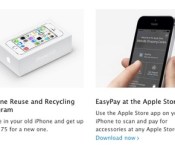
Apple’s iPhone Trade-In Program Expands to Canadian Retail Stores [iOS Blog]
After expanding to France last week, Apple’s iPhone trade-in program is now available in Apple retail stores throughout Canada as noticed by 9to5Mac. Though not publicly announced, the launch was confirmed on Canadian Apple Store retail pages and in the Apple Store app.

The in-store recycling program allows customers to trade-in an older iPhone model and immediately receive a gift card up to $275 towards the purchase of a new iPhone. The program encourages customers to responsibly recycle their old iPhones instead of throwing them away. SellCell estimates customers are storing and not recycling approximately $13.4 billion in unused iPhones.
This in-store iPhone recycling program debuted in the U.S. last summer and was expanded to include the UK a few months later. Apple also offers a mail-in recycling program that requires customers to send in their iPhone before receiving a credit. Customers may receive more money for their iPhone via the mail-in program, but they lose the convenience of a no-hassle credit that’s immediately available to spend on a new phone.
     |
 AIVAnet