
Belgian Judge May Block Apple Websites Over ‘Misleading’ Warranty Information [Mac Blog]
A Brussels judge may block access to all Apple websites in response to a complaint filed by Federal Public Service (FPS) Economy, reports Belgian newspapers (Via Tech.eu). Apple is accused of misleading consumers about warranty protections available for products purchased from Apple’s retail and online stores.

The complaint, filed last year, claims Apple advertises its one-year warranty and extended AppleCare warranty, but does not inform consumers of their right to a two-year statutory warranty under EU law. In response to this claim, Apple painstakingly outlined the differences between the company’s standard one-year warranty coverage, its AppleCare extended protection plan and the EU’s two-year warranty, but the website comparison was not sufficient for the Belgian regulatory group.
The Brussels investigative judge can order Belgium ISPs to blacklist Apple’s website as Belgian law allows for the regulation of electronic services in cases where consumer protection rights are being violated. Though he has the power to block Apple, the judge is unsure how to proceed as blocking Apple’s website also interferes with critical iOS and OS X services like iTunes and iCloud.
Consumer associations throughout Europe continue to be critical of Apple’s warranty policy in its European stores. The company was fined $1.2 million in Italy over the issue and has faced lawsuits in Germany, Luxembourg, and Portugal.
     |
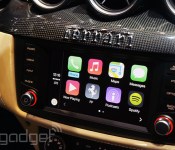
Hands-on with Apple’s CarPlay: when Siri met Ferrari (video)

Apple’s in-car infotainment system has been a long time coming. After it was announced at the company’s annual WWDC conference in June last year, “iOS in the Car” flew under the radar, only to undergo a rebrand and launch publicly yesterday under a new moniker: CarPlay. Sharing part of its name with the company’s AirPlay media streaming protocol, CarPlay combines all of the iPhone’s most important features and mirrors them inside the car, allowing car owners to call, text, navigate and listen to music (and more) using touch or Siri-based voice inputs. The new in-car interface is compatible with new Ferrari, Mercedes and Volvo models unveiled at the Geneva Auto Show, and it’s there we got the chance to test Apple’s automotive assistant inside a suitably-equipped Ferrari FF coupe.
Will CarPlay force you to buy an iPhone to go with your car (or vice versa)? Not really — the Ferrari we tried actually deployed Apple’s dash system alongside it’s own, while Mercedes-Benz and Volvo (two of Apple’s other partners) have said they’ll continue to develop Android and MirrorLink solutions for their new models. Compatible with the iPhone 5 and up, CarPlay is “loaded” into the Ferrari’s built-in navigation system by way of a Lightning adapter located underneath the armrest. Wireless connections are coming, at least from Volvo, but our test was limited to traditional cables. Once it’s connected, Ferrari will continue to utilize its own infotainment system, but users can load CarPlay by hitting a dedicated dashboard button, allowing all touch and voice inputs to be diverted to your iPhone. This loads the CarPlay dashboard, which features a familiar array of icons and services you’ll recognize from your iPhone. From here, it’s a case of using the touchscreen or calling upon Siri to load each of the services — the latter of which can be summoned with the Siri Eyes Free button located on the reverse of the steering wheel.
The first thing we noticed is how speedy everything is. Apps load quickly, and Siri’s contextual algorithms hastily recognized our voice commands and responded appropriately. Apple has also implemented safety features to ensure services do not draw your attention away from the road and push forward its “hands-free” theme. For example, when we sent or received a message from a contact, Siri would only read the message back to us and we never once got the chance to see its contents. An Apple representative was able to talk us through each CarPlay feature, so do make sure you check out our in-depth hands-on video below to get a better idea of what Apple and its car maker buddies are aiming for.
Filed under: Cellphones, Transportation, Software, Mobile, Apple

Skype’s web-based version is now available worldwide

You no longer have to live in one of a few fortunate countries to make a Skype call while checking your Outlook.com email: as of today, Skype for Outlook.com is available worldwide. All you need now is to download a browser plugin and link your Skype account. The global release comes alongside improved software support, too. PC users can now participate in HD video chats, while Mac users get a Safari plugin. If you’re heavily invested in Microsoft’s internet services, everything you need to get started is at the source link.
Filed under: Internet, Microsoft
Source: Skype

LG G Pro 2 review: new year, new Note contender

The large-screen smartphone market is now one of the most fiercely competitive in the wireless industry. But even though nearly every phone maker has produced a competitor to the Samsung Galaxy Note, only a handful of products have actually been worth considering. LG’s Optimus G Pro, a 5.5-inch flagship introduced last year, was one such exception. A year later, its 5.9-inch successor picks up where the first Pro left off, adding enough extra firepower to take on the Galaxy Note 3 spec for spec. The LG G Pro 2 may very well have what it takes to stand up against its big-screen rival, but it’ll have to overcome a few minor obstacles in order to succeed.
Hardware

Didn’t think the first G Pro was big enough? The new 5.9-inch G Pro 2 sports a larger screen than its 5.5-inch predecessor, and its 157.9 x 81.9 x 8.3 mm (6.22 x 3.22 x 0.33 in.) chassis is taller, wider and thinner too. Comparing it to similarly sized devices, it’s a little bigger than the Galaxy Note 3, although it isn’t any thicker. The HTC One Max, on the other hand, is only a hair wider, but it’s significantly thicker than the Pro 2. Weight-wise, the G Pro 2 comes in at 172g (6.07 ounces), a mere four grams heavier than the Note 3 and 45 grams lighter than the One Max. It’s more comfortable to grasp the Pro 2 one-handed than the One Max, but admittedly the Note 3 is the easiest of the three to hold.
Our initial impression of the new G Pro was that it looked like a flattened version of LG’s curved G Flex phone. Upon closer inspection, though, it has a fancier look to it. Much like its predecessor, the Optimus G Pro, the new G Pro 2 is the result of some clever engineering. The first thing you’ll notice is that the bezel sparkles, thanks to a glitter-like paint that LG refers to as “pearl.” The paint is featured on the black and silver models, but not on the white version.

The polycarbonate back cover features a textured metal finish whose mesh pattern is so fine that it feels like a thick canvas. It looks fantastic and fortunately doesn’t attract as much lint or dust as we feared. Despite all that, the phone isn’t always the most comfortable to hold: the texture is a little slicker than it would have been if it were made of rubber or some sort of soft-touch material, and the actual edges of the phone are only 4.1mm thick at its thinnest point, which made it too easy for my fingers to slip off.
Speaking of finger placement, the back of the phone is completely flat, with the exception of a steep slope around the edges and back-mounted buttons, which were designed to be easy to reach even when you’re using the phone one-handed. These buttons, which were first introduced on the LG G2, are now standard for LG’s premium (or not-so-premium) smartphones; they’re located just underneath the camera, which works out nicely because my fingers rest naturally there. While it took me a while to get used to the button placement on the G2, this setup — with the power button nestled between two volume keys — makes sense on a large phone like this. Now, you don’t have to wrap your hand around the entire frame just to adjust volume or power on the screen. (Not to mention, it makes the phone look sleeker when there aren’t any buttons along the sides.)

Underneath the rear cover sits a 3,200mAh battery and a double-decker slot that fits a micro-SIM on the bottom and a microSD on the top. Since the phone comes with either 16GB or 32GB of storage, it’s worth tossing in some external memory (up to 64GB) for music, games, photos and videos (especially if you want to take advantage of the phone’s 4K video recording).
On the G Pro 2, LG boasts a 77.2 percent screen-to-frame ratio. Essentially, this means that because of the phone’s slim bezel, the chassis is much smaller and offers a more comfortable experience than other devices with the same-sized display. Speaking of which, the G Pro 2 also rocks a 1080p Full HD IPS panel, which means it has the same resolution as the original G Pro. Unfortunately for pixel density connoisseurs, this means fewer pixels per inch — 373 vs. 401, to be exact. Arguably, this small difference in density doesn’t make the viewing experience visibly worse unless you’re looking at the two side by side, but we expect that most people would rather sacrifice a few pixels per inch for more screen real estate. We’d add, too, that the display itself is easy to see in the direct sunlight when it’s cranked up above 80 percent brightness. Likewise, the viewing angles are great too.
The Korean unit we tested comes with LTE-Advanced carrier aggregation and has penta-band support (700/850/1800/2100/2600). The 700MHz band is AT&T-compatible (band 17), which means that we were able to enjoy LTE speeds in the US. This is important to note because the phone isn’t officially available in the US, but you can still technically import one from Korea and it’ll work properly. Our office location pulled down speeds of 10 Mbps down and 5 Mbps up, but we’re certain it would fare better in areas with a stronger signal. As for other connectivity, the Pro 2 comes with tri-band (850/1900/2100) HSPA+ at 21 Mbps and quad-band GSM/EDGE. You’ll also get all the other usual connectivity options, including Bluetooth 4.0 (Bluetooth Smart-ready), NFC, 802.11ac WiFi and SlimPort.
Software

LG historically hasn’t done a good job of updating its Android phones in a timely manner, but the company is off to a good start with the G Pro 2: It ships with Android 4.4.2 KitKat, the latest version of the OS. It also comes with the same LG user interface we’ve grown used to over the years, although one small difference is that the status and virtual navigation bars are now transparent.
The Knock Code sounds like something kids need to do to get into a secret treehouse club, and it’s not actually too far off from what LG is trying to do here. In short, it’s a pattern-protected version of the company’s “KnockOn” feature on the G2: Instead of double-tapping any part of the display to get you into the lock screen, you tap a specific pattern, which will let you bypass the lock screen entirely. We were successful about eight times out of 10, but be careful about tapping too fast; you might confuse the phone that way.
As ironic as it may seem, manufacturers have pushed the upper limits of smartphone screen size while simultaneously trying to prove that they’re easy to use one-handed. This is usually done by shrinking UI elements (the keyboard, for example) and pushing them over to one side of the screen so they’re within reach of your thumb. For a 5.9-inch device like the G Pro 2, these kinds of tricks are essential if you don’t want to have both hands constantly glued to your device.

With the new G Pro 2, LG’s introduced a new feature called Mini View designed to make one-handed use a little more feasible. In truth, Samsung already does something similar with the Note 3, but the implementation here is different. Swipe left or right on the navigation bar at the bottom of the screen, and the interface will shrink into a 3.4-inch window that you can move around and even resize (it goes up to 4.7 inches).
Meanwhile, there are plenty of options for those of you who enjoy the extra screen space. Dual Browser is LG’s version of the Galaxy Note’s Multi Window, which lets you view more than one app at the same time. Hold down the back button to bring up a small menu of apps, and you just drag apps to either side of the screen. There’s also QSlide, a suite of apps that appear as floating windows. While hovering over the rest of the screen, you can choose to make them as transparent as you’d like in order to make sure they’re not distracting you when you need to focus.

The G Pro 2 also marks the debut of LG’s new Content Locker feature, which lets you hide photos and other files from view, and the only way to access them is by entering a password. This comes in handy when you’re trying to keep all of those confidential business documents away from your friends, family members and unsuspecting children who would otherwise find or alter them by accident.
Finally, LG threw in a few audio enhancements. The G Pro 2 comes with 1W Hi-Fi sound, which, according to LG, offers “studio quality sound” without any loss to the original audio. The idea is to add clarity and improve the high notes, while the speaker setup handles the mid to low end of the spectrum. In comparing it with another recent LG device, the G Flex, we noticed that although the sound isn’t as loud on the G Pro 2, it also sounds richer.
LG’s also added in a couple new tools as part of its Smart Music Player, including the ability to change the pitch and speed of your music in real time. While we imagine that this kind of feature is more useful on professional desktop software, it’s still fun to play around with — and we wouldn’t be surprised if this was just the first of several new smartphone audio tools.
Camera

LG has stuck to its tried-and-true 13-megapixel sensor for more than a year now, but we’re not complaining that it hasn’t changed. As long as the manufacturer continues to tweak the image quality and add new features that make a difference in imaging performance, we’ll be perfectly happy with LG’s current resolution. That’s why we’re seeing a bunch of other improvements in LG’s camera in terms of performance and features, which we’ll go into in more detail as we go along.
For starters, the G Pro 2 has a feature LG calls OIS+, which essentially takes the same optical image-stabilization tech that we loved in the G2 and adds software stabilization to the mix. This came in handy for me when I was taking a quick pic or when my hands started to shake.
Moving on, LG no longer features a dedicated night mode (using auto mode works sufficiently well for this cause, so it’s not a huge miss), but it’s added a couple more options to help with low-light shots. The first is Natural Flash, which is LG’s implementation of Qualcomm’s Chroma-Flash technology. Taking pictures using an LED flash is normally frustrating because the image usually comes out overexposed, but with Natural Flash, the camera takes two pictures at a time — one with flash, one without — and then the software merges them into an image that looks more balanced. In our comparisons with the G2 and iPhone 5s, we noticed that the flash is not only stronger on the Pro 2; it also does a better job reproducing colors.

Fortunately, the G Pro 2 also tackles the dilemma of taking selfies at night. After all, does anybody like a dark selfie? Not me, anyway: If I’m going to take pictures of myself, I want to really see myself. To solve this problem, LG dropped the aperture on the front-facing camera to f/2.2 and introduced a new feature called “Flash for Selfie.” (Yes, really.) As painful as the name is, it’s actually a fun idea. Shrink the viewfinder size, replace the rest of the screen with a bright white light and presto, my glorious face is now well-lit. It does a much better job at mastering the nighttime selfie than any camera I’ve used before.
How about good old-fashioned low-light images? The G Pro 2 does well there too, thanks to its f/2.4 aperture. I won’t go as far as to say that it’s the best; it’s sufficient, but there’s more noise than we prefer and not enough detail to earn any trophies. Still, I had no problem taking great images in the city at night. The only issue I came across was the camera’s inability to snap moving objects in lower-light situations; this typically resulted in blurry shots more often than I would have liked.
Fortunately, the G Pro 2 handles daytime conditions with aplomb. It snaps shots quickly and can easily maintain focus on objects, although I’d like to see the camera lock its focus a little faster. That said, I was also very happy with the Pro 2′s accurate white balance and color reproduction. All told, the vast majority of my pictures were gorgeous, and I was happy with the results.
One by one, each phone maker seems to be adding the ability to change focus in post-production, Lytro-style. Nokia introduced the Refocus Lens a few months ago, and last week, Samsung announced a similar feature in the Galaxy S5. LG’s doing the same thing on the G Pro 2 with something called Magic Focus; the company once again recruited Qualcomm for help, taking advantage of its Ubi-Focus technology. Magic Focus doesn’t do anything we haven’t seen before: It lets the user take a picture and then specify which objects you want in focus, and you can even choose to bring everything in the picture into focus if you’d prefer.

LG’s provided a couple new video features as well. Chief among them is UHD recording at 3,840 x 2,160 resolution with a solid bit rate of 30 Mbps. If you prefer, you can record in 1080p with 30 and 60 fps options, which translates to a bit rate of 20 or 30 Mbps, respectively. Additionally, LG added slow-motion 120 fps footage, though the resolution there is limited to 720p.
All in all, the G Pro 2 does a fantastic job of not only handling smooth motion, but also capturing audio; my voice came through loud and clear. LG even offers a directional-audio feature that makes it possible for the user to pick and choose from which direction they want to pick up sound (and which directions they want to filter out). The only thing I’d like to see improved is its ability to maintain focus on specific objects for a longer period of time.
The G Pro 2 also includes a brand-new video mode called Tracking Zoom. This lets you zoom in on specific parts of your screen while still capturing the action taking place in the rest of the viewfinder. It was fun to use for a little while, but it certainly has a voyeuristic vibe; that said, we’re sure there are plenty of non-creepy use cases out there for this feature.
Performance and battery life

The new G Pro comes decked out in full Snapdragon 800 (MSM8974AB) glory, which means you’re going to get a quad-core 2.26GHz CPU and Adreno 330 GPU, not to mention 3GB of RAM to keep things running smoothly. This sounds like a fantastic setup, but it’s technically not the best of the best. That honor now belongs to the Snapdragon 801, which is really just the 800 with a higher clock speed. Frankly, you get an additional 0.19GHz CPU speed and 28MHz higher maximum GPU speed. Truly, that minor speed bump won’t be apparent to most users, which means even with a slightly slower chip, the G Pro 2 is still powerful enough to handle anything you throw at it.
| LG G Pro 2 | Samsung Galaxy Note 3 | HTC One Max | |
|---|---|---|---|
| Quadrant 2.0 | 18,349 | 23,449 | 11,973 |
| Vellamo 2.0 | 1,672 | 2,501 | 2,568 |
| 3DMark IS Unlimited | 17,241 | 16,323 | N/A |
| SunSpider 1.0 (ms) | 727 | 881 | 1,173 |
| GFXBench 3.0 Manhattan Offscreen (fps) | 8.7 | 9.7 | 5.0 |
| CF-Bench | 36,840 | 37,626 | 29,137 |
| SunSpider: lower scores are better | |||
Many smartphones sold in Korea come with a spare battery, and the G Pro 2 is no exception — heck, it even comes with an external charger for it! Both cells are 3,200mAh and easily last through a day of heavy use, although gaming and high-def video recording will naturally reduce runtime by a few hours. (We imagine this is where the extra battery will come in handiest.) In our rundown test, which consists of looping a video, the phone fared much better than the original G Pro; this time we got almost 10 hours of playback, nearly two and a half more than the previous model. It’s not the best we’ve ever seen, but it’s still impressive. Of course, any units that LG sells outside of Korea likely won’t have the extra battery inside; it’s unfortunate that most carriers don’t offer this as part of the full package, but you can take comfort in the fact that if you pay $933 for a new phone, it’ll at least come with a spare battery.
I didn’t have any problems with call or audio quality, but there were a couple random bugs that I observed enough times to make note of them. First, the unit I tested occasionally lost reception, though the outages typically lasted less than a minute. Aside from that, the signal fluctuated more than it should have, quickly going from a full LTE signal to a weak one (and many times falling back to HSPA+) without any movement on my part.
The other abnormality was related to navigation, which is one of the most critical parts to get right on a smartphone. On one occasion, the G Pro couldn’t give us an accurate lock on our position (it was close, but had difficulty keeping up with us when walking around), nor did the compass point us in the right direction, so we got lost on the streets of Barcelona. We’ll continue to do more testing on this to see if the issues persist, but it’s not a good sign when you have to whip out a competitor’s phone to get accurate location readings.
The competition

The main competition for a 5.9-inch smartphone is obvious: The LG G Pro 2 is going head to head against the Samsung Galaxy Note 3, a similarly sized device that undoubtedly dominates this particular niche. This certainly isn’t the only option out there — HTC, ZTE, Huawei, Oppo, Hisense, Acer, ASUS and plenty more now offer phones in the so-called “phablet” genre — but LG’s S Pen rival is still the most popular.
Like many of LG’s previous phones, the G Pro 2 begins its life as a Korea exclusive. And at $933, it costs nearly as much as the curved G Flex did at its debut. We expect pricing to fall as it becomes available in other parts of the world (LG hasn’t mentioned the US yet, but there’s a fair chance we’ll see it show up eventually) over the next few months, but at the moment, its sticker price sits at around $300 more than the Galaxy Note 3. As such, we can’t recommend the G Pro 2 until it can be had for a more reasonable price.
Wrap-up

Aside from a couple bugs, we have few complaints about the LG G Pro 2, so forgive us if we get a little nitpicky. For starters — and this should go without saying — but if you found the original G Pro too large, you won’t be happy with the size of its sequel. That caveat aside, this phone brings a unique design, solid build quality, a great camera and some of the best specs you could hope for in a flagship device. The battery life is relatively good and hey, if you run out of juice, it even comes with a spare.
Of LG’s current lineup of large-screened smartphones, this is our favorite so far, and unless you crave Samsung’s S Pen support, the G Pro 2 can easily go up head to head against the Note 3. Once the G Pro 2 makes its way to other countries at a reasonable price, this is going to be one heck of a phone. The only question that remains is how long we’ll have to wait for it.
Filed under: Cellphones, Wireless, Mobile, Google, LG
RadioShack closing up to 1,100 stores
If you’re the type of person who purchases their smartphones from RadioShack you may need to consider a backup solution. The retailer has just announced that up to 1,100 “underperforming” stores will be closed as part of a restructuring. Once complete, it will leave roughly 4,000+ stores and 900 dealer franchises spread across the country.
Over the past few months, we have undertaken a comprehensive review of our portfolio from many angles – location, area demographics, lease life and financial performance – in order to consolidate our store base into fewer locations while maintaining a strong presence in each market.
Citing, among other things, slowed foot traffic and less than desirable smartphone sales, RadioShack will slice off approximately 1/5 of its retail presence. On a more positive note, the company does strong growth in its Concept Stores, adding they have been encouraged by the feedback on the new brand positioning.
As of now, customers can purchase Verizon, AT&T, and Sprint smartphones through RadioShack.
The post RadioShack closing up to 1,100 stores appeared first on AndroidGuys.

RadioShack plans to close over 1,000 ‘underperforming’ stores

RadioShack’s Super Bowl ad showing how cool and hip it is may’ve come a little too late, as the retailer has today announced its intention to close up to 1,100 “underperforming stores” across the US. The news was bundled in the company’s 2013 financials, which tell a story of declining sales and continued losses. RadioShack’s CEO blamed poor performance on “lower store traffic” and “intense promotional activity,” among other things, but expressed faith in the retailer’s changing brand identity to turn things around. On the up-side, the fancy new “Concept Stores” are allegedly going strong, and around 4,000 locations on top of the thousand-odd facing closure will continue to operate as usual. Perhaps some of those underperforming stores should’ve been cleared out in the 80s, after all.
Filed under: Misc
Source: RadioShack

Apple Announces September Retirement of CFO Peter Oppenheimer
 Apple today announced the retirement of Chief Financial Officer Peter Oppenheimer. Oppenheimer will leave Apple in September of this year and will be succeeded by Luca Maestri, Apple’s vice president of Finance and corporate controller. This change in executive leadership comes one day after Goldman Sachs announced that Oppenheimer would be joining the banking firm’s board of directors.
“Peter has served as our CFO for the past decade as Apple’s annual revenue grew from $8 billion to $171 billion and our global footprint expanded dramatically. His guidance, leadership and expertise have been instrumental to Apple’s success, not only as our CFO but also in many areas beyond finance, as he frequently took on additional activities to assist across the company. His contributions and integrity as our CFO create a new benchmark for public company CFOs,” said Tim Cook, Apple CEO. “Peter is also a dear friend I always knew I could count on. Although I am sad to see him leave, I am happy he is taking time for himself and his family. As all of us who know him would have expected, he has created a professional succession plan to ensure Apple doesn’t miss a beat.”
Oppenheimer joined Apple in 1996 as the Senior Director of Finance and Controller and was promoted several times before being appointed as Apple’s Chief Financial Officer in 2004. During his 18 years at Apple, Oppenheimer has served as Senior Vice President and Corporate Controller (2002 to 2004), Vice President and Corporate Controller, Vice President and Controller of Worldwide Sales and Senior Director of Finance and Controller for the Americas.
| |
Best Buy is selling the Samsung Galaxy Tab 3 with $20 off
If you were on the fence about buying a Samsung Galaxy Tab 3 at it’s regular retail price of $199, then Best Buy taking $20 off that price may just entice you into that purchase.
The Galaxy Tab 3 is the 7-inch offering from Samsung with a 600 x 1024 resolution display, a 1.2Ghz dual-core processor, 1GB of RAM, and 8GB or 16GB of internal storage + expandable microSD slot up to 64GB.
The Samsung Galaxy Tab 3 comes complete with the latest version of Android 4.1 Jelly Bean and also the custom TouchWiz interface. You can make the device your very own by clicking here and ordering the Galaxy Tab 3 for only $179 online at Best Buy.
[via BestBuy]
The post Best Buy is selling the Samsung Galaxy Tab 3 with $20 off appeared first on AndroidGuys.

XBMC looks to improve Android video playback with ‘Gotham’ beta

Version 13 of XBMC’s media center software, codenamed Gotham, is now ready for your official beta-testing pleasure. The organization — which started the project for the Xbox and spawned apps like Plex and platforms like Boxxee — kicked off work on the update nearly a year ago. It said that many of the qualms addressed by version 12 (Frodo) users have been addressed. Most notably, it now supports native hardware decoding on Android for x86 and ARM platforms, which should bring smoother playback for Blu-ray and other codecs. Other improvements include support for more 3D formats (with the notable exception of 3D Blu-ray), better touchscreen support, enhanced UPnP capability, “dramatic” audio engine improvements and easier setup. Though nightly versions have been available for a while, the company provided the usual caveats about beta software and the importance of backing up. If you’re unperturbed by that, hit the source.
Filed under: Home Entertainment, HD
Source: XBMC
Sony says the PlayStation 4’s ‘Share’ button has been used 100 million times

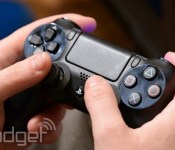
Sony has a released a bunch of statistics covering the first four months of life of its new baby. Beyond regular sales figures (six million units so far, and nearly 14 million game sales), some of the more interesting numbers relate to how PlayStation gamers are engaging with the console’s online features. We’re told that half of all PS4 owners have been persuaded to cough up for a PS Plus subscription, which grants access to online multiplayer gaming as well as a number of discounted and free titles. Meanwhile, the ‘Share’ button on the DualShock 4 controller has apparently been used 100 million times to share recorded game highlights with the PS4 community, and 3.6 million gameplay broadcasts have been streamed over Twitch and Ustream — a feature that still hasn’t been enabled on the Xbox One. And who knows? The PS4′s Twitch numbers might have been even higher if people hadn’t gotten themselves banned for playing real-live strip poker.
Source: PR Newswire, PlayStation.Blog
 AIVAnet