


Oppo’s N1 mini makes iPhones look tiny

The N1 isn’t exactly a household name, so allow us to refresh your memory: it’s a CyanogenMod phone with a selfie-friendly swivel camera made by Chinese manufacturer Oppo. Well, its creator just announced a mini version of the device — except it’s not exactly something you’d call small. Oppo shaved just 0.9 inch off the full-sized N1, so the smaller version’s still quite a large 5-inch phone, larger than other “mini” follow-up devices like the 4.3-inch Galaxy S4 mini. According to the official page Android Police spotted, the new device will have the same 13-megapixel swivel camera. It is slightly lighter (150 grams) than its older sibling (213 grams), though, and features something the original phone doesn’t have: LTE support, which is unfortunately coupled with a smaller battery (2,140mAH vs. the larger one’s 3,610mAH). As you’d except, the Oppo N1 mini’s shipping in China first on June 11th loaded with the company’s Android ROM called Color OS. Whether it’ll follow in its predecessor’s footsteps and heading stateside, we still don’t know, but we’ll keep you posted.

Filed under: Cellphones, Mobile
Via: Android Police
Source: Oppo

Android TV to debut at Google IO – report says

It wasn’t that long ago that Google had plans get a place in your living room with a TV service , unfortunately that didn’t pan out quite as well as hoped with Google TV becoming a bit of a flop, mainly due to the half-baked integration of trying to combine apps and Pay TV services.
Google knows that there is a future in TV and the demise of their original TV offering has not put them off. According to Gigaom the much rumoured Android TV, the company’s new iteration of a TV platform, will see its debut at this year’s Google I/O conference in June.
Android TV is not set to be a piece of hardware instead Google will be pushing the platform the same route as it has done with Android for smartphones and will be looking for support from TV manufactures to have their hardware running Android TV straight out of the box, whether this is a TV or set-top device.
The focus for Google is to allow users to customise their TV with the content they actually want to see on their screen, very much like what they have in place with the Android OS. Applications for online tv providers , games and music are expected to be a big part of the Android TV experience with the likes of Netflix , Hulu plus and Google’s own music and content apps being available from launch.

Google needs this to be an enjoyable way to watch TV and for this to happen you need a very intuitive UI , so out steps PANO, Google’s secret weapon for keeping the user interface simplistic and probably very Google Now ish.
GigaOm quotes that “The idea behind Pano is that apps can surface individual pieces of content right on the home screen in a card-like fashion so that users can browse movies, TV shows and other types of media as soon as they turn on an Android TV.”
Early in the year the Verge released what was reported to be a leaked internal document that showed Android TV’s interface which really highlights Google’s method of keeping it simple with a nice clean layout and easy navigation and I hope that this is what we will see come June.
So Google’s TV vision looks to be taken care of but they need to get the TV manufacturers on board for this to succeed and with the fail of Google TV probably still fresh in the minds of these companies , it may not be an easy task to convince them that this will be better however it seems that some companies love to work with Google , LG for example, so it may not be that hard.
What about Chromecast ? I hear you say. Well it won’t fade away, the success of the streaming dongle has been immense especially with its competitive pricing but it is just that – it’s a way to get content off of your mobile device to the big TV and Google still sees this a cheap way to way to keep in the TV game , plus it keeps the company competing with the likes of Roku and Apple in the streaming market.
There are exciting times ahead for Google fans and we look forward to what I/O will bring for the TV.
Source:gigaom
The Post Android TV to debut at Google IO – report says appeared first on ChromeWatching.
Read the rest of the source, ChromeWatching.com
The post Android TV to debut at Google IO – report says appeared first on AndroidGuys.
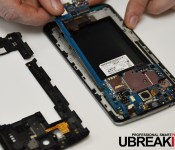
LG’s G3 is surprisingly repairable for a smartphone

LG’s new G3 has some impressive internals, but just how impressive can’t be seen until you take the thing apart. That’s just what the folks at UBreakIFix did: they got their collective hands on a newly released Korean G3 and couldn’t seem to help themselves. Turns out, the G3 is incredibly easy to take apart (and more importantly, repair) as long as you’ve got a steady hand and just a little gumption. By their count, all that holds LG’s finest flagship together are 14 screws that are revealed once you pry a bit of plastic casing off. The rest of the components are fastened to a single large board instead of multiple like in the G2, which UBreakIFix’s Justin Wetherill says makes the prospect of fixing a busted G3 less of a headache. They’re still doing a deeper dive on what makes this smartphone tick, but for now, here’s a peek into its tightly packed innards.
Filed under: Mobile
Source: UBreakIFix
Rdio’s Android app finally lets you listen to live albums correctly

Imagine this, if you will. You’re sitting in a recliner listening to Electric Light Orchestra’s Time, and just as Prologue gives way to Twilight — nothing — and then music. Those odious little pauses are hell when you’re really trying to let certain live or gapless albums wash over you, and now Rdio is addressing the problem for listeners on the go. In one of the rare instances of an Android app getting a feature ahead of its iOS cousin, the streaming service has brought gapless playback to Google’s faithful first (if you’re running Android 4.1 or later, anyway) Alas, there’s still no word on when iOS users will get the gapless treatment other than “soon.” In fairness, Rdio is a little behind the curve here anyway — rival Spotify has had uninterrupted playback for what seems like ages now — but we’re always pleased when a music service lets us listen to Pink Floyd’s oeuvre the way it was meant to be heard.
Source: Rdio
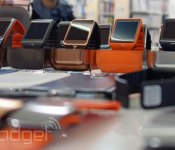
Samsung Galaxy Gear update switches it from Android to Tizen

When Samsung debuted its new line of Tizen-powered wearables, it looked like the original Galaxy Gear had been put on notice. Instead of leaving early adopters in the cold, the Korean smartphone maker has decided to make good on its promise to bring the wearable up to date — by switching it from Android over to its own OS. The update includes improvements to performance and battery life, a new standalone music player, customizable shortcuts, and voice-controlled camera commands. By installing the update, which at the moment is available as a manual download or via Samsung’s Kies software, you will lose any third-party tweaks or unsupported Android features that you’ve previously installed. However, you will gain many of the features present on the Gear 2 (except those dependent on additional sensors). Samsung hasn’t pushed an over-the-air update out yet, but that may not be a bad thing. It means some that may have accepted the update out of hand are less likely to make a decision they might regret later.
Filed under: Wearables, Software, Mobile, Samsung
Source: SamMobile

HTC One M8 Prime development halted indefinitely

If like the many new HTC One M8 owners around you felt pretty hard done by when HTC announced they were working on an M8 Prime variant, then today you can feel a little bit better about your purchase as it appears HTC have halted development of the M8 Prime indefinitely.
Notorious leaker @evleaks took to Twitter to announce that sources have told him that the HTC One M8 Prime will no longer be worked on and the project has been halted indefinitely. There are no reasons given for the sudden change of heart, but for the time being at least the HTC One M8 will remain the main flagship device for the company.
SOURCE: evleaks
The post HTC One M8 Prime development halted indefinitely appeared first on AndroidGuys.

Google Maps brings terrain view back to Android for outdoorsy types

If you’re hoping to get a bit more help from Google Maps on your next trek through the wilderness, you may be in luck. Version 8.1.0 appears to be on the way, thanks to a peek at the APK from the folks over at XDA Developers, and it packs a handy terrain view option in the side menu. This selection offers 3D elevation details of the landscape with mountains and more — a useful tool for hikers, climbers and trail bikers. All told, this appears to be the major change as the app is said to hold over the existing features, aside from the addition for the great outdoors. Unfortunately, the new version isn’t available for download from the Play Store just yet, but those feeling particularly adventurous can sideload the update now.
[Image credit: MyLoupe/UIG via Getty Images]
Source: XDA Developers
Enable “OK Google” on 3rd party launchers on any device

One of the cool features of the Moto X is the always listening “Ok Google” feature which allows you to prompt a voice command in Google Now without even having to touch the device.
Now a mod for the Xposed Framework has been created over at XDA Developers to enable “OK Google” on all 3rd party launchers on KitKat and above, and also on a per app basis.
The requirement is that you need the Xposed Framework and also version 4.4+ of the Google Search app for it to work properly.
The developer has said it has been tested on the following stock devices/launchers with no issues, and mentions that pretty much every 3rd party launcher is supported:
- Xperia Stock Launcher
- HTC Sense 6 / Blinkfeed
- TouchWiz (S5 has this built in)
- LG (untested – G3 has this built in)
So if you want to implement “Ok Google” on your device with a 3rd party launcher then just download the .APK package from here, run the App, and enjoy the handsfree Google Now control.
VIA: XDA
The post Enable “OK Google” on 3rd party launchers on any device appeared first on AndroidGuys.
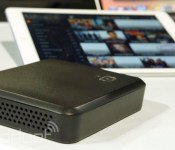
Simple.TV’s streaming DVR now sends shows to your Chromecast

Simple.TV’s streaming DVR is handy if you want to catch up on shows while on the road, but what if you want to watch on a friend’s TV, or don’t have an internet connection at all? Neither should be a big issue following an update to the company’s Android, iOS and web apps. You can now send both live and recorded TV to a Chromecast, so that big-screen experience will follow you outside of the home. And if you travel to a place where internet access isn’t guaranteed, you won’t be deprived of viewing material — it’s now possible to download recordings to a computer (sadly, not mobile devices) in advance. They’re not the biggest improvements, but they make all the difference if you’re scrounging for something to watch while on vacation.
Filed under: Cellphones, Home Entertainment, HD
Source: App Store, Google Play
HTC One’s plastic cousin officially shown off with M7 design, M8 guts

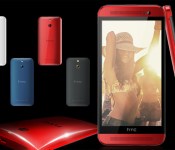
It’s no secret that HTC’s prepping a plastic variant of its flagship One (M8) phone, but we’ve never taken a proper look at it until now, courtesy of the company’s China website. And no, this isn’t a leak. Ahead of the device’s June 3rd launch, HTC’s limited edition giveaway campaign unveiled almost everything about the M8 Ace, aka “Vogue Edition,” of the One. The clear product renders — shown in black, white, blue and red options — indicate that this upcoming phone carries a similar design language as the metallic, award-winning M7 from last year; but the new plastic-only construction means you get a cleaner look on both the back and the profile sides.

The page also confirms some main specs that are identical to that of the flagship M8: a 2.5GHz Snapdragon 801 SoC (the M8 for Asia is clocked at 2.5GHz instead of 2.3GHz, by the way), a 5-megapixel front-facing camera, BoomSound front-facing stereo speakers, Motion Launch gestures and extreme power-saving mode. As we already know, the M8′s funky Duo Camera is replaced by a single 13-megapixel camera here, and it appears that the TV remote feature is also absent on the power button. On the flip side, we can just about make out China Mobile’s 4G LTE logo on the back of the phone, which is good news for the locals. There’s no mention on the screen size, but we’ve previously heard from our sources that it’ll be the same 5-inch 1080p panel as found on the M8. The leaked dummy in the above picture, courtesy of Sina Weibo user ASAMKI, suggests the same.
The ultimate question is: How much will HTC be charging us for this so-called Galaxy S5 competitor? Its “mid-range flagship” Desire 816 costs ¥1,899 (about $300) in China, whereas both the M8 and the Galaxy S5 cost ¥5,299 ($850), making for a midway point of ¥3,599 ($580). HTC will really need to stick to the lower half of the price segment to threaten not only Samsung, but also other local brands like Smartisan, Oppo, Vivo, Huawei (all mainly in the ¥3,000 sector), plus the notoriously aggressive duo: Xiaomi and OnePlus (from just below ¥2,000). Will HTC be able to surprise us? Tune in next week to find out.
Filed under: Cellphones, Mobile, HTC
Source: HTC, Sina Weibo

