


Apple Registers Two More Unreleased iPad Models in Eurasia
Over the past few months, Apple has been preparing itself for product launches later in the year by registering several new iPads, iPhones, and Macs with the Eurasian Economic Commission. The filings are legally required for any products that include encryption features and are to be sold in Armenia, Belarus, Kazakhstan, Kyrgyzstan, and Russia, making them good indicators of products coming down the line.
Earlier in July, Apple registered five tablet models, including A1876, A1934, A1979, A2013 and A2014, but today Consomac discovered recent authorization for two new tablets: A1895 and A1980. Most of these are expected to be models of Apple’s 2018 refresh of the iPad Pro.
2018 iPad Pro concept by Álvaro Pabesio
Later this year we’re expected to see a major update to the iPad Pro with design elements from the iPhone X, like slimmer bezels, faster processor, and a TrueDepth front-facing camera with Face ID support. This means that the 2018 iPad Pro models are also expected to drop support for the home button for the first time on Apple’s line of tablets.
The 2018 iPad Pro refresh is predicted to come in two sizes, measuring 11 inches and 12.9 inches, according to recent report by Apple analyst Ming-Chi Kuo. With two size tiers and a Wi-Fi, Wi-Fi + Cellular, and potentially a special Cellular model for China, there would be just one model number left over from the seven EEC filings.
While this could be an additional model of the iPad Pro we don’t yet know about, it could also relate to a model of iPad not in the Pro family, including the iPad mini 5. A rumor from May 2017 suggested the mini lineup was being discontinued, but over a year later Apple has yet to officially make such a commitment to ending the line.

Consomac’s other findings relate to model numbers previously reported, including 11 model numbers for smartphones and five model numbers for laptops, two of which we now know were the 13-inch and 15-inch MacBook Pro with Touch Bar refresh launched yesterday. For MacBook, this leaves three other models with a potential launch in 2018, perhaps indicating cheaper, entry-level MacBooks without the Touch Bar.
Today’s filings also include 11 existing iPhone models listed as running iOS 12, including the iPhone SE and iPhone X, two devices Apple has been rumored to possibly be discontinuing with the release of the new lineup. It’s unclear, however, if their inclusion is confirmation that Apple will continue selling them.
Of course, it’s difficult to obtain any information based solely on model numbers, so at this point those looking forward to new iPads and iPhones this year can at least know that the devices are a few months away.
Related Roundup: iPad ProTag: EECBuyer’s Guide: 10.5″ iPad Pro (Don’t Buy), 12.9″ iPad Pro (Caution)
Discuss this article in our forums
Facebook wants to own your face. Here’s why that’s a privacy disaster
(in)Secure is a weekly column that dives into the rapidly escalating topic of cybersecurity.
Scanning your face is easier than remembering a password, that’s for sure. But while facial recognition technology has gone mainstream with Apple’s FaceID and Microsoft’s Windows Hello, we’re only now thinking through the cybersecurity and privacy concerns.
Now Facebook, among other companies, are finding questionable ways to use this new data. To get to the bottom of just how dangerous that could be, we spoke with Theresa Payton, the former White House Chief Information Officer for the George W. Bush administration. She’s now deeply involved in the world of cybersecurity — and has some serious concerns about how Facebook intends to use the tech.
Your face belongs to you, doesn’t it?
Facial recognition technology has great potential, even in the world of cybersecurity. In the case of authentication, for example, it makes locking devices and accounts simpler for those who are slow to move to methods like two-factor authentication. But, as Theresa Payton explained, there’s a dark side to the technology.
Facebook says scanning and recognizing your face helps “protect you from a stranger using your photo to impersonate you.”
“I believe there are a lot of really cool things that could come out of this technology, but recent history tells us we need to play out worse-case scenarios,” Payton told Digital Trends. “We need to understand that new technology will always be released a year or two before we really understand the ramifications of securing that data, as well as the legal aspects of protecting privacy.”
According to a recent New York Times report, Facebook’s use of facial recognition to pick your face out of photos has a handful of civil rights organization up in arms. Using artificial intelligence and its own proprietary algorithm, Facebook already knows your face as well as your best friend.
In Facebook’s own words, scanning and recognizing your face helps “protect you from a stranger using your photo to impersonate you.” At least, that’s what it said when it first tried to introduce the technology in Europe six years ago. Facebook pulled back when EU regulators started asking questions about security and privacy – but now, the issue has returned.
Therea Payton, former White House Chief Information Officer to the Bush Administration.
You might think Facebook would retire the idea completely due these previous concerns, along with the recent Cambridge Analytica data scandal, yet the company has no plan to stop.
“They said, ‘Okay, we learned a lot,’ and basically ‘We want to make it easier to authenticate, to classify their photos and videos,” said Payton. “They basically said you shouldn’t worry about this, because we’re going to let the users control facial recognition.”
“This is cool technology, but why don’t we all take a step back and talk about the uses [of Facebook’s facial recognition]”
Facebook’s plan to analyze your face don’t stop with photos and authentication. As reported by WWD, the social media giant wants to monetize facial recognition further with what it calls “augmented commerce.” The idea is to help brands transform simple Facebook ads into interactive AR experiences. The problem? No one knows what Facebook or its ad partners will do with the data gained from scanning your face.
And that’s only the beginning. Facebook holds several worrisome and downright creepy patents regarding facial recognition technology. One Minority Report-like patent described a way to set a “trust level” for each person who enters a store. By recognizing their faces and connecting it to the data in their Facebook profile, the system could figure out which shoppers were “trustworthy,” or could unlock special deals. Other disturbing patents include a system for tracking your emotions by scanning your face and matching that to what you’re currently looking at.
One of Facebook’s new facial recognition patents that track emotions by scanning your face and matching it to what you’re currently looking at.
“You are not going to get a new face,” said Peyton. “This is cool technology, but why don’t we all take a step back and talk about the uses and applications of that technology and play out future security and privacy concerns?”
She has a point. It’s not hard to imagine a day when biometrics are accurate and routinely used for accessing your bank account. If your face was then stolen, that could be incredibly problematic. But that wouldn’t happen, right?
Biometrics won’t save us
Technology like facial recognition and fingerprint scanners are often seen as the safer alternative to simple passwords. But if that data is not secured, the consequences are catastrophic. We’ve already seen it happen. In 2015, the Office of Personnel Management had a breach that resulted in the theft of 5.6 million unencrypted fingerprints.
“I’m incredibly worried about the ease in which biometrics could be stolen and used for nefarious purposes,” said Payton.
“Play out those scenarios with this technology and come up with your countermeasures for that.”
With massive machine learning infrastructure to power biometric scanning in place for companies like Google, Facebook, Apple, and Microsoft, we tend to assume those companies are also hiding that data away in a digital locked vault.Payton says our ability to protect our biometric data is “woefully lacking right now.”
It seems it’s only worth implementing if companies are willing to do the hard work of securing the data.
“Here’s what I’d say to these technology companies…Let us know that you are thinking through these worse-case scenarios,” she said. “Play out those scenarios with this technology and come up with your countermeasures for that. If we at least get those assurances, that’d be incredibly helpful given the current state of affairs.”
Payton isn’t calling for an end to biometric scanning and facial recognition. Instead, she proposed a more responsible way to use it hand-in-hand with other technology. Rather than rely solely on something like a fingerprint scanner, Payton’s advice was for companies to combine it with behavioral-based data that could act as biometric two-factor authentication. A system might be able to know things like when the individual typically makes transactions, what kind of operating system they use, or how fast they type.
“There’s a lot of biometrics and behavioral-based information if you match the two together, then you have assurances of who that person really is,” she insisted.
But it’s not too late, Payton argued. We’ve seen the worst social media has to offer in the past couple of years, but if we could wind back the clock and warn ourselves when this was all beginning, our world might look different than it does today.
“If that worse-case scenario had been played out in in the late 1990s and early 2000s, maybe things would have been a little different on these social media platforms,” said Payton. “Let’s not repeat that type of mistake with these newer technologies we’re introducing.”
Editors’ Recommendations
- U.S. Customs says biometric entry and exit is coming first to this airport
- You’ll never read Facebook’s new data policy, so we did it for you
- Improving security means killing the password, but that battle has just begun
- Facebook wants to literally open your eyes with A.I. that fixes blinks in photos
- Facebook’s photo tag suggestions could violate Illinois law — and cost billions
Pop-up cams could be the next must-have feature for phone privacy nuts
Pop-up cameras may become more than a way to get around design challenges on today’s top phones — they may evolve into the must-have feature for privacy-focused smartphone owners. A report claims that in China, pop-up cameras are activating when certain apps are being used, providing possible evidence of how much we’re being spied upon by app and device makers.
Two phones with motorized cameras have been announced recently — the Vivo Nex and the Oppo Find X. Under normal circumstances, the cameras rise from the phone’s body when the camera app switches to selfie mode on the Nex, or when the camera app itself opens on the Find X.
However, a selection of apps in China including the QQ web browser, a travel app called Ctrip, messaging app Telegram, and the voice recording feature in a Baidu app all activate the Nex’s selfie camera. This video posted on the Weibo social network is an example of what happens. These are not small apps used by only a few people. Technology giant Tencent developed the QQ browser, Ctrip is a well established travel service provider, while Baidu is one of the world’s top search engines.
Privacy
On devices without a pop-up camera, we’d never know when the selfie camera was activated, and these instances do anecdotally suggest developers are intentionally invading our privacy. Developers disagree, however. Baidu issued a response stating app users must have given consent for the front camera to become active, but even then it does not record. Instead, it’s used to prompt the phone to activate its microphone faster than usual in the voice input app.
Tencent also says the camera is not used to record, but is instead activated to prepare for QR code readings, which are commonly used in China. After the camera issue became more widely reported, Telegram took action and has included a fix in a beta version of the app, which it apparently blames on Vivo’s own software messing around with the way the app operates, although it has not reached the public version yet.
While it’s tempting today to leap to the conclusion that apps and phones are spying on us, there’s no evidence beyond an app commanding the selfie cam to activate here, which is very different to evidence of it then recording, and even going on to upload that recording to a server without your permission. Many apps will prime features during the startup process, whether you’re about to use them or not.
That doesn’t mean we shouldn’t pay attention. It serves as another warning to check and understand the permissions apps request when we install them. If an app’s main feature doesn’t require use of the camera, microphone, or access to our emails, it’s wise to disagree when prompted. You can always change the setting later, should it become necessary.
Editors’ Recommendations
- Here are the best camera phones of 2018
- From DSLR to mirrorless and compact, here’s how to choose a camera
- Samsung Galaxy S8 camera tips that will make you a better photographer
- LG G6 camera guide: How to take killer photos
- Canary View review
Split your Uber charges with friends more easily than ever with Venmo
Splitting the cost of your Uber just got a little bit easier. On Thursday, July 12, the ridesharing giant announced a new partnership with Venmo designed to offer a brand-new payment experience for both Uber and Uber Eats. After noting that more than six million Venmo transaction descriptions included the word “Uber,” the PayPal-owned app decided to help users cut down on the number of steps needed to repay friends.
If you’re using Uber in the United States, you’ll soon have the option to pay with your Venmo balance, or your linked bank account, credit card, or debit card. You should also be able to use your new Venmo debit card that just recently launched thanks to a new partnership with Mastercard. Regardless of what Venmo payment method you link, it ought to make splitting costs with your friends and family members all the easier, and all without an additional fee.
And if you want to introduce a social media aspect to the mix (who doesn’t?), Venmo users can share their Uber charges in their Venmo feeds with custom emojis exclusive to this new partnership.
“Adding Venmo as a way to pay within Uber and Uber Eats furthers our mission to provide a seamless way to pay for the services that matter most to our customers,” said Bill Ready, chief operating officer of PayPal. “Whether it’s splitting a ride home after a night out, or sharing a meal during a night in, paying with Venmo provides our customers with a convenient and fun way to split and share these experiences with friends.”
While it’s not entirely clear when we can expect this new integration to go live, Uber says that the new payment method should be made available to folks in the United States in the coming weeks.
“Uber is always looking for unique new ways to provide an even better experience to our customers,” said Marco Mahrus, head of payment partnerships for Uber. “With so many of our riders and eaters already turning to Venmo as a way to pay a friend back for that last ride or meal, we’re proud to have built a seamless, easy-to-use connection between our apps.”
Editors’ Recommendations
- Don’t wait for a money transfer in Venmo — just use its Mastercard debit card
- Venmo will no longer let you pay or charge your friends on its website
- The best money-transfer apps for Android and iOS
- What is Google Pay? Here’s what you need to know
- Everything you need to know about Samsung Pay
ASUS ZenFone 5Z review: A compelling alternative to the OnePlus 6
The ZenFone 5Z delivers incredible performance at less than half the cost of ‘true’ flagships.

After a strong initial showing with the ZenFone series, ASUS faded from relevance in the last few years owing to a combination of uninspiring designs and inability to match up to the likes of Xiaomi, OnePlus, and Honor. OnePlus, in particular, has come to dominate the affordable flagship space, with the OnePlus 6 now the benchmark that other $500 phones have to measure up to. That’s particularly true in markets like India, where OnePlus is virtually unchallenged in this space.

ASUS is now looking to challenge OnePlus’ dominance in this segment. The Taiwanese manufacturer has been dormant in India for a few years, but that has changed in recent months. ASUS unveiled the ZenFone Max Pro M1 in the budget segment a few months ago, taking the fight to Xiaomi’s Redmi Note 5 Pro and coming out on top. It isn’t every day that you see a brand undercut Xiaomi, but ASUS managed to do just that with the M1.
Now, the manufacturer is looking to do the same in the premium segment with the ZenFone 5Z. From the onset, it’s clear that ASUS is going after OnePlus, with its marketing materials making endless references to the OnePlus 6. That’s because the ZenFone 5Z shares a lot of the same hardware as the OnePlus 6 — it is powered by a Snapdragon 845, and comes with 8GB of RAM and 256GB of storage.
More importantly, however, ASUS has once again managed to undercut the incumbent, with the ZenFone 5Z retailing for ₹5,000 ($75) less than the OnePlus 6. So does it manage to dethrone the OnePlus 6 as the best $500 phone? Let’s find out.
ASUS ZenFone 5Z

Price: ₹29,999 ($435)
Bottom line: If you’re looking from a value standpoint, the ZenFone 5Z is an easy sell. You’re getting the same hardware as the OnePlus 6 at a lower price, and ZenUI is no longer infuriating to use. Leave it to ASUS to come up with one of the best phones of 2018.
Pros:
- Gorgeous design
- Incredible performance
- Well-executed AI features
- Great value for money
- Decent camera
Cons:
- Sizeable notch
- No water resistance
- No wireless charging
- Limited global availability
See at Flipkart
About this review
I (Harish Jonnalagadda) am writing this review after using the ZenFone 5Z for over two weeks in Hyderabad, India. The phone was connected to Jio’s 4G network, and received numerous stability fixes over the course of the review. ASUS India provided the device to Android Central for review.

ASUS ZenFone 5Z Hardware
ASUS was one of the first Android manufacturers to adopt the notch, and the company made no attempt to hide the fact that the design was inspired by the iPhone X. If anything, ASUS invited those comparisons, stating that the ZenFone series offers a similar design aesthetic as Apple’s flagship at less than half the cost.
With a majority of Android phones in this segment now offering a notch, the ZenFone 5Z’s design isn’t an outlier, but the norm. The front of the phone is dominated by a 6.2-inch IPS LCD display with a sizeable notch at the top and a chin at the bottom. The notch is wider than the one you’d find on the OnePlus 6, and the chin at the bottom is also slightly thicker. The phone has a glass back as well, and both the front and back offer subtle curves thanks to 2.5D glass and are protected by a layer of Gorilla Glass 3.
The ZenFone 5Z is available in Midnight Blue and Meteor Silver, and if you ignore the obvious iPhone comparison, the design is stunning. The rounded corners, chamfered edges, and the dark blue coating underneath the glass back make for a gorgeous device.
The power and volume buttons are located on the right, and they offer excellent tactile feedback. The phone retains a 3.5mm jack, and you get dual speakers that sound great. The fingerprint sensor is positioned right where you rest your index finger at the back, making it highly convenient to unlock the phone. There’s also a face unlock feature that works reliably well most of the time, but it ran into issues in low-light scenarios.
The 6.2-inch Super IPS+ display gets sufficiently bright for outdoor use, and colors are punchy. The FHD+ resolution is more than adequate, and the screen sports a 19:9 ratio due to the notch. There’s an option to hide the notch entirely, which results in black bars on either side of the cutout. However, you will be able to make out the black bars when using the phone outdoors as the panel doesn’t have the same deep contrast levels as an AMOLED display.
For its part, ASUS lets you customize the color temperature to your liking, and there’s even an auto mode that relies on the camera sensor to detect the ambient lighting levels in your environment, adjusting the colors accordingly. For instance, the mode switches the screen to warmer colors at night to reduce eye strain and boosts colors when outdoors.
ASUS offers the standard set of display features as well — there’s the option to change display scaling, adjusting the font size and type, and you get a standard blue light filter that can be customized to kick in at a particular time. There’s also a Smart Screen feature that keeps the display switched on past the screen timeout when the device is held upright.
| Screen | 6.2-inch IPS LCD |
| SoC | 2.8GHz Snapdragon 845 |
| RAM | 6/8GB |
| Storage | 64/128/256GB |
| Camera 1 | 12MP rear, ƒ/1.8, OIS |
| Camera 2 | 8MP rear, ƒ/2.0 |
| Battery | 3300mAh fast charge |
| Connectivity | Wi-Fi ac, BT 5.0 |
| Security | Fingerprint, face unlock |
| Dimensions | 153 x 75.7 x 7.9mm |
| Weight | 155g |
| Colors | Midnight Blue, Meteor Silver |
| Price | $435, $480, $540 |
As for the hardware on offer, the ZenFone 5Z is powered by Qualcomm’s latest Snapdragon 845, and you can pick up a variant with 8GB of RAM and 256GB of storage. There’s even a hybrid SIM card tray, with the secondary SIM card slot doubling up as a microSD slot that can accommodate cards up to 2TB. The phone facilitates dual 4G, allowing you to use the 4G connection on both SIM cards. Other connectivity options include Wi-Fi ac, Bluetooth 5.0 NFC, and FM radio.
ASUS doesn’t skimp on the accessories either, and you get an 18W charger along with a clear case and Hi-Res-certified earbuds. The phone has a DAC that boosts audio performance when using wired gear, and AptX if you prefer to go wireless. ASUS also has an Audio Wizard feature in the settings that lets you tweak the audio profile.
As you’d imagine for a phone that’s running the latest hardware available today, the ZenFone 5Z is a beast when it comes to day-to-day usage. You’re not going to notice any lag or stutter anywhere, and Adreno 630 handles the most visually intensive titles without any hiccups. ASUS significantly pared back the customizations in ZenUI over the last 12 months, making the ZenFone 5Z a delight to use.
The ZenFone 5Z is one of the fastest phones you can buy today.
If the notch is the defining hardware trend of 2018, AI is its software equivalent. We’ve seen several manufacturers offer AI-assisted features to enhance camera capabilities of their devices, and ASUS has gone all-out in this area. The Taiwanese manufacturer offers a smorgasbord of AI features on the ZenFone 5Z, ranging from everything to receiving calls, charging the battery, and obviously the camera. But more on that later.
On the subject of battery, the 3300mAh battery on the ZenFone 5Z manages to deliver a day’s worth of usage consistently. I had no trouble getting to the end of the day with at least 15% battery left, even on days when I was predominantly using cellular data. ASUS offers several battery modes that eke out the most out of the battery by turning down the brightness, killing background app usage, and throttling the chipset.
The phone is compatible with Quick Charge 3.0, and ASUS bundles an 18W charger in the box that tops up the device from zero to 100% in just over an hour and a half. If you’re looking to top up in the middle of the day, you’ll be able to get up to a 60% charge in just under 40 minutes.
One of the few downsides on the hardware front is that there’s no wireless charging in spite of a glass back. ASUS doesn’t make any mention of water resistance, either, so you’re better off not taking the ZenFone 5Z anywhere near a water body.

ASUS ZenFone 5 Software
ASUS overhauled ZenUI over the course of the last year, and while the interface still sports a few distinct tweaks, the company is now focusing on providing a clutter-free experience. To that effect, the company got rid of stock apps that served the same function as Google’s offerings, and the ZenFone 5Z comes with a minimal set of pre-installed apps that include Facebook, WhatsApp, Facebook Messenger, and ASUS’ own Go2Pay mobile wallet service. There’s also the option to uninstall the pre-installed apps.
The current ZenUI interface feels much more modern, with clean lines and a white color scheme interlaced with blue accents. Overall, it’s a pleasant change from what ASUS was offering just a few years ago.
To facilitate the gamut of AI features available on the device, the ZenFone 5Z takes full advantage of the AI engine in the Snapdragon 845. One of the AI features is Optiflex, which boosts app launch times by predicting apps you’re likely to load based on your usage habits. I wasn’t able to notice dramatically-improved launch times, but this feature will likely come to be handy after using the phone for a few months.
ASUS offers a smorgasbord of AI features on the ZenFone 5Z, and it’s not just marketing fluff.
The ZenFone 5Z has three microphones placed around the device, and there’s an AI-assisted call feature that automatically adjusts volume levels so the recipient can always hear you. This feature is particularly useful when you’re making calls in a noisy environment. On the flip side, there’s AI Ringtone, which adjusts the volume of incoming calls based on the ambient noise levels in your surroundings. Say if you’re in a meeting and forgot to switch the phone to mute, AI Ringtone will detect the ambient noise and put the ringer at a lower volume. Conversely, if you’re at a mall, the volume will automatically be boosted to its highest setting so you can hear the ringtone.
AI Charging is designed to improve battery longevity by leveraging machine learning to adjust the charging speed based on when you plug in the phone. If you’re charging the device overnight, the phone charges up to 80% and then cuts off until a predetermined time, after which it will top up to 100%. ASUS says this will significantly improve battery health over time, and the feature itself takes about a week to learn your usage habits. There’s also a scheduled charging mode that lets you manually specify the charging times.
Alongside the AI features, ASUS also offers its own take on Animoji, dubbed ZeniMoji. The only difference is that ASUS’ implementation is nowhere as refined, and it just doesn’t work for the most part.
The ZenFone 5Z runs Android 8.0 Oreo out of the box with the April patch, and ASUS says it is committing to timely updates. While it didn’t specify a timeline, the manufacturer did state that the Android P update will be making its way to the device. Software updates are one area where ASUS lagged behind its rivals in the past, and while it says that things are different this time around, we’ll have to wait and see if that’s indeed the case.

ASUS ZenFone 5 Camera
The ZenFone 5Z has dual cameras arrayed vertically at the back, with the secondary sensor offering a wide-angle lens, à la LG. The primary shooter is a 12MP Sony IMX363 sensor, the same one we’ve seen in the likes of the Mi Mix 2S and the Vivo NEX. The secondary 8MP sensor facilitates 120-degree field of view, and ASUS has relied heavily on AI-based features to differentiate the camera from other devices in this category.
The camera app is easy to get started off with: you get toggles for HDR, flash, and the timer at the top, and the ability to switch between the primary and wide-angle cameras and change the shooting mode. You’ll be able to access all the shooting modes with a swipe up gesture, while a swipe down reveals all the filters. There’s also a manual mode that lets you adjust the white balance, exposure, and shutter speed.


ASUS has an AI-based scene detection feature that automatically selects the optimal shooting modes for a particular scene. If you’re taking photos at night, the camera automatically switches to night mode, and ASUS says the camera can recognize 16 modes in total, including food, animals, nature shots, people, and more.
The 1.4um pixel size and f/1.8 lens allow the ZenFone 5Z to take impressive photos in daylight conditions, and the phone does a decent job in low or artificial lighting as well.

ASUS ZenFone 5 Review
One reason for OnePlus’ strong showing in markets like India is aggressive pricing. In the U.S., you can pick up a Galaxy S9 for around $300 more than what you’d shell out for a OnePlus 6, but that isn’t the case in most parts of the world. In India, for instance, the Galaxy S9 and the Pixel 2 XL start off at well over $1,000, making them unattainable to a majority of the populace. By contrast, the OnePlus 6 retails for the equivalent of $510 in India, or half the cost of a Galaxy S9. It’s no wonder, then, that India is OnePlus’ largest global market, with the country accounting for over a third of the Chinese manufacturer’s sales.
With traditional flagships priced well out of reach of most users, the $500 price point is where brands duke it out. There’s no dearth of choice in this segment — the Mi Mix 2, Galaxy A8+ and more recently the Honor 10 are all available at around the $500 mark, and they’re all looking to do one thing: knock OnePlus off its perch.
The ZenFone 5Z is the closest anyone has come to doing that. The device is the most affordable option yet if you’re looking to pick up a phone powered by the Snapdragon 845. The design is evocative, the performance on offer is on par with the likes of the Pixel 2, and the camera holds its own. ASUS has also managed to do a great job with its slew of AI features — they offer worthwhile functionality without being overbearing.
The device isn’t without its drawbacks — you don’t get wireless charging or water resistance, and ASUS’ shoddy track record when it comes to software updates is worrisome. But as an overall package, the ZenFone 5Z is a worthy alternative to the OnePlus 6.
The phone is available in three variants: the base model with 6GB of RAM and 64GB of storage is available for ₹29,999 ($435), the variant with 6GB of RAM and 128GB of storage retails for ₹32,999 ($480), and the version with 8GB of RAM and 256GB of internal storage is available for ₹36,999 ($540). Minor shortcomings aside, the ZenFone 5Z is one of the best phones you can buy in 2018.
4.5
out of 5
If you’re looking to pick up a phone that offers the most value for your money, the ZenFone 5Z is a great choice.
See at Flipkart
How to set up Android Auto on your phone so you’ll actually use it
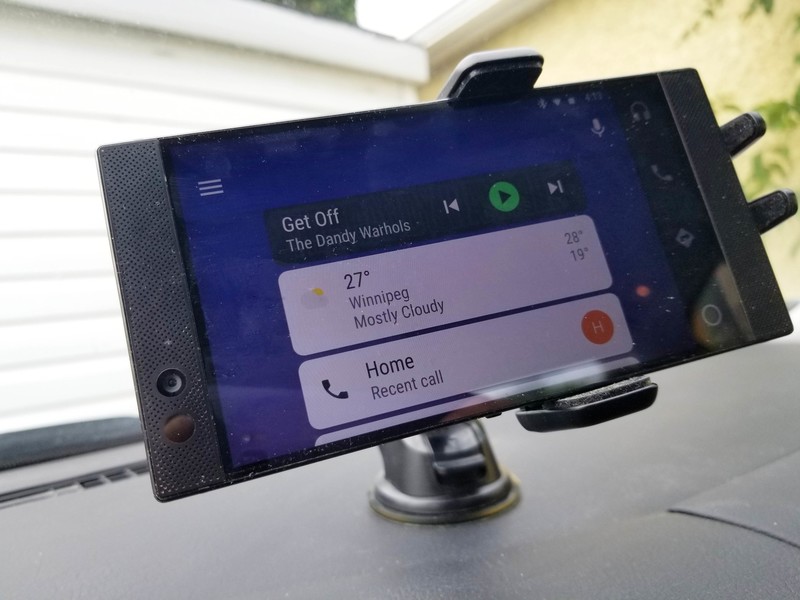
PSA: Keep your focus on the road and off your phone.
When Google first announced Android Auto, it was a fairly basic app that let you connect and display a limited amount of information from your phone to your car via a wired connection to an aftermarket in-dash display head unit. Automakers eventually supported the platform as more cars included touch displays in their interface, but unless you’re driving a newer model car from 2016 on there’s a solid chance the car you’re driving isn’t equipped to support Android Auto.
Fortunately, the Android Auto app for your phone has been vastly improved to the point where you really don’t need to invest in a fancy head unit for your car. In fact, Android Auto works just as well using just your phone with a car mount and a Bluetooth FM transmitter — and you won’t have to be bothered about thieves trying to steal your expensive car stereo.
The best universal car mounts
Using Bluetooth makes the whole process so easy
Android Auto is such an obvious choice to use behind the wheel that the only reason not to use it is if you forget to load the app before you start driving. With your phone mounted on your dash, you’re able to quickly follow directions from Google Maps, easily place hands-free calls to a recent contact, and control your music using a growing list of supporting apps that include Spotify, Google Play Music, YouTube Music, Podcast Addict, and many more.
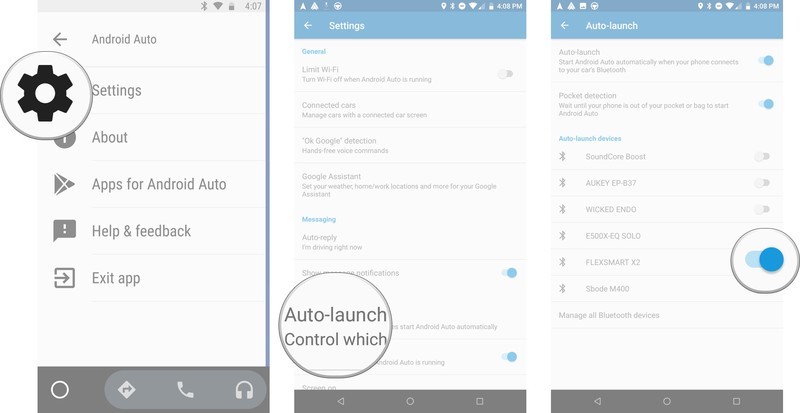
One of the best features in the Android Auto app settings is the ability to have the app automatically launch when you connect to a specific Bluetooth device. This could be your car stereo if it supports Bluetooth or a Bluetooth FM transmitter — whatever you use in your vehicle.
Once set up, you’re phone should automatically switch to Android Auto mode by simply connecting to your car Bluetooth. It’s a simple feature that will make sure you get into a better habit of using Android Auto when you drive.
My car doesn’t have an AUX in or Bluetooth support, so I use a GOgroove FlexSmart X2 Bluetooth FM transmitter because it fits well into the design of my console and includes a USB port for keeping my phone charged. What you choose to go with will depend on your car model, car stereo, and your price preference.
Customized responses for incoming messages

It’s hard to resist checking your phone when you see that text notification while you’re driving. A big reason texting and driving is so dangerous is that it’s so easy to get overconfident in thinking that you’re okay to take your focus off the road for a second or two. But it’s those little moments of distraction that can prove to be tragic and life-changing.
Android Auto gives you a couple of ways of receiving and responding to incoming messages whether you use texts, Facebook Messenger, or WhatsApp. When a message comes in, you’ll get a big push notification that lets you have Google Assistant read the message aloud with the option to respond with your voice. Alternatively, you can go into the app settings and set a custom response. By default, the reply message is, “I’m driving right now”, but you can change it to whatever you want.
Google Assistant is integrated nearly perfectly
Speaking of Google Assistant, the integration into the Android Auto interface certainly deserves praise. You’ll have the option of using “OK Google” to trigger the assistant along with a microphone button for triggering it with a quick tap. It’s in the same place whether you’re looking at navigation, your recent contacts list, or listening to music. It makes it really easy to quickly call up directions, place a call, or switch to a different playlist as needed using just my voice.
One of the few shortcomings that still need to be addressed is Google Assistant’s inability to work with podcasts — you’re able to pause and navigate through them using Google Assistant while they’re playing, but that’s it. I listen to a ton of podcasts while I drive and if one ends before another begins there’s no clean way to use Google Assistant to call up another one.
Don’t use your phone while you’re driving!
There are a number of very valid reasons why it makes sense to use your phone’s functionality while driving, but there’s no reason to have your phone in your hand while you’re driving. It’s illegal, it’s dangerous, and it’s unnecessary because Google has created a pretty fantastic app in Android Auto.
Hopefully, these tips will help you and your friends and family to drive safe this summer.
Download: Android Auto (Free)
Save big on Anker’s Bluetooth speakers, headphones, and portable projectors today only
Time is running out, so don’t miss out.

Anker is back with another one-day sale for Amazon Prime members only. The sale has a few different items in it, and most of them are perfect for using this summer. First up is Anker’s SoundBuds Slim+ Bluetooth headphones, which are down to $20.49. These are one of the best sets of headphones the company sells for and they normally sell for closer to $30.
If you need to entertain more than just yourself with some music, the Anker Soundcore 2 Bluetooth speaker is the way to go. Right now you can grab the black version for $27.99, or splurge and spend $1 more for the blue or red one. These offer water resistance, great sound quality from the 12W drivers, and 24 hours of battery life per charge. You get all of this out of a package you can nearly fit in your pocket (seriously), so don’t miss out.
Finally, Amazon has a set of its portable projectors on sale as well. The Nebula Mars Lite is down to $299.99 while the slightly larger Nebula Mars is sitting at $419.99. These normally sell for closer to $400 and $600 respectively. You can pair either of these up with a nice display and watch movies at up to 150 inches in size. They have built-in speakers, inputs for music and movie playback, and more.
To get these prices, you will need to be an Amazon Prime subscriber. If you aren’t already one, you can sign up for a free 30-day trial to take advantage of this discount and all the other upcoming ones for Prime Day.
See at Amazon
Adobe Said to Launch Full Version of Photoshop for iPad in 2019
Adobe will launch a “full version” of Photoshop for iPad in 2019, according to Bloomberg’s Mark Gurman and Nico Grant. The report claims Adobe will preview the app at its annual MAX creative conference in October.
Adobe’s chief of Creative Cloud software Scott Belsky confirmed that the company is working on a new cross-platform version of Photoshop and other apps, but declined to specify the timing of their launches.
“My aspiration is to get these on the market as soon as possible,” Belsky said in an interview. “There’s a lot required to take a product as sophisticated and powerful as Photoshop and make that work on a modern device like the iPad. We need to bring our products into this cloud-first collaborative era.”
Adobe already offers a range of companion apps for Photoshop on iPhone and iPad, including Photoshop Fix for basic retouching, Photoshop Express for basic photo editing and creating collages, Photoshop Sketch for drawing and painting, and Photoshop Mix for creating multilayered images.
Tags: Photoshop, Adobe
Discuss this article in our forums
LG Display Signs Deal With Apple to Supply OLED and LCD Panels for 2018 iPhones
LG Display has signed a deal with Apple to supply both LCD and OLED panels for the company’s 2018 range of iPhones, according to a new report by Korea-based Newspin (via DigiTimes).
The contract will see LG Display ship around 20 million LCD smartphone panels to Apple in 2018, according to the report, which also puts the number of OLED panels to be supplied by LG in the 3 to 4 million ballpark range, as per previous rumors.
In addition, the report claims LG is “likely” to secure the majority of 6.5-inch panel orders from Apple in 2019, which will see the firm ramp up its OLED shipments to 10 million units in the year. LG will reportedly produce the OLED panels for iPhone at its E6 6G plant in Paju, Korea.
Apple is expected to launch two OLED iPhones (5.8 and 6.5 inches) and one 6.1-inch LCD iPhone later this year, with the LCD device to be positioned as a low-cost option alongside the two more expensive OLED devices.
It’s unclear at present what the reported LG-Apple deal means for LCD suppliers Sharp and Japan Display, the latter of which is trying to raise millions through third-party share allocations and asset sales in order to have the necessary funds to supply LCD screens for Apple’s new iPhones.
Last year, Japan Display lost business because of Apple’s shift to OLED, and with the firm again planning to invest in LCDs, it could be in trouble in the future, should Apple increasingly turn to Samsung and LG for both panel types.
DigiTimes has previously claimed Apple will seek 60 to 70 million LCD panels for its iPhones this year, but whether that number is destined solely for the new 6.1-inch model is unknown. Apple has already earmarked $2.67 billion to invest in LG’s OLED panel production, with the Korean firm said to be building a production line dedicated to iPhone orders only, as part of its agreement with Apple.
Apple’s desire for both LCD and OLED supplies also comes at a crucial time for LG. The company posted a net loss of 98.3 billion Korean won ($87 billion) in the first quarter of 2018, with the prospect of almost doubling that figure in losses for the second quarter.
LG’s financial constraints also underline the importance of avoiding a repeat of the firm’s past OLED mistakes, such as befell its Flex and G Flex 2 phones, released in 2013 and 2015, respectively. Both smartphone displays were widely criticized at the time for exhibiting graininess and variations in brightness, issues which returned in LG’s own V30 and the Google Pixel 2 XL in models launched last year.
Related Roundup: 2018 iPhonesTags: OLED, LG Display, LCD
Discuss this article in our forums
Best Xiaomi Phones in 2018

The manufacturer you may have rarely heard of makes some of the best devices available today.
Xiaomi is a smartphone manufacturer that is growing in stature day-by-day, despite having limited presence outside of Asia. The company is now the fifth-largest smartphone vendor globally, a considerable achievement seeing as how the brand started selling phones outside China just three years ago.
Impressive, certainly, and it seems Xiaomi is set to go toe-to-toe with the likes of Apple and Samsung in the higher reaches of the smartphone market. The company overtook Samsung to become the largest smartphone brand in India late last year, and is slowly making its way to European markets.
While so many may have heard the name, the phones are still relatively alien to many in the West. Xiaomi has a reputation for building devices that are an extremely good value without cutting corners. If you’re interested in picking up a Xiaomi phone or just interested in the brand, these are the phones you’ll need to know about.
Xiaomi Mi Mix 2S

Released March 2018: The Mi Mix 2S is Xiaomi’s first flagship of 2018. The phone shares the same design aesthetic as last year’s Mi Mix 2, but has key upgrades both on the hardware and software fronts. The Mi Mix 2S is powered by Qualcomm’s latest 10nm Snapdragon 845 chipset, and comes with 8GB of RAM, 256GB of internal storage, and global LTE bands.
There’s also a variant with 6GB of RAM and storage options of 64GB and 128GB, but these models don’t offer global LTE connectivity. The highlight of the Mi Mix 2S is the dual camera arrangement at the back, with the phone featuring two 12MP imaging sensors. The primary 12MP camera is a Sony IMX 363 sensor and offers 1.4-micron pixels, whereas the secondary sensor is made by Samsung and is used as a telephoto lens.
The primary camera may just be the best Xiaomi has offered in a phone to date, and DxOMark give it a score of 97, just a few points shy of the Pixel 2 XL. The phone holds its own in daylight conditions, but it’s in low-light shooting modes where the camera truly shines. A lot of that has to do with the new AI-assisted features baked into the camera, giving it the ability to pick out the best shooting mode based on the lighting conditions.
Xiaomi Mi Mix 2S review: Great hardware and vastly improved software
The AI features also extend to portrait mode, giving you the ability to set the intensity of the background blur and even animate the background bokeh. On the software side of things, the Mi Mix 2S is the first Xiaomi phone to come with Android 8.0 Oreo out of the box. It offers the latest iteration of MIUI — MIUI 9.5 — and the interface as a whole feels much more polished.
With MIUI 9.5, you can also finally restore settings and apps from a previous Android phone or using your Google account. Previously, you were limited to choosing restore options from Xiaomi’s own Mi Cloud account — and the latest move makes MIUI a more enticing option to customers in Western markets.
The phone is on sale in China for the equivalent of $540. The variant with 8GB of RAM and 256GB of storage costs $640, and right now there’s no indication that the phone will be sold in global markets. But you can always pick it up from the likes of GearBest.
See at GearBest
Xiaomi Redmi Note 5 Pro

Released February 2018: Xiaomi unveiled the Redmi Note 5 Pro in India back in February, and it’s safe to say that the device is the best budget phone in the country by some margin. after just four months of sales, Xiaomi netted over 5 million sales for the Redmi Note 5 series, making it the fastest-selling lineup in the country. A lot of what makes the Redmi Note 5 Pro so great comes down to the hardware: it is the first phone in the world to be powered by Qualcomm’s Snapdragon 636, and the performance is staggering.
The Snapdragon 636 itself is an underclocked version of the Snapdragon 660, which is seen on devices that cost three times as much as the Redmi Note 5 Pro. Other specs include up to 6GB of RAM and 64GB of internal storage, along with a dual camera setup at the back. That camera is also interesting, as it is one of the best available in the budget segment right now.
Xiaomi Redmi Note 5 Pro review: King of the hill
For the equivalent of $220, there really isn’t a device that offers quite as much as the Redmi Note 5 Pro. The phone is available via weekly flash sales in India, with the base variant with 4GB of RAM and 64GB of storage available for ₹13,999 ($214). The variant with 6GB of RAM and 64GB of storage retails for ₹16,999 ($260).
Considering what’s on offer with the device, the Redmi Note 5 Pro is an absolute steal. Xiaomi is the king of the budget segment, and strong sales of the Redmi Note 4 last year allowed the brand to overtake Samsung. With the Redmi Note 5 Pro, the Chinese manufacturer is set to solidify its position in India.
See at Flipkart
Xiaomi Mi Mix 2

Released October 2017: Xiaomi made the smartphone segment stand up and take notice with the Mi Mix in 2016. The device’s ultra-thin bezels combined with the ceramic construction made it an enticing option for enthusiasts, but with availability limited primarily to Asian markets, it wasn’t the easiest phone to get a hold of. All that’s changed with the Mi Mix 2: the phone has the same basic design as the Mi Mix, but with a smaller 5.99-inch screen and a more rounded design that makes it much more accessible.
And with Xiaomi offering the device in over 30 markets, it is widely available for purchase. One of the highlights of the Mi Mix 2 is global LTE connectivity, with the phone featuring 42 bands in total — the most of any phone sold today, according to Xiaomi. Then there’s that evocative bezel-less design, which sees three edges of the screen sporting razor-thin margins.
Xiaomi Mi Mix 2 review: Astounding, audacious, accessible
Like the first-gen Mi Mix, the front camera has been moved to the bottom bar, which has also shrunk. The camera module itself is smaller, and has been blacked out to make it blend into the frame, creating a seamless look at the front. Xiaomi has retained the ceramic back, but switched to an aluminum mid-frame. There is a version with an all-ceramic chassis, but that particular model is exclusive to China and sold in limited numbers.
The Mi Mix 2 is no slouch either, sporting a Snapdragon 835, 6GB or 8GB of RAM, 64GB/128GB/256GB of internal storage, 12MP camera, 5MP front shooter, Wi-Fi ac with MIMO, Bluetooth 5.0, and a 3400mAh battery. One of the main drawbacks of last year’s Mi Mix was the primary camera, but this time around Xiaomi addressed the issue by using the same 12MP imaging sensor as the one on the Mi 6. As a result, images taken with the Mi Mix 2 look incredible.
With the Mi Mix 2, Xiaomi has made its bezel-less design accessible to a more mainstream audience. The device is now on sale in a handful of Asian markets, including India, where the model with 6GB of RAM and 128GB storage is available for ₹32,999 ($500). Xiaomi also kicked off sales in Europe, starting with the Spanish market.
If you’re looking to pick up the phone from a country where it isn’t officially available, then you’ll have to go through a reseller like GearBest.
See at GearBest
Xiaomi Mi 6

Released April 2017: The Mi 6 became the first sub-$500 phone to be powered by the Snapdragon 835. It also has the distinction of being the first Xiaomi device to ditch the 3.5mm jack. The highlight of the phone is the dual-camera setup at the back, which includes a standard 12-megapixel wide-angle lens, along with a 12MP telephoto lens that delivers 2x lossless zoom.
The design has picked up a considerable upgrade from last year’s Mi 5, with Xiaomi offering a chassis with rounded corners and two panes of glass sandwiched by a stainless steel frame. As you’d imagine from a Xiaomi flagship, the Mi 6 has beefy specs in the form of a 2.45GHz Snapdragon 835, 5.15-inch Full HD display, 6GB of RAM, 64GB/128GB internal memory, 8MP front shooter, Wi-Fi ac, Bluetooth 5.0, NFC, and USB-C.
Xiaomi Mi 6 review: A new beginning
The removal of the 3.5mm jack allowed Xiaomi to fit in a larger 3,350mAh battery — 15% larger than the battery in the Mi 5 — while also making the device splash-resistant. The Mi 6 is also offered in a variety of color options, as well as a limited edition ceramic version and a silver variant with a mirror finish.
The phone retails for the equivalent of $420 in China, and with availability limited to a few Asian markets, you’ll have to go through a Chinese site to get your hands on a device if you’re looking to use it in other markets. Just be aware that it doesn’t have global LTE bands, unlike the Mi Mix 2. You get bands 1/3/5/7/838/39/40/41, but if you’re in a market where there’s LTE connectivity on those bands, the Mi 6 is a great option for under $500.
See at GearBest
Xiaomi Mi A1

Released October 2017: If the Mi Mix 2 is innovative for its hardware, the Mi A1 is groundbreaking for its software. The phone is the first from Xiaomi to not run MIUI, with the Chinese manufacturer collaborating with Google on the Android One platform. As a result, you get a device with Xiaomi’s design language and Google’s software vision. The fact that the device costs under $250 is the icing on the cake.
The Mi A1 has a premium design with antenna bands running along the top and bottom of the phone at the back, and the aluminum body gives it an upmarket look. The phone also has dual 12MP rear cameras, with the same configuration as the Mi 6: a wide-angle lens augmented by a telephoto lens for 2x optical zoom.
The rest of the specs include a 5.5-inch Full HD display, Snapdragon 625, 4GB of RAM, 64GB of internal storage, microSD slot, 5MP front shooter, 3.5mm jack, and a 3080mAh battery that charges over USB-C.
Xiaomi Mi A1 review: Best of both worlds
In the two months the Mi A1 has been on sale, Xiaomi has rolled out two updates, delivering the latest security patch. The phone is set to receive the Android 8.0 Oreo update before the end of the year, and is slated to be in the first wave of devices to pick up the Android P update once it becomes available next year.
The Mi A1 is widely available, with Xiaomi kicking off sales in all markets it currently has a presence. In India, the device is sold on Flipkart for ₹14,999 ($235).
See at Flipkart
Xiaomi Redmi 5A

Released November 2017: The Redmi 5A has the distinction of being the most affordable Xiaomi handset to date, with the phone making its debut in India for under $100. Xiaomi saw a lot of success with the Redmi 4A, and it didn’t alter the formula too much with the Redmi 5A: you get the same basic hardware, but the lower price means the phone will be accessible to a wider audience.
The Redmi 5A is aimed at the Indian market, where the base variant with 2GB of RAM and 16GB of storage is on sale for just ₹4,999 ($77). That’s ₹1,000 ($15) less than the Redmi 4A, and while that price is limited to the first five million units, Xiaomi’s decision to sell the device for under ₹5,000 should give the brand an added boost when it comes to sales figures.
Specs of the Redmi 5A include a 5.0-inch 720p display, Snapdragon 425, 2GB/3GB of RAM, 16GB/32GB of internal storage, dedicated microSD slot along with two SIM card slots, 13MP rear camera, 5MP front shooter, and a 3000mAh battery. On the software front, the phone runs MIUI 9 out of the box.
The Redmi 5A is all about delivering incredible value in the entry-level segment, and it manages to do that with aplomb.
See at Flipkart
Xiaomi Mi Max 2

Released May 2017: The Mi Max turned out to be a surprise hit for Xiaomi last year, so the company rolled out an updated variant with a better design and upgraded internals. The large 6.44-inch screen combined with a massive battery makes the Mi Max 2 a multimedia powerhouse.
With the latest iteration, Xiaomi switched to a unibody design with antenna lines at the back, and made the edges rounded to make it easier to hold the device. The phone isn’t made for one-handed usage, but it is a far sight better to look at and use when seen next to the Mi Max.
Xiaomi Mi Max 2 review: Bigger is better
The Mi Max 2 features a 6.44-inch Full HD display, Snapdragon 625, 4GB of RAM, 64GB/128GB of internal storage, microSD card slot, 12MP camera, 5MP front camera, and a huge 5300mAh battery that is designed to provide at least two days’ worth of usage from a full charge.
The sheer size of the Mi Max 2 makes it a niche device, but if you’re in the market for a phone with a large screen and class-leading battery life, there isn’t a better device available today.
See at Flipkart
Updated July 2018: This article was updated with Mi Mix 2S and the Redmi Note 5 Pro.
 AIVAnet