


How Noodlecake Studios came to rule Android gaming

Everything you wanted to know about the quirky mobile game publisher from Saskatoon!
The folks at Noodlecake Studios have been busy as beavers lately, helping to polish and publish outstanding games such as Suzy Cube and Alto’s Odyssey, amazing new titles for Android gamers to check out. All told, the team has helped publish well over 100 games to the Google Play Store.
Based out of Saskatoon, Saskatchewan, this plucky studio is far removed from Silicon Valley and Canadian tech hotspots in Montreal and Vancouver but has managed make a major impact on the Android gaming industry.
The following is a Q&A we had with Ryan Holowaty, one of the core members of the Noodlecake team who talked to us about porting games to Android, the latest trends in the gaming industry, and most importantly what’s the story behind the name Noodlecake?

The history of Noodlecake Studios
Noodlecake Studios has been developing and publishing games to Android for seven years. What started as a group of friends wanting to try their hands at developing a game for Apple’s new iPhone has evolved to become one of the premier mobile game publishers.
Android Central: How was Noodlecake first founded? Is there a story behind the studio name?
Ryan Holowaty: Noodlecake was founded way back when the iPhone was first being released in Canada. Jordan Schidlowsky and Ty Haugen, our two co-founders, created the first version of Super Stickman Golf, called Stick Golf back then, and released it to the App Store as a bit of an experiment. The game took off and warranted the creation of Super Stickman Golf and the formation of the studio. At the time I and many others including Jordan and Ty were all working at a local software firm. When the game became successful, they took the leap to form the company and brought me and other key members over to help run things.
The name came purely from dealing with the lack of domain names available. We knew that all one-word domains are gone unless you create some new fake buzzword so instead we wanted to take two easy to spell and fun sounding words and mash them together. After a few beers at the local pub, Noodle cake or Noodlecake was born.
AC: For a studio in a small market like Saskatoon, how important is it to find local talent from the University of Saskatchewan? How has the industry evolved in world-class Canada over the past seven years?
RH: It is very important. Almost our entire staff are U of S grads. The computers science program here is top notch and has been producing world-class talent for years now. The industry isn’t huge yet here as many other provinces have grant systems in place for supporting game development, so it is a bit harder to get started without that help.
The University is teaching a game design course now, so that helps prepare students for the industry and small studios are starting to pop up all over the place. Most notably Studio MDHR, the creators of Cuphead, are partially based out of Regina. There was a time when it was only us and it is exciting to see that change.
AC: What were some of the challenges and/or advantages of starting a mobile game studio in the “middle of nowhere”?
RH: The lack of government support is definitely a roadblock for new studios. There are small-scale programs you can find but Saskatchewan is a resource-based province. So unless you are in agriculture, oil and gas or mining, the government really hasn’t set much up for technology.
However, that has formed a bit of a “we are going to do it without you then” attitude and a lot of cool technology companies have been created here. It is also hard to bounce ideas off other studios or go visiting other developers unlike in big centers like Montreal or Vancouver where game dev meetups are happening all the time.
But on the flip side, the cost of living is so much more acceptable it is much easier to turn a profit. Unlike the obscene costs of living in the valley, you can retain so much more of your earnings on reasonable rent and other lower costs of living. And as long as we make trips to conferences like GDC, we are able to do the face to face meetings that are so important for growth, so it all balances out nicely.

Porting to Android
Noodlecake has done a fantastic job porting games to Android, from quality ports of gaming classics (realMyst), outstanding indie game releases from Steam (Death Road to Canada, Getting Over It with Bennett Foddy, and helping iOS developers publish their games for Android audiences (Really Bad Chess, Random Heroes, Suzy Cube, Alto’s Odyssey).
AC: How does the team decide which game studios to work with, and which titles are worthy of the time and effort required to port over to Android? Do you reach out to developers or are indie studios constantly knocking at your doors looking for help bringing their games to Android?
RH: The porting aspect of Noodlecake has shifted over the past few years. Initially, we offered to port games as a way to bootstrap our publishing division. Over time as our publishing network grew, porting became more of an add-on for some developers who need help, but not the main focus of the studio. So most times that we do ports only — for example, Death Road, Alto’s Adventure and more — they are for more high-profile developers who focus on iOS only. So we have become a bit more selective in our porting process and lean to these types of established games if we are not doing a full publishing deal on iOS as well.
AC: What are the steps involved to port a game to Android? Are there some genres or Android devices that are especially tricky to work with?
RH: It really depends on how the game was developed. A few years back many developers were using Cocos2d which could not compile to Android. This is where our porting tech really came from. We were able to cross-compile their iOS code to an Android device. However, today most developers are using Unity which can already compile to Android. The catch here is optimization and support.
There are so many Android devices out there that they range wildly in their costs and hardware quality. The easiest rule of thumb is to develop for the lowest-end device. This can be either the oldest device you can get your hand on or the cheapest. Usually, cheaper hardware is cutting corners in places by using lower RAM or more basic touch controllers, which can cause serious issues on new games.
AC: What are the biggest hurdles developers face when porting their game from Steam to mobile, or from iOS to Android?
RH: Steam to mobile or mobile to Steam can be a big hurdle purely due to player expectations. Even though full console quality games are available on mobile first, there is a stigma that they are small baby games if they debut on mobile first. And in some instances this is true. If a game is designed to be more of a quick, one-touch arcade game, then it probably doesn’t belong on desktop however the lines continue to blur in that respect these days.
From a technical standpoint, the big one is how you control the game. Touch screens games are designed differently than ones you have to use a keyboard and mouse or controller for. So adapting them can be both technically challenging and also time-consuming. For example on a mobile device, you select a button by pressing it with your finger. So in many cases, you don’t need what is referred to as a selected state for the button.
However, using a controller you need to use the D-Pad to move to the button. So to show players what they have selected, you have to create a newly selected state of the button by either changing the color or adding some sort of marker to it. This extra level of development for all your UI can be very time consuming when going from mobile to PC.

The mobile game industry
AC: What’s the Noodlecake philosophy behind making the decision to make a game paid vs free-to-play with ads vs free-to-play with microtransactions? For example, Alto’s Adventure and Alto’s Odyssey were paid apps on iOS but was ported to Android as free-to-play games with in-app purchases.
RH: For us, it is a combination of what the developer wants to do and what we advise to do. In many cases, the developer wants to keep the game always premium or F2P on both and that is what we do. However, it is our job to educate the developer as to what we think would be the best model. It is our philosophy that in the end, the game is the developer’s art and we are not here to mess with that. We just want to help them bring the best product they can.
In the case of Alto’s Adventure, the Snowman team acknowledged that there is a big difference in player behavior on iOS and Android and that premium games have a much harder time on the Android platform. So it was actually their idea initially to do the conversion. We just helped them develop a free-to-play version we thought would ride the balance of still feeling like a premium experience but make F2P monetization choices.
AC: It’s been almost a year since ZPlay, a Chinese tech firm, bought a 70-per-cent stake in Noodlecake. How has that partnership impacted your reach into the Chinese market? What are some of the biggest differences between Chinese and North American gamers?
RH: It has given us access to a new market that is really just starting to show its potential. Because of the recent crackdown by the Chinese government on piracy, all games now require a registration number that is given to games after they apply to the government. This process is slow and very hard to complete if you are not in China, so having a partner on the ground opens the doors to the market there.
As well platforms like WeChat are now integrating HTML 5 versions of games into their platforms and those are proving to be very lucrative if you have the right type of game. For example Leap On! has been converted for H5 and is being sold on WeChat and QQ as a free game with advertising support. The revenue numbers coming in from that are topping anything we did on iOS and Android.
AC: With more smartphone makers testing the waters of “gamer phones” and flagship specs allowing for nearly console-quality gaming experiences on your smartphone, where do you see the mobile gaming industry headed?
RH: I think the more interesting side of this is how Nintendo, one of the biggest names in video games, has bridged the gap in the other direction with the Switch. I think what we are going to see is more of a unification of consoles becoming more portable and phones becoming more console-like and meet somewhere in the middle.
What you’ll see then is adapters and things that allow you to swap out large screen experiences with portable ones through docks and cables etc. Razor is working on a shell that you actually just drop the Razor phone into and it turns the phone into a full-fledged laptop.
AC: The app stores are often dominated by flash in the pan trends or imitators that try to copy successful formulas (see: match-3 games, Flappy bird, Pokemon Go AR-style games, Battle Royale games, etc.). Any predictions as to what the next trendy game style will be?
RH: There is definitely a shift towards multiplayer games using the “games as a service” type model and I do not think that is going away anytime soon.
We really have no time for imitators/clones of games and I think that is a whole can of worms that needs to be addressed by the platform holders like Apple and Google. But if I knew the answer to what the next big trend was going to be, I think I would be working on the game and probably wouldn’t tell you until it was out 😉.
Android Gaming

- Best Android games
- Best free Android games
- Best games with no in-app purchases
- Best action games for Android
- Best RPGs for Android
- All the Android gaming news!
Grab two of TP-Link’s energy monitoring smart plugs for just $30 today
Monitor your usage from anywhere.

Amazon currently has this 2-pack of TP-Link smart plugs marked down to $29.99. That’s $6 better than the last couple deals we’ve shared and one of the lowest prices we’ve ever seen. The 2-pack of Mini smart plugs is $10 off at $45 if you prefer to be able to stack two smart plugs in the same wall receptacle.
The HS110 smart plug can be scheduled from anywhere in the world to automatically turn on and off as you wish, allowing you to enhance your daily life in a multitude of ways, like setting up your lights to turn on right before you get home from work each day or connecting it to your kid’s TV so you know they’re not watching cartoons while they’re supposed to be doing homework. You can even control these smart plugs with your voice when paired with an Amazon Alexa or Google Assistant device like the Amazon Echo Dot or the Google Home Mini.
See at Amazon
BlackBerry KEY2: Everything you need to know
Like the BlackBerry KEYone? You’re going to love the KEY2 😍

Following a heap of rumors and leaks, BlackBerry finally unveiled the highly-anticipated KEY2 on June 7, 2018. The KEY2 is a direct successor to last year’s KEYone and retains the same general design while offering upgraded specs across the board.
There’s a lot to unpack with the KEY2, so let’s go ahead and get into it.
The latest BlackBerry KEY2 news
July 30, 2018 — BlackBerry’s next phone will be the KEY2 LE

Earlier this month, a hands-on photo appeared showcasing a new BlackBerry phone that’s expected to be a lite version of the recently released KEY2. Following that, an FCC document has now confirmed that this handset will go by the name of the BlackBerry KEY2 LE.
We were previously expecting this phone to be called the KEY2 Lite, but as the branding above shows, BlackBerry is going with KEY2 LE instead.
It’s not entirely clear what LE will stand for, but seeing as how we’re expecting it to be a more affordable version of the KEY2, Lite Edition is the most likely contender.
All the big details
Read our full review!

The KEY2 doesn’t do too much that’s different to the KEYone, but it improves everything in either minor or major ways. Three areas, in particular, get focus: performance, keyboard quality, and design.
There’s no doubt that the KEY2 is a faster, better-looking version of its predecessor, but how do things like the camera, battery, and typing experience hold up in day-to-day use?
For the full lowdown on the KEY2, check out Daniel’s review! 👇
BlackBerry KEY2 review: Just my type
See how it compares to the KEYone

The BlackBerry KEYone was no slouch of a phone, but with the KEY2, BlackBerry made upgrades in just about every area imaginable.
Between higher-end specs, the addition of dual cameras, improved keyboard, and more, the KEY2 is a better gadget in just about every regard.
However, if you already shelled out $550 for the KEYone last year, is it really worth spending another $650 this year? Let Daniel help you out with that dilemma in the comparison below 👇
BlackBerry KEY2 vs. BlackBerry KEYone: Should you upgrade?
The design is mostly the same

One of the main reasons the KEYone stood out so much was thanks to its productivity-focused design. Instead of releasing a glass, all-screen slab like so many other companies, BlackBerry kicked out a chunky, physical keyboard-touting phone.
With the KEY2, that theme is present once again.
The KEY2 measures in at 151.4 mm x 71.8mm x 8.5mm, making it taller, yet thinner, than the KEYone. The screen is once again a 4.5-inch panel with a 1620 x 1080 resolution, and the 3:2 aspect ratio makes a return, too.
You’ve got access to 35 backlit keys on the physical keyboard, and similar to the KEYone, the spacebar doubles as an integrated fingerprint sensor.
It’s got more RAM and a faster processor, but the battery is slightly smaller

Although the KEY2 may look similar to the KEYone on the outside, it’s got a lot of improvements under the hood.
Last year’s Qualcomm Snapdragon 625 processor and measly 3GB RAM have been replaced with a Snapdragon 660 and impressive 6GB RAM. You also have your choice between 64 or 128GB of internal storage, both of which can be upgraded to 256GB via a microSD card.
The battery is ever-so-slightly smaller at 3,500 mAh compared to the KEYone’s 3,505 mAh unit, but thanks to the power-sipping nature of the 660, the KEY2 should still be a battery champ.
BlackBerry KEY2 and 6GB of RAM: Why it’s a big deal
BlackBerry steps up to dual cameras

The single 12MP rear camera on the KEYone was fine. It had the capacity to take decent photos, but often struggled in low-light and produced very shakey 4K video.
You don’t buy BlackBerry phones for their excellent cameras, but this is another area where the KEY2 should offer some serious improvements.
Around back, BlackBerry’s outfitted the KEY2 with dual 12MP sensors. The primary one features a large 1.28um pixel size with f/1.8 aperture while the secondary one touts a 1.0um pixel size and f/2.6 aperture. You can record video in 4K at 30 FPS, dual-tone flash helps to brighten dark scenes, and there’s Phase Detection Autofocus.
In regards to the selfie camera, you’re looking at an 8MP sensor that’s capable of recording 1080p video at 30 FPS.
You’ll need to cough up $650 to own one

As you’d expect, the KEY2’s many enhancements have resulted in a steeper price tag compared to last year’s model.
While the KEYone started out at $550 in the U.S., the KEY2 is $100 more expensive at $650. Elsewhere, the KEY2 will cost €649 EU, £579 GB, and $829 CDN.
Specifics on the U.S. release are still up in the air, but BlackBerry’s since confirmed that the KEY2 is coming to Canadian retailers and carriers in July.
Where to buy the BlackBerry KEY2
BlackBerry KEY2
- BlackBerry KEY2 review
- BlackBerry KEY2: Everything you need to know!
- BlackBerry KEY2 specs
- BlackBerry KEYone review: Coming home
- Join our BlackBerry KEY2 forums!
Buy the BlackBerry KEY2
Updated June 27, 2018: Added our full review of the KEY2.
Everything you need to know about Sony Playlink
Turn your phone into a controller with Sony Playlink.
Sony Playlink games deliver a new kind of experience on PlayStation 4 by linking up your phone with your console. While these new games can easily be played solo, they’re really meant to be played with friends, as each one turns your phone into a controller.
Playlink is fairly new, but here’s a look at all of the things that make it fun!
What is Sony Playlink?
We first heard about Playlink at E3 2017, where we got a sneak peek at this new kind of gaming. Playlink games are built to be social experiences, best enjoyed with a few friends. They aim to be easy to pick up, even for those folks who don’t usually ever touch a game controller.
You use your phone or tablet as a controller, which means it’s a wireless gaming experience with all of the action played out on your television, making it easier to ensure that everyone can play at once.
What’s new?
Sony Playlink doesn’t exactly have an extensive catalogue of games, but the company is continuing to support it slowly. We’ll be sure to keep you up to date with any new features or games that come to Sony Playlink.
July 25th, 2018
At E3 2018, Sony announced a handful of new games coming to Sony Playlink this year. With the beloved classic UNO and Just Deal With It!, a compilation of five card games, you’ll never need to buy a deck of cards again. The previously announced Knowledge is Power is getting a sequel titled Knowledge is Power: Decades, which tests your knowledge of pop culture trivia through the ’80s all the way up until today. The other games joining Sony Playlink include Ticket to Ride, Melbits World, WordHunters, and Chimparty.
What kind of games are available?
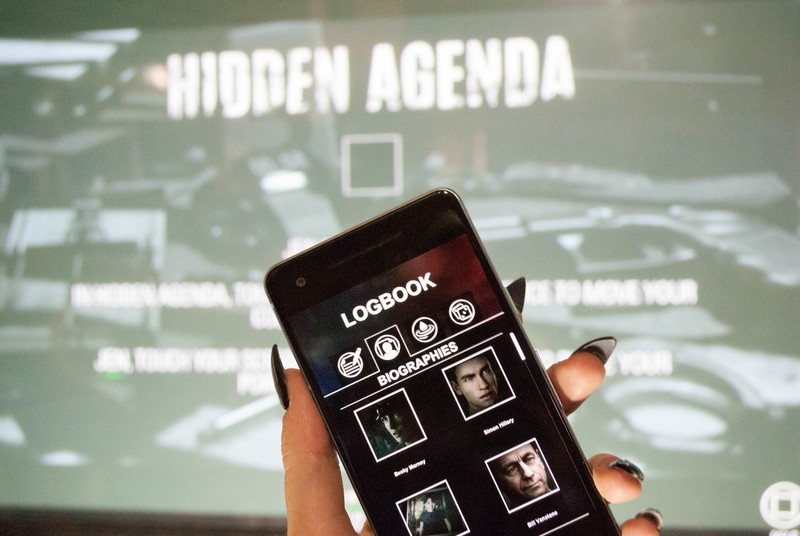
There are currently eight games to choose from for the PlayLink experience, most of which are for a large group. There is a one player game now in the mix, however.
Whether you’re learning more about your friends in a game like That’s You, seeing who is the smartest in Knowledge is Power, or singing your heart out in SingStar Celebration, PlayLink games are a lot of fun when you’re in a group.
If you’d rather play a game like this on your own, try out Erica when it becomes available to really get a feel for this kinds of games. If you’re a Planet of the Apes fan, they now have a PlayLink game you can play with up to four other people.
Check out all of the PlayLink games available now!
What do I need to play Playlink games?

In order for everyone to enjoy Playlink games, you’ll first need to download one of the Playlink games from the PlayStation Store. Each person who plans on gaming will also need a smartphone or tablet.
Most importantly, you’ll need Wi-Fi that both your PlayStation 4 console and all of the mobile devices can connect to or you can make your PlayStation a wireless hotspot that everyone can connect to. There isn’t a main Playlink app that you need to use. Instead, each game has it’s own app that can be found in the Google Play Store.
How does it work?
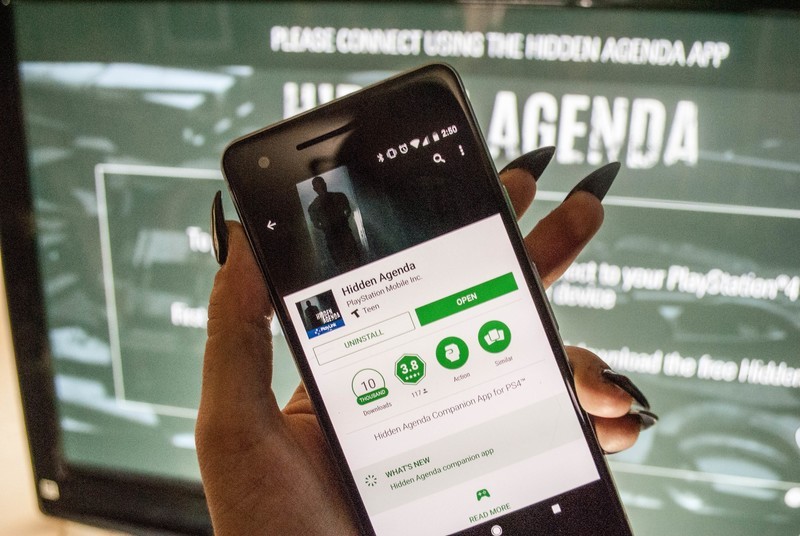
Each game is a bit different in terms of mechanics and controls, but the basic premise remains the same. Once your mobile device is connected to the same network as your console, you just need to open up the companion app on your phone and sign in.
After you’ve done this, your phone will sync up with your console and act as a controller with all of the action playing out on your television.
Do I need a group to enjoy Playlink games?

While Playlink games are really made to be played with friends, it isn’t mandatory. Different games offer different functionality in single player mode, but you can definitely play by yourself if that’s more up your alley.
Questions?

Do you still have questions about Sony Playlink? Do you plan on checking it out with friends? Are the Playlink games up your alley? Let us know about it in the comments below!
Updated July 2018: We’ve added lots of new info on the latest Playlink games.
PlayStation 4
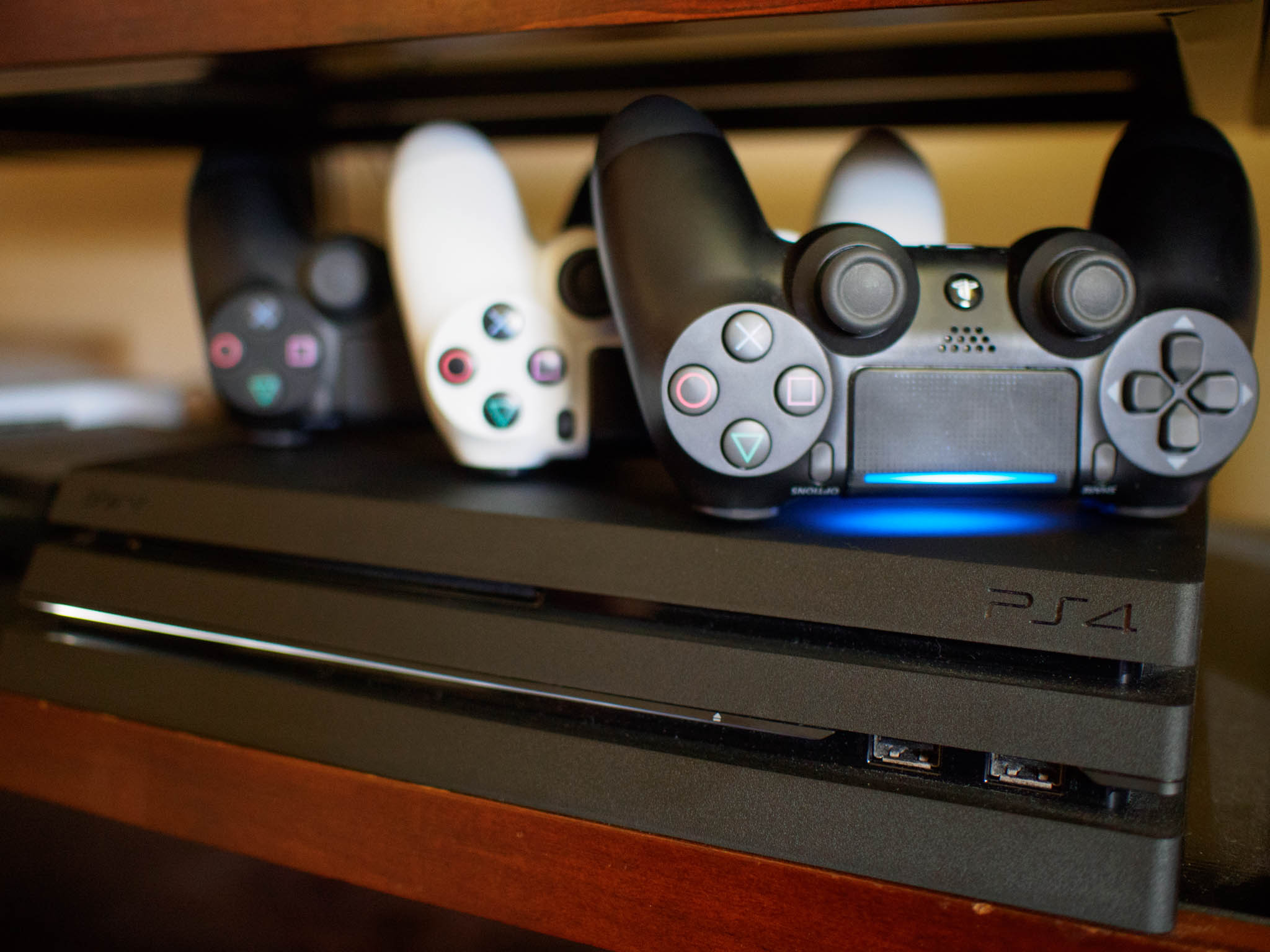
- PS4 vs. PS4 Slim vs. PS4 Pro: Which should you buy?
- PlayStation VR Review
- Playing PS4 games through your phone is awesome
Amazon
CordCutters.com is giving away a Mohu Blade and AirTV!

Our friends at CordCutters.com are back with another giveaway, and this time you can win a Mohu Blade antenna and an AirTV!
Want a chance to win? You can hit up their contest page at this link, or just enter below. Good luck!
Enter to win!
THE PRIZE: One reader will receive a Mohu Blade and an AirTV
THE GIVEAWAY: Use the widget at the bottom of this page. There are multiple ways to enter, each with varying point values. Complete all of the tasks for maximum entries and your best shot at winning! Keep in mind that all winning entries are verified and if the task was not completed or cannot be verified, a new winner will be chosen.
The giveaway is open through August 9, 2018, and the winner will be announced right here shortly after the closing date. Good luck!
Win a Mohu Blade and AirTV from CordCutters!
By entering you agree to our Privacy Policy and Terms & Conditions.
HomeKit-Compatible Ecobee Thermostat Trialing ‘Peak Relief’ Money Saving Feature
Smart thermostat company Ecobee has become the focus of a new profile shared online today by CNET, and alongside that article the company has revealed a new money saving feature for select Ecobee users called “Peak Relief.” This feature was created to help users save on energy bills by automatically cutting down on heating and cooling when energy rates are higher, and then using more when rates are lower.
For those in the test, Ecobee says Peak Relief can help customers save an extra 10 percent on heating and cooling bills. Adding in the up to 23 percent of savings that Ecobee already claims from normal use, the company now aims to save customers as much as 33 percent on monthly heating and cooling bills.
Ecobee CEO Stuart Lombard mentioned that the feature was developed over a year and a half and uses artificial intelligence and indoor/outdoor temperature readings to customize settings for each home. This is then combined with time-of-use rates from a utilities provider, which charge customers different prices depending on the time of day versus standard flat rates that go up as users consume more energy.
CNET explains that Peak Relief requires time-of-use utility rates, and while these rates have the potential to cut-down costs it can be difficult to keep track of the higher demand periods, which is where Ecobee’s new feature comes in:
Time-of-use has the potential to save customers money and help utilities avoid spikes in demand. But, many customers have a hard time keeping track of varying time-of-use rates, resulting in less energy savings for utilities and potentially higher costs for customers. Peak Relief may be able to alleviate that problem.
So, how does Peak Relief work? Let’s say you set your thermostat temperature to cool at 74 degrees. With Peak Relief, the thermostat will automatically cool your home to 71 or 72 degrees when rates are lower, then allow the temperature to slowly go back up to 74 when rates increase.
The feature offers two preferences, so your thermostat will either focus more on comfort and stay closer to your temperature settings or focus more on savings and veer a little further away from those settings when rates change.
Peak Relief is rolling out today, but it appears that the test is fairly small and only for “select customers” in California, Arizona, and Ontario, Canada, and again only if those customers are using time-of-use utility rates. However, the company has already said that it plans to roll out Peak Relief to a wide audience “early next year.”
Ecobee’s line of thermostats are part of over two dozen heating and cooling controllers compatible with Apple HomeKit, also including thermostats from Elgato, Honeywell, iDevices, and Netatmo. On Apple.com, customers can buy the Ecobee3 Lite Smart Thermostat, but the company’s latest iteration is the Ecobee4, which includes built-in Alexa support.
Tag: Ecobee
Discuss this article in our forums
MIT’s bizarre mask can control your mood, make you feel horny or anxious
We are not in control. In fact, we’re far from it. The digital world is designed to keep us passive yet engaged, insatiable yet entertained, impressionable but sure that our decisions are self-motivated.
Let’s face it — they’re usually not. Algorithms tell us what to watch. News feeds press headlines into our minds. So-called celebrity “influencers” hawk shiny objects and dictate what we desire. Forget religion; cell phones and social media are the opiates of the masses. Nowadays, even tech giants are worried about tech addiction.
Much of this happens on a subconscious level. Stimuli seep through sense organs, tap into our primal side. Ad agencies have used these insidious tricks for years. Facebook’s infamous social experiment illustrated the terrifying potential of this low-key manipulation in the Information Age.
Part of the problem is we consume so much data that it’s practically impossible to process it all. Our brains do their best to filter the noise but we don’t make it easy for them. Fake news, never-ending notifications, subliminal signals hidden in clickbait thumbnail images. The average person’s media diet would glut even Andre the Giant. We’re big and easy targets for propaganda artists.
In an effort to explore how technology can influence us in unseen ways, Xin Liu, an artist and recent graduate of the MIT Media Lab, created a high-tech carnival mask that wraps around a person’s face and changes the way she perceives her own breathing.
Xin Liu, Hongxin Zhang/MIT Media Lab
Using a respiration sensor placed under the nose and bone conduction headphones near the ears, the device, which she’s calls Masque, allows a wearer to hear her own breathing through slightly skewed auditory feedback. The effect of this feedback may surprise you.
In a pair of recent studies described in Liu’s Master’s thesis, Masque caused wearers to feel more stressed and more sexually aroused, despite no registered change in their physiology. The research highlights just how sensitive we can be to the invisible influence of technology.
A different kind of bodyhacking
Liu’s interest in the topic started with an academic focus on introspective observation or, more simply put, how a person perceives themselves.
“It’s a little like how you sometimes hear yourself talking on speaker phone.”
In the digital age, that often amounts to a mosaic of various online profiles, blended with the features and functions of her real-world body. Liu wondered how she could use a person’s own bodily processes to regulate their emotions and even change their behavior — all without the participant’s awareness. Our body is full of functions we can’t easily control. Hunger, heart rate, digestion, etc.
“Respiration is one of the only things people can easily change themselves,” Liu told Digital Tends. So, she set out to develop a device that could pick up on a person’s breathing patterns and relay those sounds back to them.
Drawing inspiration from Italian carnival masks, Liu worked with industrial designer Hongxin Zhang to create the device, which hides all its electronics inside a serpentine frame. A small temperature sensor located just under the nostril is used to detect the wearer’s respiration rate.
Masque then plays that sound back at an adjusted rate, using bone conduction headphones located at the wearer’s cheekbones. The auditory feedback responds in real time, fluctuating as a person’s breath fluctuates.
Xin Liu, Hongxin Zhang/MIT Media Lab
“It’s a little like how you sometimes hear yourself talking on speaker phone,” Liu said. “You know it’s your own voice but it sounds different because it’s coming through other devices. You just suddenly register that as your own voice because it’s synchronizing with you through your actions.”
Masqued men experiment
Through a series of pilot studies, Liu discovered that Masque caused people to experience a change in their psychological state, causing them to feel stressed or sexually aroused depending on their task.
“[Participants] cognitively thought they were more excited or more aroused than they actually were.”
In one of the studies, participants were asked to take a common test used to measure stress before and after completing a short version of the GRE. They were divided into two groups, both wearing Masque but hearing different rates of respiratory feedback. At the end of the study, participants from the group that heard the faster and louder feedback reported experiencing more anxiety.
In a second study, twelve straight men were each shown fourteen photos of women for 30 seconds and asked to rate them according to how attractive, exciting, and friendly they appeared. Liu’s results showed that as participants heard faster and louder feedback of their own breathing, they reported higher levels of attraction to the women in the photos.
These results may seem uncanny, but they aren’t all that peculiar. Faster breathing circulates more oxygen to your brain to help handle high-intensity situations. For our ancestors that meant chasing down prey or escaping predators. For us, it more likely means stressing over an interview or rushing to a meeting.
Xin Liu, Hongxin Zhang/MIT Media Lab
So, even though the participants’ own breathing and physiology didn’t change, it makes sense that they felt more anxious when they heard a higher respiratory rate.
As for the sex study, Liu found an explanation in a psychological term called misattribution of arousal. When put into a stimulating situation (for example, when walking across a rickety rope bridge) people have been shown to mistake the source of their arousal.
In a classic study from the 1970s, psychologists Donald Dutton and Arthur Aron asked straight male participants to walk across either a suspension bridge or a sturdy bridge before speaking to a female experimenter. Men who walked over the suspension bridge reported more sexual content related to the encounter with the female experimenter, which Dutton and Aron attributed to the men mistakenly assuming she was the subject of their arousal, when it was, in fact, the rickety bridge.
How Masque works. Xin Liu, Hongxin Zhang/MIT
In the MIT study, “people’s physiological activity did not actually change but they perceived it,” Liu said. “They heard a heavier breathing sound and cognitively thought they were more excited or more aroused than they actually were. Then they started to behave differently.”
Warning signs
It’s probably comforting to hear that Liu has no plans to commercialize her tantalizing device, and sees the project as more critical research than product testing. She does, however, think that the concept could be applied to help people meditate by adjusting to a slower respiratory rate or to get people more engaged in movies, virtual reality, and video games.
More importantly, Liu hopes her work helps illuminate how easily we can be influenced without our awareness and be more cognizant of the manipulative forces around us.
Xin Liu, Hongxin Zhang/MIT Media Lab
“It’s fascinating to think about how the sense of self is constructed,” she said. “Our image of who we are is in flux, it’s always changing, which is good and bad at the same time. The good thing is that means we’re more flexible and we’re growing constantly and adapting to the world. The problematic part is we’re able to be manipulated. We really need to learn how to be more sensitive, to feel our body signals and make decisions consciously rather than live with the flow. We’re actually very easily manipulated.”
Editors’ Recommendations
- New electronic skin allows bionic limbs to feel pain — and that’s a good thing
- Half taxidermy, half robot: Why UC Davis built this crazy realistic robo-bird
- 8 Amazing accessories that could make virtual reality even more immersive
- With Zerotie footwear, you may never have to touch your shoelaces again
- Robotic exosuits will make us better, stronger, faster, right? Not necessarily!
Pixel Stand may turn your phone into an Assistant-powered smart screen
Google may release an accessory called the Pixel Stand when it announces the Pixel 3 smartphone range later this year, according to code discovered inside a beta version of Google’s app. The stand may allow a docked Pixel phone to work in a similar way to Google Assistant-powered smart screens, such as Lenovo’s recently released Smart Display.
However, the product is far from official, and we have not seen any leaked images showing the device, or have firm details on its features. The Pixel Stand’s existence, so far, comes from references to it hidden inside a be a version of Google’s own app. The device’s primary feature maybe as a wireless charging dock, but with additional Assistant-related functionality.
The code states that when the phone is docked, Google Assistant will operate as it would do normally, providing answers to questions, giving suggestions, and following commands even when locked. It also adds the phone will give personalized help when docked on the Pixel Stand. All this is provided the dock is added as a trusted device on the phone, indicating it may need to be connected by Bluetooth at some point.
Lenovo’s Smart Display adds a visual element to Google Home with a choice of two different screen sizes, but costs either $200 or $250, making it considerably more expensive than a standard Google Home or Google Home Mini. Depending on how much Google charges for the Pixel Stand, it may end up being a handy middle-ground for anyone wanting to see Assistant’s advice and suggestions after providing voice commands. While the screen won’t be as large as the Smart Display — which is either 8 inches or 10.1 inches — it could be ideal for desktop use, which is where we’d most want a wireless charger anyway.
While the code inside the Google app reveals the company is certainly testing a Pixel Stand-like device, it’s not absolute evidence that it will ever be released, or that it will retain this functionality even if it does. We’re expecting the Pixel 3 range to launch later this year, potentially around October, and we should find out more then. At the same time, look out for a new Pixel Watch too.
We’ll keep you updated with Pixel Stand news here.
Editors’ Recommendations
- Here’s how and where to buy the Google Pixel 2 and Pixel 2 XL
- Everything we know about the upcoming Google Pixel Watch
- LG G7 ThinQ vs. Google Pixel 2 XL: A brains-versus-brawn comparison
- Google Pixel 3 and Pixel 3 XL: Everything we know
- Google Pixel Buds review
How do I claim a warranty repair or replacement with an Amazon Prime Exclusive phone?

It’s not quite as streamlined as you might hope.
Amazon’s Prime Exclusive program is a great way of getting a new phone at a discount. As long as you’re an existing Prime member, you can choose from a wide range of phones that Amazon sells for anywhere from 5 to 10 or even 20% cheaper than their usual retail value.
The catch? You’ll have to put up with a handful of Amazon services pre-installed on your phone, ranging from Kindle and Alexa to Amazon subsidiaries like Goodreads, IMDb, and Audible. This is a pretty small price to pay for a cheaper upfront cost, though — in the past, Amazon forced lock screen ads onto its Prime Exclusive phones, which were a much bigger nuisance than a few removable apps. Luckily, those days are long gone.
Not their phone, not their problem.
You can get some pretty great phones through the Prime Exclusive program, like the modular Moto Z3 Play and the LG V35+, but even the best phones are susceptible to failure, whether in the form of software glitches or hardware malfunctions. Sometimes you just need to file a warranty exchange, and in the case of Amazon’s Prime Exclusive range, that’s not as straightforward as you might think.
See Moto Z3 Play at Amazon
Contact Motorola’s customer support
While you can submit a return request through the Orders page of your Amazon account, warranty exchanges work a little differently. You won’t find a separate button for filing a service ticket; instead, Amazon’s Prime Exclusive FAQ instructs you to contact the phone’s manufacturer directly for any kind of troubleshooting or warranty issues.
This isn’t entirely unreasonable — Amazon can’t repair a device it doesn’t make, after all — but it’s still inconvenient when compared to filing warranty exchanges through your carrier. Typically, your carrier handles the backend operations for you and even lets you hold onto your phone until the replacement arrives, at which point you can do an exchange directly in store with sales reps available to help move over your data.

Amazon’s solution of sending you directly to the manufacturer with any issues is problematic because it leads to an inconsistent experience. Depending on who makes your phone, the process of filing a warranty exchange could be wildly different . Some manufacturers may let you hang onto your device while you await its replacement, while others will wait until they’ve received your defective unit before shipping a new one out — that process could potentially leave you without a working phone for weeks.
See LG V35 at Amazon
Contact LG’s customer support
At the very least, it’s good that Prime Exclusive phones come with a warranty at all. Because Amazon sells international and unlocked devices along with U.S. models, a lot of phones sell without a warranty at all.
Do you own a Prime Exclusive phone? Have you ever had to file a warranty exchange on it, and if so, what was your experience like? Let us know in the comments!
Google Pixel 3: News, Rumors, Release Date, Specs, and more!
Everything we know about what’ll likely be one of the year’s best phones.
Google first introduced its Pixel series in 2016, and since then, has been hard at work to establish itself as a serious player in the smartphone market. Google may be one of the most powerful and iconic companies in the world, but when it comes to hardware, is still very much a newcomer.
We saw vast improvements with the Pixel 2 compared to the original Pixel line, and we’re expecting to get that again with the Pixel 3. Google’s quickly learning what it takes to compete with the likes of Samsung and Apple, and seeing as how the Pixel 2 was one of 2017’s best phones, there’s a lot riding on this year’s entry.
Ladies and gentlemen, here’s everything we know so far about the Google Pixel 3.
The latest Pixel 3 news
July 30, 2018 — Clearly White Google Pixel 3 XL shows up in new leak

We just got our best look at the Google Pixel 3 XL courtesy of XDA. The images in question show off the Clearly White color option, and the live photos confirm a cutout at the front and a single rear camera. We can also make out a single speaker located below the display.
The XDA leak once again reaffirms the presence of a glass back on the Pixel 3 XL, with the finish alternating between glossy and matte. A glass back opens up the possibility for wireless charging, but for now there’s no further information as to whether the feature will make its way to the device.
July 28, 2018 — ‘Pixel Stand’ could be a wireless charger for the upcoming Pixels
A teardown of the Google app by the folks at XDA has served up interesting information. The code references something called a Pixel Stand, leading to suggestions that it will be a wireless charging dock for the upcoming Pixels.
According to XDA, the Pixel Stand will feature Assistant integration, and will be able to offer personalized suggestions and answer queries when the phone is docked.
June 27, 2018 — Pixel 3 and 3 XL renders show the phones from every possible angle

As if previous leaks of the Pixel 3 and 3 XL haven’t been revealing enough, MySmartPrice teamed up with OnLeaks to share a boatload of both photo and video renders of the two phones.
These renders confirm a lot of what we’ve previously seen, including things like an all-glass back for both phones, single rear cameras, and a notch on the larger Pixel 3 XL.


However, while earlier rumors suggested that only the 3 XL would have two front-facing cameras, these renders show that the regular Pixel 3 will have them, too.
The Pixel 3’s display is said to measure in at 5.4-inches with an 18:9 aspect ratio, whereas the Pixel 3 XL will have a 6.2-inch screen and 19:9 setup. As for the dimensions, we’re looking at 145.6 x 68.2 x 7.9mm for the Pixel 3 and 158 x 76.6 x 7.9mm for the 3 XL.
June 18, 2018 — Case render confirms Pixel 3 XL design

Ice Universe on Twitter has built up a reputation for being pretty accurate about leaks/rumors in the mobile space, and on June 18, they shared a case render that further confirms the Pixel 3 XL’s design.
Like we saw with the hands-on photos on June 7 and 8, the Pixel 3 XL will have a notch in its screen, dual front-facing cameras, stereo speakers, rear-mounted fingerprint sensor, and a single rear camera.
It’s peculiar that Google’s choosing to use two cameras on the front while keeping just one on the back, but based on how excellent the Pixel 2’s single rear camera is, I don’t expect this will be a downside at all.
When will the Pixel 3 be released?
In 2016 and 2017, Google held its hardware event on October 4. We don’t have a concrete date for this year’s event quite yet, but there’s no reason to believe Google will deter from this pattern.
Another October 4 event isn’t out of the question seeing as how that falls on a Thursday this year, but at the very least, we should be looking at some point in early October.
Pre-orders for the Pixel 3 will likely open shortly after it’s announced that same day with shipments going out at least a couple of weeks later.
How much will the Pixel 3 cost?
Over the past couple years, pricing for Google’s Pixel phones has remained mostly the same. The MSRP for the Pixel and Pixel 2 series is as follows:
- Pixel w/ 32GB — $649
- Pixel w/ 128GB — $749
- Pixel 2 w/ 64GB — $649
- Pixel 2 w/ 128GB — $749
- Pixel XL w/ 32GB — $769
- Pixel XL w/ 128GB — $869
- Pixel 2 XL w/ 64GB —$849
- Pixel 2 XL w/ 128GB — $949
I imagine we’ll see similar numbers with the Pixel 3, but don’t be too surprised if we get a Pixel 3 XL variant that crosses the $1000 threshold.
Google Pixel 2 and Pixel 2 XL
- Pixel 2 FAQ: Everything you need to know!
- Google Pixel 2 and 2 XL review: The new standard
- Google Pixel 2 specs
- Google Pixel 2 vs. Pixel 2 XL: What’s the difference?
- Join our Pixel 2 forums
Best Buy
Verizon
Google Store
Project Fi
 AIVAnet