


T-Mobile inks $3.5 billion deal with Nokia over 5G network equipment
T-Mobile starts laying the groundwork for its 5G network.
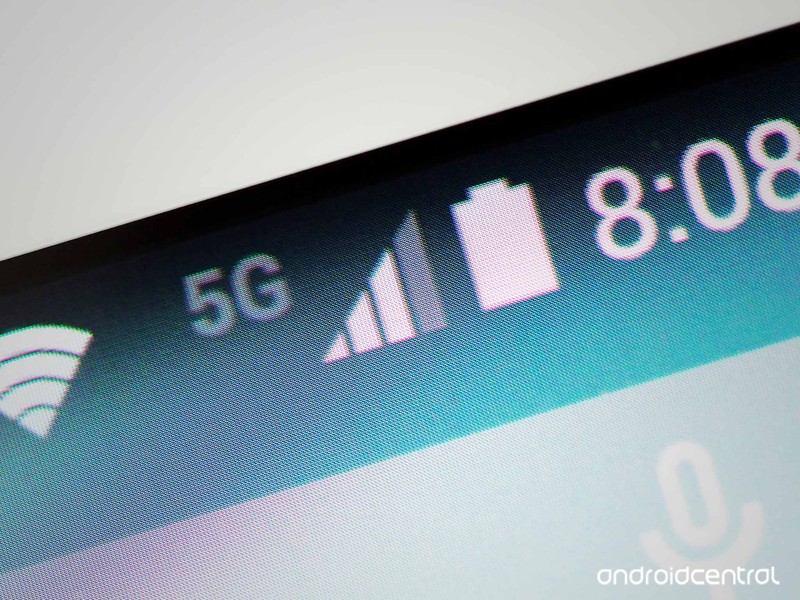
T-Mobile has announced that it is teaming up with Nokia to deploy its 5G network. The $3.5 billion deal will see Nokia provide T-Mobile with 5G equipment as well as software and services support. T-Mobile’s initial 5G push will include 30 cities, with work set to commence this year. The carrier is building its 5G network on 600MHz and 28GHz millimeter wave spectrum comliant with the 3GPP 5G New Radio standard.
From T-Mobile’s Chief Technology Officer Neville Ray:
We are all in on 5G. Every dollar we spend is a 5G dollar, and our agreement with Nokia underscores the kind of investment we’re making to bring customers a mobile, nationwide 5G network. And together with Sprint, we’ll be able to do So. Much. More.
T-Mobile will use a variety of Nokia services to build out its 5G network, including “AirScale radio platforms and cloud-native core, AirFrame hardware, CloudBand software, SON and 5G Acceleration Services.”
This is Nokia’s largest 5G agreement globally, and comes at a pivotal time for the Finnish giant as it goes up against the likes of Ericsson and Huawei in this space. 5G will drastically reduce latency while providing much more bandwidth, facilitating more mainstream VR and AR use cases.

OnePlus just surpassed Samsung’s flagship phone sales in India for the first time

Counterpoint Research shows Samsung’s drop-off was steep and poorly timed.
Here’s something we didn’t see coming: OnePlus just sold more high-end phones than Samsung in India. According to Counterpoint Research, OnePlus was the top-selling manufacturer in the flagship segment (₹30,000+, or $435+) in India for Q2 2018, hitting an all-time high of 40% market share. Adding to the surprise is that this is data for the entire quarter (April, May, June) where the OnePlus 6 was only on sale since mid-May compared to Samsung’s Galaxy S9 and S9+ launching in March.

This is the first time OnePlus has ever topped the premium segment in India, and it was aided in its gains by a precipitous drop-off of sales from Samsung and Apple in the quarter — hitting 34% and 14%, respectively. Counterpoint Research notes that fresh entries from Huawei, Vivo, Nokia and LG also mixed up the market and stole small slices. Interestingly, OnePlus hit this all-time-high mark of 40% market share thanks to OnePlus 5T sales making up 10 percentage points of the 40, all coming in the first half of Q2 before it was shelved for the OnePlus 6 launch.
The value-focused flagship model is the best way to sell phones in India.
OnePlus has been incredibly strong in India thanks to its value-focused flagship model, which places it in the “premium” tier in terms of market segmentation but gives it a massive advantage in terms of consumer pricing. The OnePlus 6 starts around ₹35,000 in India, compared to a Galaxy S9+ that starts around ₹60,000. That surely contributed to the sales numbers we see here — price is a massive factor in the Indian market, where sales skew far less expensive than Western countries, so the difference of 25% in MSRP between the OnePlus 6 and Galaxy S9+ is incredibly important. Despite the win for OnePlus, Samsung is still easily the largest smartphone brand in India with 29% of the total market — OnePlus isn’t even in the top five, as it only sells relatively expensive phones.
Regardless of the overall position, OnePlus will no doubt take this as a huge win for the growing strength of its brand even in a market it was already incredibly well established in, and look to repeat the feat in other markets globally. Though that will be a far tougher task elsewhere as Samsung holds a dominant position in so many markets where price and value are far less important.
OnePlus 6
- OnePlus 6 review
- OnePlus 6 vs. OnePlus 5T: How much changes in six months?
- OnePlus 6 vs. OnePlus 5: Should you upgrade?
- These are the official OnePlus 6 cases
- The OnePlus 6 doesn’t work on Verizon or Sprint
- Join the discussion in the forums
Logitech is buying Blue Microphones for $117 million
Logitech is venturing into the audio recording segment with its latest acquisition.

Even if you haven’t heard of Blue Microphones, there’s a high chance you saw a YouTube video or heard a podcast where one of the presenters was using the brand’s USB condenser microphones. Blue carved out a niche for itself in recent years in the audio recording space with the Yeti and Snowball, and that hasn’t gone unnoticed, as Logitech is acquiring the brand for $117 million in cash.
Blue’s existing products will be integrated into Logitech’s ever-increasing portfolio of brands, which include Ultimate Ears, Jaybird, Astro Gaming, and Logitech G. Here’s what Logitech CEO Bracken Darrell had to say about the acquisition:
Logitech’s acquisition of Blue Microphones will accelerate our entry into a growing market, and offers another way for us to help bring people’s passions (from music to blogging) to life. Joining with Blue is an adjacent opportunity for us – a new way to grow – with additional synergies related to our existing gaming, PC webcam and audio categories. It’s exciting!
For its part, Blue mentions that it will continue to innovate in this space, with exciting new products on the horizon.
Here are our first Xiaomi Mi A2 camera samples
The Mi A2 may just have the best camera we’ve seen on a $300 phone.

Xiaomi unveiled its 2018 Android One devices earlier this month in Madrid. The Mi A2 comes with significant upgrades from last year’s Mi A1, and the Mi A2 Lite offers a similar user experience at a more affordable price point.
Both devices will be sold in over 40 markets over the world over the coming months, and the Mi A2 set to make its debut in India on August 8. As a refresher, the Mi A2 features a Snapdragon 660 chipset, up to 6GB of RAM, 128GB of storage, Wi-Fi ac, Bluetooth 5.0, and a 3000mAh battery.
The cameras are of particular interest: the Mi A2 has a primary 12MP f/1.75 camera with 1.25um pixels mated to a secondary 20MP f/1.75 u1.0 camera that automatically kicks in during low-light scenarios. The same 20MP f/1.75 imaging module is present up front as well, and there’s also a front LED module that engages when you’re taking selfies at night.
Having used the Mi A2 for just under a week, here’s my initial take on the cameras.
Daylight photos


The Mi A2 does a great job in daylight scenarios. Dynamic range and color reproduction are quite good, as is the level of detail. Auto HDR boosts the overall dynamic range without slowing down the device, and the only issue I’ve faced is a slight shutter lag.


Xiaomi is aggressively pushing AI across its portfolio, but unlike other manufacturers, the feature is primarily focused on the front camera. The AI-assisted feature on the Mi A2 automatically tweaks the intensity of the beautify filter and facilitates a software-driven portrait mode. Edge detection is good, as is the level of evenness of the background blur effect.


Low-light images


You’re guaranteed to get decent daylight photos even with budget phones, but it’s a different matter altogether in low-light scenarios. That’s where the Xiaomi Mi A2 truly shines. The phone has a secondary 20MP camera that kicks in automatically in artificial or low-light conditions, and the results are clearly evident. Images come out full of detail, and the phone manages to do a great job minimizing noise.


The Mi A2 seamlessly switched between the two sensors based on the lighting conditions, and Xiaomi didn’t state a particular threshold after which the low-light camera kicks in. The 20MP module also has 4-to-1 pixel binning to reduce noise levels in low-light shots, with the camera essentially combining information from four pixels into one to create a more detailed image. Overall, the Mi A2 held its own when it comes to low-light photography, and may just be the phone to beat in this area.
HMD should be very worried
The Mi A2 is turning out to be one of the most exciting phones of the year. The hardware is a considerable upgrade from last year, and the camera . It’ll be interesting to see how much the Mi A2 will end up costing in India, as the phone is going up against the Nokia 7 Plus.
Both phones have near-identical hardware, and are based on Android One. With the Nokia 7 Plus retailing for ₹25,999, there’s clear incentive for Xiaomi to debut the Mi A2 at around the ₹20,000 figure, which would allow it to steal market share away from HMD in this category.
With the launch just over a week away, we’ll know more about the Mi A2 very soon. In the meantime, what do you make of the camera? Share your thoughts in the comments below.
OnePlus 3/3T confirmed to receive Android P update
The OnePlus 3 and 3T will go straight from Android 8.0 Oreo to Android P.

OnePlus said that Oreo would be the last platform update for the two-year-old OnePlus 3/3T, but the company is now changing its stance. In a forum thread, OnePlus confirmed that both the OnePlus 3 and 3T will receive the Android P update.
The company said that after “internal discussions and evaluation,” it decided to offer the Android P update to either device in lieu of Android 8.1 Oreo. Both the OnePlus 3 and 3T are currently running Android 8.0 Oreo, and they’ll directly make the switch to Android P, skipping Android 8.1 altogether.
OnePlus’ decision is welcome news to fans using the 3/3T, and while there’s no information on when the Android P update will be delivered to either handset, OnePlus mentions that the upcoming Android version will first make its way to the OnePlus 6, followed by the OnePlus 5/5T, and then hit the 3/3T.
Android P
- Android P: Everything you need to know
- Android P Beta hands-on: The best and worst features
- All the big Android announcements from Google I/O 2018
- Will my phone get Android P?
- How to manually update your Pixel to Android P
- Join the Discussion
OnePlus 3T and OnePlus 3
- OnePlus 3T review: Rekindling a love story
- OnePlus 3T vs. OnePlus 3: What’s the difference?
- OnePlus 3T specs
- Latest OnePlus 3 news
- Discuss OnePlus 3T and 3 in the forums
WhatsApp’s group voice and video calling feature is rolling out to everyone
WhatsApp’s group calling feature supports up to four people simultaneously.

WhatsApp announced earlier this year that it would roll out group calling for both video and voice calls, and the feature is now rolling out to everyone on Android and iOS. Group calling supports four people simultaneously, and to initiate a call, you’ll first need to place a one-on-one voice or video call and select the “add participants” button from the top right corner.
WhatsApp saw a huge boost in its userbase in the last two years, and the messaging platform now has over 1.5 billion monthly active users who spend over 2 billion minutes per day on calls. Group calls are end-to-end encrypted, and they’re designed to work on low-bandwidth networks.
India is WhatsApp’s largest market with over 250 million users, and with an overwhelming majority of users relying on mobile data, it makes sense to optimize the feature to work on 2G and 3G networks. The feature is now rolling out globally, so if you don’t see it just yet, hold tight for a day or two.
Exclusive: Turing’s next phone looks out of this world, and won’t arrive until 2020
Turing Robotics wants yet another shot at the smartphone market. Despite a few failed phone launches under its belt — and after filing bankruptcy earlier this year — the company has provided Digital Trends with plans for its next smartphone. It’s called the Turing HubblePhone: It has two screens, costs a ridiculous amount of money, and won’t arrive until 2020.
The HubblePhone has what Turing is calling a “multi-dimensional” screen that basically is a primary screen with a secondary display. It can fold up like a flip phone, or swivel out at any angle. It’s tough to explain because we have yet to see any physical prototype of this phone, and all we have to visualize this device are the concept photos below. Along with the display, the phone looks like it has a number of cameras. There’s one large main sensor at the top of the device, along with an iPhone X-style notch on the pop-out display that we assume is to be used both as a traditional camera, and for facial recognition. Turing said the camera system will allow people to do things like make a call by mouthing the name of the contact.
The main camera is set to be a big part of the HubblePhone experience. It will offer 15x optical zoom, and there will be video editing software that “dwarfs any available on today’s smartphones.”
Also interesting are the specs under the hood. Turing claims the phone will be powered by two Snapdragon 855 processors, a processor that has yet to be announced by Qualcomm. Either Turing is getting ahead of itself here, or the company is working closely with Qualcomm for the new phone. We’re betting on the former, and we’re waiting for answers from Turing.
Turing has a history of disappointing customers by not keeping promises.”
There are plenty of other vague phrases Turing is marketing for this phone. For example, Turing said the HubblePhone creates a “new dimension in gaming” thanks to the fact that it will integrate AR (augmented reality), VR (virtual reality), MR (mixed reality) and other technologies into a “cohesive experience.” The phone will also support 5G, though we already have smartphone-makers claiming they have 5G-ready phones coming in 2019. We don’t even know what operating system Turing plans to use on this phone, so take all of this with a huge grain of salt.
How much will all this vague and futuristic-sounding technology cost? A whopping $2,750. You’ll also have to wait until June 2020 to get the phone in the U.S., and Turing already has plans to ship the phone to Europe that August, China in September 2020, and the rest of the world that December.
Turing has a history of disappointing customers by not keeping promises. The original Turing Phone announced back in 2015 faced significant delays, and before shipping the device Turing swapped the operating system from Android 5.1 Lollipop to Sailfish OS, and then ended up shipping an unfinished version of the phone to customers. Next came the $1,000 Turing Appassionato, but it barely began shipping before the company declared bankruptcy in Finland and ceased production. We’re not sure how Turing expects to fund itself through 2020 for the HubblePhone — we’ve asked, and we’ll update this story if we hear back.
In the meantime, we wouldn’t put much stock in holding out for the HubblePhone.
Editors’ Recommendations
- Here’s everything we know about the Motorola Moto Z3 flagship
- We tried some of the RED Hydrogen One’s crazy tech: Here’s what you need to know
- Take a look at what could be the future of Samsung’s Galaxy phones
- Here’s every device available through Amazon Prime Exclusive phones
- Everything we know about Microsoft’s ‘Andromeda’ Surface Phone device
WhatsApp for iOS Gains Group Calling for Voice and Video
Popular Facebook-owned messaging app WhatsApp this afternoon announced that the WhatsApp apps for iOS and Android devices now support group calling for voice and video.
WhatsApp users can make group calls with up to four people total by starting a one-on-one voice or video call and then tapping the “add participant” button in the top right corner of the app to add another contact to the call.
WhatsApp says that its group calls are end-to-end encrypted and designed to work reliably around the world in a variety of different network conditions.
The feature, which was first announced by Facebook in May at its F8 developer event, is rolling out to iPhone and Android users and should be available to all users soon.
WhatsApp can be downloaded from the App Store for free. [Direct Link]
Tag: WhatsApp
Discuss this article in our forums
Oddball is the innovative, sensor-filled drum machine you can bounce
Whether it’s robot-controlled orchestras, cyberpunk saxophones, or zero-gravity space chimes, we’re suckers for weird musical instruments. Now, thanks to a recently launched Kickstarter campaign, there’s a new entry on our list — and, fittingly for such an avant-garde creation, it’s called Oddball.
If you were to give Oddball the high-concept elevator pitch, you would probably describe it as a throwable drum machine. Essentially, it’s a sensor-filled ball which uses pressure sensors and accelerometers to work out when it hits a surface, and how hard it hits the said surface. When one of these collisions takes place, it uses Bluetooth to trigger a sound played through an accompanying mobile app. By programming different sounds, and finding new ways to bounce the ball, it’s possible to create all manner of new beats and loops.
“The main idea behind Oddball is to make music more accessible, playful, and intuitive for everybody,” co-creator Pasquale Totaro told Digital Trends. “[Co-founder Nathan Webb and I] were talking about that instinctual pleasure you feel when playing an instrument, when you make noise, and when you lay down a groovy beat. We realized that, in reality, it is something that is reserved for a very small group of people — because you need to buy an instrument, commit to practicing and lessons, and is quite uncomfortable when you are just starting off. We asked ourselves, ‘how can we create something that is user-friendly, playful, and easy to use that would allow anybody to experience making music?’ That is how the idea of a ball came about. A ball is the iconic symbol of play: Everybody knows how to bounce it, and the physical nature of using a ball is very rhythmic.”
The accompanying Oddball mobile app lets you select the sound you want to play when the ball bounces, loop beats and overdub, share your created songs with friends, add additional effects, or even play over existing songs. If you’re a bit more skillful, you can also connect multiple balls and assign different sounds to each for a bouncing orchestra effect.
“Imagine if you are out and about, and you want to make a beat,” c0-creator Nathan Webb told us. “Yes, you can use a portable MIDI pad, but with Oddball your whole body and the environment around you can be part of that creative moment.”
As ever, we offer our usual warnings about the potential risks associated with crowdfunding campaigns. However, if you’re interested in getting involved, head over to the Oddball Kickstarter page to pledge your hard-earned cash. A single Oddball will set you back $77.50, although other price options are also available. Shipping is set to take place in January 2019.
Editors’ Recommendations
- Looking for a drummer that won’t argue with you? Spider-like robot fits the bill
- Here are the best free music download sites that are totally legal
- Instagram ‘music stickers’ could help to spice up your Stories
- The best tablets you can buy
- The 10 Best Google Home Games
Use your face or finger to log into accounts using Microsoft Edge
Microsoft Edge now supports the Web Authentication specification for password-free logins. Support actually appeared in Build 17723 for Windows Insider Fast Ring participants and Build 18204 in the Skip Ahead program last week, but Microsoft didn’t mention the feature until this week’s report.
Already supported in Firefox and Google Chrome, it’s a means for signing into websites without the need for using a password. Once you create an account or set up two-factor authentication, it creates two encrypted tokens, one that resides on the website end (public) and one that resides on your end of the connection (private).
Thus, when you attempt to log into the account, the site sends a request for your private token. To do this, you would simply scan your finger, enter a PIN number, scan your face, or touch a USB-based security key like those sold by Yubico.
The big deal with Web Authentication is that there’s no stand-alone software installed on your PC that handles the private key. Instead, the exchange is handled by Microsoft Edge and a supporting website, thus there is nothing to hack to retrieve stored passwords. And in the case of Microsoft Edge, your password-free logins are tied into Windows Hello.
If you’re not familiar with Windows Hello, it’s Microsoft’s password-free platform for Windows 10. It supports fingerprint scanners and facial recognition — if your PC has the hardware — along with PIN numbers. For instance, all you need to do is look at the screen to log onto Windows 10 rather than type credentials on a keyboard if your PC supports facial recognition. Using Microsoft Edge, Windows 10 extends that capability to supporting websites.
“For websites that are not ready to move to a completely passwordless model, backwards compatibility with FIDO U2F devices can provide a strong second factor in addition to a password,” the company says. “We’re working with industry partners on lighting up the first passwordless experiences around the web.”
U2F stands for Universal 2nd Factor, an open-source authentication standard initially started by Google and Yubico along with NXP Semiconductors. It’s now maintained by the FIDO Alliance, a consortium that includes not only Google, Yubico and NXP, but also American Express, Bank of America, Intel, Lenovo, MasterCard, Microsoft, Qualcomm, Samsung, and many others.
Web Authentication, maintained by the World Wide Web Consortium (W3C), is a component that’s baked directly into web browsers and supports the U2F standard. If the website supports Web Authentication, then you won’t need a security code sent to you via SMS, nor will you need an app to grant access if you have two-factor authentication enabled. Even more, you won’t need to maintain a volume of different passwords but simply provide a face or a finger.
“We started this journey in 2016, when we shipped the industry’s first preview implementation of the Web Authentication API in Microsoft Edge,” Microsoft says. “Since then, we have been updating our implementation too as we worked with other vendors and the FIDO alliance to develop the standard.”
Passwords are an ancient technology, Microsoft says.
Editors’ Recommendations
- Chrome now supports the new password-free login standard
- How to use Google Docs
- How to use Android Messages on the web
- Firefox 60 is the first browser to support password-free internet logins
- Cloud-based call recording is coming to Skype, but will you use it?
 AIVAnet