


Honor 7s review: Looks great, performs terribly
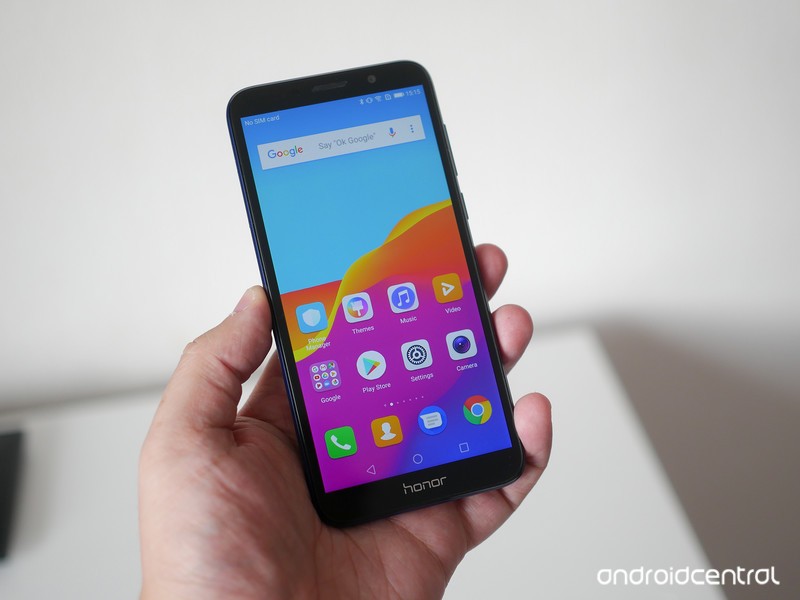
This latest budget phone from Honor looks great but has some very rough edges.
If the Honor 7s slipped you by unnoticed, it’s easily done. Launched in China under a different name, it’s a new budget phone that is available in select global markets across Africa, Asia, Europe, South and Central America. The closest it gets to a U.S. release is Mexico, likewise, it’s not currently available in Western Europe.
But Honor does some great work in providing quality phones at excellent prices, so it’s always interesting to see what’s new. The Honor 7s continues the slightly awkward naming scheme from the brand. Being an ‘s’ model shouldn’t lull you into thinking this is something it’s not.
But name aside, is it actually any good? Well…not really.
Honor 7s
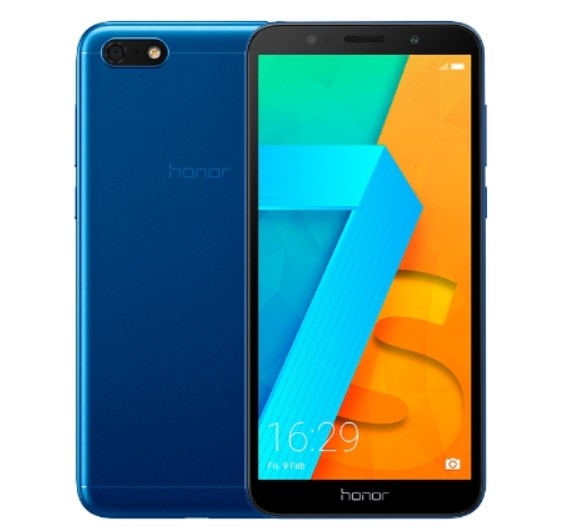
Price: €119.90 ($140)
Bottom line: The Honor 7s has a great look to it, far beyond its super-low price tag. But good looks, a nice display, and a somewhat decent camera cannot save this phone from its biggest flaw. It’s slow, slow, slow.
Pros:
- Nice display
- Good looking design
- Decent camera for the price
Cons:
- Unacceptably slow performance
See at Honor
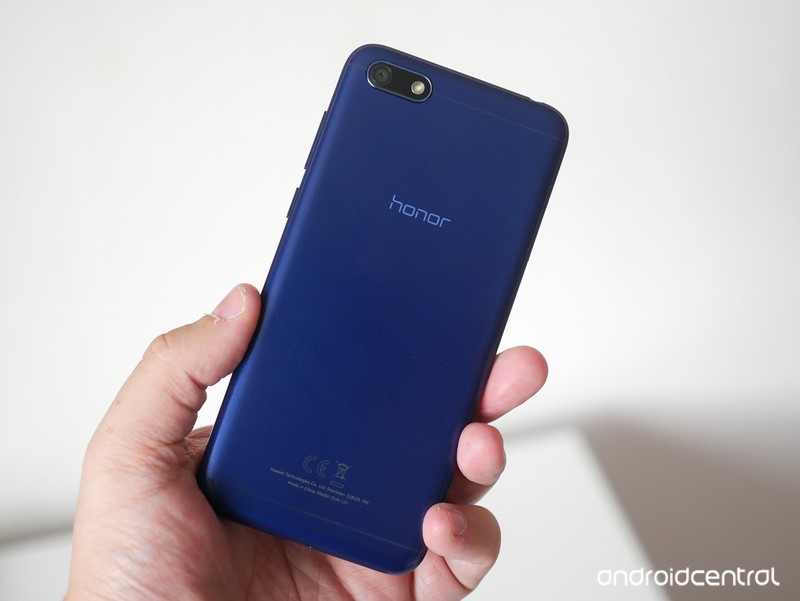
Honor 7s: Nice design, rough performance
It’s worth leading with the price because it’s largely why anyone would seriously consider buying it at all. In Europe, it’s going for €119.90 (£106 or $140) so it’s really cheap. That, in turn, leads to a number of compromises.
Design and build quality aren’t one of those, though. You still get a metal-look back and sides that are solid as a rock and around the front you’re treated to an 18:9 “Fullview” display. The resolution is ‘only’ 720p but on a 5.45-inch display, it isn’t the end of the world, especially at this price. More important is that it’s a good-looking, vibrant display. The size and weight are excellent and perfect if you’re looking for a smaller phone but still getting one of the larger 18:9 displays.
| Screen | 5.45-inch HD Fullview (1440 x 720) |
| Chipset | Quad-core Mediatek MT6739 |
| RAM | 2GB |
| Storage | 16GB |
| Rear Camera | 13MP |
| Front Camera | 5MP |
| Battery | 3020mAh |
| Price | €119.90 |
There’s actually quite a lot to be happy about. In the blue finish I have here it looks really good, and at first glance, there’s nothing really to identify this as a cheap phone. It becomes more apparent when you look closer, such as the plasticky front, lack of fingerprint sensor and ‘only’ a single 13MP rear camera.
It’s packing a sizeable 3020mAh battery which combined with this hardware is more than ample for a busy day’s use, and the 16GB of internal storage is at least expandable with a microSD card, which can also be stacked alongside a pair of nano-SIM cards.
While it looks great and certainly has a number of positive features about its hardware, there’s an equal dose of frustration. Whether it’s the MediaTek CPU, the 2GB of RAM, a combination of both or just inadequate software engineering, this phone is slow. Not just slow when you’re pushing it, slow all the time. Hopefully, it’s an optimization issue that could be fixed with an update rather than something more deep-seeded, because just navigating the phone is a chore.
You’re treated to constant stuttering and lag, and even for a phone this cheap it’s unacceptable. With the likes of Nokia and Motorola pushing out cheap phones that perform much better, not to mention the advent of Android Go, Honor simply cannot allow a phone that performs this way to hit any market.
So it needs sorting out.
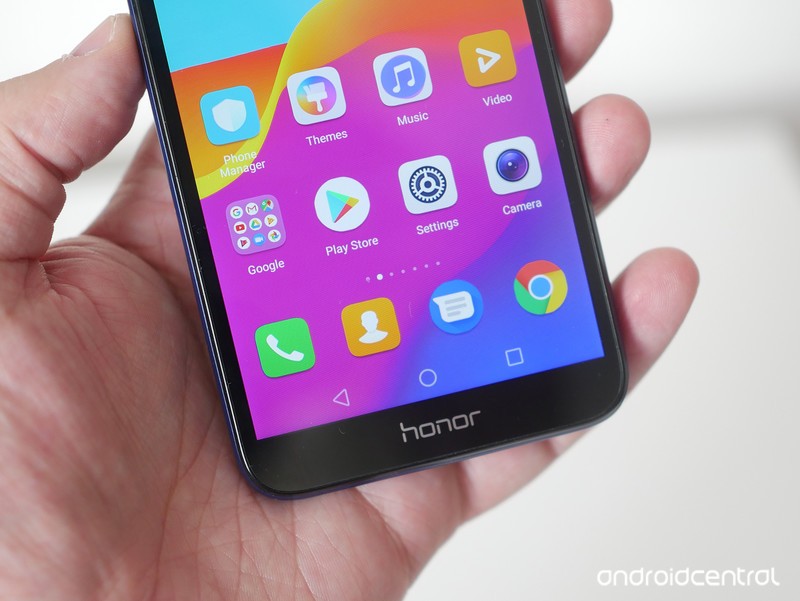
Honor 7s: Same old software, decent camera
If you’ve ever looked at a Huawei or Honor device before then the software will come as no surprise. It’s mostly the same as you’ll find on the likes of the Honor 10 or the Huawei P20 and remains consistent with some of Honor’s cheaper phones in look and feel.
Underneath EMUI you’re actually getting Android 8.1 Oreo, which is fantastic. I shouldn’t be surprised that a phone launching in mid-2018 is running the latest version, but you know. It’s especially pleasing to see on a budget phone.
There’s little to say about the software that hasn’t been said before. It’s still a blast of color to the face, though the dark notification shade is a neat touch, and as ever with EMUI there are a ton of themes and icon packs out there you can apply to give it a spruce up to your own tastes. The number one issue is what I’ve already discussed, and that’s performance. It’s just not a nice experience.
The camera pairing on the Honor 7s stacks up fairly well. Around the back, you get a 13MP single shooter, with a 5MP front camera with an LED flash. Honor is pretty good at putting the camera ahead of other areas of priority, and for a budget phone, it’s a pleasing experience all round.
Selfies look pretty good and you’ve access to the usual beautification treatments you’d find on any other Honor phone, and while the rear camera won’t necessarily take any award-winning shots, it’s a solid performer. Images can look a little dark and flat, but it’s by no means the worst you’ll find on something this cheap. Detail is pretty good, and the camera app is loaded with some of the features you’d find on Honor’s more expensive phones.

The bottom line
Availability is the key here, and the Honor 7s is probably never going to cross the path of many budget phone hunters reading this. It’s priced well though in the markets it will be sold and has plenty to like.
It looks good, with a design and construction that outstrips its price tag, the display is nice and the camera is decent for something in this segment of the market. It’s even packing a pretty big battery so you’ll likely never have to worry about running out before the end of the day.
It’s ultimately the performance that lets this phone down. Perhaps it’s because Honor opted for a MediaTek CPU and not a Kirin or Qualcomm chip, perhaps it’s just engineering gremlins. Whatever the root cause, the phone is mostly not enjoyable to use because it’s so stuttery and full of lag. I do hope it’s the latter and Honor can push out a fix, because without this spoiling the experience we’d have a really nice budget phone on our hands here.
2.5
out of 5
See at Honor
Xiaomi unveils Android One-based Mi A2 and Mi A2 Lite: Here’s everything you need to know
Xiaomi’s 2018 Android One phones offer comprehensive upgrades from last year.

Xiaomi partnered with Google over an Android One last year, the Mi A1. The phone combined Xiaomi’s hardware capabilities with the simplicity of Android One, making it one of the best budget phones of 2018.
A year on, Xiaomi is renewing its collaboration with Google to launch two Android One phones. The Mi A2 and Mi A2 Lite feature comprehensive upgrades from the Mi A1, and Xiaomi is set to make both devices available in over 40 markets around the world.
The key difference between both phones — from an aesthetic standpoint — is that the Mi A2 has a standard 18:9 display, with the Mi A2 Lite offering a 19:9 panel with a notch up top. Internally, the Mi A2 is powered by the Snapdragon 660, whereas the A2 Lite is running the now-familiar Snapdragon 625. On the software front, both devices are running Android 8.1 Oreo, and the fact that they’re a part of the Android One platform means they’ll be one of the first phones to pick up the Android P update.
Here’s what you need to know about Xiaomi’s latest Android One phones.
Xiaomi Mi A2/Mi A2 Lite: Specs
| Operating System | Android 8.1 OreoAndroid One | Android 8.1 OreoAndroid One |
| Display | 5.99-inch 18:9 FHD+(2160×1080) IPS LCD panelGorilla Glass 5 | 5.84-inch 19:9 FHD+(2220×1080) IPS LCD panel |
| SoC | Octa-core Qualcomm Snapdragon 6604×2.2GHz Kryo 260 + 4×1.8GHz Kryo 26014nm | Octa-core Qualcomm Snapdragon 625Eight Cortex A53 cores up to 2.0GHz14nm |
| GPU | Adreno 512 | Adreno 506 |
| RAM | 4GB/6GB | 3GB/4GB |
| Storage | 32GB/64GB/128GB | 32GB/64GB |
| Rear camera | 12MP (f/1.8, 1.25um) + 20MP (f/1.75, 2.0um)PDAF, LED flash, 4K video recording | 12MP (f/1.8, 1.25um) + 5MP (f/1.8, 1.0um)PDAF, LED flash1080p video recording |
| Front camera | 20MP (f/1.75, 2.0um)AI portrait modeLED Selfie lightBeautify 4.0 | 5MP f/2.2 lensAI portrait mode |
| Connectivity | LTE with VoLTEWi-Fi 802.11 ac, Bluetooth 5.0GPS, GLONASS | LTE with VoLTEWi-Fi 802.11 a/b/g/n, Bluetooth 4.23.5mm audio jackGPS, GLONASS |
| Battery | 3010mAh batteryQuick Charge 3.0 (USB-C) | 4000mAh batteryFast charging (5V/2A over Micro-USB) |
| Fingerprint | Rear fingerprint sensor | Rear fingerprint sensor |
Xiaomi Mi A2: The new performance beast

The Mi A2 features a 5.99-inch FHD+ 18:9 display backed by a layer of Gorilla Glass 5. The 2.5D curved glass allows the edges to seamlessly merge into the mid-frame, and the phone also has subtle curves at the back to make it easier to hold.
Xiaomi has been using the Snapdragon 660 platform for over a year now, and the Mi A2 is the latest to feature the chipset. The Snapdragon 660 is notable for being just as fast as flagships SoCs even from just a few generations ago, and it’s safe to say that it is one of Qualcomm’s best in this category.
There’s a 3010mAh battery under the hood, up to 6GB of RAM and 128GB of storage, Wi-Fi ac, Bluetooth 5.0, and a USB-C port. The camera is where things get interesting: the primary 12MP IMX 376 sensor is mated to a 20MP module with large 2.0um pixels. The front camera also has a similar 20MP sensor with 2.0um pixels, and as just like the Redmi Note 5 Pro, the Mi A2 has an AI-enabled portrait mode.
Xiaomi Mi A2 Lite: Notched display, incredible battery life

The Mi A2 Lite isn’t just a variant of the Mi A2 with toned-down hardware — the phone sports a cutout at the front to accommodate the camera module and the requisite sensors.
Xiaomi has said in the past that it favors the Snapdragon 625 for the chipset’s balance between efficiency and performance. The manufacturer rolled out more than a handful of phones powered by the chipset — including last year’s Mi A1 — so there’s not going to be a performance differential between the A2 Lite and what we saw last year.
Essentially, the Mi A2 Lite has the same underpinnings as its predecessor, albeit with a refreshed design for 2018. However, the one downside is that the A2 Lite has a Micro-USB port, a puzzling choice considering the Mi A1 had a USB-C charging port.
Xiaomi is moving away from the ubiquitous headphone jack in its premium models, but the jack is intact on the budget-focused devices. As such, although the Mi A2 doesn’t have a 3.5mm jack, the A2 Lite has the analog port.
Xiaomi Mi A2/Mi A2 Lite: Pricing and availability
There’s enough differences between the Mi A2 and A2 Lite that Xiaomi is targeting two diverse set of users with its latest Android One phones.
The pricing reflects that as well, with the decked-out version of the Mi A2 running up to $410. The Mi A2 Lite, meanwhile, starts off at $210. Here’s the pricing breakdown for the all variants Xiaomi will have up for sale:
- Mi A2 (4GB/32GB): €249 ($290)
- Mi A2 (4GB/64GB): €299 ($350)
- Mi A2 (6GB/128GB): €349 ($410)
- Mi A2 Lite (3GB/32GB): €179 ($210)
- Mi A2 Lite (4GB/64GB): €229 ($270)
Xiaomi mentions that it will make both devices available in over 40 markets around the world, and we should be hearing more about region-wise availability later this month. Xiaomi is huge in India, so we should see the brand launching both devices in the country shortly.
Given the cost-conscious nature of the Indian market, it’s likely we’ll see the base variant of the Mi A2 Lite debuting at under the $200 price point. Anywhere at the ₹10,999 ($160) figure should make it a great option considering the Redmi Note 5 shares a similar hardware foundation.
As for the Mi A2, the phone directly goes up against the $375 Nokia 7 Plus, so it’ll be interesting to see what price point it slots in.
Best Alternatives to Project Fi

Project Fi is unique, but if for some reason you can’t or don’t want to subscribe to it, here are some awesome alternatives.
There is nothing else like Project Fi in the U.S. Google’s alternative carrier is a unique combination of flexible, powerful and intuitive. With one SIM card, it dynamically switches between three carriers in the U.S. and provides effortless worldwide roaming while abroad. With its app, it’s easy to top up on data or share the cost of a plan amongst a group of people.
Project Fi: Everything you need to know
 Advertisement
But Project Fi isn’t perfect, or at least not perfect for everyone. Case in point: It’s a lock-in strategy for Google, since recent Nexus and Pixel devices are compatible with the service. It’s also relatively expensive, with a flat rate of $10 per gigabyte of data.
So I thought it would be nice to try to find other carriers in the U.S. that offered at least approximations of Project Fi’s service while ensuring compatibility with a wider range of phones. To do that, I made a set of criteria for the alternative providers:
- It must have an intuitive and flexible payment schedule
- It must have inexpensive talk and text in the U.S.
- It must ensure data is relatively affordable
- It must be compatible with most unlocked phones
- It should have robust roaming capabilities
- It should have data rollover or credits for unused data
- It should offer service through more than one U.S. carrier (for redundancy)
As I said at the beginning, there’s nothing else like Project Fi in the U.S., but some providers come relatively close to hitting all of the above criteria. Here’s what I found.
- Ting
- Mint Mobile
- UNREAL Mobile
- Cricket Wireless
- MetroPCS
- Honorable mention

Advertisement
Ting

To many of its long-time users, alternative carrier Ting is a darling of flexibility and customer service. The main appeal for Project Fi admirers is the flexible, modular plans, which let you pay for exactly how much talk time and texting you need, along with simple, affordable data tiers.
Prices for a single line start at $32 for 100 minutes of talk and text and 2GB of data, but it doesn’t cost much more to add features from each category. It’s also just $6 per additional line, which is pretty great.
Ting also has access to two networks, Sprint and T-Mobile, though unlike Project Fi you can’t dynamically switch between them — your phone may be compatible with both services, but you’ll need to choose whether you want GSM or CDMA service, and can switch SIM cards based on your location and coverage.
One thing I constantly hear about Ting, too, is that it offers fantastic customer service and flexibility. And while its roaming rates are not included in the base package like Project Fi, they’re relatively inexpensive.
See at Ting
Mint Mobile

Most wireless service providers require you to pay your bill month-to-month, but Mint Mobile takes a different approach by charging you upfront for three, six, or 12 months of service at a time. It’s a unique concept and one that requires a bigger check from the get-go, but could result in some big savings over time.
All Mint Mobile plans come with unlimited talk and text, and depending on the one you choose, you’ve got your choice of 2GB, 5GB, or 10GB of 4G LTE data. If you decide you need additional LTE speeds during a month, you can get an extra 1GB for $10 or 3GB for $20. Oh, and mobile hotspot is included no matter what plan you get.
Mint Mobile is powered by T-Mobile’s network, and as such, you can bring over virutally any unlocked GSM phone.
If the service sounds like something you’d be interested in, you can test-drive it for seven days with a money-back guarantee.
See at Mint Mobile
UNREAL Mobile

UNREAL Mobile is the youngest company on our list, having launched in late June. While it’s still finding its footing in the market, it’s already one of the most interesting Project Fi alternatives around.
There are three plans to choose from at UNREAL Mobile with the only differentiator being the amount of LTE data that comes with each one. The $10/month plan has 1GB, stepping up to $15/month gives you 2GB, and going all out with the $30/month option comes with 5GB.
All three plans have unlimited talk, text, and 2GB data once your LTE allotment is up, and if you don’t use all of that LTE during a single month, it rolls over to the next one. All plans also come with a free VPN service, an ad-blocker, and support for using your UNREAL number of all your devices.
There’s a small selection of phones you can buy and only CDMA devices are supported if you want to bring your own handset, making this UNREAL’s biggest downside right now. However, if you’ve got a CDMA phone and are looking to change your cell service, this is definitely worth a look.
See at UNREAL Mobile
Cricket Wireless

AT&T’s discount brand, Cricket Wireless, doesn’t tick every box for Project Fi wannabes, but it comes close on a few. For example, it offers excellent nationwide coverage, since it runs on AT&T’s network, and as a result should be compatible with almost every unlocked phone sold in the U.S. today.
It also has simple, inexpensive and flexible plans that offer unlimited U.S. talk, text, and data, plus the ability to roam in Canada and Mexico on two of the higher-tier (but at $50 and $55, still affordable) plans.
There are a few of caveats, though: Cricket limits LTE download speeds to 8Mbps, 4G speeds to 4Mbps, and the $50/month unlimited plan is capped at 3Mbps — all of which is considerably slower than what AT&T’s network is capable of. Mobile hotspot is only available on the $50 and $55 plans, and if you want additional data with a non-unlimited plan, you’ll pay is $10 per gigabyte (which matches Project Fi).
See at Cricket Wireless
MetroPCS

Finally, MetroPCS is also a fairly good provider, since it now lives on T-Mobile’s network but offers services that are considerably cheaper and more flexible. You can get unlimited talk, text and data, plus hotspot support, for $60 per month, while 2GB of data is just half that amount. MetroPCS doesn’t offer international data roaming, but call and text adds-ons for Canada and Mexico are just $5 per month.
Because MetroPCS runs on T-Mobile’s network, most unlocked phones are going to be compatible with it, which makes it an excellent option for bring-your-own-device enthusiasts.
See at MetroPCS
Honorable mention — Visible

Visible debuted this past May as a new MVNO from Verizon, and while we can’t recommend it just yet as it currently only supports iPhones, it’s worth keeping an eye on as it expands availability to Android handsets down the road.
For $40/month, Visible gives you unlimited talk, text, and LTE data (capped at 5Mbps) on Verizon’s network. Video streaming is limited to 480p, but you can use as much data as you’d like throughout the month.
That’s a good enough deal on its own, but Visible goes the extra mile by being about as customer-friendly as cell providers come. After ordering a SIM through its website, wait for it to be delivered, pop it in your phone, and then download and open the Visible app. Through here, you’ll handle all of your billing, get in touch with customer service, and more. When you want to pay your bill, Visible accepts credit/debit cards, PayPal, and even Venmo.
Visible: Everything you need to know about Verizon’s new phone service
The reality
The reality is that nothing in the U.S. is like Project Fi. Google’s carrier experiment may be a little more expensive on a per-gigabyte basis, and more restrictive from a phone choice perspective, but in many ways, and for many people, it’s the ideal network provider.
Of course, not everyone has access to a Nexus or Pixel phone, so hopefully these offerings will come in handy when you’re searching for your next alternative carrier.
Updated July 2018: Removed Consumer Cellular, added UNREAL Mobile and Mint Mobile. Added Visible as an honorable mention.
Alternative carriers (MVNOS)

- What is an alternative mobile carrier?
- What are the advantages of going with an alternative carrier?
- How to make sure your phone works on a prepaid alternative carrier
- 8 Important Considerations When Switching To An MVNO
- These are the cheapest data plans you can buy in the U.S.
- Mint SIM vs. Cricket Wireless: Which is better for you?

Capture your next adventure in 4K with the $42 Yi Discovery Action Camera
An action camera worth buying.

Yi’s 4K Discovery Action Camera is now down to $41.99 when you enter promo code YIDISCOV at checkout. This deal will save you $17 on its current price, which is already a pretty decent deal for a 4K cam.
It features a 2-inch touchscreen and only one physical button. It can take 8MP photos and features eight shooting moods including Loop and Time Lapse, Countdown Mode, Burst Mode among others. It also incorporates Wi-Fi allowing you to download videos straight to your smartphone after connecting the Yi Action App; the app has easy share options for social media sites like Facebook too. This camera is waterproof as well.
Make sure to pick up a micro SD card for this camera as well to save your footage. It can use a card of up to 128GB.
See at Amazon
How to back up the Lenovo Mirage Solo

Backups should be on, but it never hurts to double check.
It’s always a bad feeling when your fancy VR headset dies. No mass market good is perfect, and even some duds are going to make it out into the world. But the one thing worse than losing your VR headset is losing your game progress along with your VR headset.
Here’s how to backup your Lenovo Mirage Solo!
Back it up, back it up
How to backup your Lenovo Mirage Solo

Place the headset on your head.
Press the indented button on the Daydream controller to wake the controller up.
Select the Settings icon near the top of the screen.

Select All Settings.
Use the touchpad on the controller to scroll to the bottom of the Settings list.
Select System.
Select Backup.
By default, Backups are on. Your game save data, list of downloaded applications, and other settings will be backed up to your Google Drive storage. If for some reason backups are turned off, simply toggle the switch next to Backup to Google Drive.
Have you had to manually backup your Mirage Solo data? Let us know down below!
Google Daydream

- Daydream View review
- The ultimate guide to Daydream
- These phones support Daydream VR
- Every Daydream app you can download
- Catch up with Daydream in the forums!
Apple Previews New Piazza Liberty Store, Opening Thursday in Milan
Apple today premiered this week’s opening of Apple Piazza Liberty in the center of Milan, Italy. Set to open its doors on Thursday, the retail location features a dramatic glass fountain that serves as the entrance to the store and a backdrop to the large outdoor amphitheater.
The piazza, clad in Beola Grigia, a stone used throughout Milan, will be open to the public 24 hours a day and will host special events year-round amongst 14 Gleditsia Sunburst trees planted in the area.
“There’s no better expression of our vision for Apple stores serving as modern-day gathering places than Apple Piazza Liberty,” said Angela Ahrendts, Apple’s senior vice president of Retail. “In a city with such rich history of art, entertainment and creativity, it’s an honor to establish a space where anyone can be inspired to learn, create and connect with their neighbors.”
Apple Piazza Liberty will host a variety of Today at Apple sessions, taking in photography, filmmaking, music creation, coding, design and more. This September, Apple Piazza Liberty will also host a special month-long Milan Series, where 21 local artists will share their visions for the creative future of Milan, as previewed on a special Apple.com web page.
There will be live music in the location’s amphitheater on the opening night by musician LIM, a “crazy self-portraits” session with Olimpia Zagnoli on July 27, a photographic laboratory with Piotr Niepsuj on July 28, and a “draw the summer” class on July 29.

“To work within one of Italy’s historic piazzas is both a great responsibility and wonderful challenge,” said Jony Ive, Apple’s chief design officer. “We combined two fundamental elements of the Italian piazza — water and stone — adding a glass portal that creates a multi-sensory experience as visitors enter the store through a cascading fountain that seems to envelop them.”
The store will employ 230 staff, many of whom have come to Milan from Apple stores around the world, according to Apple. Apple Piazza Liberty opens Thursday, July 26, at 5pm, and registrations for Today at Apple can be made now on Apple’s website.
Tags: Italy, Apple retail
Discuss this article in our forums
WhatsApp Message Notifications to Support Media Previews in Future Update
WhatsApp received an update overnight that suggests media previews will soon be coming to the app’s iOS message notifications for the first time.
Currently in WhatsApp iOS notifications, images included in messages are replaced by a camera emoji, requiring the user to open WhatsApp to see the media. Likewise, GIF messages are represented in notifications by the space invader emoji.
However, WABetaInfo reports that WhatsApp version 2.18.80 lays the groundwork for full media previews in iOS notifications. The upcoming notification extension feature is said to support images as well as GIFs.
 Image via WABetaInfo
To view the media preview, users will need to use the Peek and Pop gestures or swipe down on the notification in Notification Center. Users should also be able to download the media directly from the notification if they have disabled WhatsApp’s media auto-download option.
Aside from the notification feature that’s still under development, the latest version of the app lets you use Siri to send messages to WhatApp groups.
WhatsApp is a free download for iPhone available from the App Store. [Direct Link]
Tag: WhatsApp
Discuss this article in our forums
Honor 9N with 19:9 display launches in India for ₹13,999 ($200)
Honor 9N brings the Honor 10’s visual flair to a more affordable price point.

Honor is one of the fastest growing brands in India, recording a growth of over 300% from last year. The brand is now looking to build on that momentum with the Honor 9N, the latest launch in the budget segment.
The Honor 9N shares a lot of elements with the Honor 10, including a 14-layer coating etched underneath the glass panel. It’s not quite as crazy as the Honor 10’s Phantom Blue, but the Honor 9N is available in interesting color options of its own — notably the Robin Egg Blue.
On the hardware side of things, the Honor 9N features a 5.84-inch FHD+ 19:9 panel, HiSilicon’s Kirin 659 chipset, 13MP + 2MP dual cameras at the back, 16MP front shooter, 4GB of RAM, 64GB of storage, and a 3000mAh battery.
Honor is also touting face unlock as a differentiator, and you’ll be able to hide the notification contents behind the feature. Like the Honor 10, there’s a cutout at the top.
The Honor 9N runs EMUI 8.0 based on Android 8.0 Oreo, and there’s a gaming mode along with India-focused customizations that include a bike mode that mutes notifications automatically, and Paytm integration.
Honor is going to sell three variants of the Honor 9N in the country: a base variant with 3GB of RAM and 32GB of storage for ₹11,999 ($175), a version with 4GB of RAM and 64GB of internal storage for ₹13,999 ($200), and a model with 4GB of RAM and 128GB of memory for ₹17,999 ($260).
If you’re interested, the Honor 9N will go up for sale from July 31.
Vivo NEX vs. OnePlus 6: A close contest
The OnePlus 6 is the more practical choice, but the Vivo NEX is so much fun.

With the rise of affordable flagships, there really isn’t a compelling reason to shell out over $800 for a phone. The OnePlus 6 reinforces that belief by combining top-notch specs with a clean software interface, making it a great option over the likes of the Galaxy S9.
Vivo isn’t a household name in Western markets, but its latest device has the potential to change that. The Vivo NEX is the brand’s most ambitious device yet, featuring a motorized slider for the front camera and an in-display fingerprint sensor. The Chinese manufacturer rose up the ranks in China and India on the back of aggressive marketing and a robust distribution network, and is now looking to make its foray into global markets.
The OnePlus 6 is a fan favorite in this segment, and the Vivo NEX packs far more interesting tech and costs just $70 more. Let’s see how it fares next to the OnePlus 6 in everyday usage.

Where they’re equal
Both the Vivo NEX and OnePlus 6 are evenly matched when it comes to the hardware side of things. You get the Snapdragon 845 on both phones, and you can pick up a variant with 8GB of RAM and 256GB of storage.
They also share a similar design language with a curving back that makes it easier to hold either device. Both devices have glass backs, and while the OnePlus 6 looks particularly stunning in red, the Vivo NEX isn’t far behind. The NEX has an array of geometric patterns underneath the glass panel that change hues based on the angle of the light reflecting off the phone’s surface. It may not be as bold as the OnePlus 6, but it definitely stands out.
The OnePlus 6 features a 6.28-inch Optic AMOLED panel, whereas the NEX has a larger 6.59-inch Super AMOLED display. There isn’t much to differentiate between either device in this regard, as both have displays that offer vibrant colors and excellent contrast levels. The one downside on the NEX is that the sheer size of the display makes it hard to use the phone one-handed.
There really isn’t much missing when you look at the basics — Wi-Fi ac, Bluetooth 5.0, and the 3.5mm jack — and the OnePlus 6 builds on that by offering water resistance. There’s no IP rating (OnePlus says it’s good against “everyday use”), but it should withstand the splash of water. The NEX misses out on that as it’s hard to prevent ingress of water when there’s a retractable camera involved.
Onto the battery side of things, the NEX has a 4000mAh battery, with the OnePlus 6 sporting a 3300mAh battery. The 6.59-inch display evens out the larger battery, and both phones offer a day’s worth of usage comfortably. If you need to top up in a jiffy, Vivo’s fast charging standard works at 22W, while Dash Charge’s 20W delivers up to a 60% charge in just over 35 minutes.


Vivo NEX to the left, OnePlus 6 to the right.


Like most of the hardware, the camera quality is also on the same level. The NEX does a better job in daylight conditions — managing to capture an impressive amount of detail. Meanwhile, the OnePlus 6 taking better photos in low-light scenarios. The resultant low-light images from the NEX have a lot of noise, and as cool as the front camera is to use, it doesn’t do as great a job as the sensor on the OnePlus 6.

What the Vivo NEX does better
The Vivo NEX offers a glimpse into the future of smartphone design. Vivo solved the notch problem quite elegantly by moving the front camera to a motorized slider that only activates when needed, leading to a device that is truly bezel-less. In fact, the only other phone that currently manages to achieve the same effect is OPPO’s Find X, which has a mechanical slider for the front and back cameras.
The slider is my favorite thing about the phone. I lost count of the number of times I pulled up the front camera just to see the camera pop up from the top of the phone. The motor doesn’t make any sound itself, but you can set one up to add to the occasion — the default sci-fi option is wonderful.
The NEX’s retracting camera is just plain cool.
With the camera tucked away underneath the chassis, the front of the device is dominated by a large slab of glass, one that’s not marred by any cutouts. The 91.24% screen-to-body ratio and the razor-thin bezels make it a delight to use the screen for gaming or reading text on a daily basis.
Then there’s the in-display fingerprint sensor. Vivo claims it is faster, and that has held up in just under a week’s worth of usage. It’s nowhere as fast as the standard rear-mounted sensor on the OnePlus 6, but it is immeasurably cooler to use.

What the OnePlus 6 does better
OnePlus phones have always featured high-end hardware, but in recent years the company’s efforts on the software front with OxygenOS have been just as notable. OxygenOS delivers a clean user interface that stays true to Google’s vision of Android, while providing thoughtful customization options in the form of navigation gestures, a reading mode that makes it conducive to read long-form content on the device, and so much more.
OxygenOS is one of the best manufacturer skins around.
The fact that the OnePlus 6 is available as a single SKU makes it easier for the company to manage updates. OnePlus has gotten much better in terms of rolling out timely updates, and the latest OxygenOS 5.1.9 build integrated Google Lens into the main camera app — OnePlus is one of very few companies that offer this particular feature.
On the other hand, Vivo’s Funtouch OS is about as close as you can get to an iPhone that’s running Android. Most of the interface elements are a faithful imitation of iOS, including the Control Center, multitasking pane, and even the design of the stock apps and icons. Unlike every other Android device, the quick toggles are accessible with a swipe up gesture from the bottom of the phone, which means you’ll essentially have to retrain years of muscle memory.

Vivo NEX or OnePlus 6: Which should you buy?
The Vivo NEX manages to stand out in a sea of similar-looking devices. The technological innovations alone make it a device worthy of consideration if you’re looking to try out something new. Sure, the software situation is far from ideal, and while you can fix most of the major issues with a launcher like Nova, there’s still the fact that most of the core interface elements (like the notification pane) are a poor facsimile of iOS.
Huawei has significantly dialed back on the customization over the course of the last year as the brand made its foray into the UK and other Western markets, but a huge chunk of Vivo’s sales still come from China and India. The iPhone is seen as an aspirational device in both markets, and Vivo in previous years was able to sell millions of units by replicating a similar design aesthetic and software experience at a fraction of the cost.
With Vivo now looking to venture forth into markets outside of Asia as well, it will likely start making changes to Funtouch OS to make it a more palatable option for a global audience, which will hopefully include doing something about that name.
Meanwhile, the OnePlus 6 is still a safe choice — you know what you’re getting with OxygenOS, and the raw power on offer means the phone will be competitive for at last two years. But if you’re looking for a more exciting phone with an astounding bezel-less display and an in-display fingerprint sensor that actually works, the Vivo NEX is a great choice in its own right.
For now, India is one of very few markets where both the OnePlus 6 and the Vivo NEX are up for sale. And because there’s no shortage of great options in this category, both devices are aggressively priced. The variant of the OnePlus 6 with 8GB of RAM and 128GB storage retails for ₹39,999 ($585), whereas the Vivo NEX — which also has 8GB of RAM and 128GB of storage — costs ₹44,990 ($655) in India. With just $70 between the two, it makes sense to go with the Vivo NEX just for that wow factor.
See at Amazon
The longest lunar eclipse in 100 years happens this Friday, but there’s a catch
Get out your binoculars and your passports — that is, if you want to catch the longest total lunar eclipse of our lifetimes. Well, at least, of the century. On Friday, the celestial event will turn the moon from its normal pearly white into a beguiling red orange for more than 100 minutes, NASA says. But the bad news? It won’t be visible from North America. If you want to catch sight of this historic (and likely stunning) event, you’ll need to be in the Middle East, south or eastern Africa, or western and southeast Asia and India. And even then, you’ll have to hope that the weather holds.
Folks in those regions will actually be able to see the totality of the lunar eclipse — that is to say that for about an hour and 42 minutes, they’ll be able to see the blood red moon. However, the entire lunar eclipse, which begins when the moon moves through the Earth’s stratosphere, will be longer still at six hours and 13 minutes.
This coming total lunar eclipse is particularly special because for one, the eclipse will take place during a full moon, and secondly, the sun, Earth, and moon will all be perfectly aligned at the same time. Another thing to note is that the Earth is just about the farthest away from the sun it will get during its orbit. And because the moon will be passing right through the center of the Earth’s shadow, it will be blocked from the sun for an extensive amount of time. Theoretically, the longest a lunar eclipse could last would be one hour and 47 minutes — that means this eclipse will be just five minutes shy of the maximum.
Folks in Australia will be able to see the eclipse briefly as the moon sets, while those in parts of Brazil and Europe will see the eclipse during the moon’s rising. Alas, those of us in the U.S. will miss it because the eclipse will begin at around 1:14 p.m. ET, and the maximum period of totality will begin at 4:21 p.m. ET — at both times, it’ll be too bright to see the blood moon.
So when can Americans expect to see their next eclipse? A partial lunar eclipse will come our way next July, during which the southern half of the moon will pass into Earth’s shadow. It probably won’t be quite as stunning as the one we’ll miss, but it’s something to look forward to.
Editors’ Recommendations
- The best Apple Watch faces
- How to take pictures of the stars
- The best free flight simulators
- Google Home review
- How to get Amazon to deliver to the trunk of your car
 AIVAnet