


Google Adds Morse Code Accessibility Feature to Gboard on iOS
Google has added support for Morse code typing to its Gboard app for iOS, providing an accessible method of digital communication for people with disabilities.
The customizable feature replaces the letters of the keyboard with large dot and dash keys to enter text, and offers text-to-Morse sequences to the auto-suggestion strip above the keyboard.
Google has also launched a Morse Typing Trainer web game that teachers users how to communicate in Morse code using Gboard.
Tania Finlayson, an assistive tech developer with cerebral palsy who works on the Gboard project, explained in a Google blog post how Morse code has helped her communicate more effectively:
“At first I thought learning Morse code would be a waste of time, but soon learned that it gave me total freedom with my words, and for the first time, I could talk with ease, without breaking my neck. School became fun, instead of exhausting. I could focus on my studies, and have real conversations with my friends for the first time. Also, I did not need an adult figure with me every moment at school, and that was awesome.”
For existing Gboard users, the Morse code feature is delivered in an update (version 1.29). Gboard is a free download for iPhone available on the App Store. [Direct Link]
Tags: Google, accessibility, Gboard
Discuss this article in our forums
How to change a car battery
We’re going to let you in on a little secret: changing a car battery requires no special tools and it’s well within the reach of just about anyone. Here’s how you do it.
Step one: Find your battery
Ronan Glon/Digital Trends
The first step is to find your battery. In a vast majority of cars it’s located in a corner of the engine bay. Either up front, behind one of the headlights, or out back, right below the windshield on either side. Note that it might be hidden under a plastic cover, especially if you drive a car made in the last decade or so. Don’t panic if you don’t see it under the hood; the dealer didn’t rip you off. Some auto manufacturers (like BMW) often choose to install the battery under the rear seat or in the trunk to save space. Your owner’s manual will help you find it if you’re unsure of its location.
Found it? Good. Now it’s time to roll up your sleeves. Speaking of, we recommend wearing clothes you don’t mind getting a little bit dirty. And, make sure you know the code to your car’s stereo. On some cars, disconnecting the battery resets the stereo and it will ask for a permission code the next time it starts up.
Step two: Disconnect the terminals
Your 12-volt battery has a positive and a negative terminal, just like the AA batteries you used to put in your Game Boy Color. It’s connected to the car’s electrical system via metal terminal ends. Find both terminal ends — keep in mind the positive one might be under a plastic cover — and determine how they’re secured. You’re in luck if your car has a quick-release clamp. If not, you’ll need wrenches to loosen the terminal ends. The size of the bolt varies from car to car. Some use 10-millimeter bolts, some use 13-mm bolts, and some use one of each. You might even find a car with a 7-mm bolt, or a different size entirely.
Start by disconnecting the negative terminal end. It’s the one with a – symbol next to it, usually on the battery casing. Remember: righty tighty, lefty loosey. The bolt shouldn’t require an immense amount of effort to break loose. Make sure your wrench never touches both terminals at the same time. It will conduct electricity and cause sparks to fly, which is the last thing you want while working around a gasoline engine. Gently pull up on the terminal end once it’s loose to remove it and tuck it out of the way. Do the same with the positive terminal, and this time make sure the wrench doesn’t touch a metal part of the car (like the hood or the body).
Step three: Remove the battery hold-down
Both terminal ends are off the battery — what now? You can’t just yank the battery out. It’s held down by a retaining system that usually consists of a strap or a metal plate. Either way, you’ll need a socket wrench, the appropriate socket, and an extension bar long enough to clear the battery and reach the bolt.
Loosen it slowly and make sure you don’t drop the bolt. We recommend using a telescopic magnet to retrieve it before it falls in the dark, greasy abyss otherwise known as your engine bay. You can also use a set of pliers, or simply reach down and grab it if you have enough space to do so.
Step four: Remove the old battery and inspect the terminals
Now, you’re ready to pull the battery out. It’s relatively heavy, it can weigh 20 pounds or more depending on its size, so be prepared. Look at the terminal ends before you reinstall the new one. If you see a build-up of green-ish, gray-ish, or white-ish powder you’ll need to clean them with either emery cloth or sandpaper to keep your charging system in tip-top shape. Don’t use anything too coarse; 100-grit works fine. Sand the inner part of the terminal ends until they’re nice and shiny. Battery acid is corrosive so wear gloves and try not to get any on your clothes.
Step five: Install the new battery
Ronan Glon/Digital Trends
Drop in the new battery and don’t forget to tighten the retaining system you removed earlier. Most new batteries come with anti-corrosion washers and grease to keep terminals free of dirt and grease. Go easy on the grease but cover the entire surface of the terminal. Then, connect the positive battery terminal first, always making sure the wrench doesn’t come in contact with another metal part. It needs to be tight, you shouldn’t be able to move the terminal end by hand, but don’t over-tighten it or you’ll break it. Repeat these steps for the negative terminal end.
Double-check that you didn’t leave any tools in the engine bay, close the hood, and start the car to ensure everything works as it should.
Congratulations, you’ve just changed a battery.
Editors’ Recommendations
- How to jump a car battery the correct way
- Get your road or mountain bike ride-ready with our top-notch tuning guide
- Do it yourself: How to buy and install a garbage disposal in your home
- The most common Nintendo Switch problems, and how to fix them
- How to clean a laptop screen
December space launch could make Israel fourth country to land on moon
Google Lunar XPrize
In an age in which the high-profile space stories and competition typically involve companies like SpaceX, Boeing, and others, it’s easy to forget that it used to feel like more of a national rivalry — summoning memories of the U.S. and Soviet Union from the height of the Space Race. One country which clearly hasn’t forgotten those halcyon days? Israel, which announced its intentions to be the fourth country to land a mission on the moon — after the U.S., Russia, and China.
With this goal in mind, it’s planning to launch an unmanned spacecraft in December as a collaboration between Israel Aerospace Industries and the nonprofit organization SpaceIL. The launch will take place from Cape Canaveral, Florida. The two companies behind the launch have raised $88 million from private donors to fund the project over the course of the past eight years. Their diminutive craft is a little over 5 feet in height and tips the scale at 1,322 pounds. It will take around two months to reach the moon, with a target date of February 13, 2019. No launch date has yet been announced.
“The launch of the first Israeli spacecraft will fill Israel, in its 70th year, with pride,” said SpaceIL President Morris Kahn. “It is a national accomplishment that will put us on the world’s space map.”
SpaceIL was previously part of Google’s Lunar XPrize competition, which promised a $20 million prize for any non-governmental organization able to land an unmanned spacecraft on the moon by 2014. Ultimately, no organization was able to achieve this, although clearly, SpaceIL was not ready to throw in the towel just because it had missed Google’s deadline. Half a decade later, it may well claim the moral victory, if not the financial one.
If the group’s spacecraft does successfully reach the moon, it will be the smallest craft to have done so in history. On the moon’s surface, it will take assorted videos and photographs, as well as measuring the moon’s magnetic field using a magnetometer.
Israel Aerospace Industries hopes that the space mission will trigger an “Apollo effect,” which captures the imagination of kids and gets them inspired about the possibility offered by STEM (science, technology, engineering, math) subjects.
Editors’ Recommendations
- Get your Sagan on with 60 awe-inspiring photos of the final frontier
- SpaceX says it won’t send space tourists around the moon just yet
- Prepare for liftoff: Here’s a list of upcoming important SpaceX rocket launches
- NASA reveals its plans to have astronauts orbiting the moon by 2025
- Japanese space probe to begin exploring asteroid Ryugu
Save an additional 20% on your Prime Day purchases by using American Express Reward points
The savings just keep piling up.
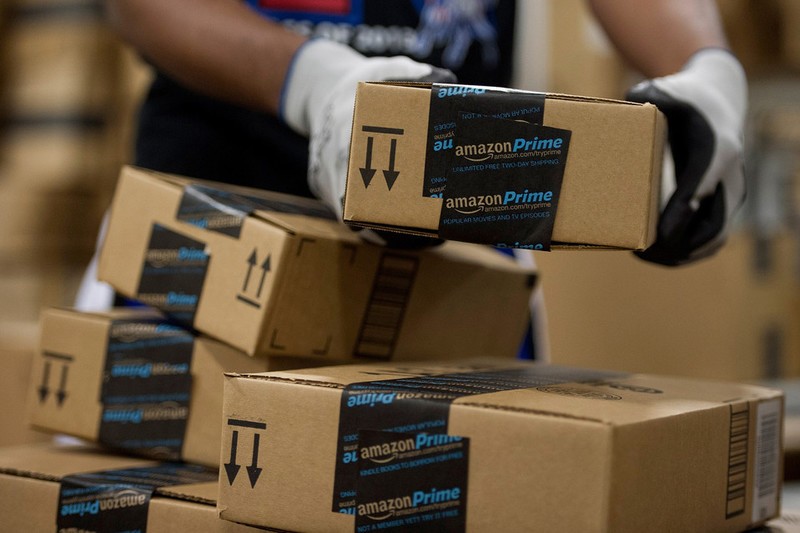
We already know that we will see millions of deals across the world on Prime Day, but did you know that you could drop the prices even lower by just shopping with your American Express points? Amazon frequently offers an additional percentage off select purchases when you checkout and pay for part of the transaction using your Rewards points, and come Prime Day, the company is offering 20% off on a variety of items.

When it comes to saving money, this may be one of the easiest ways you’ll be able to do it on Prime Day. The first step is to head to this page and click to activate the offer. Once the offer is activated, you’ll want to make sure that your American Express card is one of the payment methods in your account, and that you have linked your accounts successfully. The last, and easiest part, is to find an eligible item, add it to your cart, and pay using at least one American Express Reward point.
One of the best parts about this offer (besides the money you save) is that you don’t have to have enough points to cover your entire purchase. In fact, you can use a single point, worth $0.01, and you’ll still receive the discount during checkout. Of course, if you have a bunch of points you don’t know what to do with, you could use all of them on the purchase, but it’s not a requirement.
This discount can be redeemed on any item physical goods that are sold and shipped by Amazon. You won’t be able to redeem it on items sold by third parties, digital goods, or Amazon gift cards. It can only be redeemed once and has a maximum benefit of $100. The offer is currently live, so if there is something you want to buy now, you can save 20%. The promotion can end at any time, so be sure to activate the offer now and link your accounts to avoid missing out.
You can already take advantage of a bunch of great deals at Amazon, so be sure to check them out and get an early start on your purchases. Not sure what Prime Day is really all about? Be sure to check out our comprehensive guide with all the details you need. Amazon is also offering a few other ways to get some extra cash to spend on Prime Day to help keep your costs as low as possible.
Amazon Prime Day Tips and Tricks: Avoid bad deals and save money
Don’t make bad choices because you weren’t informed.
On big shopping days, like Amazon Prime Day, it’s easy to get caught up in the excitement and buy things that may not have really been a good deal. Now, if it’s a product that you actually wanted or needed, and the price was what you could afford, there’s really no such thing as a bad deal, but the risks come with impulse purchasing. With millions of deals coming and going, it can be easy to buy something that wasn’t actually a good deal. Luckily, we have a few tricks up our sleeve to help you avoid making these bad purchases, so let’s dive right in.
Prepare in advance
Having a basic idea of the items you are looking for and a price you’re willing to spend on them will definitely help keep you on track. It’s easy to miss out on deals because you aren’t looking in the right places or because you spent too much time trying to research and see if it’s worth buying it. Having a plan of attack before the event starts is an easy way to help you succeed.
If you download the free Amazon Shopping app on your iPhone or Android device, you can actually save deals that you’re interested in so that you don’t miss out. Having these items marked ahead of time will keep you on track.
Stick to listings shipped by Amazon
Amazon is a huge marketplace, and while most of the items you’ll see on Prime Day will be sold and shipped by Amazon, some of them will come from third-party sellers. While most third-party sellers are trustworthy, there could be some that have bad intentions. From recently-launched stores to those without feedback, it can be hard to know exactly what you’re getting without a ton of research. Prime Day is not a day you want to be researching sellers and pricing, so it’s best to keep it simple.
Items that are sold and shipped by Amazon are always trusted, this means that Amazon handles the whole experience for you and all of the customer service will take place through them. There are other listings that will be sold by third parties, generally the brand, and then shipped by Amazon. On these items, Amazon handles the fulfillment of the item (packing and shipping) and has the items in its warehouse.
Keep it locked to Thrifter
The team over at Thrifter will be covering all of the best deals that come and go during all 36 hours of the event. From direct price drops to coupons, Lightning Deals, and more, if you want one place to go to find all the best deals, this is it. The team will be comparing the discounted prices to regular pricing, vetting sellers, and ensuring that everything that is posted is completely trustworthy.
Be sure to sign up for their Prime Day newsletter to have helpful tips, tricks, and all the best deals delivered right to your inbox.
FDA approves freeze-dried blood plasma for use by U.S. troops
The military is getting a leg-up on ordinary civilians when it comes to wound treatment — courtesy of a decision by the Food and Drug Administration (FDA) to approve an experimental freeze-dried blood plasma for use by U.S. troops, even though it’s not approved for wider use by the population at large.
The freeze-dried plasma could be a lifesaver in war zones, where regular injuries are still unfortunately common. Plasma is the component in blood which causes clotting, thereby stopping the bleeding. The advantage of the freeze-dried plasma is that it doesn’t need to be refrigerated, and can also be delivered more quickly, since it doesn’t have to be thawed out as with regular frozen blood plasma.
Whether or not the freeze-dried plasma — which is manufactured by a company in France — would get approved was mired in some controversy. Last year, House Armed Services Committee Chairman Mac Thornberry (R-Texas) attempted to circumvent the FDA by giving the Department of Defense the ability to allow its use without going through the regulatory authority. Nonetheless, the FDA ultimately approved the technology, although it has yet to do so for wider use among civilians.
“Through our collaborative program with the [Department of Defense], they’ve made clear the importance of access to freeze-dried plasma in initial efforts to control hemorrhage from battlefield trauma,” FDA Commissioner Scott Gottlieb said in a statement. “Granting this authorization will support access to this important product in the event it’s needed. The FDA remains deeply committed to implementing an enduring pathway to ensure that these potentially life-saving medical products are made available in the most expeditious, safe and effective manner possible.”
This isn’t the first smart technology we’ve covered, designed to help soldiers injured in combat. Recently we wrote about a new type of polystyrene and rubber wound dressing developed by the U.S. Army. Intended to stop extreme bleeding, it features amazing levels of absorbency, allowing it to absorb up to 800 percent of the material’s weight in liquid.
Meanwhile, a pair of scientists in the U.S. recently announced independently developed synthetic blood technologies which could buy trauma patients valuable extra hours. One key potential audience for this technology is the military.
Editors’ Recommendations
- Super absorbent wound dressing will swell up to save soldiers’ lives in combat
- Is this the future of medicine? Synthetic blood could buy patients 48 extra hours
- Bitter lawmakers tell Google to justify Huawei link after A.I. military deal ends
- ZTE and the U.S.: Everything you need to know
Google’s Chrome desktop browser is about to receive a major facelift
If you subscribe to Google’s nightly build of Chrome “Canary,” the latest release for Windows, Linux, and Chrome OS now sports a much-needed facelift thanks to the new Material Design user interface. The new look is set as the default, providing enhancements to the boring outdated Chrome design with a rounded address bar, rounded and colored browser tabs, and new omnibox suggestion icons.
“MacOS users can set experimental flags chrome://flags/#top-chrome-md to ‘Refresh’ and enable chrome://flags/#views-browser-windows to try it out now,” says Google evangelist François Beaufort. “Note that it’s still being actively developed and that you may stumble upon bugs.”
Material Design is a design language introduced by Google in 2014. It’s based on the “card” layout used in Google Now that borrows from traditional real-world paper and ink designs. It attempts to emulate physical substrates in a virtual environment, rendering crisp edges and shadows that give depth. Material Design infiltrated Android 5.0 and is slowly becoming the default visual design across all Google apps and services.
“Material Design is guided by print design methods — typography, grids, space, scale, color, and imagery — to create hierarchy, meaning, and focus that immerse viewers in the experience,” Google says. “Material Design is inspired by the physical world and its textures, including how they reflect light and cast shadows. Material surfaces reimagine the mediums of paper and ink.”
The user interface for Google’s Chrome browser has remained mostly unchanged for many years. You can alter its appearance to some degree by downloading and installing themes from the Chrome Web Store, but they merely change the background colors of the Start page, toolbar, tabs, and so on.
The fact that the Material Design user interface is now appearing in Chrome Canary means Google is making progress on getting the new interface into a stable build. If you’re curious to see what Material Design is about, be warned: Chrome Canary isn’t a stable version of Google’s browser. It’s a nightly build that has yet to be thoroughly tested, introducing new features along with potential show-stopping bugs.
But also keep in mind that Material Design is an ongoing project thus aspects of Chrome may change based on feedback until the user interface is ready for primetime. Google supposedly made major changes to Material Design earlier this year to support a tool called “Material Theming” for designing interfaces. Gmail’s redesign on the web was part of that overhaul to the design platform.
Google is expected to make Material Design the default user interface in the stable version of Chrome on September 2, the browser’s birthday. That means the new interface must survive the design changes in the Canary, Developer and Beta channels before it goes mainstream in less than two months. We shall see if Google succeeds in making that anniversary deadline.
Editors’ Recommendations
- The best Chrome themes
- Chrome’s desktop browser now supports web-based VR on the Oculus Rift
- New Chrome OS features make your Chromebook a better Windows replacement
- Chrome’s search bar may soon display pictures for your browsing pleasure
- Chrome OS notification center redesign borrows from Windows 10 Action Center
How Logitech continues to thrive in the post-PC world
Luke Larsen/Digital Trends
The PC is in decline. We’ve been hearing that story and seeing the numbers for years now, and we all know it’s true.
But in the midst of that decline, you might be surprised to hear how well a company like Logitech gets along. Despite its deep connection to PCs, the small, independent company continues to stay relevant in its many different ventures — whether that’s in high-end audio, or gaming peripherals.
We took a behind-the-scenes look at Logitech’s facilities in Camas, Washington to see how it thrives in a world where we rely less and less on PCs by the day.
A long history in audio
Logitech is known first and foremost as a PC mice and keyboard manufacturer. It was founded in the early 1980s in Switzerland — and by 2008, the company had sold over a billion mice. You’re bound to have used at least one of them in your life. But Logitech knew that if it wanted to grow, it’d have to expand beyond mice and keyboards.
The small, independent company continues to stay relevant in its many different ventures.
In 2001, Logitech acquired a competitor based out of Vancouver, Washington called Labtec, a company with a rich history in a desktop peripherals. Logitech didn’t have much experience in at the time: Computer speakers.
“That’s how we benefited for the heritage,” said Philippe Depallens, the VP of Logitech Audio, told Digital Trends. “We still have 15 [Labtec employees] from that era still with us. Logitech is very good at integrating different ingredients from different places. But also through the acquisition, we’ve been able to aggregate all the heritage that these guys have.”
After acquiring Labtec, Logitech quickly added audio devices to its suite of computer peripherals and began building up its own audio engineering facilities. Even though they both plug into a PC, engineering speakers is very different than mice or keyboards.
Luke Larsen/Digital Trends
In order to support all these new ventures in audio, Logitech has continued to improve its testing facilities, bringing in the highest level of technology and industry practices, many of which rival what you’d see from a massive multinational conglomerate like Samsung or LG. The facility is filled with anechoic chambers, listening rooms, and compliance labs, all for the purpose of engineering some of the most advanced speaker systems in the world. The anechoic chambers, used for completely isolating sounds, are particularly fascinating, Logitech’s largest anechoic chamber even features a completely mesh floor to allow for a padded surface beneath. Spending too long in one of these chambers will make your ears tingle.
Even though they both plug into a PC, engineering speakers is very different than mice or keyboards.
On the other side of the spectrum, Logitech has built cozy listening rooms where they perform blind testing of its speakers. In the dark room of couches, listeners can switch between the different systems, as well as styles of music and volume. The idea is to give Logitech engineers an idea of what the average person hears, so they can make proper calibrations to the speakers based on how people actually experience the music.
But Logitech didn’t just build these advanced testing facilities for computer speakers. In addition to Labtec in the early 2000s, the company has made a couple of other important acquisitions — namely, Ultimate Ears (UE) and Jaybird. The two consumer audio companies, one for audiophiles and one for exercise, still maintain their own identity, but are now under the umbrella company of Logitech.
Luke Larsen/Digital Trends
“As you know, the desktop speaker is a business that is currently declining,” said Depallens. “There is no secret around that. We have to embrace the new form factors and new behaviors.”
The addition of bluetooth speakers and headphones from these acquisitions have allowed Logitech to expand beyond the PC at a time when that’s more needed than ever.
Digging deep into gaming
The other big area where Logitech continues to thrive is in gaming. It’s one of the only areas of PC manufacturing where there is growing, not feigning interest. More importantly, it’s a demographic that is passionate about its peripherals, whether that’s mice, keyboards, speakers, or headphones. Logitech has caught onto that.
The first gaming products Logitech produced were the classic WingMan joysticks in the mid-1990s — an elegant weapon for a more civilized age. Nowadays, it’s all about Logitech G, the company’s new dedicated gaming brand. It was re-launched in 2013 with its refreshed mice and keyboards, all adding gaming style and performance to its products. Whether it’s affordable options like the Prodigy G203 or the wireless G903 Lightspeed, Logitech G has quickly become a mainstay in the gaming world and even show up on our list of the best gaming mice you can buy.
“We started to realize we could create a beautiful ecosystem around the desk between the mouse, the keyboard, and the speaker.”
Earlier this year, these two new ventures of gaming and high-end audio came together in one interesting product: The Logitech G560 Gaming Speakers. It’s first dip into the gaming speaker world, the G560 are certainly a unique take. Rather than just flashing LEDs in your face, the the G560 speakers use the backdrop of your room to enhance the gaming speakers. You can synch them up with games to fill the space behind your monitor with dynamic colors that actually reflect what’s happening within the game itself. They don’t come cheap, but with powerful sound (including a 2.1 subwoofer), it’s some fascinating innovation in a space that tends to remain fairly static.
“The easiest way for us to do this would have been to take one of our existing products, slap on a Logitech G logo, ship it, and just say this is a gaming speaker,”Depallens said. “That could have been our approach, but that’s usually not the approach we take.”
Logitech said it spoke to lots of gamers all around the world to see how they would actually use speakers around the desk, considering the popularity of gaming headsets.
“That’s when we started to realize we could create a beautiful ecosystem around the desk between the mouse, the keyboard, and the speaker,”Depallens said. “It’s about creating an ecosystem where not just the sound and the input is there, but also light. We realized that sometimes it’s easier to look to the right or left of your screen than it is to look down at your keyboard. That’s how the G560 was born.”
Syncing up with all sorts of different games, the lights on the speakers help set the tone of the gaming space — and in our experience, do add a special ingredient to make games more immersive.
Between high-end audio and new gaming products, we’re seeing a company can crank the volume on its strengths, without being left behind in this new era of how we use computers today.
Editors’ Recommendations
- Bowers & Wilkins will design the sounds of the future in a massive new lab
- Samsung now offers a Chromebook Pro with a backlit keyboard for cave dwellers
- The untold story of how the XPS 13 defied odds to become the world’s best laptop
- Marshall’s Major III headphones crank up audio quality, keep classic design
- 5 things Google’s Pixel Buds 2 need to outdo Apple’s AirPods
When YouTube TV fails, an old-school antenna steps up

YouTube TV failed hard during the World Cup semifinal, but old-school antennas rocked it just fine.

In case you missed it, YouTube TV went down hard today. Right when England was trying to #BringItHome. England’s defense pretty much disappeared in the second half, but so, too, did YouTube TV’s stream of the game. (If you somehow actually missed the game, England lost in OT. Sorry, lads.)
But this is a learning experience for us all. First, you’ve got to play all 90 minutes. Second is that you really should have a good over-the-air antenna set up. Because while it doesn’t yet do 4K resolution over the air, it’s also not subject to the streaming hiccups that we still experience in 2018.
(Third is that U.S. soccer announcers are still bad, but that’s another thing for another time.)
Read: YouTube TV reminds us why you should have a good over-the-air antennaMore: The best over-the-air antennas
Introducing CordCutters.com
- The hardware you need
- All about streaming services
- What channels are on which service
- FREE over-the-air TV
- How to watch sports
- Join the discussion
Get the latest deals
A few seconds cost an Apple store $27,000 worth of stolen merchandise
It took just seconds for a team of four thieves to make off with $27,000 worth of Apple products over the weekend, an ABC News affiliate reports. The team of bandits ripped out electronics that were tethered to display chargers from tables across an Apple store in Fresno, California. The robbery, which took place in the Fashion Fair Mall, seemed to shock customers and Apple store employees, who stood by as the fast-acting bunch grabbed as many electronics as possible before shoving their way out of the store.
The entire heist was captured by surveillance cameras and showed four young men wearing hoodies making fast work of taking laptops and iPhones. In total, the crew managed to steal 26 items, all from the center two tables in the front and middle of the store. Laptops were slammed shut and pulled from their securing cords, and iPhones were quickly yanked out before the group ran for the exit. While one bystander seemed to attempt to block their escape, he was pushed aside, and all four men ran away seemingly unscathed.
Customers can be seen huddling together in petrified groups, as one young girl ducks under a table for safety.
“Various iPhones, the iPhone 6, iPhone 7 and 8, and even the new iPhone X was taken in this grand theft,” said Mark Hudson of the Fresno Police Department. “One customer stood by the door to prevent them from leaving but was knocked out of the way.”
Police are now in search of the suspects, who are described as four or five black males between the ages of 16 and 18 years old. The fifth member of the group is said to be the getaway driver. None of the four suspects in the store ever displayed a weapon, the police said.
Law enforcement officials believe that the theft may be related to a markedly similar incident that took place at an Apple Store in downtown San Luis Obispo, California on June 21. In that case, the robbers managed to take a table’s worth of merchandise.
“There are other reports of other places, other cities in California, that have had these kinds of takeover thefts,” Hudson said. “So we are looking into [this crime] being connected to other crimes, at any other Apple Stores outside of Fresno.”
Apple has long been plagued by similar robberies, dating back several years.
Editors’ Recommendations
- Need a new tablet? Check out the best iPad deals for July 2018
- With ChroMorphous technology, clothes may soon change color with a tap of a phone
- The best chat clients
- Robot bees on Mars — NASA funding a swarm of drones to explore the Red Planet
- Elon Musk sends ‘kid-sized submarine’ to aid Thai cave rescue
 AIVAnet