


Why Mastercard is ripping a page from Bitcoin’s book
Mastercard
(in)Secure is a weekly column that dives into the rapidly escalating topic of cybersecurity.
Blockchain, the technology behind Bitcoin, has captured the interest of everyone from Facebook to Microsoft. One of the biggest investors in the technology has been Mastercard, holding nearly thirty blockchain patents to its name.
What does a company like Mastercard want to do with all that blockchain tech? It wants to make the future of money look a bit more like Bitcoin.
Stopping the skimmers
According to the ATM Industry Association, two billion in losses from credit card “skimming” occur each year around the world. Using a skimming device at places like gas stations and ATMs, thieves can easily steal credit card information from those who previously used it. While chip cards have done a lot to solve that problem, companies like Mastercard always need to stay one step ahead of hackers.
“Utilizing blockchain technology, Mastercard will be able to eradicate many of the fraudulent activities”
“Every year, billions of dollars are stolen through identity theft and skimming credit cards,” said Arran Stewart, an expert on blockchain from Job.com, told Digital Trends. “Utilizing blockchain technology, Mastercard will be able to eradicate many of the fraudulent activities that happen through the abuse of their card services.”
Stewart is the co-owner of the recruitment platform Job.com, which implements a smart contract on the blockchain to facilitate private information, not unlike how Mastercard proposes to do it.
Mastercard’s patent would put credit cards on a publicly-accessible blockchain, which can then verify payments in a secured fashion. Stewart explained that Mastercard could remedy the problem by encoding an image of a payment card to the blockchain and then encrypt it with a public and private key. Once the payment is finished, the system decrypts the card image using those private keys.
Mastercard
Despite blockchain’s many demonstrated use cases, its application in finances have always been important. It’s the backbone of how a cryptocurrency like Bitcoin functions — a public database that allows the currency to exist without direct oversight from a single entity, known as a “distributed ledger.”
However, Mastercard’s interest in blockchain goes far beyond this single patent. In fact, the company is one of the largest holders of blockchain-related patents in the world.
Blockchain money
In the last few months, Mastercard has created a program that allows developers to build new applications on top of its own set of APIs. That helps Mastercard work closer with companies like PayPal and Apple and opens interesting new opportunities that take blockchain even further.
Consider the tourism and hospitality industry. Mastercard has developed a platform that would let travelers to plans and personal information privately, and then reap the reward of finding the best deals for their trip.
Mastercard has created a program that lets developers build new applications on top of its own set of APIs
“Mastercard has recognized the value in the travel industry and are providing a platform that allows holidaymakers/travel seekers and others to tell the tourism world where they wish to go privately through blockchain encryption,” said Stewart. “Airlines, travel companies, hotels and many others will be able to bid to offer that user the best possible price and service over other competing bidding providers, all powered on Mastercard’s blockchain.”
It’s a fascinating idea, but tourism is only the tip of the iceberg. Mastercard has a number of applications, from sending money, to setting budgets through voice assistants, paying employees instantly and securely, and, most interestingly, something it calls “proof of provenance.” It’s a way of creating a transparent supply chain that both consumers and wholesalers will have access to. That could help both restaurants and ordinary people keep track of where the food on their plate comes from.
“Transparency in the supply chain has been something that consumers and wholesalers have been looking for since supply goods began,” said Stewart. “Proof of provenance is the future of knowing where and how goods and services reach the hands of the consumer. Blockchain will be the backbone of this and one major example of this being put into practice will be Amazon utilizing this technology to provide evidence of the supply of their goods. This technology will also reduce loss, damage, theft and time to deliver within any supply chain.”
Mastercard
Obviously, Mastercard isn’t the only financial company developing new technology on the blockchain. Competitors like Visa and American Express aren’t far behind, and both have numerous secured patents in the blockchain world. Despite the fact that Mastercard is ahead of the pack, Visa patented a “digital asset network” based in blockchain in August of last year. What it’ll do with these patents is still unclear, but it seems Mastercard won’t be the only player in the game.
While we shouldn’t expect financial institutions to embrace cryptocurrency anytime soon, it’s clear our money is going to function a lot more like Bitcoin than dollar bills in the future.
Editors’ Recommendations
- Is there horse in your hamburger? How blockchain could fight food fraud
- Before crypto nirvana, blockchain needs to solve these basic problems
- The best songs about money
- The best money-transfer apps for Android and iOS
- How to buy Bitcoin
Samsung has booked the Gear S3 into this flash hotel, and it’ll never leave
Julian Chokkattu/Digital Trends
Wearable technology isn’t only about tracking steps and buzzing notifications, it’s also a very effective way of increasing productivity, and the Viceroy Hotel Group is about to make the most of its potential. If you’re lucky enough to visit one of Viceroy’s upmarket hotels in the near future, staff around you may be wearing a Samsung Gear S3 smartwatch; but it won’t be for personal messages, it’ll be for messages that help the hotel run faster and more smoothly.
Viceroy will be the first hotel to use a combination of the Gear S3 smartwatch and hotel management platform Alice, as a way to connect staff with guest requests. It’s a subtler, quieter, and quicker system than the well-established walkie-talkies that many hotel workers carry around all day. Hotels are generally big places, and keeping everyone connected together is a serious challenge.
How will it affect you, as the guest? Imagine you’ve just arrived and are headed up to your room, with baggage left in the lobby ready to follow. The reception desk can instantly send a message to a colleague, which appears on their watch as a notification. If they’re not available, its a single tap to let reception know, or another tap to confirm they’ll be along to take the baggage up in a moment. It’s possible alerts could then be automatically placed on the TV screen in your room to tell you the bags are on the way up. Everyone in the process is kept informed, with the minimum of intrusion for all concerned, and the service is completed quickly.
The hotel group will use Gear S3 smartwatches with an LTE connection, ensuring that even if the member of staff is out of Wi-Fi range the watch will still operate, and negate the need to carry around a connected smartphone too. The usefulness goes well beyond carrying bags around. It’s an essentially hands-free system, and because it’s attached to your wrist it’s harder to lose, plus it’s expected to speed up attentiveness too.
Working with Samsung, the Alice software group will demonstrate the system at a conference on hotel technology later this month, and the Viceroy Hotel Group will be the first to use the final product. For the rest of us, we’re looking forward to the Samsung Gear S4, Samsung’s follow-up to the Gear S3, which we expect to launch after the summer, potentially alongside the Galaxy Note 9.
Editors’ Recommendations
- The only guide you need to get started with Google’s Wear OS
- The best smart luggage
- Electronic locks in over 40,000 hotels worldwide compromised, says security firm
- What is USB OTG? Here’s how to use USB drives and more on your Galaxy S9
- The best Wear OS apps
Rebble is exactly what you need if you don’t want your Pebble watch to die
Support for your Pebble smartwatch will end on June 30. That means from the end of this month the app store will close, the voice recognition feature will break, and mobile app updates and a lot more won’t continue. Your watch will still work, but most of the things that make it great will no longer exist. We know this for sure because FitBit, which acquired Pebble, told us the end date at the beginning of the year.
However, there is an alternative — and we’re not talking about buying a different smartwatch. Rebble is an unofficial spinoff of the Pebble platform, and aims to offer most, if not all, the services you’re enjoying on your watch after the Fitbit-imposed June 30 deadline. That means continued mobile app support, an operating application store, and firmware updates. Everything you need to keep your Pebble in good, working order.
To take advantage of this, Pebble owners will have to switch over their Pebble accounts to the Rebble Web Services manually. Rebble is unofficial, and while Fitbit has apparently been helping them out, it won’t automatically migrate anything over. You’ve got to do that yourself. Following its last business update in February, Rebble now has its user accounts ready to go, and with only a couple of weeks left before the deadline, you’ll have to act fast to save your Pebble. Once the June 30 date passes, it’ll be too late.
It’s simple to do. Rebble has its own authorization site, where you sign-in and link your existing Pebble account to Rebble’s service, and that’s about all for now. Rebble’s app isn’t ready to go, and it’s not possible to switch over to the Rebble servers yet either. However, if you don’t complete these steps now, you won’t be able to in the future. Rebble warns that even when its service is up and running after the Fitbit shutdown, not everything will be in place and working. It’ll take time to get some of the more complicated features to an operational state.
Rebble will provide a basic Pebble watch service for free, but a monthly subscription will be used to access dictation and weather services. Costs will be announced in the future. Lending support to Rebble’s cause is Pebble CEO Eric Migicovsky, who alerted Pebble owners to the pressing need to sign up with Rebble through his Twitter account.
Rebble is great news for the vibrant and dedicated community that still exists around Pebble; but if you’re considering a new smartwatch instead, there are a few very cool alternatives out there that may tempt you away.
Editors’ Recommendations
- How to download the data Apple has about you
- The best unlocked phones you can buy
- Here is everything you need to know about the Fitbit Versa
- Everything you need to know about Samsung Pay
- Google’s Play Movies and TV app tells you where to stream your shows
Ultimate Ears’ Boom 2 Bluetooth speaker drops to just $75 in various colors
Blast your music everywhere you go.

Amazon has a variety of UE Boom 2 Bluetooth speakers on sale for just $74.99 today, which is the lowest price we’ve ever seen on this popular speaker. Most of these colors have never seen a price drop from the original $199.99 price tag, so if you like any of them you’ll want to grab one quickly, since this is a one day deal. The discount is available on the Deep Radiance, Origami, Panther, and Serendipity Blue color configurations.
The UE Boom 2 speaker sends sound out in all directions (360 degrees) and has a deep bass to keep the party pumping. It’s waterproof, shockproof and can even connect with the Echo Dot so you can voice control it via Amazon’s Alexa. The coolest thing about this speaker is that it can be wirelessly connected with over 150 other Boom 2 speakers to really crank up the volume. It features a 15-hour battery life and a Bluetooth range of 100 feet.
At this price, this is definitely one of the best Bluetooth speakers you can get, so don’t miss out.
See at Amazon
Modern Dad does the Amazon Echo Dot Kids Edition
It’s an Echo Dot — you know, for kids!
Does a kid need an Amazon Echo Dot? And if so, does a kid need a grown-up Echo Dot? Or an Echo Dot Kids Edition? Or does a grown-up need a kid to have a Kids Edition more than a grown-up edition?
These are the questions we parents struggle with. Well, that, and what’s for dinner.
But today it’s all about the Amazon Echo Dot Kids Edition. It is, for all intents and purposes, an Echo Dot, just like it’s always been. Only now it has a cool little case. That seems silly, I know. Why does a 3-inch speaker need protecting? All I can say is you’ve never met my sweet little daughters — and that it’s also more about whatever it is that might get knocked onto the Echo Dot than it is the Echo Dot doing the knocking.
More interesting with this more-expensive Echo Dot — it retails for $79 but we’re already seeing it for $69 — is that you get a year’s worth of Amazon Free Time, for free. (Well, rolled into that more-expensive price.) That gets you access to all kinds of kid-friendly content, and some parental controls that you kids might or might not find a workaround for. (My money’s on the kids, though.) That in and of itself pretty much makes up the difference.
But what it doesn’t do is answer our original question. Does a kid need an Echo Dot? And in that case, does a kid need a kid-friendly Echo Dot?
That one’s on you to answer.
Amazon Echo Dot Kids Edition ($79)

See at Amazon
The Amazon Echo Dot Kids Edition is just like any other Echo Dot. It’s got a small speaker. It’s got Alexa. And this one comes with a kid-friendly case, access to loads of kid-friendly content, and has parental controls to keep the kid from having too much fun with it.
It’s not a bad deal, if only for the kid-friendly books and music and games and stuff. But if they’re on the cusp of being a mini-grownup instead of an oversized baby, you might just save some cash and go for the real deal.
Modern Dad
- Subscribe on YouTube
- See the gear
Subscribe to the Modern Dad newsletter!
Nokia 6.1 2018 review: Delivering value in simplicity
The Nokia 6.1 is durable, fast, and receives timely updates. You can’t ask for more from a $269 phone.

Nokia’s comeback tale is one that’s filled with nostalgia, lofty goals, and a few missteps. The brand managed to carve out a niche for itself thanks to its focus on timely updates and no-nonsense design. Those principles worked for Nokia in the past, and are now allowing HMD to become a player to contend with in the Android space.
The Nokia 6 was the first device that kicked off Nokia’s resurgence, with the device making its debut in China last February. There was considerable excitement around the device, but it failed to live up to those high expectations, mostly because of an underwhelming Snapdragon 430 that wasn’t able to keep up with the Full HD display.
For the 2018 refresh, HMD is making a few key changes, chief among them an upgraded chipset. The Nokia 6.1 2018 is powered by the beefier Snapdragon 630, and offers Bluetooth 5.0 as well as a USB-C port. There’s no dearth of budget phones in markets like China and India, but HMD’s focus on an uncluttered software and fast updates has allowed the brand to stand out from the likes of Xiaomi, Honor, and even Motorola.
In short, the Nokia 6.1 2018 is one of the best phones you can buy today for under $300.
Nokia 6.1 2018
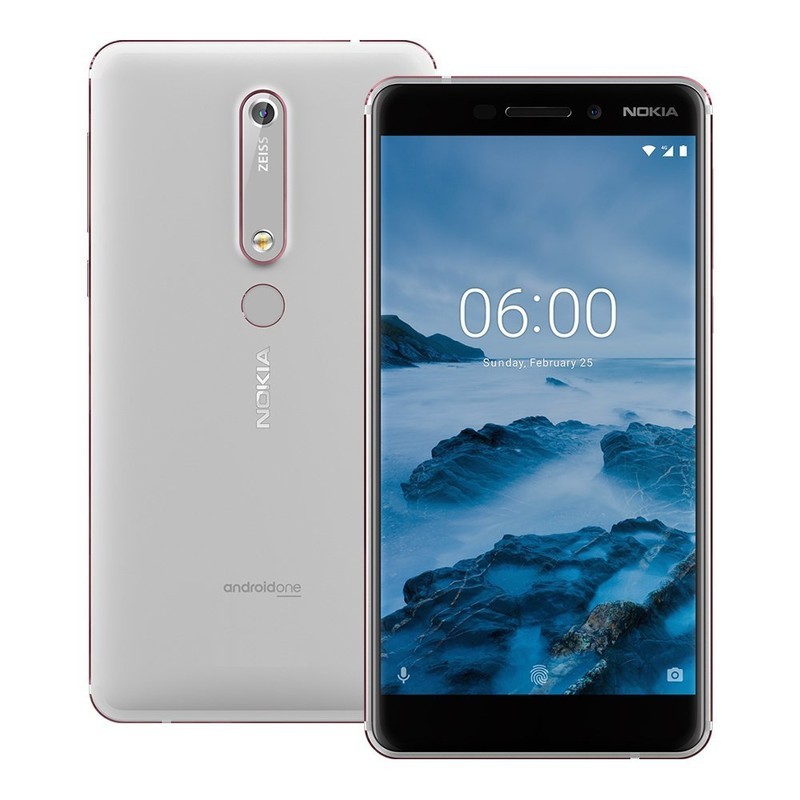
Price: $269, £229, ₹16,500
Bottom line: The Nokia 6.1 retains the same build quality as its predecessor, while offering an upgraded chipset with much better performance, fast charging, and USB-C connectivity.
Pros:
- Durable chassis with outstanding build quality
- Clean software and timely updates
- All-day battery life with USB-C charging
Cons:
- Average camera
- 16:9 display
See at Amazon
About this review
I (Harish Jonnalagadda) am writing this review after using the Nokia 6.1 for over a month in Hyderabad, India. The device was connected to Jio’s 4G network, and received a few security updates during the course of the review. The phone was provided to Android Central by HMD India.
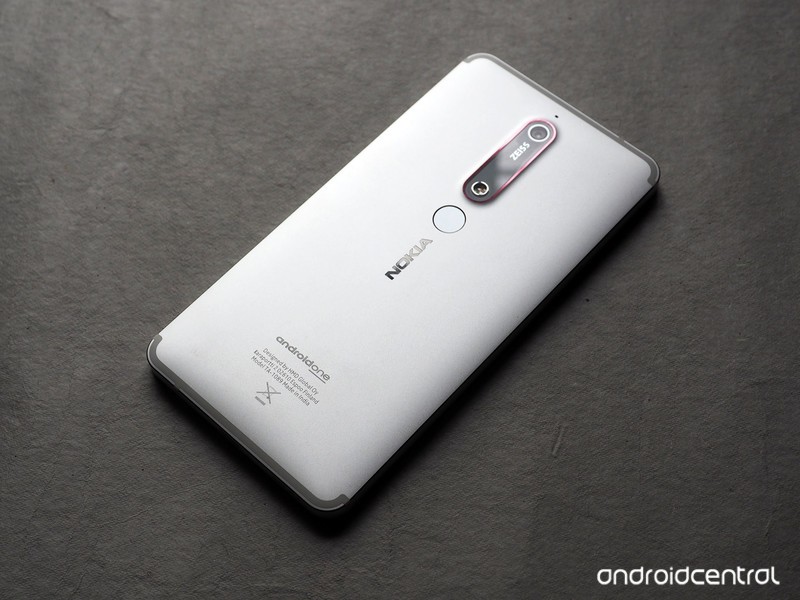
Nokia 6.1 2018 Full review
Nokia phones of old were legendary for their durability, and the brand is trying to infuse the Nokia 6.1 with the same characteristics. Of course, given that there’s a large glass screen up front means the phone isn’t going to be as rugged as the 1100 or the 3310, but HMD has designed a chassis that can take a beating.
The Nokia 6.1 is milled out of series 6000 aluminum, and you can feel that the phone is built to last from the moment you pick it up. HMD even made a point of playing air hockey with Nokia 6.1 units at the device’s launch event in India, just to show off its durability.
This is the most durable budget phone available today.
The design is largely unchanged from last year, although the Nokia 6.1 has slightly reduced bezels. That’s because the fingerprint sensor is now located at the back of the device. The camera housing is also more oblong, with the flash module moving further below the back. It’s great that HMD switched to USB-C with the Nokia 6.1. Far too many budget phones still feature a MicroUSB port, so in this area, HMD is ahead of other brands.
The fingerprint sensor is located just where your finger rests at the back, and it’s just as fast as other budget devices. And talking about the basics, the Nokia 6.1 has a 3.5mm jack located up top.
The Full HD display on the Nokia 6.1 is still a 16:9 panel and not 18:9 like most phones in this category. The panel has decent colors, although the color balance is more toward the cooler side of things. Sunlight readability, on the other hand, is excellent, and I faced zero issues using the Nokia 6.1 under harsh sunlight.
The phone comes with a two-tone finish, with the chamfers on the sides and the camera sensor picking up accent colors that break up the design well. The copper version is similar to what we’ve seen on the Nokia 7 Plus: the black color scheme is interlaced with copper accents, and that gives the phone added flair. There’s also a blue version of the device with blue accents, but that particular option is available in limited quantities.
The white variant I’m reviewing comes with iron accents, and while it isn’t as distinctive as the other models, it is a great alternative if you’re looking for a version with an understated design.
| Screen | 5.5-inch 16:9 IPS LCD |
| SoC | Snapdragon 630 |
| RAM | 3GB/4GB |
| Storage | 32GB/64GB |
| Rear Camera | 16MP, ƒ/2.0 |
| Front Camera | 8MP, ƒ/2.0 |
| Battery | 3000mAh |
| Connectivity | Wi-Fi 802.11 a/b/g/n, BT 5.0, FM radio |
| Security | Rear fingerprint |
| Colors | Black/Copper, Blue/Gold, White/Iron |
| Dimensions | 148.8 x 75.8 x 8.2mm |
| Weight | 182grams |
| Price | $269, £229, ₹16,500 |
The main issue with last year’s Nokia 6 was the underwhelming Snapdragon 450 chipset. It wasn’t able to handle the Full HD panel, and as a result, the phone felt laggy during everyday tasks. Thankfully, that isn’t the case on the Nokia 6.1. The Snapdragon 630 ensures the phone blazes through most day-to-day tasks, and it even handled demanding workloads with aplomb.
I’ve used the version with 3GB of RAM, and while I didn’t face any issues in day-to-day usage, the 4GB model with 64GB of storage is a better bet if you’re looking for a future-proof device. Either model has a microSD slot that lets you extend storage.
In a segment where manufacturers are trying to cut costs by getting rid of basic accessories like earphones, HMD includes an 18W wall charger in the box, along with a pair of decent-sounding earbuds. That’s a common theme with the Nokia 6.1: HMD has learned from last year’s mistakes, and the device is one of the more feature-rich phones you’ll find in this category. It even has an FM radio, and the two SIM card slots can both connect to 4G networks. And yes, you can use dual VoLTE.
Coming to the battery side of things, the 3000mAh battery was more than adequate to deliver a day’s worth of usage, and the phone now has fast charging. You’ll be able to use the bundled 18W charger to quickly top up when you’re in a hurry — up to 40% in under an hour. That’s significantly better than last year’s model, which took an agonizing three hours to fully charge.
For all of its hardware strengths, the loudspeaker on the Nokia 6.1 is sub-par. There’s a single speaker located at the bottom, and it’s neither loud nor detailed (it’s a good thing HMD bundles earbuds in the box). The only other downside on the hardware front is that you won’t be able to use the Nokia 6.1 on the likes of Verizon or Sprint as it is a GSM-only device.
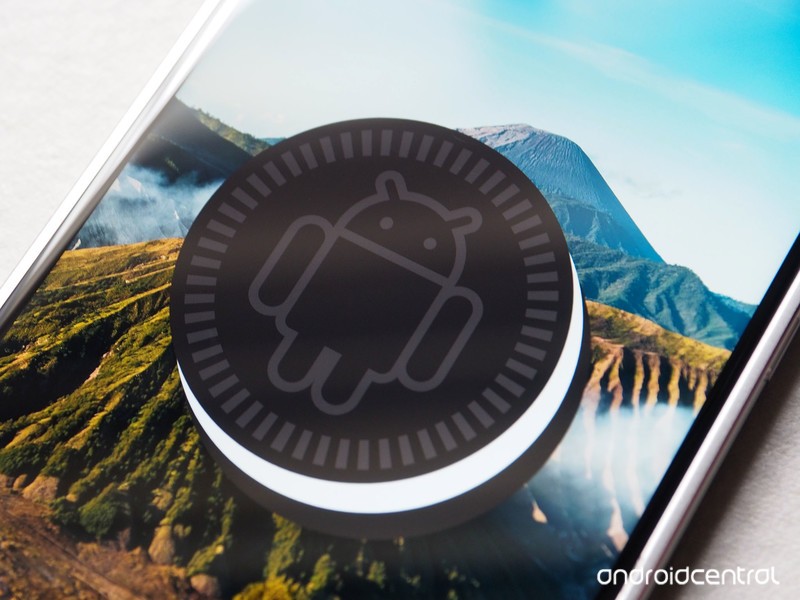
HMD focused on two pillars when reviving the Nokia brand: industrial design and quick updates. Over the course of the last year, HMD has shown once and again that it can roll out consistent updates to its portfolio of devices, and earlier this year the brand committed to the Android One platform for all of its future devices.
The software experience on the Nokia 6.1 is just as fluid as other Android One phones, and the clean user interface is a delight to use. The phone has consistently picked up monthly security updates, and is now on the June 5, 2018 patch. While it isn’t a part of the Android beta program like the Nokia 7 Plus, it should be in the first wave to devices to pick up the Android P update once the stable build is available later this year.
The one potential downside with the Nokia 6.1 — particularly if you’re one to install custom ROMs — is the fact that there’s no easy way to unlock the bootloader. This is admittedly an issue that will affect a small minority of users, and with HMD consistently rolling out updates, there really isn’t a reason to flash another build onto the Nokia 6.1. But if you’re one to tinker with ROMs, know that it’s particularly hard to do so on the Nokia 6.1.
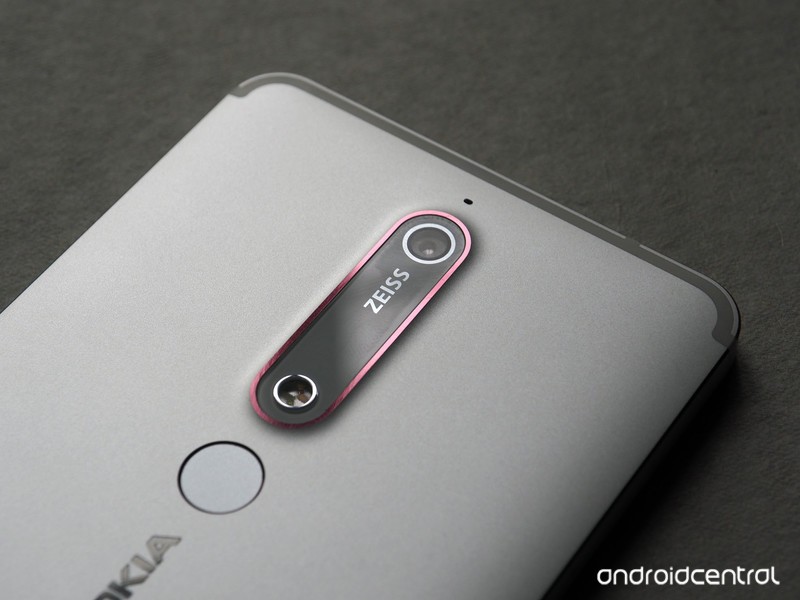
Continuing the theme of simplicity, HMD has stuck with a single imaging module at the back of the Nokia 6.1. The 16MP f/2.0 lens takes decent photos in daylight scenarios, but it struggles to focus in low-light conditions. There’s also a fair bit of noise from resultant low-light shots.
Switching on HDR helps with improving the dynamic range of images, and you also get a manual mode that lets you adjust the white balance, ISO, shutter speed, and exposure levels. The camera interface itself is easy to navigate, with toggles clearly laid out. There’s even a Bothie mode that lets you take photos from the rear and front cameras simultaneously.




The 8MP front shooter takes great selfies, and Nokia 6.1 shoots 4K video as well — with the ability to upload directly to Facebook or YouTube. There’s plenty of detail in videos, but as there’s no optical image stabilization they tend to be shaky if there’s a lot of motion involved.
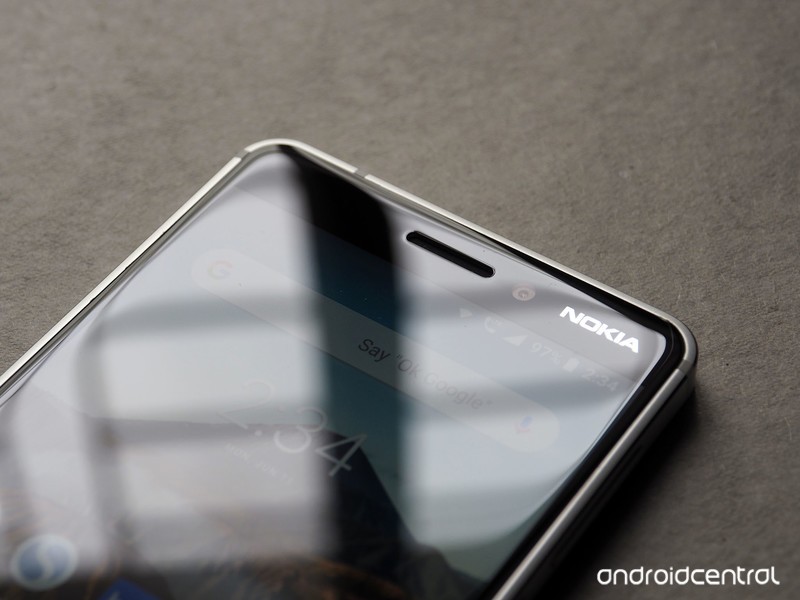
Should you buy it? Yes
The Nokia 6 sold in excess of 10 million units globally, making it one of the best phones in this category last year. The Nokia 6.1 builds on that foundation with a much more capable chipset, improved battery life, fast charging, and USB-C connectivity.
Sure, the Nokia 6.1 is missing out in a few areas — it’s still using a 16:9 display, and the camera could be better at low-light conditions. But it excels at the basics, and the durable design should make it withstand the occasional tumble without any issues.
The Nokia 6.1 delivers in the areas that matter, making it a great budget option for 2018.
The Nokia 6.1 isn’t the only Android One device in this category, as the Mi A1 also costs around the same. The A1 doesn’t have the same hardware prowess as the Nokia 6.1, but it has an edge when it comes to the camera side of things.
Earlier this year, I said that the Redmi Note 5 Pro has the potential to be the best budget phone in India. However, Xiaomi bungled the launch, and three months after its release, you still can’t get the phone without going through a lot of hoops.
Thankfully, the Nokia 6.1 doesn’t have any such issues. The phone is up for sale on Amazon India, as well as thousands of retail stores across the country.
Best of all, the Nokia 6.1 is also up for sale in the U.S. for $269. The phone is available unlocked from Amazon.com, and you’ll be able to use it on GSM carriers like AT&T and T-Mobile. For under $300, the only other device that comes close to the Nokia 6.1 is the Moto X4, which is available for around the $280 figure right now.
The downside with the Moto X4 is that Motorola isn’t as quick as it used to be at rolling out software updates, and the phone is unlikely to receive platform updates beyond Android P. The Nokia 6.1, meanwhile, will get two platform updates and three years’ worth of security updates, making it future-proof.
4.5
out of 5
A good budget phone needs to do three things: offer a lag-free experience in day-to-day usage, a sturdy chassis, and timely updates. The Nokia 6.1 delivers in all three categories.
See at Amazon
See at Amazon India
Apple could implement one of the Google Pixel 2’s coolest features
Another week, another slew of Apple patents. The company was recently awarded four interesting phone-related patents that could indicate that the company is working on a few new features to the iPhone and other mobile devices.
Here’s a rundown of the new patents Apple has been awarded, and what they could mean for Apple’s future products.
The Google Pixel’s squeeze feature on the iPhone?
Perhaps the most interesting mobile-related patent of the week relates to Apple working on a “mobile electronics device with squeeze detection.” If that sounds familiar to you, that’s because it currently features on the Google Pixel 2 and Pixel 2 XL, and featured on a few HTC devices before them.
The patent notes that a device could be configured to get input from its enclosure based on pressure that’s applied to the enclosure. The patent doesn’t describe something completely the same as what’s found on the Pixel though — it notes the use of at least one “deformable housing wall,” so it’s possible the feature could be closer to Apple’s Force Touch, in that the enclosure may actually move.
The patent is a continuation of a patent filed in 2016, which is itself a continuation of a 2013 patent.
A better iPhone flash
Apple could also be working on improving the flash on the iPhone’s camera. According to one of the newly published patents, the company could move the iPhone’s flash, and build in four different elements into the flash. Those elements could then be controlled individually and either automatically or manually. On top of that, the elements could feature light diffusers to more uniformly light a scene.
The elements could be helpful in different situations. For example, they could have slightly different colors to them, or only one or two of them could be used to light a scene that only needs a little extra light.
This patent is a continuation of a patent that Apple filed in 2015.
Improved interior mapping
Apple could be working on a way to improve interior mapping. The company filed a patent called “Range-Free Proximity Determination,” in which an iPhone could enter a proximity fence set by a series of nodes placed in an area. Those nods could then help inform the phone exactly where it is — in a much more precise way than what GPS could do.
This could be helpful for a number of situations. For example, a store could set up nodes and customers could then find their way around the store on their phone.
It would be interesting to see this technology in the real world, but it may be hard to implement — Apple would have to convince businesses, for example, to buy and install the nodes.
The iPhone could protect itself against accidental drops
Last but not least is a patent that could help make the iPhone much more durable. The patent is called “Drop Countermeasures for Electronic Device,” and describes the use of a motion sensor and processor dedicated to determining the direction that the phone is being dropped in. After determining the direction, the phone can use an “actuated member” to move a component in the phone and redirect impact energy away from a pressure-sensitive area of the phone and toward a component that can better take the impact.
It’s really a pretty smart system, but it’s hard to see it being implemented any time soon. The components needed to implement it would almost certainly add some weight and thickness to the iPhone — something that Apple probably doesn’t want to do. This patent is a continuation of patents dating back to 2013.
Editors’ Recommendations
- Apple patents hint at smarter iPhone camera, blood pressure-sensing Watch band
- Chromebooks will start to feel more like Windows, but in a good way
- Pixel 2 and Pixel 2 XL problems, and what to do about them
- Everything you need to know about the Google Pixel 2 and Pixel 2 XL
- Dell’s new patent application shows how a two-screen laptop deals with DRM
Snapchat opens its doors to third-party apps, keeps privacy first
dennizn/123RF
On Thursday, June 14, Snapchat officially launched its new platform for third-party developers. Known as Snap Kit, developers can now integrate Snapchat features into their own apps — while also keeping user data safe.
Snap Kit is separated into four different integration options — which are each their own separate kits. With Creative Kit, users can integrate stickers, links, and filters from other apps into the Snapchat camera. For example with Postmates, one of Snapchat’s launch partners, you will be able to snap friends with a Postmates sticker that shows the estimated time your food is supposed to arrive. If you and your friends can’t decide on where to eat, you can also snap them the best options nearby.
Pandora
Users can also send songs via Snapchat using music apps SoundHound and Pandora. If you’re on SoundHound, all you’ll need to do when you discover a song you like is tap “Snap this song,” the Snapchat camera will then pre-populate the camera with artist and song stickers along with a link to the song. As for Pandora, users can create song cards to Snap to others or share to their Story. Whoever you send it to can then swipe up to listen to the song on Pandora, even if both apps aren’t connected.
There’s also Bitmoji Kit that gives users access to their Bitmojis across other apps. Even though the personalized cartoon avatars are already available as a keyboard extension, you’re unable to use it within some apps — such as Tinder. With the integration, those swiping on Tinder will be able to send their Bitmoji through direct messages by connecting both accounts.
Another option is Story Kit that allows third-party apps to embed Snapchat Stories into their own websites. Apps will then be able to share any public Stories that relate to their audience based on time, captions, locations, and more.
With Login kit, you can use your Snapchat account as a way to login into apps which also brings along your Bitmoji. But when it comes to logging into different apps, Snapchat made it clear that user data is safe. You’re only asked for your Snapchat Display Name and Bitmoji avatar (which is optional) when signing into other apps rather than more personal information like your email or phone number. The company also doesn’t share demographic information or friends list with third parties.
For further security, Snapchat also stays on top of inactivity. If you haven’t used an app that you’re signed into via Snapchat for over 90 days, Snap Kit will automatically disconnect you.
For now, Snapchat is launching the new platform with only a small group of apps. But any future third party Snap Kit integration will have to go through a human review process. All developers who submit their apps will have to agree to the privacy standards built into the Snap Kit program in order to gain approval.
Editors’ Recommendations
- 7 hidden Snapchat features for chatting with friends
- Snap, then shop — Snapchat rolls out Shoppable AR filters
- Social Feed: Fake tweets, more Facebook Stories, and required hashtags
- Instagram is working on another Snapchat copycat: Nametags
- Snapchat has undone its controversial redesign for a majority of iOS users
AT&T Completes Acquisition of Time Warner
AT&T this afternoon announced that it has completed its acquisition of Time Warner, just two days after a U.S. District Court Judge ruled that the merger could move forward.
“The content and creative talent at Warner Bros., HBO and Turner are first-rate. Combine all that with AT&T’s strengths in direct-to-consumer distribution, and we offer customers a differentiated, high-quality, mobile-first entertainment experience,” said Randall Stephenson, chairman and CEO of AT&T Inc. “We’re going to bring a fresh approach to how the media and entertainment industry works for consumers, content creators, distributors and advertisers.”
The news comes after the United States Justice Department said that it would not seek a stay to stop the merger from happening. The DoJ can, however, appeal the decision if it chooses to do so even after the completion of the merger.
In a statement earlier this week, the DoJ said it believes that the merger between the two companies will make the pay TV market “less competitive and less innovative.”
AT&T’s purchase of Time Warner had been on hold since November, when the Justice Department filed a lawsuit to put a stop to it based on the argument that it would lead to higher bills and fewer options for consumers.
AT&T’s successful acquisition of Time Warner and the judge’s ruling in favor of the two companies has already had an impact on the television market, with Comcast moving forward with a $65 billion all-cash offer for Fox’s assets.
Tags: AT&T, Time Warner
Discuss this article in our forums
Intel’s Core i9 for laptops is great, but it’s not a true Core i9
Jayce Wagner/Digital Trends
Intel’s new Core i9 processors are unbelievably fast. During our time with the Alienware 17 R5 laptop, and the Alienware Area-51 R5 desktop, we were very impressed with both the mobile and desktop Core i9, and their ability to handle complex workloads in record time. But there’s an important distinction between the mobile and desktop versions of these processors. They’re not really in the same league.
The desktop version of the Core i9 is an 18-core behemoth, while the mobile version is a six-core processor, like its Core i7 brethren. So why isn’t it just called a Core i7? There’s a reason, but it’s not a good one.
Understanding the naming scheme
When you’re shopping for a processor, desktop or laptop, the designation — Core i3, Core i5, Core i7 — serves as a shorthand for performance.
Intel’s latest 8th-generation Core i3 processors feature four cores, but no hyperthreading — so you’ll only get a max of four processing threads instead of the eight you’d get if it had hyperthreading support. Similarly, Core i5 chips come in at six cores, six threads. At the top, the Core i7 chips now pack six cores and 12 threads.
The Intel Core i9-8950HK has more in common with a top-end Core i7 processor than it does with other chips in the i9 range.
These figures vary a bit between individual chips, but for the most part they’re consistent across product lines — mobile and desktop versions are typically within striking distance of each other. It’s a roadmap that’s easy to navigate, and the product names clearly communicate where they stand in relation to each other.
The introduction of the new mobile Core i9 short circuits that simplicity.
Here’s the problem: The Core i9-8950HK has the exact same number of cores and threads as the Core i7-8750H, making its name feel a little disingenuous. Every other naming jump is associated with an increase in cores or threads (or both), but here — it’s not. The Core i9 is certainly a faster chip, with a base clock speed of 2.90Ghz and a max speed of 4.80Ghz, but it’s got the same number of cores and threads.
Calling it a Core i9 feels like a misnomer
Comparing it to the desktop Core i9, which features a whopping 18 processor cores, makes that disparity even more apparent. Now obviously an 18-core mobile processor would obliterate all but the largest batteries in a laptop — and would probably require an unreasonable amount of cooling. The problem here isn’t the processor, it’s the marketing. The mobile Core i9 is good, great even. But why call it an i9?
We fell for the marketing ourselves when we saw the Alienware 17 R5 featured an 8th-generation Intel Core i9 processor. We had high expectations after reviewing the Alienware Area-51, a gaming machine that used the desktop Core i9. Despite the Alienware 17 R5 ending up being our favorite gaming laptop, we were disappointed to find out that it wasn’t a true Core i9. Again — it’s still an incredibly impressive chip — but we couldn’t help but feel a bit misled.
The truth is the Intel Core i9-8950HK has more in common with a top-end Core i7 processor than it does with other chips in the i9 range. Putting a Core i9 sticker on something doesn’t make it a faster processor any more than slapping a Bugatti bumper sticker on your Honda Civic makes it a supercar.
It’s unfortunate because otherwise the mobile Core i9 is an excellent processor. It doesn’t need the crutch that this kind of marketing trickery provides, it stands on its own and performs exceptionally well. Giving it a name that isn’t in line with its performance or capabilities undermines confidence in Intel’s other product lines, and it’s just not necessary.
Editors’ Recommendations
- Intel shows off world’s first six-core mobile CPUs, adds Optane to everything
- You can stuff a hefty Core i9 six-core CPU in Dell’s new refreshed XPS 15 laptop
- HP’s mainstream Pavilion PCs refreshed with latest AMD Ryzen, Intel Core CPUs
- Intel’s powerful new 8-core processor could land in desktops this September
- Lenovo’s first VR-certified 15-inch mobile workstation packs a six-core CPU
 AIVAnet